Tag: exhibitions

  • CES Asia Unveiled Expands to Seoul in Partnership with KES

    CES Asia Unveiled Expands to Seoul in Partnership with KES

    CES Asia Unveiled is expanding into Seoul through a formal partnership with the Korea Electronics Show. The tie-up connects the regional preview platform directly with South Korea’s primary trade gathering for consumer electronics, appliance manufacturers and component suppliers.

    Organisers designed the Seoul event to give domestic tech makers, retail buyers and international media an early look at product launches ahead of the main global exhibitions. South Korean conglomerates and hardware startups will gain a dedicated stage to demonstrate consumer hardware, artificial intelligence applications and smart home devices to regional distributors.

    Bringing Preview Formats to South Korea

    The Seoul expansion reflects South Korea’s position as a dominant exporter of consumer electronics and display technologies. By collaborating with the Korea Electronics Show, the platform integrates local exhibition infrastructure with international brand networks that typically anchor large-format consumer technology shows across Asia.

    Participating companies will present products across smart appliances, mobility solutions, gaming hardware and personal devices. The format focuses on direct business matchmaking, pairing device manufacturers with Asian retail operators, ecommerce platform buyers and regional supply chain partners seeking early product inventory.

    Regional Competition in Consumer Electronics

    Trade event organisers across the Asia-Pacific region continue to adjust their calendars to secure hardware debuts from top tier manufacturers. While previous editions of regional technology shows concentrated heavily in Shanghai and Tokyo, trade bodies are increasingly setting up multi-city formats across key consumer markets in Northeast Asia.

    For South Korean electronics suppliers and regional distributors, the joint event provides immediate access to product roadmaps without requiring travel outside the domestic market. Registration timelines and exhibition schedules for the joint Seoul show will open through official trade channels as participating brands finalize their regional product lineups.
  • Baselworld to halve exhibitor numbers in 2018

    Baselworld to halve exhibitor numbers in 2018

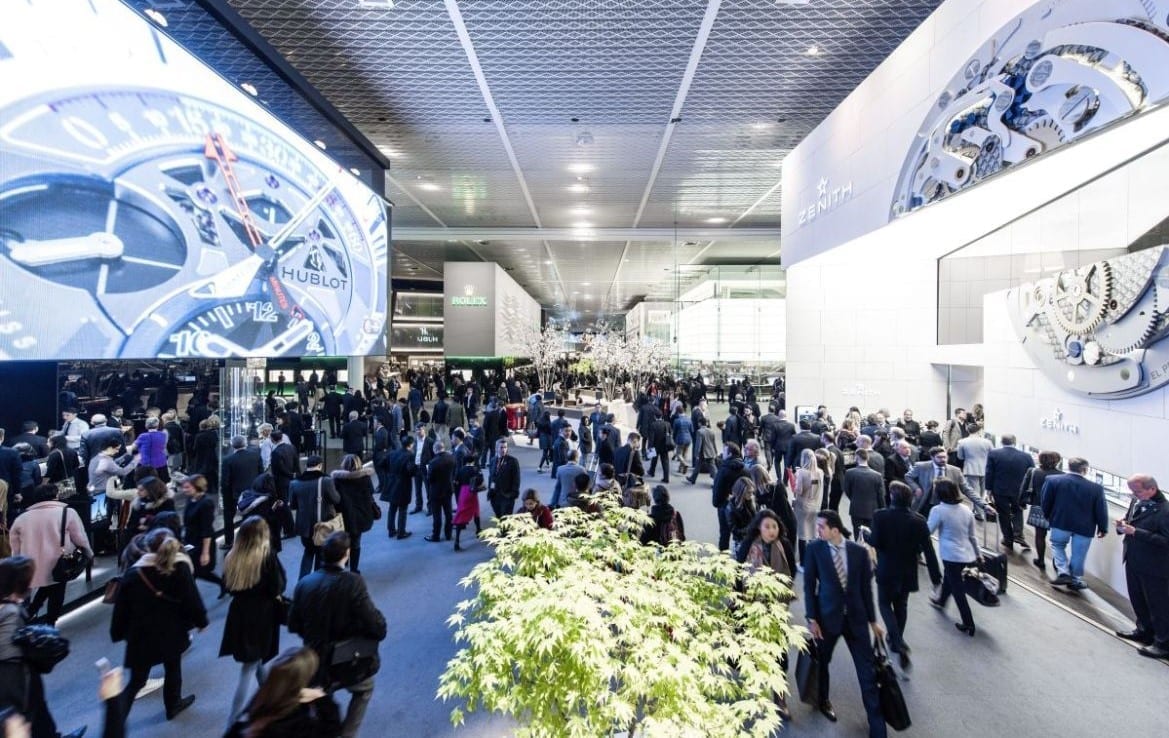
    Baselworld, the world’s leading show for watches and jewellery, will halve its exhibitor numbers and shorten the show’s duration by two days in 2018.

    The exhibitor numbers in 2018 are expected to be around 600-700, compared to around 1,300 this year. The prices for stand rental will also be lowered by -10%, the organizers revealed.

    Baselworld said the decision to reduce the number of exhibitors and length of the show is a result of market consolidation in terms of marketing and production and the challenges of digital technology.

    In a statement, Baselworld said: “Baselworld remains faithful to its strategy of quality and diversity. However, the watch and jewellery market is undergoing a period of profound change. Baselworld 2018 presents itself in a denser and more concentrated form in several respects.

    “Baselworld has decided to maintain its outstanding quality for the next edition. The show does not rely on quantity, but will remain the leading event for premier global brands. And this in all segments.”

    According to the Federation of the Swiss Watch Industry, Swiss watch exports fell by -9.8% in 2016 – their second consecutive annual drop.

    “The environment confronting the Swiss watch industry remained difficult throughout the year 2016. Demand for personal luxury goods fell, especially for the most expensive products. Timepieces therefore had to contend with changes in the choices made by consumers who are increasingly interested in the notion of experience associated with the world of luxury and less in shopping as used to be the case,” said the Federation of the Swiss Watch Industry.

    Baselworld is scheduled to take place from 22 to 27 March 2018.

  • Tight market hits Watches & Wonders

    Tight market hits Watches & Wonders

    With sales slipping in the industry’s largest market, the annual Watches & Wonders exhibition in Hong Kong may be cut back to every two years.

    High-end watchmakers are looking at a shift in strategy in Hong Kong in the face of the most severe downturn the industry has faced since the 2008-09 financial crisis, reports Reuters.

    Branching out from the two biggest trade shows in Switzerland, the Salon International de la Haute Horlogerie (SIHH) in Geneva and Baselworld, Watches & Wonders was launched in 2013 by theFondation de la Haute Horlogerie, which is now talking with exhibitors about the show’s future format, according to Richard Mille, CEO of independent watchmaker Richard Mille.

    Watches & Wonders mainly showcases Richemont-owned brands like Cartier, Montblanc and Vacheron Constantin, as well as some independents, reports Bloomberg.

    “Some brands have been fighting to get out, completely out, to stop Watches & Wonders,” Mille said at this week’s SIHH in Geneva, the industry’s first event of the year.

    “Some of the brands want to do it every two years, some say every year. It’s a negotiation.”

    A decision will be made after this week’s show, according to foundation chairwoman Fabienne Lupo.

    The event also competes with the annual Hong Kong Watch & Clock Fair, which had nearly 800 exhibitors last year.

    China’s crackdown on extravagant spending plus currency fluctuations have hit the demand for expensive timepieces in Hong Kong, with Swiss watch exports to the island city plunging 23 per cent in the first 11 months of 2015, and facing the first annual decline since 2009. TAG Heuer closed one of its Hong Kong stores in August.

    Mille, whose watches sell from about 70,000 Swiss francs ($70,000) upward, says the objective of exhibiting in Watches & Wonders is to make contact with clients who are unable to attend the boutique shows. “It’s not cheap, but it’s worthwhile.”

    Meanwhile, high-end watchmakers are considering expanding their range of more affordable products. Executives at the Geneva event say the industry is having to adapt to a market with fewer Chinese, Middle Eastern and Russian buyers than a year ago, an outcome of record low oil prices and signs of economic weakness in China.

    Cartier, Richemont’s leading brand and main source of profit, is presenting more models than ever at more accessible prices at this week’s SIHH. Among them is Cartier’s new Drive model, a steel-cased men’s watch priced at a little more than 5000 euros ($5430). Previously, Cartier would offer only new models in gold and leather, with prices starting at more than 10,000 euros.

    Sister brand Piaget, generally starting no lower than 10,000 euros, has re-launched a women’s line starting at about 7000 euros, while Richemont stablemate Montblanc has introduced a wide range of lower-priced models.

    Montblanc CEO Jerome Lambert says that whatever happens, his company will stay active in Hong Kong with major exhibitions.

    “There is a different price awareness among customers now… and less price elasticity,” Piaget chief executive Philippe Leopold-Metzger told Reuters at the fair. “Times are difficult.”

    Several watchmakers have cut staff numbers in recent months, including Kering‘s newly acquired Ulysse Nardin and privately owned Parimigiani and Christophe Claret. Piaget closed a boutique in Shanghai last month, and Parmigiani plants to cut back its global outlets to about 250 from around 300 by the end of the year.

    Van Cleef & Arpels, one of the fastest-growing brands within the Richemont group, has also seen a slowdown in Hong Kong, Macao and the US. It is looking at new growth opportunities in such markets as Australia, Canada and Thailand, where it has just opened a store.