Tag: exotic

  • Amouage Makes a Fragrant Debut in Seoul with Exotic Pop-Up Store Ahead of Permanent Expansio

    Amouage Makes a Fragrant Debut in Seoul with Exotic Pop-Up Store Ahead of Permanent Expansio

    Amouage, a luxury fragrance house, has made its inaugural entry into the South Korean market with the establishment of its first pop-up boutique in Seoul. This marks a major step in the company’s broader growth strategy across Asia.

    Strategically Located Temporary Boutique

    The temporary boutique is conveniently situated in Apgujeong, in proximity to Dosan Park. This pop-up store is a precursor to a permanent flagship store, which is slated to open in the same location in the near future.

    The primary objective of the pop-up boutique is to build Amouage’s brand recognition and gauge consumer response prior to making a long-term commitment to a retail presence in the region.

    Inspiration and Design

    The design of the boutique draws inspiration from Oman, the birthplace of Amouage. Architectural elements echo the country’s mountainous landscapes and traditional falaj water systems. The interior design incorporates stone textures, geometric details, and a warm colour palette to create a refined, minimalist space with subtle nods to Omani culture.

    Services and Collection

    In addition to its fragrance collection, the boutique provides a variety of personalised services such as engraving and gift wrapping. The store layout promotes exploration and discovery, offering a shopping experience that deviates from the traditional, high-density retail format.

    Amouage initially made its presence felt in South Korea through a personalised space at Hyundai Duty Free. The recent launch in Seoul is in line with the brand’s ongoing expansion efforts in the Asia-Pacific region. In 2024, Amouage collaborated with Luxasia to penetrate markets in Australia, India, Indonesia, New Zealand, and the Philippines.

    Questions & Answers

    What is the main purpose of Amouage’s pop-up boutique in Seoul?
    The main purpose of the pop-up boutique is to build Amouage’s brand recognition and gauge consumer response in South Korea prior to making a long-term commitment to a retail presence in the region.

    What unique characteristics define the design of the boutique?
    The boutique’s design draws inspiration from Oman, the birthplace of Amouage, with architectural elements reflecting the country’s mountain landscapes and traditional falaj water systems. The interior design integrates stone textures, geometric details and a warm colour palette to create a refined, minimalist space with subtle references to Omani culture.

    What services are offered by the boutique apart from its fragrance collection?
    In addition to its fragrance collection, the boutique provides personalised services such as engraving and gift wrapping. The layout of the store encourages exploration and discovery, deviating from the traditional high-density retail experience.

  • The airline founder building Asia’s next super app

    The airline founder building Asia’s next super app

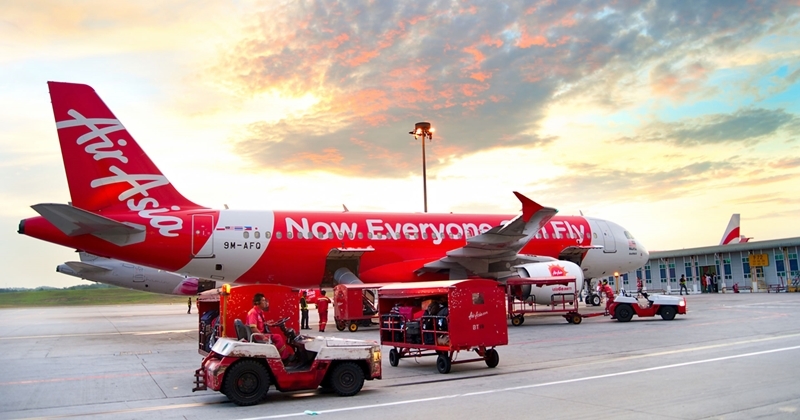
    AirAsia’s founder Tony Fernandes is building what he hopes will be the region’s next “super app” as he deals with the coronavirus travel downturn. He wants to rival the likes of Grab, GoJek, and WeChat with an all-in-one app for food delivery, shopping, payments, entertainment, and travel. As the airline’s boss, he has been looking at new ways to generate income while his planes were grounded. AirAsia has struggled during the pandemic and cut 30% of its staff.

    Mr. Fernandes said he has spent his time during the travel slump improving the AirAsia app and the company’s payments platform BigPay.

    “The downturn was a blessing in disguise in some ways as it allowed us to focus more on it. Running an airline takes up a lot of our time but we have been given the opportunity and time to focus on our digital business.”

    AirAsia already has a “rich database” of over 60 million users as its starting point. The AirAsia app, which also offers users a messaging service, has set its sights on super apps like Singapore-based Grab, Indonesia’s GoJek, and China’s Meituan.

    “AirAsia has always been a digital company. We were one of the first airlines to sell online. It’s in our bloodstream,” added Mr. Fernandes, who is also a major shareholder of English football club Queen’s Park Rangers (QPR).

    “I know a super app sounds like a lofty target but Grab and GoJek also started out small as food or mobility apps. Plus people also questioned me the same way when I said I wanted to start AirAsia.”

    Mr. Fernandes’ airline has now grown to become Asia’s biggest budget carrier. Last year AirAsia launched its own record label called RedRecords in partnership with Universal Music. The aim is to discover stars from South East Asia who will appeal to a Western audience. The first major signing, Thai pop star Jannine Weigel, has already built up millions of followers across social media.

    “Boy have we got something special with the record label. The Koreans have shown how Asian music can appeal to a global audience with K-pop and there is huge potential for southeast Asia.”

    “This also helps us engage with a younger audience and gives lots of content for our app.”

  • Tigerair Taiwan to open new route flying to Palawan in the Philippines

    Tigerair Taiwan to open new route flying to Palawan in the Philippines

    Tigerair Taiwan announced Monday plans to inaugurate a new flight route between Taoyuan in Taiwan and the Philippine city of Puerto Princesa on Palawan Island starting June 7, said reports.

    It will become the third route between Taoyuan and the Southeast Asian country following the announcement by the Singapore-headquartered budget airline that it would begin flying from Taoyuan to Kalibo, a major hub for the tourist destination of Boracay island, reported UDN.

    To promote the launch of the route, individuals who book tickets between 10:00 a.m. on April 10 and 11:59 p.m. on April 11 will enjoy a discounted price of NT$399 for each single journey ticket (excluding taxes). The departure dates must be between June 7 and Oct. 18, 2019.

    There new route will offer three flights a week, according to Tigerair.

    Puerto Princesa will become the fourth destination route targeting the Southeast Asian market offered by Tigerair Taiwan, which will soon be flying 29 international routes to 22 cities, the report wrote.

    Palawan, the fifth largest island of the Philippines, boasts a plethora of wildlife, jungle mountains, and white sandy beaches. In 2016, Palawan was ranked the “Most Beautiful Island in the World” by readers of Conde Nast Traveller.

  • Indonesia en route to popularize tropical fruit

    Indonesia en route to popularize tropical fruit

    Thousands of farmers under East Kalimantan farmers group Gapoktan find it unfortunate that people outside Indonesia are missing out on their home-grown fresh and juicy mini papayas, bananas and dragon fruits.

    So far, most of their fresh fruit products are only consumed by locals buying from nearby markets due to a lack of infrastructure, making it expensive to deliver fruit across the country, let alone export them.

    Indonesian fruit exporter EK Prima Ekspor Indonesia, a subsidiary of the United Arab Emirates’ retail giant LuLu Group International, knows firsthand how selling prices at the consumer level end up depending more on transportation costs than on production costs.

    “Transportation — from farmers to warehouses to airports and finally to the destination country — is very expensive. If our unique fruit doesn’t appeal to consumers, we could lose out to other countries, especially if they can produce similar fruit for cheaper prices,” said Irawan Santoso, head of the fruit and vegetable division of EK Prima.

    Indonesia also has mangosteens, rambutans, snake fruits, jackfruits, soursops, breadfruits, guavas and starfruits that grow in the tropical country, but they are not frequently consumed globally or even domestically.

    The government aims to boost tropical fruit production by expanding land for fruit plantations while also improving infrastructure and transportation systems to decrease high distribution costs, as part of efforts to be the biggest tropical fruit producer in Southeast Asia by 2025 and in the world by 2045.

    President Joko “Jokowi” Widodo acknowledges that this is no easy task, especially with farmers’ preferences to use land for high-yielding commodities, such as palm oil, rather than fruit, which takes time to return on investment. Poor infrastructure has also driven up logistics costs for years.

    “If we can have 14 million hectares of oil palm plantations, we should also be able to have that much land for fruit,” Jokowi said during the opening ceremony of the four-day Fruit Indonesia Festival 2016 in the Jakarta Convention Center parking lot on Thursday. The President handed out various tropical fruits to children to remind people of the “love local fruit” movement.

    “If you see a lack of supporting infrastructure that could hamper distribution, please let us know,” he told the audience consisting of scientists, fruit planters as well as local and international trade delegates.

    To expand plantations, provincial administrations have been instructed to provide local farmers with 5 to 50 ha of land for fruit planting per business unit, as part of the bigger goal to provide 400,000 ha of land in Java, Kalimantan, Sulawesi and Sumatra.

    The program started with 100,000 ha in cooperation with state-owned companies. State plantation firms under PTPN also asked to start cultivating their under-utilized land for fruit production.

    “The state firms have been very enthusiastic to give sections of land for fruit plantations. They are used to producing palm oil, rubber, tea and other commodities but not fruit. So, a new management specializing in horticulture needs to be formed,” Bogor Agriculture Institute (IPB) rector Herry Suhardiyanto said.

    IPB is now studying a possibility to form another state company to develop horticulture based on the State-Owned Enterprises Ministry’s request.

    The business community is hopeful that the vision of becoming the world’s largest tropical fruit producer will be honored over time.

    “Let us not change the policy and vision every time we change presidents,” said Karen Tambayong, head of horticulture development with the Indonesian Chamber of Commerce and Industry.

  • Hotel occupancy rates increase in Bali

    Hotel occupancy rates increase in Bali

    The occupancy rates of star rated hotels in Bali averaged 72.40 percent in August or an increase of 1.76 percentage points from 70.62 percent in the previous month.

    “The occupancy rate was quite encouraging when visits by foreign tourists shrank 9.52 percent in Bali compared with the previous month,” head of the Bali branch of the Central Bureau of Statistics (BPS) Adi Nugroho said here on Wednesday.

    Adi said the occupancy rates would boost hotel operators as an occupancy rate of 50 percent is enough to cover operating cost including salaries of employees.

    In August, 2016, Bali recorded 438,135 visits by foreign tourists including 437,929 arrivals recorded by the Ngurah Rai airport and 206 arrivals at seaport.

    The number of arrivals dropped 9.52 percent in August from July but an increase of 44.3 percent year-on-year, Adi said.

    Adi said most foreign tourists stayed at star rate hotels in six of nine regencies in the province.

    The highest occupancy rate was recorded by hotels in the regency of Badung averaging 75.38 percent or up from July, followed by hotels in the city of Denpasar averaging 66.34 percent though declining from the previous month.

    Hotels in the regency of Gianyar followed in the third place with occupancy rate averaging 60.01 percent , down from 66.84 percent in July , the regency of Buleleng recorded an occupancy rate of 57.69 percent up from 52.23 percent and the regency of Karangasem 47.45 percent, down from 50.92 percent.

    Three other regencies – Jembrana, Bangli and Klungkung – have no star rated hotels . They have only inns or non standard hotels.

    Four star hotels recorded the highest occupancy rate averaging 78.16 percent, followed by five start hotels averaging 77.31 percent, one start hotels 64.96 percent , three start hotels 58.55 percent and two star hotels with occupancy rates averaging 56.31 percent.

    Adi Nugroho said despite the significant increase in the occupancy rate. the increase was recorded only in the regencies of Badung and Buleleng.

    In three other regencies, hotel occupancy rates declined including in the city of Denpasar, regencies of Gianyar and Karangasem, Adi Nugroho said.