Retail News CRM

Tag: expats

  • HCMC Soars in Global Financial Center Rankings, Surpassing Bangkok to Claim an Impressive 3rd Place!

    HCMC Soars in Global Financial Center Rankings, Surpassing Bangkok to Claim an Impressive 3rd Place!

    Ho Chi Minh City (HCMC) has reached a significant milestone, achieving its highest ranking in the Global Financial Centers Index (GFCI) since its inception in 2022. This notable rise, documented in the latest GFCI report released last week, sees HCMC score 664, a jump of 10 points from March’s assessment.

    A Comprehensive Evaluation of Financial Hubs

    The GFCI evaluates 135 financial centers worldwide, using a nuanced matrix of indicators that includes business environment, reputation, infrastructure, human capital, and development of the financial sector. Each city’s score is derived from inputs provided by reputable third-party organizations such as the UN, World Economic Forum, and Transparency International, complemented by feedback from 4,877 financial services sector professionals.

    Forecasting Financial Growth

    With its burgeoning score, HCMC is among the 15 financial centers anticipated to exhibit robust growth over the next two to three years—a promising outlook that contrasts with Bangkok’s decline from 96th to 102nd place.

    Vietnam’s Ambitious Financial Hub Plans

    In a bold move to enhance its financial stature, Vietnam is developing an international financial hub that spans HCMC and Da Nang. Announced in a government resolution passed in June, the hub will feature a diverse array of services, from banking to capital markets associated with asset and fund management. Notably, experimental mechanisms for fintech innovation, specialized trading platforms, and derivatives are also part of the plan. The government aims to have the HCMC section operational by 2025, with full completion expected within five years—making HCMC not just another city, but a potential playground for financial progress.

    Regional and Global Financial Rankings

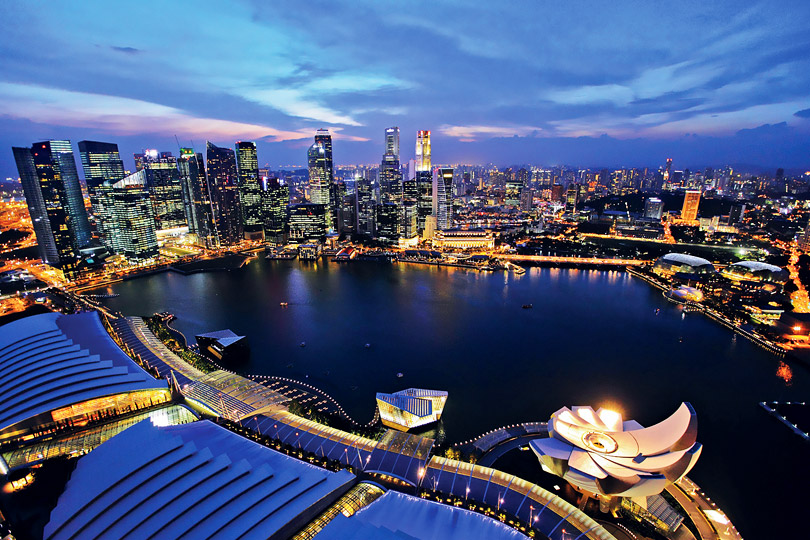
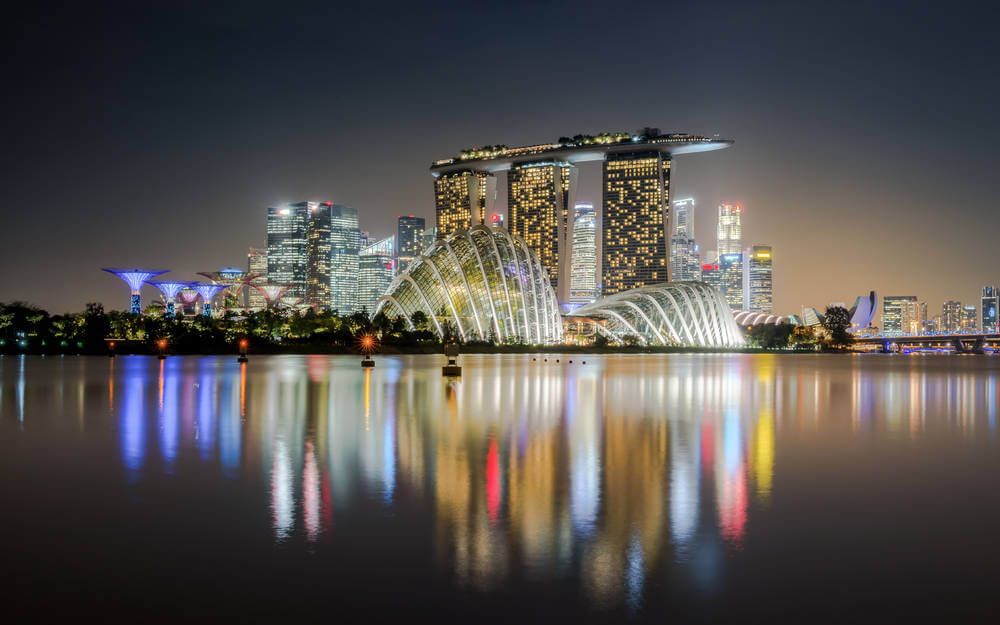
    Other Southeast Asian cities making their mark in the rankings include Singapore at a respectable 4th, Kuala Lumpur at 45th, Jakarta at 91st, and Manila at 104th. Meanwhile, the global top 10 list remains steadfast, with New York maintaining its lead with a score of 766, cushioning its position against the competition from London, Hong Kong, and Singapore.

    Questions & Answers

    What factors contribute to HCMC’s rise in the GFCI ranking?
    HCMC’s improved ranking is attributed to its competitive business environment, strong infrastructure, and ongoing developments in human capital and financial sector growth.

    When is the financial hub in HCMC expected to be operational?
    The HCMC section of the new financial hub is projected to be operational by 2025, with the entire development completed within five years.

    How does HCMC’s ranking compare to other Southeast Asian cities?
    HCMC ranks significantly higher than other Southeast Asian cities like Bangkok, which dropped to 102nd, while Singapore remains the leader in the region at 4th globally.
  • Hong Kong Edges Out Singapore to Claim Title of Asia’s Most International City

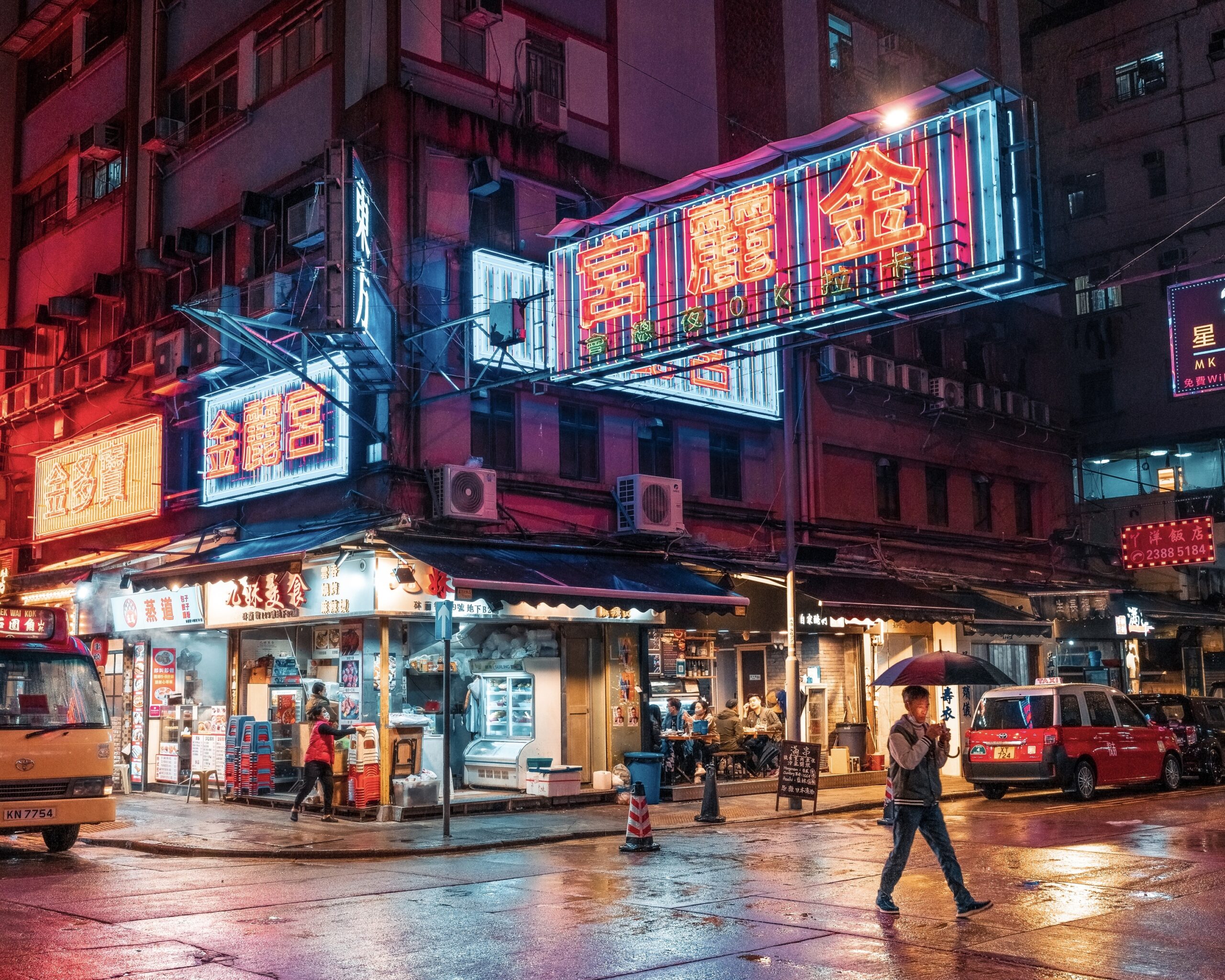
    Hong Kong Edges Out Singapore to Claim Title of Asia’s Most International City

    In a recent release from the Hong Kong General Chamber of Commerce, the Asian Cities Internationality Index has revealed its latest rankings, ultimately declaring Hong Kong the leading city in Asia with a score of 73.7 out of 100. The dynamic city narrowly edged out Singapore, which secured a score of 73.5, making the competition as tight as a pair of shoes on a bustling Hong Kong street.

    Evaluating 11 major cities in the region, the index utilized 113 indicators across seven categories: business and economy, quality of life, infrastructure and connectivity, innovation and ideas, human capital diversity, cultural interaction, and the governmental and legal frameworks that support business operations. This comprehensive analysis also drew insights from a survey completed by 1,107 senior business executives situated in the assessed locales, ensuring a well-rounded perspective.

    Hong Kong’s recognition as a top-tier global financial hub shines through the report. Praised for its successful hosting of international events and a living environment characterized by safety, stability, and freedom, the chamber’s press release highlighted these factors as key to its ascendance in the rankings. In contrast, Singapore’s strengths were noted in its multicultural milieu and its adeptness at attracting and nurturing diverse talent.

    Despite this triumph, Hong Kong’s performance in the innovation and ideas category raised some eyebrows, where it ranked fourth behind Shanghai, Singapore, and Seoul. Patrick Yeung Wai-tim, the chamber’s CEO, acknowledged this shortcoming, pointing to an ongoing challenge in the commercial viability of scientific research. “Hong Kong’s own enterprises still invest a relatively low proportion of their operational costs in scientific research and development,” he commented, as reported by the South China Morning Post.

    Tokyo secured the third position in the rankings, followed closely by Seoul, Shanghai, and Bangkok, while Kuala Lumpur, Taipei, Jakarta, Ho Chi Minh City, and Mumbai completed the list in that sequence, according to the Macao News. Each city’s unique strengths play into the larger narrative of Asia’s evolving retail landscape, reminding us that while the skyline may gleam, innovation remains the true lifeblood of progress.

    Questions & Answers

    How did Hong Kong perform in the innovation and ideas category?
    Hong Kong ranked fourth in the innovation and ideas category, trailing behind Shanghai, Singapore, and Seoul, which raised concerns among experts regarding its commercialization of scientific research.

    What factors contributed to Hong Kong’s top ranking in the index?
    The city’s strong performance in the business and economy category, coupled with its status as a global financial hub and a safe, stable living environment, were key factors that contributed to its high score.

    Which cities rounded out the top six in the rankings?
    The top six cities included Tokyo in third place, followed by Seoul, Shanghai, and Bangkok, while Kuala Lumpur, Taipei, Jakarta, Ho Chi Minh City, and Mumbai followed in succession.

  • Bangkok named world’s best city for working remotely

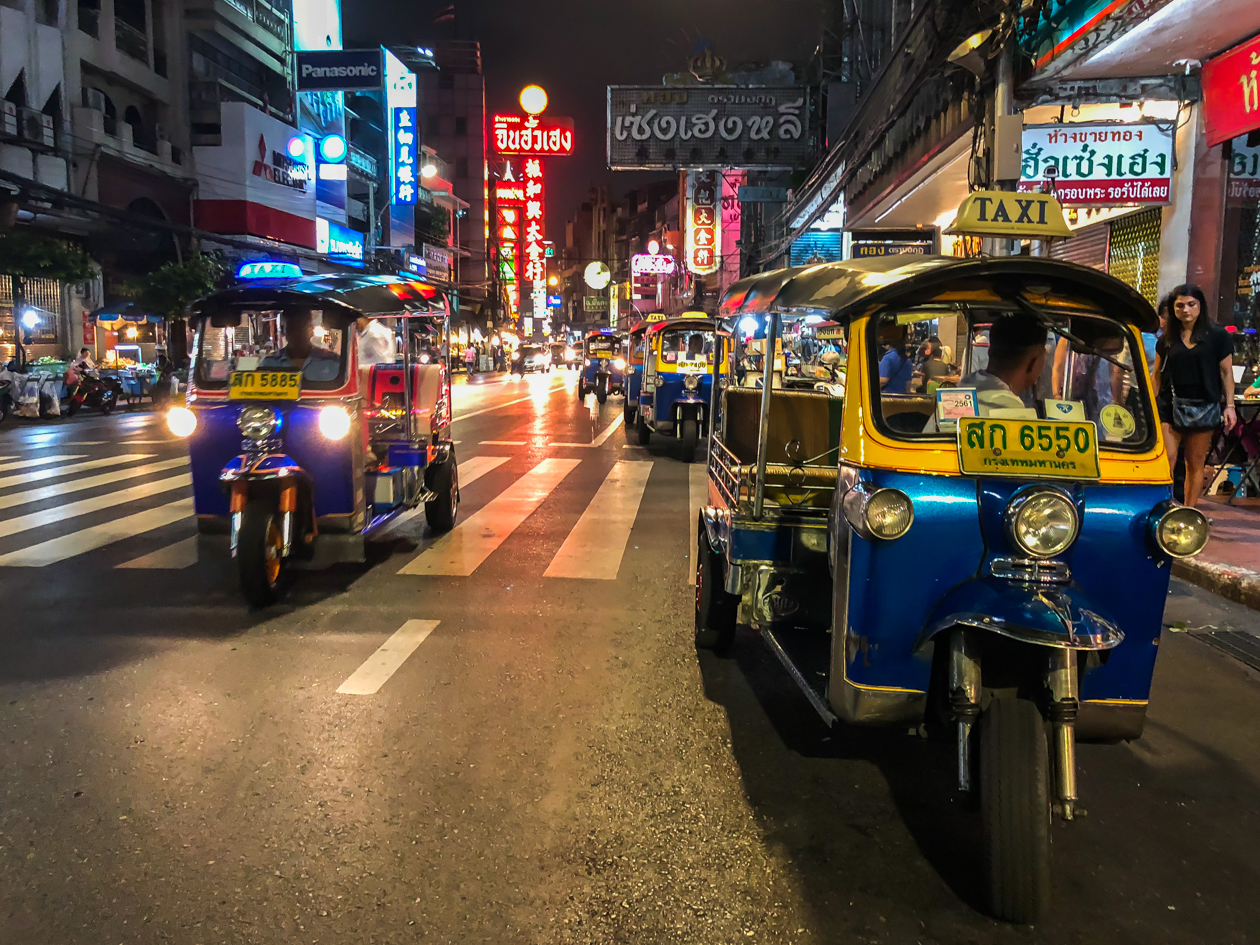
    Bangkok named world’s best city for working remotely

    Bangkok, the capital city of Thailand, has been recognized as the best location globally for remote work. This ranking comes from a recent study conducted by QR Code Generator, an organization specializing in QR technology solutions. The study assessed various cities worldwide using criteria including internet speed, access to remote work visas, and overall cost of living. Each city was rated on a scale of 0 to 100.

    Bangkok led the pack with a score of 69.98. The city was lauded for its high-speed mobile internet, affordable living costs, and rich cultural offerings.

    The city’s unique blend of modern and traditional attractions, coupled with its lively street life, makes it an attractive destination for digital nomads. Not to mention, the city’s delicious food and beautiful temples add to its allure.

    Coming in second place was Bucharest, Romania, with a score of 65.62. Bucharest was praised for its easy access to remote work visas, abundant green spaces perfect for outdoor activities, and a rich arts and architecture scene.

    Rio de Janeiro, Brazil, earned the third spot with a score of 62.35. The city’s strong local purchasing power played a significant role in its high ranking.

    Buenos Aires, Argentina, secured the fourth position, being recognized as one of the most affordable cities globally when it comes to groceries and dining.

    Rounding out the top five was Beijing, China, which was appreciated for its high-speed broadband and mobile networks, ensuring reliable global connectivity for remote workers.

    Reacting to these rankings, a spokesperson from the Thai government, Sasikarn Watthanachan, shared that a new Destination Thailand Visa has been introduced. This visa aims to attract foreign nationals who wish to combine travel with remote work or participate in cultural and medical activities.

    In addition, the spokesperson highlighted that the Thai government is also making efforts to boost tourism by extending its visa-free scheme to 93 countries and territories, allowing stays of up to 60 days.

    Questions & Answers

    What criteria were used to rank the cities in the study?
    The criteria included internet speed, access to remote work visas, and overall cost of living.

    Which city topped the rankings?
    Bangkok, Thailand, topped the rankings.

    What measures is the Thai government taking to attract remote workers?
    The Thai government has introduced a new Destination Thailand Visa to attract foreigners looking to combine travel with remote work. They are also expanding a visa-free scheme to 93 countries and territories, allowing stays of up to 60 days.

  • Expats unhappy with Vietnam visa policy

    Expats unhappy with Vietnam visa policy

    Vietnam’s consternating visa policies helped placed the nation in the bottom 10 of an index ranking countries in terms of how favorable expatriates find their living conditions.

    The Expat Essentials Index, informed by the annual Expat Insider survey by website InterNations (which describes itself as the world’s largest online community of expats), found expatriates vexed about the Vietnam’s visa policy.

    For the 2022 edition of the index, InterNations asked 11,970 expats of 177 nationalities living in 181 countries and territories to provide information on various aspects of expat life.

    To be featured in the Expat Essentials Index, each destination needed a sample size of at least 50 survey participants. In total, 52 countries and territories met this requirement.

    Vietnam landed in the bottom 10, ranking 46th in the overall index, which included the four subcategories of Digital Life, Admin Topics, Housing, and Language.

    The nation was placed 51st out of 52 destinations for the Admin Topics Subcategory.

    Within this subcategory, 48% of surveyed expats reported that they had difficulties obtaining a visa to move to Vietnam, double the global average of 24%.

    Almost two in three, or 66%, said it was challenging to deal with the local bureaucracy, compared to 39% globally. And 41% found it difficult to open a local bank account, compared to 21% globally.

    “The bureaucracy makes simple tasks quite difficult,” said a British expat living in Vietnam, according to the survey.

    Vietnam ranked last for the availability of government services online in the Digital Life Subcategory, where it placed 49th. About one in four expats (23%) described it as difficult to pay without cash in Vietnam, compared to 8% globally.

    The country also fell in the bottom 10 of the Language Subcategory, ranking 47th.

    Within this subcategory, Vietnam ranked last for the ease of learning the local language.

    However, 65% of respondents reported that it is easy to live in Vietnam without speaking the local language, compared to 51% globally.

    For more positives, the country excelled in the Housing Subcategory, where it ranked fifth. Nearly seven in 10 expats (69%) considered housing in Vietnam affordable (compared to 39% globally), and 76% reported that it is easy to find a house here (versus 54% globally).

    The survey found Bahrain the world’s best destination for expats and Germany the worst. Singapore came third in the list as expats highly rated its digitalized life and Indonesia sixth thanks to affordable housing, with both having the language advantage.

  • Expats’ salaries topped $34,000 a month in Q1

    Expats’ salaries topped $34,000 a month in Q1

    The monthly incomes of foreign experts ranged between US$8,500 and $34,000 last quarter, according to a recent report by recruitment firm Navigos Search.

    The report said enterprises operating in Vietnam “pay very high salaries” to attract foreign candidates.

    Navigos Search said some sectors like a garment, tourism, and hospitality have a high demand for foreign personnel due to a shortage of local expertise.

    The garment industry, for instance, lacks Vietnamese talent for jobs requiring high levels of expertise like pattern development, innovation and quality control, while candidates from Sri Lanka, India, and Pakistan are interested to work in Vietnam due to competitive salaries and opportunities to work abroad.

    The resumption of international flights last month has fast-tracked the recovery of the tourism and hospitality sectors, driving demand for senior managers, Navigos Search added.

    The previously reported highest salaries in Vietnam were VND400-600 million ($17,520-26,275) paid to HCMC-based general managers in the healthcare sector with more than five years’ experience, according to headhunting agency Adecco Vietnam.

    HCMC ranked sixth among top cities for expats to live and work last year in a survey by InterNations, with 75 percent of respondents saying their income was more than enough to cover expenses, and 77 percent satisfied with their financial situation.

  • Singapore Weighs Open Borders Amid Omicron

    Singapore Weighs Open Borders Amid Omicron

    The country’s COVID-19 task force said closing its Vaccinated Travel Lanes (VTLs) would not stop the spread of Omicron.

    Closing Singapore to visitors from countries with high numbers of Covid-19 cases would affect the republic’s reputation and connectivity with the rest of the world, and rules have already been tightened to contain the Omicron variant, the country’s multi-ministry task force on Covid-19 said at a press briefing.

    Even if we close all the VTLs, there will still be non-VTL connections between Singapore and other countries and Omicron will still be able to enter Singapore unless we impose a total lockdown and close our borders entirely, Ong Ye Kung, taskforce co-chair said about whether it was looking to review border and VTL measures.

    At the same time, the task force warned of an upcoming Omicron wave» and said that it does not intend to relax further social restrictions currently, but will try not to have to tighten them until at least the Chinese New Year in February. Current gathering limits permit groups of five.

    Compliance with safe management measures will give Singapore a much higher chance of getting through this upcoming wave without having to tighten further, Finance Minister Lawrence Wong said at a press briefing.

    Switzerland is among Singapore’s top investment and trading partners, and there are around 1,000 Swiss companies and around 3,000 Swiss expatriates in the city-state. UBS is a notable example, with several thousand employees in Singapore and frequent travel between Zurich and Southeast Asia.

    The city-state stopped new ticket sales for VTL flights and buses from December 23 to January 20 amid Omicron concerns and said it would cap VTL quotas and ticket sales for travel after January 20 at 50 percent.

    Last week, it said that on-arrival tests for non-VTL travelers, who are all required to serve a 7 or 10 day Stay Home Notice (SHN) either at their place of residence or at a dedicated facility, are no longer required. From 8 January, all non-VTL travelers entering Singapore will also no longer be required to undergo a COVID-19 PCR test on arrival.

    The Ministry of Health on Wednesday said that from 14 February 2022 onwards, persons aged 18 years and above who have completed the primary vaccination series of COVID-19 vaccines and are eligible for booster vaccination will only be considered as fully vaccinated for 270 days after the last dose in their primary vaccination series.

  • Singapore Toughens COVID Rules for Expats

    Singapore Toughens COVID Rules for Expats

    The city-state is cracking down on expats who refuse to vaccinate against the coronavirus.

    Singapore will require applicants for work passes, long-term passes, and permanent residence to be vaccinated, effective February 1, citing a government task force communication. This applies to those renewing their work passes as well.

    The measure represents a toughening of measures in Singapore, which has 1.1 million foreign workers according to recent government data. Many of them work in finance, where foreign banks have established sizeable hubs in Singapore as well as Hong Kong as a gateway to wider Asia.

    The pandemic has slowed the frequent flight traffic to Singapore, with executives like UBS boss Ralph Hamers not able to visit Asia until last month – more than one year into his tenure running the Swiss wealth management giant.

    The new Singaporean measures are being spurred by the rapid spread of Omicron, a variant of COVID-19 which the WHO pegged as concerning last month due to the ease with which it spreads as well as the severity of illness it can cause.

    The aim is to loop in employers, which will have to attest that their employees, as well as dependents, are up to date on their vaccinations when they arrive in Singapore. They do not apply to children under 12, nor those medically ineligible for the vaccine.

    These measures will help sustain our high vaccination rates and facilitate the safe reopening of our society and economy, the Singaporean task force said, according to the outlet.

  • Vietnam 19th best country in the world for expats: HSBC survey

    Vietnam 19th best country in the world for expats: HSBC survey

    Vietnam has climbed four places to 19th in the list of best countries for expats to work and live, an HSBC survey found. With an average annual income of $90,408, nine out of 10 expats said in Vietnam they are as happy as or happier than at home, according to the 11th annual Expat Explorer issued by HSBC on Wednesday.

    Foreigners enjoy working in Vietnam for many benefits: 55 percent of respondents said they take more holidays, 41 percent live in a better home and 39 percent have more household staff compared to their home country.

    Fifty-seven percent said their employment contracts include an annual allowance to fly home or to another place, higher than the global average of 17 percent.

    Forty-two percent get an accommodation allowance while the global average is 18 percent, and 73 percent receive health and medical allowances compared to 43 percent elsewhere.

    Vietnam ranks first in the world with 72 percent saying moving to Vietnam helps them save more and 72 percent also saying they have more disposable income than they did in their home country.

    Both are higher than the global average: 52 percent for savings and 56 percent for disposable income.

    There are also some downsides for foreigners living in the country, respondents said. While more than half of expats across the world said they enjoy the better overall quality of life, only four out of ten foreigners in Vietnam said so.

    Organizing finances is difficult for expats, with only 27 percent of foreigners saying it is easy to open a bank account, buy insurance or pay taxes, while the global average is 43 percent.

    Just more than a third had no difficulty in experiencing healthcare services, but this figure is 46 percent globally.

    Raising a child in Vietnam poses challenges, with just 18 percent saying the quality of child care is better than in their home country, compared to the global average of 38 percent.

    Forty-seven said Vietnam is a good place for expats who want to progress their career, while the global average is 56 percent.

    There are financial issues that concern expats in Vietnam, with 37 percent being worried about restrictions on moving money out of the country and 22 percent each concerned about less favorable exchange rates and job security.

    Sabbir Ahmed, head of retail banking and wealth management at HSBC Vietnam, said: “The survey shows Vietnam is a promising host country for expats who are seeking both opportunities and challenges to boost and develop their careers.

    “We expect Vietnam to improve several areas to enhance the experience of expats and their families by developing further the environment, educational programs and financial services.”

    The ranking listed Singapore as the best place in the world for expats for the fourth year in a row, followed by New Zealand, Germany, Canada, and Bahrain.

    The survey polled 22,318 people from 163 countries and territories through an online questionnaire.

  • Expats confused over Vietnam’s profile picture requirement for phone users

    Expats confused over Vietnam’s profile picture requirement for phone users

    Some have no idea about the requirement, others find it invasive while network providers can’t guarantee help in English. Expats are having issues with Vietnam’s new regulation which asks phone users to submit a profile picture to their network provider.

    The Ministry of Information and Communications requires mobile subscribers to provide photographic proof of their identities before April 24, or they will be locked out of their network.

    Ryan, 28, is a Briton working in Hanoi. He had no ideas about the new regulation until we contacted him because the profile photo request was sent to his phone in Vietnamese.

    “I’ve never had to do this in the U.K. or in any other countries I’ve travelled through,” Ryan said, adding that he finds the requirement “invasive”.

    In light of recent data breaches by companies as large as Facebook, Ryan is concerned that his information could fall into the wrong hands. “I don’t know if I could trust my network provider with my information,” he said.

    The government claims the requirement will result in better control of network subscribers and prevent spam accounts.

    But while network providers claim user data will only be used to manage subscribers as stated by law, experts believe the regulation has loopholes that could be taken advantage of.

    The images could slip through the network security holes, a scenario in which the responsibility of the network provider has not yet been clearly defined, said lawyer Vu Tien Vinh.

    A photo taken by a customer and sent to a network provider cannot be authenticated, Vinh added.

    Having been to many Asian countries, Mark from Canada finds the regulation odd. “Why would a phone company need my photo?” he said.

    Ryan and Mark are not the only expats who are having issues with the regulation. Many foreigners are also confused as local mobile operators don’t seem to provide the assistance they need.

    On Saturday, customer service centers of all major network providers were packed with customers coming in to have their photos taken.

    Amid the chaos, employees at the centers suggested that foreigners could bring in their passport, or take a photo of their passport and submit it to the companies’ websites. But, they could not guarantee there would be anyone who speaks English available to help.

    Vietnam has 118.7 million mobile subscriptions, according to official data and there are 82,000 foreigners living and working in the country. As of last week, at least 38 million mobile phone users have not provided adequate personal information to network providers, said Nguyen Duc Trung, a senior telecommunications official at the Ministry of Information and Communications.

    Mark is one of them. The 35-year-old is not planning to do anything yet. “I’ll see if they actually lock my account,” he said.

  • Vietnam named most affordable country in the world for foreigners

    Vietnam named most affordable country in the world for foreigners

    Nearly one in five said they have far more money at their disposal than their lifestyles require.

    The Expat Insider 2017 survey released on Thursday has put Vietnam in the spotlight as the cheapest place to live for expats.

    The country has jumped five places from the previous year to top the 2017 table, confirming how affordable it is for foreigners to live and work here.

    The survey was developed by asking 12,519 respondents, representing 166 nationalities and living in 188 countries around the world, how they felt about their financial situation, and whether their disposable income was sufficient to cover their expenses.

    The cost of living in each country was compiled from the global cost of living database Numbeo. All amounts are in U.S. dollars and current as of September 2017.

    Mexico and Colombia round off the top three most affordable locations, while expats living in Switzerland and Israel find it the hardest to get by on the money they make

  • Foodland, plans to expand lots over the next five years

    Foodland, plans to expand lots over the next five years

    Expats’ favorite supermarket, Foodland, plans to expand lots over the next five years. The chain has doubled its yearly investment budget to THB500 million to open four or five new grocery stores and add three new types of restaurants to their roster.

    Some of the new locations are already open. There is now a Foodland at The Street community mall on Bangkok’s Ratchadaphisek Road. Another Foodland opened yesterday at Rama 3’s The INT Intersect community. A third is opening soon at the Terminal 21 in Nakhon Ratchasima. The other locations have not yet been announced.

    Foodland’s new restaurants will include a Japanese ramen chain, a Hong Kong-style roasted-goose dining spot and a Singapore-style street food restaurant.

    Chief executive officer Somsak Teerapattanakul said, “As I am getting older, I want to speed our expansion as much as possible. Starting from next year, we plan to open four or five new Foodland stores for five consecutive years,” Somsak said.
    These expansion plans means that the company’s sales might reach THB10 billion in 2017, which would be 25 percent higher than the THB8 billion they should hit this year.

  • Expatriates Start Acquiring Properties in Surabaya

    Expatriates Start Acquiring Properties in Surabaya

    About 10 percent of 450 apartments and Small Office Home Office (SOHO) developed by Operational Cooperation (KSO) PT Darmo Permai and PT Waskita Karya in the 88 Avenue Surabaya Project had been purchased by expatriates.

    KSO Wskita Darmo Permai managing director Kevin Sanjoto said that 65 percent of the 450 units had been sold. About 50 percent of the buyers were from Surabaya, 10 percent were expatriates, 15 percent from Jakarta and the rest of them were buyers from East Indonesia.

    “The expatriate buyers are from Japan, Singapore, and Korea. Some of them need places during their stay in Surabaya, including as preparations to face the ASEAN Economic Community (AEC),”Kevin said during the ground breaking ceremony of the project on Saturday, January 30, 2016.

    Waskita Karya Realty president director Didit Oemar Prihadi said that KSO Waskita Darmo Permai would hold road shows in big cities to boost the sales.

    “With such a strategy, we believe that we will gain new buyers, because many investors outside Java are interested in investing in Surabaya,” Kevin added.

    The apartment and SOHO project was a part of a superblock project developed on a 3.4-hectare land in West Surabaya. It was planned that the project would have eight towers consisting of SOHO, The Residence, The Suites, The Sky, The View, The Terrace, The Heritage and The Infinity. SOHO and The Residence would be the first towers to be completed.

    “By looking at the sales figure, and since the development project has been started, we expect to complete the project by 2018, and the handover can be conducted on August 8, 2018,” Didit said.

  • Expats in Asia-Pacific, including Singapore, highest paid in the world

    Expats in Asia-Pacific, including Singapore, highest paid in the world

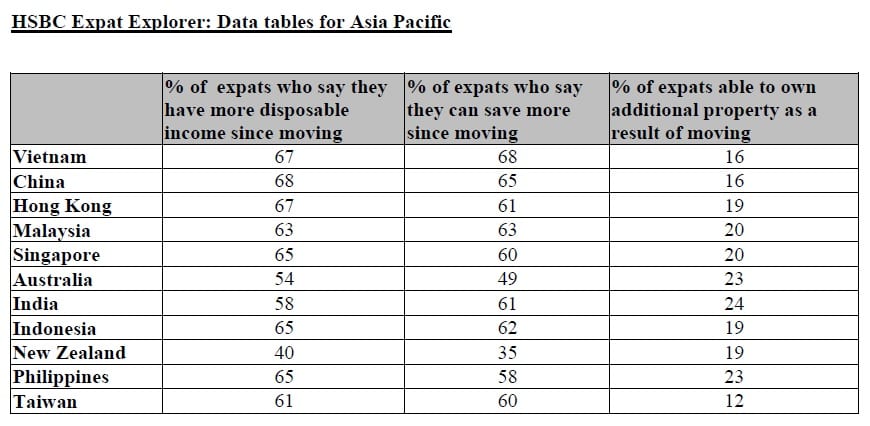
    Expatriates in the Asia-Pacific are among the highest paid in the world, with Singapore in the top five in the region for disposable income and savings, according to HSBC’s latest Expat Explorer survey.

    The region’s appeal for professionals is set to increase further with the formalisation of the Asean Economic Community (AEC). The eight edition of the Expat Explorer survey was completed by 21,950 expats from 198 countries through an online questionnaire in March, April and May 2015 and released on Monday (Dec 21).

    The study found that the annual average salary for expats across the Asia-Pacific is US$126,000 (S$178,000), the highest compared to the global average of US$104,000.

    South-east Asian countries – including Vietnam, Malaysia and Singapore – along with China and Hong Kong, stand out for offering expats the chance to save more money and enjoy greater disposable income.

    According to the survey, 65 per cent of expats in Singapore report greater levels of disposable income (compared to a global average of 57 per cent), 60 per cent are able to save more (global average is 52 per cent) and 20 per cent say they have been able to buy additional property as a result of moving (global average is 17 per cent).

    The ability to save more, enjoy greater disposable income or acquire real estate assets are all important considerations for expats moving to a new country.

    Said Mr Matthew Colebrook, HSBC Singapore’s head of retail banking and wealth management: “Managing finances is a key draw-card for living abroad, whether that be in helping to ascend the housing ladder or opening up lifestyle choices for later life. However, it does come with complexities and often means expats need to consider financial planning not in one, but two or more countries.”

    Apart from the financial incentives, South-east Asia’s appeal will be heightened as mobile professionals will be able to access a wider job market via the formalisation of the AEC.

    The AEC – which comes into effect on Dec 31 – aims to integrate South-east Asia as an economic region by reducing barriers to cross-border trade and investment, and allowing freer flow of professionals to work in other markets in the region.

    Said Mr Colebrook: “Asia offers some of the most rewarding job opportunities, allowing expats to experience and learn skills while at the same time, boost their standard of living and raise lifestyle aspirations. As the Asean countries move closer to economic cohesion, skilled workers will be needed to raise the region’s competitiveness and help companies and sectors to offset locational skill shortages or mismatches.”

    Singaporeans are one of the most globally mobile workforces in the region, with some 212,500 citizens living overseas as of June 2015, according to the Department of Statistics.

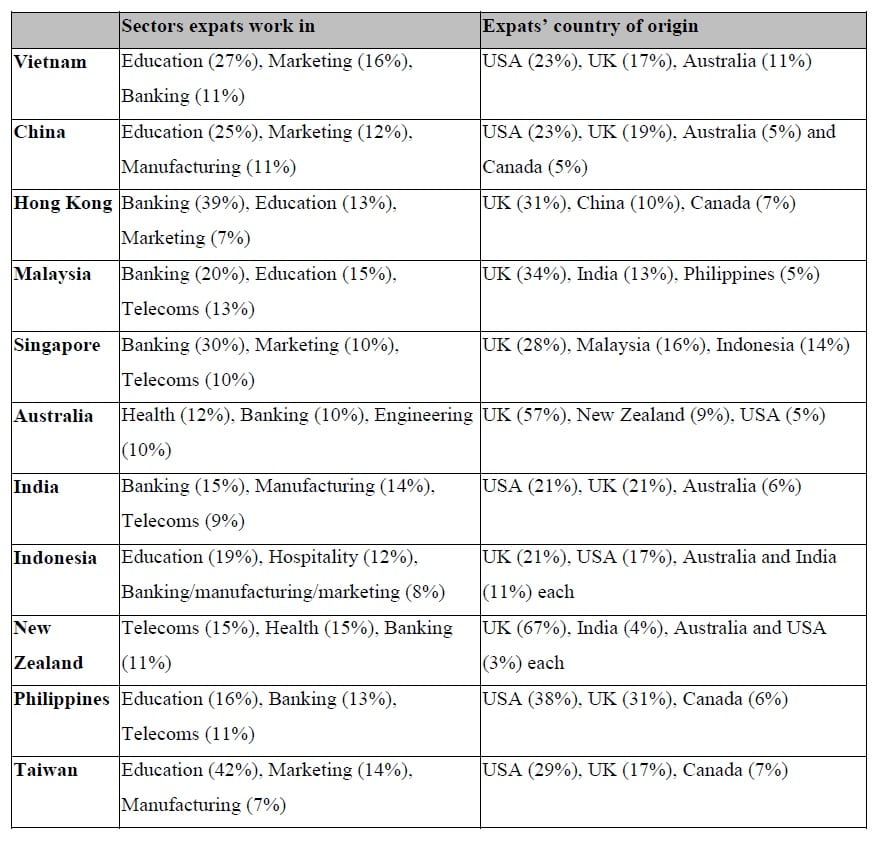
    Based on the sample of respondents surveyed in the latest edition of the Expat Explorer, expats in the Asia-Pacific originate from Australia, Canada, China, India, Indonesia, Malaysia, New Zealand, Philippines, United Kingdom and the United States. They work in industries such as education, marketing, banking, health, engineering, telecommunications, manufacturing and hospitality.