Retail News CRM

Tag: expedia

  • Agoda’s top Chinese New Year 2019 travel rankings

    Agoda’s top Chinese New Year 2019 travel rankings

    Bangkok, Tokyo, and Taipei are the top three most popular destinations for Asia-Pacific travellers over the Lunar New Year period in 2019, according to booking data from Agoda. This year, Osaka, slips from the third spot in 2018 to sixth, while Taiwan scoops three of the top ten destinations, with Taipei in third, and Kaohsiung and Taichung in fifth and seventh respectively. Overall, Japan, Taiwan, and Thailand will benefit the most from travellers celebrating the Lunar New Year.

    Travels during the Spring Festival tend to be reserved for family bonding and indulging in food and leisure activities that the whole family can enjoy. It is thus not surprising that most travellers in the region have chosen gourmet and retail paradise in Bangkok, Tokyo, Taipei, Kuala Lumpur and Singapore among their top ten destinations.

    The Lunar New Year is celebrated in many cities across Asia, but Chinese travellers enjoy the longest holiday. With a week to spare, Chinese tourists are spending the new year in cities such as Hong Kong, Tokyo, and Bangkok.

    This year, HongKongers chose to change things up, travelling to Japan, Thailand, and Taiwan over the previously favoured Korea. In fact, Korea dropped out of the top three destinations altogether to settle at the fifth spot. Staycations have also risen in popularity, and Hong Kong has made its way into the top ten this year as well.

    Singaporeans prefer to travel to neighbouring countries for their relatively short Lunar New Year public holidays. For the first time, staycations have emerged as a popular choice for those who prefer staying behind to celebrate the festival.

    Taiwanese are travelling within the region for Chinese New Year, with Kaohsiung rising up to clinch the top position. For the first time in three years, Kyoto has slipped out of the top ten rankings.

    Malaysians continue to favour travelling within the region to celebrate Lunar New Year. In 2019, domestic destinations take up eight out of the top ten destinations. Thailand remains the only overseas destination in the top ten list for Malaysian travellers over the period.

    Indonesians are venturing further afield this year to celebrate the Lunar New Year, with Kuala Lumpur and Tokyo taking up two out of three of its top travel destinations. Japan is rising in popularity, as the region adds Sapporo – with its winter wonderland – into Indonesia’s top ten destinations.
  • AirAsia share price up marginally after selling stake in Expedia JV

    AirAsia share price up marginally after selling stake in Expedia JV

    AirAsia Group Bhd’s (AAG) share price rose 0.90% this morning after it divested its remaining 25% stake in its joint venture (JV) company, AAE Travel Pte Ltd for US$60 million (RM240 million).

    The airline sold its remaining stake to the 75% stakeholder in the company Expedia Inc’s Expedia Southeast Asia Pte Ltd — in a bid to monetise its investment and utilise the proceeds as working capital.

    At 10.41am, AAG was trading at RM3.38 with 2.18 million shares changing hands.

    AirAsia divested the other 25% interest it had in March 10, 2015.

    The group announced in a bourse filing yesterday that it has executed a share purchase agreement for the disposal and the cash purchase consideration is net of AirAsia’s concurrent purchase of AirAsiaGo.com domain names and related assets from AAE Travel Pte Ltd by Travel 360 Sdn Bhd.

    AirAsiaGo.com, which offers a full suite of travel products including AirAsia flight and hotel packages featuring Expedia Group lodging content, will continue to be powered by Expedia Group.

  • Raya Online Sales Will Likely Peak inEarly June With 0% GST

    Raya Online Sales Will Likely Peak inEarly June With 0% GST

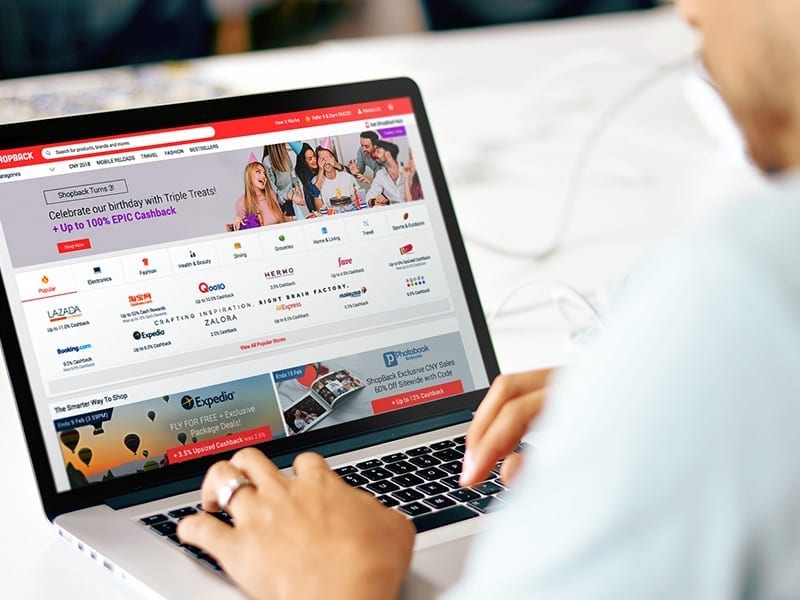
    ShopBack, the leading online Cashback platform that partners more than 500 online shops in Malaysia, foresees Raya sales will reach its peak in the first week of June, given the 0% GST implementation from June 1st onwards.

    “Our partners have started to prepare for an early June promotion as that will likely be the week when consumers rush into Raya preparation. For example, Lazada is planning for a Mega Sale from June 1st until June 4th with onsite games, flash sales, and up to 11% cashback for ShopBack users. Around 40 partners are joining our Raya campaign and we are looking to have at least 100% growth this year,” says Alvin Gill, Country General Manager of ShopBack Malaysia.

    Other online partners that are joining the campaign include Traveloka, 11street, foodpanda, FashionValet, Booking.com, Senheng, Hermo, Expedia, Sephora, ASOS, JD sports, PappaDelivery etc. and the highest Cashback on offer is 30%.

    “There was a 25% drop in sales during the 14th General Election week and it was expected. As people resume working and Ramadan begins, the number of online sales has started to recover to the previous level. According to ShopBack data, the number of sales powered by ShopBack during Ramadan 2017 VS 2016 grew by 100%. We are confident to achieve beyond this number as the market sentiment looks very positive after GE14.

    “The 0% GST may allow Malaysians to have better purchasing power when spending for their Raya needs. Based on our historical data, sales normally surge at the second week of Ramadan but for this year, it may start after the 0% GST takes effect and will prolong to the fourth week,” Alvin says.

    Malaysians Spent More Compared to Indonesians

    ShopBack regional’s data also hows that in a comparison with Indonesians, Malaysians’ average spending during Ramadan 2017 was USD 54.54. Indonesians instead spent USD 49.04 on average. Overall, Fashion appeared as one of the top selling categories in both countries. Malaysians spent more on Health & Beauty and Electronic items while Groceries, Toys & Games had a great demand among Indonesians.

    “Larger electronic items, for example, household appliances could be the reason of higher spending found among Malaysians,” Alvin explains.

    Both Malaysia and Indonesia experienced a dip in traffic during Iftar hour. Website and app traffic during peak hour remained unchanged except for an increase of 15% during Ramadan month.

    “This year, ShopBack has integrated its app with regional partners like Lazada, especially Lazada app users can get better cashback when they shop through our app during Ramadan. We aim to integrate with more partners’ apps in the future to enhance our user experience. It will continue to propel our growth in the next half of 2018 together with the implementation of 0% GST,” Alvin adds.

    Currently, more than 1 million Malaysians are using ShopBack for their daily purchases. ShopBack has given over RM25 million worth of cashback since 2015. The cashback savings can be transferred out to a user’s bank account upon validation. Other than Malaysia, ShopBack also operates in Singapore, Thailand, Indonesia, the Philippines, Taiwan and Australia.

  • Uber has offered CEO role to Dara Khosrowshahi from Expedia

    Uber has offered CEO role to Dara Khosrowshahi from Expedia

    An Uber spokesperson tells us its board has reached a decision to offer someone the CEO role. We’ve confirmed from a source familiar with the situation that this person is Dara Khosrowshahi, CEO of Expedia.

    Both Meg Whitman and Jeff Immelt had been considered for the top job, but both publicly tweeted that they didn’t want it.

    Some reports on Sunday suggested that Whitman was still in the running anyway.

    The Uber CEO seat has been vacant since June, when co-founder Travis Kalanick resigned.His departure came after former U.S. Attorney General Eric Holder completed an investigation into the company’s culture. Lawsuits and allegations of sexism are what prompted the investigation.

    Since then, the Uber board has been involved with its own lawsuits. Early investor Benchmark Capital, which has one of the board seats, sued Kalanick claiming that he did not disclose material information about the company’s problems.

    They now want Kalanick off the board and say they would not have granted him the power to appoint two additional board seats, which have not been filled. Early investor and former board member, Shervin Pishevar, has intervened in the lawsuit, accusing Benchmark of leaking confidential information.

    Khosrowshahi has headed up Expedia since 2005, after serving as the chief financial officer of IAC for seven years. Expedia has done very well in the stock market under his term and is up 32% so far this year. The stock has nearly tripled in the past five years.

    Several Uber investors have told us that they are happy with the decision, saying that Khosrowshai has the right operational experience to get the job done.

    According to a recent Glassdoor survey based on employee feedback, Khosrowshahi was ranked 39th among the highest-rated CEOs, with more than 2,200 employee reviews combining to assign him a 94 percent approval rating.

  • Expedia to leverage partnership with AirAsia

    Expedia to leverage partnership with AirAsia

    American travel company Expedia Inc, will leverage its partnership with AirAsia Bhd to seek more opportunities in Asia. Expedia president and chief executive officer (CEO) Dara Khosrowshahi said AAE Travel Pte Ltd (AAE) — a joint-venture firm between Expedia group and AirAsia, had been overseeing both Expedia and AirAsiaGo points-of-sale across the region since 2011.

    “For us AirAsia has been a fantastic partner. We had no idea that Asia offered such significant and rapid growth opportunities until what we learnt through our partnership with AirAsia. It kicked us into an aggressive stage of growth through its scale and deep insight into this region.”

    Expedia is the majority shareholder in AAE with 75 per cent share.

    Khosrowshahi said that opportunities in Asia would be the company’s focus in the mid-term future, with plans to grow the region into the second-largest market for the online travel firm in the next five years.

    “Our data is showing that success in the next 10-20 years will depend on how well we do in Asia.

    “The investments we are making here, such as the Expedia Innovation Lab, allows us to understand our Asian customers better,” he added.

    Expedia Innovation Lab for Asia deploys electromyography, real time eye-tracking software, which when combined with real-time questions to users, uncovers emotional responses that can be used to develop new products and the way users interact with Expedia.

    Expedia is the largest travel company in the world, generating US$72 billion in gross bookings last year on 200 sites in 75 countries and 35 languages.

    Its success is based on investing heavily in technology to understand the real outcomes customers desire, and innovating to create new ways to fulfil them.

  • Vietnam imposes tax duty on foreign room-booking sites

    Vietnam imposes tax duty on foreign room-booking sites

    Firms such as Agoda and Expedia will have to pay a 10 percent duty. The Ministry of Finance has told foreign accommodation booking services to pay taxes if they wish to continue operating in Vietnam.

    A document recently released by the ministry asked booking sites like Agoda, Traveloka and Expedia to pay a combined 10 percent of their total revenue made in Vietnam.

    Vietnamese accommodation providers that have signed contracts with these foreign sites are obliged to fulfill these tax duties on behalf of them.

    The ministry said that the move aims to prevent tax losses from foreign-based companies that are gaining from online business transactions.

    Vietnamese accommodation booking site Vntrip had previously held a press conference and sent a document to the ministry accusing Singapore-based travel agency Agoda and some other sites of tax evasion.

    Vntrip said that the acts of these foreign companies had resulted in huge losses to the state revenue and created unwholesome competition.

    This is not the first time the Vietnamese government has imposed taxes on international businesses operating in the country. Last September, the popular ride-sharing service Uber was officially ordered to pay taxes after two years of providing transport services in Vietnam.