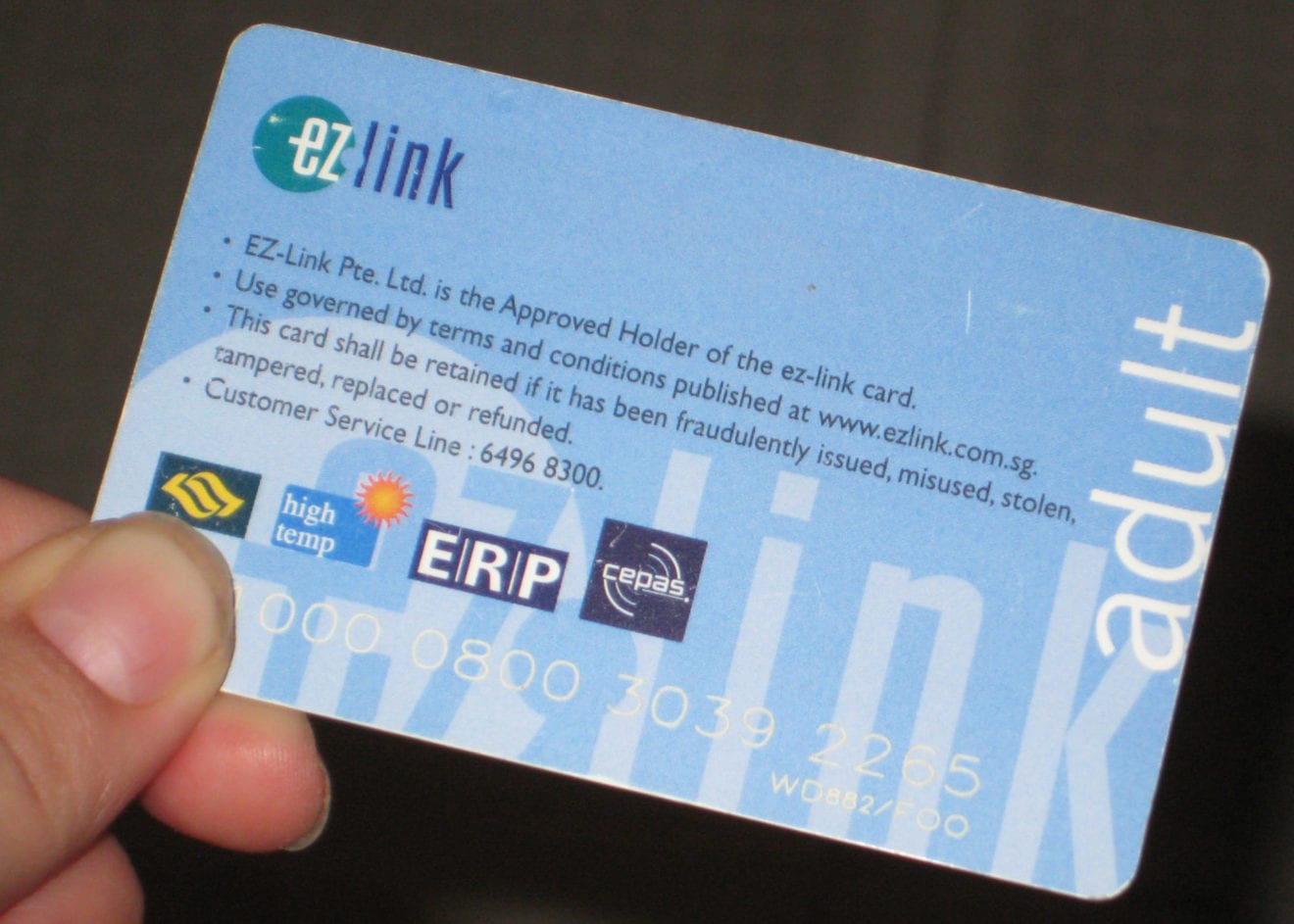
Nicholas shared his strategies to displace cash totally. Always try and do not be afraid of failure. Every failure is part of our learning experience and must help us improve.This is so that we do not stagnate nor remain in the status quo while the environment around us continues to evolve. Those are the words from Nicholas Lee Tat Meng, the man behind Singapore’s EZ-Link cards, a contactless smart card used for the payment of public transportation fares in the city, with limited use in the small payments retail sector.
Nicholas started his engineering career as a systems engineer in a local systems integration company prior to joining the Land Transport Authority of Singapore (LTA) in early 1997. In the LTA, he held various engineering portfolios before being seconded to its Policy Division to work on international relations and the development of business models for new transportation projects.
In 2000, Nicholas was assigned to manage the island-wide implementation of the EZ-Link card. This included the design, development and implementation of a clearing-settlement backend system and the rollout of acceptance terminals across all mass rapid transit and bus transport systems in Singapore.
Following the launch of the EZ-Link card in 2002, Nicholas then moved on to EZ-Link Pte Ltd, a wholly owned subsidiary of the Land Transport Authority. Over the years, he held several portfolios from developing business models and operating structure to supervising the company’s marketing efforts and corporate communications. On 1 October 2011, he was appointed as CEO of EZ-Link to lead the company to greater growth in adoption, transactions and applications of cashless payments.
EZ-Link’s humble beginning
EZ-Link was formed on January 8, 2002 with its core business of clearing and settlement of all EZ-Link card transactions generated in transit and non-transit (retail/merchant) environments, as well as the sale, distribution and overall management of EZ-Link cards. In 2009, EZ-Link became the first card issuer in Singapore to launch the CEPAS-compliant EZ-Link card. Thereby extending the company’s influence beyond the local public transport sector and into the retail and food and beverage industries.
These new EZ-Link cards are also accepted as a mode of payment for Electronic Road Pricing (ERP) and at carparks fitted with the Electronic Payment System (EPS) when used in the dual-mode in-vehicle unit. To date, more than 17 million new CEPAS-compliant EZ-Link cards have been issued.
“Over the years, we have been working towards the vision of a cashless society with the launch of several ground-breaking products and services such as the My EZ-Link Mobile, the world’s first and award-winning mobile application for EZ-Link card top-ups; EZ-Charms, the first EZ-Link non-card form factor in Singapore; and EZ-Link Rewards with Perx, the first-in-Singapore rewards scheme for public transport EZ-Link users,” said Nicholas.
Apart from benefitting the consumers and commuters, EZ-Link is also looking to help businesses in Singapore to enjoy the benefit of cashless transactions through their services. Currently, there are over 30,000 acceptance points island-wide tapping on the EZ-Link card payment system which provides quicker customer service and lower costs related to cash handling.
According to Nicholas, EZ-Link has the privilege of serving more than 3 million customers using their products and services daily. “This is a huge responsibility for us to undertake as we have to ensure that customers’ expectations are met when they interact with the cards, and the availability of sufficient infrastructure and capability to assist them in using our services,” he said.
The biggest challenge
However, the task of transforming Singapore into a cashless society was not that easy. Nicholas shared that their biggest challenge has been in the area of cash or in other words, how they can displace cash and encourage greater use of electronic money via the EZ-Link card. “Of course, our scope is not just limited to usage of the EZ-Link card, but also on topping it up as well. For instance, more than 40% of top-ups of the EZ-Link card are still done via cash.”
To address this challenge, Nicholas shared that they have introduced schemes such as EZ-Reload to link an EZ-Link card to a bank account or credit/debit card account. In the event when the card runs out of stored value, it will automatically top itself up so that the cardholder will never have to go to a device to do a top-up.
“We initially charged a $0.25 fee for this service, but have been progressively making it free for all DBS/POSB and Citibank card holders. With EZ-Reload, our customers are able to rely less on physical top-up points, and save themselves from the hassle of queuing up at Ticketing Offices and General Ticketing Machines,” said Nicholas.
Nicholas shared that the next challenge is displacing cash in the retail/F&B area for small sum payments meaning those less than $20. In the past, the firm have invested into infrastructure to enable merchants to accept the EZ-Link card as a means of payment. However, Nicholas shared that there has been much resistance to this change by consumers and eventually, cash still prevailed.
The journey ahead
Moving forward, Nicholas said that they have partnered with various industry players to create a more open and efficient payment infrastructure that will accept all means of payment including the EZ-Link card. This means a collaborative approach with other industry players to enable multiple modes of payment so that consumers have more choice and flexibility in choosing the right electronic payment method to use, as opposed to cash payment. “Hopefully, the EZ-Link card will be the preferred choice of payment for consumers. In doing this, we are working together with the industry to tackle a challenge instead of facing it alone,” he said.
Furthermore, Nicholas said they are gradually transforming into a new organisation, in terms of how they operate, how they engage with their customers and how their services are delivered.
“We are looking at new digital services, increased personalisation of services to fit individual consumers, more exciting EZ-Link products that may come in different shapes and sizes and capable of interacting with individuals. With the rapid advancement of technology, we have an opportunity to evolve EZ-Link to another level,” Nicholas adds.
Nicholas’ guiding principles
Apart from not being afraid to fail, Nicholas believes that it is important to always question themselves why and how should they remain relevant to their customers and stakeholders. This, he said, ensures continual renewal of practices and business to keep up with the rapid changes in the environment, which is especially important given the rise of various disruptive business models.
Secondly, he emphasised on the need to stay focused on their core business and do what they do best. “We innovate by collaborating with industry partners through win-win relationships and are always mindful of doing things beyond our capabilities,” he said.
Meanwhile, in his journey building a cashless Singapore, Nicholas is focused in three goals:
- To transform the EZ-Link card into a lifestyle product (beyond public transport but also in cars, taxis, private buses, identity card) and make it the preferred choice of consumers in their everyday lives
- To be a consumer-centric company whereby services and innovation are developed around consumer needs and expectations
- To contribute substantially towards Singapore’s goal of becoming a cashless society