Retail News CRM

Tag: fabric

  • Levi’s Makes a Fashion Statement: Weaving into the Cultural Fabric of Australia

    Levi’s Makes a Fashion Statement: Weaving into the Cultural Fabric of Australia

    At the 2025 National Gallery of Victoria (NGV) Gala, an unexpected element caught everyone’s attention – a denim carpet. This unusual red carpet replacement was not just a whimsical twist, but a calculated move by Levi’s, the clothing brand sponsor, showcasing its deep-rooted connections within the cultural matrix of today.

    The NGV Gala, one of Australia’s most esteemed events, is a grand celebration of art, fashion, and food. Levi’s participation in the grand event extended beyond a mere brand appearance. It signaled a strategic step in its plan to establish itself firmly at the confluence of culture in the Australasian region. Levi’s seized this opportunity to position itself not just as a heritage brand but as a proactive player in shaping modern creativity.

    A Strategy Rooted in Authenticity

    The General Manager of Levi’s ANZ, Michael Baer, had highlighted the crux of the partnership prior to the Gala. He stressed the importance of cultural credibility, maintaining that it had to be genuine and earned rather than contrived.

    Baer insisted, “It is of utmost importance that every partnership we form feels authentic and reciprocal.” This philosophy was at the heart of Levi’s strategy: forging ties that mirrored the brand’s ethos and resonated with its community.

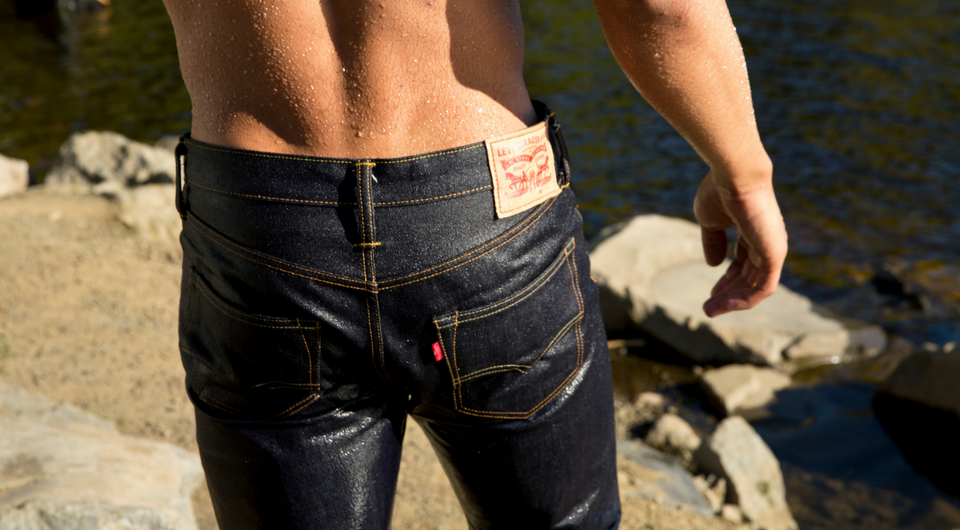
    This authenticity was evident in every decision made during the Gala, starting with the Levi’s Denim Carpet. This innovative centerpiece replaced the traditional red runway with a deep indigo denim sprinkled with the iconic red tab, a subtle yet powerful homage to the brand’s heritage. It represented Levi’s 150-year-old legacy of turning workwear into something functional yet fashionable, ordinary yet iconic.

    Fashion, Music, and Art Fusion

    Levi’s aimed to transcend mere visibility. It sought to establish a presence where its audience already existed – in music, art, and fashion. The Gala offered the ideal environment for this.

    Manly-based musician Don West, known for his effortless cool and natural affinity for denim, was the star attraction of the night. He performed with his seven-piece band, all bedecked in bespoke Levi’s pieces fashioned in collaboration with designer Karen Walker.

    This performance highlighted Levi’s capacity to leverage live culture as a narrative medium – one that amalgamated sound, style, and substance.

    Complementing the concert was a fashion runway featuring designs by RMIT’s top fashion students. Their designs, a fusion of innovation and sustainability, mirrored Levi’s ongoing commitment to nurture young talent and advocate environmentally friendly design.

    Local Connections, Global Resonance

    The NGV Gala partnership reflected Levi’s broader regional strategy: forming meaningful collaborations with local creative communities to expand its cultural influence.

    Levi’s aspired to reflect the diversity and creativity of its consumers in Australia and New Zealand, from collaborating with visual artists to engaging musicians. This strategy aimed to solidify Levi’s enduring presence within Australia’s cultural institutions, ensuring the brand remained not just relevant, but central to the country’s creative dialogues.

    Heritage Melding with Modern Culture

    The NGV’s star-studded exhibition featuring Vivienne Westwood and Rei Kawakubo provided a fitting backdrop. Like Levi’s, both these fashion houses embody a rebellious spirit and a lasting impact on style and identity.

    By the end of the event, it was evident that Levi’s wasn’t merely a sponsor – it was a story weaver. Levi’s impact at the NGV Gala showcased a disciplined strategy founded on authenticity, creativity, and cultural partnerships.

    Questions & Answers

    What was the significance of the Levi’s Denim Carpet at the 2025 NGV Gala?
    The Levi’s Denim Carpet, replacing the traditional red carpet, signified the brand’s deep-rooted connection with the cultural fabric of society. It was also an homage to the brand’s heritage.

    What was the intention behind Levi’s partnership with the NGV Gala?
    Levi’s aimed to establish itself firmly at the crossroads of culture in the Australasian region, positioning itself as a proactive player in shaping modern creativity.

    How did Levi’s reflect its commitment to authenticity and creativity at the Gala?
    Levi’s showcased its commitment to authenticity and creativity by creating meaningful collaborations with local creative communities, nurturing young talent, advocating environmentally friendly design, and leveraging live culture as a narrative medium.
  • Nokia Unveils Autonomous Networks Fabric: A Game-Changer in AI-Driven Automation for Retail Innovation

    Nokia Unveils Autonomous Networks Fabric: A Game-Changer in AI-Driven Automation for Retail Innovation

    Nokia has unveiled its Autonomous Networks Fabric, a groundbreaking suite of artificial intelligence (AI) models specifically designed for the telecommunications industry. This innovation aims to streamline network automation while empowering operators to effortlessly introduce new services.

    The Fabric of Unified Intelligence

    The Autonomous Network Fabric acts as a cohesive intelligence layer, seamlessly integrating observability, analytics, security, and automation across all network domains. This enables networks to function as a single, adaptive entity, irrespective of the vendor, architecture, or deployment model involved.

    Breaking Free from Legacy Systems

    In recent years, telecom operators have been aspiring to transition to fully autonomous networks. Yet, the burden of outdated systems, siloed processes, and scattered data has been a significant hurdle. Nokia’s Autonomous Network Fabric changes the game by offering an integrated suite featuring cohesive data management, comprehensive observability, and interpretable AI.

    Pioneering Automation

    This revolutionary fabric allows for large-scale automation that minimizes complexity. It facilitates reliability improvements and operational cost savings by enabling operators to swiftly test new concepts and incorporate those that yield effective results. What does it mean for customers? Imagine an orchestra where every instrument plays in perfect harmony, and you’re just getting started!

    What Customers Can Expect

    With the Autonomous Network Fabric, clients will enjoy:

    • Unified Data Management: All pertinent network data is systematically collected, curated, and transformed into actionable insights through a data-mesh architecture. Operators have the flexibility to design and create new data products rapidly within a low-code/no-code framework, empowering them to harness AI and machine learning for cutting-edge data assets.
    • 360-Degree Observability: The framework facilitates comprehensive use and distribution of data and AI throughout the organization, ensuring quality and consistency in automation by monitoring the entire chain of data custody.
    • Explainable AI: Telco-trained large language models (LLMs) provide clarity on data interpretation, issue analysis, and rationale behind automated actions through a rich knowledge engine.

    Strategic Partnership with Google Cloud

    The Autonomous Network Fabric will be launched as a software-as-a-service (SaaS) solution on Google Cloud, seamlessly integrating with on-premises setups using Google Distributed Cloud and hybrid cloud environments. It will harness Google Cloud’s generative AI capabilities to offer intelligent workflows for network operations. This includes real-time monitoring, anomaly detection, and effortless resolution of performance issues.

    “As networks become increasingly complex and vulnerable, the demand for fully autonomous systems is on the rise. Good AI is built on quality data, and Nokia’s Autonomous Network Fabric serves as a robust foundation. Our collaboration with Google Cloud merges our extensive network expertise with AI-optimized processes to propel customer success,” remarked Kal De, SVP Product and Engineering, Cloud and Network Services at Nokia.

    By facilitating telecom companies to deploy Nokia’s 5G core network on Google’s cloud infrastructure, the partnership aims to establish an innovative ecosystem where developers can swiftly implement and scale network automation.

    “This marks another pivotal moment in our collaboration with Nokia, focused on enhancing network reliability and proactively addressing issues, turning data into valuable insights for consistent and high-performance networks,” said Muninder Singh Sambi, Vice President and General Manager, Networking and Security at Google Cloud.

    Questions & Answers

    What is Nokia’s Autonomous Networks Fabric?
    Nokia’s Autonomous Networks Fabric is a suite of AI models and integrated security designed to streamline network automation in the telecommunications sector, helping operators roll out services more efficiently.

    How does this solution help telecom operators?
    It allows operators to overcome barriers posed by legacy systems, offering unified data management and comprehensive observability to enhance network reliability and reduce operational costs.

    What role does Google Cloud play in this initiative?
    Google Cloud supports the deployment of the Autonomous Network Fabric, leveraging its AI tools to enable intelligent workflows and facilitate rapid scaling of network automation.

  • Fabric origin a problem for textile firms seeking to benefit from EU trade deal

    Fabric origin a problem for textile firms seeking to benefit from EU trade deal

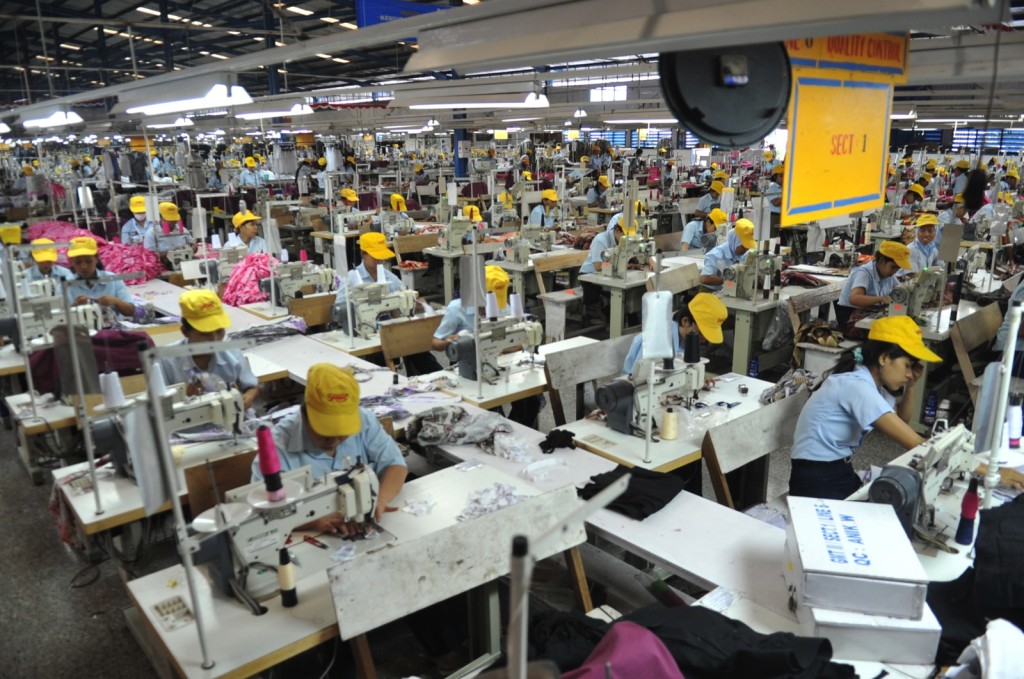
    With Vietnam not producing enough or competitively priced raw materials for the textile industry, its companies are struggling to fully benefit from the EVFTA. The lack of fabric production in the country means businesses are unable to meet origin requirements to enjoy tax incentives, SSI Securities Corporation said. To do so, they need to use domestically produced fabrics or imports from countries that have free trade deals with the E.U., it added.

    But Vietnam depends on China for 60-70 percent of its textile feedstock, and fabrics imported from South Korea account for only 15 percent of the total requirement.

    The E.U.-Vietnam Free Trade Agreement, which took effect on August 1, has strict rules of origin for goods exported to the bloc.

    Under its provisions, 77.3 percent of Vietnam’s textile exports it will enjoy zero percent tax within the first five years while the rest follow a seven-year roadmap.

    The EVFTA is the E.U.’s second trade deal with an ASEAN member country after one with Singapore, and one of the few with a developing country.

    It will see Vietnam eliminate 99 percent of its import duties over 10 years and the E.U. doing the same over seven.

    Before the deal was signed, Vietnam’s garment and footwear exports to Europe were given preferential treatment under the Generalized System of Preferences (GSP) program, with a 9.6 percent tariff on the former.

    For the first two years enterprises can choose to continue to be taxed under the GSP program or EVFTA. From the third year, if a company does not meet the rules of origin as stipulated in the deal, the tariff rate will increase to 12 percent.

    The Vietnam National Textile and Garment Group (Vinatex) said the tax incentives under EVFTA are not attractive enough for businesses to switch from Chinese to Vietnamese fabrics since the former are 10-40 percent cheaper and delivered faster due to the scale of production.

    China’s textile and dyeing industry has a capacity of 80 billion meters of fabric a year while Vietnam’s is 2.5 billion meters against a demand of eight billion meters.

    But SSI believed that in the long run Vietnam needs to develop its own industry and ensure sufficient scale to compete on cost with China.

    There are around 6,800 textile and garment businesses in the country and their exports were worth $32.85 billion last year.

  • H&M launches menswear clothing line using intelligent fabrics

    H&M launches menswear clothing line using intelligent fabrics

    Sweden fashion retailer H&M launches an intelligent fabric this week, deploying fashion technology for menswear which keeps the wearer cool in the summer heat.

    Called Coolmax, the intelligent fabric absorbs moisture and allows air to pass through.

    “We see fabric innovation as pushing menswear forwards in new ways,” said Ross Lydon, head of menswear design at H&M. “Coolmax is our first collection that optimizes everyday clothing with high-performance materials. It is a segment of the market that we will continue to explore and focus on in the future.”

    Coolmax fabric will be used in clothing such as polo shirts and crewneck T-shirts or jeans. The hero of the new Coolmax collection is a two-button tailored slim-lapel jacket, pictured at the top of the screen, which retails for 69.99. T-shirts are priced at €9.99 and polo shirts at 14.99.

  • Second UNIQLO and alexander wang Collaboration Collection to Feature New AIRism Fabric

    Second UNIQLO and alexander wang Collaboration Collection to Feature New AIRism Fabric

    UNIQLO, the Japanese global apparel retailer, announces that it will begin rolling out a Spring/Summer 2019 collaboration collection with alexanderwang from Friday, April 12. The full collection will be available online and at Orchard Central Global Flagship Store, while selected items will be available in all stores. This second partnership with alexanderwang builds on the LifeWear commitment to making life better, bringing together the exceptional functionality of UNIQLO’s innovative AIRism fabric with alexanderwang’s sleek styling.

    Speaking ahead of the launch, Alexander Wang said, “Working with UNIQLO on the second season of the collaboration felt like there was a mutual understanding of not only aesthetics but of each other’s work ethic. It was easier coming together this time round to accomplish a similar goal from various touch-points. Innovation has always been at the forefront of our design and creative process, and functionality serves a huge purpose in the way our customers and I dress. Therefore, through the influence of innovation, technology and functionality, this special AIRism collection was born.”

    Keeping women comfortably stylish

    The collection adds new value to LifeWear by combining the year-round comfort of functional AIRism apparel with the signature alexanderwang look. Five of the 11 women’s items employ the sheerest-ever AIRism fabric, developed to feel like a “second skin.” During summer, women can enjoy camisoles and slips featuring a fabric so smooth, light and comfortable that they almost forget they are wearing them. Another fabric used in the women’s collection is a proprietary, new, seamless type of AIRism that is designed for both indoor and outdoor use. This new AIRism fabric is supportive but not constrictive, and is a perfect material for bras and even shorts to maintain comfort.

    First-ever cotton blend AIRism for men

    Men’s items include T-shirts and tank tops that incorporate a new fabric comprising a premium cotton finish and an AIRism interior. The fabric feels smooth and comfortable and is sufficiently thick so these innerwear items can also serve as regular outerwear. The men’s boxer briefs also use this fabric to enhance comfort on hot summer days. As seen in the previous season, the waistband is also adorned with the collaboration logo that wearers could casually show.

  • Recycled-plastic fabric launched by Esprit

    Recycled-plastic fabric launched by Esprit

    A special capsule collection for women and men featuring recycled-plastic fabric has been launched by Esprit.

    The Good Collection includes classics like a denim jacket, pencil skirt with straps, oversized sweatshirt with school logo, culottes, rain cape, bomber jacket, knit styles with humorous all-over letter print or striped longsleeves with the brand’s logo, as well as denim in trendy silhouettes and washings.

    In total, there are 21 articles for women and 15 for men available, ranging from tee-shirts to a knit dress.

    The company describes it as a stylistic tribute to the brand’s beginnings, saying Esprit’s basic manifesto has always included an awareness for mankind and the environment, long before terms like “sustainability” or “social conscience” came along. Consequently, much of the collection features natural styles made from organic cotton or recycled materials such as cellulose (PET).

    Susie Bell and Doug Tompkins started Esprit in California in 1968, and as children of the hippie and peace movements regarded compliance with social and environmental aspects as normal.

  • Birlas to merge Madura Clothes into Pantaloons Trend

    Birlas to merge Madura Clothes into Pantaloons Trend

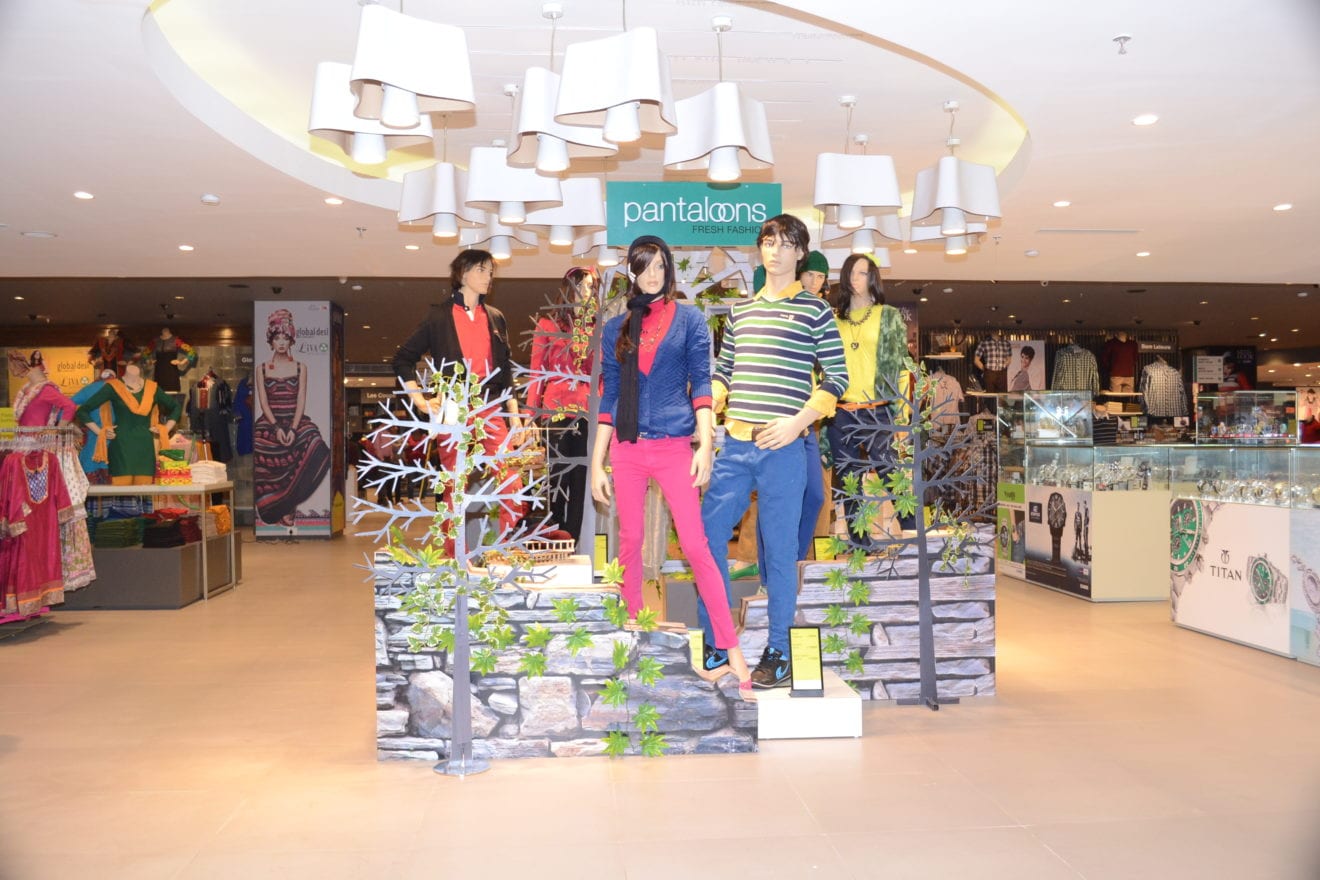
    The Kumar Mangalam Birla-controlled group on Sunday introduced a plan to merge its Aditya Birla Nuvo Ltd (ABNL)-operated trend retailing enterprise with Pantaloons Trend & Retail. This can create India’s largest branded attire participant, valued at Rs 12,000 crore.

    In accordance with the plan, Madura Trend (the branded attire retail division) and Madura Way of life (the posh branded attire retailing arm of ABNL) will probably be demerged into Pantaloons Fashions, a listed subsidiary of the group.

    After the restructuring, Pantaloons Style might be renamed Aditya Birla Trend & Retail Restricted, and have 1,900 shops throughout India. The mixed entity may have a debt of Rs 1,775 crore, after loans of about Rs 475 crore can be handed from Madura to Pantaloons.

    Underneath the merger plan, ABNL shareholders will get 26 new fairness shares of Pantaloons for each 5 ABNL fairness shares held, following the demerger of Madura Style. Equally, shareholders of Madura Clothes will get seven new fairness shares of Pantaloons for each 500 Madura Garment fairness shares held, pursuant to the demerger of Madura Way of life. The choice shareholder of Madura Clothes Way of life will get one new fairness share of Pantaloons. After the deal, Pantaloons’ fairness base will improve from 92.eight million to 772.eight million shares.

    “The thought is to unlock worth for our shareholders in each ABNL and Pantaloons Style,” stated Aditya Birla Group Chairman Kumar Mangalam Birla. He additionally stated style retailing was doing much better than the nation’s financial system, with the mixed entity’s income rising by 40 per cent and Ebitda by 43 per cent, prior to now two years.

    Normal Chartered Financial institution was the advisor for the transaction, and Worth Waterhouse & Co LLP and Bansi S Mehta & Co have been the valuers.

    With this restructuring, an ABNL shareholder holding 100 shares will get 520 Pantaloons shares, along with the 100 ABNL ones. The promoters will personal near a 60 per cent stake in Pantaloons after the restructuring, in contrast with the current 72 per cent. The group determined to maintain its ‘Extra’ branded grocery shops out of the merger scheme, and stated it might not supply any stake within the new firm to non-public fairness gamers.

    “This consolidation will create India’s largest pure-play trend & way of life firm, with a robust bouquet of main style manufacturers and retail codecs. This transfer brings India’s number-one branded menswear and womenswear gamers collectively,” the chairman stated. He added the corporate’s inner accruals have been sufficient to fund its progress plans and the transaction can be accomplished in six to 9 months.

    “Buyers of ABNL had been asking for a demerger for a very long time. This entity will create the most important pure-play trend firm within the nation and take away the holding firm low cost of ABNL,” Kumar Mangalam Birla stated. The Pantaloons model will proceed on the degree of shops, whilst the corporate’s identify will change. The debt-to-equity ratio of Pantaloons will enhance after the scheme.

    “This may also convey all branded attire companies beneath one roof, speed up the expansion of those companies, and assist exploit rising alternatives introduced by the quickly rising Indian attire market,” stated Pranab Barua, the group’s enterprise director (attire & retail enterprise).

    The consolidation would additionally allow tapping of operational synergies on numerous fronts, reminiscent of sourcing, actual property and know-how platforms, the group stated in a press release.

    Commonplace Chartered Financial institution was the advisor for the transaction whereas Worth Waterhouse & Co. LLP and Bansi S. Mehta & Co have been the valuers.