Tag: face

  • Facebook reportedly tested a facial recognition app

    Facebook reportedly tested a facial recognition app

    It would be interesting to see how many people flat out don’t trust Facebook. This is the company that got fined $5 billion by the Federal Trade Commission (FTC) for failing to adhere to a consent decree it signed back in 2011. The terms of the consent decree prevented Facebook from using member profiles without the express consent of subscribers. In 2015-2016 Aleksandr Kogan, a Russian-American professor at Cambridge University, collected profiles through the use of an app he developed ostensibly for research purposes. But Kogan sold as many as 87 million user profiles to a company called Cambridge Analytica, which was hired by the Trump campaign to turn the data into information that it could use.

    As recently as the first day of this year, an organization called Privacy International issued a report claiming that certain Android apps sent users’ personal information to Facebook. The social-media site allegedly received this personal data even if the user did not have a Facebook account.

    What brings up Facebook’s apparent inability to keep members’ private data private is a report from Business Insider stating that the company had developed a facial recognition app between 2015 and 2016 that was developed for employees. The app was never released to consumers and has been discontinued. The frightening thing about the system is that according to one source, it could identify any Facebook member if enough data about the member was available. The app was in the early stages of development, according to the report. Facebook employees with the app installed on their phones could point the camera at a person and seconds later the display would show their name and Facebook profile photo.

    Last year, a lawsuit against Facebook was certified as a Class Action meaning that several similar suits were consolidated into one. The plaintiffs claimed that the app was using facial recognition on their phones without permission. Since 2010, the company had been collecting facial templates based on users’ physical characteristics in order to show members’ names in photographs. But the plaintiffs say that this violates the 2008 Illinois Biometric Information Privacy Act which prohibits companies from collecting and storing biometric data without permission. Facebook’s defense is that facial templates do not count as biometric data. This feature remains on the app, and when someone “tags” a Facebook subscriber in a photo it links back to the subscriber’s Facebook profile. This feature used to be enabled by default on the app, but users must now opt-in.

    Facebook is also reportedly developing its own AI assistant similar to Google Assistant, Siri and Alexa. The company would use it for its Portal line of smart displays; currently, the Portal speakers use Amazon’s Alexa digital helper. Back in 2015, Facebook did add such a feature for the Messenger app which it called “M.” While “M” used AI to answer certain questions, those it couldn’t handle were sent to a call center manned by humans. In January 2018, Facebook eliminated the feature.

    Meanwhile, Facebook is one of four tech firms (along with Apple, Google, and Amazon) that is being investigated by the House of Representatives’ Judiciary Committee for possible antitrust violations. Just this past week, the committee released written responses from the four tech firms to questions it asked each of the companies. Facebook admitted in its reply that it dropped certain apps from its developer platform if they competed with Facebook’s own features. As an example, the company admitted that it dropped Vine, Twitter’s now-defunct app that created six-second video loops. Facebook said that Vine was a copy of its News Feed. Committee members also wanted to know the “exact circumstances” behind Facebook’s decision to drop apps like Phhhoto, MessageMe, Voxer, and Stackla. The company said that it “will restrict apps that violate its policies.”

    If Facebook cannot be trusted with personal and biometric data, we should be breathing a sigh of relief that it stopped developing the aforementioned facial recognition app. Or did it? Can we believe Facebook when they say that it is no longer developing such a tool?

  • DFS Group enables WeChat facial-recognition payments in Macau

    DFS Group enables WeChat facial-recognition payments in Macau

    DFS Group has become the first international retailer to activate WeChat facial-recognition payment outside Mainland China.  Authorized by the government of Macau, DFS Group has trialed 10 WeChat facial-recognition devices at T Galleria DFS.

    After Macau success, T Galleria Beauty by DFS in Hong Kong’s Causeway Bay will be the next store to enable the new payment system.

    “WeChat facial-recognition payment has become the predominant form of digital payment amongst key retail market players in Mainland China, further closing the gap between the online and offline experience,” said Zac Coughlin, a chief financial officer at DFS Group. “We are immensely proud to become the very first global merchant outside Mainland China to enable WeChat Facial Recognition Payment, as part of our commitment to constantly adapt to the ever-evolving needs of our customers.”

    With the facial-payment technology, DFS and WeChat aim to enhance their customers’ experience by doing away with QR codes.

    WeChat facial-recognition payment is only available to customers with a valid Chinese form of identification.

  • Fave launches takeaway platform in Singapore

    Fave launches takeaway platform in Singapore

    Southeast Asian digital merchant-platform Fave has launched a food takeaway service in Singapore.

    Fave Takeaway will allow customers to pre-order their meal selection and make payment via the app’s digital wallet FavePay before picking up their order at participating stores. Customers can expect to collect their order within 30 minutes (or less) depending on the restaurants’ speed of service.

    Takeaway is part of Fave’s strategy to further digitize Southeast Asia’s F&B sector by allowing merchants to serve more customers beyond the capacity of their outlets while diversifying their revenue streams and increasing productivity.

    “As the [Singapore] government continues to push for a digital and seamless economy, Fave is helping SMEs adapt to the new landscape and in a more cost-effective way by giving them the tools to enable them to serve their customers in the best and efficient way possible,” said Fave co-founder and CEO Joel Neoh. “The introduction of Takeaway is our way of enabling that our merchants get the most out of the platform by increasing productivity and revenue.”

    “Queueing makes up a large portion of the average Singaporean’s time, but it is not something we would want to do when we are in a rush,” said Fave Singapore MD Ng Aik-Phong. “With the introduction of Takeaway, we hope to bring convenience and efficiency to our consumers while improving our platform for both merchants and consumers.”

    More than 200 merchants are participating in the launch of Takeaway with more to follow in the coming months.

    The new feature follows the launch of Fave’s Table Ordering service in May this year.

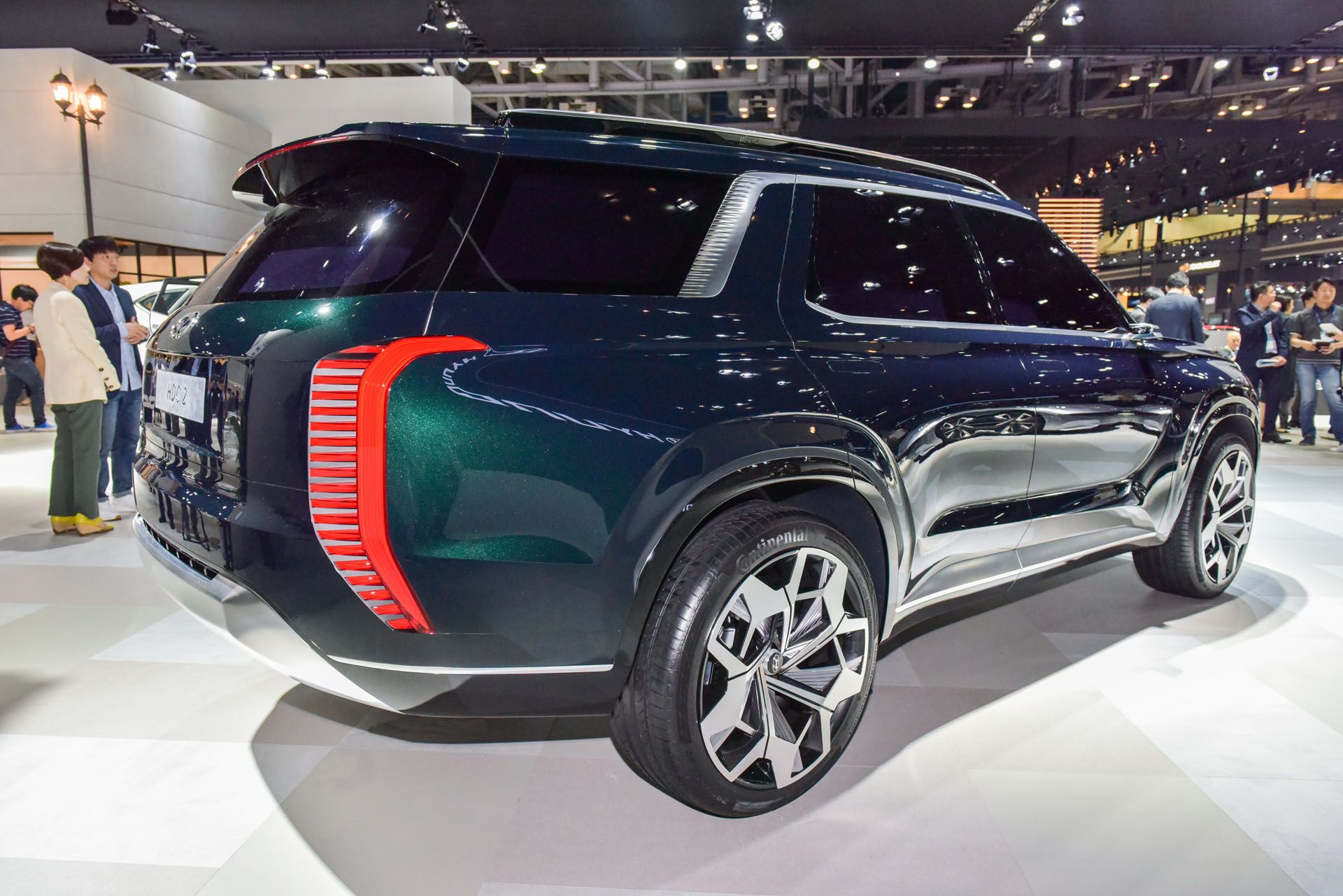
  • BTS to promote new Hyundai Palisade SUV

    BTS to promote new Hyundai Palisade SUV

    Global K-pop sensation BTS has been chosen as the face of Hyundai Motor’s new large Palisade SUV, which will premiere at the upcoming LA Auto Show. The carmaker said Tuesday that it has appointed the seven-member boy band as the global ambassadors for the vehicle. The group will introduce the car in a video to be shown at the auto show today.

    According to Hyundai Motor, the group’s explanation will focus on the large SUV’s spacious interior and the convenient features found throughout its three rows of seats.

    “Hyundai Motor appointed BTS as the global brand ambassador of the Palisade as the K-pop group was considered the most suitable to introduce the new vehicle that is throwing the gauntlet down in the large SUV market,” the company said in a statement Tuesday.

    “The group will be able to deliver the greatly spacious interior of the Palisade, which is able to accompany seven to eight people.”

    Hyundai Motor said it would live stream the premiere on the automaker’s Facebook page. It will also post a range of videos featuring BTS and the Palisade on its social media accounts.

  • New iPhone brings face recognition to the masses

    New iPhone brings face recognition to the masses

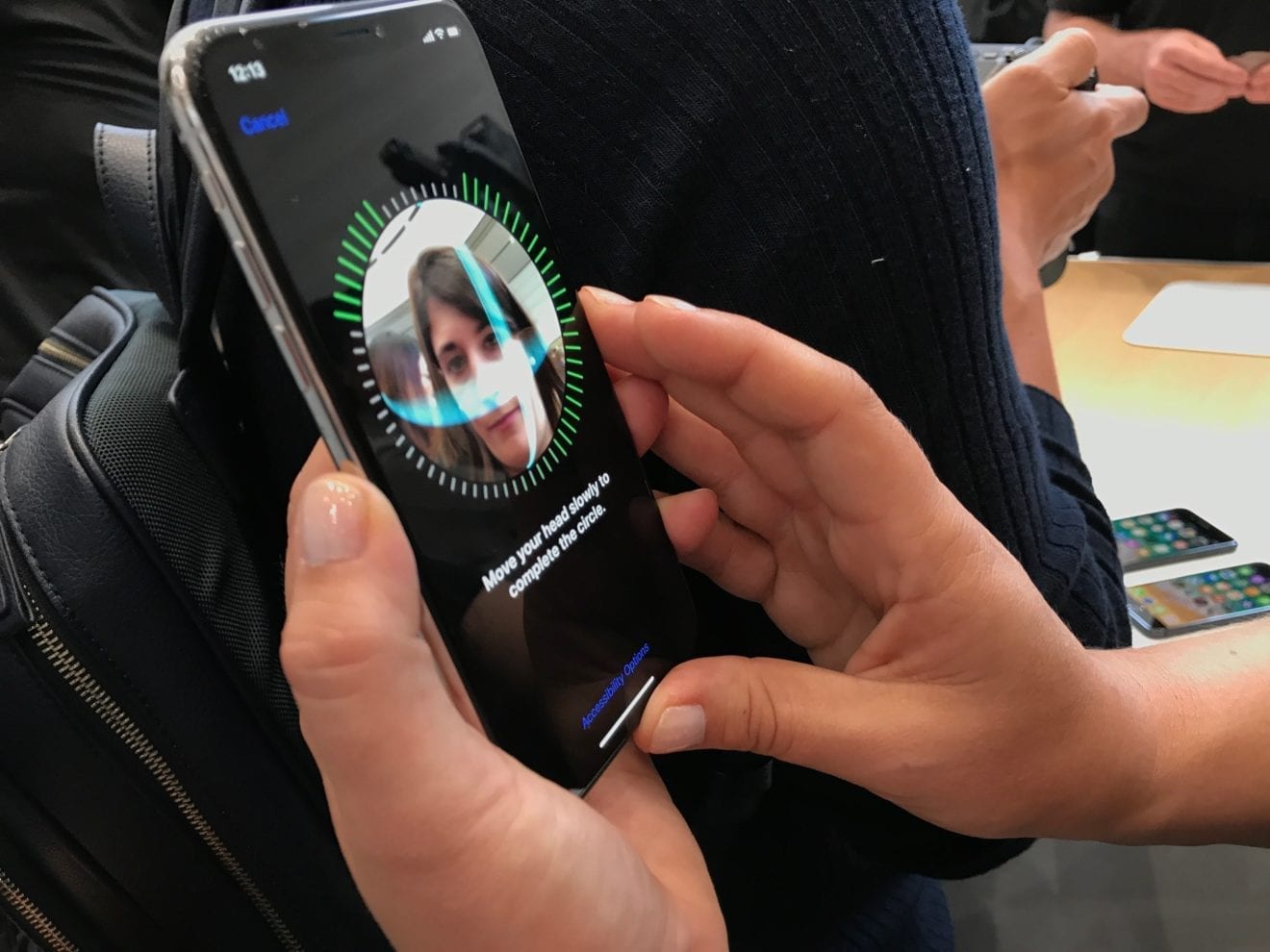
    While other devices have offered facial recognition, Apple is the first to pack the technology allowing for a three-dimensional scan into a hand-held phone. Apple will let you unlock the iPhone X with your face — a move likely to bring facial recognition to the masses, along with concerns over how the technology may be used for nefarious purposes.

    Apple’s newest device, set to go on sale November 3, is designed to be unlocked with a facial scan with a number of privacy safeguards — as the data will only be stored on the phone and not in any databases.

    Unlocking one’s phone with a face scan may offer added convenience and security for iPhone users, according to Apple, which claims its “neural engine” for FaceID cannot be tricked by a photo or hacker.

    While other devices have offered facial recognition, Apple is the first to pack the technology allowing for a three-dimensional scan into a hand-held phone.

    But despite Apple’s safeguards, privacy activists fear the widespread use of facial recognition would “normalize” the technology and open the door to broader use by law enforcement, marketers or others of a largely unregulated tool.

    “Apple has done a number of things well for privacy but it’s not always going to be about the iPhone X,” said Jay Stanley, a policy analyst with the American Civil Liberties Union.

    “There are real reasons to worry that facial recognition will work its way into our culture and become a surveillance technology that is abused.”

    A study last year by Georgetown University researchers found nearly half of all Americans in a law enforcement database that includes facial recognition, without their consent.

    Civil liberties groups have sued over the FBI’s use of its “next generation” biometric database, which includes facial profiles, claiming it has a high error rate and the potential for tracking innocent people.

    “We don’t want police officers having a watch list embedded in their body cameras scanning faces on the sidewalk,” said Stanley.

    Clare Garvie — the Georgetown University Law School associate who led the 2016 study on facial recognition databases — agreed that Apple is taking a responsible approach but others might not.

    “My concern is that the public is going to become inured or complacent about this,” Garvie said.

    Advertisers, police, porn stars 

    Widespread use of facial recognition “could make our lives more trackable by advertisers, by law enforcement and maybe someday by private individuals,” she said.

    Garvie said her research found significant errors in law enforcement facial recognition databases, opening up the possibility someone could be wrongly identified as a criminal suspect.

    Another worry, she said, is that police could track individuals who have committed no crime simply for participating in demonstrations.

    Shanghai and other Chinese cities have recently started deploying facial recognition to catch those who flout the rules of the road, including jaywalkers.

    Facial recognition and related technologies can also be used by retail stores to identify potential shoplifters, and by casinos to pinpoint undesirable gamblers.

    It can even be used to deliver personalized marketing messages — and could have some other potentially unnerving applications.

    Last year, a Russian photographer figured out how to match the faces of porn stars with their social media profiles to “doxx” them, or reveal their true identities.

    This type of use “can create huge problems,” said Garvie. “We have to consider the worst possible uses of the technology.”

    Apple’s system uses 30,000 infrared dots to create a digital image which is stored in a “secure enclave,” according to a white paper issued by the company on its security. It said the chances of a “random” person being able to unlock the device are one in a million, compared with one in 50,000 for its TouchID.

    Legal battle brewing 

    Apple’s FaceID is likely to touch off fresh legal battles about whether police can require someone to unlock a device.

    FaceID “brings the company deeper into a legal debate” that stemmed from the introduction of fingerprint identification on smartphones, according to ACLU staff attorney Brett Max Kaufman.

    Kaufman says in a blog post that courts will be grappling with the constitutional guarantees against unreasonable searches and self-incrimination if a suspect is forced to unlock a device.

    U.S. courts have generally ruled that it would violate a user’s rights to give up a passcode because it is “testimonial” — but that situation becomes murkier when biometrics are applied.

    Apple appears to have anticipated this situation by allowing a user to press two buttons for two seconds to require a passcode, but Garvie said court battles over compelling the use of FaceID are likely.

    Regardless of these concerns, Apple’s introduction is likely to bring about widespread use of facial recognition technology.

    “What Apple is doing here will popularize and get people more comfortable with the technology,” said Patrick Moorhead, principal analyst at Moor Insights & Strategy, who follows the sector.

    “If I look at Apple’s track record of making things easy for consumers, I’m optimistic users are going to like this.”

    Garvie added it is important to have conversations about facial recognition because there is little regulation governing the use of the technology.

    “The technology may well be inevitable,” she said.

    “It is going to become part of everyone’s lives if it isn’t already.”