Tag: factory automation

  • TSMC Explores Rare-Earth Alternatives for Factory Machinery

    TSMC Explores Rare-Earth Alternatives for Factory Machinery

    TSMC is exploring alternatives to rare-earth components across its factory equipment to curb risks that Beijing’s export controls could disrupt plants manufacturing the world’s most advanced chips, three people familiar with the matter said.

    The world’s largest contract chipmaker surveyed automation suppliers on using rare-earth-free motors after China placed certain rare-earth materials, magnets and processing technology under export licensing rules last year.

    A shortage of specialised magnets in factory motors threatens chip output for AI systems, smartphones and data centres, though talks remain early and TSMC declined to comment.

    Supply Checks on Factory Floor Motors

    Specialised magnets made with rare earths drive precision motors in automated wafer-handling systems and cleanroom equipment. Without these components, high-throughput manufacturing lines ground to a halt, cutting off output bound for smartphone makers, consumer tech brands and data centre operators. TSMC has approached equipment suppliers to gauge whether alternative motor designs can match current production tolerances without relying on Chinese materials.

    Talks remain at an early phase and have not triggered wide equipment replacements across operational plants. TSMC declined to comment on vendor communications.

    Vulnerabilities in Advanced Electronics Pipelines

    Hardware brands across Asia track fabrication inputs closely because component disruptions cascade rapidly into consumer hardware shortages. A bottleneck in factory machinery slows capacity additions for cutting-edge nodes, lifting wafer costs and tightening component supply for consumer electronics brands already balancing thin margins.

    For equipment vendors, redesigning factory tools without rare-earth magnets requires heavy engineering adjustments. Permanent magnets provide the highest torque density for compact industrial robotic arms, meaning substitutions often demand larger machinery footprints or reduced operating speeds. Capital expenditure across upcoming wafer fabrication projects in Taiwan and the United States will reflect the cost of these redesigns.

    Government Initiatives Back Mineral Independence

    Export restrictions imposed by Beijing last year placed several rare-earth materials, industrial magnets and associated extraction tech under strict licensing regimes. The regulatory clampdown prompted tech-heavy economies across the Pacific to fund alternative supply chains and local extraction capacity.

    In June, American Institute in Taiwan director Raymond F. Greene confirmed that Washington is coordinating with Taipei to secure critical minerals and build domestic processing capacity. Domestic efforts are also expanding inside Taiwan. In February, Economy Minister Kung Ming-hsin said the government would support the Industrial Technology Research Institute to establish a pilot production facility within three years to meet an estimated 50 percent of domestic rare-earth demand.

    The state-backed research institute confirmed it is working with the Ministry of Economic Affairs on an execution plan for the mineral initiative.

  • Rajby Textiles Opens 500,000-Piece Denim Plant in Karachi

    Rajby Textiles Opens 500,000-Piece Denim Plant in Karachi

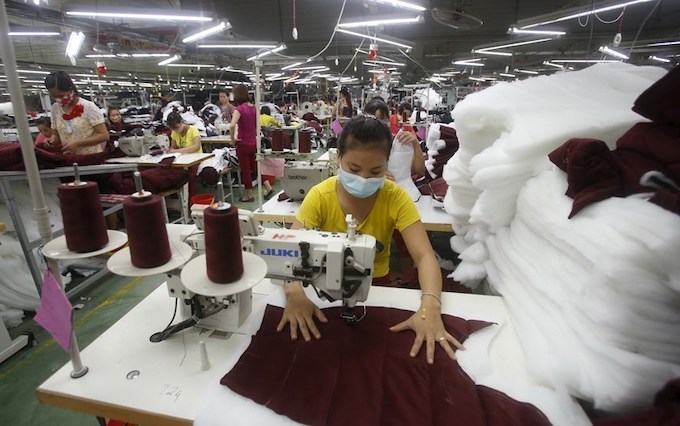
    Rajby Textiles Pvt. Ltd. Opened a garment manufacturing facility in Karachi, adding initial capacity for 500,000 finished denim pieces per month.

    A planned second phase will double output to 1 million pieces monthly, fed directly by the company’s existing mill that weaves 3.2 million meters of denim fabric each month.

    Automation on the Factory Floor

    The Karachi unit incorporates automated spreaders, pocket setters, automatic hemmers and loop attachers to accelerate assembly times and maintain stitch uniformity across bulk production runs. Finishing operations rely on Jeanologia ozone systems, laser distressing equipment and industrial washers engineered for lower resource consumption.

    Integrating garment assembly with on-site fabric milling removes transit delays between raw material production and cut-and-sew operations. The shift turns Rajby into a fully vertical supplier for international apparel labels seeking shorter order lead times in South Asia.

    “For over 50 years, [Rajby Textiles](https://wwd.com/sourcing-journal/sj-denim/adriano-goldschmied-relaunches-house-of-gold-rajby-textiles-filippo-donati-1238822229/) has built its reputation on manufacturing excellence, quality, and continuous innovation,” said Daniyal Saleem, CEO at Rajby Textiles. “With this new garment facility, we are bringing that same commitment to the finished product. By combining modern automation with sustainable technologies, we are offering our global brand partners an integrated, responsible, and agile supply chain.”

    Shifting Pressure to Vertical Hubs

    Global clothing retailers continue to consolidate their vendor rosters, favoring South Asian manufacturers that control spinning, weaving and sewing under a single corporate umbrella. Fragmented supply chains that ship yardage between disparate subcontractors face rising freight expenses and compliance penalties from European and North American buyers.

    Pakistani denim exporters are racing to match integrated rivals in Bangladesh and India by adding downstream stitching operations. The risk sits in execution: running high-speed garment lines demands tighter labor coordination and rapid turnaround on seasonal design changes than bulk fabric production ever required.

    Environmental Targets and Water Treatment

    To align the new sewing floor with brand sourcing rules, Rajby is upgrading its wastewater infrastructure. The company is retrofitting its effluent treatment plant with moving bed biofilm reactor biological and tertiary systems to meet the Zero Discharge of Hazardous Chemicals Progressive standard.

    Plant managers have scheduled installation of a wastewater recycling system designed to reclaim 30 per cent of process water by 2027. The company calculates that initial threshold will save volume equal to the daily water consumption of 17,280 people.

    Power Generation and Waste Milestones

    Rooftop solar generation will supply 800 kilowatt-hours of power directly to the apparel unit, cutting site-level emissions by 25 per cent. Management set an interim target to reduce total greenhouse gas emissions across the garment division by 50 per cent by 2030.

    The apparel plant builds on earlier energy systems installed at the fabric mill, which uses biomass boilers and waste heat recovery units to generate 95 per cent of its industrial steam from renewable inputs. The broader roadmap calls for achieving 100 per cent wastewater recycling and zero manufacturing waste sent to landfill across the Karachi complex by 2030.

  • Dongfeng Motor to Begin Trial Humanoid Robot Production at Year-End

    Dongfeng Motor to Begin Trial Humanoid Robot Production at Year-End

    Dongfeng Motor plans to begin small-batch trial production of its humanoid robot at the end of this year, aiming to bring its working capabilities on par with human workers by the end of next year.

    The humanoid robot will enter manufacturing factories in October to handle sorting and quality inspection tasks, according to Zhang Zhenlin, chief engineer of intelligent technology at Dongfeng.

    Factory Sorting and Showroom Patrols

    Development covers two distinct platforms: a bipedal humanoid named Xiaodong and a quadruped model called Yuanzai. Both debuted at the 2026 World Robot Conference in August this year.

    Xiaodong handles material sorting inside automotive manufacturing plants. Over time, the system will move from single repetitive tasks to autonomous factory floor operations.

    Commercial rollout begins earlier for Yuanzai. The quadruped will handle customer guidance in auto dealerships, campus patrols, and facility monitoring through onboard multimodal perception and autonomous navigation.

    Cross-Sector Technology Sharing

    Chinese automakers are applying EV software architectures and artificial intelligence models directly to robotics hardware. Dongfeng chief engineer of intelligent technology Zhang Zhenlin said developing embodied intelligence lets teams reuse automotive large-model technology and speed up commercialization.

    Automakers’ development of embodied intelligence products allows technology to be reused across multiple areas such as automotive large models, thereby speeding up commercialization and mass production.

    Overlapping supply chains give carmakers immediate access to batteries, vision sensors, and assembly infrastructure. Factory operators expect the humanoid units to reduce assembly costs while running round-the-clock inspections on vehicle lines.

    The Competitive Field in China

    Dongfeng is not alone in the push. Several domestic EV makers have built dedicated robotics divisions to automate shop floors and sell commercial hardware.

    Xpeng opened a humanoid robot production line on September 8, 2026. It plans mass production of its Iron robot by late 2026, with customer deliveries starting in 2027. Chery-backed Aimoga Robotics has shipped more than 3,000 units globally and is preparing an IPO. Li Auto, Seres, and Leapmotor have also put capital into embodied AI development this year.

    Capital Allocation and Global Goals

    Robot deployment fits into a wider overseas expansion budget. Dongfeng plans to invest 50 billion yuan ($7.41 billion) internationally to launch more than 50 vehicle models.

    Under a roadmap presented by deputy general manager Zhou Feng, the company will build 10 assembly plants and five research hubs outside China. Dongfeng targets 1.5 million overseas vehicle sales annually by 2030, using Xiaodong’s 15-month trial run as the baseline test for broader automation.