Retail News CRM

Tag: fare

  • AirAsia studying possibility of increasing airfares

    AirAsia studying possibility of increasing airfares

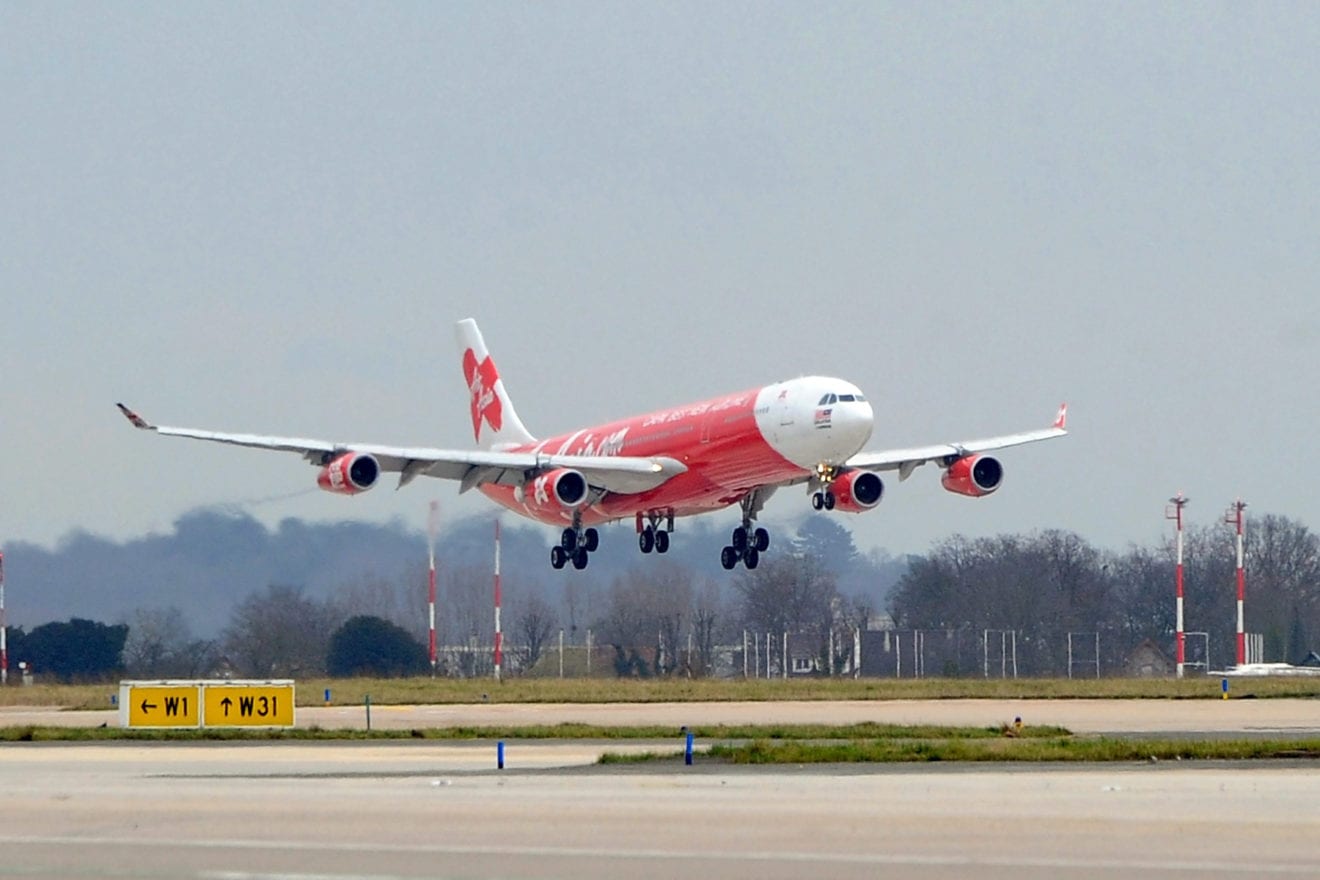
    Low-cost airline AirAsia Bhd is studying the possibility of increasing its airfares in the future, following the implementation of the Conditional Movement Control Order (CMCO). Executive chairman Datuk Kamarudin Meranun said discussions are ongoing to decide if there is an urgent need for AirAsia to increase its airfares in the future.

    “Even if there is an increase, it will not be significant.

    “At the moment, we do not know exactly how much the increase would be (if any) as we do not know the total number of AirAsia aircraft that would be allowed to operate during the CMCO,” he told reporters after the launch of the group’s charity campaign, “Derma Dengan Ikhlas” here today.

    On Tuesday, some local carriers warned that passengers will likely have to pay over 50% or more for airfares if social distancing is implemented onboard aircraft, as proposed by the International Air Transport Association (IATA) in view of the Covid-19.

    Malaysia Airlines Bhd and Malindo Air said the need for social distancing among passengers would result in a spike in airfares by up to 54%.

    Malaysia Airlines said this was seen in Thailand after its government-regulated empty seating between passengers, which resulted in domestic fares increasing by over 50%.

    “We will continue to drive dynamic pricing based on capacity and demand. Promotions will surely be ascertained periodically as and when it is feasible.

    “We expect customers to be more concern about safety and security,” it said in a news report yesterday.

    Kamarudin said the increase of fares would be subject to costs and AirAsia would try as much as possible not to increase its fares so as not to burden passengers.

    “Our intention is resuming flight (operations) is to ensure that operations can continue and not because we are aiming for profit, as, in the current challenging situation, it is difficult for airline companies to make a profit.

    “As long as we can pay for management costs such as maintenance and so on, it is sufficient,” he said.

    He said the operation of airline companies is subjected to government directives, hence, all plans will have to comply with the government’s decision, especially during the CMCO.

    “So, when we made a plan and when the announcement by the government is not in line with our plans, we have to change it,” he said.

    Meanwhile, Kamarudin said AirAsia has used RM50,000 from its contribution fund to purchase essential goods from ST Rosyam Mart supermarket to be distributed to more than 1,000 families and various communities, including single mothers, non-governmental organizations, mosques and welfare organizations.

    “So far, we have provided assistance to more than 50 locations and we realized that there are more communities that are in need of such assistance,” he said.

    The airline had launched a public digital donation drive on April 5 and has managed to raise RM911,000 to date.
  • AirAsia 3.0 to help save cost and enhance revenue

    AirAsia 3.0 to help save cost and enhance revenue

    After two years of working closely with Google and other data companies, AirAsia expects cost savings and revenue enhancement beginning next year. Group CEO Tan Sri Tony Fernandes told a group of analysts during AirAsia 3.0 investor day that he expected about 4% less fuel burnt after crunching numbers and using the right aircraft for specific routes. With hundreds and hundreds of other fuel initiatives including spare parts, he is looking at 10% to 15% cost savings by the end of 2020.

    All these initiatives to save costs and enhance revenue are part of the airline’s move towards digitization, which also allows it to be creative in its delivery and offering as well as personalize and segmentize its product offerings. This is made possible by analyzing all the data that it has.

    “On the revenue side, with all the rich data we have, we are able to serve customers better in terms of personalizing all that. We have never done promos, as we normally send e-mails, but now we will be much more proactive in filling up the planes.

    “We also now have the ability to dynamically adjust fares on the spot and all this will help us maximize revenue and save costs,’’ he added.

    As part of the AirAsia 3.0 initiative, the plan is to make the entire journey nicer and comfortable for the traveler while various new initiatives will be introduced.

    An analyst said in a report the AirAsia 3.0 plan would solidify the airline’s business via predictive maintenance, which would result in cost savings by FY20. It will enhance the online user experience by transforming AirAsia.com into all-in-one travel and lifestyle marketplace, facilitated by its mobile payment facility BIGPay.

    The carrier’s cargo arm would cover more networks while eliminating the layers in air cargo fulfillment process, the analyst said.

    Another research house said it “does not expect material earnings contribution in the near term from the implementation of the new business platforms.’’

    A foreign brokerage added that “near-term losses from these new initiatives, which are likely to drag already-thin margins in the core airlines business.’’

    AirAsia, according to Fernandes, has come a long way and was the first to revolutionize the way people travel low cost and used the Internet to sell tickets. But that did not come without skepticism and ridicule.

    Eighteen years on, AirAsia is Asia’s largest low-cost carrier that prides on online options to reach out to travelers. It has flown more than 500 million people and has 260 planes on leaseback arrangements to save cost. Ancillary income accounted for 9% of revenue back in 2008 but now it makes up 21%, or RM2bil, of revenue.

    Fernandes still sets sights on China and is working with a new partner to return to Vietnam. He is also bullish that AirAsia’s Indonesian and Philippine operations will be profitable soon.

    AirAsia group is expected to release its first-quarter 2019 results on May 29. A local research house has forecast core net profit of RM147mil (minus 59% year-on-year).

    “Management has done a good job to retain high load factors in first-quarter 2019. However, yields were exceptionally challenging in Malaysia, India, and Thailand due to softer consumer demand and stiffer competition.

    “We are also concerned on the group’s financial year 2019 growth plan to deploy a net addition of 18 aircraft. There has been no aircraft addition in first-quarter 2019, which implies that all the aircraft will be deployed in the subsequent quarters. We deem this as excessive under the current market conditions,” the research house said.

  • AirAsia abolishes KLIA 2 fee

    AirAsia abolishes KLIA 2 fee

    AirAsia Group Bhd will cease charging the RM3 klia2 fee for all flights departing from Kuala Lumpur International Airport 2 (klia2) starting today. The klia2 fee was introduced in May 2014 to cover the additional cost created at klia2 due to the use of mandatory facilities imposed by Malaysia Airports Holdings Bhd (MAHB) such as aerobridges and SITA check-in and boarding systems, compared to the low-cost carrier terminal previously.

    “Following our announcement last week, we have removed the klia2 fee. We have said from the very beginning that klia2 is not fit for low-cost carrier operations, and we will be going directly to MAHB for all the extra costs they’re costing us,” AirAsia Malaysia CEO Riad Asmat said in a statement.