Retail News CRM

Tag: farmer

  • Fonterra Farmer Shareholders Green-Light $4.22 Billion Consumer Division Sale to Lactalis

    Fonterra Farmer Shareholders Green-Light $4.22 Billion Consumer Division Sale to Lactalis

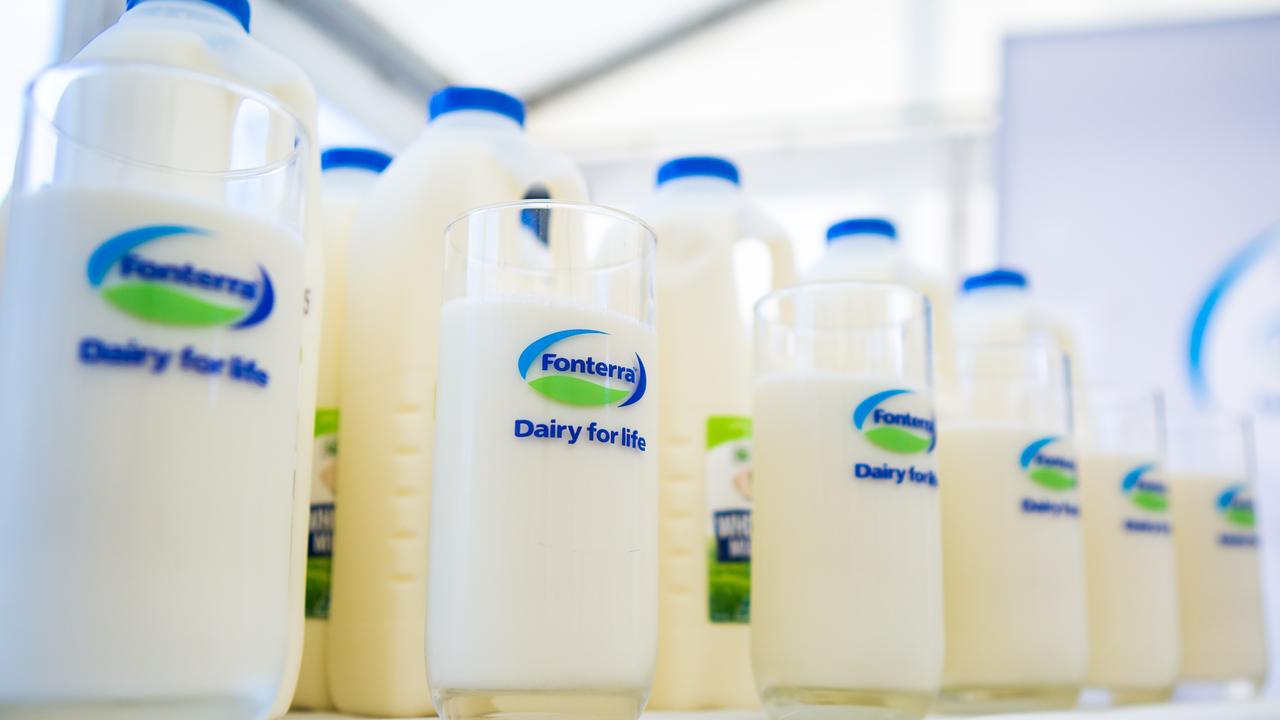
    Fonterra’s farmer shareholders have granted approval for the company’s proposal to divest its consumer products division. The Mainland Group and its associated businesses are set to be sold to Lactalis for a sum of $4.22 billion.

    High Support for Divestment

    A resounding 88.47% of farmer shareholders voted in support of this divestment decision in a special virtual meeting. The company asserts that this level of shareholder support exemplifies one of the core principles that sets Fonterra apart from other processors in the market.

    Fonterra Chairman Peter McBride voiced his appreciation for the active participation of the farmer shareholders throughout the decision-making process. Since the exploration of divestment options was initiated in May of the previous year, and especially over the past few weeks when the full details were made available, there has been a significant uptick in discussion and engagement from the farmers.

    McBride commented on the strategic implications of the divestment, stating, “We have thoroughly examined our strategic context, our strengths, and the way we create value for our farmer owners as a cooperative. This divestment will result in a more simplified and focused business, the value of which cannot be overstated.”

    To approve the sale, Fonterra required more than half of the total votes, a condition that was met with ease due to the high percentage of votes supporting the divestment.

    Final Steps and Future Investments

    The divestment process of Mainland Group’s business from Fonterra is now pending regulatory approvals. These approvals are currently underway, and the completion of the transaction is expected to occur in the first half of the coming year.

    In addition, Fonterra has revealed plans to make a significant investment in its dairy operations. The company intends to allot NZ$75 million ($66 million) towards expanding butter production at its Clandeboye site located in South Canterbury.

    Questions & Answers

    What percentage of Fonterra’s farmer shareholders voted in favour of the divestment?
    Approximately 88.47% of Fonterra’s farmer shareholders voted in favour of the divestment.

    What will the divestment result in for Fonterra?
    The divestment will lead to a more simplified and focused business for Fonterra.

    What significant investment has Fonterra planned following the divestment?
    Fonterra has planned to invest NZ$75 million ($66 million) in expanding butter production at its Clandeboye site in South Canterbury.

  • Pinduoduo Trains Farmers in Online Commerce to Boost Agricultural Incomes

    Pinduoduo Trains Farmers in Online Commerce to Boost Agricultural Incomes

    Agricultural e-commerce platform Pinduoduo has helped to raise incomes for rural farming communities by widening market access for producers, who can now bypass intermediaries to sell directly to consumers.

    But while many farmers are aware of the benefits of selling online, they may still find it daunting to set up and run their own e-commerce business without help and training. This is especially so for those with less education and are less tech-savvy.

    Pinduoduo, which operates a digital platform connecting millions of farmers and consumers, identified the lack of digital skills as a potential sticking point toward wider adoption of agricultural e-commerce. Founded in 2015, Pinduoduo started as an online fresh produce retailer and has made it a core priority to use technology to improve agriculture.

    The company’s “Tech for Agri” approach is centered on increasing market accessibility, improving digital inclusion and literacy, and fostering innovation as key enablers for agricultural modernization.

    Recognizing that the lack of internet-savvy talent may prevent farming communities from participating fully in e-commerce and the digital economy, Pinduoduo set about creating a comprehensive learning platform to deliver courses for aspiring farmers to become agricultural entrepreneurs.

    In 2019, Pinduoduo partnered with China Agricultural University to train farmers on how to run their own online businesses. The inaugural class in Yunnan province was attended by dozens of local farmers. That year, Pinduoduo held more than 1,000 hours of instructor-led training sessions and trained hundreds of farmers. Together with its online courses, the company helped train 490,000 agricultural merchants.

    Since then, Pinduoduo has developed an extensive suite of online courses covering topics in business, finance and marketing. Delivered in the form of articles, videos and livestreaming sessions, the on-demand online courses leverage on the widespread availability of the mobile internet and provide a valuable resource for farmers and merchants to learn at their own pace.

    Pinduoduo has also focused on training the younger generation of farmers to take up e-commerce and help their communities. Many of these youths left their rural hometowns to work in big cities but have the desire to return to start their own businesses and to be closer to their families.

    As of the end of October 2021, more than 126,000 “New Farmers” born after 1995 have set up online stores on Pinduoduo. Many of these younger “New Farmers” have tertiary education.

    As digital natives, these “New Farmers” are more open to new technology and innovations. They are also more mindful of the need for more sustainable development in agriculture.

    Each young “New Farmer” is estimated to inspire another five to 10 youths to go into e-commerce. On average, each young “New Farmer” creates 50 local jobs directly and indirectly by boosting demand for ancillary services from logistics to packaging. This helps to grow agriculture-related industries and bolsters the agricultural ecosystem.

    To date, Pinduoduo has connected an estimated 16 million farmers to the digital economy through its platform. With its more than 800 million active consumers, Pinduoduo is helping to aggregate and channel consumer demand to benefit rural communities.


  • Dragon fruit suffers pandemic troubles

    Dragon fruit suffers pandemic troubles

    The Covid-19 pandemic has made it difficult for Vietnamese dragon fruits, in season now, to be exported.

    China, which accounts for some 80 percent of Vietnam’s total dragon fruit exports, has restricted the flow of goods at some border gates as part of its pandemic safety precautions.

    Meanwhile, for markets like the European Union, the U.S. and some Asian countries, the pandemic has caused an increase in logistics cost, and traders are facing fiercer competition from Taiwan, Thailand and Malaysia.

    To expand markets for its dragon fruit, Vietnam is seeking ways to penetrate new markets, including Australia and Japan.

    Ta Duc Minh, the commercial counselor at the Vietnamese embassy in Japan, said Vietnamese farmers and firms should ensure synchronous cycles from cultivation, harvest and preservation to transport and export to maintain the freshness and taste of dragon fruits.

    They should also intensify the application of advanced post-harvest technology to ensure product quality, he said.

    Phu proposed the central province of Binh Thuan and the southern province of Long An, the two country’s largest dragon fruit producers, should speed up processing and export of dried fruit as well as other products made from dragon fruits like wine and syrup.

    Binh Thuan has 33,750 hectares of dragon fruits with an average annual output of 650,000 tons. It currently has 240 dragon fruit collecting, semi-processing and packaging facilities, and six processing facilities that make different products with the fruit.

    According to the Long An Department of Industry and Trade, the province produces some 330,000 tons of dragon fruit each year.

  • Nearly 8,000 Vietnamese farmers take to online sales

    Nearly 8,000 Vietnamese farmers take to online sales

    Nearly 8,000 Vietnamese farmers started trading on e-commerce platforms in the first six months, up 191 percent year-on-year, as authorities pushed the development of the digital economy.

    The total value of agriculture produce on e-commerce platforms in the period tripled to VND944 billion ($41 million), according to a Ministry of Information and Communications report.

    It stated this was the result of the ministry and municipal authorities pushing postal companies to partner with e-commerce platforms to help distribute produce.

    This year, Vietnam’s lychees became the first agricultural produce to be exported to Europe via a domestic e-commerce platform.

    Minister of Information and Communications Nguyen Manh Hung said e-commerce and logistics is the future of the postal sector, thanks to technology paving the way.

    Vietnam’s digital economy is forecast to grow by 29 percent annually from 2020 to $52 billion by 2025, according to a study by Google, Temasek Holdings and Bain & Co.

  • Imports driving Vietnam cattle farmers out of business

    Imports driving Vietnam cattle farmers out of business

    Vietnamese beef prices have been falling because of a market glut, while imported beef is flexing its competitive muscles, offering higher quality for similar prices.

    In the central province of Ninh Thuan, dealers are buying a head of cattle from farmers for just VND7-8 million ($304.3-347.8), a third of the VND20-21 million price it fetched two years ago.

    Dealers in the southern province of Soc Trang province are also giving farmers a hard time, buying beef at VND40,000 per kilogram, 40 percent of the price in 2016.

    “I have never seen beef prices so low,” livestock farmer Lam Sanh said, adding that he might have to quit and find another way to make a living.

    With prices falling over the last two years, small-scaled cattle farmers have been switching to different vocations, a husbandry official in An Giang province said.

    The number of cows and buffaloes raised in Vietnam has fallen to five million now from nearly seven million in 2006, according to the Vietnam Animal Husbandry Association.

    Vietnamese beef is having a difficult time competing with imported beef, which comes in abundance and is priced reasonably, Tong Xuan Chinh, deputy head of the Animal Husbandry Department said.

    Last year, the country imported more than 262,300 heads of cattle, and nearly 42,000 tons of beef and buffalo meat, valued at more than $410 million, according to the Animal Husbandry Department under the Ministry of Agriculture and Rural Development.

    Dealers are putting pressure on farmers to sell their cows at a low price because beef imported from the U.S. and Australia are abundantly available in supermarkets and sold at the same price as local beef at VND250,000–400,000.

    At this price, imported beef is being favored by consumers concerned about safety issues that have plagued the Vietnamese food market in recent years.

    The Vietnamese government has issued policies to assist local cattle farmers but these have not led to raising the scale of production and ability to provide better quality at lower prices.

    “The competition between local beef and imported beef will continue to be intense,” Chinh said.

  • No new buyer found yet for Aussie Farmers Direct

    No new buyer found yet for Aussie Farmers Direct

    The administrators of Aussie Farmers Direct have recommended that the company be wound up after failing to find a buyer for the business ahead of a second creditors meeting later this week.

    Owing $86.7 million, Stay in Bed Milk & Bread (traded as Aussie Farmers Direct) is expected to yield only $3.4 million in realisable value, leaving creditors $69.2 million out of pocket, KordaMentha administrators Craig Shepard and Leanne Chesser said.

    Recoverable assets include a database of around 100,000 customers, the sale of which is currently being finalised with interested parties.

    In the months leading up to SIBMB and sister business The General Store (TGS) falling into administration management had attempted to secure a buyer, but despite three parties expressing interest in February they were unable to secure a deal.

    Founders Jordan Muir and William Scott had even considered a public float in mid-2017 to secure additional capital for the loss-making business, which burned through $70 million in private investment over four years.

    The final death knell for the business came after the investors behind AFD’s holding company withdrew financial support in March following unsuccessful attempts to restructure the business into a profitable operation, leaving the company losing around $500,000 per week without a backer.

    In addition to the loss of investment, administrators added that the food, grocery and meal kit delivery business’ strategy was overly focused on sales growth driving unsustainable investment in expensive systems such as IT and logistics infrastructure.

    Administrators also agreed with the view of management that it was ultimately unable to compete with Coles and Woolworths.

    SIBMB had been booking losses for several years prior to its collapse, which worsened from a $10.9 million loss in FY15 to a $21.3 million loss in FY17.

    TGS was initially making a small profit, but by FY17 booked losses of $627,000.

    A second meeting of creditors will be held in Melbourne on Thursday 19 April, at which time the process of formally shutting down the remnants of the business is expected to progress.