Tag: Fashion Industry

  • Gap appoints Chris Blakeslee president and CEO of Athleta

    Gap appoints Chris Blakeslee president and CEO of Athleta

    Gap announced that it is appointing Chris Blakeslee as the new President and CEO of Athleta, joining the company August 7. In this role, Blakeslee will drive strategic growth for the portfolio’s nearly $1.5 billion1 women’s active and lifestyle brand, and certified B Corporation, building on the foundation of Athleta’s product innovation and its mission to ignite a community of active, healthy, confident women and girls who empower each other to reach their true potential through the ‘Power of She.

    Blakeslee brings broad expertise in the apparel retail and wholesale industries, holding roles across marketing, sales, product portfolio management, operations, and supply chain, serving most recently as President of sister companies Alo Yoga and Bella+Canvas since 2017. In that time, Alo Yoga grew to over $1 billion in sales in 2022, nearly doubling its year-over-year growth.

    “A true brand champion, Chris is known for driving results in high-growth businesses through the blend of creativity and operational rigor,” said Bob Martin, Executive Chairman and Interim CEO, Gap Inc. “Chris is a strong, decisive leader and proven business driver across multiple industries, including active apparel and wellness – one of the fastest and most aspirational retail sectors – making him well suited to guide Athleta into long-term, sustainable growth rooted in delivering high-quality performance product and a rich omni shopping experience.”

    “I’m thrilled to join the Gap Inc. team and to lead Athleta – a brand I’ve long admired. I see incredible runway for the brand to capitalize on its unique, purpose-led positioning and performance product innovation, leveraging its assets across marketing, stores, product and community to deliver consistent growth,” said Blakeslee. “There is something really captivating about the ‘Power of She’ when it comes to engaging women and girls in all aspects of life, and I can’t wait to jump in with the teams to harness this in a way that will further serve customers’ wants and needs.”

    Blakeslee joins a strong and dedicated Athleta leadership team, including Chief Creative Officer, Julia Leach, who was appointed in May to clearly and consistently articulate the brand voice and vision across all its touch points.
  • Is Growth For Luxury Brands in China Over?

    Is Growth For Luxury Brands in China Over?

    China and the Chinese played a primary role in the growth of the luxury sector in the past decade. But what was once a boon for luxury goods brands is now turning around.

    Chinese consumers account for the largest portion (31 percent) of global luxury spending, up from only 1 percent in 2000, according to a study by consulting firm Bain & Company. And in the past decade, thanks to China and Chinese shoppers abroad, the luxury goods market worldwide grew by 72 percent in size.

    luxury goods

    (Statista)

    “The relentless expansion of the domestic economy that fueled China’s voracious appetite for the finer things in life has slowed,” Exane BNP Paribas analyst Luca Solca.

    “This only compounds the chilling effect that the government’s anti-corruption campaign has had on demand for luxury fashion and fine jewelry.”

    Many luxury goods brands opened up store after store to tap the Chinese market. The experts are now debating whether they are too exposed to China.

    In his analysis, Solca looked at whether each brand is over- or underexposed to the Chinese market based on the number of stores they have. Accordingly, Versace is the most over-exposed brand with 22 percent of its stores based in China. Moncler, Tod’s, and Dolce&Gabbana are among the overexposed brands as well.

    The only large brands underexposed to China are Hermes, Tiffany, and Michael Kors. And these brands still have some retail expansion opportunity in China, according to Solca.

    (Source: Exane BNP Paribas analysis, RE-Analystics, Business of Fashion)

    (Exane BNP Paribas analysis, RE-Analytics, Business of Fashion)

    Sales of luxury products in the mainland have started to slow down after Chinese regime leader Xi Jinping launched his political anti-corruption campaign in 2013. Many of the Chinese officials and their numerous cronies and associates notorious for using luxury items for bribes stopped shopping for those items.

    A slowdown in the Chinese economy since mid-2015 was the second blow for luxury brands. Some brands have already started closing stores in China.

    “A corollary to the drop in domestic sales is a reduction of the store footprint by most brands, with a greater focus on fewer, larger, and better-located stores” Bain & Company stated in its report on China’s luxury market in 2015.

    Louis Vuitton, which is the most valuable luxury brand in the world, closed six stores and opened two new stores in China in 2015. And the company recently announced the closure of two additional stores located in Shanghai and Shanxi.

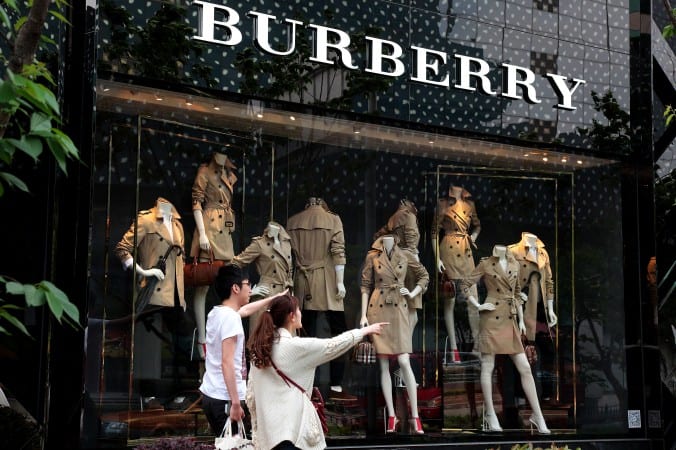
    Meanwhile, Gucci closed five stores in China, Burberry closed two stores, and Prada closed four stores in 2015, according to the Bain report. Due to collapsing demand in China, brands are expected to shut more stores across the country in coming months.

    Adding to the industry’s woes, publicly traded luxury goods companies announced weaker than expected results in April 2016, caused by slowing Chinese tourism in Europe. Burberry Group Plc, Prada SpA,Kering SA, and LVMH Moet Hennessy Louis Vuitton SE all reported disappointing results following terror attacks in Europe.

    According to Bruno Lannes, a Bain partner based in Shanghai, luxury brands should place greater emphasis on exclusive and fashionable collections, digital platform engagement and digital content, as well as pricing, in order to remain competitive in rough times.

  • Hong Kong Government Allocates About $64 Million In Fashion Industry For Upcoming Budget

    Hong Kong Government Allocates About $64 Million In Fashion Industry For Upcoming Budget

    The Hong Kong government just settled its 2016-17 budget — which includes an allocation for the fashion industry of 500 million Hong Kong dollars (or about $64.35 million at current exchange rates).

    Financial secretary John C. Tsang told us that the funds will go towards developing the fashion industry, specifically promoting local designers and brands internationally and in Hong Kong. He added that the city’s government will establish an incubation program for fashion designers, “drawing on the experience of other fashion capitals like London, New York and Seoul.”

    Additionally, the Hong Kong government will set up a resource center to provide technical training and support for young designers, according to Tsang.

    “The uncertain pace of U.S. interest rate [normalization], heightened financial market volatility, modest and patchy growth in advanced economies, weak growth in emerging markets, a slowdown in inbound tourism and subdued exports will all impact on growth prospects,” the Hong Kong government said in a release, WWD reported.

    The Hong Kong Trade Development Council will also team up with the local government to sponsor programs that will bring emerging Hong Kong-based brands to fashion weeks in Paris and New York. From Sept. 7-10, the HKTDC plans to host a new event called Centrestage — giving Asian brands a platform for runway shows. 

    In related news, Lane Crawford recently tapped nine artists to create a series of visual installations for the luxury retail company’s stores in Hong Kong and China in celebration of the Chinese New Year — which began earlier this month.

    Participating artists include Andrea Minini, Angel Chen, Desmond Leung, Hui Hoi Kiu, Huijun Guan, Mosaic Art Projects (which is led by visual artists Karen Pow and Chao Harn Kae), Jan Zhou and Yeli Gu.