Tag: FDI

  • Vietnam Jan-Feb FDI inflows up 9.8 pct to $2.58 bln

    Vietnam Jan-Feb FDI inflows up 9.8 pct to $2.58 bln

    Vietnam received $2.58 billion in foreign direct investment (FDI) in January-February, up 9.8 percent from the same period a year earlier. FDI pledges, which indicate the size of future FDI disbursements, were more than 2.5 times higher than the same period last year, climbing to $8.47 billion, the Ministry of Planning and Investment said in a statement on Tuesday.

    Of the pledges, 81.8 percent are to be invested in manufacturing and processing, while 5.6 percent would go to real estate, the ministry said.

    Hong Kong was the top source of FDI pledges in the period, followed by Singapore and South Korea.

    The Southeast Asian country reported a record high FDI inflows of $19.1 billion last year, up 9.1 percent.

  • Malaysia’s economy likely to slow in April to June 2019

    Malaysia’s economy likely to slow in April to June 2019

    Malaysia’s economy is likely to grow at a slow rate in April to June 2019 in view of the decline in the Leading Index (LI) in December 2018, according to the Statistics Department. Chief statistician Datuk Seri Dr Mohd Uzir Mahidin said the monthly change of LI decreased 1.4% to 117.3 points in December 2018 from 119.0 points in the previous month.

    “The declined in six out of seven components have weighed down the performance of the LI with the significant decreased by two components namely real imports of other basic precious & other non-ferrous metals and number of housing units approved, which posted negative 0.5% respectively,” he said in a statement.

    The annual change of LI also registered a negative growth of 1.7% in December 2018.

    The LI is designed to monitor the economic performance for an average of four to six months ahead.

    Meanwhile, the Coincident Index (CI), a measure of current economic activity, was unchanged in December 2018.

    The increased in real salaries & wages in manufacturing sector (0.2%) and real contributions to EPF (0.1%) were offset by the decreased in capacity utilisation in manufacturing sector (-0.2%) and Industrial Production Index (-0.1%).

    The annual change of CI grew at 3.6% as in the previous month.

  • Walmart bets on India despite change in FDI norms

    Walmart bets on India despite change in FDI norms

    American retail giant Walmart and its Indian e-tail major Flipkart are betting big on India despite the revised norms for Foreign Direct Investment (FDI) in e-commerce, the companies said. “Walmart’s and Flipkart’s commitment to India is deep and long term. Despite the recent changes in regulations, we remain optimistic about the country,” the regional Chief Executive Officer of Walmart Asia and Canada Dirk Van den Berghe told IANS in a statement in New Delhi.

    The companies will continue to focus on creating “sustained economic growth and bringing sustainable benefits to India, including employment generation, supporting small businesses and farmers, and growing Indian exports to Walmart’s global markets”, added Berghe, who is also the retail giant’s Executive Vice President.

    Walmart’s assertion on the company’s commitment to India came after American investment bank Morgan Stanley in a report on Monday said the former might exit the country after the new FDI norms in e-commerce came into force on February 1.

    “An exit is likely, not completely out of the question, with the Indian e-commerce market becoming more complicated,” the New York-based financial services firm said in its report titled “Assessing Flipkart Risk to Walmart EPS (earnings per share)”.

    In May last year, Walmart bought 77 percent equity stake in Flipkart for a whopping US$ 16 billion (Rs 1,16,256 crore).

    The revised FDI norms in e-commerce, however, have tightened the noose around the businesses of the country’s leading e-tailers – Walmart-owned Flipkart and Indian arm of American e-commerce giant Amazon.

    The policy revisions, issued by the Ministry of Commerce and Industry on December 26, 2018, barred e-commerce platforms providing a marketplace from exercising control or ownership over the inventory and forbids any company to sell its products exclusively on an e-commerce platforms alone.

    The e-tail companies are now working towards changing the ownership of their inventory, so as to comply with the norms.

  • Optimistic about Indian market despite changes in new FDI policy: Walmart

    Optimistic about Indian market despite changes in new FDI policy: Walmart

    US retail major Walmart, which invested $16 billion in Flipkart, Wednesday said it is committed to the Indian market and is optimistic despite recent changes in the FDI policy for e-commerce firms in the country, according to a PTI report. The Bentonville-based retailing major’s statement came after a recent report by global consultancy firm Morgan Stanley, which had hinted that Walmart may quit Flipkart as the new foreign direct investment (FDI) policy came into effect, which would lower its profitability in the long run.

    Morgan Stanley, in a report titled ‘Assessing Flipkart Risk to Walmart EPS’ dated February 4, claimed that “an exit is likely, not completely out of the question, with the Indian e-commerce market becoming more complicated.”

    “Walmart’s and Flipkart’s commitment to India is deep and long term. Despite the recent changes in regulations, we remain optimistic about the country,” said Dirk Van den Berghe, Executive Vice President and Regional CEO Walmart Asia and Canada.

    He further added, “We will continue to focus on serving customers, creating sustained economic growth and bringing sustainable benefits to the country, including employment generation, supporting small businesses and farmers, and growing Indian exports to Walmart’s global markets.”

    Tightening norms for e-commerce firms having foreign investment, the government, from February 1, barred online marketplaces like Flipkart and Amazon from selling products of companies where they hold stakes and banned exclusive marketing arrangements that could influence product price.

    The revised policy on FDI in online retail, issued by the commerce and industry ministry, also said that these firms have to offer equal services or facilities to all its vendors without discrimination.

    Last year on August 18, Walmart had completed acquisition of 77 per cent stake in Flipkart for about $16 billion (Rs 1.05 lakh crore), a deal which gave the US retailer access to the Indian e-commerce market.

  • Walmart may exit Flipkart due to new FDI rules: Morgan Stanley

    Walmart may exit Flipkart due to new FDI rules: Morgan Stanley

    Retail giant Walmart may exit Flipkart after India’s new Foreign Direct Investment (FDI) norms for e-commerce companies came into force, US investment banker Morgan Stanley has warned. “An exit is likely, not completely out of the question, with the Indian e-commerce market becoming more complicated,” the report by Morgan Stanley said late Monday.

    According to the report, Walmart-Flikkart saga might turn out to similar to what happened with Amazon in China in late 2017.

    “There is a precedent for an exit as Amazon retreated from China in late 2017 after seeing that the model no longer worked for them,” the report read.

    “We estimate that Flipkart derives 50 per cent of its revenue from this category, meaning Flipkart could face meaningful disruption and top-line pressure in the near term,” it added.

    The new FDI rules may require Flipkart to remove as much as 25 per cent products from its platform including smartphones and electronics that constitute a bulk of sales, said Morgan Stanley.

    On February 1, disruption was caused in the e-commerce operations in India of the two companies after the new FDI norms for the e-commerce sector came into effect.

    The norm prohibited the online retailers from mandating any company to sell their products exclusively on its platform.

    In the new policy, the Commerce Ministry also noted that the online retail firms would not directly or indirectly influence sale price of goods and services and would maintain a level playing field.

    Amazon India had to withdraw many of its products and they were listed as “currently unavailable” as the new norms prohibit the e-retailers from selling products of companies in which they have stakes.

    The two companies have together lost market capitalisation of $50 billion.

    Amazon lost market capitalisation of over $45 billion on Nasdaq while Walmart lost over $5 billion on the NYSE.

  • Vietnam foreign investment skyrockets in January

    Vietnam foreign investment skyrockets in January

    FDI pledges for new projects, increased capital and stake acquisitions in Vietnam rose 51.9 percent year-on-year to $1.9 billion in January. In a statement Monday, the Ministry of Planning and Investment said the manufacturing sector attracted the most interest from foreign investors, accounting for $1.19 billion or 62.4 percent of the total FDI. Science and technology ranked second with $185.8 million, followed by real estate with $179.1 million.

    Japanese were the top investors with nearly $364 million. South Korea and China were next with $349.1 million and $307.8 million.

    Ho Chi Minh City is the most attractive location for FDI investors in January, accounting for around 39.1 percent of the total FDI. Southern Binh Duong Province ranked second, accounting for 12.5 percent, followed by northern Hai Duong Province with 6.5 percent.

    As of January 20 authorities had issued licenses for 226 new projects with a total capital of $805 million. Meanwhile, another $340.2 million was pledged for existing projects this month.

    The two biggest projects were Kyoshin Vietnam’s $134.7 million investment expansion in HCMC by Japanese investors to produce, process and export electrical components and molds, and Katolec Global Logistics Vietnam’s $65 million investment for warehousing and storing goods in the northern province of Ha Nam.

    Estimated FDI disbursement for the month was $1.55 billion, up 9.2 percent year-on-year.

    Vietnam reported FDI disbursement of $19.1 billion last year, up 9.1 percent.

  • Global business leaders raise concerns over e-commerce policy changes in India

    Global business leaders raise concerns over e-commerce policy changes in India

    Several global business leaders have raised concerns over the evolving regulatory challenges concerning the e-commerce sector in India and said they want a stable policy regime to help this space achieve its robust growth and investment potential. According to a report, multiple business leaders attending the World Economic Forum Annual Meeting here said there are confusions in their mind in the backdrop of recent policy changes for e-commerce players having FDI in India.

    They did not want to be named, given the sensitivity of the subject and the evolving nature of the proposed rules, but said they have directly, or through their representatives, raised their concerns with the Government. They wanted to raise the issue directly with Commerce and Industry Minister Suresh Prabhu in Davos, but his plan to come here got changed at the last moment.

    At a session here at the WEF meeting, WTO Chief Roberto Azevedo also said there was a need for a global multilateral framework on e-commerce business.

    India’s FDI policy allows 100 percent foreign direct investment in marketplace model, but investors also want a stable policy and regulatory regime, a senior official of a leading online retailer said.

    An industry lobby group official said there is a fear that certain new rules proposed by the Government could lead to discrimination against investors as this policy is only for foreign players and not for domestic ones in the e-commerce sector.

    Another executive claimed it is being seen as a non-consultative approach even with investors who bring in huge foreign direct investment.

    However, Government officials rejected these allegations and said the new changes seek to safeguard competition and the interest of domestic players. The rules have been made after due consideration and consultations with concerned stakeholders, they added.

    The Commerce and Industry Ministry brought certain changes to Press Note 2 on December 26, 2018 which prohibited e-commerce companies from entering into an agreement for exclusive sale of products along with tightening norms for firms having foreign investment.

    The Government has also barred online marketplaces like Flipkart and Amazon from selling products of companies where they hold stakes and banned exclusive marketing arrangements that could influence product prices.

    The revised policy on foreign direct investment in online retail also requires these firms to offer equal services and facilities to all its vendors without discrimination. The policy would be effective from February 2019.

    In India, the policy as such does not permit FDI in inventory-based model of e-commerce.

    Companies have been seeking more time to implement the changes even as some of them have warned that these substantial modifications in the way they do business pose risks of derailing the e-commerce sector that has been a big job creator.

    Executives from another global retail major said the impact could also be felt by several connected sectors such as advertising, logistics, warehousing and manufacturing.

  • Vietnam to see slower growth in 2019

    Vietnam to see slower growth in 2019

    Vietnam’s economic growth is expected to slow down this year though it will remain a regional outperformer, according to leading global analysts. Fitch Solutions, an arm of Fitch Ratings, said in a report released Wednesday it expects Vietnam’s GDP growth to slow to 6.5 percent in 2019 in line with a wider trend of slowing global growth, but added the country would remain one of the fastest growing economies in Southeast Asia.

    The economy grew by 7.1 percent last year, the fastest rate of expansion in 11 years, according to official data. This was well above the 6.5-6.7 percent target set by the National Assembly.

    “Its increasing openness and reliance on foreign investment suggests that it is unlikely to be spared from the global growth slowdown arising from rising trade protectionism and tighter financial conditions.

    “Although we believe that Vietnam’s manufacturing sector and economy will continue to outperform the region over the coming quarters, growth is likely to face headwinds stemming from rising global trade disruptions and tightening financial conditions, which will negatively impact global economic growth and risk sentiment,” Fitch Solutions stated.

    The World Bank Group in its bi-annual report on Vietnam issued last month said the country’s GDP growth is likely to slow from 6.8 percent in 2018 to 6.6 percent this year as the global economy weakens.

    Weaker global demand for exports and reduced investment and trade flows as the U.S. Federal Reserve raises interest rates are other risks for Vietnam’s economy, Sebastian Eckardt, the World Bank’s lead economist for Vietnam, said.

    The Asian Development Bank (ADB) in a forecast released last month for the East Asia and Pacific region projected Vietnam’s growth at 6.8 percent for 2019, slightly lower than the 6.9 percent it expected for 2018. These rates are the second highest in the forecast behind only India’s.

    Disbursed foreign direct investment (FDI) in Vietnam reached a record $19.1 billion in 2018, up 9.1 percent year-on-year. With exports rising by 13.8 percent to $244.72 billion and imports at $237.51 billion, the country achieved its highest ever trade surplus of $7.21 billion last year.

    Fitch Solutions said in 2019 the manufacturing sector would remain a key economic growth driver and outperform the region.

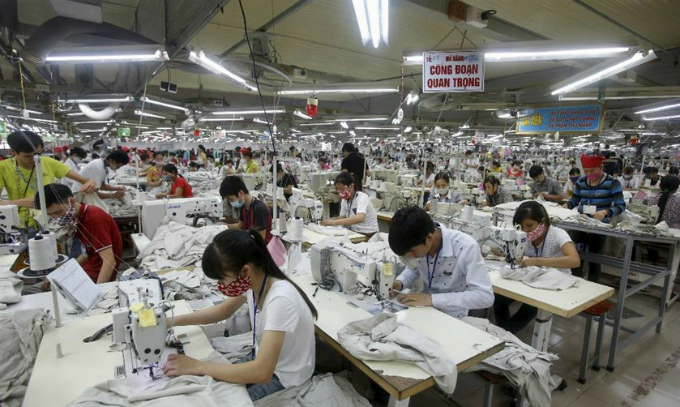
    Vietnam has grown to become a manufacturing powerhouse, particularly in electronics, due to its relatively cheap and large workforce, geographical advantages, attractive tax breaks, stable political environment, and open trade policies.

    The opening up of the Vietnamese economy also came at an opportune time as China began to shift away from lower-end and export-oriented manufacturing to focus on the domestic economy.

    Vietnam’s continued commitment to economic liberalisation will also attract foreign manufacturers seeking to leverage its preferential trade deals.

    The country is a signatory to 10 bilateral and multilateral free trade agreements (FTAs), with six more trade pacts in the offing, including the highly touted Vietnam-EU FTA.

    Fitch Solutions added that trade tensions between China and the US would continue to drive up costs for manufacturers operating in China, pushing companies to outsource to its neighbor Vietnam, which is more competitive in terms of wages.

  • India eyes $100 billion FDI in next two years

    India eyes $100 billion FDI in next two years

    India will aim to receive $100 billion in foreign direct investments in the next two years and special industrial clusters are being created for countries like Japan, South Korea, China and Russia where their companies can invest and operate, Union minister Suresh Prabhu said. The commerce and industry minister said his ministry has also identified sectors and countries which holds huge potential for investments in India.

    “I have given a target. $100 billion of FDI should come from different sectors into India. It will not happen in one year. We have identified companies, sectors and countries and now we are going for road shows to attract investors,” Prabhu said.

    He said India would remain a top destination for foreign investors in 2019 and the ministry would look at all sectoral issues that may come come in the way to attracting overseas investments.

    “For countries like Japan, South Korea, China and Russia, we are creating industrial clusters where they can invest and operate,” Prabhu said.

    The minister said China has agreed to set up industrial parks in India and the Chinese authorities have been asked to give a list of companies that are willing to set up factories in India.

    Similarly, India would be happy to welcome firms from Europe and the US who want to move out of other countries and set up manufacturing bases in India, Prabhu said.

  • Vietnam FDI disbursement in 2018 tops $19 bln

    Vietnam FDI disbursement in 2018 tops $19 bln

    Foreign direct investment disbursement in Vietnam reached a record $19.1 billion in 2018, a year-on-year increase of 9.1 percent. However, FDI pledges for new projects, capital supplements and stake acquisitions were down 1.2 percent from a year earlier to $35.46 billion, according to the Ministry of Planning and Investment.

    A total of 3,046 new projects have been granted investment certificates since the beginning of the year, with a total registered capital of nearly $18 billion. Nearly 1,170 projects registered to increase their capital by a total of $7.5 billion. The rest of the registered capital was reported in a total of 6,500 instances of capital contribution and share purchases by foreign investors.

    This year, foreign investors injected capital into 18 fields and sectors. The processing and manufacturing industry attracted the highest capital at $16.5 billion, followed by real estate with $6.6 billion, and wholesale and retail sectors with $3.6 billion.

    Japan ranked first in FDI contributions to Vietnam this year, followed by South Korea and Singapore. Localities that attracted the most FDI were Hanoi, Ho Chi Minh City and the northern city of Hai Phong.

    Meanwhile, Vietnam invested nearly $380 million abroad this year, mainly in banking and finance, forestry, and fishing. Vietnamese investors injected capital into 38 different countries and territories, with the highest investment in Laos, followed by Australia, the U.S. and Cambodia.

  • Vietnam labor costs highest among ASEAN comparators

    Vietnam labor costs highest among ASEAN comparators

    Vietnam’s labor cost is the highest among comparator countries in Southeast Asia, a World Bank report says.

    In a report on enhancing enterprise competitiveness and enhancing small and medium-sized enterprise (SME) linkages, it says Vietnam’s labor costs are higher than in comparable Southeast Asian peers.

    It defines labor costs for each firm as the cost of all payments to all workers divided by the number of workers.

    It says wage costs about $2,739 per worker for the median Vietnamese firm, about twice as high as in Laos, Myanmar and Malaysia, and about 30 to 45 percent higher than in Cambodia, Thailand and the Philippines.

    While Vietnam’s labor costs are higher than in the rest of the region, they seem in line with productivity levels and thus do not seem to be a major obstacle to competitiveness, the report says.

    The average manufacturing firm in Vietnam produces about $10,500 worth of value-added per worker per year, higher than in most countries in Southeast Asia. It is around $10,000 in Malaysia, and $5,000 in Cambodia.

    Vietnam’s relatively high value appears to be partly driven by high and growing use of capital, the report says.

    The report also breaks down labor productivity in the country by region. The north-central and central coastal regions of Vietnam have the highest productivity — of almost $16,000 value addition per worker — while the southeast comes in second at $14,000.

    The Red River Delta region has a productivity of only $7,000, and it is even lower in the Mekong River Delta at around $6,000.

    It also said that foreign-owned firms are generally more productive than domestic firms, which can be explained by their easier access to technology and finance through their parent companies.

    The World Bank report also says that capital productivity is low in Vietnam. The ratio of sales to value capital in Vietnam is around 160 percent, lower than in any of its peers in Southeast Asia. The bank’s data confirms that capital might not be used very efficiently in Vietnam.

  • Vietnam’s Jan-Nov FDI rises 11.9 pct on-year

    Vietnam’s Jan-Nov FDI rises 11.9 pct on-year

    Vietnam received an estimated $16 billion in foreign direct investment (FDI) in the first 11 months of this year, up 11.9 percent from the same period in 2016, the government said on Monday.

    FDI pledges for new projects, increased capital and stake acquisitions jumped 82.8 percent from a year ago to $33.09 billion, the investment ministry said in a report published on its website.

    The manufacturing and processing industry received the most foreign funds as of November, followed by the electricity and air production and distribution sector.

    South Korea, Japan and Singapore were the biggest investors in Vietnam.

    Vietnam’s FDI inflows hit a record high of $15.8 billion in 2016.

  • H&M may open 30 stores in India by early 2016

    H&M may open 30 stores in India by early 2016

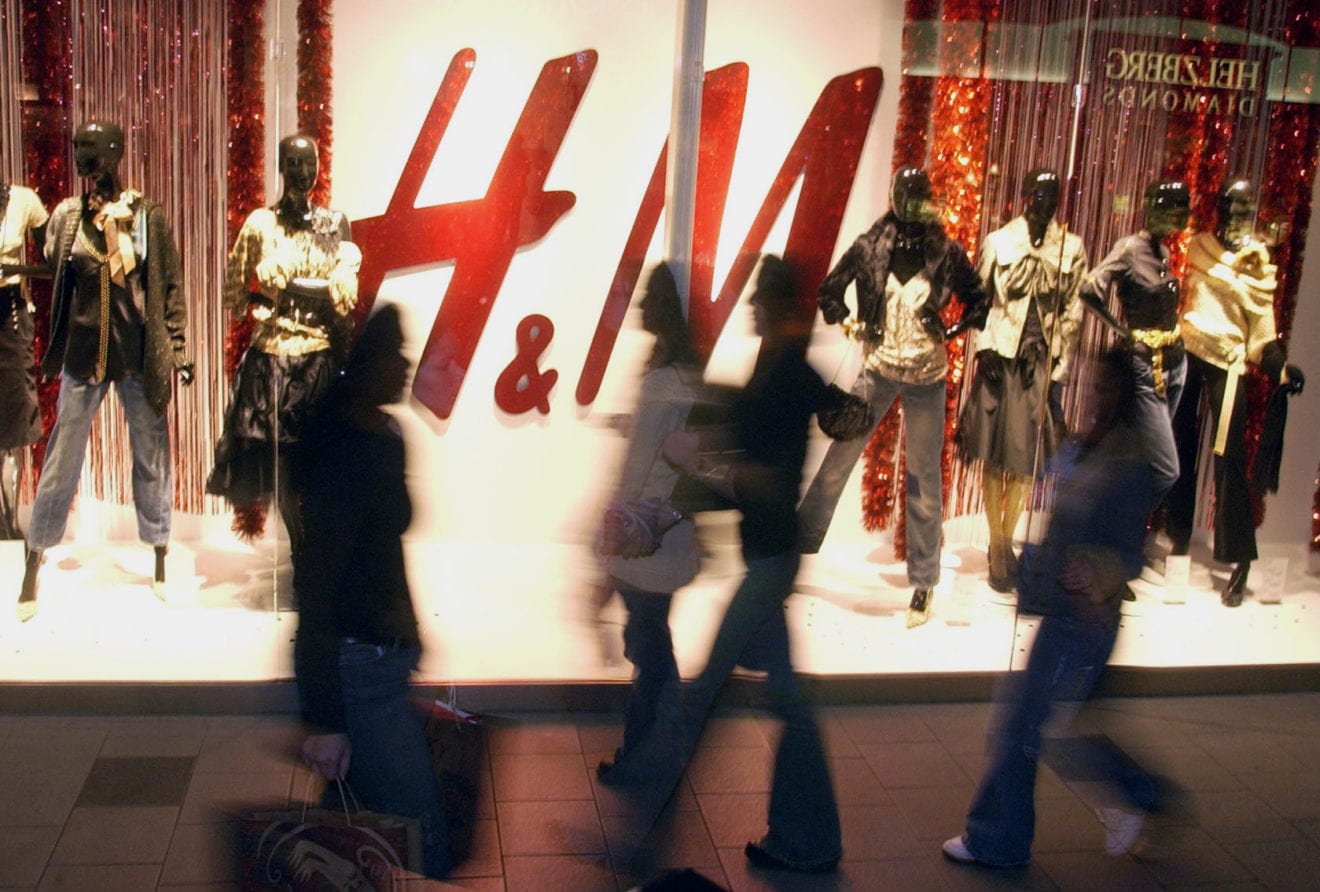
    Following IKEA announcing the purchase of 13 acres in Hyderabad for its first store in India on Friday, it’s the turn of another Swedish chain, Hennes & Mauritz (H&M), to go for a big rollout in the country. H&M, rival to another European fast fashion brand, Zara, is likely to open as many as 30 stores in India by early next year, sources say.

    The Swedish fashion chain, in the middle of major global expansion, is learnt to have already closed about 15 real estate lease deals in India, and is in the process of raising this count. The group, with $22 billion in global sales and 3,600 outlets across 59 markets, recently announced it would launch its first India store in the national capital. The store, of about 25,000 sq ft, would be located at a popular mall.

    At the time of making its application for investing about Rs 750 crore into the country, H&M had said it planned to open 50 outlets across India through the next few years. Zara, in a joint venture with Tata group’s Trent, has 16 stores across the country; it posted $114 million in sales for the year ended March this year.

    H&M did not reply to a Business Standard questionnaire on store openings and lease deals.

    According to H&M’s latest quarterly report, the company plans to open as many as 400 stores across the world this year. Besides India, the group’s expansion thrust is on the US and China. In fact, in North America, both H&M and Inditex’s Zara are giving stiff competition to the US-based Gap. Recently, Gap announced its plan to shut 175 stores in the US.

    Besides international expansion, H&M is also focused on going online. Of late, the group has gone online in Poland, Portugal, Romania, the Czech Republic, Bulgaria, Slovakia, Hungary and Belgium, among others.

    Though the company secured the government’s approval to invest in India early last year, it has delayed its launch partly due to a slow retail environment in its home market, pressure on margins and focus on some other key markets. Analysts said general elections in India, as well as political uncertainties, might also have added to the delay.

    H&M’s big India play at this point is significant because there has been no action in the international brick-and-mortar retail scene for about a year, except Gap launching its store recently.

    The National Democratic Alliance government at the Centre is opposed to foreign direct investment (FDI) in multi-brand retail. The UK’s Tesco, in partnership with the Tata group, is the only entity in multi-brand retail to have invested in India (Maharashtra and Karnataka). In 2013, American major Walmart parted ways with its partner, Bharti group.

    While limiting its business to wholesale, Walmart has not shown any interest in entering India’s multi-brand sector. French chain Carrefour, which also had wholesale stores in the country, made an exit last year, in the absence of a favourable multi-brand policy.

    In multi-brand retail, FDI is capped at 51 per cent, while 100 per cent foreign investment is allowed in single-brand retail. However, despite the fact that there’s no cap on FDI in single brand retail, companies such as IKEA and H&M are believed to have been worried over a clause pertaining to mandatory 30 per cent sourcing from India.