Tag: fed

  • US Fed Makes Historic Third Consecutive Rate Cut, Slashes Interest Rates by 0.25%

    US Fed Makes Historic Third Consecutive Rate Cut, Slashes Interest Rates by 0.25%

    The US Federal Reserve has announced a reduction in interest rates by 0.25 percentage points, marking the third consecutive cut this year. However, further reductions in the near future seem unlikely.

    Federal Reserve’s Position

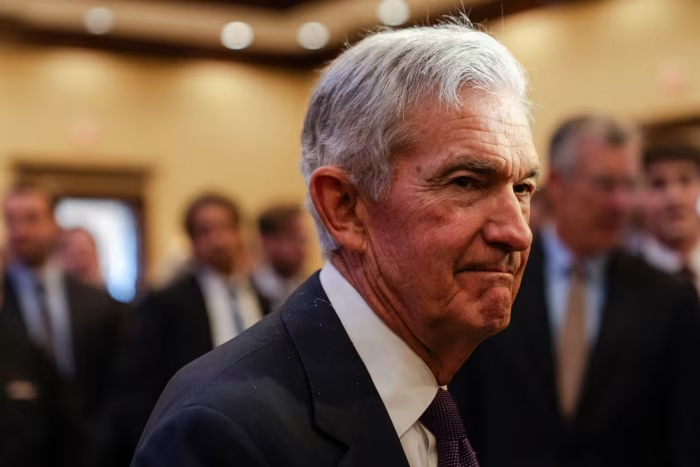
    According to Jerome Powell, the Chair of the Federal Reserve, the central bank is poised to observe the economic evolution before taking any further action. The statement also reiterated language previously used in late 2024, indicating a pause in any additional rate cuts. Powell emphasized that the bank is well-equipped to determine the “extent and timing of additional adjustments” based on incoming data, the evolving outlook, and balance of risks.

    Impact of Reduction

    The latest reduction of a quarter percentage point sets the rates to a range between 3.50-3.75%, the lowest in around three years, aligning with market expectations. The Federal Reserve has also projected one more rate cut for the next year, while acknowledging increased employment risks.

    Internal Rifts

    The recent decision has led to deeper divisions within the central bank, with three officials voting against the reduction. Austan Goolsbee, president of the Chicago Federal Reserve, and Jeffrey Schmid, president of the Kansas City Federal Reserve, both advocated for maintaining unchanged rates. Fed Governor Stephen Miran continued to support a larger half-percentage-point cut.

    Balancing Act

    Acknowledging some level of disagreement, Powell highlighted the challenge of balancing concerns of inflation risks and a potentially weakening jobs market. He stated that the Federal Reserve currently operates at the higher end of the “neutral” rates range, a level that neither stimulates nor restricts economic activity. This “neutral” designation could imply less urgency to lower rates quickly.

    Future Outlook

    Powell emphasized the need for several years of wages surpassing inflation for economic stability and improved affordability for the public. The Federal Reserve also raised its 2026 growth forecast, while moderating inflation expectations and maintaining unemployment rate projections. However, these forecasts could be altered as the bank navigates the delay in federal economic data releases due to the prolonged government shutdown.

    Challenges Ahead

    As the Federal Reserve heads into 2026, it faces a period of significant change. A new chief is set to take over after Powell’s term ends in May, amidst mounting political pressures. In particular, President Trump has expressed his desire for more aggressive rate cuts. Trump’s chief economic adviser, Kevin Hassett, is considered a strong contender for the role. Furthermore, the impending expiry of Miran’s term in January will create a vacancy within the Federal Reserve’s top leadership.

    Questions & Answers

    What was the extent of the recent rate cut by the US Federal Reserve?
    The US Federal Reserve cut interest rates by 0.25 percentage points.

    What challenges did the Federal Reserve face in making this decision?
    The decision led to a rift within the central bank, with three officials voting against the reduction, reflecting differing views on the balance between inflation risks and the softening job market.

    What changes are expected within the Federal Reserve in 2026?
    Significant changes are expected in 2026, including the appointment of a new chief following the end of Powell’s term in May. Additionally, the expiry of Fed Governor Stephen Miran’s term in January will result in a vacancy within the top leadership.

  • Fed Eases ‘Reputational Risk’ Oversight, Boosting Opportunities for Crypto Firms to Thrive

    Fed Eases ‘Reputational Risk’ Oversight, Boosting Opportunities for Crypto Firms to Thrive

    The US Federal Reserve has announced a significant change in its supervisory approach by instructing its regulators to no longer weigh “reputational risk” when overseeing banks. This shift comes as a response to arguments from the cryptocurrency sector, which claimed that such considerations had led to unjust exclusions and banking challenges for crypto firms.

    Industries labeled as high-risk often find it hard to maintain banking relationships, a situation that escalated during what some have termed “Operation Chokepoint 2.0.” Over 30 technology and crypto firms were denied access to banking services in the US, leaving many scrambling for financial support.

    In a statement released on Monday, the Federal Reserve Board indicated that it is currently revising its supervisory materials to remove references to reputational risk. Instead, they will focus on more specific discussions centered on financial risk. Additionally, the board will enhance training for examiners to ensure uniform implementation across all banks it supervises, while collaborating with other federal banking agencies to foster consistent regulatory practices.

    Risk Management Remains Paramount

    Despite this pivotal change, the Federal Reserve has underscored the necessity for banks to maintain robust risk management protocols that align with existing laws and regulations. This new direction will not alter how banks supervised by the Federal Reserve incorporate reputational risk into their own management strategies.

    The Federal Reserve defines reputational risk as the potential backlash from negative publicity regarding an institution’s business practices — whether the claims are substantiated or not — which can lead to loss of clientele, expensive lawsuits, or decreased revenues.

    A Turning Point for Banks and Crypto

    Notable reactions to this development have emerged, with US Senator Cynthia Lummis remarking that aggressive reputational risk policies “assassinated American Bitcoin & digital asset businesses.” She characterized this shift as a victory, but added, “there is still more work to be done.”

    Rob Nichols, president and CEO of the American Bankers Association, also expressed his approval, stating that the adjustment would render the supervision process more transparent and consistent. “We believe banks should make decisions based on prudent risk management and free market principles, not the subjective views of regulators,” he added, making a case for more autonomy in banking operations.

    Nonetheless, critics caution that discarding reputational risk may obscure crucial non-financial factors, jeopardize bank stability, and weaken regulatory oversight, potentially leading to riskier banking practices. It’s a balancing act not unlike walking a tightrope.

    Regulatory Shifts in the Crypto Space

    This adjustment at the Federal Reserve is part of a broader trend, as other regulatory bodies in the US are also easing crypto-related restrictions this year. In May, the US Office of the Comptroller of the Currency confirmed that banks could engage in crypto trading on behalf of customers and outsource certain crypto functions to third parties. Additionally, in March, the US Federal Deposit Insurance Corporation clarified that banks under its supervision could participate in crypto activities without prior approval, signaling a thaw in the regulatory landscape that could energize the crypto market.

    Questions & Answers

    What does the Federal Reserve’s change mean for crypto firms?
    The change will allow banks to assess lending relationships with crypto firms without the burden of reputational risk, potentially making it easier for these companies to access banking services.

    How did US Senator Cynthia Lummis respond to the news?
    Senator Lummis declared it a win for the crypto sector, highlighting that aggressive reputational risk policies had detrimental effects on American Bitcoin and digital asset businesses.

    What are the potential downsides of removing reputational risk considerations?
    Critics warn that eliminating reputational risk might overlook important non-financial issues and weaken regulatory oversight, which could result in riskier banking practices.

  • Asia stocks quiet, dollar firm after upbeat US job data

    Asia stocks quiet, dollar firm after upbeat US job data

    Asia stocks hovered near four-month highs on Monday after a mixed performance on Wall Street at the close of last week, while the dollar firmed against the yen following strong US job and manufacturing data. MSCI’s broadest index of Asia-Pacific shares outside Japan was almost flat. It had scaled a four-month peak on Friday along with a surge in its global peers.

    Trade was subdued with many of the region’s markets closed for the Lunar New Year. China’s financial markets are closed all week, while those in South Korea are shut until Thursday.

    Hong Kong’s Hang Seng, which is trading for only half a day, edged up 0.2%.

    Japan’s Nikkei added 0.5%.

    On Wall Street on Friday optimism from a surge in January US job growth was offset by a weaker-than-expected outlook from Amazon.com Inc that battered retail stocks. The Dow nudged up 0.26% while the Nasdaq shed 0.25%.

    “Key points for the markets this week will be how the remaining US corporate earnings releases turn out, and whether they are in line with recent upbeat data,” said Junichi Ishikawa, senior FX strategist at IG Securities in Tokyo.

    “While corporate earnings and fundamentals remain key, political developments, notably the US-China trade situation, remain potential risk factors,” he said.

    A US Labor Department report on Friday showed nonfarm payrolls jumped by a stronger-than-forecast 304,000 jobs last month, the largest gain since February 2018.

    That report, along with better-than-expected ISM manufacturing activity numbers for January, pointed to underlying strength in the world’s biggest economy.

    “After last week’s risk appetite revival, the data pulse and the tone of Fed speakers will be important. For the Goldilocks market to continue, we need to find a delicate balance between improving data and still-neutral central banks,” strategists at ANZ wrote.

    Global equity markets performed strongly last week after the Federal Reserve pledged to be patient with further interest rate hikes, signalling a potential end to its tightening cycle.

    Friday’s robust economic data triggered a sharp rebound in US Treasury yields, in turn lifting the dollar.

    On Monday, the US currency was a shade higher at 109.555 yen after advancing 0.6% on Friday.

    The euro was little changed at $1.1456 after getting pulled back from a high of $1.1488 on Friday.

    The Australian dollar was mostly steady at $0.7244 after slipping 0.4% the previous session.

    The benchmark 10-year U.S. Treasury yield was at 2.686% after climbing nearly 6 basis points on Friday to pull away from a four-week low of 2.619% earlier last week.

    West Texas Intermediate (WTI) US crude oil futures extended Friday’s rally and were last up 0.3% at $55.42 per barrel.

    On Friday, WTI futures had rallied 2.7% on the upbeat US job report, signs that Washington’s sanctions on Venezuelan exports have helped tighten supply and data showing US drillers cut the number of oil rigs.

  • Higher Fed interest rate could weaken Vietnamese currency

    Higher Fed interest rate could weaken Vietnamese currency

    The U.S. recent interest hike might result in a high demand for U.S. dollars in Vietnam, weakening the local currency further, experts say. The U.S. Federal Reserve Wednesday raised its interest rates for the fourth time this year to 2.25-2.5 percent. The Fed has projected two more hikes next year.

    Every time the Fed raises its interest rate, the interest rate for the greenback will increase at international banks, economist Nguyen Tri Hieu said.

    He said that with the interest rate on dollar accounts at Vietnamese banks at zero percent currently, investors might look to deposit their money in international banks for at least 2 percent.

    “This could result in a bleeding of dollars which could lead to a lower supply of the greenback in Vietnam.”

    Hieu added that the smaller supply of dollars will increase its exchange rate against the dong.

    The Fed interest rate increase will pressure the USD-VND exchange rate, as the dollar strengthens further over the dong.

    Local banks will push their interest rates up to prevent their customers from exchanging local currency to the U.S. dollar, he said.

    According to Ngo Dang Khoa, HSBC country head of global markets, another risk is that the U.S. dollar is forecast to be stronger next year, making a weaker dong a high possibility.

    Economist Hieu said that a strong dollar will also increase its exchange rate against the Chinese yuan, which will create even greater pressure on the dong.

    If the dong value remains unchanged, it will become stronger against the yuan, and Chinese exports to Vietnam could increase, resulting in a higher trade deficit than Vietnam has already has with the country, he said.

    However, other observers have said that as the fourth hike has been predicted, the Vietnamese market has prepared itself for the new interest rate and short-term impacts could be mitigated.

    Khoa with HSBC also said that there won’t be major responses from the Vietnam market following this hike, especially the forex market, as investors have already expected the interest rate to be raised.

    The local finance market won’t have to bear major impacts because of the raise, as the State Bank of Vietnam has recently taken measures to control the exchange rate and interest rate to stabilize the market, he said.

    The dong has fallen by some 1.57 percent, against the greenback since the beginning of the year. The dong hit 23,419 to the dollar on Friday.

    Prime Minister Nguyen Xuan Phuc had said in August that the devaluation of the dong needs to be kept within a 2-percent band this year compared with the end of last year.

  • Asian stocks slump after Fed raises interest rates

    Asian stocks slump after Fed raises interest rates

    Tokyo led a rout of Asian shares today, mirroring big losses on Wall Street after the Federal Reserve (Fed) defied unprecedented pressure from US President Donald Trump and raised interest rates, sparking fears the move could choke economic growth.

    The Nikkei plunged to a 15-month low as investors took fright over the pace of monetary tightening, with a slump triggered by the Dow’s fall to its lowest level of 2018 gathering pace.

    The Fed raised rates for the fourth time this year – as expected – but markets reacted badly after chairman Jerome Powell said the bank would not shift course on reducing its balance sheet.

    Investors had hoped for a less aggressive approach amid concern that global growth is slowing, while Powell played down the impact of recent market turmoil on the US economy.

    “They think the Fed has completely misjudged the situation and now it’s just a matter of … trying to find an exit while you can,“ said Kyle Rodda, a market analyst at IG Group in Melbourne.

    “We’re probably entering a stage now where markets have got it (in) their head that we’re preparing for quite sustained downside going into 2019.”

    The Fed now projects only two interest rate increases, down from three previously, as it trimmed its forecast for US growth and inflation.

    Stephen Innes, head of Asia-Pacific trade at OANDA, said the “Fed delivered a dovish hike, but clearly, there wasn’t enough affirmation in the statement that the Fed was close to pausing or ending their interest rate hike cycle sooner than expected”.

    But some analysts urged caution.

    “The market overreacted to the Fed, I think,“ said Shane Oliver, head of invest-ment strategy at AMP Capital Investors in Sydney.

    “It is moving in a dovish direction and is on track for a pause in the first half of next year. Markets are being driven by fear rather than fundamentals.”

    But the spillover from the rate hike continued to rattle investors in Asia today, deepening concern over global growth prospects which are already facing headwinds from Trump’s trade war with Beijing, a slowing Chinese economy, and potential turmoil from Britain quitting the European Union.

    Japanese stocks also declined after the Bank of Japan left ultralow rates unchanged, with the threat of trade protectionism and slowing global growth casting a pall over the export-driven economy. A strong yen also put downward pressure on stocks with the dollar falling below ¥112.

    Nissan dropped more than 2% after a Japanese court rejected prosecutors’ request to extend the detention of former Nissan chairman Carlos Ghosn after his arrest for financial misconduct.

    Shanghai fell more than 0.5%, even after the People’s Bank of China said it would supply lower-cost liquidity for up to three years to banks willing to lend more to small companies, as policy makers aim to shore up the flagging economy.

    Sydney closed more than 1% lower while Hong Kong and Seoul were down 0.9% each.

    The equities slump spread to Europe. Around 1100 GMT, London’s benchmark FTSE 100 index was down 0.5% with losses capped by stronger-than-expected UK retail sales data and as traders looked ahead to the outcome of the Bank of England’s regular monetary policy meeting later today.

    In the eurozone, Frankfurt’s DAX 30 shed 1.0% and the Paris CAC 40 slumped 1.5%.

  • Bank Indonesia Prepares for Fed Rate Hike

    Bank Indonesia Prepares for Fed Rate Hike

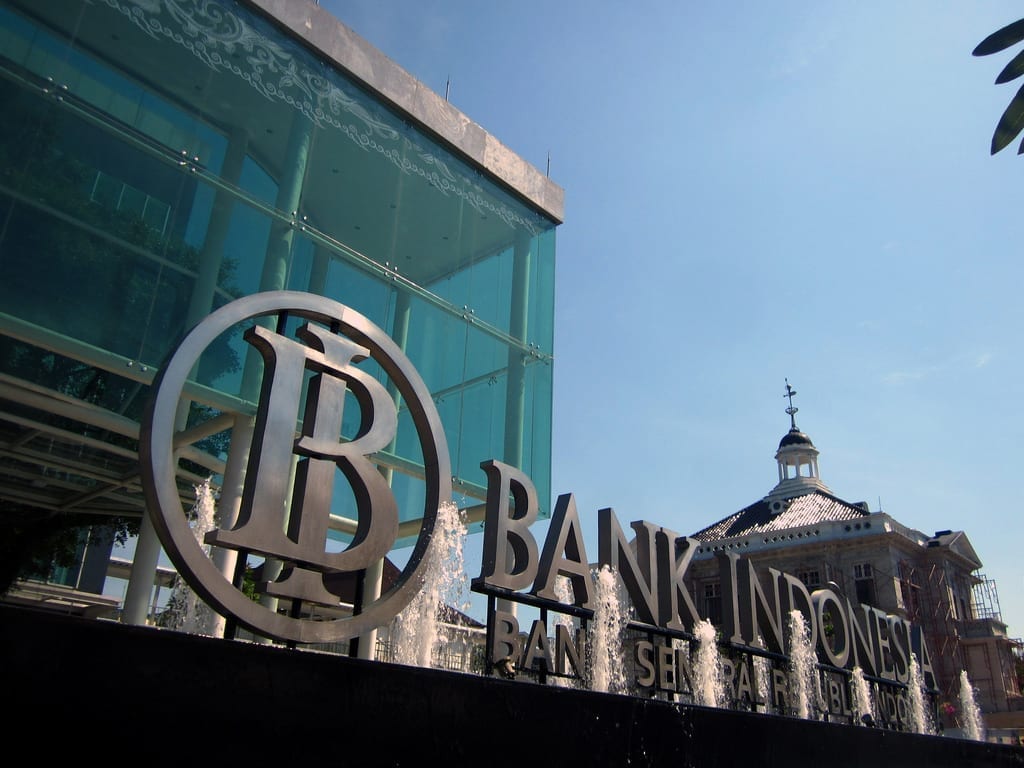
    Bank Indonesia Governor Agus Martowardojo said the central bank is preparing for the impact of Fed Fund Rate (FFR) hike in March. Agus said there were clear signs of a US’ interest rates increase during The Federal Reserves’ monthly meeting in February.

    “The probability is 90 percent, that’s why all market participants are getting ready,” the former finance minister said yesterday.

    Agus said that although a Fed Rate hike will likely be followed by a rupiah correction, the impact will not negatively impact the domestic monetary situations.

    He claimed the country’s economic resilience is quite strong, referring to the sustained economic growth in the range of 5.0 percent. Similarly, inflation has been within a safe range of three to five percent in the last two years.

    Other defensive factors are Indonesia’s healthy balance of payments that goes well in hand with a controlled current account deficit. As of February 2017, the country’s balance of payment was at a surplus of US$4.5 billion. The foreign exchange reserve was around US$116.9 billion.

    Bank Mandiri chief economist Anton Gunawan predicts the Fed Fund Rate will rise three times this year. However, he said there is a tendency that investors will prefer Asian markets rather than return to America’s.

    Anton said the rupiah could still see a fairly stable exchange rate to trade between Rp13,200 and Rp13,400 per US dollar.

    “The hedging liability also serves to reduce pressure on the rupiah,” he said.