Tag: fee

  • Lotte Mart’s distribution fees scrutinized

    Lotte Mart’s distribution fees scrutinized

    Korea’s antitrust body is examining the practice of retailers unfairly shifting distribution costs to their suppliers. The Fair Trade Commission (FTC) has started evaluation proceedings against Lotte Mart for transferring this burden and charging an onward transportation fee after a product has been delivered. The regulator could fine the retailer 400 billion won ($353.92 million) if it is found to have violated the law. It has the authority to prosecute and punish companies that contravene the Fair Trade Act and other statutes related to anti-competitive practices.

    The FTC’s Distribution Division, which monitors the activities of retailers, submitted an evaluation report, equivalent to a prosecutor’s indictment, to the commission early last month. The document outlined Lotte Mart’s infractions over five years.

    Lotte Mart has until early February to respond.

    This will be the first time the FTC has taken action against a company for shifting distribution costs to suppliers. Lotte Mart’s practice of transferring the costs, commonly known as post-distribution costs, is widespread.

    The action comes amid FTC Chairman Kim Sang-jo’s drive to root out unfair practices in the retail industry.

    Lotte Mart’s shifting of post-distribution cost to suppliers is likely to have far-reaching implications in the industry as the practice is common.

    “When signing a contract, there are requests to supply products at a price three to five percent lower than the actual price to account for the post-distribution costs,” explained Mr. Lee, who operates a company that supplies to retail stores. “It’s not just Lotte. It is common for large retail stores such as Emart, Homeplus, department stores, convenience stores and even e-commerce companies, such as Coupang.”

    The 400 billion won fine, if charged, would be an unprecedented amount. If other companies are fined, the total sum could rise to the trillions.

    “Unlike sales promotion fees, distribution costs have to be paid,” said Mr. Kim, the president of a large food company. “We struggled as it’s impossible to know the exact figure, but the FTC took on this matter for the first time.”

    From the FTC’s perspective, large retail stores use distribution centers for their own benefit, and it is unfair to force suppliers to take on costs incurred after products are delivered to the centers.

    “Suppliers that just want to deliver to distribution centers are forced to deliver to branches,” explained a senior FTC official. “If the final delivery destination is a branch store, the supplier should be able to manage their products as they want at the distribution center, but that is not the case.”

    “From a common-sense perspective, distribution costs apply only until the delivery location, not costs after the delivery,” the official added.

    Other experts disagree with the FTC’s assessment.

    “If the retailer and supplier haven’t agreed on the location of the delivery, the supplier burdening the delivery cost abides by civil law,” said Lee Ho-young, a law professor who specializes antitrust law at Hanyang University.

    Lotte is going all out on its defense, hiring Kim & Chang’s fair-trade team to represent it.

    “In the past, when there weren’t distribution centers, suppliers used to be burdened with the distribution costs,” said a Lotte Mart official. “Post-distribution costs are paid after distribution centers were established.”

    The FTC is looking into other cases.

    “The retail business cannot work if post-distribution costs are shifted to retailers,” said an executive at a large retail company who is in charge of fair trade matters.

    The FTC could make a final decision as early as March.
  • AirAsia abolishes KLIA 2 fee

    AirAsia abolishes KLIA 2 fee

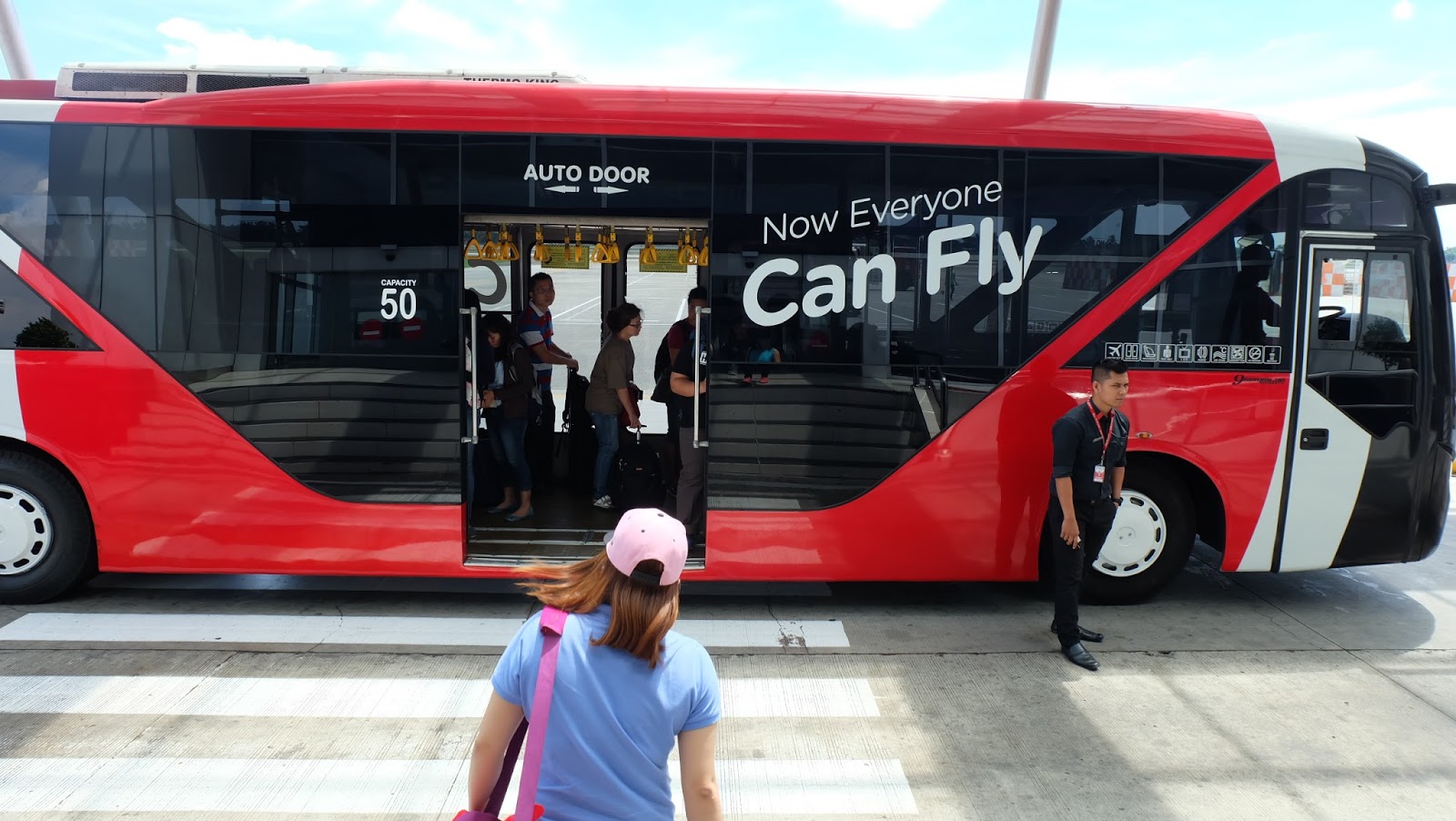
    AirAsia Group Bhd will cease charging the RM3 klia2 fee for all flights departing from Kuala Lumpur International Airport 2 (klia2) starting today. The klia2 fee was introduced in May 2014 to cover the additional cost created at klia2 due to the use of mandatory facilities imposed by Malaysia Airports Holdings Bhd (MAHB) such as aerobridges and SITA check-in and boarding systems, compared to the low-cost carrier terminal previously.

    “Following our announcement last week, we have removed the klia2 fee. We have said from the very beginning that klia2 is not fit for low-cost carrier operations, and we will be going directly to MAHB for all the extra costs they’re costing us,” AirAsia Malaysia CEO Riad Asmat said in a statement.

  • Fees, retail services to be banks’ main income

    Fees, retail services to be banks’ main income

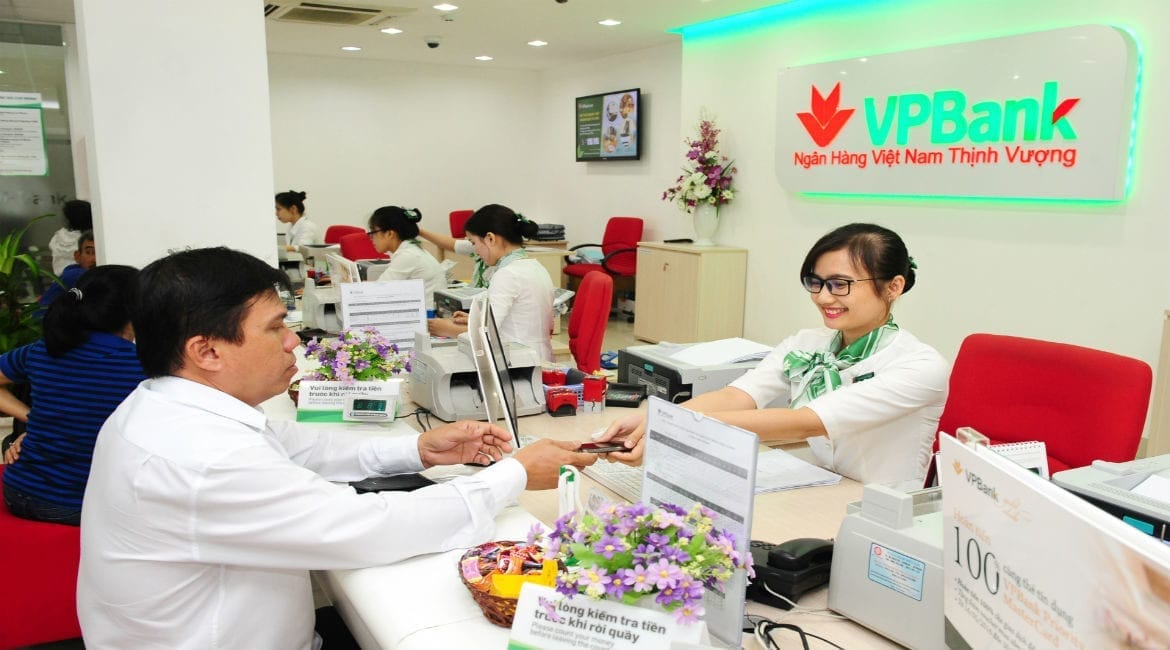
    Commercial banks are expecting the revenue from fees and retail banking services to become their main income sources this year, as a result of rising market demands.

    According to Nguyễn Đức Vinh, general director of VP Bank, after years of investing in the financial company FE Credit, his bank was expecting to receive a large profit from the company in 2018.

    FE Credit started to gain profits from the retail banking segment in 2016, and the profit improved continuously last year. VP Bank’s financial reports showed that the bank’s profits last year hit a record high of more than VNĐ6.43 trillion (US$283.25 million), of which FE Credit made up some 51 per cent.

    Vietcombank also expects to better exploit the potential retail banking segment this year, as it recruited Thomas William Tobin, a Canadian foreign senior expert in retail banking, last year, to be its retail banking director. It was the first time the State-owned bank appointed a foreigner in its management board, showing its priority for the retail banking segment.

    Vietcombank’s chairman Nghiêm Xuân Thành hoped that the expert, who has expertise in global and Vietnamese finance, will help the bank make a leap in the retail banking segment.

    Vietcombank is targeting to become the country’s leading bank in retail segment in 2020, Thành said.

    According to Nguyễn Đình Tùng, general director of the Orient Commercial Joint Stock Bank, his bank is expected to earn a pre-tax profit of more than VNĐ1 trillion in 2018, thanks to specific strategies in the sales of financial products, especially in non-credit services.

    Some other banks have also planned to better exploit the potential business segment in 2018 through mergers and acquisitions last year. Typically, Shinhan Bank Vietnam acquired ANZ’s retail banking services or the Vietnam International Bank (VIB) acquired the HCM City’s branch of Commonwealth Bank of Australia.

    According to experts, banks are investing significantly in retail banking services, instead of only focusing on corporate lending in the hope of gaining higher profits from the potential segment this year.

    With more than 93 million people and sharply increasing consumption, Việt Nam is considered a hot destination for the retail banking segment, which is why banks have strategically planned to boost the segment.

    In fact, the in-cash habit of Vietnamese people is no longer an obstacle to the development of card network and non-credit services. Thus, several banks are aiming to give their customers a variety of non-traditional credit services, such as savings and transactional accounts, mortgages, personal loans, debit and credit cards.

    Notably from the beginning of this year, many banks have considerably improved the quality of their retail banking services to enhance competitiveness in the market. They are also focussing on other aspects such as marketing, technology and human resources to attract more individual customers to non-credit services.

    The move was decided after the retail banking segment contributed to a large amount of the total profits of many banks last year. BIDV and MB Bank, for example, gained high profits last year, thanks to a 34 per cent to 35 per cent rise in retail banking services.

    Nguyễn Thanh Nhung, general director of VietBank, said retail banking services would be a key to making a sustained and stable profit for the banking sector this year. The development of non-credit services contributes to diversifying bank’s services, thereby bringing more customers. This type of service will also disperse risks and create higher profits for commercial banks, said Nhung.

    According to Trần Du Lịch, a member of the National Financial and Monetary Policy Advisory Council, banks currently not only gain profits from lending but also from retail banking services, so the move to invest in retail services is inevitable in the future.

    Based on the results gained, leaders of commercial banks said they would continually apply this business strategy, with a focus on retail banking services next time.


  • Banks increase service fees

    Banks increase service fees

    The Bank for Investment and Development of Vietnam (BIDV) is officially applying a new fee schedule for e-banking.

    The fee on transfers via e-banking of less than VND10 million ($440) is up from VND6,600 (29 cents) to VND7,000 (31 cents), and for up to VND500 million ($22,000) from VND12,000 (52 cents) to VND15,000 (66 cents).

    TP Bank has also raised its fees for SMS Banking, from VND8,800 (38 cents) to VND11,000 (48 cents) per month.

    Eximbank’s have increased to VND16,000 (70 cents) per month and are to be paid every quarter.

    Explaining the increase, TP Bank said that it had to pay VND800 (3.5 cents) per SMS so it was losing money.

    The bank recently introduced eTokens for better security at no charge, but customers who still use OTP SMS must pay fees to cover costs, it said.

    Previously, the Saigon Thuong Tin Commercial Bank raised its internet banking fees for individual customers from VND33,000 ($1.5) to VND44,000 ($1.9) per quarter.

    Other commercial banks have sent proposals to the State Bank of Vietnam (SBV) over increases to ATM transaction fees to cover part of the cost of their investment in ATMs.

    Depending on the bank, the cost of an ATM withdrawal is around VND7,000 (31 cents), which is a loss.

    Such proposals have been met by public concern, however, as many cardholders claim that using ATM cards is burdened by many other types of fees, with some 20-25 basic service charges. Mr. Nguyen Toan Thang, General Secretary of the Vietnam Banks Association, said that customers should not have to pay all fees but only those for the services they use.

    The Department of Payments at the SBV said that domestic debit, or ATM, cards are subject to certain fees, such as ATM withdrawals, money transfers to the same or a different bank account, and statement printing.

    Some bank experts said that banks have to charge for ATM-related services because they have invested in ATM facilities in regard to installation, operations, maintenance, and security. ATM users should therefore pay a fee.

    In addition to increases in certain e-service fees, banks have also cut some charges. Eximbank, for example, reduced its interbank transfer fee from accounts to the Napas system from VND22,000 (96 cents) to VND11,000 (48 cents).

    BIDV offers free annual fees for e-banking customers. Other banks, such as TP Bank and Sacombank also offer free eTokens.

    Banks are improving such services as they move towards modern banking, increasing service revenues and reducing costs.

  • Karaoke bars told to pay annual royalty fee of 9 cents per song in Vietnam

    Karaoke bars told to pay annual royalty fee of 9 cents per song in Vietnam

    Vietnam’s recording industry association told karaoke businesses to take copyright laws seriously. From mid-July this year, royalty fees for more than 10,000 licensed musical works will be collected by the Recording Industry Association of Vietnam (RIAV), the organization said in a statement on Tuesday.

    The rate for a one-year license for each song will be VND2,000 ($0.09).

    Before releasing the statement, the association conducted a survey on the use of musical works under the protection of the association for commercial purposes in the provinces of Quang Ninh, Tra Vinh and Ben Tre.

    RIAV claimed that infringing on copyright to make a profit violates the Civil Code, Intellectual Property Law and other relevant regulations.

    Along with the proposed fee, RIAV has told karaoke businesses to take copyright laws seriously by immediately taking protected songs off their playlists and complying with laws regarding the payment of royalties.

    Earlier this month, in a meeting with a state official, U.S. Ambassador to Vietnam Ted Osius highlighted his interest in protecting intellectual property. He also urged authorities to take action.

    Vietnam has signed five international conventions and treaties for the protection of artistic works.

    There are four associations in Vietnam set up to protect composers and their works.