Tag: feed

  • Take Control of Your Feed: Instagram Empowers Users with AI-Powered Reels Algorithm Customization

    Take Control of Your Feed: Instagram Empowers Users with AI-Powered Reels Algorithm Customization

    The days when Instagram was simply a platform for checking in on friends and family are long gone. Nowadays, user feeds are filled with content that is supposed to align with their interests, however, this is not always the case. Meta, the parent company of Instagram, is aware of this and is providing Instagram users with a solution to optimize their algorithms.

    Controlling the Instagram Reels Algorithm

    Instagram has come out with a new feature that allows users to have a greater control over the type of videos that appear on their Reels feed. Named “Your Algorithm”, this feature provides users with details about the topics Instagram assumes they are interested in based on their past activity.

    The “Your Algorithm” settings can be adjusted by users to either add new topics or remove existing ones. This assists the app in determining the users’ actual video preferences. Instagram has stated that this feature is AI-based, although they have not provided further details about this functionality.

    Using this AI-powered feature, users now have the ability to view, personalize, and shape the topics that form their Reels, thus making the recommendations feel even more customized.

    More Customization Features on the Way

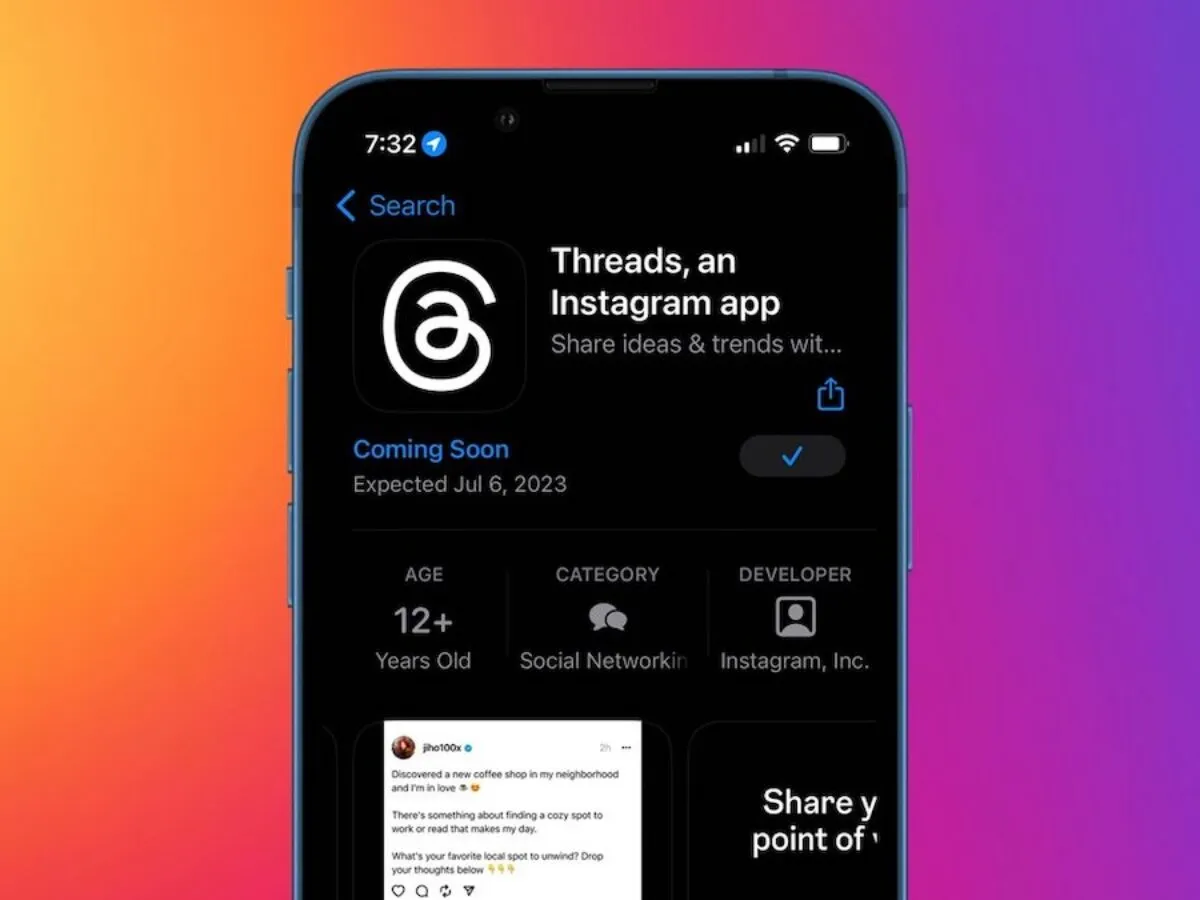
    According to Meta, these customizations are only the initial phase for Instagram. The company has future plans to introduce adjustable algorithms for the Explore tab and other parts of the app. Meta has also recently launched a feature on Threads, another of its platforms, that permits users to adjust the algorithm by tagging their posts with “dear algo”.

    Currently, “Your Algorithm” is available in the US and Meta has stated that it will soon be available worldwide in English. To utilize this feature, users need to:

    – Open a Reel video
    – Click on the icon with two lines and hearts at the top-right corner

    From there, users can view a summary of recommended topics and input the topics they want to see more or less of. They also have the option to share their list of interests via a story.

    While the new customization feature is a welcome addition, some users may desire even more control over their Instagram. For instance, after tailoring their Reels feed, some might prefer to remove them from their main feed and restrict them to the Reels submenu. Reshuffling features such as Direct Messages back to their original place before Instagram’s recent redesign is another potential request. While it may be a tall order, it’s certainly food for thought for the developers at Meta.

    Questions & Answers

    What is the new feature Instagram is rolling out?
    Instagram is launching a feature named “Your Algorithm” that allows users to fine-tune the type of videos that appear in their Reels feed.

    How does “Your Algorithm” work?
    “Your Algorithm” provides users with details about the topics Instagram assumes they are interested in based on their past activity. Users can then add new topics or remove existing ones to enhance their personalization.

    When and where will “Your Algorithm” be available?
    “Your Algorithm” is currently available in the US and will soon be available globally in English.
  • Revolutionize Your Viewing: YouTube Tests AI Chatbot for Personalized Home Feed Customization

    Revolutionize Your Viewing: YouTube Tests AI Chatbot for Personalized Home Feed Customization

    YouTube is in the process of testing an Artificial Intelligence (AI) chatbot aimed at enhancing your home feed to better align with your video preferences. This development seeks to address the limitations currently presented by the platform’s algorithm, allowing you a greater degree of control over your feed.

    Algorithm Limitations and the Role of AI

    Your YouTube home feed is largely shaped by the platform’s algorithm. This algorithm works by continuously monitoring your viewing habits, the content you have previously liked or disliked, and the YouTube channels you follow. Despite its effectiveness, this system has its flaws as it can lead to an over-saturated feed based on a fleeting interest.

    For instance, viewing a few Marvel-related videos may lead the algorithm to categorize you as a die-hard Marvel fan and subsequently fill your home feed with Marvel content. YouTube is acknowledging this limitation and is experimenting with an AI chatbot that allows you to specify the type of content you wish to view.

    Introducing Your Custom Feed

    YouTube is testing a new feature, “Your Custom Feed,” which allows you to customize your home feed. Users involved in the experiment will find this feature on their home page. This feature allows you to update your feed recommendations based on simple prompts. This innovation is intended to provide an easy means of exerting greater control over your suggested content.

    Accessing the AI chatbot is as simple as tapping “Your Custom Feed” next to the Home option on your YouTube main page. You can then enter a prompt detailing the type of videos you wish to see on your home feed. This change will reset your current YouTube home feed to better reflect your stated preference.

    AI and Custom Feed

    YouTube is not alone in utilizing AI to help users customize their feeds. Platforms are increasingly using AI chatbots or manual topic selection to tailor content to users’ preferences, providing more control over content than relying solely on algorithms.

    However, it is worth noting that as technology giants like Google begin to integrate AI tools into their products, they are likely to use the data shared with these chatbots to train their AI models. This data-sharing means users may inadvertently become a source for training AI systems.

    Respecting User Preferences

    While some users may appreciate the more personalized feed offered by AI technologies, others may prefer to browse un-curated content. It is hoped that should this feature become widely available, Google will allow users to opt-out, respecting the preferences of users who do not wish to have their viewing habits learned by AI.

    Other User-Controlled Features

    YouTube has been taking steps to give users more control over their feeds. For instance, there is the “Customize Your Feed” option that occasionally appears on the home feed, which asks users to select their preferred types of videos. YouTube also frequently asks if you like a particular post or video to determine if it should show you similar content in your feed.

    In addition, YouTube introduced an option to remove pop-ups such as “subscribe to the channel” or “watch another video” that appear at the end of a video. These innovations suggest that YouTube is committed to refining the user experience on its platform.

    Questions & Answers

    What is YouTube doing to improve the user experience?
    YouTube is experimenting with an AI chatbot that allows users to customize their home feed. This gives users more control over their feed, addressing limitations of the platform’s algorithm.

    How can users interact with the AI chatbot?
    Users can interact with the chatbot by tapping the “Your Custom Feed” feature found on their home page. They can then enter a prompt detailing the type of videos they wish to see on their home feed.

    What if users do not wish to have AI learn their viewing habits?
    YouTube hopes to respect the preferences of all users. Should the AI feature become widely available, it is anticipated that users who do not wish to have AI learn their viewing habits will have the option to disable the feature.

  • Instagram now helps you find popular places more easily

    Instagram now helps you find popular places more easily

    Instagram now offers a new map experience for Android and iPhone users, which should allow you to rediscover local businesses and find popular locations around you more easily. As the social media announced, you can now tap on location tags inside a post in your feed or in a Story of a friend to find places around you.

    However, the most interesting part is that you can now manually find locations via the Explore tab as well. You can search for a place in the search bar and tap on the search result, which will open the establishment in question, or you can just type the name of your city or neighborhood, and the app will show you what popular locations are around you.

    Instagram also added filter options that allow you to find places by category. At the moment, there are six filter categories: Restaurants, Cafes, Sights, Hotels, Parks & Gardens, and Bars. You just need to tap on the type of location you want to visit, and Instagram will list all the places around you that fall into that category.

    Although the new map feature on Instagram will undoubtedly let you find more places easily, we should point out that Instagram isn’t the only social media platform that has such a function. For quite some time now, Snapchat has been offering pretty much the same feature. You can go to Snapchat’s map and basically find various establishments around you. Also, just like Instagram, Snapchat offers six filter options that will help you find the place you are looking for more easily.

  • Facebook starts rolling out chronologically ordered Feeds

    Facebook starts rolling out chronologically ordered Feeds

    Facebook is gaining a new way for users to consume content from friends, Favorites, Pages and groups – a chronologically ordered Feed tab. Mark Zuckerberg posted a short demo of the feature on Thursday, saying it is one of the most requested features on Facebook.

    “One of the most requested features for Facebook is to make sure people don’t miss friends’ posts. So today we’re launching a Feed tab where you can see posts from your friends, groups, Pages and more separately in chronological order. The app will still open to a personalized feed on the Home tab, where our discovery engine will recommend the content we think you’ll care most about. But the Feeds tab will give you a way to customize and control your experience further,” posted Zuckerberg on Facebook.

    Furthermore, people will be able to create a Favorites list inside the Feeds tab, consisting of friends, pages and groups, in order to get to their favorite content faster and easier. This change is similar to what Meta has done with Instagram – the company announced a chronological Feed back in January, and rolled out the feature a couple of weeks later.

    The new Feed tab in Facebook is already rolling out to some users on Android and iOS. There’s a slight difference between the two operating systems – on Android the tab can be found at the top of the UI, while on iOS it is at the bottom. The fill rollout should take place over the course of next week.


  • Google announces five new features coming to Chrome for iPhone and iPad

    Google announces five new features coming to Chrome for iPhone and iPad

    If you have an iPhone and don’t like Safari, chances are you’re using Google’s internet browser, Google Chrome. If that’s the case for you, you’ll be delighted to hear that Google Chrome’s latest update for iOS is now bringing some very useful features, including improved security, a redesigned main screen, and more.

    Google has recently been bringing loads of updates to its Chrome browser. Now, some update love is being sent to its iOS version, and Google has announced some new features coming our way. Let’s see what these are.

    First off, we have Google’s Enhanced Safe Browsing feature. This one is a security-centered feature that proactively warns you about dangerous websites you are about to visit. Enhanced Safe Browsing has been available on Android and desktop for months now, and it’s finally made its way to iPhone users.

    The feature works by sending real-time data to Google Safe Browsing to check for malware, phishing, and other dangerous animals that lurk in the Internet’s dark corners. This way, you’ll get warned if you encounter a dangerous website.

    Speaking about security, Chrome for iOS also gets another useful feature: alerts for compromised credentials. iOS’ own password service does warn you about those, but it’s never a bad thing to get two warnings if you have a compromised password: you know, hackers can use this to access some of your accounts, so better be vigilant about it.

    To enable Enhanced Safe Browsing, update your Chrome app, and then go to Chrome > More > Settings > Enhanced Safe Browsing (you can do that from iPhone or iPad).

    Moving on, another useful features coming to Chrome for iOS is called “Chrome Actions”. This is a quality-of-life feature that lets you easily perform a certain tasks without having to dive deep into the app’s settings to find it.

    To use Chrome Actions, you simply need to type into the address bar of Chrome what you want to do. Examples include typing “Clear Browsing Data” or “Open Incognito Tab”, and even “Set Chrome as Default Browser”.

    Additionally, Chrome can also predict when you will need a Chrome Action by the words you are typing in the address bar, so you don’t need to memorize all the commands to benefit from this feature. Since 2020, the desktop version has had it, and Android users got it in April 2022, but it’s never too late to get something useful like that.

    But that’s not all. This new update lets you set Google Password Manager as your Autofill provider, if you want to do so. This comes as an alternative to Apple’s own password service, as well as third-party tools such as 1Password or Dashlane.

    The app’s main screen also has a new look now with this new update. The main screen now includes more than just your recent tabs, adding access to your Discover feed. Unlike the previous features, that’s something the Android version of Chrome is yet to get, and Google has stated it will be available in the future.
    The update also brings some minor changes as well. There are improvements of Google’s website translation feature. This will help you see websites in your preferred language (the feature uses on-device machine learning), and it is now getting an updated language identification model. Pretty much, this means the app will be able to more accurately recognize the language of a webpage and whether it needs to be translated for you.
    Other minor tweaks include the ability to manage camera and mic permissions for specific sites, and the ability to download and add iCalendar files to your Calendar.
  • Instagram is working on a more immersive news feed

    Instagram is working on a more immersive news feed

    Instagram has been implementing new features like crazy in the past couple of months. The product tagging option we told you about is now live in the US, and the new feed options announced in January are already live as well.

    Now there’s another cool feature in the works, according to Instagram chief Adam Mosseri who tweeted the following: “We’re testing a new, immersive viewing experience in the main Home feed.” This immersive experience means basically taller photos and videos in a new feed view, similar to Instagram Stories.

    Another change is the increase in post recommendations from people or accounts you don’t actually follow. While somewhat counterintuitive, this change aims to keep people engaged for a longer period of time.

    This might annoy some users but there will be an option to personalize the feed to your liking (although the details are not clear at this point) and hopefully minimize these strangers appearing in your recommendation panel.

    During the short video posted on Twitter, Mosseri also showed a glimpse of the new interface and how the new feed will look like. The experience is not full-screen per se, as users would still be able to see the home, search, Reels, and other sections under the image (take a look at the screenshot below).

    According to Mosseri, the new features will be rolling out to users that are part of Instagram’s testing program in the coming weeks. Let us know what you think about this new Instagram feed in the comments section below.

  • Spotify is testing a TikTok-like video feed

    Spotify is testing a TikTok-like video feed

    Spotify wants to become more TikTok-like… sort of. Apparently, the music streaming service is testing a new feature called Discover for its app. The feature will allow artists to post vertical videos to their songs and allow listeners to discover new songs more easily.

    The new Spotify Discover feature was spotted by Chris Messina in the music app’s latest iOS TestFlight beta version. The new Discover button is located between the Home and Search buttons. When you Discover, you are presented with a TikTok-style video feed of artists and their songs. You can like the song by tapping on the heart icon or hitting the three-dot button for more information.

    Spotify declined to comment on whether the new feature will make it into the official version of the app or if it will be ditched entirely. A spokesman for the streaming service gave the following statement:“At Spotify, we routinely conduct a number of tests in an effort to improve our user experience. Some of those tests end up paving the way for our broader user experience and others serve only as an important learning. We don’t have any further news to share at this time.” – Spotify spokesperson.

    The new Discover feature could prove very useful for artists as it will allow them to add a visualization to their songs without the need for an expensive music video. The feature will also allow Spotify to differentiate itself more from its biggest competitor, Apple Music, as the latter doesn’t have a video feed section.

    A couple of artists have already made vertical music videos in the past. For example, back in February and April of 2019, British singer MARINA published vertical videos for her songs Handmade Heaven and Orange Trees, which ere posted on all social media, taking advantage of the smartphone form factor. Later, Billie Eilish jumped on the new trend as well. The American music artist posted a vertical video of her hit song Bad Guy in August of 2019.

    If Spotify indeed adds the new Discover section to its app, vertical music videos could become mainstream. If that happens, Apple will probably add a similar feature to its music streaming service too.

    Spotify isn’t the first popular app to work on a TikTok-like video feed. Instagram introduced a very similar feature in its app called Instagram Reels. YouTube also introduced its own version of a vertical video feed called YouTube Shorts.

    Both Reels and Shorts proved to be quite successful, and it isn’t surprising that other big companies want to add similar features to their apps. Netflix also recently introduced a video feed to its app containing comedy content. The new Netflix feature is called Fast Laughs.

  • Google wants you to think of its search app when it comes to breaking news

    Google wants you to think of its search app when it comes to breaking news

    Twitter, on the other hand, has been able to attract viewers looking for live coverage of breaking news. During such events, anyone with a smartphone can become a photojournalist sharing live video and audio from the scene. In 2015, Google and Twitter reached a deal that elevated tweets to the top of Google Search results for queries related to breaking news. Now, Google would like to be more like Twitter.

    Inside the company, Google’s initiative is called Big Moments and is still considered an experiment. As such, Google isn’t saying exactly how it might display tweets covering breaking news in the future. A small group inside the Google Search team is working on Big Moments and the failure of Google Search to display relevant breaking news during the attack on the U.S. Capitol and the Black Lives Matter protests has insiders on the Google Search team working on ways to fix things.

    “We are continually experimenting with ways to ensure that people who come to Google can find the most authoritative and up to date information when they need it,” a Google spokesperson said in a statement. “Any feature or improvement to our systems goes through a rigorous testing and evaluation process to ensure it delivers value to people.”

    Early last year when word about COVID-19 started to be the big story almost every day, Google revised its Search format so that video and data from medical authorities stood out more in the results. This is what Google would like to do with other timely breaking news events. Still, Google argues that it is not a publisher and should be viewed as a platform.

    The changes that Google wants to bring to Search include the addition of historical context to a story. In addition, Google would add information to a breaking news event that it doesn’t already include such as updating the most recent death and injury counts connected to a breaking news story, in real-time. Currently, those interested in news turn to Google Search after an event is over instead of heading to the app while the event is taking place.

    Twitter has made itself one of the most visited sites during a breaking news event when the event is taking place. As we explained above, part of what makes Twitter so good with breaking news is the way live video from the scene of an event can be posted in seconds and those close to the event can obtain up-to-date information. Google hopes to catch up to Twitter with Big Moments which is being led by Elizabeth Reid, a senior executive who took over as the head of Search experiences in April.

    Big Moments will use algorithms to make editorial decisions instead of having human editors make these decisions. The SearchEngine Journal said that using algorithms to curate news in real-time will be a big challenge for Google especially with stories that are “polarizing.” Google already comes under attack for showing bias is some search results and would probably have to deal with more critics complaining on the bigger news stage.

    Google recently added a notice that appears on Search when a story is moving too quickly to appear on the Search app. The message says: “It looks like these results are changing quickly. If this topic is new, it can sometimes take time for results to be added by reliable sources.” In a situation like this, human curators would take too long to bring the story to Google which is why the company is using algorithms since the goal for the company is to get the latest news out as fast as possible.

  • Facebook joins effort to boost newspaper subscriptions

    Facebook joins effort to boost newspaper subscriptions

    Facebook aimed at fostering ‘a healthy news ecosystem’ and curbing the spread of fake news. Facebook announced Thursday initiatives to help struggling news organizations gain paid subscribers, following a similar move unveiled earlier this month by Google.

    The social network giant said it will test “premium news models” for organizations that deliver their content on Facebook, to enable the publishers to have more control over pricing, subscriber relationships and revenue.

    “Earlier this year, many publishers identified subscriptions as a top priority, so we worked with a diverse group of partners to design, refine, and develop a test suited for a variety of premium news model,” said a blog post by Facebook executives Campbell Brown, Alex Hardiman and Sameera Salari.

    Facebook said it would soon roll out the test to support new subscription models in Instant Articles in partnership with a news organizations in the U.S. and Europe, starting with the Android application.

    The leading social network said it would allow for “paywalls” in its Instant Articles feature, aiming to encourage users to sign up and pay news organizations whose content is linked through Facebook.

    If a person subscribes after prompting, the publisher will handle the payment directly and keep 100 percent of the revenue, Facebook said.

    Facebook said it would allow for various paywalls including a “metered” system with a fixed number of articles as well as a “freemium model” where certain content is locked at the discretion of the publisher.

    Included in the test will be Germany’s Bild and Spiegel, France’s Le Parisien, Italy’s La Republicca, the Telegraph and the Economist of Britain and the U.S.-based Boston Globe, Washington Post, and news groups Hearst and Tronc, which includes the Baltimore Sun, Los Angeles Times, and San Diego Union-Tribune.

    Facebook said the changes are part of its Journalism Project created this year aimed at fostering “a healthy news ecosystem” and curbing the spread of fake news.

    The moves by Facebook and Google come with many news organizations blaming the internet giants for encouraging free content, while getting most of the ad revenues from news articles appearing on their platforms.

    Earlier this month, Google announced similar actions, ending a “first click free” policy that required news organizations to provide at least three free articles to be indexed in a Google search.

    This will be replaced by a “flexible sampling” model that will allow publishers to require a subscription at any time they choose, according to Google.