Tag: fenty beauty

  • LVMH registers company called “Project Loud” with Rihanna

    LVMH registers company called “Project Loud” with Rihanna

    Plans by luxury fashion house LVMH to quietly collaborate with popular celebrity Rihanna on a new fashion business have been exposed, according to Fashion United. Citing a Fashion Network report on the partnership, the website reveals that the new fashion company Project Loud – originally registered as a shell firm in 2017 – took in a €60 million (US$67.8 million) capital investment from LVMH last year. The firm’s president was shown to be senior LVMH executive Jean-Baptiste Voisin.

    Rihanna’s Fenty line – which, according to LVMH chairman Bernard Arnault achieved €500 million in sales last year – was also launched with the support of LVMH. Its Fenty x Puma collaboration in 2017 resulted in a boost in Puma sales by 23 per cent.

    The success of Fenty indicates high potential sales volumes for Project Loud and bodes well for this latest LVMH investment.

    News of the collaboration first broke in January when online portal WWD and the New York Times cited multiple unnamed sources confirming plans.

    Writer Vanessa Friedman flagged the question “Is Rihanna the Coco Chanel of the 21st century?” in a feature published last month.

    “Robyn Rihanna Fenty, one of the defining musical artists of the millennium and a multi-hyphenate talent, has no formal fashion training. What she does have is a clear vision for her own image, 14 No. 1 singles on the Billboard 100 chart and more than 50 Top 40 hits, 67 million Instagram followers, and an ability to disrupt the status quo,” Friedman wrote.

    “While the details of the agreement remain unclear, it is a turning point in both fashion and fame.

    “The combination of Fenty and LVMH will be the clearest expression yet of how celebrity, social media and influencers have redefined the power balance between culture and consumption, changing the way brands of all kinds relate to their audience,” wrote Friedman.

  • Rihanna to launch a fashion house with LVMH

    Rihanna to launch a fashion house with LVMH

    WWD reported that, according to multiple sources, the Rihanna is working with French luxury conglomerate LVMH to launch a luxury house under her name. It would be the first time LVMH has launched a brand new label since Christian Lacroix in 1987. No word on an official launch date, but perhaps that is why Rihanna is suing her father now over the ‘Fenty’ name as he could be holding up proceedings with LVMH.

    The pairing makes sense. In 2015, Rihanna appeared in Christian Dior’s “Secret Garden IV” ad shot at Versailles, the first Black woman to front a campaign for the French fashion house. She also created a line of Dior sunglasses in 2016.

    What is more, she launched Fenty Beauty by Rihanna under the Kendo, LVMH’s incubator to produce products that ultimately end up in Sephora, or in this case, change the way beauty products are marketed.

    WWD reported that Fenty Beauty made close to $100 in a matter of weeks — a great sign for Rihanna’s impending luxury offering.

    Sources tell WWD Rihanna is a “hands-on type” who is very involved in the range’s product development (she was reportedly said to be the same way while creating for Puma and Savage x Fenty).

    It is believed LVMH started forming a team six months ago, handpicking employees from Louis Vuitton and Celine to work on the fashion house’s ready-to-wear, leather goods and accessories. And hold on to your Fenty x Savage hats here, the line is to be released in tandem with her ninth album expected to drop later this year.

    We already cannot wait to be fresh off of Rihanna’s runway.

  • Glossier’s president and CFO quits

    Glossier’s president and CFO quits

    One of Glossier’s earliest executives is leaving. Henry Davis, president and chief financial officer, is exiting the direct-to-consumer beauty brand after almost five years to pursue his own entrepreneurial opportunities. This comes weeks after Davis’ position changed from chief operating officer to chief financial officer, a role the company has been trying to fill since former vice president of finance Matthew Weiler departed the company earlier this year.

    In addition to Davis and Weiler, former creative director Helen Steed left Glossier a year ago to join New York-based branding and design agency Aruliden as vice president and creative director. Glossier confirmed Davis’ departure. His last day will be December 31.

    “Henry has been my partner since the earliest days of Glossier. He was one of the first people to understand the opportunity to build a new kind of company — one that leverages technology to create in collaboration with its customers,” Emily Weiss, founder and chief executive, told BoF. “I’m excited for him as he begins his own entrepreneurial journey.”

    After Weiss, Davis was the most public face of the business. He was one of the first executives hired by Weiss and joined the brand in June 2014, three months before launching in October of that year.

    Previously, Davis worked at Index Ventures, an early investor in Glossier that also led, along with Institutional Venture Partners, a $52 million Series C round of funding in February.

    A changing of the guards in upper management follows a handful of new hires including Marie Suter, who left Condé Nast after a 13-year tenure to join Glossier as creative director in March.

    Facebook alum Maykel Loomans is now head of digital product design, and Kym Davis, formerly of Fenty Beauty, is leading product development.

    Ashley Mayer, who came from Silicon Valley-based venture firm Social Capital, is head of communications, and former head of communications, Amy Snook, recently became chief of staff.

    The company, which has almost 200 employees, has raised $86 million and, according to a source close to the company, is on track to do over $100 million in revenue this year.

    In November, Glossier opened a flagship location in New York City that by customer accounts was one of the most bustling stores in the area.

    To date, the brand has only sold its range of skincare, cosmetics and body care through direct channels, an anomaly for direct-to-consumer lines that have begun to rely on retail partnerships to scale. Since inception, Weiss’ mission has been to retain complete control of its brand experience by creating a direct retail network to support the digital first line.

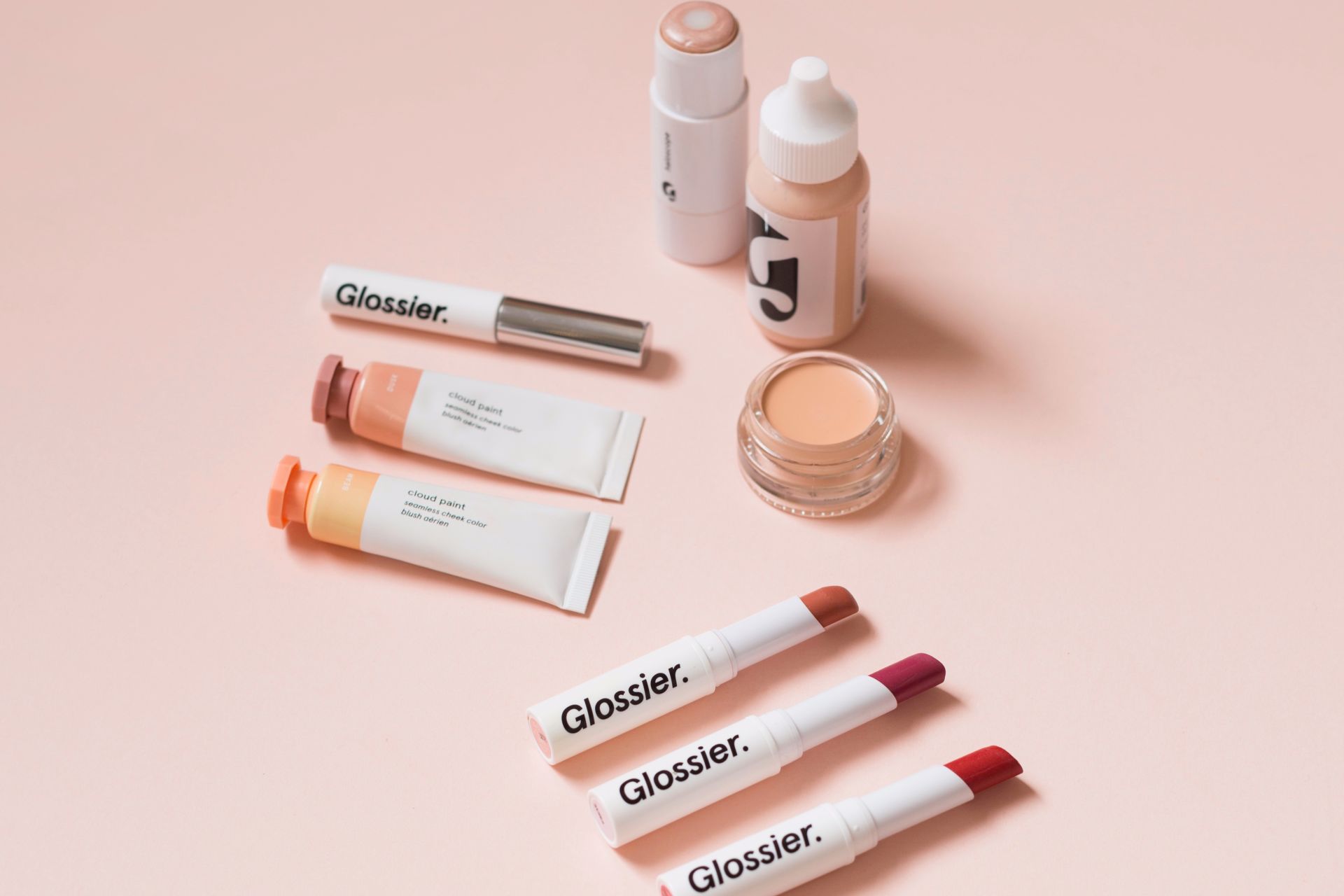
    And even though this may have resulted in the brand not yet scaling to the size of many other heavily funded startups, Weiss’ — and by extension Glossier’s — influence is outsized. Weiss has stayed true to her direct roots and in doing so has managed to build a cult following and community of engaged consumers willing to buy anything put forth by the brand, from its best-selling Boy Brow grooming pomade to its Milky Jelly Cleanser.

    The brand’s most engaged consumers have become ambassadors that are treated like influencers — some unpaid and others receive cash and shopping credits for their efforts in spreading the word.

    Weiss has been thoughtful about international expansion. Despite global demand from the onset, she took three years to sell outside the US. Glossier started selling in Canada and the UK last year and this year entered Ireland, Sweden, Denmark and France. The brand now sells across seven countries.

    “This team has proven that building a business alongside your customers is the future — not only in the world of beauty, but for all internet-first brands,” Davis said. “I couldn’t be more bullish about Glossier’s future as I embark on founding my own company.”

    Nabil Mallick, a partner at Thrive Capital and Glossier board member, will serve as interim CFO. A search for a full-time CFO is underway.

  • The changing face of today’s beauty industry

    The changing face of today’s beauty industry

    Younger consumers, those between ages 18 and 24, are one of the driving forces behind the beauty market’s growth, according to Fashionbi’s new “Beauty Market Trend” report. Celebrity brands, natural beauty, personalization and gender-bending products are also becoming more popular among beauty buyers.

    “There are many experiments in the field of the ‘smart and tech beauty’ products,” said Yana Bushmeleva, chief operating officer at Fashionbi, Milan. “Another interesting trend is the customized beauty when the customer can literally create a perfect product for his or her skin type.”

    Personality-driven products

    For decades, luxury beauty brands have enlisted actresses, singers and models to star in their advertising campaigns. Today, however, celebrities have the agency and the following to launch their own beauty lines, sometimes with the help of more traditional industry players.

    Created by frequent luxury collaborator Rihanna, Fenty Beauty launched following months of anticipation and two years of research and development in September 2017. The line of color cosmetics, including a staggering 40 shades of foundation, was developed in partnership with LVMH-owned Kendo, the company behind Bite Beauty and Marc Jacobs Beauty.

    Available exclusively at retailers Sephora and Harvey Nichols, as well as Fenty Beauty’s ecommerce site, stock flew off the shelves as women gravitated toward the brands’s inclusive message and merchandising.

    Other successful celebrity brands include Kylie Jenner’s Kylie Cosmetics, which made $420 million in 18 months, and sister Kim Kardashian West’s KKW Beauty, which earned an estimated $14 million on its launch day

    Model Miranda Kerr’s Kora Organics has a focus on eco-friendly beauty, and actress and singer Lady Gaga is expected to introduce her own makeup line next year.

    “Not all the beauty brands rely on celebrity endorsement,” Ms. Bushmeleva said. “There are also those which diversify the risks, [like in] Dior’s case, some makeup and skincare products are promoted by Bella Hadid, some by Natalie Portman and some have no celebrity endorsement.

    “Those brands which believe that the celebrity endorsement is crucial for the marketing campaigns should choose the person who is ‘new’ to the market, which means is not involved in the promotion of the competitive brand or doesn’t have its own line,” she said.

    Other makeup brands are collaborating with fashion houses for limited collections.

    A Balmain x L’Oreal capsule collection was released in late 2017, and included a dozen shades developed by Balmain’s creative director Olivier Rousteing with the cosmetics maker’s team.

    Men are also buying more makeup products than before, and luxury brands are looking to capitalize on the trend.

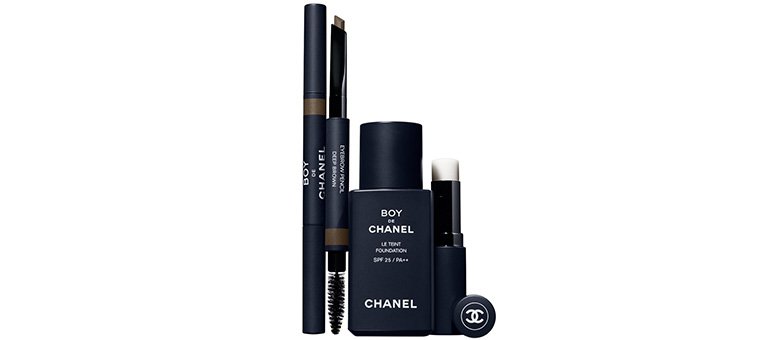
    This trend is becoming more popular in Asia especially, and French fashion label Chanel is getting in on the ground floor with its first men’s makeup line. The collection will be comprised of three products, including an eyebrow pencil, lip balm and tinted moisturizer.

    It launched in South Korea on Sept. 1, but will branch to ecommerce starting in November, where everyone can purchase.

    Keeping it clean

    The majority of cosmetics executives believe that health-inspired beauty along with personalization and digital engagement will be driving themes in the industry this year.

    According to a survey by Euromonitor, skin health is a major factor within the beauty-manufacturing world today with an increase in brands creating topical probiotics. More than half of beauty execs believe that health in beauty, digital and personalization are the most important aspects of successful launches.

    Beauty brand Lancôme expanded its bespoke skin tone matching service within the United States in 2016. The brand’s Le Teint Particulier Custom Made Makeup uses digital readings of a client’s face to create a specially blended foundation at the counter.

    Eco-friendly personal care products comprise cosmetics that are organic, farm-to-face or cruelty-free.

    A report from Perfect 365 found that a significant portion of Western consumers condemn the testing of beauty products on animals and will reject brands that do so. Nearly 50 percent said they would be happy if their state in the U.S. banned animal testing and nearly a quarter said they regularly use PETA’s Web site to see if a brand tests on animals before they buy it.

    While Western consumers tend to reject beauty products tested on animals, China still requires such trials, putting luxury beauty brands in an awkward position (see story).

    Clean beauty is becoming another key word within the personal care industry as sustainability and wellness take over in all aspects of retail, and luxury retailers are some of the first to take it on.

    Consumers are more concerned than ever in regards to harmful chemicals in any product, but the beauty consumers as well as the luxury consumer are some of the most keen to these issues.

    “There are a few possible ways for luxury brands to embrace clean beauty,” Ms. Bushmeleva said. “Either to launch a new ‘green’ beauty brand, launch a special line under the current brand or through the acquisition of the existing company.”

  • The secret to Savage x Fenty’s success

    The secret to Savage x Fenty’s success

    Rihanna’s highly-anticipated, size-inclusive lingerie line Savage x Fenty marked the latest addition to the superstar’s sprawling fashion and beauty empire.

    Avid buyers who visited the Savage x Fenty site at midnight were placed in a queue system that could not keep up with demand: fans had to wait as long as two hours and/or enter the queue multiple times before they could freely browse and purchase products from the collection.

    Developed in partnership with TechStyle — the subscription-oriented parent company behind Kate Hudson’s Fabletics and Kim Kardashian’s ShoeDazzle — Savage x Fenty features 90 pieces of lingerie, sleepwear, and accessories in multiple shades and sizes, including four themed capsule collections titled On the Reg, U Cute, Damn and Black Widow.

    All items are priced under $100 apiece, with the option to sign up for a $50 annual subscription program for exclusive early access to product launches and limited-edition items.

    “Savage is really about taking complete ownership of how you feel and the choices you make,” Rihanna told Vogue last week. “Basically making sure everybody knows the ball is in your court.”

    From her multimillion-dollar cosmetics line Fenty Beauty to her iconic collaborations with Puma and now her Savage brand, the singer is setting new standards for brand partnerships in the music industry — all while working on a new reggae album. Forbes estimates that the star banked $12 million in 2017 (one-third of her pre-tax earnings that year) from her fashion ventures.

    Fenty Beauty — notable for featuring 40 different shades of foundation to accommodate different skin tones — racked up $27 million in earned media value within just one month of launch. Annual revenue for Fenty Beauty is on track to surpass those of rival lines like Kylie Jenner’s Kylie Cosmetics and Kim Kardashian’s KKW, according to Slice Intelligence.

    Is the business backed by her music success? A rep for Rihanna declined to comment, but sources tell Billboard that Roc Nation’s CEO/co-founder Jay Brown is one of her secret weapons, overseeing her deals.

    Rihanna first signed with Roc Nation’s management arm in 2010, and later joined the firm’s in-house label imprint in 2014; Roc Nation hired new president of management Phil McIntyre just a few weeks ago, allowing Brown to turn even more of his focus on Rihanna, sources say.

    But because Rihanna is leveraging her own brand to sell her products, she is directly involved in every step of the design and manufacturing process, and goes above and beyond to pull back the curtain for her fans — visiting facilities, picking out color palettes, filming DIY makeup tutorials and regularly seeding previews of upcoming products on her Instagram account, which boasts 62.5 million followers as of press time.

    “One thing that’s always stood out to me is how unapologetically human Rihanna is,” Aleesha Smalls-Worthington, senior brand director, marketing & e-commerce at Scotch Porter and former digital marketing exec at Iconix Brand Group and Roc Nation, tells Billboard. “Whether in person or on social media, that element of humanness is still missing from a lot of relationships and interactions. Many celebrities set up their business objectives based on the 10 million views or $10 million in sales they want in return. Rihanna’s ‘return’ is simply what her fans want from her: inspiration, aspiration, a piece of Ri. That in all-caps spells HUMAN.”

    A huge competitive advantage for Rihanna in the current brand landscape is her focus on diversity and inclusiveness in her products. According to Slice Intelligence, African-American, Hispanic and Asian shoppers comprise the largest proportions of Fenty Beauty’s customer base, while white shoppers are the brand’s smallest consumer group.

    Rihanna’s successful launches with brands like Puma and TechStyle also highlight a key discrepancy between the high-end fashion brands that artists tend to cite in their lyrics — e.g. Gucci, Louis Vuitton, Valentino — and the types of deals that actually lead to meaningful, sustained revenue for artists and a closer, more accessible relationship with fans.

    “Every single artist I’ve talked to wants a Gucci deal,” Marcie Allen, president of music experiential agency MAC Presents, tells Billboard. “Guess what? Unless you’re The Rolling Stones, your fans can’t afford Gucci. Most of the artists coming up today are younger, and their key fan demographics are Gen-Z and millennials. Last time I checked, my stepdaughter who’s Gen-Z is not going out and buying a Gucci bag. I tell these artists, you can wear Gucci all you want, but you also need to work with brands your fans can afford.”

    In fact, for artists with avid online followings, making products more affordable could actually lead to more aggregate spending and income, not less. According to Slice Intelligence, Fenty Beauty consumers spend an average of $471 annually on makeup, outpacing shoppers of Kat Von D who spend $371, KKW shoppers who spend $278 and Kylie Cosmetics shoppers who spend $181 — a testament to how an eye for diversity and accessibility, plus unparalleled cultural clout, equals an unstoppable driving force for business.

    Normally, music partnerships with fashion brands involve the artist and their team receiving a flat fee or commission to license music for advertising, and/or to be featured in official ambassador programs that brands already have in place. Depending on the turnaround time, payments can start as low as $10,000 for one to two days of production and social posts.

    But deeper, more integrated deals like the ones Rihanna and Roc Nation are brokering also involve equity and royalties on unit sales, in addition to steep upfront fees. Sources tell Billboard that A-level artists can command advances as high as $2 million for each branded clothing and footwear line, plus anywhere from a 7- to 15-percent cut of gross sales.

    “If I can do your job better than you, I can’t hire you. That’s a waste of my money and time,” Rihanna said at Vogue’s Forces of Fashion conference in October 2017. “But if you have something to offer, I know there’s an expertise that I can respect and I put people in place based on what their strengths are … I’m only as great as my team, and I pay very special attention to that.”

    Rihanna was first appointed as Puma’s creative director and global ambassador for the brand’s women’s collections in Dec. 2014. Her first branded sneaker, launched in May 2016 for $140 a pop, sold out in just 35 minutes.

    Though Rihanna’s appointment with Puma arrived amid a flurry of other corporations hiring celebrities as creative directors and chief creative officers, in a mutually desperate attempt to increase brand exposure — Lady Gaga and Polaroid (2010), will.i.am and Intel (2011), Alicia Keys and BlackBerry (2013), Justin Timberlake and Bud Light Platinum (2013), Nick Cannon and RadioShack (2015) — Rihanna retained her branding power even as most “creative directorships” proved to be unfeasible and shut down within just a few years.

    “From the artist’s perspective, the title of ‘creative director’ is actually very limited,” Mara Frankel, senior creative director, brand partnerships at Atlantic Records, tells Billboard. “Brands aren’t going to change their entire media-buying strategy to suit what artists are looking for, and artists are not really meant to work for brands in that way because they want to focus on being in control of their own music and art. This can lead to a less authentic relationship, which could be why some of these deals didn’t work out in the long term.”

    Part of Rihanna’s outsized branding success comes from her reputation and devoted following online. According to Nielsen Music’s N-score talent tracker — which assesses endorsement potential for U.S. celebrities across 10 attributes, and which brands rely on to maximize ROI on their campaigns — Rihanna outranks the average music celebrity on marketability with an overall N-Score of 78, compared to the music average of 65. On the “Stylish” and “Trendsetter” attributes in particular, Rihanna outranks much of her competition at 48 and 35 respectively, compared to the music norms of 26 and 19.

    In addition, Rihanna fans are 3.7 times more likely to purchase from Rihanna herself than from other celebrities, according to research from The NPD Group — which reflects a wider trend across the industry of artists becoming the new influencers of note for retailers. “It used to be that all these fashion houses were seeding their products only with social-media and YouTube influencers, but now, there’s a huge paradigm shift towards artists,” says Allen. “You used to see an actor or model like Kate Moss as the face of a Gucci campaign, not Harry Styles.”

    The major labels are growing their own brand partnership teams, which are dedicated to securing strategic deals for their artists that drive both visibility and market share. The types of deals range from product placements in music videos and sync licenses for commercials to private events and tour sponsorships. Fashion has become one of the hottest partnership targets, as clothing and beauty brands naturally cover an expansive amount of real estate, from social media and TV campaigns to billboards and brick-and-mortar stores — compelling some industry experts to call retail “the new media.”

    While some in-house label departments handle merchandising and e-commerce directly for their artists, like Universal Music’s Bravado, third-party fashion deals continue to flood the marketplace like never before. SZA, Metro Boomin, Future and Cher have all appeared in Gap commercials over the last nine months.

    Justin Timberlake debuted his branded Air Jordans during his Super Bowl Halftime Show performance in Feb. 2018; just this week, Nike launched another special-edition Air Jordan shoe with Travis Scott. Gucci recently tapped Harry Styles as the face of its upcoming tailoring campaign, while Lil Yachty, A$AP Rocky and Joey Bada$$ all have their own capsule collections with Nautica, Guess and Urban Outfitters, respectively.

    “The landscape is extremely competitive right now,” says Allen. “I am pitching artists to brands every single day and telling them, ‘Listen, in two months, you won’t be able to get this artist for less than half a million dollars. If you don’t jump on this artist now, you will not be able to afford them down the line.’ My biggest advice to brands is to listen to your peers in the industry, and not to underestimate the importance of being part of an artist’s career when they are on the rise.”

    Of course, no one celebrity or even a large management company like Roc Nation can pull off an entire product launch alone, which is where TechStyle comes in as an invaluable partner for Savage x Fenty.

    In a similar vein, Fenty Beauty is tapping into Kendo Holdings, a division of French conglomerate LVMH that has incubated products with other celebs like Kat Von D, for manufacturing and distribution.

    In the fragrance world, Parlux Fragrances handles manufacturing and distribution for Rihanna and Jay-Z, while Elizabeth Arden handles logistics for the likes of Shawn Mendes and Britney Spears — the latter of whom still makes an estimated $50 million from fragrances alone every year.

    SEE ALSO : Off-White opens second Hong Kong store, launches capsule line

    “What Rihanna’s doing right now is creating a dominating mix of products that she knows she has the right to be a resource and creative authority for,” says Smalls-Worthington.

    “You have a lot of celebrities trying to put a square peg in a round hole, but Rihanna’s going wide and deep in a smart way: carefully studying her consumers and how they express themselves across multiple touch points, and delivering on that expression in an inclusive way, without forcing anything. Her products are empowering people to express their best versions of their best selves — to get a piece of Rihanna without sacrificing who they are as individuals. She’s set herself up in a way such that she is it, and her consumers also want to be it. And I don’t think she’s done yet.”
  • Star leaks Fenty Beauty by Rihanna campaign images

    Star leaks Fenty Beauty by Rihanna campaign images

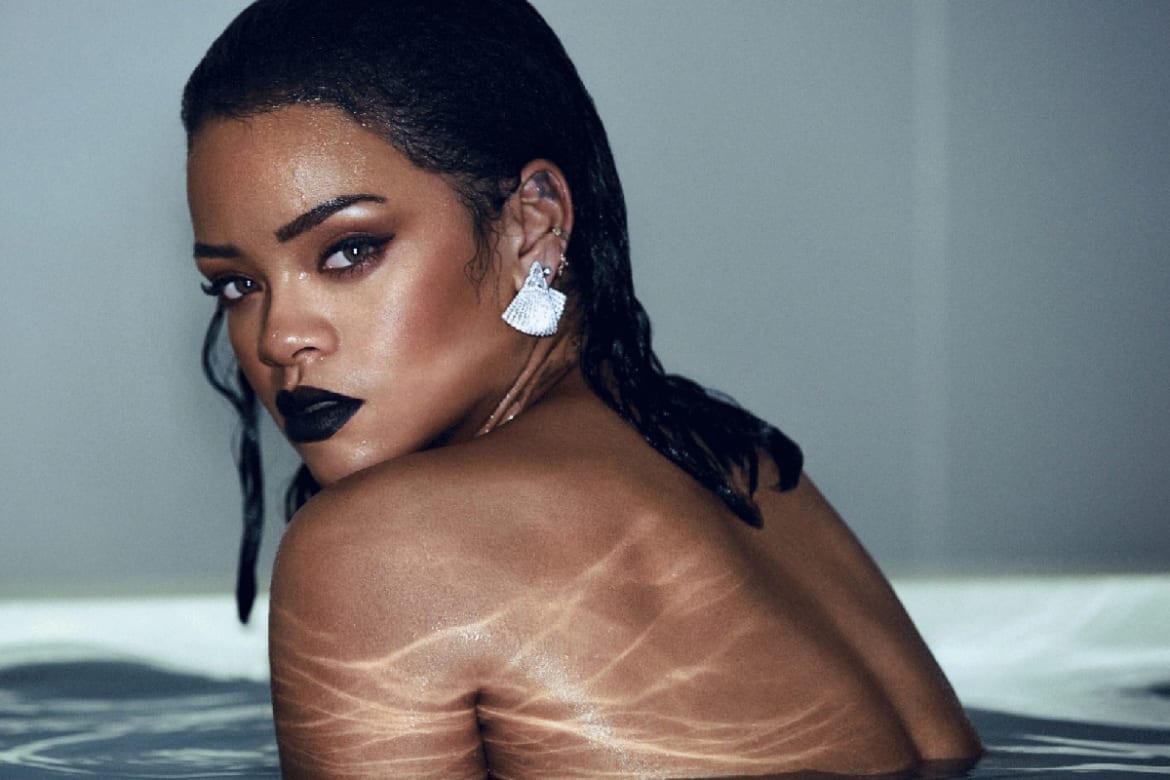
    Pop star Rihanna has uploaded visuals from the advertising campaign for her new cosmetics line Fenty Beauty by Rihanna on Instagram.

    The Barbados-born entertainer has 56.2 million followers on the social-media site.

    Little information has been released yet about the beauty line, created in collaboration with Kendo, the LVMH group’s subsidiary which also works on Kat Von D and Marc Jacobs Beauty.

    Rihanna presented her first make-up product, a bronze lip gloss with a glistening rosy shimmer and “holographic” effects 12 months ago at a catwalk show for Fenty Puma, the line designed in collaboration with German sports brand.

    Fenty Beauty by Rihanna will be available at Sephora stores and on the perfumery retailer’s e-shop from Friday.

    This is not Rihanna’s first foray into make-up. She had a collaboration with Mac Cosmetics in 2013.