Tag: Ferragamo

  • Valiram opens Indonesia’s first Salvatore Ferragamo store

    Valiram opens Indonesia’s first Salvatore Ferragamo store

    Valiram, the Malaysian retail group, has opened the first Salvatore Ferragamo store in Indonesia. Located in Plaza Indonesia, the store is part of Valiram’s growing international network of stores under multiple licensed brands, including Victoria’s Secret, Tumi, Bulgari and MLB.

    The Indonesian store offers a range of the brand’s premium handbags as well as shoes.

    Salvatore Ferragamo was founded in Florence in 1927 by its namesake fashion designer and offers high-end clothing, accessories, and footwear for men and women, along with fragrances, watches, and eyewear.

    In July, the fashion business unveiled a brand-new concept store in Soho, one of New York City’s most fashionable neighbourhoods, at 63 Greene Street. It is the luxury brand’s first foray into fusing an upscale retail environment with digital creativity and customisation.

    Valiram has retail stores and businesses throughout the Asia-Pacific region, including Singapore, Indonesia, Australia, the Philippines, Thailand, Macau, and Vietnam.

    The business, which runs more than 350 stores, boasts 200 brands spanning many different categories, including fashion and accessories, watches and jewelry, perfume and cosmetics, as well as confectionery and dining concepts.

  • Burberry CEO resigns to lead rival luxury retailer

    Burberry CEO resigns to lead rival luxury retailer

    Marco Gobbetti is to give up his role as CEO of Burberry after leading the brand and business for almost five years.

    According to a report, Gobbetti will return home to Italy to lead rival luxury goods group Ferragamo.

    Gobbetti will stay with Burberry until the end of this year while the company searches for a successor, and to ensure an orderly transition.

    “Gobbetti has had a transformative impact and established a clearly defined purpose and strategy, an outstanding team, and strong brand momentum,” said Gerry Murphy, chairman of Burberry. “The board and I are naturally disappointed by Marco’s decision but we understand and fully respect his desire to return to Italy after nearly 20 years abroad”.

    Gobbetti became CEO and joined Burberry’s board in 2017, succeeding Christopher Bailey who left the group the following year. Prior to Burberry, Gobbetti was chief executive of Moschino and Givenchy before holding executive positions at French brand Celine in 2008.

    “With Burberry re-energised and firmly set on a path to strong growth, I feel that now is the right time for me to step down,” said Gobbetti. “I would like to thank my colleagues as well as Gerry and the board for their partnership.

    “I am fully committed to supporting them through the transition and I have every confidence that the creativity and strong values that define Burberry will continue to drive the company’s future success.”

  • Ferragamo flags China-driven sales rise after massive loss last year

    Ferragamo flags China-driven sales rise after massive loss last year

    Italian luxury goods group Salvatore Ferragamo said on Tuesday that China and e-commerce had boosted sales in the year so far after the COVID-19 pandemic pushed the firm to its first full-year operating loss since it listed in Milan 10 years ago.

    Deputy Executive Chairman Michele Norsa, a long-time executive brought back by the Ferragamo family last year to steer the group through the pandemic and a brand revamp, told analysts in a call that he expected sales in China to keep growing by a double-digit percentage.

    The coronavirus emergency has hit Ferragamo hard because it is geared towards traveler spending, with many shops in airports. It has also compounded the challenge of rejuvenating a brand famous for shoes worn by Hollywood stars such as Audrey Hepburn.

    Overall sales fell 33% in 2020, one of the worst performances in an industry grappling with shop closures intended to curb the pandemic as well as a lack of tourists and travelers in general.

    Several sources told Reuters late last year that the majority owners had held informal talks with investors about selling a minority stake in their holding firm. The company denied at the time that the family planned to sell a stake or had met investors.

    Asia accounting for more than half of group revenues in 2020, when turnover in the region fell 25.5%.

    The Florence-based firm said the first nine weeks of 2021 had seen a positive trend in its retail network and an 86% jump in digital sales. China and Korea are both performing strongly, it said.

    Earnings before interests and taxes (EBIT) slumped to a 62 million euro ($74 million) loss in 2020, due also to impairment charges on assets and broadly in line with analysts’ expectations. In 2019, Ferragamo made a 150 million euro profit.

    Chief Executive Micaela Le Divelec’s term expires in April, and there is speculation that management may be overhauled.

    Two sources close to the matter said on Tuesday the situation was still uncertain in that respect.

    Norsa told analysts he could not comment on possible management changes, and that a “normal process” was taking place “in continuity and harmony” ahead of the annual meeting to appoint a new board of directors.

  • How Ferragamo veteran Sofia Ciucchi revived heritage brand Il Bisonte for millennials

    How Ferragamo veteran Sofia Ciucchi revived heritage brand Il Bisonte for millennials

    Luxury label Il Bisonte has come a long way from a family-owned retailer to a landmark flagship store in Harbour City which opened this month.

    Il Bisonte may not be the first Italian brand that comes to mind, but this artisanal leather label has been in existence for more than 50 years, heralding from Florence. For 20 years, the brand was distributed at a nifty mom-and-pop store in the neighbourhood mall of Heng Fa Chuen and had acquired a loyal following from local residents.

    In 2015 British private equity firm Palamon Capital Partners acquired Il Bisonte, seizing back full control from franchisees to begin direct selling. The new owners recruited Sophia Ciucchi from Italian luxury house Salvatore Ferragamo, appointed her CEO of Il Bisonte and charged her with revitalising and reawakening the sleeping brand.

    Proving her success, Il Bisonte has just been sold to Look Holdings Inc for €100 million.

    Originally operating under a wholesale model, Il Bisonte has its footprints on a global level at renowned department stores and through local distributors.

    “A couple of years ago, Japan represented 80 per cent of our sales,” explains Ciucchi. “At the end of last year, it was reduced to less than 50 per cent because the rest of the word was growing so much faster.

    “Europe and the Middle East have made a high contribution and the US is also growing. So, I think it’s a question of rebalancing and making our brand more international in the rest of Asia and the US.”

    For a long time, Il Bisonte has largely been focusing on developing its presence in the US, Europe and Japan and only now has it decided to re-enter Hong Kong with a strong foothold of the market.

    Now with a new flagship at Harbour City, Il Bisonte is also guaranteed strong exposure to Mainland Chinese shoppers ahead of a planned store roll out on the mainland.

    “Hong Kong is a strategic market for Asia, especially China and other Southeast Asia markets,” said Ciucchi.

    The business in Hong Kong is headed by retail manager Charles Lo, who says the company’s initial location at IFC mall ensured high visibility and established a strong market positioning in the territory. That drew approaches from other mall operators wanting the brand in their properties.

    Despite Japan being its best-selling market, Ciucchi has no imminent plans to buy out local partnerships and begin direct selling there.

    Ciucchi says due to the unique nature of the Japanese market and the characteristics of local shoppers often hard to grasp, the brand feels more confident having locals continue the label’s success there. If it’s not broken, don’t fix it is Ciucchi’s mantra.

    Endorsing the circular economy

    Il Bisonte crafts its handbags and accessories from bull-calf leather which ages with time and wear, giving it a distinctive look and making its pieces transgenerational. This inspired the brand to open a secondhand marketplace within its New York flagship store, and online. Consumers can resell their own pieces or purchase from others, embracing the circular economy.

    Not only does this initiative coincide with the brand’s heritage background, but pre-loved goods are much more welcomed by eco-conscious millennials these days. With luxury brands usually unwilling to see their products displayed on second-hand platforms, Il Bisonte’s open embrace of the pre-loved strategy makes it somewhat unique in the sector.

    Future digital plans

    Another of Ciucchi’s innovative strategies is to leverage the brand’s founder Wanny Di Filippo, a cigar-toting, bearded icon of Italian fashion.

    Il Bisonte has animated his character into a cartoon series, titled “Dreams Come True” to connect with the millennials and give the brand a more youthful approach. This storytelling is intended to evoke imagination and creativity, embodying the core values of the brand and share the story of how Di Filippo founded the brand.

    Next, in a clear progression of its revival strategy, Ciucchi is looking into converting Il Bisonte into an omnichannel brand next, starting with a new e-commerce platform by next fall. From there on, she hopes to create a holistic ecosystem by connecting all retail channels together.
  • Lotte gears up for winter promotion at downtown and airport stores

    Lotte gears up for winter promotion at downtown and airport stores

    The winter promotion for Lotte Duty Free will kick off on 23 November and run until 2 January 2019. The large-scale event will see more than 50 overseas brands, including  MaxMara, Ferragamo and Vivienne Westwood, offered at a discount of 20-80%.

    During the six-week promotion, any customers spending more than $1 at the retailer’s Myeongdong head office, World Tower, Coex, Incheon Airport, Gimpo Airport, Busan or Jeju stores will be given the chance to enter a lottery. 10 winners from the lottery will be presented with a ₩3m ($2,658) travel voucher.

    Customers spending a certain amount instore will be entitled to giveaways and gifts with purchase. Those that more than $800 in Lotte’s World Tower or Coex downtown stores will receive tickets for the Picasso and Cubism Art Exhibition; those spending more than $300 at World Tower, Coex, Busan or Jeju from 28 November will receive a Lotte calendar, while those spending more than $300 at Incheon, Gimpo or Gimhae airports after 1 December will receive a free microfiber knee blanket; and those that spend more than $100 at the retailer’s Coex store will be awarded a scratch coupon.

  • OnTheList launches in Singapore

    OnTheList launches in Singapore

    Hong Kong’s OnTheList flash-sale concept has launched in Singapore.

    The first OnTheList Singapore sale will run from September 19 to 22 in Ngee Ann City Tower B.

    It marks the first overseas foray by the independent, members-only flash-sale concept platform, founded in 2016 by French entrepreneurs, Delphine Lefay and Diego Dultzin Lacoste.

    OnTheList contracts to brands to move excess inventories in short-term sales, with discounts as high as 90 per cent. By selling to a pre-registered, members-only audience, the sales do not undermine those at mainstream stores, or clutter them with racks of off-price merchandise.

    Consumers enrol to attend sales online, with options of free access or a paid premium membership giving advance access to sales.  A separate website has been built for OnTheList Singapore.

    “When I was working in Hong Kong’s retail industry, there was an absence of options for distributors and brands to clear old inventory occupying valuable warehouse space,” explains Delphine Lefay. “To fill this gap, we founded OnTheList as an independent third-party platform and it was the first of its kind in Asia.

    “Through flash sales we hosted, we offered consumers access to premium products at attractive prices, and brands the opportunity to clear past-season items and connect with new customers,” she adds.

    Dultzin Lacoste says this method of clearing stock also promotes sustainability and minimises environmental impact within the retail industry, as old inventory does not go to waste.

    “OnTheList’s business model also gives brands the opportunity to reach out to a wider consumer database, engaging them through the flash sale platform as a first touch point.”

    In just two years, the business has gone from a few pop-up sales to over 150 flash sales and partnerships with over 250 premium brands, including Armani, Clarins, Diane Von Furstenberg, Ferragamo, Kenzo, Roberto Cavalli, and Ted Baker Le Creuset and Havaianas. In Hong Kong, OnTheList now has a permanent venue for its flash sales, but has grown so big it still needs short-term venues, often running multiple sales concurrently.

    OnTheList has now cleared more than 1 million items from its brand partners – and in one four-day sale last year it sold a pair of Havaianas every six seconds.

    OnTheList Singapore will launch with monthly pop-up sales, announcing participating brands just 10 days prior to the sale.

    “We are expanding into Singapore because its retail market has many similarities with Hong Kong’s,” says Lefay.

    OnTheList Singapore also hopes to tap into the large tourism market, as tourism receipts in the city have reached record highs during the past two years.

    “As visitor arrivals from China, India, Indonesia and Vietnam have increased tremendously, it is an opportune time for OnTheList to attract high spenders from the region and to use Singapore as a launchpad for future expansion in Asia and beyond.”

  • Hong Kong retail start recovering

    Hong Kong retail start recovering

    A “steady if cautious” Hong Kong retail recovery is clearly underway, according to a report from Savills released today.

    “The retail sector is slowly coming to life after four years of painful adjustment which has seen the emergence of a ‘tenant’s market’, a rare occurrence in Hong Kong’s landlord-dominated retail scene,” observed Simon Smith, head of research and consultancy with Savills.

    Over recent months, he said, retailers have been taking the opportunity to upgrade for little or no extra cost and examples include Pandora which moved within IFC Mall and Hourglass, which runs Patek Philippe, relocating within Tsim Sha Tsui from the Imperial Hotel to a better site in the Holiday Inn.

    In further evidence of upgrade demand, Harry Winston has taken the space previously occupied by Ferragamo in the Mandarin Hotel and will open in early 2018. Alternatively, retailers are cutting overheads as they find that renewal negotiations are yielding significant savings as landlords discover a new pragmatism.As reported, Topshop has renewed the lease on its Queen’s Road Central store at a discount of about 50 per cent.

    While landlords of high street shops remain on the back foot, larger shopping centres, such as  Harbour City, IFC Mall and New Town Plaza, are proving relatively immune to the downtown, says Smith.

    In IFC Mall, Italian menswear brand Boggi opened recently while Brunello Cucinelli has launched a new flagship in the same mall.

    “As street-shop rents have fallen heavily while centre rents have only seen a minor adjustment, the gap between the two has narrowed considerably and tenants are now finding that a prime street front pitch can be a viable alternative to taking space in a nearby mall. This is the narrowest the gap has been since 2009 and represents a return to the norm after seven years of major gains in street shop rents.”

    Strength in regions

    Savills also notes that regional and district malls such as Popcorn in Tseung Kwan O and Tuen Mun Town Plaza are doing relatively well.

    “Hong Kong’s tight geography, excellent transport infrastructure and dense retail environment has helped this type of mall defend against the threat from online. The appeal of air conditioned spaces in the summer months and the lure of enhanced F&B offerings have also helped boost the appeal of local malls. We have also seen landlords putting more effort into marketing campaigns with better events, more pop-up stores and creative TV and online advertising,” said Smith.

    “Most malls now have a very well-established cyber-presence via websites and apps. Click-and-collect is making some limited headway locally, with brands such as Zara, Burberry, L’Occitane, Watson’s Wine, Chow Sang Sang and Starbucks all offering the service.

    “In a mixed market some trade categories are performing well and pharmacies in particular are expanding aggressively at the moment. Not every landlord wants them but they are often prepared to pay above-market rents. F&B is also out-performing, driven in part by a richly valued stock market and rising wages.”

    Nick Bradstreet, head of retail with Savills, said luxury fashion is turning around in Hong Kong even though brands have been closing stores in Macau and Mainland China over the past year or so. Luxury sales in China have actually surged over the past six to nine months.

    “Cosmetics retailers are reporting fairly stable business, but after a period of rapid expansion, many brands are still culling store numbers. Electrical goods retailers are consolidating in what is a very competitive marketplace,” he said.

    Savills prime street shop rental indices remained flat over the third quarter while rents in prime malls continued to drift off marginally. The latest September retail sales figures from government recorded a seventh consecutive month of rises attributable in part to a strong inbound tourist numbers. Jewellery, watches, clocks and valuable gift sales outperformed, rising by 14.7 per cent year-on-year, with strong growth also noted for medicines, cosmetics and Chinese drugs.

  • Salvatore Ferragamo changes the game in Asia

    Salvatore Ferragamo changes the game in Asia

    Italian fashion label Salvatore Ferragamo has taken over four JVs created in partnership with Trinity (Fung Group), which distributes the brand in South Korea and Southeast Asia.

    Ferragamo says it has bought the companies’ 20 per cent share, still owned by Trinity through Trinity Luxury Brands Holdings and Ferrinch. The value of the transaction has not been disclosed.

    Impacting Ferragamo Korea, Ferragamo (Malaysia), Ferragamo (Singapore) and Ferragamo (Thailand), the takeover follows an agreement signed in 2012. This included a purchasing option allowing for Salvatore Ferragamo to take full control of the JV companies.

    At the time, Ferragamo had already increased its stake in the four companies to 80 per cent.

    In the past few years, the Asia-Pacific region has become Salvatore Ferragamo’s main market, accounting for 35.5 per cent of its global revenue. At the end of September, the label’s sales in the region amounted to €360 million (US$375 million), equivalent to a 0.3 per cent decrease compared to the first nine months of the previous fiscal year.

    The label has 70 monobrand stores in the region.

  • New post at Luxasia Group for SingPost’s ex-boss

    New post at Luxasia Group for SingPost’s ex-boss

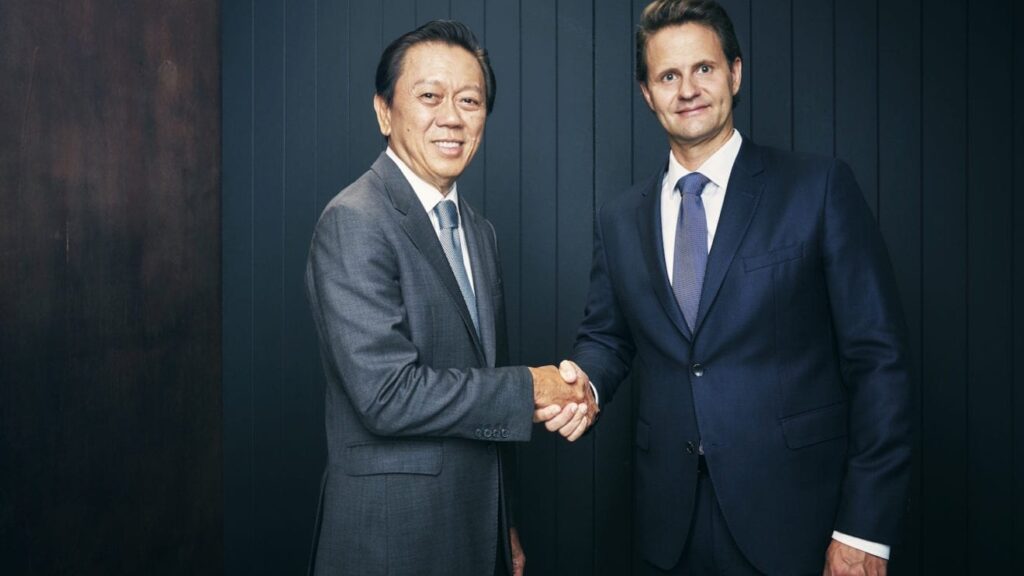
    Beauty retailer The Luxasia Group has appointed former SingPost CEO Dr Wolfgang Baier as group CEO, while founder/owner Patrick Chong has become chairman.

    “Luxasia is now at an important crossroads,” says Chong. “We intend to grow with our international partners and strengthen our core competencies to become the leading Asia consumer-centric omnichannel go-to-market partner of the beauty industry.”

    Patrick-Chong-Wolfgang-Baier

    He says Baier has proven leadership capabilities, vast knowledge and skills in areas such as CRM and omnichannel retail. “His track record in the logistics sector will also help strengthen Luxasia’s partnerships.”

    “Transformation is relevant in every sector and particularly for retail, where the digital and physical space is converging,” says Baier. “This makes developing an omni-channel ecosystem critical. We want to revolutionise how we serve consumers and brand partners in the beauty industry across Asia.”

    Chong says the search for a CEO took more than a year, as it was important Luxasia found the right leader.

    “Not only does Wolfgang understand our operations and share the same aspirations, in some ways he is even more ambitious for Luxasia with regard to developing new areas.”

    Established in 1986, The Luxasia Group has developed retail and distribution networks across Asia for some of the world’s biggest beauty companies. Based in Singapore, the privately held company has 11 offices and more than 2000 full-time employees in Singapore, China, Hong Kong, India, Indonesia, Malaysia, Myanmar, Taiwan, Thailand, the Philippines and Vietnam.

    It manages a portfolio of more than 120 international fragrance, cosmetics, skincare and
    professional salon brands including Beiersdorf, Burberry, Clarins, Estee Lauder, Ferragamo, Hermes, P&G and Shiseido.