
Tag: Fin

  • Rumors, manipulation plague Vietnam markets

    Rumors, manipulation plague Vietnam markets

    Vietnam’s stock and corporate bond markets are heavily affected by rumors and sophisticated manipulation, which pose the need for more transparent and thorough regulations, a minister has said.

    Many tickers have been pushed up to new peaks without improvement in business results, with many companies failing to submit their earnings in time, Minister of Finance Ho Duc Phoc informed the National Assembly in a recent report.

    “The stock market is still in an early stage of development and is therefore heavily affected by investor sentiment. Rumors, fears of cash flow and inflation pressure have caused the market to plunge recently.”

    Vietnam’s benchmark VN-Index hit this year’s bottom on May 16, the lowest in 11 months. The plunge came after VN-Index increased by nearly 36 percent last year as one of the best performers globally. The number of new stock accounts opened last year alone equaled that of the previous 10 years.

    But the market turned bearish in April and has struggled to recover since.

    Phoc is also concerned about risks faced by a speeding corporate bond market.

    Many amateurs who fail to meet government criteria have cheated to secure bonds, made possible by the violations of commercial banks and stock brokerages, he said.

    One typical example involves property developer Tan Hoang Minh, whose chairman Do Anh Dung was arrested in early April on suspicions of “fraudulent appropriation of assets,” he added.

    Governor of the State Bank of Vietnam Nguyen Thi Hong called for more thorough solutions to prevent future violations.

    In the long run, the government needs to make the corporate bond market a key capital mobilization channel for the economy, she added.

    Phoc said changes will be made to tighten regulations on bond issuances, listed on a dedicated market for corporate bonds.

  • Singapore, Australia to collaborate on FinTech development

    Singapore, Australia to collaborate on FinTech development

    Singapore FinTech Association (SFA) and FinTech Australia (FA) have agreed to further strengthen opportunities for FinTech firms across both countries.

    An MoU between the two parties aims to contribute to the development of the FinTech industry in general across ASEAN and Australia. They will collaborate from time to time on particular initiatives relating to the FinTech industry.

    The two bodies have also arranged to seek input and opinions from each other, in respect of matters relating to the FinTech industry and invite each other to participate in relevant events and support each other in interfacing regulators and other bodies.

    According to the EY FinTech Australia Census 2018, Singapore is among the top four markets that Australian FinTechs are looking to expand into.

    “Australia and Singapore have long enjoyed a strong and vibrant relationship, it is now timely to extend that cooperative relationship to the FinTech industry.”

    “The shared capabilities and high levels of collaboration between Melbourne and Singapore will pave the way for continued two-way knowledge sharing and long term success for FinTech businesses in both markets,” SFA president Chia Hock Lai said.

    FA general manager Rebecca Schot-Guppy added that, “FA is proud to be building the network for our members by signing an MoU with the SFA. Singapore is seen by Australian FinTechs as a top four region for expansion and by signing this agreement we hope it fosters opportunities for our members. We look forward to working with the SFA.”

  • Indonesia to Extend Ban on Shark Fin Exports

    Indonesia to Extend Ban on Shark Fin Exports

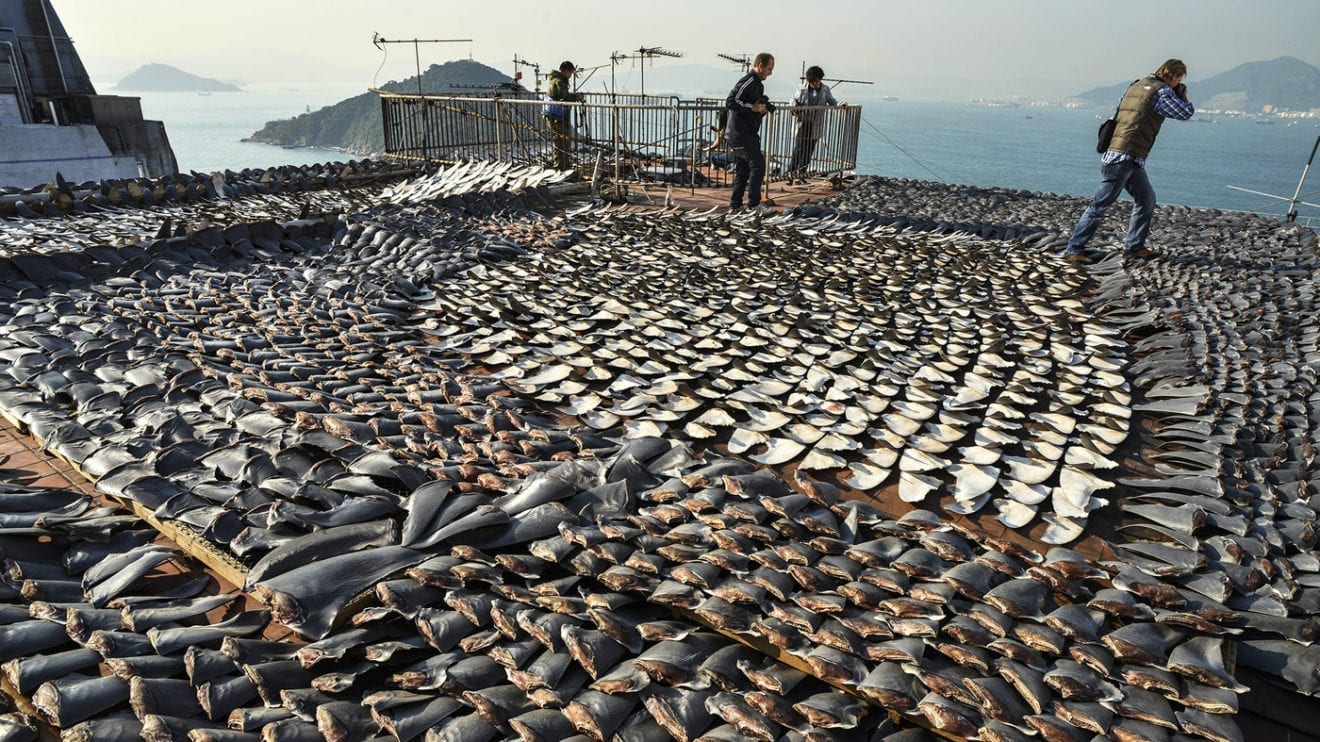
    Marine Affairs and Fishery Ministry will extend the ban on shark fin exports, said the ministry’s directorate general secretary of marine space management Agus Dermawan. “It may be extended, but I don’t know when,” he said Saturday.

    Shark fin export has officially been suspended after Marine Affairs and Fishery Minister Susi Pudjiastuti issued on December 10, 2014, Regulation No. 59/2014 regarding a ban on hammerhead and oceanic whitetip sharks until November 2015. It had since been extended with Marine Affairs and Fishery Ministry Regulation No. 34/2015, which is effective until December 31, 2016.

    According to Agus, Indonesia was the world’s largest shark fin exporter. In 2012, for example, Indonesia exported 434 tons of shark fin worth over US$6 million, the Central Statistics Agency (BPS) recorded.

    He said that the ministry has joined hands with researchers to count the number of endangered shark species left in Indonesia. The regulation about the ban on export and hunting will be based on the outcome of the research. Despite the export ban, hunting and trade of certain shark species for domestic consumption are still allowed.

    Agus said since 2013 five shark species have been listed as endangered, four of which hailed from Indonesia, including hammerhead and oceanic whitetip sharks. Hammerhead sharks include Sphyrna lewini, Sphyrna zygaena, dan Sphyrna mokarran, whereas oceanic whitetip sharks include Carcharhinus longimanus.

    Despite the official export ban, rare shark fin smuggling continues to happen. In February, Directorate of Customs and Excise of Finance Ministry Tanjung Perak office, Surabaya, foiled an attempt to smuggle 20 tons of shark fins and jellyfish to Hong Kong.

    Therefore, Marine Affairs and Fishery Minister Susi Pudjiastuti vows to enhance the Task Force 115, who are tasked with eradicating illegal fishing practices. “We will deploy Custom & Excise and the Task Force personnel to monitor smuggling,” Minister Susi Pudjiastuti said.

    Meanwhile, Oceans Campaigner of Greenpeace Indonesia Sumardi Ariansyah has urged the government to do more than just banning shark imports. According to him, shark fin consumption in Chinese restaurants has also contributed to the declining population of the species, although not as high as foreign demand. “The government must set up and establish better and more comprehensive policies,” he said.