Tag: financial markets

  • China Clears 18 Active ETF’s to Funnel Billions into A-Shares

    China Clears 18 Active ETF’s to Funnel Billions into A-Shares

    China approved 18 actively managed exchange-traded funds on Monday, clearing domestic fund managers to channel tens of billions of yuan into mainland equities.

    Each fund could raise around 2 billion yuan, or roughly US$300 million, during subscription drives starting as early as Friday. The China Securities Regulatory Commission cleared the batch from domestic public fund houses after a three-month review. Fund managers may issue initial offer details as early as Tuesday, opening a direct pipeline of institutional cash for Shanghai and Shenzhen listings.

    Terms of the Fund Approvals

    Speaking at the Financial Street Forum in Beijing, CSRC chairman Wu Qing confirmed the approvals while outlining measures to stabilize equity prices. The new batch represents a shift toward active management within the exchange-traded market, giving portfolio managers leeway to select individual stocks rather than mechanically tracking broad equity indexes.

    Unlike passive benchmark trackers that buy across an entire gauge, actively managed funds allow stock pickers to concentrate capital in undervalued names or specific sectors. For domestic institutional investors, this structure offers a mechanism to deploy liquidity quickly without absorbing the broader market drag from troubled legacy sectors.

    State Capital Steps In

    The push follows sharp declines across mainland bourses. The benchmark CSI 300 Index fell 3.4 percent over the five trading sessions through Friday, capping an unprecedented 10-week losing run. Although the index bounced 0.3 percent on Monday following third-quarter growth data, it sits roughly 17 percent below its June peak, flirting with technical bear-market territory.

    State-backed institutional buyers, collectively known as the National Team, have already stepped up purchases. Inflows into leading broad-based ETFs reached their highest levels since July late last week, marked by heavy institutional volume near market close. The rollout of active ETFs expands this liquidity playbook from direct index intervention to discretionary equity allocation.

    Tech Valuations Under Pressure

    Mainland technology companies have borne the brunt of recent equity weakness as global enthusiasm for artificial intelligence hardware shifted. The tech-focused Star 50 Index dropped nearly 40 percent across the half year, turning into one of the weakest major tech gauges worldwide.

    Beijing has relied on equity markets to finance strategic technology developers, but falling secondary valuations threaten primary fundraising. In contrast, Hong Kong has seen growth companies in biotechnology and artificial intelligence rise to 30 percent of its listed pool from 10 percent in 2023, drawing capital that might otherwise seek mainland listings. Funneling fresh fund flows into Shanghai and Shenzhen gives domestic tech counters a valuation buffer at a time when retail sentiment remains fragile.

    Corporate Buybacks and Enforcement

    The regulatory initiative builds on market-support efforts launched in July, when Chinese authorities brought together state funds, domestic insurers, and asset managers to steady trading desks. That intervention curbed outright panic selling but failed to halt the weekly erosion across large-cap benchmarks.

    Regulators are pairing the ETF rollouts with pressure on corporate boards to execute share buybacks, alongside pledges by the CSRC to punish accounting misconduct and illegal trading. Attention now turns to Friday, when fund houses open their books for initial subscriptions to establish how much institutional and retail capital the 18 products collect.
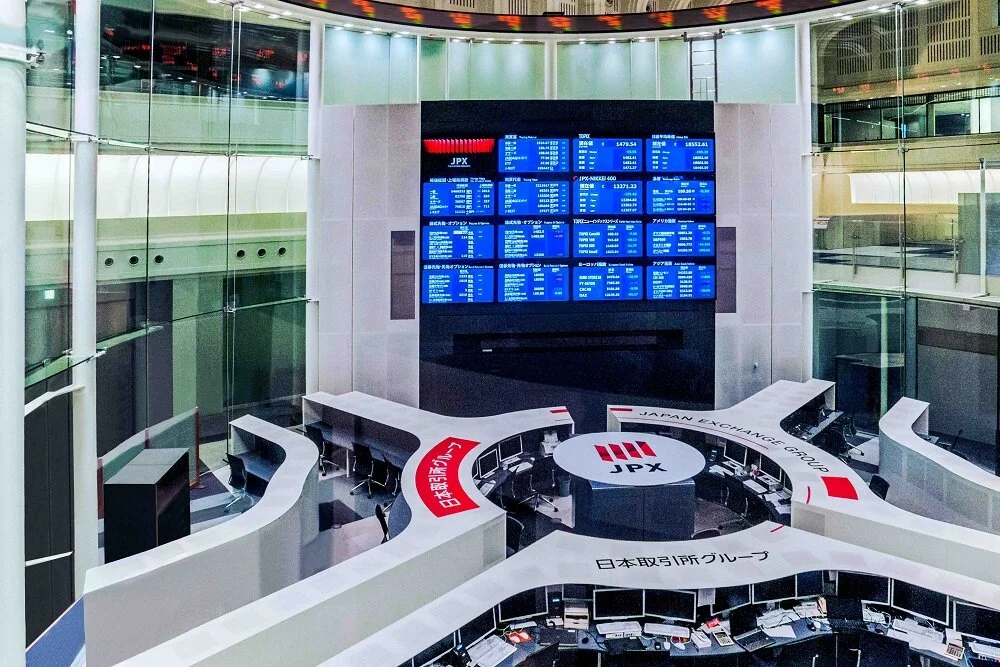

  • Tokyo Financial Exchange Launches BOJ Overnight Rate Futures After Benchmark Hits 1.25%

    Tokyo Financial Exchange Launches BOJ Overnight Rate Futures After Benchmark Hits 1.25%

    Tokyo Financial Exchange will introduce a futures contract tied to the Bank of Japan’s overnight call rate this month. The contract targets traders hedging volatility between policy meetings. Last month, the central bank lifted its benchmark rate to a 31-year high of 1.25 percent. That was its second increase this year.

    Faster rate adjustments broke the central bank’s previous pattern of six-month pauses between increases. The new contract allows financial institutions and corporate treasuries to hedge specific policy meeting outcomes. They no longer have to rely on wider quarterly averages.

    Plunging Activity in Three-Month TONA

    Trading in the exchange’s existing three-month Tokyo Overnight Average Rate (TONA) futures failed to match market needs during recent policy shifts. Volume in that contract fell nearly 50 percent in September compared to the same month a year earlier, the exchange reported.

    Market participants faced mismatch risks under the three-month design when pricing rate hikes scheduled weeks apart. “Interest rate moves have become more active lately, and there is an increase in demand for derivatives trading,” said Ryosuke Seo, a director in the wholesale business department at the Tokyo Financial Exchange.

    Exchange Competition Against Swaps Desk

    Both Tokyo Financial Exchange and Osaka Exchange, a unit of Japan Exchange Group, launched three-month TONA contracts in 2023 ahead of the central bank’s exit from negative interest rates. Neither venue took decisive liquidity away from private dealer networks.

    Over-the-counter overnight index swaps remain the primary competition because they allow customized maturities matched directly to meeting dates. Notional volume in yen overnight index swaps extending out past 30 years reached a record high last month, according to Japan Securities Clearing Corp data.

    Implications for Commercial Borrowers

    For Japanese businesses and regional corporate treasuries, listed meeting-date futures provide a transparent pricing mechanism for short-term borrowing costs. Commercial real estate borrowers, consumer lenders, and retail supply chain financiers in Tokyo have seen debt servicing expenses climb as rates advanced from negative territory to 1.25 percent.

    An active exchange-traded contract reduces reliance on bespoke bank swaps. Those private swaps often carry higher bid-ask spreads for smaller institutional participants. Tokyo Financial Exchange must now build adequate clearing volume before the next central bank tightening cycle takes hold.

    Context of the Policy Tightening Cycle

    This launch follows monetary tightening steps across 2024 and 2026 that dismantled over a decade of ultra-loose policy. The Bank of Japan exited negative interest rates in 2024. That shift altered domestic yield curves and prompted financial institutions to seek shorter-duration hedging tools.

    Traders and money-market desks now look to the central bank’s December meeting. Consensus estimates point to a third rate hike that would push Japan’s benchmark lending rate above 1.25 percent before year-end.

  • Japan Recalibrates Messaging to Reassure Markets on Reflation Stance

    Japan Recalibrates Messaging to Reassure Markets on Reflation Stance

    Japan has begun recalibrating its economic messaging to reassure financial markets that Prime Minister Sanae Takaichi is not pursuing reflationary policies, Finance Minister Satsuki Katayama said in an interview with broadcaster TV Tokyo on Saturday, Oct 3.

    The policy adjustment followed discussions with US Treasury Secretary Scott Bessent over whether Tokyo was communicating its fiscal direction clearly to international investors.

    Recalibrating Tokyo’s Market Strategy

    Katayama explained that the administration concluded in late August that it needed to address market perceptions that the Takaichi government planned an aggressive return to reflationary spending and loose monetary coordination.

    Tokyo made the decision to change its public posture in late August. Officials determined that clearer explanations were necessary to prevent unhelpful market speculation and currency volatility.

    Feedback from the US Treasury

    Bessent indicated to Japanese officials that Takaichi’s economic policies match current economic conditions. However, the US Treasury chief questioned whether the Japanese government communicated its strategy with sufficient precision to global funds and domestic institutions.

    Katayama noted that Washington’s feedback helped prompt the shift. “So we concluded around late August that we need to communicate that message more clearly to financial markets,” Katayama said, addressing market perceptions that the administration’s policies are reflationary.

    Managing Investor Sentiment

    Market analysts have closely tracked Takaichi’s fiscal and structural reform targets since she took office. For consumer businesses, retail operators and institutional investors across Asia, clarity on Japanese fiscal discipline dictates borrowing costs, currency stability and import price pressures.

    Aggressive reflationary policies risk weakening the yen further, which raises import costs for Japanese retailers while squeezing household purchasing power. By pushing back against the reflationary label, the administration aims to anchor long-term bond yields and stabilize business planning assumptions.

    The Policy Stance Ahead

    Tokyo previously faced scrutiny over whether new spending initiatives would widen government debt issuance or complicate the Bank of Japan’s rate normalization plans. The messaging overhaul formalizes a more cautious stance designed to preserve policy flexibility without alarming debt markets.

    Japanese finance ministry officials are scheduled to roll out the updated policy framework across upcoming investor briefings and international economic summits this autumn.

  • S&P Dow Jones Indices Tests New Strategies in South Korea Ahead of Global Markets

    S&P Dow Jones Indices Tests New Strategies in South Korea Ahead of Global Markets

    S&P Dow Jones Indices is introducing its newest investment strategies in South Korea before other markets, using the country as a launchpad for global innovation.

    The index provider is testing products ranging from multi-asset and covered call strategies to thematic indices and blockchain-based versions of core benchmarks such as the S&P 500.

    Cameron Drinkwater, chief product and operations officer at S&P DJI, outlined the expansion in Seoul this week during Korea Premium Weeks. Drinkwater, who joined the firm in 2019 and previously served as chief financial officer, said local investor acumen and inventive financial firms make the country a prime testing ground.

    Tokenised Benchmarks and Retail Crypto Demand

    Digital asset infrastructure anchors the push into Seoul. South Korea maintains one of the highest retail cryptocurrency participation rates in Asia. That creates a consumer base accustomed to 24-hour trading, direct custody inside unified digital wallets and fractional share purchases. S&P DJI plans to match these trading habits by putting traditional benchmark exposures onto distributed ledger networks.

    On-chain indices allow asset managers to offer fractionated index units without the clearing overhead of traditional depository receipts. Tokenised index units reduce settlement friction for institutional distributors in Seoul. They also permit instant rebalancing across multi-asset portfolios. Local brokerages that run separate desks for domestic equities, offshore derivatives and digital tokens can merge those channels into unified mobile platforms.

    “It is a very important market for us not only because it is growing so quickly but also because of the amount of innovation that has been originating here,” Drinkwater said.

    Institutional Infrastructure and Product Design

    South Korean asset managers have become prolific issuers of complex exchange-traded products, particularly covered call strategies linked to major US equity indices. These yield-focused instruments sell call options against underlying index holdings to generate cash distributions for local retail accounts. Local firms frequently modify standard option-writing schedules to maximise monthly payouts. That push forces index providers to supply custom calculation algorithms and dynamic strike selection models.

    Execution plumbing carries the operational risk. Retail appetite for high-distribution strategies is strong, but covered call structures cap upside capital gains during market rallies. If domestic issuers flood the Seoul exchange with overlapping derivative-income products, secondary market liquidity could fragment. That would widen bid-ask spreads during periods of elevated equity volatility.

    Derivatives Expansion and Regulatory Timelines

    Expansion in Korea aligns with a broader buildout of S&P DJI’s global derivatives ecosystem. S&P DJI signed a 25-year extension of its exclusive licensing agreement with Cboe Global Markets through 2051. The agreement preserves Cboe’s exclusive rights to trade S&P 500 Index options while establishing joint work on tokenised option contracts. SPX options trading hit an annual record of 970.6 million contracts in 2025. Average daily volume reached 3.9 million contracts, up 25 per cent from 2024.

    Rollouts for on-chain indices in Seoul depend on final policy guidelines from domestic financial authorities. South Korean regulators are drafting frameworks for digital asset classification and tokenised securities through 2026. Technical operating standards are scheduled for completion in early 2027.

  • LVMH Stock Falls 40 per Cent as Asia Demand Slows

    LVMH Stock Falls 40 per Cent as Asia Demand Slows

    LVMH Moët Hennessy shares have dropped 40 per cent year to date, touching six-year lows. Luxury demand weakened across key consumer markets in Asia and the United States.

    The sell-off erased 11 per cent of the French group’s market value in September alone. Shoppers pulled back across mainland China and western retail hubs.

    Valuation drops below historical averages

    LVMH now trades at a forward non-GAAP price-to-earnings multiple of 15.8 times. Its five-year historical average sits at 22.4 times.

    Valuation multiples compressed across the sector as high interest rates, inflation and geopolitical tensions cut into discretionary budgets. Institutional buyers have stayed cautious about near-term revenue trajectories.

    Asia ex-Japan pressure mounts

    The United States and Asia ex-Japan together generate nearly 54 per cent of total revenue for the Paris-based conglomerate. Weakness across both territories leaves the group exposed to broader retrenchment.

    Chinese shoppers spent less on high-end leather goods, spirits and watches over recent quarters. Foot traffic in tier-one city flagship stores slowed down. Regional travel retail failed to fill the gap.

    Operating margins face structural shift

    For department store operators and prime landlords across Asia, the valuation slide signals leaner wholesale orders and tougher lease renegotiations. Luxury houses spent three years opening stores and raising prices across Shanghai, Hong Kong and Singapore.

    That pricing power has hit a ceiling. Group brands now face tough inventory decisions, particularly in fashion, leather goods and cognac segments where excess stock demands discounting or production cuts.

    Slowing momentum across core divisions

    Growth rates across the sector slowed early this year after record post-pandemic sales volumes. Consumer sentiment worsened rather than stabilized as property and labor market pressures persisted in mainland China.

    Investors are tracking whether the group can protect gross margins without heavy promotional discounting in regional department stores. Third-quarter organic revenue from Asia ex-Japan will be the critical figure when the next quarterly results arrive.

  • Korea Exchange Extended Session Triggers 5,354 Trading Halts in First Week

    Korea Exchange Extended Session Triggers 5,354 Trading Halts in First Week

    South Korea’s new evening equity session triggered 5,354 volatility interruptions during its first week. Retail traders dominated thin trading books.

    Daily turnover across the extended four-hour window averaged 1.1 trillion won ($811 million) between Sept. 14 and Friday. That represented 4.6 percent of total equity trading value across the Korea Exchange.

    Trading runs from 4 p.m. To 8 p.m. To help domestic investors trade outside office hours, the exchange created the window. Instead, speculative retail flow concentrated into illiquid listings. The evening block generated 77.17 percent of all circuit-breaker style volatility interruptions recorded across the entire exchange over the five-day stretch.

    Retail Concentration Drives Market Friction

    Individual accounts generated more than 90 percent of all executed trades during the inaugural evening sessions. Foreign investors accounted for 6.7 percent of volume. Domestic institutions and pension funds contributed just 2.6 percent.

    Institutional market makers stayed away, leaving order books vulnerable to sharp imbalances. An average of 54.85 million shares changed hands daily across the late session. Volume was spread across hundreds of main-board Kospi and junior Kosdaq listings without offsetting bids to absorb retail momentum.

    Kosdaq Small Caps Suffer Wild Swings

    Distortions hit smaller counters on the tech-heavy Kosdaq board fastest. Thin order books let minimal volume drive outsized price jumps. These gains evaporated by the next morning’s regular open.

    Pony Link illustrated the structural gap on Sept. 14. After finishing daytime trading at 2,400 won, the Kosdaq-listed stock hit its daily upper price limit of 3,150 won in after-hours trading. That jump took just 1,417 shares, roughly one-tenth of its daytime volume of 15,641 shares. The gain vanished the next morning, and the stock closed regular hours down at 2,365 won.

    Exchange Defends Auction Mechanics

    Bourse officials rejected claims that the high number of volatility interruptions pointed to structural failure. The mechanisms pause continuous trading for short single-price auctions. This prevents transactions at distorted levels and restores orderly pricing.

    Halts cooled over the week. The market recorded 1,112 volatility interruptions on Sept. 14, dropping by half to 553 events by Friday.

    The number of volatility interruptions should not necessarily be interpreted as an indicator of market volatility, as the measures help curb excessive price movements by preventing trades at abnormal prices and facilitating price discovery through single-price auctions.

    Surveillance Team Deployed Through December

    Regulators at the Korea Exchange have assigned a dedicated task force to monitor the evening session through the end of the year. The unit will track order patterns for spoofing, price manipulation, and artificial momentum in thinly traded counters.

    Brokerages in Seoul will watch whether institutional desks deploy automated liquidity before year-end, or if the evening window stays an exclusive arena for retail day traders.

  • US SEC Regulation Signals Greater Clarity for Crypto Assets

    US SEC Regulation Signals Greater Clarity for Crypto Assets

    The United States Securities and Exchange Commission (SEC) has introduced a new regulatory framework for digital assets, aiming to provide clearer guidelines for the classification and trading of cryptocurrencies. This move is expected to bring substantial clarity to a sector previously marked by regulatory uncertainty, particularly concerning tokens like XRP.

    Legal experts, including those from Skadden, Arps, Slate, Meagher & Flom LLP, view this regulation as a significant step forward in establishing a more structured environment for the crypto market. The framework addresses key areas such as asset categorisation, disclosure requirements, and market integrity, which could help institutional investors and businesses better navigate the digital finance landscape.

    Implications for Digital Asset Markets

    The new SEC regulation is anticipated to impact how digital assets are treated by financial institutions and technology firms. By defining clearer rules, the framework could foster greater investor confidence and potentially encourage broader adoption of cryptocurrencies within established financial systems. This clarity is particularly relevant for tokens that have faced scrutiny over their classification as securities, offering a pathway for compliance and legitimate operation.

    For retailers and consumer brands exploring blockchain and digital payment solutions, regulatory clarity from a major market like the US can set precedents. Asia-Pacific countries are also developing their own frameworks, and global harmonisation, even if gradual, could simplify cross-border digital transactions and the use of cryptocurrencies in retail.

    Global Regulatory Ripple Effects

    While this regulation originates from the US, its implications could extend internationally, influencing how other jurisdictions approach digital asset oversight. As major economies establish robust frameworks, there is a growing potential for a more standardised global approach to crypto regulation. This development could reduce fragmentation and facilitate international trade and investment involving digital assets, including their use in supply chains and consumer loyalty programmes.

    Several Asian markets, including Singapore, Hong Kong, and Japan, have been proactive in developing their own digital asset regulations. The SEC’s move provides another data point for these regions as they refine their policies, potentially accelerating the mainstream integration of cryptocurrencies and blockchain technology into various business sectors across Asia-Pacific.

  • Taiwan Consumer Confidence Dips Despite Strong Economic Forecasts Amid Inflation Fears

    Taiwan Consumer Confidence Dips Despite Strong Economic Forecasts Amid Inflation Fears

    Taiwanese consumer confidence has fallen, with sentiment regarding the economic outlook and spending weakening this month, despite official predictions of the strongest economic growth in decades. A recent survey by Cathay Financial Holding Co. Revealed that inflation concerns and volatility in financial markets are contributing to this cautious mood among consumers.

    The survey highlighted a drop in consumer optimism toward the local stock market and overall risk appetite following recent equity swings. Factors such as heightened tensions between the US and Iran, rising oil prices, and expectations for higher US interest rates have made investors more conservative. Frequent stock trading halts in South Korea and renewed questions about the sustainability of the artificial intelligence (AI) boom have fueled market volatility.

    Divergence in Economic Views

    Consumers now anticipate inflation to average 2.3 percent this year, surpassing the government’s estimate of 2.07 percent and the central bank’s 2 percent target. Their economic growth expectations also fall short of official projections, with consumers anticipating an 8.94 percent expansion this year on average, significantly lower than the government’s forecast of 11.05 percent, which would mark the fastest pace in nearly four decades. Only about one-quarter of respondents expect growth to exceed 10 percent.

    This divergence between official forecasts and household expectations suggests that the benefits of Taiwan’s AI-led economic expansion have not yet translated into stronger consumer confidence. Higher energy costs, inflation risks, and financial market swings are adding to uncertainty, which in turn has led to a weakened willingness among consumers to make major purchases. The index for durable-goods spending has consequently moved into negative territory.

    Investment Sentiment

    Despite the cautious consumer sentiment, Taiwanese equities remain the most preferred investment target for the next six months, selected by 57 percent of respondents. In comparison, 24 percent favored US stocks. For those planning to increase investments, confidence in Taiwanese companies’ ability to sustain earnings was the most frequently cited reason, followed by optimism regarding the economy’s overall strength.

    RetailNews Asia observes that similar patterns of economic growth failing to fully translate into consumer confidence have been seen across other Asian markets, particularly where global economic headwinds and local inflationary pressures create a disconnect between macro-indicators and household spending power. This trend often prompts retailers to adapt strategies to cater to more value-conscious consumers or focus on essential goods over discretionary purchases.

    The survey, conducted from August 1 to August 7, gathered 12,580 responses from customers and members of Cathay Life Insurance Co. And Cathay United Bank Co.

  • China Launches Offshore Government Bond Futures to Boost Yuan Usage

    China Launches Offshore Government Bond Futures to Boost Yuan Usage

    China has initiated offshore trading in government bond futures from Hong Kong, a pivotal step in its ongoing efforts to internationalise the yuan. This new financial instrument is expected to enhance the currency’s appeal by offering improved stability and hedging capabilities, particularly to investors outside Western markets.

    Expanding Yuan’s International Reach

    The introduction of offshore government bond futures is part of China’s broader strategy to gradually open its financial system to foreign participation. By providing more avenues for investors to engage with yuan-denominated assets, Beijing aims to bolster the currency’s global standing and reduce reliance on other major currencies for trade and investment.

    This development follows a series of measures designed to integrate China’s markets with the global financial system. Recent years have seen increased foreign investment in Chinese bonds and stocks through various connect schemes with Hong Kong, fostering a more accessible environment for international capital. The new futures contracts offer an additional layer of sophistication for portfolio management, enabling investors to mitigate interest rate risks associated with Chinese government debt.

    Implications for Asian Markets

    For retailers, consumer brands, and technology companies operating across Asia, a more widely used and stable yuan could simplify cross-border transactions and investments. As trade flows within the Asia-Pacific region continue to grow, a stronger international yuan provides an alternative to traditional reserve currencies, potentially reducing foreign exchange volatility for businesses with significant exposure to the Chinese market.

    RetailNews Asia has been tracking China’s deliberate steps to expand its financial influence, including the increasing issuance of yuan-denominated bonds by other nations and the growth of ‘panda bonds’ within its domestic market. This latest move with offshore bond futures reinforces China’s ambition to position the yuan as a major currency for global finance and trade, impacting how businesses structure their financial operations across the region.

  • Asian Stocks Soar as US Treasury Intervention Calms Bond Market Fears

    Asian Stocks Soar as US Treasury Intervention Calms Bond Market Fears

    Asian stock markets rallied strongly on Thursday after the US Treasury intervened to calm fears over rising bond yields. The announcement that the Treasury would significantly increase its long-term bond issuance provided a much-needed boost to investor confidence, leading to a rebound in equities across the region.

    This intervention comes after weeks of heightened concern over US bond yields, which had climbed to near two-decade highs. The prospect of sustained high inflation, increased government borrowing, and potential further interest rate hikes by the Federal Reserve had pushed yields on 10- and 30-year US Treasuries to unsustainable levels, sparking a sell-off in riskier assets, including Asian stocks.

    Yield Concerns Eased By Treasury Move

    The US Treasury’s unexpected decision to “at least double” the amount of long-term bonds it issues is a clear signal to the market that authorities are uncomfortable with the recent spike in borrowing costs. This move is intended to inject liquidity and bring down yields, which had seen the 30-year US Treasury yield reach its highest point since June 2007 earlier in the week. The immediate effect was a reversal of losses in US equities and a decline in the dollar against other major currencies.

    For Asian markets, the impact was immediate and positive. Technology firms, which often rely on significant debt for capital expenditure, particularly in areas like artificial intelligence, had been hit hard by rising yield concerns. Seoul’s Kospi index led the charge, jumping over six percent at one point. South Korean chipmaker SK hynix saw its shares rocket more than 12 percent, partly bolstered by its recent US$29 billion share buyback announcement, with Samsung also climbing almost nine percent. Elsewhere, Tokyo, Hong Kong, Shanghai, Sydney, Wellington, and Manila also reported strong gains. RetailNews Asia has observed that stability in financial markets is crucial for regional consumer brands planning expansions or significant capital investments, as it directly influences their cost of funding and investor sentiment.

    Future Outlook For Rates And Oil

    Despite the current relief, market observers question how long the fall in yields will last. Key factors that could reignite pressure on the long end of the Treasury curve include persistently high oil prices and ongoing concerns about US government borrowing. Crude prices have been on an upward trend for the past two weeks, fueled by fading hopes for a US-Iran deal regarding the Strait of Hormuz, with tensions in the region remaining high.

    Investors are also closely watching the US Federal Reserve’s stance on interest rates. Minutes from the Fed’s July meeting indicated that many policymakers believe further rate hikes might be necessary if inflation does not sufficiently decline. Three of the twelve voting members of the Federal Open Market Committee advocated for an immediate rate increase, noting robust economic activity driven largely by the AI industry. Attention now turns to the upcoming annual meeting of central bankers in Jackson Hole, Wyoming, next week, where Fed boss Kevin Warsh is expected to provide further clarity on the central bank’s rate strategy.

  • Indian Investment Data Shows 50:50 Equity-Debt Portfolios Offer Better Risk-Adjusted Returns over 100% Equity

    Indian Investment Data Shows 50:50 Equity-Debt Portfolios Offer Better Risk-Adjusted Returns over 100% Equity

    Indian investors seeking optimal portfolio strategies should look beyond absolute returns, as new data suggests a balanced approach offers better risk-adjusted performance. A 20-year analysis, using India’s Nifty 100 TRI for equity and the CRISIL Short Term Bond Fund Index for fixed income, indicates that while all-equity portfolios yielded higher overall gains, a 50:50 blend of equity and debt provided more stable returns relative to the volatility experienced.

    The study, compiled from UTI Mutual Fund data, highlights that purely equity-focused portfolios, though delivering greater long-term returns (e.g., ₹1 lakh growing to ₹10.5 lakh over 20 years), also carried significantly higher risk. For instance, over a one-year period, a 100% equity portfolio saw a 3.6% loss, while a 50:50 balanced portfolio gained 1.1%, and fixed income returned 5.8%.

    Volatility Versus Absolute Returns

    When comparing absolute returns, the 100% equity portfolio consistently outperformed over longer durations. Over 20 years, it recorded a 12.5% Compound Annual Growth Rate (CAGR), compared to 10.9% for the 50:50 balanced portfolio and 7.2% for 100% fixed income. This trend held true for 10-year, 5-year, and 3-year periods as well, where equity maintained its lead.

    However, volatility tells a different story. Measured by standard deviation, the equity portfolio exhibited substantially greater fluctuations. Over two decades, its standard deviation was 20.9%, dwarfing the 10.3% of the 50:50 portfolio and the mere 3.2% of the fixed income portfolio. This indicates that while equity offered higher potential gains, it also came with considerable unpredictability.

    Understanding Risk-Adjusted Performance

    To provide a clearer picture for investors, the analysis introduced risk-adjusted returns, calculated by dividing the CAGR by the annualised standard deviation. This metric reveals how much return a portfolio generated for the level of risk it undertook. On this front, the 50:50 balanced and 100% fixed income portfolios consistently surpassed the 100% equity option across all timeframes.

    For example, over 20 years, the 100% equity portfolio had a risk-adjusted return of 0.60, while the 50:50 balanced portfolio achieved 1.0, and fixed income reached 2.2. This signifies that for every unit of risk taken, the diversified and fixed income portfolios delivered more return. This insight is crucial for long-term investors, emphasising that a higher absolute return doesn’t necessarily equate to a more efficient or less volatile investment journey.

    Questions & Answers

    What is the key finding regarding 100% equity portfolios in India?
    The data shows that 100% equity portfolios delivered higher absolute returns over longer periods (up to 20 years) but also carried significantly higher volatility and lower risk-adjusted returns compared to balanced or fixed-income portfolios.

    How did a 50:50 balanced portfolio perform in terms of risk-adjusted returns?
    A 50:50 balanced portfolio consistently showed higher risk-adjusted returns than a 100% equity portfolio across all periods, indicating that it generated more return relative to the volatility recorded.

    What indices were used to represent equity and fixed income in the analysis?
    The Nifty 100 TRI was used to represent equity, and the CRISIL Short Term Bond Fund Index was used to represent fixed income or debt in the Indian market analysis.