
Tag: Financial Supervisory Service

  • Caffe Bene Korea losses soar

    Caffe Bene Korea losses soar

    Beancounting has taken a turn for the worse for Caffe Bene Korea, which has just reported a net loss of US$30 million.

    The coffee shop chain’s turnover was $97 million, according to a corrected annual report filed with South Korea’s Financial Supervisory Service. This was down from $122.5 million the previous financial year, when the net loss was $7.1 million.

    It has been three years since the company turned a profit.

    The chain – which specialises in iced desserts as well as hot and cold coffees – has culled its Mainland China network from 600 stores back to 400 during the last two years. It has apparently failed to find a partner with which to enter the Hong Kong market.

    For the quarter ending March 31, Caffe Bene had $15.6 million in sales, down from $23.7 million for the same period last year.

    According to the company’s latest count in April, its Korean outlets have fallen to 850, from a 912 peak two years ago. It is competing against about 30 coffee chains in Korea.

    “Too many menu items brought considerable operational burden to each outlet store,” says deputy-GM for Korea Jong Wook Kim. “To resolve this issue, Caffe Bene is reducing the number of items and focusing on what customers prefer most.”

    Founder Kim Sun-Kwon’s stake in Caffe Bene has dwindled from nearly 50 per cent to 4 per cent, and last year he stepped down as CEO in favour of Choi Seung-Woo, a former chief of Woongjin Food. In March, Kim was out as president.

    Meanwhile, Korean investment firm K3 Equity Partners converted enough preferred shares to take a 52 per cent stake in Caffe Bene, and in March, Hallyu Ventures – a joint venture between Singapore’s Food Empire and Indonesian conglomerate Salim Group – paid $13 million for an initial 38 per cent interest.

    Units worldwide, including a claimed presence in seven Southeast Asian markets, including the Philippines where it operates five stores after landing in 2008, and in Vietnam, stand at 1364, down from 1560 two years ago.

    Caffe Bene has also had a roasting in the US, where it has been the subject of several lawsuits by franchisees.
  • Government stuck in past in retail shop payment systems

    Government stuck in past in retail shop payment systems

    Mr. Park, a 50-year-old manager of a coffee shop in Yeouido, western Seoul, recently bought an integrated circuit (IC) card reader for 400,000 won ($343). Last summer, the country’s financial authority required shops to use them so customers could pay with credit cards with an IC chip embedded in them.

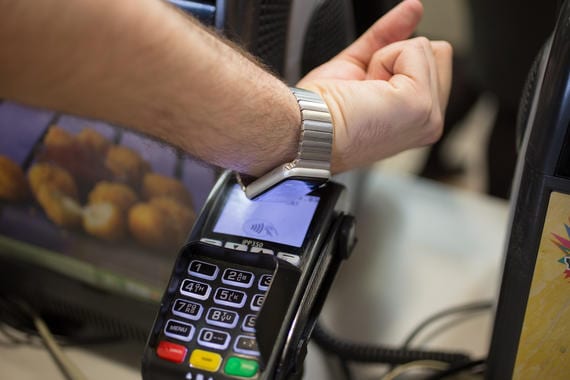
    However, as more locals use the Samsung Pay mobile payment system, IC card readers are fast becoming dinosaurs. The card reader that Park bought recently does not have ability to process Near Field Communication (NFC) payment system. If Apple decides to expand its mobile payment system in Korea, shops will have to buy new card readers with NFC capabilities.

    “I don’t understand why the government told us to buy the new card reader so early in the transitional process,” Park said. “They could have waited until the different mobile payment systems were established.”

    Many industry insiders are critical of the financial authority forcing shop owners to buy IC card readers in July. They say the government is behind in the latest technological trends.

    The government’s decision came after an information leakage scandal last February. Financial authorities believed that it was safer to use cards with IC chips compared to traditional magnetic strips, which are thought to be more vulnerable to financial crimes, including card duplication.

    Due to the government’s decision, approximately 2.47 million credit card company affiliates, or 95 percent of the total 2.6 million stores, were forced to buy the new card reader. The credit card companies chipped in 100 billion won to support their affiliated stores.

    Unfortunately, Samsung Pay, which Samsung Electronics introduced in August, turned the market upside down. Samsung Pay can work with cards that have magnetic strips and allows its customers to secure their identities with fingerprint recognition authentication.

    Samsung Pay users have grown significantly thanks to its ease and safety. Samsung Pay does not require stores to have IC card readers.

    “We did not consider Samsung Pay prior to commercializing IC card readers,” said a representative for the Financial Supervisory Service (FSS). “We intended to adapt the magnetic payment system just in case IC chips run into trouble.”

    IC card readers currently cannot process NFC. The payment system enables a portable device such as a smartphone to establish radio communication with the card readers nearby. Currently, Google’s Android Pay and Apple’s Apple Pay are using this system. Samsung Pay has NFC payment systems in its smartphones as well.

    The financial authority failed to include NFC payment systems in the new IC card readers because there was discord between the major credit card companies. Hana and BC agreed to adapt the system while others were unwilling due to extra charges the companies would have to pay mobile service providers.

    Some industry insiders argue that a lack of government’s efforts further complicated this situation. “Financial authorities failed to ease or mediate the tension between credit card companies,” said a representative for a credit card company.

    Many worry that store owners will have to pay another 100,000 won or so for a new card reader if NFC gets popular.

    Moreover, Kakao Bank and K-Bank – the first two Internet banks in Korea – are expected to open next year and shake up the existing payments market. They would not require any type of credit card readers in transactions. Customers could pay directly using their registered banking accounts, which would save them transaction fees as well.

    Experts recommend the government consider upgrading the existing card readers to enable mobile transactions.

    “As the credit card industry develops rapidly, we also need to adapt to new technologies such as NFC as fast as possible,” said Kim Jong-hyun, a senior researcher at Woori Finance Research Institute.

    “As of now, more people use traditional plastic credit cards, and we need to prioritize them in our policies,” said a representative at the FSS.

    BY LEE TAE-KYUNG [kim.youngnam@joongang.co.kr]