Retail News CRM

Tag: firm

  • Rush for Retail Reign: AI Firm Harex InfoTech Joins Bid War for Korean Giant Homeplus

    Rush for Retail Reign: AI Firm Harex InfoTech Joins Bid War for Korean Giant Homeplus

    In the quest for acquiring the South Korean retail giant Homeplus, two contenders have stepped forward. The attempt to secure new ownership for Homeplus is aimed at stabilizing its operations.

    AI company Harex InfoTech and an anonymous bidder have expressed their interest by submitting their respective letters of intent (LOIs) before the cut-off date of October 31, as informed by investment banking insiders.

    Homeplus, a retail arm which MBK Partners took over from Tesco in 2015, went bankrupt following years of falling sales and liquidity crunches. It was reportedly grappling with basic expenditures, such as electricity bills. However, in March, the court gave Homeplus the green light to look for a buyer under its rehabilitation scheme.

    In preparation of its bid, Harex InfoTech is said to be strategizing to amass approximately 2 billion US dollars in the United States. With the proposed deal, all regular shares owned by MBK Partners would be voided. In contrast, new shares would be allocated to the bidder who succeeds.

    It is obligatory for the triumphant bidder to assume Homeplus’ debts. These include a debt of 940 million US dollars owed to Meritz Financial Group and preferred shares amounting to 405.8 million US dollars held by the National Pension Service (NPS).

    The process of due diligence for qualified bidders will persist through to November 21, with ultimate bids scheduled to be submitted by November 26.

    While the existing deadline for presenting Homeplus’ rehabilitation plan is November 10, those keeping a close watch on the industry anticipate the court to prolong it to sync with the bidding timeline.

    Questions & Answers

    What is the current development with Homeplus’ ownership?
    Two firms have submitted their letters of intent to bid for the ownership of Homeplus.

    Who are the current bidders for Homeplus?
    AI firm Harex InfoTech and an undisclosed bidder have shown interest in acquiring the South Korean retail giant.

    What financial obligations will the successful bidder of Homeplus have to assume?
    The winning bidder is required to tackle Homeplus’ debts, which consist of a 940 million US dollar debt to Meritz Financial Group and preferred shares valued at 405.8 million US dollars held by the National Pension Service.


  • German firm hopes to build $1.5 bln offshore wind farm in Vietnam

    German firm hopes to build $1.5 bln offshore wind farm in Vietnam

    Binh Dinh Province has given approval to a German company to study the possibility of building the country’s second offshore wind power plant. PNG AG will carry out a year-long study for a $1.5-billion wind power plant in the districts of Phu Cat and Phu My.

    The company, which has over 20 years of experience in renewable energy, had earlier proposed building a 500-700-MW power plant in the province, its first project in the country.

    The first offshore wind power plant, the 99MW Bac Lieu Wind Power Project in the southern province of the same name, went on stream in 2016.

    It is expected that in 2021-30, for which period the national plan is being drafted, the country will need 30 GW of wind and solar power.

    There are 11 wind farms in the country with a total capacity of 429 MW, according to Vietnam Electricity (EVN).

  • New Zealand payment firms roll out new technology to reduce fraud

    New Zealand payment firms roll out new technology to reduce fraud

    Payment firms in New Zealand have committed to rolling out the new payment technology credential-on-file (COF) tokenization to strengthen e-commerce security and enhance conversion rates.

    Adyen, Bambora, Cybersource, Paystation by Trade Me and Windcave said they plan to introduce tokenization in the country, in partnership with Visa, which will not only reduce fraud but will also enhance conversion rates, resulting in savings for businesses and simpler payment experience for every-one that shops online.

    COF tokenization replaces card details such as account numbers and expiry dates with unique digital identifiers (‘tokens’) that are used for payment without exposing a cardholder’s sensitive information.

    Each token is merchant-specific, so it can only be used with the merchant where it is stored, removing any incentive for hackers to try to steal the account data and decreasing the risk of data breach attempts.

    Businesses usually store card numbers for direct debit, top-up, loyalty, subscription or account-based online shopping. This same technology is used to enable the various mobile wallets that are available to Kiwis today.

    Riaz Nasrabadi, Visa’s head of Product for New Zealand and the South Pacific, said this commitment to drive tokenization across the industry represents a win for New Zealand businesses, consumers, financial institutions and payments companies alike.

    “The technology enhances consumers’ experience, enables retailers to retain consumer loyalty and protects all businesses from fraud,” Nasrabadi said. “With the advent of open data and the creation of new experiences based on data, initiatives such as tokenization will ensure consumer data is protected and held securely.”

    According to Visa, in addition to enhancing security, COF tokenization enables businesses to have consumer payment details instantly refreshed when a card is lost, stolen or expires, meaning there is no need for the consumer to log in and update his or her details, or the business to lose out on that payment cycle.

    “This development will be welcomed by Kiwi consumers, with a YouGov survey finding that 44 percent identify updating pre-existing details with merchants and service providers among the most annoying consequences of losing a card or having it expire,” the company said.

    The automated process could also help prevent online merchants from missing out on subscription renewals, with 19 percent saying they would use the manual card update to try out an alternative, and 13 percent opting to stop using a service altogether.

    According to Visa, with tokenization in place protecting their card details, 37 percent of New Zealanders said they would be more likely to purchase from small retailers, 46 percent would be more trusting of online businesses, and 36 percent said they would buy from retailers they had not bought from in the past.

  • Wholesale apparel portal Joor eyes Asia as its gets $16 million

    Wholesale apparel portal Joor eyes Asia as its gets $16 million

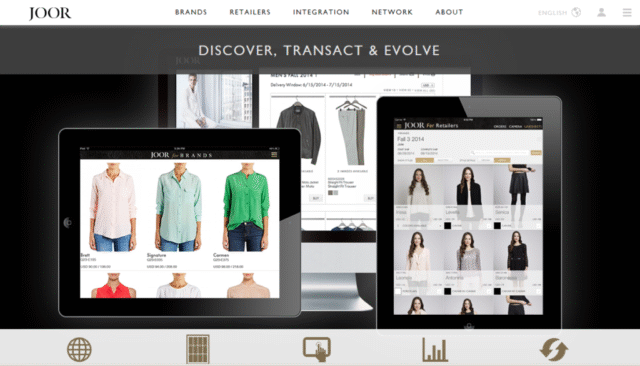
    US wholesale platform and data exchange Joor has raised US$16 million in Series C funding. The financing round was led by Itouchu, one of Japan’s leading conglomerates with participation from existing investors Canaan Partners and Battery Ventures. Joor has now raised $36 million since its launch and the new cash will fund ongoing product innovation for both brands and retailers, as well as expansion into Asia.

    Through the partnership with Itouchu, Joor will be able to access more than 150 US and European brands, and accelerate the entry of new overseas brands into Japan.

    “Joor’s dominance in North America and Europe makes it the natural choice for expansion into the Japanese market. We are excited to continue supporting their strategic growth,” said Yoshihiro Fukushima, executive officer of Itochu.

    “At Joor, our focus from day one has been the simplification of the wholesale process for brands and retailers,” said Kristin Savilia, CEO of Joor. “Our mission is to bring the industry together with one platform. The team at Itouchu supports this mission and we are excited to have its expertise and support to enable Joor to expand into Asia, furthering its global dominance.”

    Joor connects 8600 brands within 53 categories and 200,000 retailers in 144 countries into one wholesale platform.

    Luxury companies including Kering, LVMH, Richemont, Balenciaga, Alexander McQueen, Saint Laurent and Marc Jacobs have moved their wholesale business exclusively to the platform.

  • Emami India acquires German brand Creme 21

    Emami India acquires German brand Creme 21

    Indian FMCG major Emami Ltd on Friday said it has acquired German brand Creme 21 in the personal care space, having major business in the Middle East and other focus markets. The brand, which offers skin care and body care products such as creams and lotions, shower gels, sun care range and men’s range, has been acquired at less than 1.5 times of its sales.

    With current sales at over eight million euros and a gross margin of over 50 per cent, the city-headquartered company expects to take this brand on an aggressive growth trajectory.

    “The acquisition has a strong business fit as it operates in our focus markets and chosen categories. We plan to leverage our existing network of distribution and infrastructure to grow the brand.

    “It has good potential for growth and we expect it to add value to our growth trajectory. With this acquisition, the company would be able to enjoy economies of scale due to additional business base,” said company Director Harsha V. Agarwal.

    The company said international acquisition is in line with its strategy for growth through inorganic route.

    Over 80 percent of the brand’s business is contributed by MENA (the Middle East and North Africa) region and the balance by Germany and other focused countries. The products are manufactured by a third party in Germany under asset lean model.

    “The acquisition is being funded from internal accruals,” it added.

  • Maybank Malaysia vaults into list of world’s top 500 brands

    Maybank Malaysia vaults into list of world’s top 500 brands

    Maybank has made it into the world’s top 500 brands for the first time, after it was named in Brand Finance’s Global 500 Brands – the only Malaysian bank and one of two Malaysian brands to be included in this prestigious listing. Maybank achieved a brand valuation of US$4.2 billion (RM17.3 billion), a 32% increase from last year’s valuation of US$3.16 billion according to its statement.

    Maybank said the group also maintained its position as the top bank brand in Malaysia for the fifth year running, improving its previous rating of “AAA-” to “AAA”.

    At the same time, it registered an increase in the Brand Strength Index (BSI) to 86/100 this year from 82/100 previously. BSI is a key driver that contributes to brand valuation and determines the strength of a brand.

    Maybank was among only eight Asean brands listed in the global ranking. It was placed 494 in the world’s top 500 most valuable brands list.

    Maybank group president and CEO Datuk Abdul Farid Alias said the recognition was a reflection of Maybank’s sustained efforts in building closer relationships with its stakeholders and focusing on delivering consistent value through all its products and services.

    “It is definitely a great honour for Maybank to be listed among the top brands in the world today. We believe it also demonstrates how a homegrown brand from Malaysia is defining new standards and raising the bar in the global stage with support from all its stakeholders.”

    Farid added that Maybank’s strategy in developing a meaningful brand experience was centred on its mission to humanise financial services, as well as its commitment to being at the heart of communities where it operates.

    “While we will continue to strengthen our brand positioning across all our engagement channels, we are also focusing on providing next-generation customer experience given that technology is rapidly influencing our lifestyles and the way people do banking today,” he said.

    Brand Finance in its annual survey, values the brands of thousands of the world’s biggest companies. The results of this analysis are then ranked with the world’s 500 most valuable brands featured in the Brand Finance Global 500 report.

  • Vietnamese banks report plunge in profits

    Vietnamese banks report plunge in profits

    While profit across the banking sector grew by an estimated 40 percent last year, VietinBank, LienVietPostBank and SaigonBank have reported steep declines. The biggest surprise came from state-owned VietinBank, the country’s second biggest lender by assets, which reported a 25 percent fall in profits before tax to go out of the group of five most profitable banks in the country.

    Le Duc Tho, its chairman, said this was a result of having to restrict operations last quarter to begin restructuring.

    Asset growth, credit growth and capital mobilization grew by 6-10 percent, lower than targeted.

    LienVietPostBank reported a 30 percent decline in profit before tax as a result of losses related to securities investments and low marginal interest rates.

    It achieved losses of nearly VND5 billion ($215,140) from securities investments whereas in 2017 it had made a profit of VND380 billion ($16.35 million).

    SaigonBank’s profit before tax fell by more than 26 percent due to provisioning for bad debts. The bank had to increase provision for bad debts by 22 percent to an amount equivalent to 87 percent of its profit from business operations.

    Its bad debts doubled in the first half of 2018 to nearly VND900 billion ($38.72 million), but by the end of the year it brought the rate down from 6.48 percent during mid-year to 2.2 percent. It involved provisioning of VND287 billion ($12.35 million).

    HSBC Vietnam CEO Pham Hong Hai said from 2019 bad debts could reemerge as a problem for banks after the recent lending spurt and the instability of the global financial markets.

    As a result, banks’ profits would most likely see a downward trend this year, he warned.

    The State Bank of Vietnam targets credit growth of 14 percent this year, the same as last year, and keeping non-performing loans to below 2 percent.

  • Viettel sole Vietnamese brand in global 500 listing

    Viettel sole Vietnamese brand in global 500 listing

    Military-run telecom giant Viettel is the only Vietnamese firm in the list of 500 most valuable brands in the world. Valued at $4.32 billion, Viettel’s brand was ranked 478th on the list of 500 most valuable brands in the world for 2019, Brand Finance, a leading global brand valuation consultant, announced at the ongoing World Economic Forum in Davos, Switzerland.

    This is the first time a Vietnamese brand has been named in this list.

    Accordingly, Viettel’s brand value in 2019 has increased 35.8 percent year over 2018. The telecom giant’s high brand valuation was largely due to its presence and contribution in 10 foreign markets, suggesting the company was internationally competitive.

    2018 was a successful year for Viettel in  foreign telecommunication sectors, with service revenue growing by 20 percent, mobile subscribers base growing by 70 percent and net cash flow from international operations by $240 million, 3 percent higher compared to 2017.

    Brand Finance’s Global 500 list ranks the most valuable brands in the world covering all business fields including telecommunications, technology, automotive, oil and gas. Some big names in the list include Amazon, Apple, Google, Mercedes-Benz, Shell and Telstra.

    “Every year Brand Finance conducts an assessment of about 5,000 global brands across 40 different areas on various criteria such as revenue, brand strength, and financial health,” said David Haigh, CEO of Brand Finance.

    Out of a total 5,000 global businesses surveyed, there were 500 Southeast Asian businesses, of which only 8 brands made it to the Global 500 list. The listed brands were in three categories: telecommunications, oil and gas, banking.

  • Coffee exports jump for Korean firm

    Coffee exports jump for Korean firm

    Namyang Dairy Products said Friday its coffee exports jumped more than 20 percent in 2018 on market diversification and the rising popularity of Korean pop culture abroad. Overseas shipments of its freeze-dried coffee and instant coffee products totaled 36 billion won ($32 million) last year, compared with 28 billion won a year earlier.

    Exports of freeze-dried coffee totaled 2,000 tons last year, compared with 1,500 tons a year earlier. The value rose to 30 billion won from 23 billion won. The company also exported 50 million instant coffee mixes, up from 40 million the previous year.

    A company official attributed the export jump to its development of premium products as well as the overseas popularity of Korean pop culture.

    Namyang Dairy Products said it will ramp up efforts to diversify its export markets to Europe. Last year, Korea’s overall exports of coffee products came to 75,100 tons, up slightly from 75,000 tons a year earlier.

    Meanwhile, Korea’s exports of milk powder surged to 32.5 billion won last year from 26 billion won a year earlier.

  • KKR invests into lifestyle products

    KKR invests into lifestyle products

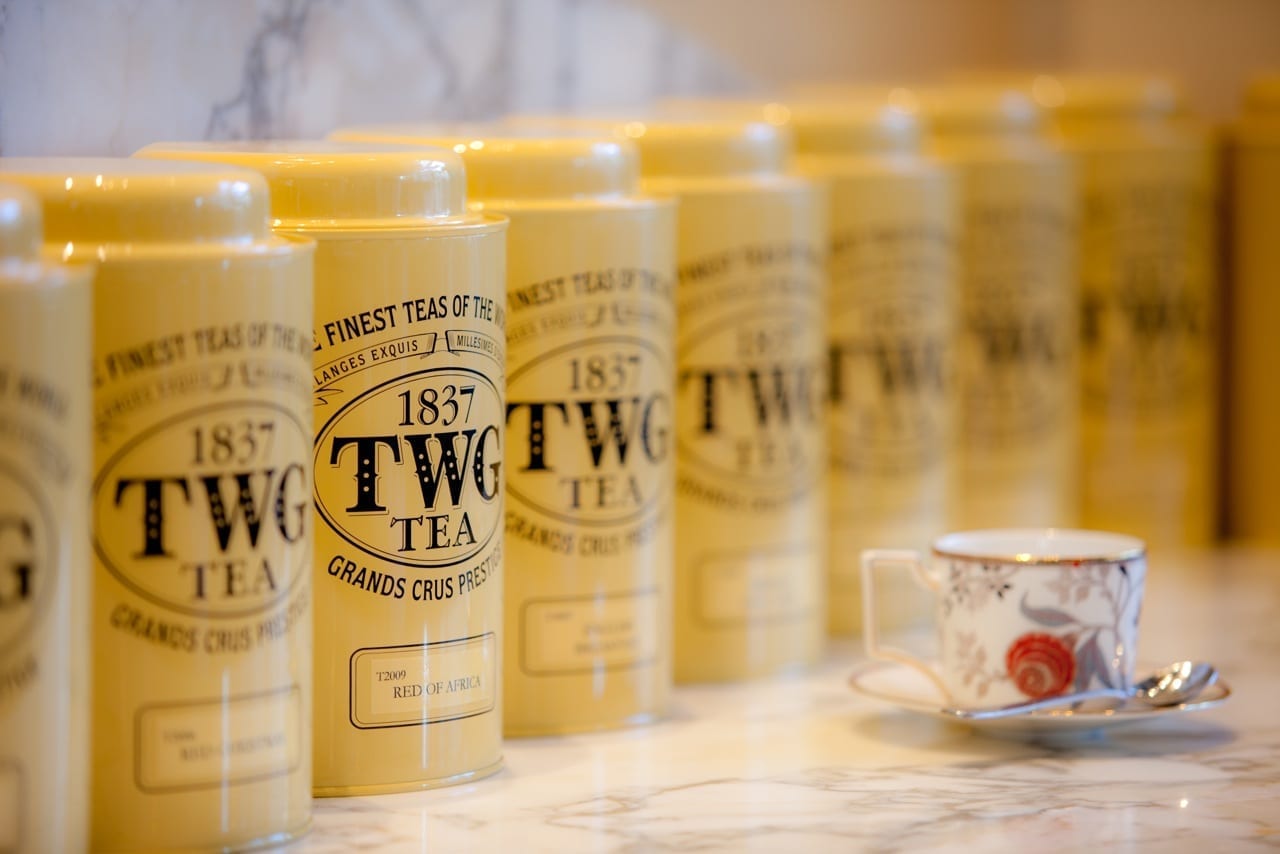
    Private Equity firm KKR has taken up a “significant stake” in massage chair and lifestyle products group V3, the owner of the OSIM and TWG Tea brands. KKR’s investment is up to S$500 million in V3, valuing V3 at an enterprise value of about S$1.7 billion. However,  Both parties declined to comment on the exact mix of equity and debt financing. KKR is making the investment from its Asian Fund III. What we know is that the investment by KKR represents more than 50 percent increase in enterprise value compared to when the group was taken private.

    Ron Sim remains the Chairman, Chief Executive and Controlling Shareholder of V3. He said: “I am extremely pleased to welcome KKR as a significant shareholder in V3. I am confident this investment will position the company for our next phase of growth, starting with the immediate expansion of TWG Tea in Japan and the US and of OSIM in China. We would also be looking into M&A opportunities that are earnings accretive.”

    KKR partner Jaka Prasetya said the investment underscores KKR’s strong belief in the continued growth of the region’s consumer sector: “We aim to provide support and capital to successful home-grown, regional companies like V3 in order to capture opportunities across Asia and beyond.”

    Headquartered in Singapore, V3 has a presence in over 100 cities in 26 countries around the world. The largest chunk of V3’s revenue comes from sales of OSIM massage chairs.

    V3’s annual revenue climbed back above the S$600 million mark last year, reversing the revenue decline owing to store closures in China in prior years. Profit also rose, Mr Sim said.

    The luxury lifestyle and wellness industry continues to be a sector of exciting growth in Asia, proliferated by rapidly rising consumer affluence throughout the region.

  • Indonesian taxi firm Blue Bird joins hands with ride-hailing app Go-Jek

    Indonesian taxi firm Blue Bird joins hands with ride-hailing app Go-Jek

    Indonesia’s largest taxi operator Blue Bird Group said on Monday (May 9) that it plans to form a partnership with the country’s biggest online ride hailing app Go-Jek.

    The collaboration is expected to cover the areas of technology, payments and promotions.

    In a joint statement, the two firms said the partnership would increase the quality of their customer service and that the initiatives would focus on enhancing the transportation experience through a convenient mobile solution. The partnership would “accelerate Indonesia’s digital revolution and empower consumers”, they said.

    Mr Yoga Adiwinarto, country director of the Institute for Transportation and Development Policy (ITDP), said Blue Bird needs to have more reliable apps and will probably ask Go-Jek to develop them.

    He added: “Go-Jek will probably handle the Blue Bird apps, perhaps even put Blue Bird on the Go-Jek platform. More reliable apps will help taxi passengers, an improvement from the poor Blue Bird apps right now.”

    The two companies said they would announce further details about the collaboration soon.

    Monday’s announcement came after a protest in March, where thousands of Indonesian drivers from various taxi companies took to the streets of Jakarta speak up against the ride-hailing app industry, which is often perceived as a threat to the traditional transportation industry.