Retail News CRM

Tag: fiscal

  • Asics Shatters Fiscal Records in 2025: A Year of Exponential Growth and Expansion

    Asics Shatters Fiscal Records in 2025: A Year of Exponential Growth and Expansion

    Asics, a renowned Japanese firm specializing in footwear and apparel, has hit an all-time high in the 2025 fiscal year, demonstrating growth across all aspects of its operation.

    Stellar Financial Performance

    The fiscal year that ended on December 31, 2025, saw Asics garner as much as ¥810.9 billion (US$5.298 billion), marking a 19.5 per cent surge in growth from the previous year. The firm also recorded an operating profit of ¥14.2 billion ($92.8 million), an impressive figure by any standard.

    For four consecutive years, Asics has consistently set new records in terms of net sales and operating profit. Notably, 2025 was the year when the company’s Sport Style and Onitsuka Tiger brands crossed the ¥100 billion milestone in net sales.

    Brand Expansion and Innovative Projects

    Onitsuka Tiger, the luxury lifestyle label hailing from Japan, debuted its flagship stores in notable European cities such as Barcelona, London, and Paris in 2025. This move is part of Asics’ strategy to further strengthen its market presence. Simultaneously, the company has initiated the construction of the Onitsuka Innovative Factory, located in Sakaiminato City.

    Asics reported a 34.7 per cent increase in domestic sales on a year-on-year basis, attributing this to the 84 per cent boost in sales derived from tourists visiting Japan. This surge in domestic growth was mirrored by a 33.4 per cent rise in sales in Southeast and South Asia, underpinned by the opening of a flagship store in New Delhi.

    Despite initial concerns, Asics saw its sales in Greater China grow by 19.9 per cent.

    Supporting Global Athletic Events

    As the official partner of the 2025 World Athletics Championships held in Tokyo, Asics successfully executed targeted product launches in Japan, thereby solidifying its position among runners and athletes.

    Questions & Answers

    How much did Asics earn in the 2025 fiscal year?
    Asics reported earnings of ¥810.9 billion (US$5.298 billion) in the 2025 fiscal year.

    Which brands of Asics surpassed the ¥100 billion mark in net sales?
    Asics’ Sport Style and Onitsuka Tiger brands crossed the ¥100 billion milestone in net sales in 2025.

    What was the percentage increase in Asics’ domestic sales in 2025?
    In 2025, Asics recorded a 34.7 per cent increase in domestic sales from the previous year.

  • Vietnam Jan-Feb FDI inflows up 9.8 pct to $2.58 bln

    Vietnam Jan-Feb FDI inflows up 9.8 pct to $2.58 bln

    Vietnam received $2.58 billion in foreign direct investment (FDI) in January-February, up 9.8 percent from the same period a year earlier. FDI pledges, which indicate the size of future FDI disbursements, were more than 2.5 times higher than the same period last year, climbing to $8.47 billion, the Ministry of Planning and Investment said in a statement on Tuesday.

    Of the pledges, 81.8 percent are to be invested in manufacturing and processing, while 5.6 percent would go to real estate, the ministry said.

    Hong Kong was the top source of FDI pledges in the period, followed by Singapore and South Korea.

    The Southeast Asian country reported a record high FDI inflows of $19.1 billion last year, up 9.1 percent.

  • Malaysia’s economy likely to slow in April to June 2019

    Malaysia’s economy likely to slow in April to June 2019

    Malaysia’s economy is likely to grow at a slow rate in April to June 2019 in view of the decline in the Leading Index (LI) in December 2018, according to the Statistics Department. Chief statistician Datuk Seri Dr Mohd Uzir Mahidin said the monthly change of LI decreased 1.4% to 117.3 points in December 2018 from 119.0 points in the previous month.

    “The declined in six out of seven components have weighed down the performance of the LI with the significant decreased by two components namely real imports of other basic precious & other non-ferrous metals and number of housing units approved, which posted negative 0.5% respectively,” he said in a statement.

    The annual change of LI also registered a negative growth of 1.7% in December 2018.

    The LI is designed to monitor the economic performance for an average of four to six months ahead.

    Meanwhile, the Coincident Index (CI), a measure of current economic activity, was unchanged in December 2018.

    The increased in real salaries & wages in manufacturing sector (0.2%) and real contributions to EPF (0.1%) were offset by the decreased in capacity utilisation in manufacturing sector (-0.2%) and Industrial Production Index (-0.1%).

    The annual change of CI grew at 3.6% as in the previous month.

  • Carlsberg Malaysia declares highest ever dividend payout for FY18

    Carlsberg Malaysia declares highest ever dividend payout for FY18

    Carlsberg Brewery Malaysia Bhd has declared its highest dividend payment amounting to RM1 per share for the financial year ending Dec 31, 2018 (FY18) following a record performance for the year. Managing director Lars Lehmann said this is equivalent to a 110.3% payment of the group’s FY18 net profit, in line with its dividend policy to declare at least 75% of the group’s quarterly net profit and a special dividend in the event of surplus cash after considering future cash requirements.

    The group declared a fourth quarter (Q4) interim dividend of 16.6 sen per share. It also proposed a final interim dividend of 22.4 per share plus a special dividend of 9.3 sen amounting to 48.3 sen per share.

    Together with the interim dividends declared for the first nine months of FY18 amounting to 51.7 sen, the total dividends for FY18 amount to RM1 per share.

    Carlsberg’s Q418 net profit rose 34.9% to RM67.45 million from RM50.01 million a year ago thanks to strong sales in the Malaysian operations, higher profits from Carlsberg Singapore Pte Ltd as well as higher profit contribution from Lion Brewery (Ceylon) PLC.

    Revenue grew 22.3% to RM525.65 million compared with RM429.94 million in the previous year’s corresponding quarter.

    For FY18, the group’s net profit jumped 25.3% to RM277.15 million from RM221.17 million a year ago, while revenue grew 12.1% to RM1.98 billion from RM1.77 billion.

    Looking ahead, Carlsberg warned that rising prices for raw and packaging materials will see costs increasing 5%-10% if it is unable to mitigate such effects. Lehmann, however, stressed that the group is improving its efficiency.

    “There’s a bit of headwinds for increase in prices of raw materials like malt and packaging materials like cans that are not specific to Malaysia but globally. There’s a bad harvest in Australia for barley and the prices are going up,” he told a media and analyst briefing after announcing its FY18 financial results today.

    He added that the group will continue its focus and execution on the third year of SAIL’22 strategy in both Malaysia and Singapore, while areas of growth for FY19 are its premium brands like Connor’s, Somersby, 1664 Blanc and Asahi Super Dry.

  • Malaysia’s economy expands 4.7% in Q4 2018

    Malaysia’s economy expands 4.7% in Q4 2018

    The Malaysian economy grew at a faster pace of 4.7% in the fourth quarter (Q4) of 2018 driven by private sector activity. This compares with a 4.4% growth in Q3 2018. For 2018 as a whole, the local economy also expanded 4.7%. According to Bank Negara Malaysia (BNM), a rebound in exports of goods and services contributed towards the positive growth of net exports.

    Headline inflation declined to 0.3% from 0.5% in Q3, mainly due to transport inflation turning negative.

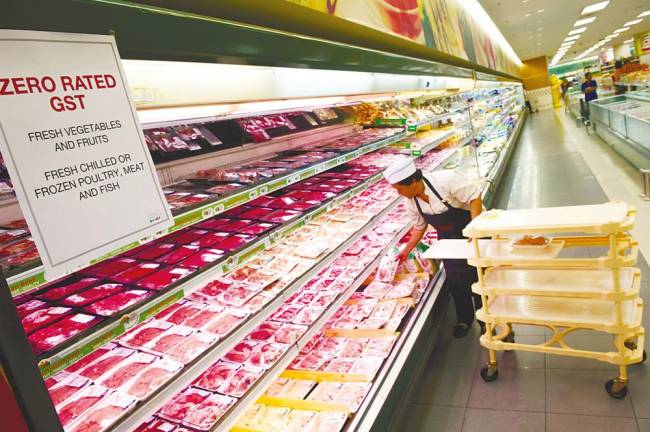
    The zerorisation of the Goods and Services Tax and the implementation of the Sales and Services Tax continued to exert an overall downward impact to headline inflation during the quarter.

    BNM governor Datuk Nor Shamsiah Mohd Yunus said the Malaysian economy is expected to remain on a steady growth path with private sector demand being the main driver of growth.

    She said headline inflation is expected to average moderately higher.

  • Samsung to pay its biggest tax bill ever as profits rise

    Samsung to pay its biggest tax bill ever as profits rise

    Samsung Electronics is expected to pay 16.8 trillion won ($15 billion) in corporate taxes this year, up 20.1 percent from a year earlier, due to its record earnings, its regulatory briefing showed Monday. It is expected to cough up 28.6 percent of its operating profits, which reached an all-time high of 58.9 trillion won in 2018, according to its consolidated financial statement.

    The estimated tax amount is the highest amount ever for the company, 2.4 times the number from 2015 and over 14 times from 2009, its past reports showed.

  • Oil price drops as global economic concerns grip market

    Oil price drops as global economic concerns grip market

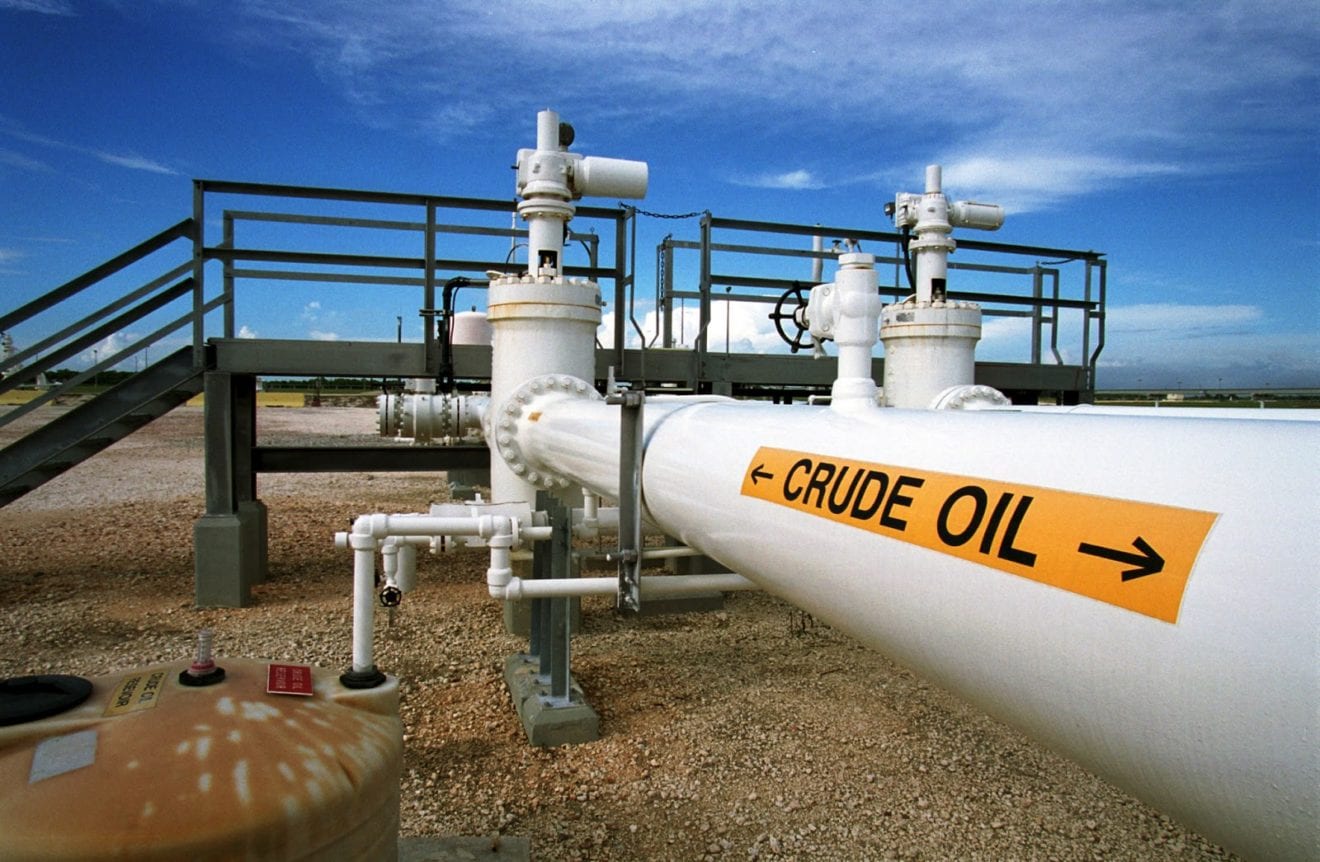
    Oil price fell about 2 percent on Thursday as the market was weighed down by concerns that global demand growth would lag in the coming year. A rebound from late December lows seemed to stall amid worries that a trade war between the U.S. and China would continue, weighing on demand. The market also contended with the possibility that oil producers would not adhere strictly to cuts agreed to last year.

    Brent crude futures fell $1.06 a barrel, or 1.7 percent, to settle at $61.63. U.S. crude futures fell $1.37 a barrel, or 2.5 percent, to settle at $52.64.

    “The correction is stalled, mainly on concerns about demand growth,” said Gene McGillian, director of Market Research at Tradition Energy in Stamford, Connecticut. “There seems to be uncertainty about what is going to happen with the trade talks, with global economic growth and demand in the coming year,” he said.

    In particular, he said, the market is worried about whether demand is sufficient to absorb growing crude production from the U.S.

    “Supply fundamentals have increasingly been turning supportive in recent weeks, but against this the market still worries about the yet-to-be-realised – if at all – impact on demand from weaker macroeconomic fundamentals,” said Ole Hansen, head of commodity strategy at Saxo Bank.

    Though the United States published robust jobs data last week, global markets remain nervous after China reported the lowest annual economic growth in nearly 30 years in January. That focuses yet more attention on the outcome of U.S.-China talks to end the trade war between the world’s top two economies.

    The oil price also came under pressure as weekly data published by the U.S. Energy Information Administration on Wednesday showed an unwelcome increase in stocks of crude oil.

    A decline in OPEC production and a squeeze on supply from Iran and Venezuela because of U.S. sanctions have led many analysts to forecast that the market will be balanced in 2019.

    The oil price is showing a 20 percent gain so far this year.

    Price support is provided by supply cuts led by the Organization of the Petroleum Exporting Countries (OPEC) to tighten the market.

    Saudi Arabia, the world’s top oil exporter, told OPEC it had pumped 10.24 million barrels per day (bpd) in January, two OPEC sources said, a deeper cut than targeted in the supply pact. The kingdom pumped 10.643 million bpd in December.

    “We believe that financial markets may be overestimating the risks of a global recession,” said Jean-Pierre Durante, Head of Applied Research at Pictet Wealth Management.

    “Moreover, lower oil prices – prices were between 14 percent and 18 percent lower in January than their 2018 average – are likely to stimulate economic activity and oil demand, particularly in emerging markets.”

    U.S. sanctions against Venezuela’s oil industry are expected to freeze sales proceeds of Venezuelan crude exports to the United States.


  • Korean export decline picks up speed in January

    Korean export decline picks up speed in January

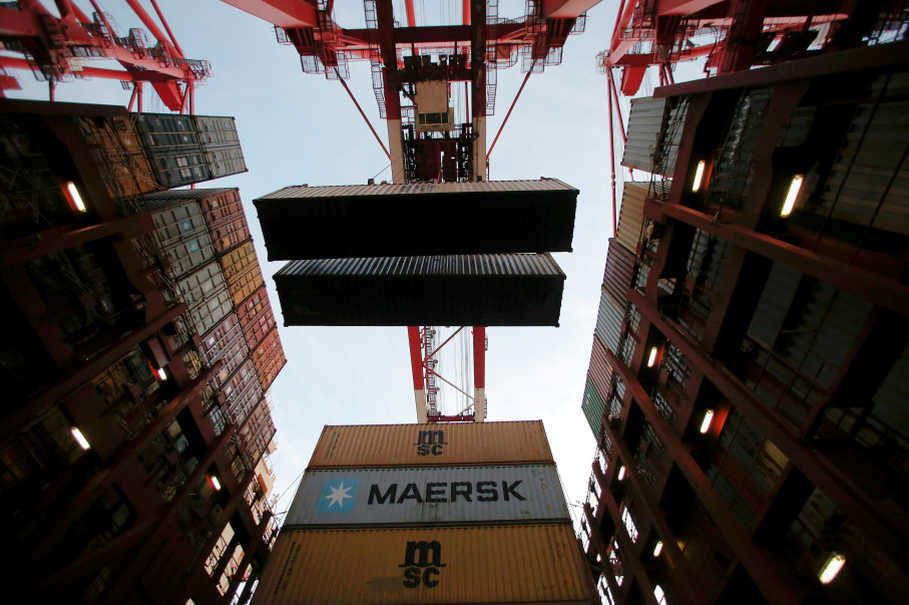
    Exports have continued to fall for a second month, but at a steeper rate, confirming concerns raised by Finance Minister Hong Nam-ki earlier this week. Although Korea succeeded in posting a trade surplus for the 84th consecutive month, a new record, exports in January fell 5.8 percent, sharper than the 1.2 percent drop recorded in December.

    This is the first time since September and October 2016, when exports fell for two consecutive months.

    According to the Ministry of Trade, Industry and Energy on Friday, Korea’s exports in January amounted to $46.4 billion.

    Imports also retreated, losing 1.7 percent to $45 billion. As a result, Korea’s trade surplus in January was $1.3 billion, which is one-third of the $3.4 billion surplus reported a year ago.

    The ministry, however, said the decline of Korea’s exports wasn’t exclusive to Korea as other countries have also been falling as well.

    In December, China’s exports retreated 4.5 percent while Japan was down 3.2 percent, Taiwan lost 3 percent and Singapore fell 4.1 percent.

    The ministry said the decline was largely the result of external factors including the trade dispute between the United States and China, uncertainties resulting from Brexit, falling prices of semiconductors and crude and the slowing growth of the Chinese economy.

    Semiconductors, which were the largest contributor to last year’s thriving exports, played the biggest role in pulling down the number in January and December. Exports fell 23 percent compared to a year ago to $7.42 billion. Semiconductors account for roughly 20 percent of all Korean exports. Semiconductor exports have been shrinking after reaching a high of $12.4 billion in September 2018. The figure fell below $10 billion in December for the first time since April last year.

    The ministry blamed the falling price of semiconductors as global IT companies have been delaying additional purchases since the second half of last year. The price of an 8 gigabyte DRAM chip nosedived 36.5 percent from $9.60 a year ago to $6.10. The price of a 128 gigabyte NAND memory has fallen 22.4 percent from $6.7 to $5.2.

    Falling crude prices was another factor that drove down exports. Petroleum product exports fell 4.8 percent to $3.47 billion, while petrochemical goods slipped 5.3 percent to $3.98 billion. International oil prices have been falling since October last year. Last month, the price of a barrel of oil was down 10.7 percent on year.

    But these weren’t the only export items that struggled.

    Mobile telecommunication goods exports, including smartphones, have fallen 29.9 percent while computers exports are down 28.2 percent. Exports of ships fell 17.8 percent and displays were down 7.5 percent.

    Mobile telecommunication exports to the United States fell 9.7 percent, while the figure for member countries of the Association of Southeast Asian Nations (Asean) saw a steeper drop of 21.9 percent.

    On the contrary, automotive exports, which struggled throughout 2018, appeared to recover, growing almost at the same rate as a year ago.

    Automobile exports in January were up 13.4 percent to $3.67 billion, largely thanks to growing demand in the United States, Europe and the Commonwealth of Independent States (CIS). Exports to the United States in the first 20 days of January were up 43.4 percent to $820 million, Europe grew 20.7 percent to $350 million and the CIS surged 104.1 percent to $150 million.

    Thanks to positive growth in automotive exports, automobile parts exports grew as well, increasing 12.8 percent.

    Steel was another export good that saw an increase thanks to rising prices. When compared to a year ago, it grew 3.3 percent to $2.8 billion.

    By country, China, which is Korea’s No. 1 export market, tumbled 19.1 percent. China, as of last year, accounts for 26.8 percent of Korea’s exports.

    While the majority of the goods exported to China all fell last month, semiconductors, petroleum and petrochemical goods were hit especially hard. Semiconductor exports plummeted 40 percent in the first 20 days of last month to $1.61 billion, while petroleum exports fell 36.4 percent. Petrochemical exports lost 13.7 percent. The three products account for 44 percent of exports to China.

    Exports to the United States rose 20.4 percent to $6.21 billion, largely thanks to import of Korean automobiles, particularly SUVs, which saw an uptick of 43.4 percent.

    EU exports also grew in the double digits at 11.9 percent to $5 billion.

    The ministry said the situation will likely turn around in the second half when semiconductors and crude prices go up. The ministry said that when excluding semiconductors, petroleum and petrochemical goods, Korea’s exports in January only dipped 0.7 percent to $31.5 billion.

    The ministry also noted that new growth engine products like rechargeable batteries are doing well.

    It said that rechargeable battery exports have been rising over the last three years and are now expected to surpass exports of electronic consumer goods, which amount to $7.22 billion.

    Last year, secondary battery exports amounted to $7.23 billion, up 21.5 percent.

    Last month, it grew 14.5 percent year on year to $660 million.

    Biohealth exports have been growing in double-digits for four consecutive years. Last year, they reached a record of $8.15 billion, up 13 percent. Last month, however, biohealth exports fell 1.6 percent to $560 million. The ministry said that it still expects exports of biohealth goods to rise over the course of the year.

    OLED panels and electric vehicles are also seeing an increase in exports. OLED panels last month grew 12.8 percent to $800 million, while electric cars saw a surge of 184.7 percent to $280 million.

    The finance minister said the government will be coming up with measures to help small- and medium-sized exporters that may struggle from the recent turnaround, while Trade, Industry and Energy Minister Sung Yun-mo on Friday emphasized that the government will do its best to revitalize all exports.

    “Our plan will not be concentrated on short-term measures, but committed to all 365 days so that we can achieve $600 billion of exports by the end of this year,” Sung said.

    Korea, last year, reached a new milestone with exports exceeding $600 billion. However, with the global economy expected to shrink, there have been concerns that, this year, Korea’s exports may fall back below that threshold.

    “In a Jan. 21 export strategy meeting, we initiated a pan-government and a private-government joint support system, and since Jan. 30, we started a program of consulting on export difficulties in 15 cities starting with Changwon in South Gyeongsang,” the minister added.
  • Oil prices edge lower, tightening supply outlook supports

    Oil prices edge lower, tightening supply outlook supports

    Crude oil prices edged lower on Monday after sharp gains during the previous session but were supported by expectations of shrinking supply and signs that China-US trade tensions could ease. International Brent crude oil futures on Monday were down 20 cents, or 0.32% at 0339 GMT to $62.54 a barrel, after closing up 3.14% in the previous session to their highest close since Nov 21.

    US West Texas Intermediate (WTI) futures were at $55.13 per barrel, down 13 cents, or 0.24%, from their last settlement. WTI settled 2.73% higher in the last session at its highest close since Nov 19.

    Output declines from the Organization of the Petroleum Exporting Countries (OPEC) as they make good on their pact to curb a supply overhang were compounded by falling US oil rig counts and sanctions on Venezuelan oil sales.

    “While Venezuela’s output reportedly rose last month, fresh US sanctions on the country could see 0.5 to 1% of global supply curtailed,” said Vivek Dhar, commodities analyst for Commonwealth Bank of Australia in a note on Monday.

    The sanctions will sharply limit oil transactions between Venezuela and other countries and are similar to those imposed on Iran last year, experts said after examining details posted by the Treasury Department.

    OPEC oil supply fell in January by the largest amount in two years despite sluggish production declines from Russia, according to a Reuters survey.

    However, Russian oil output in January missed the target for the output cuts, Energy Ministry data showed on Saturday. Production last month declined to 11.38 million barrels per day (bpd), but that was only down by 35,000 bpd from its October 2018 level that is the baseline for the pact.

    Russian Energy Minister Alexander Novak has said the country’s overall cuts from the October baseline would total 50,000 bpd in January. Russia has pledged to reduce oil output by 230,000 bpd from October.

    US energy firms last week cut the number of oil rigs operating to their lowest in eight months as some drillers followed through on plans to spend less on new wells this year.

    “The collapse in oil prices late last year has resulted in more cautious spending by US oil explorers,” said Dhar.

    Meanwhile, hopes for thawing China-US relations have also helped ease concerns over slowing economic growth.

    “While the US and China have yet to reach a deal, markets were buoyed by reports that they have made significant progress,” ANZ Bank said in a research note.

    US President Donald Trump last week said he would meet with Chinese President Xi Jinping, perhaps twice, in the coming weeks to try to seal a comprehensive trade deal with Beijing, but acknowledged it was not yet clear whether a deal could be reached.

  • Vietnam per capita income matches Malaysia’s 20 years ago

    Vietnam per capita income matches Malaysia’s 20 years ago

    Vietnam’s recent economic achievements notwithstanding, much effort is needed for it to close the gap with other countries, a minister has said. Minister of Planning and Investment Nguyen Chi Dung said at a conference Wednesday that while Vietnam’s GDP per capita had surged by 27.4 times in the last 30 years to almost $2,590 last year, Malaysia had achieved this figure 20 years ago.

    Thailand had done so 15 years ago and Indonesia 10 years ago.

    The main limitations of its economy were low labor productivity, economic efficiency and competitiveness, and the country also faced the risk of being stuck in the middle-income trap.

    According to the 2018 Vietnam Annual Economic Report, average productivity per worker was VND60.73 million ($2,600) in 2017, lower than that of China, Japan, the Philippines, Thailand, and Cambodia.

    Currently the country also faced challenges like the U.S.-China trade war, the minister said.

    For these reasons, institutional reforms were necessary to achieve a more sustainable economy, he noted.

    Macroeconomic stability and high economic growth with innovation in science and technology were imperative.

    The private sector had to remain one of the pillars of the economy in future, Dung said. “If Vietnam doesn’t catch the 4.0 train, the gap between it with other countries will become wider. Vietnam needs to narrow that gap.”

    Vietnam’s GDP has grown at 6.8 percent a year on average for the last 20 years, and the economy has grown 39 fold in the period to $245 billion last year.

    Growth last year was 7.08 percent, the highest in a decade.

  • Vietnam’s exports slow down

    Vietnam’s exports slow down

    Vietnam’s exports fell by 1.3 percent year-on-year in January to $20 billion as phone shipments fell sharply. Exports of phones were 27.5 percent down at $2.9 billion, according to the General Statistics Office. Computer and electronics exports fell 5 percent to $2.3 billion.

    But exports of textiles and garments rose by 6.7 percent to $2.7 billion, footwear by 12.8 percent to $1.6 billion and machinery and equipment by 15.2 percent to $1.4 billion.

    The U.S. was the biggest importer ($4 billion) followed by China ($3.8 billion) and the EU ($3.2 billion). The country’s Southeast Asian neighbors only accounted for $2 billion.

    Meanwhile, Vietnam’s imports rose by 3.1 percent to $20.8 billion.

    Last year exports were worth $244.72 billion, up 13.8 percent, and imports cost $237.51 billion, giving Vietnam its highest trade surplus ever of $7.21 billion.

  • Dollar eases as focus shifts to Fed meeting

    Dollar eases as focus shifts to Fed meeting

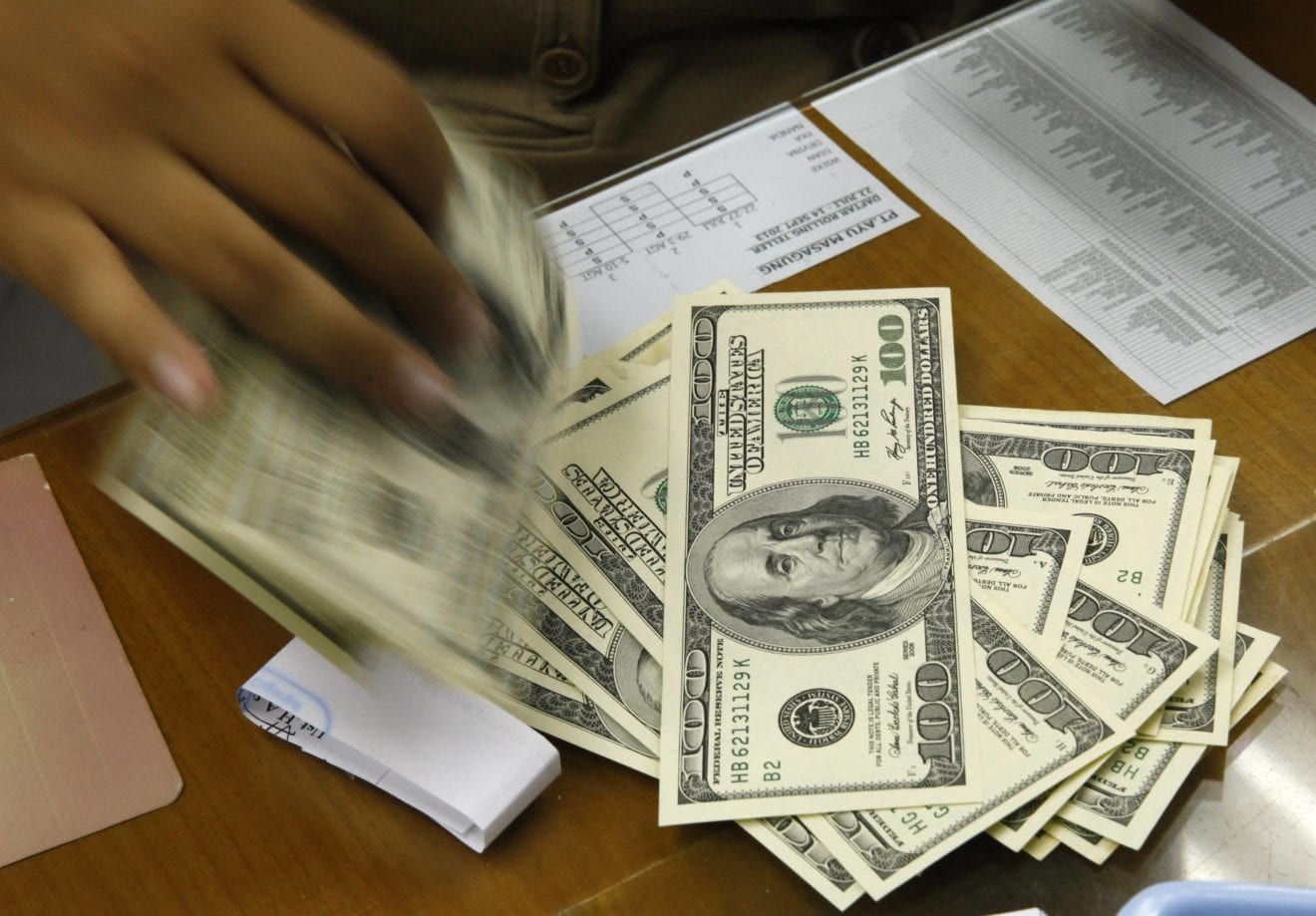
    The dollar eased versus most of its peers on Monday as investors turned their attention to this week’s Federal Reserve policy meeting, with traders wagering policymakers will signal a pause in their tightening cycle. The Federal Open Market Committee meets between Jan 29-30, and Chairman Jerome Powell is widely expected to acknowledge growing risks to the US economy as global momentum weakens.

    The dollar fell 0.2% versus the offshore yuan to 6.7406. The rally in the yuan also fuelled a bounce in the Australian dollar, which gained 0.18% versus the dollar to $0.7195. Kiwi dollar strengthened by 0.3% to $0.6859.

    “The general direction for the dollar is still down and markets will be taking cues from the FOMC this week,” said Sim Moh Siong, currency strategist at Bank of Singapore.

    “The Fed will most likely keep rates steady this year given the state of economic growth outside the US”

    The dollar index, a gauge of its value versus six major peers was marginally lower at 95.74, after falling 0.8% on Friday.

    A deal to reopen the US government for now after a prolonged shutdown also reduced investor demand for the safety of the greenback.

    ‘The re-opening of Federal government after one-month shutdown fuelled ‘risk on’ rally in the US equities and slashed demand for safe-haven currency like USD, leading to sharp decline of the dollar index last Friday,” said Margaret Yang, markets analyst at CMC Markets.

    Over the past two months or so, Powell and several other Fed policymakers have taken a more cautious approach on further monetary tightening, leaving the dollar underpowered after it enjoyed a boost from the Fed’s four rate increases last year.

    Traders are bearish on the dollar for 2019.

    Amid a weakening global economy and US-Sino trade tensions, the US central bank is widely expected to hold rates steady this year to avoid hurting growth at home. Interest rate futures markets are pricing in no rate hikes for 2019.

    Investors are also anxiously waiting news from high-level US-China trade talks on Tuesday and Wednesday to see if the world’s largest economies can reach a compromise that will end their trade war. President Donald Trump has threatened to hike tariffs on Chinese goods if there is no significant progress in the negotiations.

    The yen added 0.2% in early Asian trade at 109.34.

    The dollar has gained around 1.2% on the yen over the last two weeks. Not helping the yen was the Bank of Japan’s downgrade of its inflation forecasts last week when it also maintained its accommodative monetary policy, as widely expected.

    Moreover, Japanese investors have been net buyers of foreign bonds over the last few weeks, stoking demand for dollars. This likely explains why the safe-haven yen has not appreciated during this period even though risks of a global economic slowdown have rattled investor sentiment.

    The euro was marginally higher at $1.1411.

    The single currency managed to cling on to a 0.4 percent gain made last week despite the European Central Bank downgrading its growth forecasts for the near term.

    Growth data out of Europe’s economic powerhouses such as Germany and France has been weaker-than-expected and analysts expect the ECB to remain dovish for an extended period.

    Traders believe Europe’s slowdown and a dovish ECB are priced into the euro, which has traded in a $1.12-$1.16 range over the last three months.

    Sterling was marginally lower, fetching $1.3193.

    Cable gained 2.5% last week after a report in the Sun newspaper that Northern Ireland’s Democratic Unionist Party had privately decided to offer conditional backing for British Prime Minister Theresa May’s Brexit deal this week.

    However, Ireland’s Deputy Prime Minister Simon Coveney said on Sunday the backstop was already a compromise drawn up to meet May’s negotiating red lines, and the EU and Ireland were united in the view it “was not going to change”.

    Analyst expect sterling to remain volatile. Britain is set to leave the European Union on March 29, but the country’s members of parliament remain far from agreeing a divorce deal.

  • OCBC: Malaysia could restore fiscal health in 3 years

    OCBC: Malaysia could restore fiscal health in 3 years

    Malaysia has a reasonable chance of restoring its fiscal health within three years if the economic growth remains stable with new revenue streams and stable expenditure, according to OCBC Bank chief economist Selena Ling. “But if you have a case where the global environment is very serious and dire and there is no deal between US and China… then it becomes a very hostile environment for any developing country to operate in,” she said last Friday.

    She noted that if the global economy remains at a status quo for the rest of the year and crude oil prices stabilise, Malaysia may miss the fiscal deficit target by 0.1-0.2 percentage points.

    Having said that, the potential slippage is not expected to be “very severe” that will derail Malaysia off its targets.

    “Rating agencies also want to see a multi-year plan. If it’s just a slippage of one year that you can attribute to a lot of external factors, probably the rating agencies will give you a pass. It’s really not a one year story they’re looking for,” she explained.

    The government has projected fiscal deficit to ease to 3.4% of gross domestic product (GDP) this year from 3.7% in 2018. It looks to further narrow the fiscal deficit to 3% and 2.8% in 2020 and 2021, respectively.

    Ling projects Malaysia to record a full-year GDP growth of 4.4% for 2019 amid slowing global growth and the ongoing external headwinds.

    Malaysia’s ringgit, on the other hand, could appreciate to RM4 against the greenback in the event of a weak dollar.

    She said the strengthening of the ringgit will have less to do with domestic factors as the slowdown in economic growth is seen as benign, coupled with an unlikely change in the Overnight Policy Rate (OPR).

    Another reason that could be supportive of strong ringgit is the risk of the US economy falling into a recession next year.

    Meanwhile, Ling expects oil prices to be subdued and could result in a shortfall in government coffers if they remain at the current level of around US$50 per barrel until year-end.

    Although Budget 2019 is based on the oil price assumption of US$70 per barrel, she does not see a need to recalibrate the budget at this juncture, but it will exert pressure on seeking new revenue sources.

    “As far as the budget revision is concerned, I suspect (it will) not be so soon because the US$70 is a medium-term price target and oil prices have been volatile in the last six months.

    “But if you look at the average price, it is relatively stable and maybe for the next budget in October 2019, they (the government) may revise the oil price assumption,” she added.

  • Malaysia’s exports rebound in September

    Malaysia’s exports rebound in September

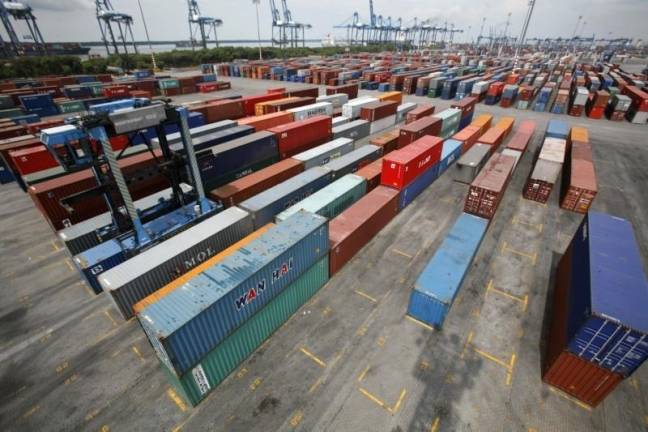
    Malaysia’s exports rebounded by 6.7% in September 2018 to RM83 billion year-on-year (y-o-y) after a slight decrease in the previous month, according to Statistics Department. Total trade which was valued at RM150.8 billion increased RM3.3 billion or 2.3% in September 2018, chief statistician Malaysia Datuk Seri Dr Mohd Uzir Mahidin said in a statement.

    Mohd Uzir said the trade surplus recorded the highest value since October 2008 at RM15.3 billion, increased RM7.1 billion or 85.9% from a year ago.

    Re-exports was valued at RM16.5 billion registering an increase of 26.2% y-o-y and accounted for 19.9% of total exports, while domestic exports increased 2.7% or RM1.8 billion to RM66.5 billion.

    The export growth was contributed by expansion in exports to Hong Kong, Taiwan, Singapore, Australia and Republic of Korea. Meanwhile, lower imports were mainly from India, Republic of Korea, Vietnam, UAE and EU.

    The main products which contributed to the expansion in exports were electrical & electronic products, refined petroleum products, crude petroleum and liquefied natural gas (LNG).

    However, the department said decline was recorded for palm oil and palm oil-based products, timber and timber-based products and natural rubber.

    For imports, the lower in imports by ‘end use’ was mainly attributed to intermediate goods, capital goods, and consumption goods, it added.