Retail News CRM

Tag: fish

  • Vietnam Navigates Stormy Trade Seas, Eyes $11B Seafood Export Milestone Amid Global Demand Surge

    Vietnam Navigates Stormy Trade Seas, Eyes $11B Seafood Export Milestone Amid Global Demand Surge

    Vietnam’s seafood export industry is on track to hit its projected target of $11 billion this year, despite experiencing slower growth in exports to the U.S. due to increased tariffs. In the first 10 months of the year, exports witnessed a 15% year-on-year increase and reached a figure of $9.5 billion. This surge was primarily driven by shrimp exports, which contributed to more than 40% of the total exports, according to the Vietnam Association of Seafood Exporters and Producers (VASEP).

    U.S. Export Slowdown

    The third quarter saw a slow down in exports to the U.S., particularly in shrimp and pangasius, following the 20% tariff on seafood imports from Vietnam, which was implemented in August. However, this slump has not hampered overall growth.

    Emerging Markets and Opportunities

    Promising opportunities for export growth are emerging in other markets, particularly China. In the first 10 months of the year, China purchased over $2 billion worth of seafood from Vietnam, marking a significant increase of 32%. The main products exported to China include lobster, marine fish, and live crab, with demand consistently on the rise.

    Despite a weakening yen, exports to Japan also increased, witnessing a 15.2% rise to $1.4 billion. Other rapidly expanding markets include Canada and Australia.

    Challenges Ahead

    Despite the promising figures, VASEP has cautioned that the fisheries sector could encounter challenges in the coming year. The main concerns comprise the increased tariffs, potential impacts of the U.S. Marine Mammal Protection Act, and the likelihood of the E.U. maintaining its yellow card on Vietnam due to illegal, unreported, and unregulated fishing.

    The competition presented by India, Ecuador, and Indonesia is also expected to intensify in the near future, adding to the list of potential hurdles.

    Questions & Answers

    What factors have contributed to Vietnam’s seafood export growth this year?
    The main factors include a surge in shrimp exports and increasing demand from markets such as China, Japan, Canada, and Australia.

    What challenges could potentially impact the seafood export industry in Vietnam?
    Increased tariffs, potential ramifications from the U.S. Marine Mammal Protection Act, the likelihood of the E.U. continuing its yellow card on Vietnam for illegal fishing practices, and rising competition from India, Ecuador, and Indonesia could pose challenges.

    What is the projected seafood export target for Vietnam this year?
    Vietnam aims to achieve a seafood export target of $11 billion this year.
  • Popeyes Singapore Halts Fish Burger Sales Amid Mold Scare: An Investigation Underway

    Popeyes Singapore Halts Fish Burger Sales Amid Mold Scare: An Investigation Underway

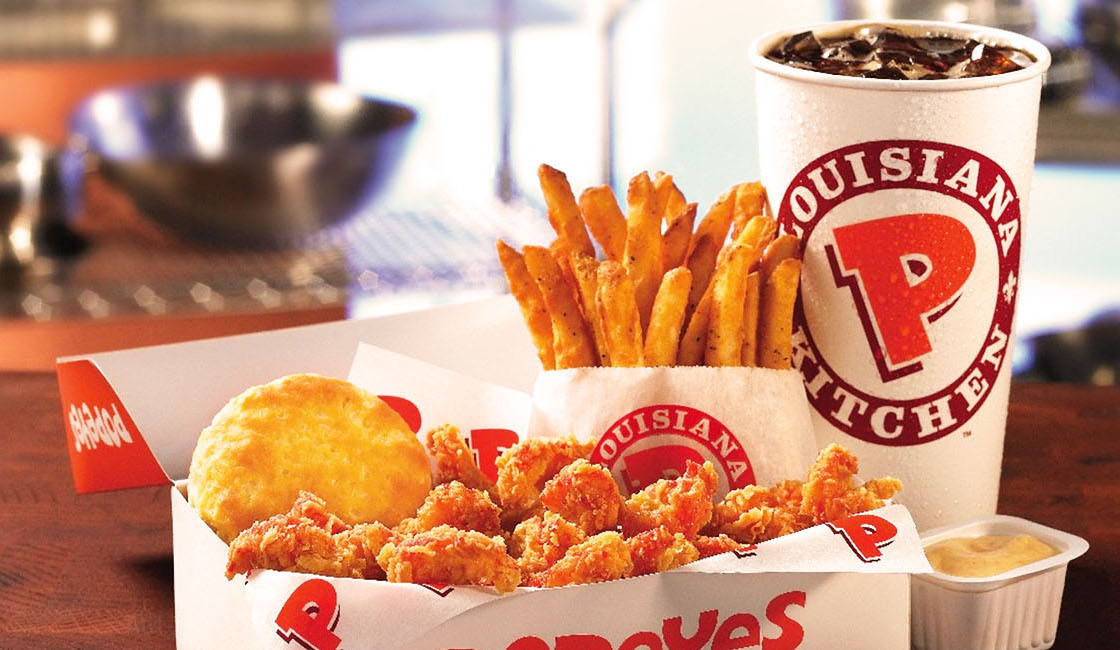
    Popeyes Singapore recently halted the sale of its limited-edition Poppy Fish Burger throughout all its branches following an incident where a customer found mold on her burger bun at the Orchard Xchange outlet. This occurrence has led to a comprehensive investigation.

    The fast-food chain’s decision to suspend the sale of the burger is a precautionary measure while the inquiry is ongoing. In a statement, they expressed sincere apologies for the incident and emphasized their commitment to food safety, stating that it is their topmost concern and they take such matters very seriously.

    Popeyes also revealed that the Singapore Food Agency (SFA) had already inspected the Orchard Xchange outlet and found their food-safety controls to be satisfactory. Currently, Popeyes is collaborating with the SFA, its suppliers, and its operations team to identify the root cause of the mold incident and avert any similar issues in the future.

    The customer, identified as Teng, shared that she had consumed most of the Poppy Fish Burger before noticing the mold on the bun. She explained that she did not see it sooner because she had been focused on her computer while eating. Upon discovering the mold, Teng discarded the remaining burger and lodged complaints with both Popeyes and the SFA.

    The SFA confirmed its inspection of the Orchard Xchange outlet and stated it had sternly cautioned the management to improve their procedures. The agency assured that it would continue to monitor the outlet for compliance.

    Popeyes, on its part, pledged to scrutinize its internal processes to understand the cause of the mold incident. It has already performed a thorough inspection of all food items, required suppliers to confirm the integrity of the shelf-life of their products and reinforced food-safety checks across all its locations. Furthermore, recommendations from the SFA have been received, which the fast-food chain promised to implement immediately.

    Questions & Answers

    What action was taken by Popeyes Singapore following the discovery of mold on a burger bun?
    Popeyes Singapore suspended the sale of its limited-edition Poppy Fish Burger at all its locations as a precautionary measure and initiated a thorough investigation into the incident.

    How is Popeyes Singapore addressing the issue to prevent a repeat occurrence?
    Popeyes Singapore is reviewing its internal processes, performing comprehensive inspections of all food items, asking suppliers to verify their product shelf-life, and reinforcing food-safety checks at all outlets. The chain is also implementing recommendations from the Singapore Food Agency.

    What role has the Singapore Food Agency (SFA) played in this incident?
    The SFA inspected the implicated Popeyes outlet, found its food-safety controls satisfactory, issued a stern warning to the management to improve their procedures, and committed to ongoing monitoring for compliance. The agency also provided recommendations to Popeyes Singapore which the chain has pledged to implement immediately.

  • Fisheries exports grow by 6% in H1

    Fisheries exports grow by 6% in H1

    Vietnam’s fisheries exports in the first half of 2024 were worth US$4.4 billion, up 6% year-on-year on higher demand in major markets like the U.S., China and the EU.

    The Vietnam Association of Seafood Exporters and Producers’ latest report said key items such as shrimp, pangasius, and tuna did well.

    Pangasius accounted for $918 million and tuna for $472 million, up 5% and 23%. Shrimp fetched $1.6 billion, a 6% increase, while exports of other crustaceans jumped by 75% to $125 million.

    The U.S. and EU imported 18% and 56% more tuna. Shrimp exports to China and the EU rose by 17% and 13%.

    Top shrimp exporter Minh Phu said profits for the first half were VND7.2 billion (US$284,000) as against a loss of VND98 billion in the same period last year.

    Its CEO, Le Van Quang, said the company has been receiving more orders than last year and is planning to boost exports to China, Japan, South Korea, Australia, and New Zealand.

    Businesses are optimistic that seafood exports, especially of green and sustainable products, will grow even more in the coming months.

    But the seafood association said some challenges remain, such as fierce competition from Ecuador and India, rising transport costs and a shortage of raw materials for processing.

  • Tuna exports expected to grow by 20% in H1

    Tuna exports expected to grow by 20% in H1

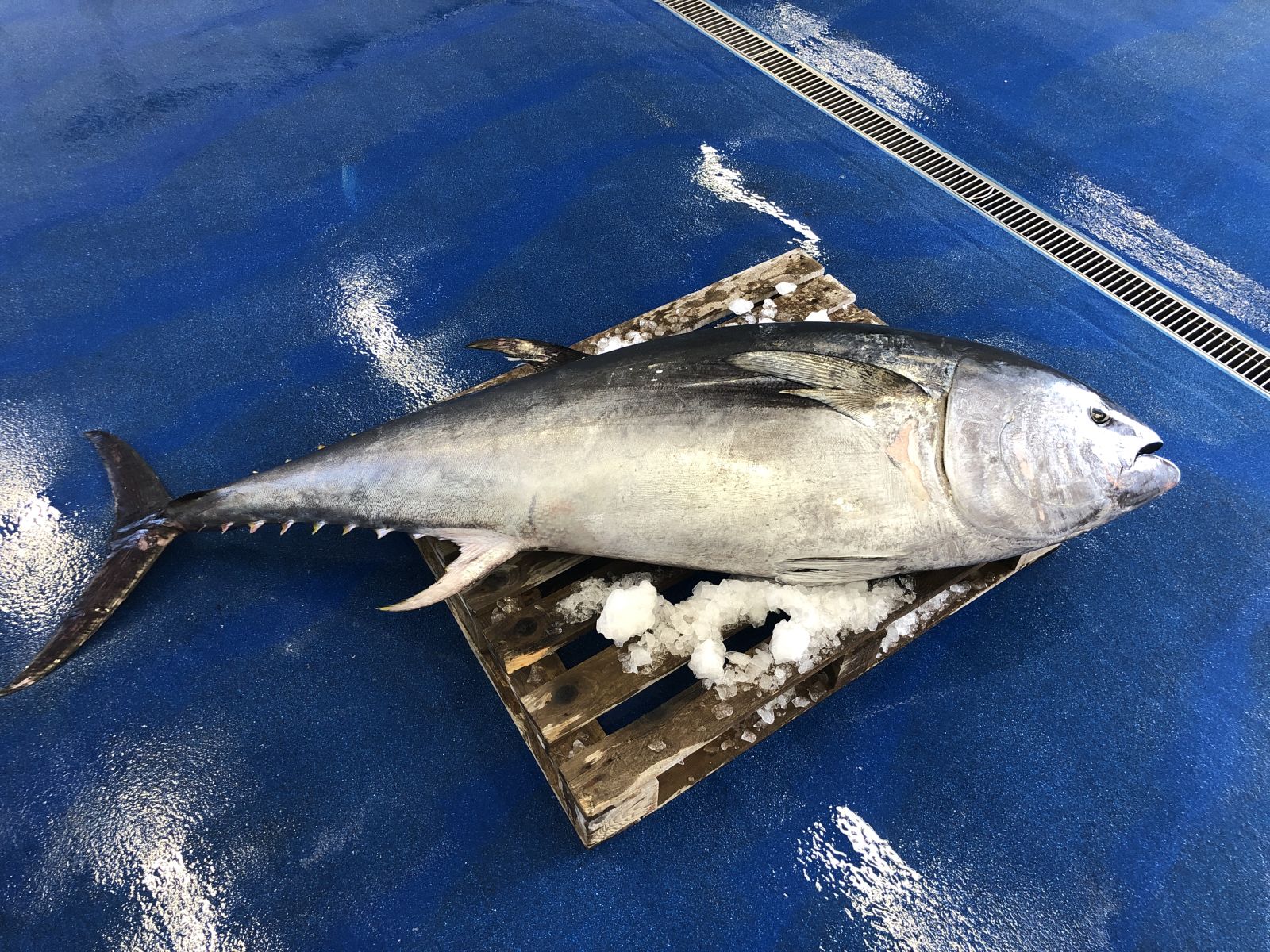
    According to the Vietnam Association of Seafood Exporters and Producers (VASEP), tuna exports are projected to reach US$456.8 millio in the first half of 2024, a 20% year-on-year increase.

    After decreasing in 2023, exports rose by 22% in the first five months of the year to $388 million.

    Shipments of canned tuna products, bagged tuna and frozen loin/fillet increased by 44%, 24%, and 7%. Exports of frozen whole tuna nearly tripled.

    Exports to most markets increased, with those to the U.S. and the E.U., the two largest, rising by 30% and 37% and accounting for 37% and 22% of total exports.

    Exports to Israel, Russia and the Republic of Korea rose by 64%, 58% and 66%.

    Speaking at the association’s annual general conference in HCM City on June 10, Cao Thị Kim Lan, Director of the Binh Dinh Fisheries Joint Stock Company, said in 2023, Vietnam became the world’s 5th largest exporter of tuna behind Thailand, Ecuador, Spain, and China, rising from the 8th place 10 years ago.

    She said exports could reach $1 billion again this year if the raw material shortages are resolved. More than 50% of exports are processed from imported tuna.

  • Tuna exports rise to year’s highest levels

    Tuna exports rise to year’s highest levels

    Tuna exports rose to US$87 million in August, the highest for the year though 5% down year-on-year, according to the Vietnam Association of Seafood Exporters and Producers.

    VASEP said there were some changes in the export patterns in August.

    After declining steadily, exports to the U.S. increased by 2% bolstered by a 24% jump in shipments of canned tuna.

    But exports for the year-to-date were 45% down from 2022 at US$208 million.

    Exports to the EU saw a 37% surge, including a 45-fold rise in shipments to Italy. Smaller markets like Thailand and the Philippines also bought more tuna.

    Shipments to members of the CPTPP trade deal like Japan, Canada and Mexico fell by 53%, 49% and 14%.

    Exports for the year have been worth $545 million, down 25% from the same period last year.

  • Vietnam’s tuna export orders to increase

    Vietnam’s tuna export orders to increase

    The Vietnam Association of Seafood Exporters and Producers (VASEP) forecast tuna export orders will increase sharply in the last months of the year due to decreasing inventories in major export markets.

    VASEP said the stockpiled quantity of tuna in the U.S., one of the main markets of Vietnam has begun to decrease and importers were considering speeding up imports.

    By the end of the year, major markets such as the U.S. will have many festivals, so consumer demand will increase. Meanwhile, preferential tariffs are an advantage that has pushed EU importers to seek orders from Vietnam.

    Over the past seven months of this year, Vietnam’s tuna exports reached nearly $445.6 million, down 31% year-on-year, VASEP said.

    While exports of high-value fresh, frozen and dried tuna products decreased 46%, shipments of processed and canned tuna goods saw a modest rise of 4% to over $204 million, it said.

    Besides, exports to the EU, Mexico, Israel and Thailand had recorded high growth over the same period of 2022.

    The EU market showed signs of recovery, with a growth rate of 28% in June and July, earning Vietnam a turnover of $12 million per month. Notably, in the bloc, exports to the Netherlands also continuously grew remarkably while that to Germany maintained an increase of 30% in June and July.

    Vietnamese tuna exports to Mexico and Chile also recorded hikes of 100% and 90%, respectively. Meanwhile, tuna shipments to Thailand also soared 65% in the last two months.

    According to Nguyen Ha, tuna market expert of VASEP, in the context that exports to the main traditional markets had all declined, Israel had emerged as a potential market.

    In the first half of this year, Vietnamese tuna exports to Israel hit nearly $25 million, up 92% over the same period last year.

    Frozen tuna meat and fillets still accounted for the highest proportion of 47%. The export value of this product group saw a yearly hike of 29%. Meanwhile, the export turnover of canned tuna increased 375% and other processed tuna products surged 83%.

    Despite being a small country, with no natural resources and limited domestic labor resources, Israel’s consumer demand was quite large and solvency was high, so there remained ample room for Vietnam’s tuna exports to the market, Ha said.

    Especially, the Vietnam-Israel FTA (VIFTA), signed on July 25, would open up opportunities for Vietnam’s seafood exports, including tuna, to access the Israeli market and lucrative Middle East region, Ha said.

    To penetrate the Israeli market, VASEP Secretary General Truong Dinh Hoe suggested that tuna exporters ensure product quality, carefully study market information, promote credibility and be responsible.

    He vowed that VASEP would accompany, research carefully and disseminate market information to businesses.

    To facilitate tuna exports, businesses petitioned the Ministry of Agriculture and Rural Development and the Ministry of Industry and Trade to grant more quotas for imported raw tuna as domestic tuna raw material could meet only 25% of demand for processing and export, the Binh Dinh Fishery JSC Co suggested.

  • Seafood exporters situation more dire than during Covid

    Seafood exporters situation more dire than during Covid

    Seafood exporters are seeing orders plummet and facing even greater difficulties than during the Covid-19 pandemic.

    In the first five months of this year their exports fell by 28% to $3.37 billion and companies saw a decline of 20-50% in export orders, according to the Vietnam Association of Seafood Exporters and Producers (VASEP).

    Prices too have been falling due to the low demand, making it harder for companies to repay bank loans and manage other expenses.

    A severe shortage of raw fish and shrimp is expected in early 2024, VASEP said.

    Seafood exports this year are projected to be $9 billion, or nearly $2 billion less than last year.

    To mitigate the industry’s problems, VASEP has called on the government to reduce bank lending interest rates and make credit more accessible to it.

    It wants the interest rates on U.S. dollar loans to be reduced to below 4% and on dong loans to under 7%.

    It has demanded a rollover of loans by four to six months and a special credit package for small seafood producers.

    It has also proposed that a VND10-trillion stimulus package for the Mekong Delta region that is under consideration should be disbursed early so that exporters can start stockpiling raw materials early.

    Prime Minister Pham Minh Chinh had instructed the State Bank of Vietnam in April to consider such a package.

  • Tuna exports to UK triple

    Tuna exports to UK triple

    Tuna exports to the U.K. tripled year-on-year in the first two months even as shipments to some main markets like the U.S. and E.U. plunged.

    Exports to the U.K. were worth US$1.3 million, enabled by a 13-fold rise in February, according to the Vietnam Association of Seafood Exporters and Producers (VASEP).

    Vietnam now ranks 13th out of 45 countries and territories that export tuna to that country.

    Last year its exports to the U.K. rose by 10%.

    Other markets to which Vietnam’s tuna exports grew by 32-99% in the first two months were Japan, Thailand, Germany, and Israel.

    They made up the country’s top five markets in the first two months along with the U.K.

    Vietnam’s total exports, however, dropped 30% year-on-year to $109 million in the period.

    The U.S. and the E.U. each posted a 50% decline, which VASEP attributed to rising inflation and a change in consumers’ shopping habit.

    The fact that Vietnam still has a yellow card given by the E.U. for illegal, unreported and unregulated fishing also pose challenges to exports, VASEP added.

    The association expects global demand for tuna to recover in the second half of this year.

    Vietnam has nine tuna species across its seas, with an estimated reserve of 600,000 tons. The three biggest tuna fishing localities are Binh Dinh, Phu Yen, and Khanh Hoa.

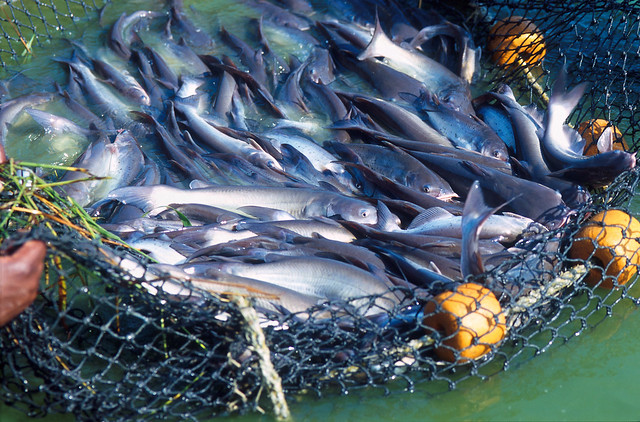
  • China begins large purchase of Vietnamese tra fish

    China begins large purchase of Vietnamese tra fish

    A Chinese trader has imported 500 containers of tra fish weighing 12,000 tonnes from Vietnam right after China lifted its zero-Covid policy, showing a positive signal for the sector this year.

    China is the second biggest importer of Vietnamese tra fish, after the U.S. Last year, Chinese traders bought nearly 300,000 tonnes of the fish from Vietnam, with a total value of more than $700 million.

    Notably, the current price of fillets exported to this market ranges from $3.5 to 3.6 per kg – the best export price of this product – in the context of the global economic downturn.

    Vietnamese tra fish is now exported to 138 countries and territories worldwide.

    About 350 tra fish-raising establishments in the Mekong Delta region with a total area of nearly 3,120 ha have been certificated to meet Vietnamese Good Agricultural Practices (VietGAP) standards.

    According to the Vietnam Association of Seafood Exporters and Producers (VASEP), this year, tra fish exports are expected to surpass $2.4 billion – a record high set in 2022.

  • Shrimp exports fall by half in January

    Shrimp exports fall by half in January

    Shrimp exports plummeted by 55% year-on-year in January to US$141 million due to weaker global demand and stronger competition from other countries.

    According to the Vietnam Association of Seafood Exporters and Producers, exports to the U.S. were worth $23 million, down 65%, the sharpest decline among all markets.

    Shipments to the EU were down 55% to $24 million. Vietnam’s largest market, Japan, imported $29 million worth of shrimp, a 47% decline.

    A major reason for the fall in exports was that demand in the EU was weaker because of the impact of inflation and uncertainties related to the Russia-Ukraine conflict.

    Vietnam also saw heightened competition from rivals such as Ecuador and China.

    Shrimp exports would face a lot of challenges this year due to the unfavorable global economic situation, which would drive down demand, and high inventories in many markets, the association said.

    Exporting to Japan is becoming increasingly difficult because of the high hygiene, safety and sustainability standards the country has, it said.

    However, China’s reopening in January would help the Vietnamese fisheries sector realize its export target of over $10 billion this year, including $4 billion worth of shrimps, it added.

  • Vietnam’s seafood exports nearing $11 bln in 2022

    Vietnam’s seafood exports nearing $11 bln in 2022

    Vietnam’s seafood exports this year could reach $11 billion for the first time, spearheaded by shrimp, pangasius and tuna, according to the Vietnam Association of Seafood Exporters and Producers (VASEP).

    Truong Dinh Hoe, VASEP general secretary, said at a conference in HCMC Saturday that by November, seafood exports had already crossed $10 billion, so by the end of the year, it could reach $11 billion for the first time.

    The largest seafood export markets for Vietnam are the U.S., Japan, China and the EU. The EU, the U.S., and China account for 60% of the global seafood trade and 50% of Vietnam’s export turnover in the first ten months of this year.

    Hoe said all sectors of the seafood industry grew 18-77%, but exports began to slow down amid lower purchasing power, higher interest and fluctuating exchange rates. He added that as the world enters a recession and inflation increases, demand is falling globally.

    As such, Vietnam’s seafood industry would face tough competition from competitors that offer lower costs and prices, like Ecuador or India.

    Economist Dinh The Hien said that the global economy would worsen in 2023, directly affecting the seafood industry.

    “However, businesses shouldn’t be too pessimistic; they should search for new opportunities to grow,” he said.

  • Lobster exports up seven-fold in 9 months

    Lobster exports up seven-fold in 9 months

    A seven-fold year-on-year increase in lobster exports to China netted revenues of $179 million in the first nine months of the year.

    According to the Vietnam Association of Seafood Exporters and Producers (VASEP), China accounted for 90% of Vietnam’s total lobster exports in the first nine months.

    VASEP communications director Le Hang said China’s demand for seafood is set to increase with the Lunar New Year festival season coming up.

    She said lobsters account for more than 5% of Vietnam’s total seafood exports yearly.

    A fall in lobster production after aquaculture areas were affected by recent storms and floods. Retail prices of lobsters currently stand at VND1.3-2 million ($52.4-80.6) per kilogram, up 10% against over October.

    Some 90% of lobsters raised in the two central localities of Phu Yen and Nha Trang, the two biggest lobster aquaculture areas in Vietnam, are exported to China via border trade.

    Recently, a business in HCMC signed a contract to export 2,000 tons of live lobsters to the Chinese city of Kunming.

    Under the agriculture ministry’s plan, Vietnam will raise 3,000 tons of lobsters for an annual export turnover of around $200 million yearly.

    According to VASEP, the country earned nearly $3.4 billion from the export of lobsters, prawns, and shrimps in the first nine months, up 23% year-on-year.

  • Tra fish exports to ASEAN rise by 83%

    Tra fish exports to ASEAN rise by 83%

    Vietnam’s tra fish exports to Southeast Asia exceeded US$152 million in the first nine months of this year, a year-on-year increase of over 83%.

    Higher transport costs due to rising fuel prices caused exporters to opt for closer destinations, the Vietnam Association of Seafood Exporters and Producers (VASEP) said, adding that Thailand, Singapore, Malaysia, and the Philippines are the biggest markets for Vietnamese tra fish among the ASEAN nations.

    Shipments to Thailand, Singapore, Malaysia, and the Philippines increased by 81%, 56%, 114%, and 92%.

    Exports to Laos, Cambodia, Myanmar, and Indonesia rose by two to four times.

    ASEAN countries would import more tra fish and become fish and become than the EU soon, VASEP predicted.

    Overall tra fish exports were worth nearly US$1.97 billion in the first nine months, up 83.3%, according to the General Department of Vietnam Customs.

    Its biggest markets were the U.S., China and the EU.

  • Tuna exports jump by 56 percent in H1

    Tuna exports jump by 56 percent in H1

    Tuna exports in the first six months were worth US$553 million, a 56 percent rise year-on-year, according to data from the Vietnam Association of Seafood Exporters and Producers.

    Exports to the U.S. all but doubled thanks to higher demand, especially for canned tuna.

    Exports to members of the Comprehensive and Progressive Agreement for Trans-Pacific Partnership (CPTPP) also rose sharply, especially to Canada (up 68 percent), Japan (up 26 percent) and Mexico (up 30 percent).

    The EU market grew the slowest at 7 percent.

    The association expected high growth for tuna export in the second half of the year, with export rising 45 percent from 2021 to $1.1 billion.

    It warned rising fuel prices, which have kept fishing boats on shore, would affect supply.

  • Vietnam goes past Thailand, becomes Israel’s biggest tuna supplier

    Vietnam goes past Thailand, becomes Israel’s biggest tuna supplier

    Vietnam surpassed Thailand in the first half of this year to become the biggest exporter of tuna to Israel.

    It accounted for 31 percent of Israel’s imports while that country became Vietnam’s third largest market behind the U.S. and Italy.

    Israel bought less tuna from most countries amid the Covid-19 pandemic, but increased its imports from Vietnam, the Vietnam Association of Seafood Exporters and Producers (VASEP) said.

    Latest data from VASEP shows that Vietnam’s exports to Israel jumped by 34 percent during the year until Aug. 15 to nearly $25 million.

    Eight companies ship tuna fish to Israel, but have all complained about Covid-related restrictions hurting their production in recent months.

    VASEP has repeatedly been petitioning the government to quickly vaccinate workers in the fisheries sector to ensure the supply chain is not disrupted.