Retail News CRM

Tag: fishery

  • Fisheries exports grow by 6% in H1

    Fisheries exports grow by 6% in H1

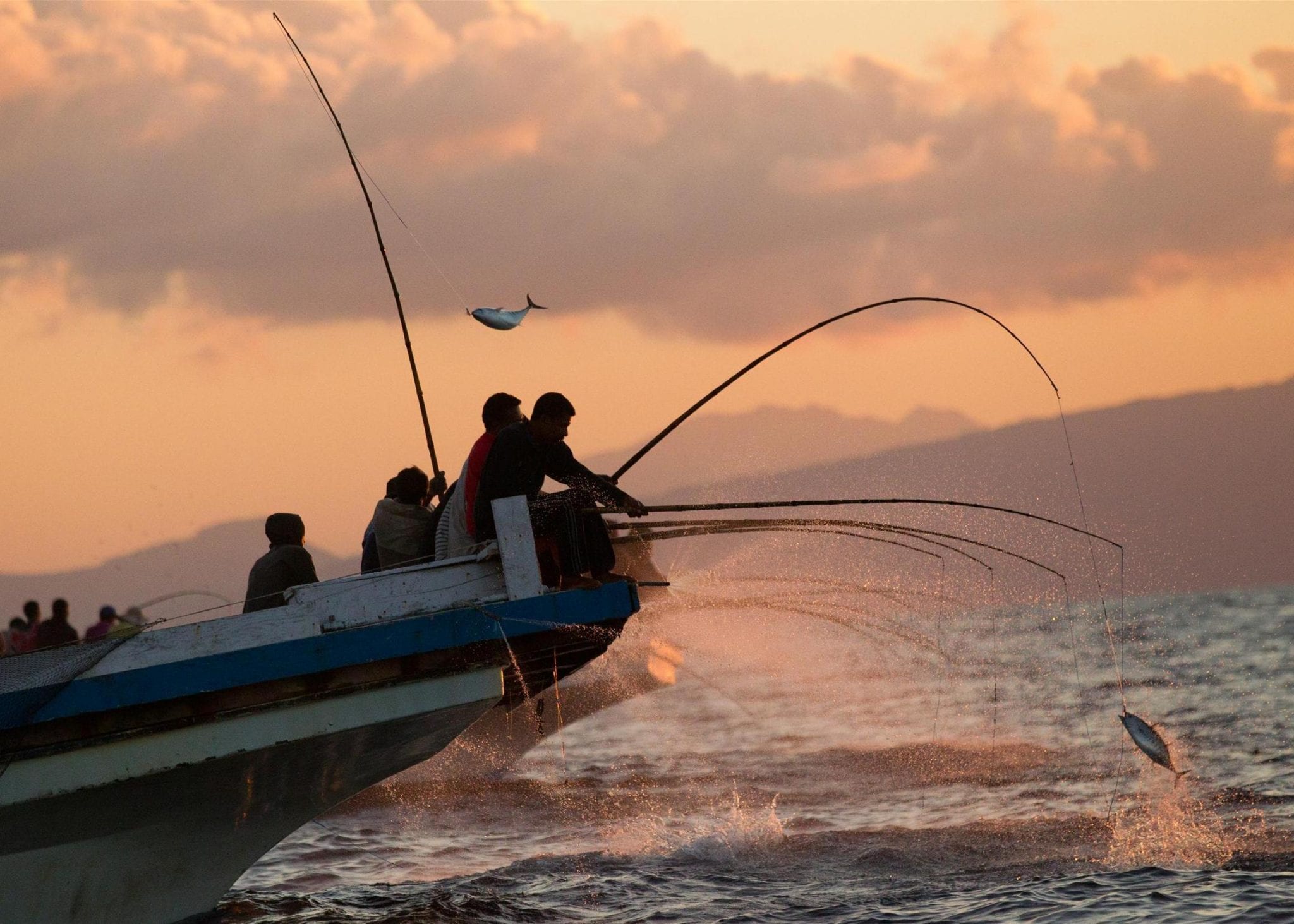
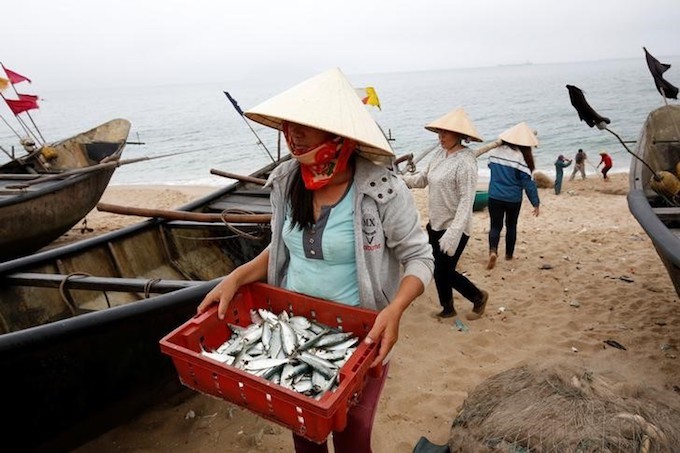
    Vietnam’s fisheries exports in the first half of 2024 were worth US$4.4 billion, up 6% year-on-year on higher demand in major markets like the U.S., China and the EU.

    Key items such as shrimp, pangasius and tuna did well, the Vietnam Association of Seafood Exporters and Producers said in its latest report.

    Pangasius accounted for $918 million and tuna for $472 million, up 5% and 23%. Shrimp fetched $1.6 billion, a 6% increase, while exports of other crustaceans jumped by 75% to $125 million.

    The U.S. and EU imported 18% and 56% more tuna. Shrimp exports to China and the EU rose by 17% and 13%.

    Top shrimp exporter Minh Phu said profits for the first half were VND7.2 billion (US$284,000) as against a loss of VND98 billion in the same period last year.

    Its CEO, Le Van Quang, said the company has been receiving more orders than last year and is planning to boost exports to China, Japan, South Korea, Australia, and New Zealand.

    Businesses are optimistic that seafood exports, especially of green and sustainable products, will grow even more in the coming months.

    But the seafood association said some challenges remain, such as fierce competition from Ecuador and India, rising transport costs and a shortage of raw materials for processing.
  • EU set to lift ‘yellow card’ on Vietnam fisheries next year

    EU set to lift ‘yellow card’ on Vietnam fisheries next year

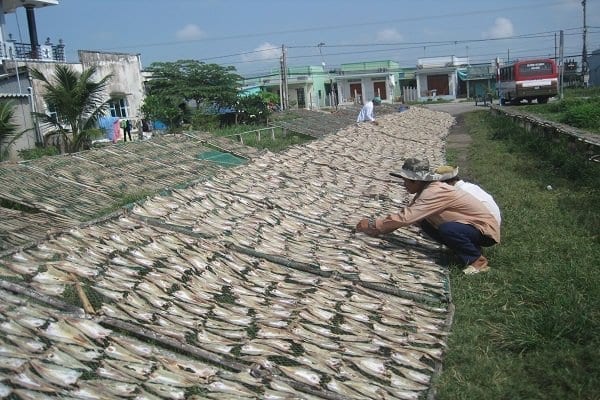
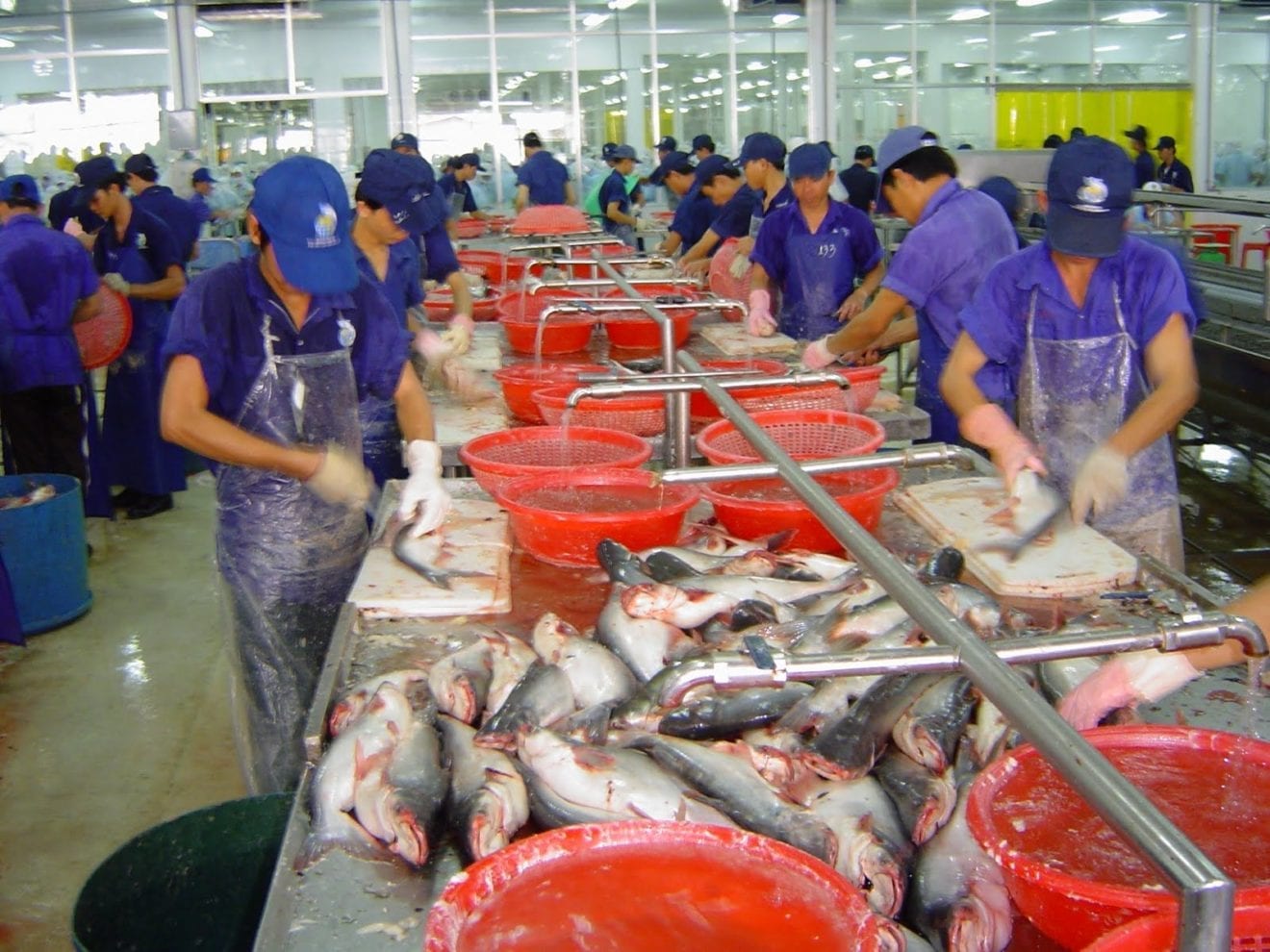
    Vietnam will have to wait another six months for the European Union to consider lifting a ‘yellow card’ restriction slapped last year because of illegal fishing.

    After an evaluation done May 15-24 this year, the EC decided that they would consider lifting the yellow card in January next year, as Vietnam has shown “improvement,” according to a statement issued by the Directorate of Fisheries under the Ministry of Agriculture and Rural Development.

    The European Commission (EC), executive body of the 28-nation bloc (including the U.K.), had issued an official warning on October 23 last year that it would ban seafood imports from Vietnam unless Hanoi did more to tackle illegal fishing carried out by Vietnamese vessels in other countries’ territories.

    The directorate, however, admitted that problems continued to dog the sector, especially in controls of fishing and tracing origins.

    Vietnam currently has around 33,000 offshore fishing vessels, but only 3,000 of them, or 9 percent, are equipped with satellite navigation devices, it said, adding that the high cost of installation was a constraining factor.

    Though Vietnam has acted on suggestions from EC last year to improve controls over offshore fishing in the 2017 Fishery Law, there was still room for improvement in the actual implementation process at local provinces, the directorate said.

    Vietnam ranks among the top ten seafood producers in the world, according to the FAO, the U.N. food and agriculture organisation.

    The E.U., the world’s biggest fish importer, adopted a regulation that took effect in 2010, aiming to avoid complicity in illegal fishing and promote sustainable use of the sea resources.

    The EC estimates that each year, between 11 and 26 million tons of fish, at least 15 percent of the global catch worth 8 and 19 billion euros, are caught illegally.

  • European Commission to help Vietnam fight IUU fishing

    European Commission to help Vietnam fight IUU fishing

    The European Commission is willing to cooperate with and support Vietnamese authorities in their reforms to fight illegal, unreported and unregulated (IUU) fishing.

    This was said by Karmenu Vella, Commissioner of the European Union for Environment, Maritime Affairs and Fisheries.

    In an interview, Vella said the European Commission welcomed the high-level commitments of the Vietnamese authorities, notably the plan adopted by the Ministry of Agriculture and Rural Development, to implement urgent measures to overcome the yellow card adopted in October 2017.

    Minister of Agriculture and Rural Development Nguyễn Xuân Cường is currently on a working visit to the European Union from March 20-24 to promote the removal of “yellow card measure” for Việt Nam in IUU fishing.

    “Nonetheless, the European Commission reiterates its concerns as regards the translation of such commitments into tangible measures aimed at addressing the serious shortcomings that led the Commission to adopt the yellow card,” Vella said.

    According to him, the adoption of pre-identification (yellow card) of Việt Nam as a non-cooperating country in fighting IUU fishing in October 2017 is the formalisation of a dialogue in place since 2012. This step is just a warning and does not imply any kind of trade-related measures, he said.

    “The objective of the European Union’s IUU policy is to enter into a cooperation with competent authorities in third-world countries to ensure they align their legal and administrative frameworks with international obligations to fight against IUU fishing and establish adequate control mechanisms,” Vella said.

    By April 2018, six months after the adoption of the yellow card, Vietnamese authorities are expected to provide a progress report addressing the implementation of the action plan, he said, adding the European Commission will evaluate, including by means of visits to the country, the content of the action plan in light of the shortcomings established in the Commission’s decision of October 23, 2017.

    Talking about the possibility of removing the yellow card for Việt Nam, Vella said any decision would follow a careful analysis of the actions undertaken by the authorities to remedy the deficiencies that led to the yellow card.

    “The revocation of the yellow card will only be possible if all the mentioned deficiencies are sufficiently addressed,” he said.

    In case the situation does not improve, the European Commission may proceed with the identification of the country as non-cooperating in fighting IUU fishing (red card) and submit the proposal to the Council of the European Union to list Viet Nam as non-cooperating in fighting IUU fishing, Vella said.


  • International Fish Force Academy Officially Opens

    International Fish Force Academy Officially Opens

    The International Fish Force Academy of Indonesia (IFFAI) has officially opened today on Thursday, March 16, 2017. The inauguration was attended by Maritime Affairs and Fishery Minister Susi Pudjiastuti and National Police Chief Tito Karnavian. “This [academy] is aimed at how to handle criminal cases,” said Minister Susi on Thursday, March 16, 2017.

    The IFFAI academy is a joint effort by the Ministry of Maritime Affairs and Fishery together with Indonesian National Police (Polri) and the 115 Task Force.

    Susi explained that IFFAI is an international-standard school to study about fishery related criminal activities. Fishery crimes are complex and not only involve fish theft. “It also includes human trafficking, forced work, and endangered animal trade.”

    Minister Susi revealed that it would require great skills in handling and a good coordination between agencies to counteract the problem. “Now, information sharing is outstanding in developing an international fisheries fish force,” Susi said.

    According to the head of research and human resource agency at the Marine Affairs and Fishery Ministry, Zulficar Mochtar, there are currently 24 investigators and public prosecutors from the Ministry, Police, Navy, and Supreme Court that are enlisted at the academy.

    Zulficar said that following new criminal modus related to maritime affairs, he hopes that the academy can produce law enforcers that are able to understand and analyze this sort of criminal activities.

    The other purpose of this academy is to continue to build an effective understanding and collaboration between law enforcement agencies and to produce agents of change in the field. Participants will be trained at Jakarta Center for Law Enforcement Cooperation (JCLEC) in Semarang.

  • Indonesia fishery sector losing its bite

    Indonesia fishery sector losing its bite

    Fishing captain Wahyu Sumantri used to helm a 700-tonne vessel that sailed the Celebes Sea from North Sulawesi. These days, he can be found peddling mie ayam, or chicken noodles, from a push cart in his home town of Kerawang, in West Java, about two hours from Jakarta.

    “Hopefully, this is just like a long break for me and I will land a job at sea again soon,” he told The Sunday Times. The 38-year-old, who has a degree in fishery technology, lost his job last year after the government deemed his vessel illegal because it was not locally built.

    The move was among a series of tough measures introduced by Maritime Affairs and Fisheries Minister Susi Pudjiastuti in late 2014 to tackle illegal fishing across Indonesia.

    It is also a key plank in President Joko Widodo’s bid to transform Indonesia into a maritime power and also improve the livelihoods of its 2.4 million fishermen.

    Pudjiastuti also banned fishermen from unloading their catch out at sea because the other boat, especially if it is a foreign vessel, often bypassed local ports and port controls by taking the fish elsewhere.

    This practice is known as at-sea trans-shipment, but illegal trans-shipment has reportedly caused annual losses of US$20 billion to Indonesia’s fishery sector.

    Sumantri’s fishing boat is now one of the many such vessels lying idle in Bitung, North Sulawesi. Similar scenes can be seen in nearby Ambon, Maluku.

    Bitung is home to the country’s largest fish processing firms, which include tuna canneries and processing plants, employing tens of thousands of locals.

    Industry players there, however, say they have been hit hard by Pudjiastuti’s tough policies against illegal, unreported and unregulated (IUU) fishing. The ban on trans-shipment and use of foreign fishing boats, in particular, has led to a severe cut in fishing resources for these firms.

    What this means is that they do not have enough boats to bring in sufficient fish stocks for export.

    The utilization of total tuna cannery capacity in Bitung, for instance, has fallen to just 6 percent — or 90 tons a day — from 50 percent two years ago, said Bitung’s fish processing firms’ association chief Basmi Said.