Retail News CRM

Tag: Fitbit

  • Fitbit’s Exciting Redesign: An Exclusive Peek at the Modern Look and AI Coach for Premium Users

    Fitbit’s Exciting Redesign: An Exclusive Peek at the Modern Look and AI Coach for Premium Users

    The Fitbit application is undergoing a significant transformation, a move that has been anticipated by many. Some users are already experiencing the new updates, indicating that Google’s aim to give Fitbit a comprehensive Material 3 makeover is finally coming to fruition.

    Fitbit Receives a Visual Overhaul

    Last month, Google launched the Gemini-powered AI coach as a preview feature. Now, it has been reported that Fitbit Premium users in the US have gained access to the Material 3 Expressive redesign as part of a public preview. The new AI coach and the visual revamp are expected to be officially available to all users next year.

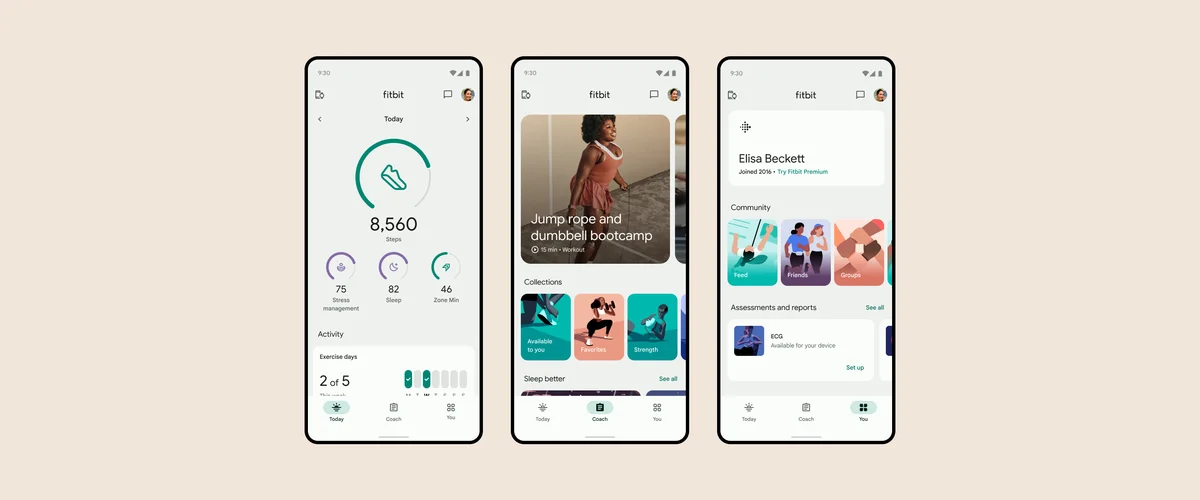
    The redesign incorporates Google’s Material 3 Expressive (M3E) style into the Android app, along with several navigation adjustments. The bottom bar has been made shorter, and synchronizing your Pixel Watch or Fitbit device is as simple as swiping down from any of the four tabs.

    When you do this, you’ll notice a circular loading animation cycling through the distinctive M3E shapes. Once the synchronization is complete, the “Fitbit Premium” label vanishes from the app bar and is replaced by a linear progress indicator.

    The new expressive shapes are also noticeable in various sections of the app, such as the checkmark animation that appears when you achieve a goal. Each metric view now features a floating toolbar with a floating action button (FAB) to switch between time frames. For statistics such as Steps and Sleep, you can switch between Day, Week, Month, 3 Months, or Year.

    Every pill-shaped bar includes a floating button that opens the personal health coach. The Today, Fitness, and Sleep sections now utilize a layered sheet-style design. The top statistics are displayed on a themed background, while the remaining content appears on a card layer that expands as you scroll. The distinct color themes – teal for fitness and purple for sleep – provide aesthetic separation.

    However, Dynamic Color is still absent. The bottom bar, toolbar, and FAB currently rely on Fitbit’s default blue accent.

    Google Delivers on its Promise

    Despite the redesign still being in preview stage, it’s encouraging to see Google fulfilling its promise to revamp Fitbit. The app plays a crucial role in the entire Fitbit experience. Whether using a tracker or smartwatch, it’s the hub for all health and fitness data. As such, giving it a design that aligns with other Google products is a positive development.

    From the preview screenshots, the layout appears a bit cluttered at the moment. However, this is an issue that can be easily resolved before the full release. For Fitbit Premium subscribers, it’s certainly worth exploring the update in its early stages. While it’s not perfect yet, it’s evident that Google is committed to making Fitbit more cohesive and modern.

    Questions & Answers

    What is the main aim of Fitbit’s redesign?
    The main goal is to modernize the Fitbit app, giving it a design that matches other Google products. This is part of Google’s effort to make Fitbit more cohesive and modern.

    What new features have been added as part of the redesign?
    The redesign incorporates Google’s Material 3 Expressive (M3E) style into the Fitbit app, along with several navigation adjustments. There’s a new AI coach, a shorter bottom bar, unique color themes for different sections, and new expressive shapes throughout the app.

    When can all Fitbit users expect to access these new features?
    The new AI coach and the visual revamp are currently in the preview stage but are expected to roll out officially to all users next year.
  • Revolutionize Your Fitness Journey with Fitbit’s Innovative AI-Powered Personal Health Coach

    Revolutionize Your Fitness Journey with Fitbit’s Innovative AI-Powered Personal Health Coach

    Fitbit Introduces Public Preview of Gemini-Powered Personal Health Coach

    The wearable device company, Fitbit, is unveiling a public preview of its new, Gemini-powered personalized health coach. This rollout serves as an intriguing introduction to the future of personalized fitness, and it will be available for eligible users to test from this week.

    The Launch of Fitbit’s AI-Powered Personal Coach

    Fitbit’s new artificial intelligence (AI)-powered coach, developed using Google’s Gemini technology, is set to revolutionize health and wellness practices. This AI coach is designed to function as a comprehensive fitness trainer, sleep counselor, and health advisor. Users can interact with the coach to establish goals or seek advice on their health-related queries. Examples of prompts that can be used include “Devise a 30-minute upper body workout I can do in my hotel room” or “Why did I wake up tired today?”. This AI can even assist you in framing questions for your next doctor’s consultation.

    However, it’s important to note that this AI coach is currently in its “preview” stage. It is being developed and modified based on active public feedback to improve its efficacy and user experience.

    Missing Features and Workarounds

    Since the AI coach is in its preview phase, it currently lacks some features that are standard in the traditional Fitbit app. Important elements such as health logging (including menstrual health, nutrition, and water logging), key metrics (the stress management score and cardio fitness score), and social features (friends, groups, leaderboards, and badges) are not included in the preview version.

    Recognizing these limitations, Google has designed a mechanism that allows users to switch between the new preview and the standard Fitbit app experience, providing the opportunity to test the AI coach while still being able to access the complete features of the traditional app.

    The Future of Health and Wellness

    This preview stands as a significant step towards Google’s grand vision of AI-driven health and wellness. The potential of a Gemini-powered coach to analyze user data and yield profound, actionable insights is phenomenal. Google emphasizes that the development of this AI coach is being conducted responsibly, backed by scientific evidence, and ensuring user data security and personalization. Early access for dedicated Premium users will enable them to test these potent features and provide valuable feedback.

    This development indicates the direction health and fitness technology is taking, with competitors such as Apple also rumored to be heading in a similar direction with their Health application. While it cannot replace professional medical advice or personalized gym training, this technology can assist in addressing quick health-related queries.

    The current version may be lacking some core features, but the objective of this preview is to provide a hands-on experience of the future of fitness technology, inviting users to be part of this exciting journey.

    Fitbit Premium users are encouraged to explore this new feature. Its easily toggled nature means users can try it with no downside. The updated experience will be available for Fitbit tracker and Pixel Watch owners, starting from October 28th.

    Questions & Answers

    What is the new Fitbit AI coach?
    The AI coach is a new personalized health guide developed by Fitbit, powered by Google’s Gemini technology. It acts as a fitness trainer, sleep counselor, and wellness advisor.

    What features are missing in the AI coach’s preview version?
    The preview version currently lacks certain features such as health logging (including menstrual health, nutrition, and water logging), key metrics, and social features.

    When will the updated experience be available?
    The updated experience will be available for Fitbit tracker and Pixel Watch owners from October 28th.

  • Fitbit app redesign finally makes Health Metrics easier to read on Android and iOS

    Fitbit app redesign finally makes Health Metrics easier to read on Android and iOS

    Fitbit continues to advance its mobile app experience and the latest update focuses on one of the most essential areas for health-oriented users—the Health Metrics. Users of Android and iOS devices can now access the updated Health Metrics section..

    Until now, the Health Metrics section displayed data through two tabs dubbed  “Today” and “Trends.” The interface contained health data across both tabs but it appeared disconnected from other sections of the application.

    That’s finally changingFitbit eliminated the tabbed interface structure in their latest update. The health metrics data now occupies a single scrollable page without any tabs. Users can view their health statistics through a simple summary widget located at the top that shows their performance across five health metrics using a five-point scale. This feature used to exist exclusively in the “Today”  feed.

    Underneath the summary widget, there’s now a well-organized list of five core metrics:

    • Breathing Rate (BR)
    • Blood Oxygen (SpO2)
    • Resting Heart Rate (RHR)
    • Heart Rate Variability (HRV)
    • Skin Temperature Variation

    Each metric is shown in a card format, making it easier to understand at a glance. Tapping on any of these entries opens a more detailed “Trends” view that now includes Week, Month and Year filters, giving users a better view of long-term health changes.

    The new and more detailed trend pages include short explanations written in simple language for each statistic. For example, breathing rate is described as “the number of breaths you take per minute.”

    The update seems cosmetic at first glance but it greatly improves the user experience. The redesigned interface provides better responsiveness and improved navigation while maintaining design consistency throughout the application.

    This Health Metrics redesign is part of a broader visual overhaul across the Fitbit app. The Water Tracking screen was updated recently, and now Health Metrics follows suit. Next in line? Food logging, which still uses an older interface and could definitely benefit from a similar revamp.

    The new UI comes with the Fitbit 4.39 update for iOS, while the Android versions is rolling out more slowly. Not all users have access to it just yet, as Google which now lists Fitbit under its official “Google LLC” developer account—appears to be releasing it in waves.

  • The Fitbit Ace LTE gets new features for your active kids and family this holiday season

    The Fitbit Ace LTE gets new features for your active kids and family this holiday season

    The Fitbit Ace LTE is getting a whole bunch of new updates just in time for the holidays. These new features are designed to keep families connected, active, and having fun together.

    One of the most exciting new features rolling out is Family Chat. Now, families can communicate directly through their Ace LTE devices or the Ace app. This will be perfect for coordinating schedules, sending quick reminders, or just checking in with each other throughout the day.

    However, if you are looking for a way to get the whole family moving, Fitbit Ace LTE now has a new feature called “Family Quests.” This feature includes challenges that encourage everyone in the family to work together to unlock rewards. For example, this Thanksgiving, you and your family can complete the “Turkey Berserkey” quest by hitting your activity goals. It’s a fun way to bond and build healthy habits.

    Fitbit has also partnered with the Alliance for a Healthier Generation to add 50 new Daily Quests. These bite-sized challenges help kids learn about things like sleep, nutrition, and even geography. Plus, there’s a new game in the Fitbit Arcade called “Solar Sword” that lets kids defend their village from monsters. The more they move, the more game time they unlock.

    To make it even easier to track their progress, there are two new watch faces called Noodles. These sleek designs help kids see how close they are to reaching their daily activity goals.

    And if you’re looking to save some money this holiday season, we got you as we have gathered some great deals on the Ace LTE and its accessories for you. From November 21st through December 4th, you can save $50 on the Ace LTE and $20 on Ace LTE bands at the Google Store. Plus, if you’re buying for siblings, you can get 50% off your second Ace Pass annual plan from now through January 31st, 2025. Additionally, we have included discounted options from Amazon and Woot below.

  • Newest version of Fitbit on Android allows you to manually log your body temperature

    Newest version of Fitbit on Android allows you to manually log your body temperature

    Fitbit has recently rolled out an update for its Android app, bringing it to version 4.06. This latest update introduces a new feature that enables users to manually record their body temperature readings using their thermometer.

    Users will now be able to tap the floating action button and find a new option for “Temperature” alongside Activity, Sleep, Food, Water, and Weight. The “Body temperature” card under “Health” in the Today feed will take you to a stats page that follows the new design style.

    Additionally, Fitbit has introduced a new feature that allows users to manage their manually logged entries easily. Now, you can specify a precise time for these entries and even delete them if needed. Users will also have the option to completely disable the card by accessing the “Customize Today” toggles page.

    This feature is a recent addition to the revamped Fitbit app. However, it is possible that it might have already been accessible in the previous version of the app if you owned a Fitbit tracker or smartwatch capable of measuring nightly skin temperature variations.

    Google Pixel 8 Pro is equipped with a temperature sensor that will soon be equipped with this functionality to measure body temperature — as soon as the US Food and Drug Administration grants the regulatory approval. Once the feature is available, users will be able to take a reading from the app and effortlessly save it to the Fitbit app. This could be extremely helpful to recognize ahead of time the onset of a possible illness or to track female reproductive health.

    The app can be downloaded or updated on Android from the Google Play Store, while iOS is currently on version 4.08. This latest addition to the Fitbit app is a welcome feature that empowers users to closely track their health and make well-informed decisions regarding their health.

  • Fitbit drops support for two music streaming services on Sense and Versa smartwatches

    Fitbit drops support for two music streaming services on Sense and Versa smartwatches

    Google-owned Fitbit is informing many of its customers that it will soon stop supporting two music streaming services quite popular in the United States: Deezer and Pandora. In an email sent to many Fitbit smartwatch users, the company states that it will ax support for the two apps, which will no longer be available for download.

    The email confirms that come March 31, these two music streaming services will no longer function on specific smartwatches like Fitbit Sense, Fitbit Versa 2 and Fitbit Versa 3. According to the email, customers “will no longer be able to download Pandora stations or add Deezer playlists to your device, nor will you be able to play anything that you have previously downloaded.”

    This is the second time Fitbit has taken away an important functionality from its customers in less than a year. Last year, Fitbit removed the ability to sync and transfer music via PC and Mac. The company removed the option to transfer playlists to Fitbit watches through a computer back in October but allowed users to continue to play personal music stored on the watch and transfer music to it with the Deezer and Pandora apps.

    Well, Fitbit took away that option as well, or at least is about to since the deadline is March 31, 2023. It’s surprising that the company is removing important features that will most likely lead to fewer sales, without adding new ones to replace them. It’s like Fitbit wants to make its smartwatches completely unappealing to those who love using this type of products.

    It remains to be seen how Fitbit’s actions will impact the sale of its smartwatches, but there’s bound to be some retribution from customers, especially from those who remained loyal even after Google bought the company Google.

  • Fitbit Luxe and Charge 5 updated with much

    Fitbit Luxe and Charge 5 updated with much

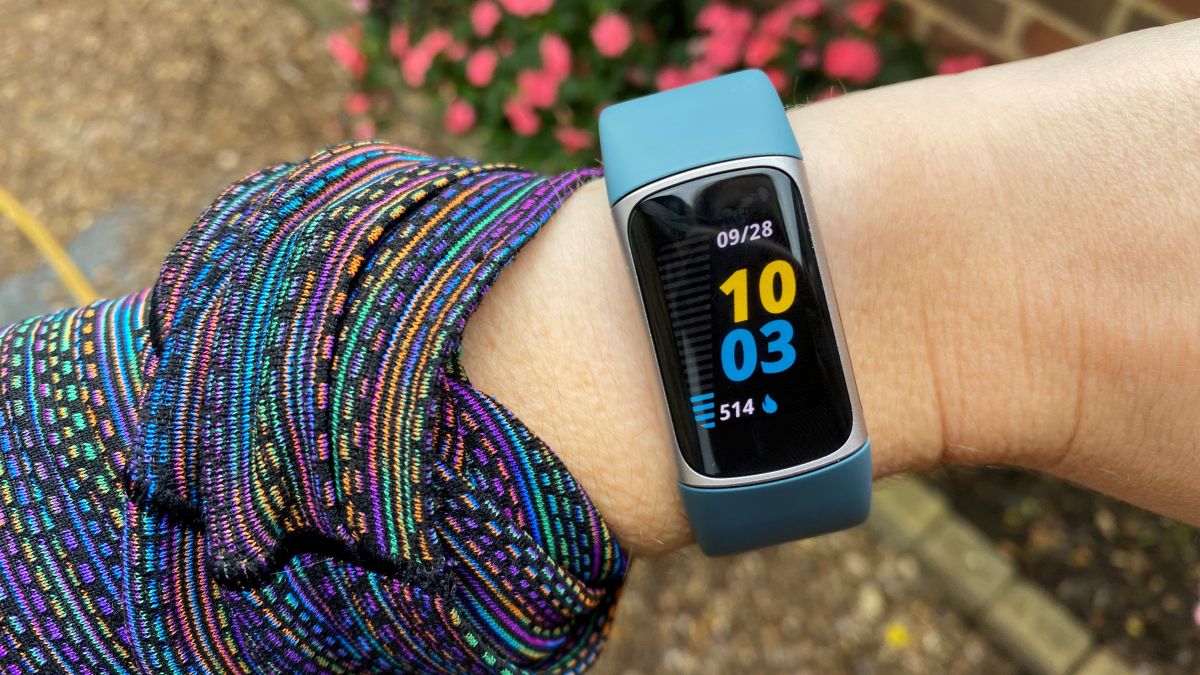
    Last month Fitbit quietly rolled out an update for Charge 5, one of its most advanced fitness trackers. Although it didn’t say anything about what the update should change, we did learn that the Google-owned company added the ability to find your phone via the fitness tracker.

    Today, Fitbit confirmed that the update not only introduced the much-needed feature, but also added a few clockfaces. The above image shows one clockface in two color variations – Boom, plus an additional clockface for another Fitbit wearable device, the Luxe.

    Just to be clear, Fitbit Luxe owners will get all three clockfaces, while Charge 5 will only receive the Boom clockface available in two versions. Besides these new customization options, Luxe users will also get the option to find their phones via the wearable device, just like the Charge 5.

    To do that, you’ll have to install the new Find Phone app, open it on your tracker, tap Find Phone, and your phone should start to ring loudly, even if it’s set on the DnD (Do Not Disturb) mode. If you successfully locate your phone, you can tap Cancel to stop it from ringing.

    Fitbit says the update is now available, although Charge 5 users might have already picked this one up more than a week ago when it surfaced for the first time.

  • You can now link Fitbit and Google Fit with Google Assistant

    You can now link Fitbit and Google Fit with Google Assistant

    With the recent launch of the Google Pixel Watch and the close partnership with the wellness experts at Fitbit, which Google acquired last year, it’s obvious that the search giant is looking to make a serious push into the fitness tracker market. And it only makes sense that the super-smart Google Assistant would be able to seamlessly integrate with the current and upcoming features in Google Fit and the dedicated Fitbit app, right?

    Well, it seems this time is upon us right now — many users can spot the ability to link to Google Fit and Fitbit in their Assistant Settings, and the feature seems to be rolling out to any and every contemporary Google device that supports the Assistant.

    With the small caveat that, while you can link both Google Fit and Fitbit apps, you have to make the choice of keeping only one of the two active at a time.

    Linking either of the apps and granting the necessary permissions will give Google Assistant access to:

    • Your activity metrics, such as workouts, steps, duration, pace, and burned calories
    • The distance you have covered during your training by tracking your location
    • Your heart rate data

    A “Proactive health & fitness results” toggle suggests that the Assistant may display health/activity cards on your device, letting you know of recent trends, either to congratulate you on the successful journey or remind you to pick up the pace.

    To connect Fitbit and Google Fit to Google Assistant, open your Google Assistant settings, go to the Wellness section, and choose Activity. Then select either Google Fit or Fitbit and proceed with the linking steps. Keep in mind that the feature is not yet widely available, so don’t be worried if you only see the Calm app in the Wellness section.

    Currently, even if you sync them up, voice prompts to the Assistant will call up a blank. It seems that the feature is still inactive, locked behind a server-side toggle, which Google will probably flip once the update has rolled out to more devices. If this is the case, we most likely won’t have to wait too long to ask Google Assistant to tell us how many steps we have taken during the day.

  • Fitbit co-founder reveals the future of Fitbit smartwatches

    Fitbit co-founder reveals the future of Fitbit smartwatches

    During Google I/O 2022, Big G announced the Pixel Watch, its long-awaited, first-ever smartwatch. But, although the new wearable bears the Google branding, it has a lot in common with Fitbit smartwatches. The search giant acquired Fitbit in 2019, and we can safely say that the Pixel Watch will be the first Wear OS device with Fitbit integration.

    So, considering that Google is launching its own watch now, we can’t help but wonder what will happen to Fitbit smartwatches. Well, according to Fitbit Co-Founder and the head of Google’s wearables division, James Park, Google releasing a smartwatch doesn’t mean that Fitbit watches are getting the ax.

    Park stated that Google’s Pixel Watch was designed for users who want LTE and, at the same time, all the advanced health and fitness features the tech industry can currently offer. In other words, the Pixel Watch is targeted at users that prefer the Apple Watch or the Samsung Galaxy Watch experience.

    Park further stated that, according to him, there will always be people for whom LTE and the other stuff that watches, such as the Apple Watch Series 7 and the Samsung Galaxy Watch 4, offer are completely unnecessary. According to him, such people will always prefer the tracker with the most advanced health capabilities and reliably long battery life, implying that Fitbit smartwatches will continue to be designed for hardcore fitness enthusiasts.

    In this regard, Park said, “The great thing about combining Pixel and Fitbit is that we’re able to collectively offer these different devices. People can pick and choose what’s best for them.”

    During the interview, James Park also revealed if the Fitbit app will replace Google Fit or vice versa now that Google has its own smartwatch. Park stated that for now, both apps will continue to exist as is, since they are each used by a pretty hefty amount of users, and that both groups like their chosen apps for a variety of reasons. Google doesn’t want to mess with the experience with either one subset of users for the time being.

  • Images of the Fitbit Luxe fitness tracker leak

    Images of the Fitbit Luxe fitness tracker leak

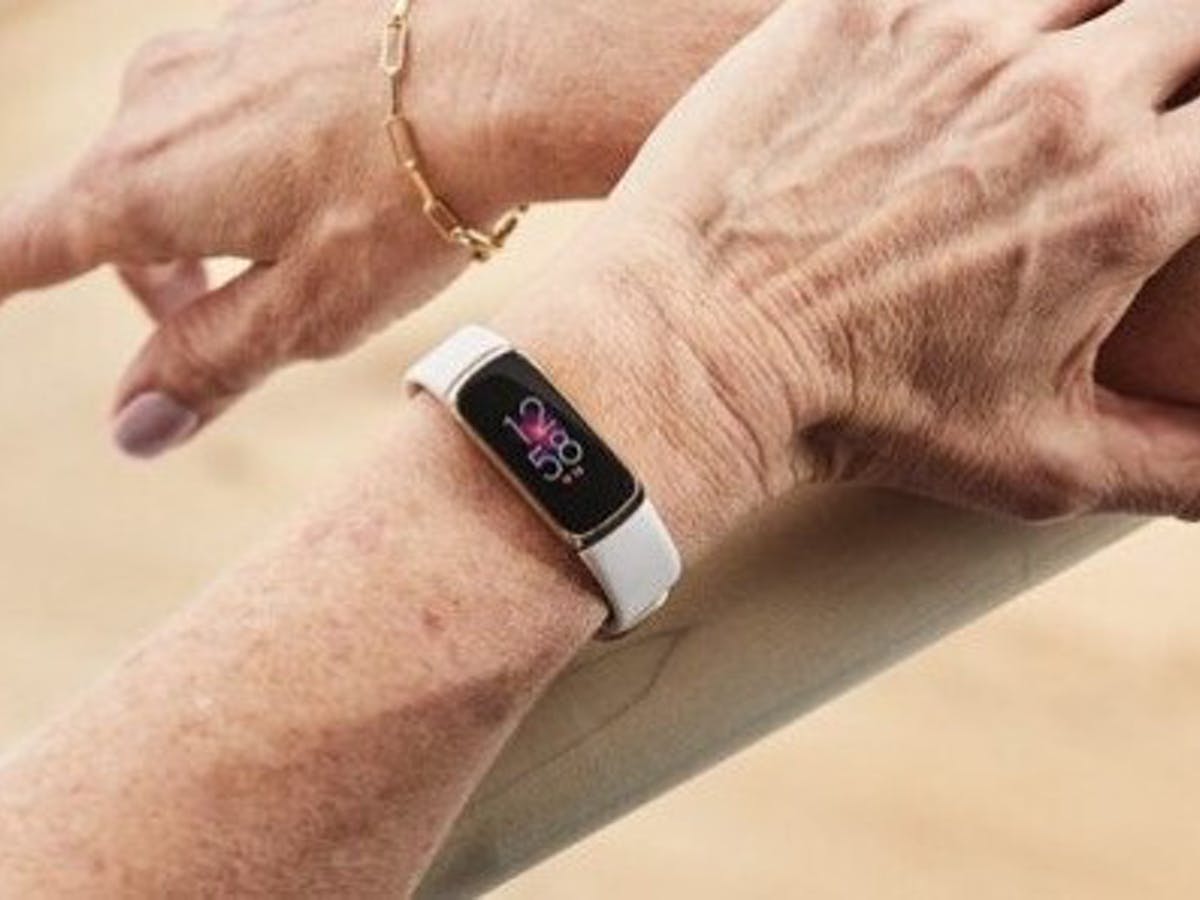
    This past January, Google closed on its $2.1 billion acquisition of Fitbit. Today, Germany’s WinFuture published some photos of the next Fitbit fitness tracker, the Fitbit Luxe. The wearable is supposed to deliver “balanced health in an elegant design,” and with the use of a polished stainless steel casing, the device does look to be as advertised.

    The Fitbit Luxe is equipped with an OLED display and features interchangeable straps that use a classic watch buckle to close. Thanks to Google’s acquisition of Fitbit, the Luxe will work with Assistant and will monitor your sleep and your heart rate. Speaking about your heart rate, if there is a certain range that you’re trying to hit and activity gets you there, the device will vibrate.

    The color options will be black, soft gold/white, and platinum/orchid. Pricing is unknown at the moment although the use of expensive and pricey materials could make the Fitbit Luxe pricier than you might have expected. And the device is water-resistant allowing you to take it swimming.

    Pricing is unknown, and so are the potential unveiling and release dates. We also are not clear about certain specs including the size of the device’s battery capacity, and the amount of storage and memory that comes with the fitness tracker.

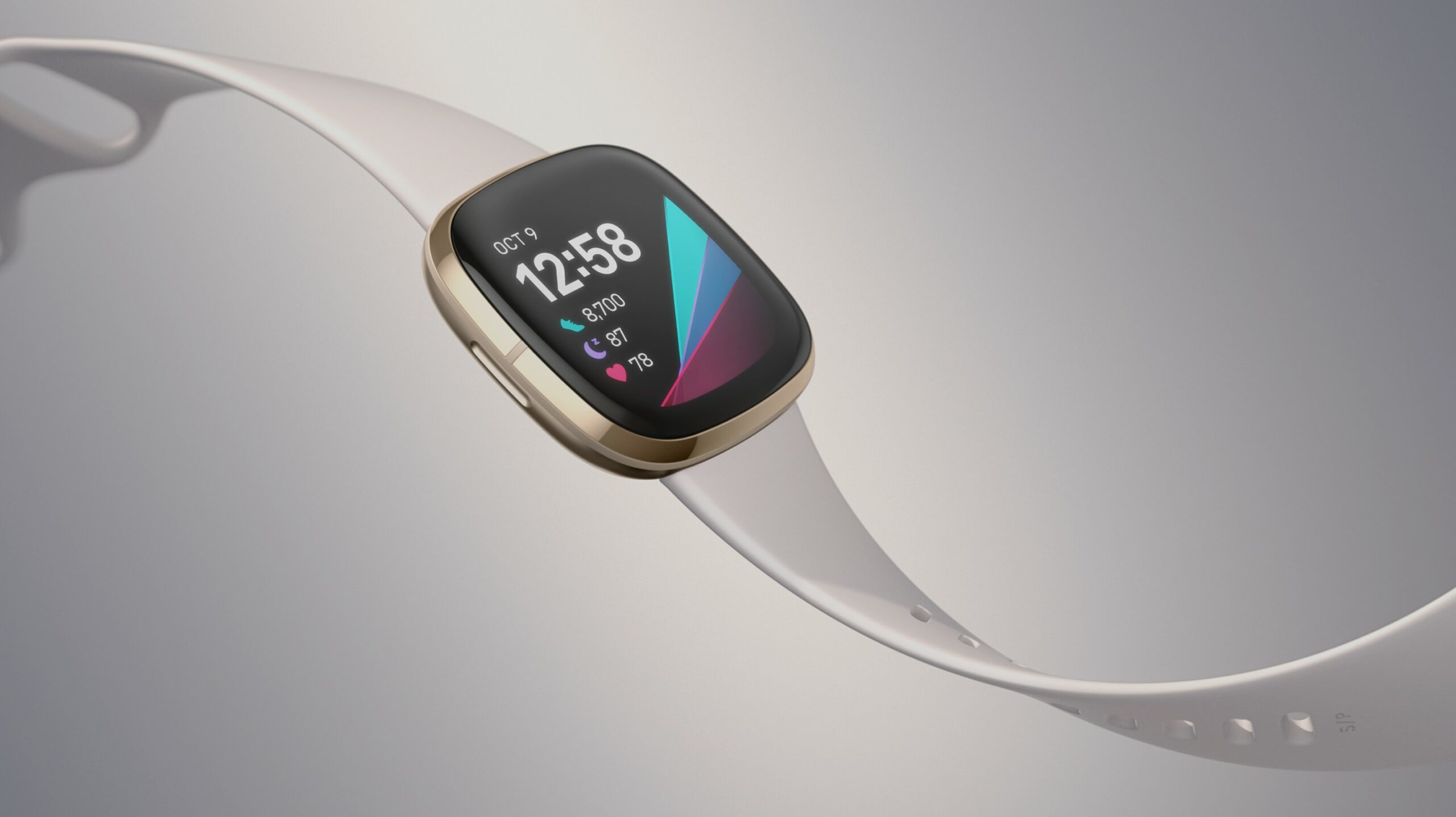
  • The Fitbit Sense will match the Apple Watch’s ECG capabilities next month

    The Fitbit Sense will match the Apple Watch’s ECG capabilities next month

    While its name might be synonymous with low-cost fitness trackers for many consumers around the world, Fitbit has faced quite the uphill battle trying to gain a foothold in the fast-growing smartwatch market over the last few years.

    Although the company’s rookie Apple Watch-rivaling effort was released all the way back in 2017 (to tepid reviews and overall indifference even from its core fanbase), followed by the slightly better-received Versa the next year, Fitbit still failed to make the industry’s top five in terms of revenue for H1 2020, ranking behind everyone from Apple to Garmin, Huawei, Samsung, and even Imoo and Amazfit.

    As you can imagine, that’s a very poor result for a 2007-founded outfit with Fitbit’s brand recognition, but instead of waiting for Google to arrive on a white horse and miraculously right the ship, the US-based company stepped things up to unveil its “most advanced health smartwatch” last month.

    Much like 2019’s Samsung Galaxy Watch Active 2, the Fitbit Sense went official with a dormant ECG monitor. This is the same exact feature that made its debut on the Apple Watch Series 4 two years ago, saving countless lives between then and now in conjunction with fall detection capabilities and Cupertino’s all-around impressive heart rate sensor.

    While Fitbit needed a lot of time to catch up to the heavyweight champion of the wearable device world, it looks like the company will be able to miraculously beat Samsung to the commercial ECG punch. That’s because the potentially life-saving technology has already received clearance from the US Food and Drug Administration (FDA) ahead of public October 2020 availability on the recently announced Sense.

    The aptly named Fitbit ECG App will be enabled stateside sometime next month, as well as in a host of European countries including Austria, Belgium, Czech Republic, France, Germany, Ireland, Italy, Luxembourg, the Netherlands, Poland, Portugal, Romania, Spain, Sweden, Switzerland, and the United Kingdom. That’s right, Fitbit pulled a double, obtaining both FDA approval and Conformité Européenne (CE) marking in the European Union.

    Last but certainly not least, early Fitbit Sense adopters in Hong Kong and India are also slated to get access to the Apple-matching ECG app in October. That makes for a pretty remarkable list of supported countries straight off the bat, mind you, but in case you’re wondering, Apple’s list is unsurprisingly even longer.

    Meanwhile, Galaxy Watch Active 2 and Galaxy Watch 3 owners can still measure their ECG exclusively in South Korea, although for what it’s worth, Samsung has at least made a big step recently towards finally spreading the love to the US at some point by the end of the year. This time for real.

    In a nutshell, this is what separates the serious health-tracking smartwatches from the casual fashion-centric wearable devices. As explained by Fitbit, the main purpose is to detect atrial fibrillation (AFib), a condition that affects more than 33.5 million people (!!!) globally, increasing the risk of complications like stroke.

    A large chunk of those suffering from AFib is unlikely to become aware of their problem until it’s too late to keep it in check, which is where the Apple Watch lineup and now the Fitbit Sense comes in, assessing a user’s heart rhythm for early signs of atrial fibrillation so you can receive the necessary medical attention to live a long and normal life.

    Obviously, the ECG monitor built into a $330 commercial device also featuring a bunch of other sensors may not prove as reliable as a medical-grade system typically found in a hospital, but Fitbit claims the multi-site clinical trial is conducted as part of the submission process to regulatory agencies yielded a stellar 98.7 percent sensitivity score and a perfect 100 percent specificity rating.

    In other words, you should absolutely consider the Fitbit Sense as an alternative to the Apple Watch Series 5 or the soon-to-be-released Series 6 if you have heart problems, trouble sleeping, or even if you need help managing day-to-day stress. Keep in mind that the Android and iOS-compatible smartwatch is still up for pre-order ahead of an actual September 25 release. And no, we’re afraid Amazon’s early discount is no longer available.

  • Fitbit debuts fitness and health Premium subscription service

    Fitbit debuts fitness and health Premium subscription service

    Alongside the Versa 2 smartwatch, Fitbit announced a subscription-based fitness and health service that it calls Fitbit Premium. The service uses unique data from each subscriber to deliver a personalized experience “with actionable guidance and coaching.”

    The premium service is meant to help users achieve their health and fitness goals and costs $9.99 per month. At launch, Fitbit Premium includes nine guided health and fitness programs, which will help subscribers get more sleep, wake up energized, increase their activity, manage nutrition and create lasting healthy habits.

    Among the programs that subscribers will be able to use, Fitbit mentions actionable coaching, daily tips and tricks, structured workout plans, relaxation tools, recipe suggestions, and educational content.

    But that’s not all, as Fitbit promises to launch additional activity, sleep, and nutrition programs by the end of the year. Also, to help those with a condition such as diabetes or weight loss, Fitbit says it will launch a personal, one-to-one coaching service in 2020, with a limited pilot targeted to roll out later this year.

    Fitbit Premium will start rolling out in September at $9.99 per month or $79.99 per year. However, promotional pricing and product bundle offers might be available before and after the premium services releases.

  • Fitbit partners with Snapchat to make Apple Watch owners jealous

    Fitbit partners with Snapchat to make Apple Watch owners jealous

    Fitbit may have joined the “true” smartwatch game a bit late compared to Samsung or Apple, but after a somewhat slow start in this potential-brimming market, the Versa seems to have put the company on the right track. The world’s second-largest smartwatch vendor took quite a risk by developing its wearable software from scratch rather than adopting Google’s Wear OS, but this proprietary platform continues to grow at a healthy pace in terms of capabilities and ease of use.

    Of course, everyone needs high-profile partners to boost the appeal and trendiness of today’s wearable devices, and Fitbit’s newest ally in its fight against Apple and Samsung is as high-profile as they come. We’re talking about Snap, the company behind one of the world’s most popular social networks.

    Snapchat users who just so happen to own a Fitbit Versa, Versa Lite, or Ionic as well can now connect their Bitmoji account to their smartwatch to display their “personal emoji” on their wrist. For those unfamiliar with the Bitmoji app, we should probably mention the experience is very similar to what Apple offers with Memoji and Animoji on iPhones and Samsung’s own AR Emoji experiments for recent high-end Galaxy handsets.

    Obviously, the main difference is you can have fun with Bitmoji on both Android and iOS, as well as on Fitbit devices starting today. Your cartoon avatar will show up on the “first-ever” Bitmoji clock face (once you download it from the Fitbit App Gallery, that is), aiming to motivate you to be more active, help you create healthier habits, and celebrate personal achievements.

    While unlikely to be as expressive as its smartphone counterpart, your wrist Bitmoji promises to support more than 50 fun clock face variations, changing throughout your day to reflect your activity and progress towards your fitness goals. For instance, your personal emoji will wave hello to start your day, dance with your alarm clock to annoy help you wake up in a better mood, throw confetti after you hit your daily step objective, meditate when you’re totally relaxed and zen, carry an umbrella if there’s a chance of rain, and much more.

    That definitely sounds like something Apple Watch and Samsung Galaxy Watch owners could also appreciate, but for the time being, all we can do is wait and see if there are any Memoji or AR Emoji expansions planned for the near future.

  • Fitbit Versa Special Edition with NFC support flies high

    Fitbit Versa Special Edition with NFC support flies high

    While it’s certainly not unusual to see older gadgets discounted shortly after new models are released, the recently unveiled Fitbit Versa Lite Edition is not actually an upgraded version of last year’s regular Versa. As such, deals on the original model weren’t exactly guaranteed, especially given Fitbit’s newfound success in a fast-growing global wearables market, owed in part to this specific low-cost Apple Watch rival.

    All things considered therefore, it’s definitely a nice surprise to be able to buy a Special Edition of 2018’s Fitbit Versa at a markdown of around 25 percent on Amazon right now. That translates into pretty hefty savings of 60 bucks (give or take a couple) for what was already one of the most affordable feature-packed smartwatches available in the US.

    In case you’re wondering what makes this device “special”, it’s the addition of an NFC chip compared to a standard Versa edition, which enables wrist payment support. We’re not talking about Google Pay, mind you, but rather’s Fitbit proprietary service, fittingly dubbed Fitbit Pay and compatible with credit and debit cards issued by more than 100 US banks

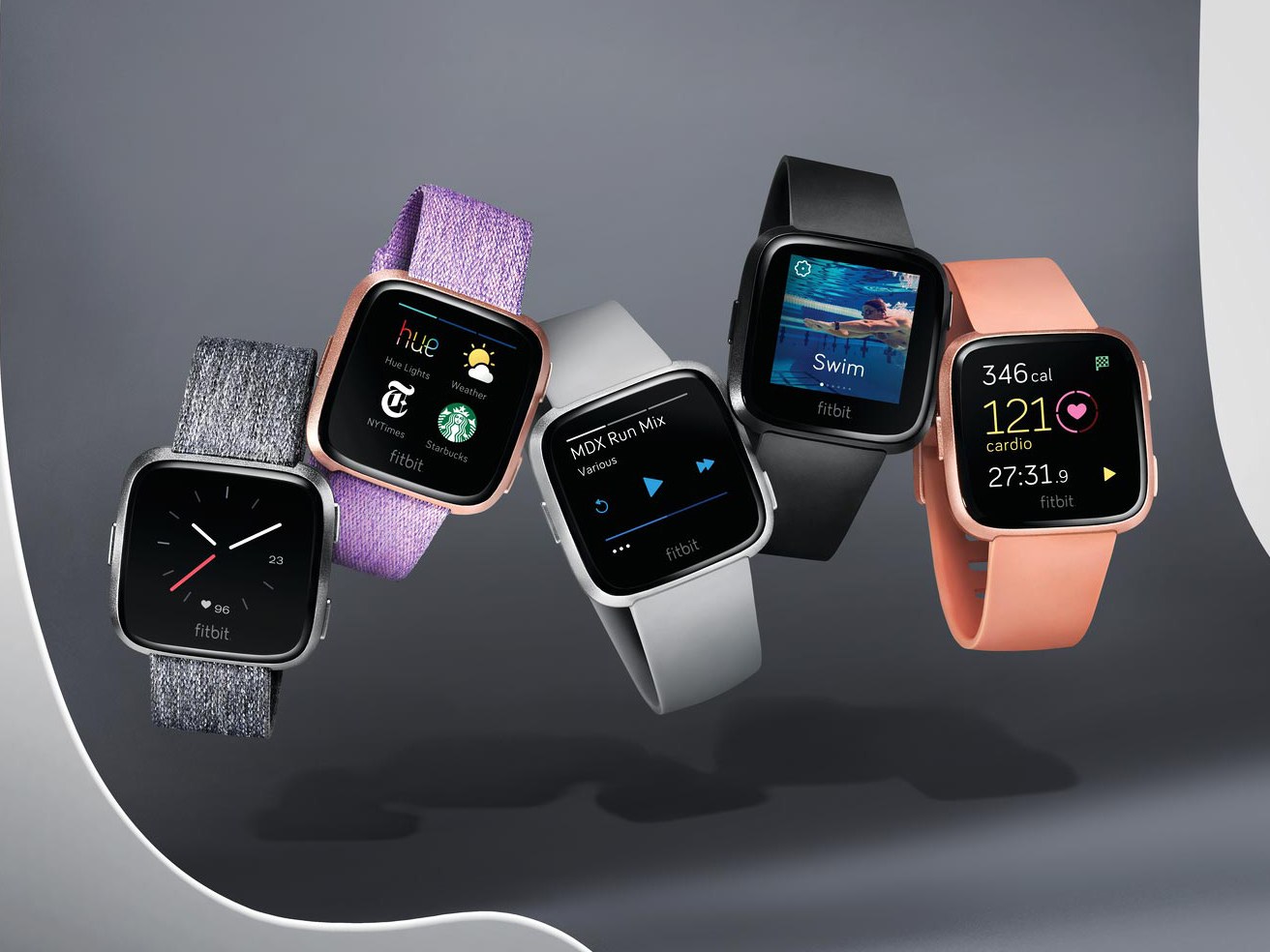
    You can get the marked-down Versa SE with a “Charcoal Woven” or “Lavender Woven” strap, both of which look… pretty unusual for a fitness-first wearable device. Otherwise, there’s no disputing the appeal of an inexpensive smartwatch with a decent touchscreen in tow, as well as stellar 4+ day battery life, a swim-proof design, built-in optical heart rate monitor, accelerometer, gyroscope, altimeter, and plenty of other tricks up its sleeve guaranteeing a top-notch activity and sleep tracking experience.

  • Smartwatch market set for a shakeup: Juniper Research

    Smartwatch market set for a shakeup: Juniper Research

    Big brands are set to lose share in a major shakeup of the smartwatch market. According to Juniper Research, the largest brands in the category now will see their market share fall by 2023 as new niche players gain ground. Four leading brands including Apple, Samsung, Fitbit, and Fossil will see sales decline from an estimated 58 per cent of the market last year to 47 per cent by 2023. The decline is due to the growth of smaller players such as Garmin, Huami and Huawei.

    Smaller players will thrive thanks to strategies tailored for niche markets, their choice of cases or price points, while other brands are releasing premium smartwatches combining the best of fitness, outdoor activity and health features. While Apple will remain the largest single vendor in terms of shipments over the next four years, Huawei will enjoy the fastest growth, at a CAGR of 20 per cent.

    An intensified focus on healthcare integration will also contribute to an increase in smartwatch shipments over the next few years. Juniper forecasts that Apple and Withings will lead this section, followed by Fitbit and Garmin.

    China to become the biggest market

    The rise of smaller players is linked to the rapid expansion of the Chinese market offering lower-priced smartwatches. The Far East and China have now overtaken North America as the largest geographical market, with more than 24 million smartwatches shipped last year, compared to 19.5 million in North America.

    The gap between these two markets will widen by 2023, with the Far East and China trebling its shipments by then.

    Slower hybrid market

    The adoption of hybrid smartwatches will be slower than expected. Last year, hybrid smartwatches represented about 22 per cent of all smartwatch sales. The slower growth is linked to smaller players focusing on digital smartwatches offering more possibilities in terms of apps, connectivity and sensors than hybrid watches, which remain limited in their functionality.