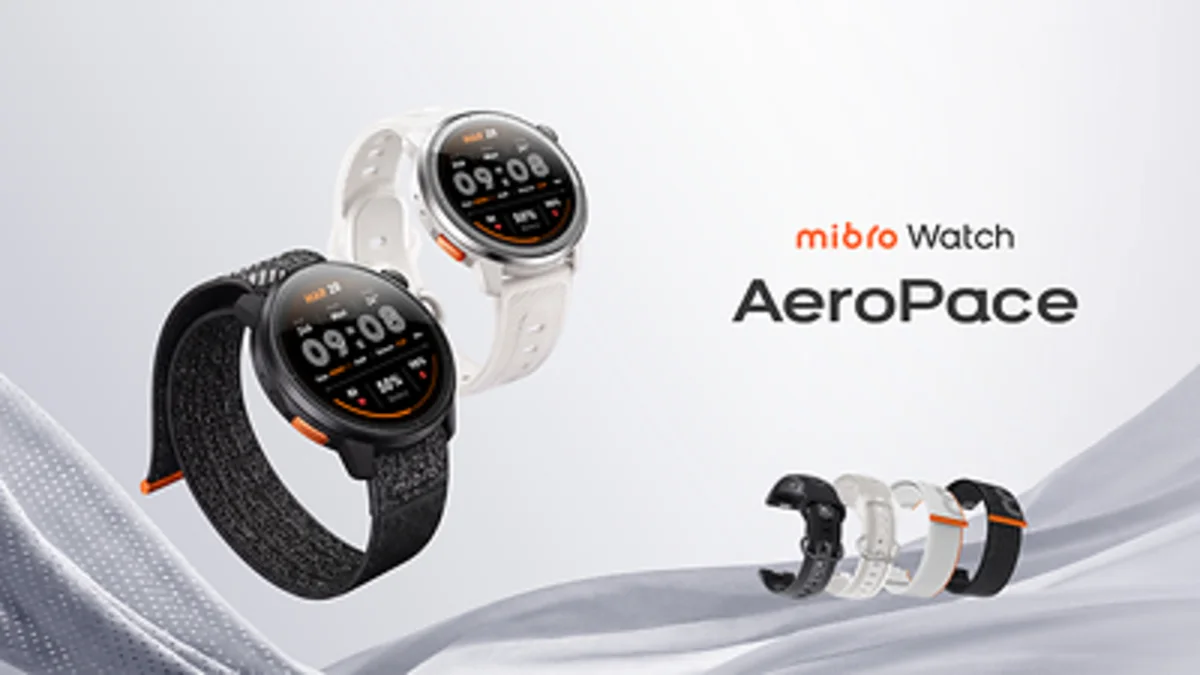
Smart wearables maker Mibro launched its AeroPace running smartwatch on Oct. 13, 2026, with pricing starting at 149.99 EUR through official sales channels.
Designed for beginner runners, the device introduces Mibro Coach, an intelligent training system developed by the Mibro Sports Science Lab that combines sports physiology models with AI agents to guide users through assessment, planning, recovery, and review.
Hardware specifications and tracking features
During workouts, the system tracks cadence, stride length, ground contact time, and vertical oscillation. Post-session analysis combines these metrics with training load, heart rate variability, and sleep quality to highlight strengths and suggest next steps.
Post-session software logs compile these telemetry readings alongside estimated cardiovascular load, recovery windows, and recent sleep metrics.
Training software and conversational coaching
Developed by the Mibro Sports Science Lab, the companion training software structures guidance around the VDOT running index, estimated VO2max benchmarks, and predictive race finishing targets from 5K distances up to full marathons. The platform offers more than 20 preconfigured training programs running between four and 20 weeks in duration.
Daily workouts adjust based on recorded sleep duration, fatigue metrics, and recent training stress. Users can select between five AI coaching personas or interact directly via Just Talk, a conversational feature designed for voice and text interaction regarding pacing and recovery adjustments.
Market positioning in entry-level fitness wearables
At 149.99 EUR, the device targets recreational runners looking for structured physiological metrics without paying the premium commanded by dedicated endurance hardware from Garmin, Polar, or Coros. Chinese consumer electronics brands continue to push mid-tier price points by bundling algorithmic coaching features into lightweight hardware, challenging incumbent sportswear and GPS equipment makers.
Software retention presents the real commercial test for Shenzhen hardware makers. Selling a low-cost fitness watch is straightforward through direct-to-consumer digital channels. Keeping runners engaged requires algorithmic training advice accurate enough to prevent injury and justify long-term platform loyalty.
Corporate background and product roadmap
Founded in 2015, Mibro operates as a consumer hardware brand under ZhenShi Information Technology (Shenzhen) Co., Ltd. The business previously expanded third-party fitness ecosystem compatibility by integrating the Mibro Fit application with Strava in December 2024, followed by the release of the Lite3 Pro smartwatch in July 2024.
Product expansion continued with three sports-oriented smartwatches in June 2025 and the Kids Watch Phone S1 in November 2025, before direct commercial distribution began in the United States market in March 2026.
Mibro will distribute the AeroPace across Europe and Asia through its online storefronts and authorized regional distributors as initial retail shipments begin this quarter.