Tag: Fivimart

  • Vingroup buys Vietnam c-store chain Shop&Go

    Vingroup buys Vietnam c-store chain Shop&Go

    Vingroup has acquired 87 Vietnamese Shop&Go convenience stores for just US$1.

    Vingroup’s retail arm VinCommerce, which manages Vinmart supermarkets and Vinmart+ convenience stores, will upgrade infrastructure, staff and goods at the acquired stores by the end of next month.

    According to a VinCommerce statement, Shop&Go made the approach and offered to sell itself.

    “The competition is more intense than we imagined; that is why we’ve decided to leave,” a Shop&Go spokesperson said, admitting Vietnamese retail market still has potential for growth.

    “We have sold our stores to Vingroup so it can continue to develop them.”

    Opened in 2006, Shop&Go was one of the earliest convenience store chains in Vietnam.

    By 2016, it had aggregated losses of almost VND205 billion (US$8.81 million).

    VinCommerce runs 108 VinMart supermarkets and 1900 VinMart+ convenience stores.

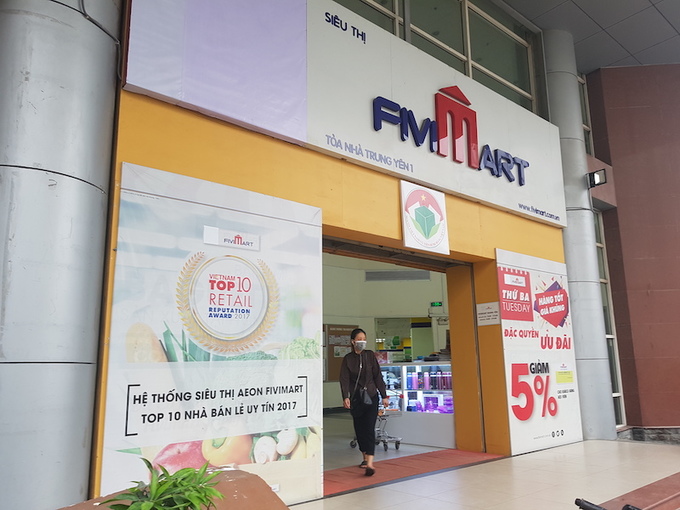
    Last year, it acquired supermarket chain Fivimart with 23 outlets.

    In a report last year, Nielsen Vietnam observed a rise in visits by Vietnamese to convenience stores. The average shopper uses a convenience store 4.5 times per month – three times the frequency of 2010.

  • Vingroup acquires mobile phone retailer Vien Thong A

    Vingroup acquires mobile phone retailer Vien Thong A

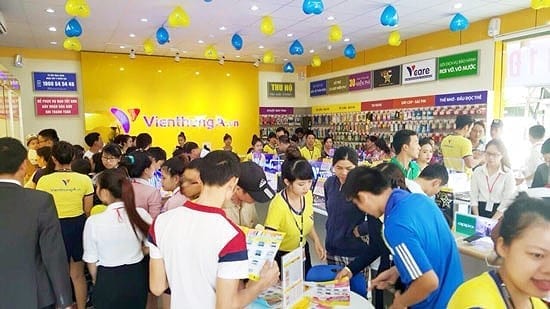
    Vietnam’s biggest private conglomerate Vingroup has officially confirmed its acquisition of major tech products retailer Vien Thong A.

    In its financial statement for the third quarter of 2018, Vingroup lists Vien Thong A Import Export Trading Production Corporation as a fully-owned subsidiary.

    On September 14, Mai Thu Thuy, board member of the Vincom Retail Joint Stock Company and Chairwoman of the Vincom Mega Mall Royal City, was appointed legal representative of the acquired company.

    Established in November 1997 in Ho Chi Minh City, Vien Thong A is the oldest retail technology chain in Vietnam. It has nearly 200 stores, including independent shops and a “shop-in-shop” model in BigC supermarket, CoopMart, and 100 service centers.

    In early 2017, Vien Thong A CEO Hoang Ngoc Vy revealed plans to restructure the company and seek investors to expand its business.

    Last month, VinCommerce, a member of Vingroup, bought Fivimart from domestic company Nhat Nam JSC and Japanese retailer AEON, which held 70 percent and 30 percent stakes, respectively.

    In the first nine months of this year, retail sales of Vingroup reached VND12.89 trillion (nearly $555 million), a 41 percent year-on-year surge.

    Vingroup, Vietnam’s biggest property conglomerate, dominates the housing and property markets with Vinhomes.

    It has also entered the healthcare market with Vinmec, runs a chain of supermarkets called Vinmart, and entertains tourists at Vinpearl resorts.

  • Vingroup retail arm acquires Vietnamese supermarket chain

    Vingroup retail arm acquires Vietnamese supermarket chain

    VinCommerce, owner of the largest Vietnamese retail outlet chain, has bought out competitor supermarket chain Fivimart.

    The deal, whose value has not been revealed, delivers 23 Fivimart outlets to VinMart.

    VinCommerce, a member of the Vingroup business conglomerate, bought Fivimart from domestic company Nhat Nam JSC and Japanese retailer AEON, which held 70 percent and 30 percent stakes, respectively.

    VinCommerce CEO Thai Thi Thanh Hai said that her company’ vision is to have VinMart and VinMart+ (a chain of convenience stores) outlets not just in Vingroup’s apartment buildings and malls, but also in other neighborhoods.

    “The acquisition of Fivimart is part of how we make that vision a reality,” she added.

    The acquisition raises the number of VinMart stores to 100 and that of VinMart+ to 1,400.

    Hai said that VinCommerce plans to have 200 VinMart and 4,000 VinMart+ stores by 2020.

    Nhat Nam JSC sold a 30 percent stake of Fivimart, founded in 2007, to AEON in 2015.

    It had increased its number of outlets from 10 then to 23 now.

    The deal saw Fivimart’s revenue increase, by as much as 20 percent a year for some time.

    But the company has been reporting losses for the last three years, attributing them to high costs. Its losses amounted to VND60 billion ($2.58 million) in 2015, VND96 billion ($4.13 million) in 2016 and VND23 billion ($989,600) last year.

    At the end of last year, Fivimart reported an accumulated loss of almost VND200 billion ($8.6 million), with a debt of VND823 billion ($35.41 million), which was equal to the company’s total asset value.

  • AEON sells stake in Vietnamese supermarket chain

    AEON sells stake in Vietnamese supermarket chain

    Japanese retail company AEON has closed its cooperation with Vietnamese shopping market chain Fivimart, a source said.

    A senior AEON official, who asked not to be named, said that the company has sold its entire stake in Fivimart to a Vietnamese firm after three years of cooperation.

    The source did not reveal the value of the deal.

    Starting Friday, the AEON logo has been covered in many Fivimart supermarkets. The company’s official Facebook fanpage updated a new profile picture without the AEON logo and its website says “under upgrade and construction.”

    In 2015, AEON acquired a 30 percent stake in Fivimart from its owner Nhat Nam Joint Stock Company. Fivimart outlets have risen from 10 then to 23 now.

    The deal saw Fivimart’s revenue increase, by as much as 20 percent a year for some time.

    But the company has been reporting losses for the last three years, attributing it to high costs. It lost 60 billion ($2.58 million) in 2015, VND96 billion ($4.13 million) in 2016 and VND23 billion ($989,600) last year.

    At the end of last year, Fivimart reported an accumulated loss of almost VND200 billion ($8.6 million), with a debt of VND823 billion ($35.41 million) which is equivalent to the company’s total asset value.

    AEON joined the Vietnamese market in 2008. In 2011, its member, the Ministop convenience store chain, cooperated with Vietnamese coffee firm Trung Nguyen to launch G7-Ministop convenience stores.

    The deal didn’t work out, and Ministop closed the deal in 2015 and turned to partner with Japanese Sojitz, looking to open 800 stores in the next eight years.

    AEON also partners with local supermarket chain Citimart, which reported a loss of VND91 billion ($3.91 million) in 2015 and VND33 billion ($1.41 million) in 2016.

    Citimart’s accumulated loss by the end of 2016 was VND157 billion ($6.75 million).

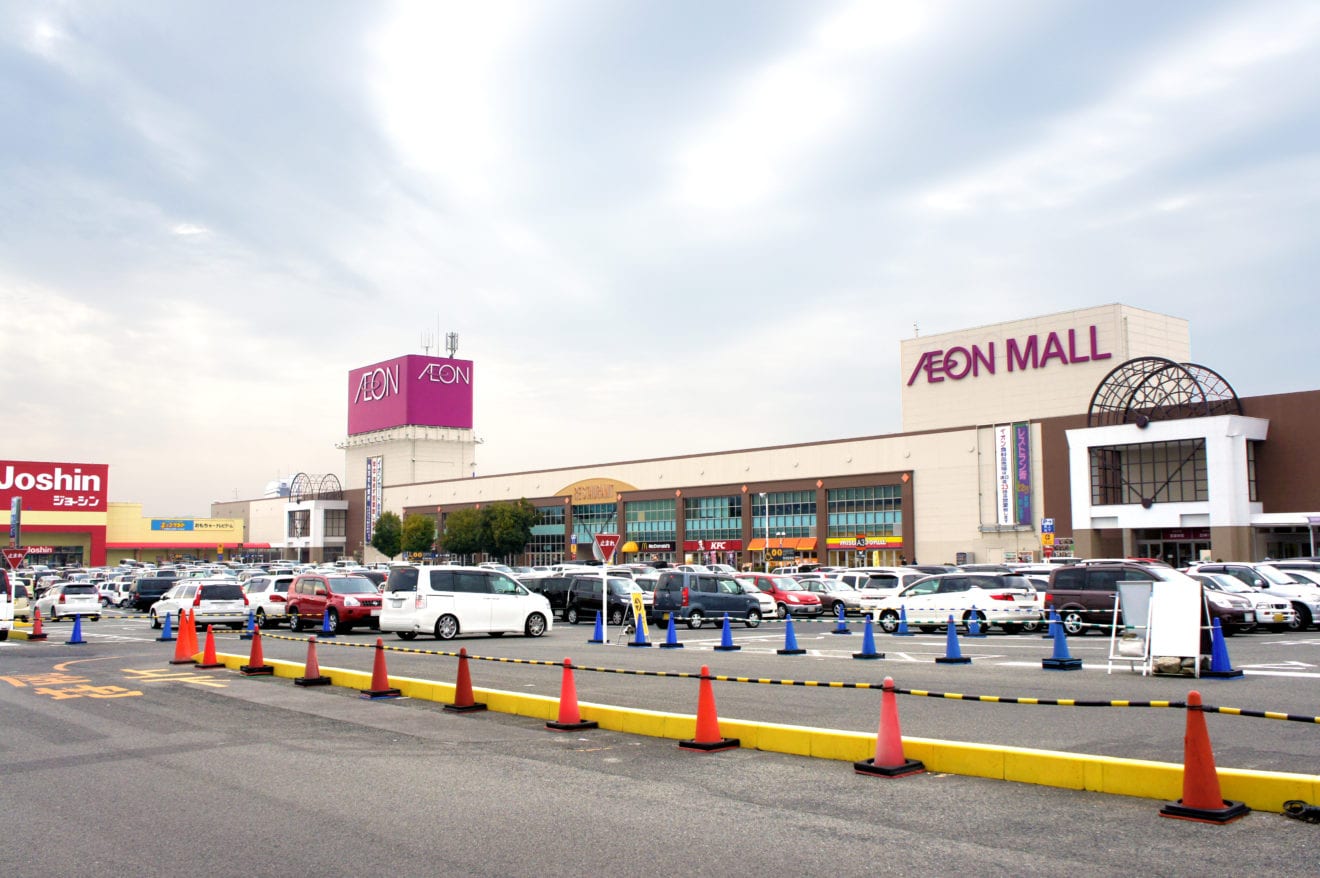
    AEON has four shopping malls in Ho Chi Minh City, Hanoi and the southern province of Binh Duong.

    It is constructing another mall in Hanoi and one in the northern Hai Phong city, with a goal to have 20 malls in the country by 2020.

  • K-Market to expand network with VinGroup

    K-Market to expand network with VinGroup

    Korean chain K-Market is in talks with VinGroup to expand its network.

    K&K, the owner of K-Market supermarket chain and K-Food, wants to expand by opening inside VinGroup’s commercial centres.

    K-Market currently locates its retail stores inside Lotte Mart and Fivimart outlets.

    The retail operators plans to expand its network to 100 supermarkets by 2020, and eyes a turnover of  more than US$100 million in 2017.

    Ko Sang Goo, chairman of K&K, said the company has been researching the Vietnam retail market carefully.

    The group aims to add more services to its chain such as laundry and eateries and to import more Korean products to serve local needs.

    K-Market currently has four stores in Hanoi and nine in Ho Chi Minh City.

  • Aeon Vietnam opening second HCMC mall

    Aeon Vietnam opening second HCMC mall

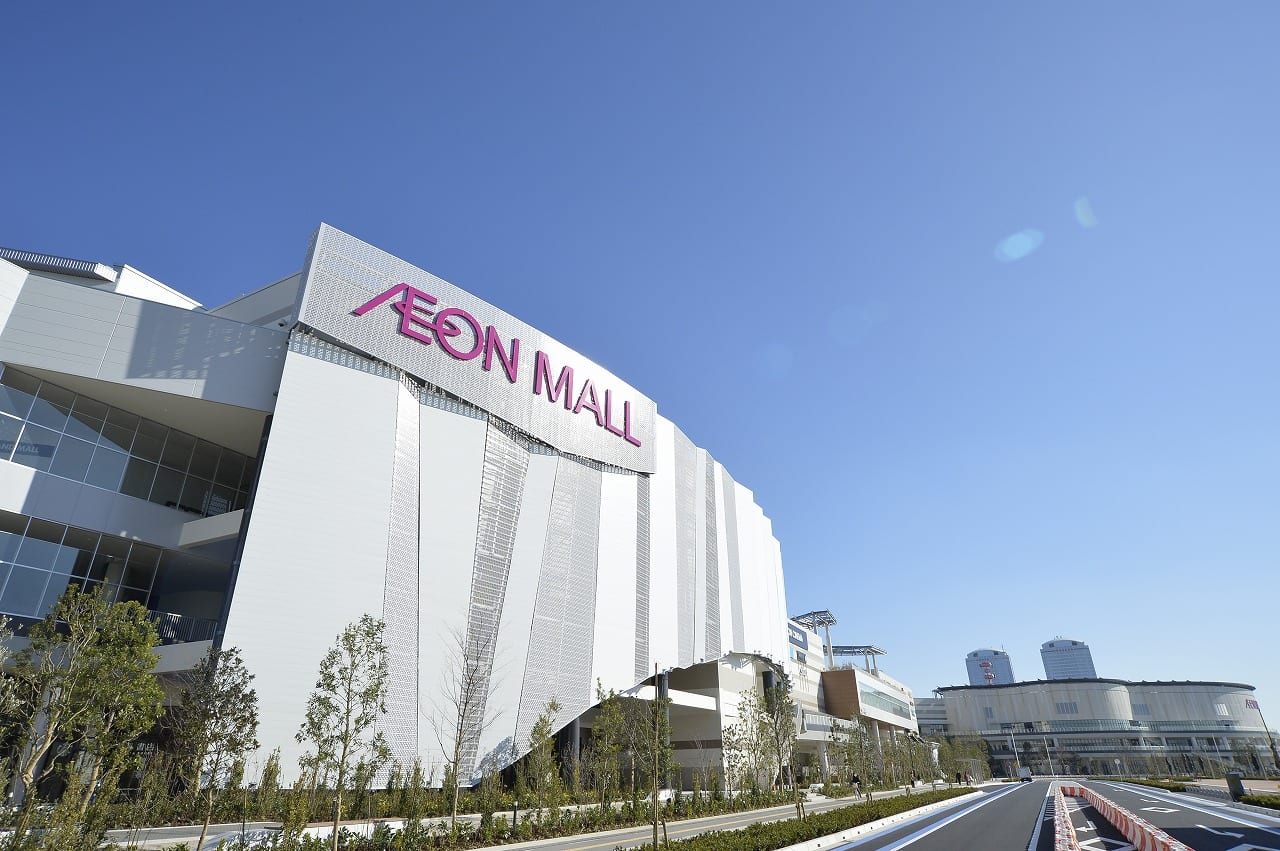
    Aeon Vietnam will inaugurate its second shopping centre in Ho Chi Minh City, Aeon Mall Binh Tan, on July 1.

    Larger than Aeon Mall Tan Phu Celadon, which opened in early 2014, it has an total investment exceeding US$120 million and covers 4.6 ha. at the Hi-Tech Healthcare Park of Hoa Lam Shangri-La. It will have four floors and a basement, with a parking lot designed to accommodate 1500 cars and 4000 motorbikes at any one time.

    About 80 per cent of goods on sale at the mall, Aeon’s fourth in the country, will be made in Vietnam with the rest imported from Japan.

    A feature will be a photo-taking area for children and families, plus painting classes for children.

    Aeon targets 20 malls across Vietnam by 2020. The Japanese retailer owns 49 per cent of the Citimart store chain and 30 per cent of another local chain, Fivimart, and also runs Ministop convenience stores.

  • Five trends in Vietnam retailing

    Five trends in Vietnam retailing

    Vietnam’s retail market is set to grow by 8.4 per cent annually until 2020, making it one of the fastest-growing markets in south-east Asia.

    Against a backdrop of increased disposable income, rapid urbanisation and an appetite for change among younger shoppers, we take a look at five trends defining the marketplace for pan-Asian retailers right now.

    Confident investment

    January 2015 marked the first time non-domestic retailers could take full ownership of commercial property in Vietnam, following commitments made to the World Trade Organisation. Now, new trade agreements with Japan, Korea and the countries that make up the Association of South-East Asian Nations (ASEAN) look set to support further growth for international retailers in Vietnam:

    Tailoring the best of international retail

    Domestic retailers may have the advantage when it comes to local shopper knowledge but
    international retailers are drawing on their own strengths to help them compete.

    Dairy Farm, FamilyMart and Aeon have brought their expertise in loyalty schemes, private label and innovative marketing to their stores in the region.

    Other points of difference include appealing to busy office workers with a fast food to go counter (seen at Family Mart and B Mart) and bringing an international flavour to the in-store hot food offer (Aeon Mall).

    Alternative store concepts

    Many retailers have established themselves in Vietnam with a hypermarket presence in one of the major retail hotspots like Hanoi or Ho Chi Minh City.

    Lotte and hypermarket chain Aeon are appealing to families and experimental shoppers with department store formats that act as wider shopping and entertainment destinations. Aeon is also making its mark with a loyalty scheme that includes tailored offers for mums – such as birthday treats or discounts on baby care.

    In the convenience channel, Guardian is the first combined-format health, beauty and drugstore in Vietnam. The store is making waves with its clean layout, colourful signage, bold promotional activity and sales assistants offering a superior level of service.

    Product innovation for a changing market

    A new concept in Vietnam, private label is appealing to young, experimental shoppers thanks to its lower prices and alternative products.

    Aeon has introduced its TopValu private label range, which taps into the popularity of Japanese culture by offering authentic Japanese ingredients and home cooking kits. The retailer is now working with local suppliers to explore domestic production.

    An increasingly affluent middle class is also supporting demand for exclusive and imported novelties. Dairy Farm is well-known for attracting these shoppers with its packaged food, household, health and beauty ranges.

    Expanding to national coverage

    A priority for most retailers is to create a nationwide presence. Lotte has built a network of ten hypermarkets spanning six big cities across Vietnam, making them the first pan-Asian retailer to achieve such a spread of coverage. Meanwhile, Ministop (Aeon), Guardian (Dairy Farm) and Shop&Go are pushing their convenience format in retail hotspots.

    Major retailers are seeing good growth from their franchise models, making partnerships, mergers and acquisitions hot topics.

    Aeon has partnered with local retailers Citimart in the south of the country and Fivimart in the north. The domestic chains are helping Aeon speed up its expansion plans by using their existing store networks. In return, their own customers are benefitting from the retail giant’s private label ranges and investment in infrastructure.