Tag: food ingredients

  • Mycofeast Buys New Zealand Dairy Protein Startup Daisy Lab

    Mycofeast Buys New Zealand Dairy Protein Startup Daisy Lab

    British biotechnology firm Mycofeast acquired New Zealand dairy protein startup Daisy Lab for an undisclosed sum in October 2026. The buyout secures Daisy Lab’s precision fermentation platform.

    The deal transfers Daisy Lab’s Auckland operations and patent pipeline to the UK group. Daisy Lab’s scientific team will stay intact.

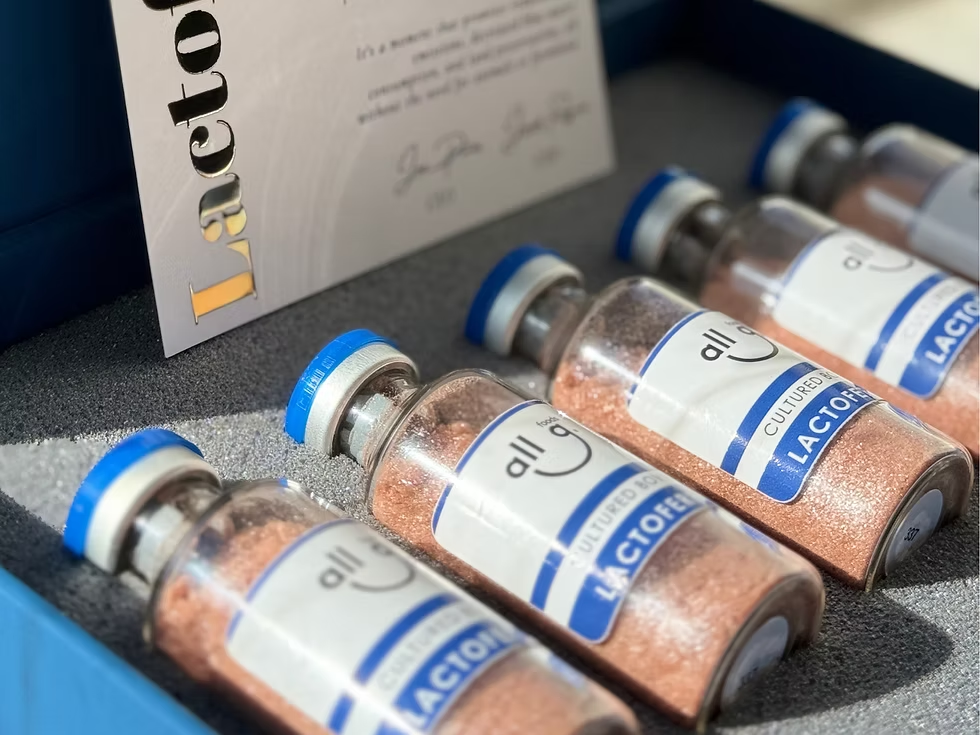
    Daisy Lab uses genetically engineered yeast to produce animal-free dairy proteins, including whey, casein, beta-lactoglobulin and lactoferrin. The company estimates its system cuts greenhouse gas emissions by up to 97 per cent compared with conventional dairy farming. Its most advanced project centres on high-yielding bovine and human lactoferrin. The iron-binding glycoprotein is used in infant nutrition, immune supplements and pharmaceuticals.

    Integration without cuts

    All laboratory staff and founders will keep their Auckland positions. Co-founders Irina Miller, Nikki Freed and Emily McIsaac will take broader operational roles across the Mycofeast organisation.

    Development work from the New Zealand team will link with Evolutia Bio, Mycofeast’s research arm in California. The team will also draw on the parent firm’s industrial processing plants. Daisy Lab had initially engaged Mycofeast as an ingredient customer and commercial partner before talks became a full buyout.

    “There are no layoffs associated with the acquisition. Mycofeast wanted both the technology and people,” Daisy Lab co-founder and CEO Irina Miller said.

    Fermentation economics in focus

    Extracting traditional lactoferrin requires thousands of litres of bovine milk to yield a single kilogram of purified protein. That scarcity keeps market prices between $600 and $2,000 per kilogram. It is one of the most expensive dairy fractions on global commodity markets.

    Precision fermentation bypasses cows entirely by brewing identical proteins inside stainless-steel bioreactors. For ingredient buyers across Asia, synthetic biology offers stable pricing. It also removes exposure to seasonal milk collection swings, farm runoff rules and herd disease risks.

    Capital pressure across alternative protein

    Australasian food-tech startups are turning to offshore trade sales over standalone venture capital rounds. Higher interest rates and tighter funding over the past two years made building private pilot and commercial processing facilities prohibitively expensive for early-stage laboratories.

    Selling to an established biotech operator gives Daisy Lab immediate industrial hardware without raising dilutive scale-up equity. The deal also hands Mycofeast a research base in New Zealand. That puts the British group inside a major agricultural exporter currently overhauling its biotech regulations.

    Next steps for scale

    Daisy Lab incorporated in Auckland in 2021 to engineer alternative proteins for New Zealand’s dairy-heavy economy. The startup focused on high-margin proteins rather than commodity milk powder. It established high-titre yeast strains to prove commercial viability before pursuing international manufacturing partners.

    Teams across both companies are now preparing lactoferrin samples for regulatory clearance dossiers and commercial customer trials across North America and the Asia-Pacific region.
  • Fonterra Annual Profit Jumps to NZ$2.6 Billion on Mainland Sale

    Fonterra Annual Profit Jumps to NZ$2.6 Billion on Mainland Sale

    Fonterra lifted its full-year net profit after tax by 142 per cent to NZ$2.6 billion ($1.6 billion) following the sale of its consumer arm.

    Operating profit jumped 97.6 per cent to NZ$3.4 billion for the fiscal year ended July 31. That figure included a NZ$1.2 billion gain from selling the Mainland Group consumer business.

    The Auckland-based dairy co-operative completed the Mainland sale in March, handing over brands including Anchor, Mainland, Perfect Italiano and Anmum. Stripping out the divestment, underlying operating profit rose 20 per cent to NZ$1.8 billion from NZ$1.5 billion a year earlier. Total cash distributions reached NZ$12.42 per fully shared-up farmer shareholder. That comprised a NZ$10.42 operating payout and a NZ$2.00 capital return from sale proceeds.

    Balance sheet overhaul and debt reduction

    Fonterra used the divestment proceeds and operating cash flow to cut adjusted net debt by NZ$967 million. Total debt fell to NZ$1.7 billion. Gearing dropped to 21 per cent from 24 per cent twelve months prior. Debt to earnings before interest, tax, depreciation and amortisation fell from 1.1 times to 0.7 times, giving the business headroom to absorb farmgate commodity swings.

    Underlying earnings per share rose 31 per cent to 71 New Zealand cents from 54 cents in FY25. Underlying return on capital reached 14.2 per cent. That result beat the co-operative’s target band of 10 to 12 per cent.

    Processing volumes counter farmgate price drop

    Milk collections reached 1,571 million kilograms of milk solids across the season, up 4.1 per cent year-on-year. That set a ten-year processing record for the group. Higher factory throughput spread fixed costs across a larger volume base and improved plant utilisation.

    Higher processing volumes helped shield earnings from softer commodity rates. The final Farmgate Milk Price settled at NZ$9.69 per kilogram of milk solids, down from NZ$10.16 in the previous season. Global milk supply recovered across Europe and the Americas during the period.

    Early recovery against post-sale targets

    The co-operative beat its internal recovery schedule by two years. Management had planned to take three years following the Mainland exit to rebuild underlying operating profit to NZ$1.7 billion. Higher product stream margins pushed the core business past that mark in year one.

    For food manufacturers and retail private-label buyers across Southeast Asia and Greater China, the restructured business now functions strictly as an ingredients and foodservice supplier. It no longer competes as a brand owner on retail shelves. The divestment removed channel conflict with Asian supermarket clients, though it concentrates group revenue on volatile global dairy trade benchmarks and industrial buyers.

    Earnings momentum into the next milk season

    Asset sales in South America and China farming hubs preceded this final exit from overseas retail consumer operations. Fonterra shares traded at NZ$8.30 in Wellington after the release. That put the stock near the upper limit of its 52-week trading range of NZ$6.14 to NZ$8.49.

    Chief Financial Officer Andrew Murray stated that holding product stream returns near FY26 levels would keep earnings on track through the next cycle. Investors and ingredient buyers now look to Fonterra’s opening farmgate forecast update in November to gauge early Southern Hemisphere spring production volumes.