Tag: food processing

  • Thai Chamber of Commerce Urges Raw Material Imports to Defend Food Exports

    Thai Chamber of Commerce Urges Raw Material Imports to Defend Food Exports

    Thailand must permit regulated imports of agricultural raw materials to supply export-oriented factories, the Thai Chamber of Commerce warned this week as persistent domestic shortages squeeze food processing operations.

    Poj Aramwattananont, chairman of the chamber, said the shortfall hinders exports despite the country’s advanced infrastructure in cold storage, sterilisation and canning. “To support the Kitchen of the World, we must enable imports for export-oriented production,” said Mr Poj.

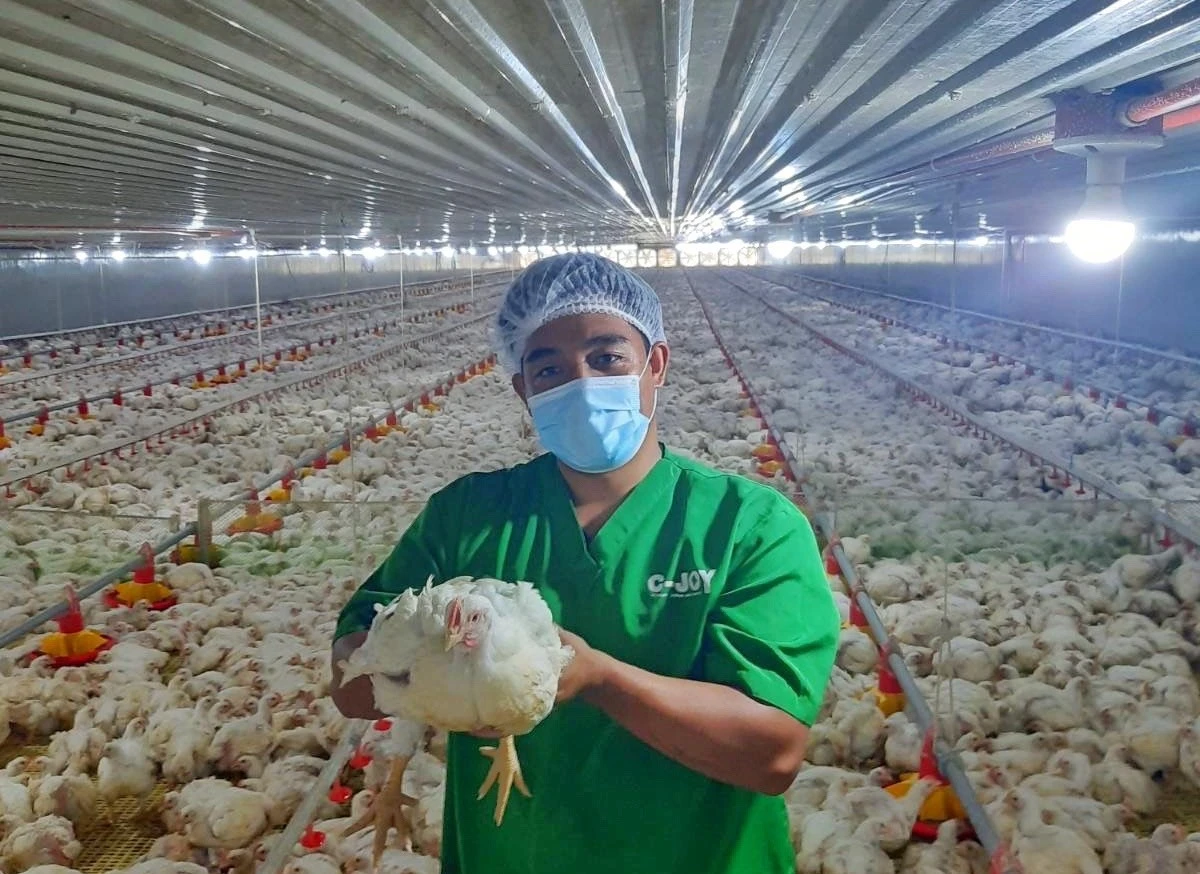
    The bottleneck affects established exports of fresh chicken, processed poultry and tuna, alongside 1 rapidly growing export sector: pet food manufacturing. In addition to raw material deficits, agricultural water management issues continue to limit local supply, preventing domestic production from keeping pace with processing lines.

    Opening Inbound Supply for Export Lines

    Poj proposed setting up regulated import channels specifically for raw agricultural goods destined for re-export after processing, balancing factory demand without depressing domestic farmgate prices.

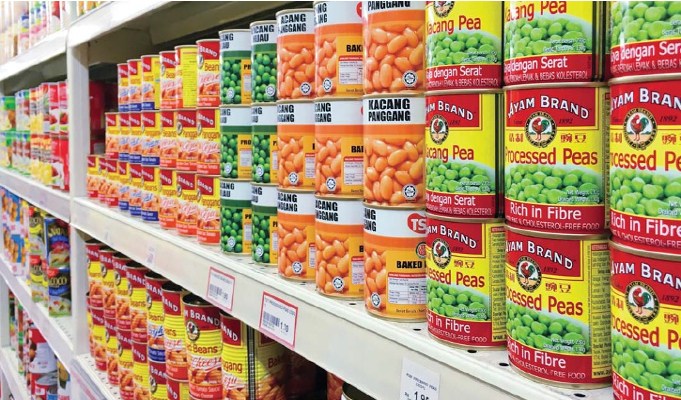
    Industrial processors operate sterilisation autoclaves and continuous-feed canning lines designed for steady volume. When local farms miss delivery quotas because of seasonal water shortages, these industrial plants run below capacity, driving up the fixed cost per unit on finished export goods.

    Food security has shifted into a top global priority as trade routes face recurring disruption from armed conflicts. Sourcing inputs from outside Thailand allows packaging plants to fulfill overseas retail contracts while domestic agricultural reform remains slow.

    Shifting Formulations to Functional Ingredients

    Visit Limlurcha, vice-chairman of the chamber, said post-pandemic consumption patterns require local processors to shift development toward health, innovation, and environmental criteria.

    Functional ingredients represent the fastest-moving segment of this shift, prompting negotiations between industry groups and the Thai Food and Drug Administration to approve specific ingredient health claims on packaged retail labels.

    Maintaining export margins will also require biological upgrades at the farm gate. Visit said agricultural programs must prioritise targeted plant breeding for disease and pest resistance alongside livestock lines engineered to withstand recurring epidemics.

    Diversifying Culinary Exports Past Staple Dishes

    Restaurateurs and consumer packaged goods brands face similar product concentration risks on retail shelves abroad. Thaniwan Kulmongkol, president of the Thai Restaurant Association, said export campaigns rely too heavily on familiar recipes like pad Thai, leaving regional food styles unmonetised.

    Coordinated marketing through bodies like the Tourism Authority of Thailand could pull lesser-known regional recipes into standard restaurant formats and commercial retort packaging.

    Processing plants already possess the technical equipment to produce shelf-stable regional meals. Without sustained access to raw fish, poultry cuts, and specialised farm inputs, those lines cannot run the production runs necessary to displace cheaper regional competitors.

    The Policy Hurdle Facing Factory Floor Inputs

    Thai agribusiness groups have historically operated behind protective trade walls designed to preserve local farmer margins. The chamber’s call exposes a growing divide between rural agricultural producers and industrial export manufacturers who need cheap, predictable inputs to defend supermarket shelf space.

    If the government grants tariff exemptions or streamlined permits for processing-bound agricultural inputs, factory owners can run their sterilisation and canning operations at planned capacity. If the trade restrictions stay intact, regional processors in neighbouring markets with direct maritime trade access will absorb that volume.

    The Thai Food and Drug Administration continues discussions on labelling rules for functional products, while cabinet review of agricultural import mechanisms remains pending.


  • Thailand Investment Applications Rose 28% to over 1.7 Trillion Baht

    Thailand Investment Applications Rose 28% to over 1.7 Trillion Baht

    Thailand secured 1,954 investment promotion applications worth more than 1.7 trillion baht in the first nine months of the year, a 28 per cent increase driven by artificial intelligence hardware, electronics and food processing.

    Foreign direct investment led the expansion, surging 62 per cent year on year to 1.55 trillion baht across 1,309 proposals.

    Digital ventures drew 139 projects valued at over 1.17 trillion baht, nearly double the intake from a year earlier. Within that segment, 111 projects worth over 1.2 trillion baht tied directly into artificial intelligence supply chains, spanning data centres, cloud hosting, chip design, semiconductor manufacturing and testing, printed circuit boards and hard-disk drives. Major applicants included US-based Analog Devices, Taiwan’s Delta Electronics and California storage-device maker Western Digital.

    Hardware Clusters and Supply Chain Pull

    Electrical appliances and component producers took second place, logging 262 project filings valued at 189.37 billion baht, up 7 per cent. Board of Investment secretary-general Narit Therdsteerasukdi stated that rapid expansion across data hubs is accelerating local orders for power management gear, cooling units, high-speed networking lines and server racks. That procurement loop connects heavy infrastructure directly to domestic tier-two and tier-three parts suppliers.

    The increase reflected both a global shift in investment flows amid geopolitical tensions and rapid technological change

    Singaporean corporate vehicles directed the largest volume of overseas capital, channeling 1.16 trillion baht, followed by manufacturing groups based in China, the United Kingdom, Japan and Taiwan.

    Central and Eastern Industrial Hubs Take 93 Per Cent

    Geographic concentration remains sharp across the country’s established manufacturing corridors. Thailand’s Central region drew the heaviest capital concentration at 955.2 billion baht, while the Eastern region pulled 632.3 billion baht. Combined, the two commercial districts absorbed 93 per cent of every investment baht pledged through September.

    For regional plant managers, the heavy tilt toward Central and Eastern provinces locks in transport advantages close to deep-sea container ports but tightens competition for power grids, industrial water rights and technical plant operators. New facilities entering these corridors must contend with rising land acquisition costs and an increasingly crowded supplier base.

    Agribusiness Gains Behind Farm and Packaged Goods

    Agribusiness and modern food processing generated the sharpest sectoral growth rate outside digital compute. Applications rose 59 per cent to 80.1 billion baht spread across 218 operations. These proposals span commercial animal feed, processed starches, natural plant extracts, rubber goods, packaging manufactured from farm waste and modernized food and beverage packaging lines.

    Other operational segments recorded steady intake. Public utilities and energy groups accounted for 313 applications worth 59.8 billion baht, dominated by solar, wind, biomass and biogas generating facilities alongside industrial water plants. Logistics and commercial services generated 51.8 billion baht in applications, while automotive assemblies and replacement parts manufacturing drew 36.3 billion baht across the period.

    Approved Filings Point to Export Mandates

    The nine-month intake builds on formal factory approvals already working through state pipelines. The Board of Investment approved 1,951 projects between January and September representing 1.51 trillion baht in committed expenditure.

    Approved facilities carry binding production targets once commercial runs begin. According to agency projections, the approved facilities are estimated to generate 1.96 trillion baht in annual exports, absorb more than 693 billion baht in domestic raw materials and parts each year, and open 116,000 factory floor and engineering roles across the industrial estate network.

  • McDonald’s Supplier HyFun Plans USD 208 Million India IPO

    McDonald’s Supplier HyFun Plans USD 208 Million India IPO

    Indian food processor HyFun now plans to raise USD 208 million through an initial public offering in Mumbai. The company supplies french fries and potato products to fast-food chains, including McDonald’s, across domestic and regional markets.

    The listing targets fresh capital to expand processing plants and cold-chain capacity across Indian agricultural hubs. Procurement volumes are climbing. Multinational quick-service operators continue to fuel demand through higher restaurant footfall and rapid menu expansion.

    Capital for food processing scale

    HyFun links contract farming directly with industrial food manufacturing. Supplying high-volume quick-service restaurant networks requires dedicated cold-storage facilities, temperature-controlled logistics, and strict agricultural quality controls. These operations demand heavy upfront capital.

    Equity funding allows food processors to lower borrowing costs while building specialized production lines. Raising public capital also creates a balance-sheet cushion. That financial buffer helps suppliers manage raw material price swings and farm-level supply disruptions.

    Fast-food supply chain pressures

    Quick-service operators in India have accelerated store openings across regional hubs and suburban retail corridors. Chains like McDonald’s depend on local processing partners to protect margins against import tariffs and currency swings.

    A well-funded domestic supplier eliminates procurement bottlenecks and stabilizes ingredient pricing for restaurant chains. It also raises the competitive bar for rival food manufacturers. Unlisted processors now face pressure to secure private equity backing or consolidate operations.

    Shifting risk for food investors

    Raw potato price volatility and agricultural yields remain the primary operating risks. Both depend heavily on seasonal monsoon patterns and regional climate shifts. When harvests falter, processors locked into long-term supply contracts with fast-food brands must absorb the cost spikes.

    Institutional appetite for consumer-facing food supply businesses remains strong in Mumbai. Funds continue to back agricultural supply chain companies that hold multi-year delivery agreements with global restaurant brands.

    Next steps for the listing

    HyFun built its business supplying frozen french fries and potato snacks to quick-service chains, grocery retailers, and export markets. Plant expansions in Gujarat now support international buyers across Southeast Asia and the Middle East alongside domestic accounts.

    Draft red herring prospectus filings with the Securities and Exchange Board of India will detail the final issue size, primary share sales, and secondary promoter stake sales. Market participants will watch the formal filing date and the split between fresh capital expenditure and existing shareholder exits.

  • Cargill Commits $130 Million to Expand Asian Poultry Production

    Cargill Commits $130 Million to Expand Asian Poultry Production

    Cargill will spend more than $130 million over the next two years to expand its poultry processing and feed manufacturing operations in Thailand and the Philippines.

    The investment will lift the company’s cooked poultry output in Thailand to 160,000 metric tons annually. It targets THB 25 billion in yearly export revenue.

    Automation in Saraburi and Thai Storage Expansion

    At its central processing plant in Saraburi, Thailand, Cargill is installing an automated cooked chicken production line. The system uses robotic machinery and artificial intelligence to process real-time sorting and quality data. Work will run through 2028. It will create more than 300 manufacturing jobs in the province.

    Upstream feed operations in Thailand get direct support through a new 30,000 metric ton grain silo. Ground was broken on the facility this year, with commissioning planned for early 2027. The extra holding capacity lets the company buy grain outside standard harvest cycles. That buffers feed costs against seasonal price swings.

    Feed Milling and Retail Brands in the Philippines

    Across the Philippines, capital spending focuses on domestic feed supply and farm networks. An animal feed mill with an annual capacity of 190,000 metric tons is now under construction for late 2027 completion. It will employ over 100 workers and supply commercial producers nationwide.

    Beyond the mill, capacity is expanding across local hatcheries, breeder facilities and broiler farms. The extra volume supplies contracted foodservice buyers. It also stocks Tip-Top, Cargill’s retail chicken brand sold in Philippine supermarkets.

    Demand for high-quality protein continues to grow across global markets, and customers are looking for reliable innovation partners who can help them scale with confidence.

    Watcharapon Prasopkiatpoka, vice president and managing director for Cargill’s Asia-Pacific poultry business, oversees the program across both markets.

    Supply Chain Realignment for Export Markets

    Two distinct strategies define the regional split. Thailand serves as the primary export base, shipping cooked poultry to supermarkets and restaurants in Japan, Europe, North America and Asia. Automation at Saraburi addresses industrial labor shortages in central Thailand. It also enforces consistent portion control for strict overseas food safety audits.

    Philippine investments target domestic food security and price stability rather than exports. Local integrators face frequent raw material bottlenecks and volatile feed prices. Controlling the feed mill and hatchery network shields Cargill from spot-market disruptions. That gives its retail pack business a cost edge over smaller domestic processors.

    Earlier Footprint and Regional Competition

    Global agribusiness groups have spent recent years retooling Southeast Asian protein units around processed, cooked meat instead of raw commodities. Thailand became a processing hub through bilateral sanitary agreements with the European Union and Japan. That sparked heavy capital spending from regional competitors CP Foods and Betagro.

    Cargill previously focused regional spending on standalone feed mills and local joint ventures. This capital plan shifts that focus toward integrated infrastructure. It links grain storage directly to automated cooking lines.

    Work on the Thai grain silo wraps up in early 2027. The Philippine feed mill follows late that year, and the Saraburi processing line comes online in 2028.

  • South Korea Tightens Regulatory Requirements for Foreign Food Facility Imports

    South Korea Tightens Regulatory Requirements for Foreign Food Facility Imports

    South Korea has strengthened its regulatory framework for food imports, imposing tighter requirements on overseas facilities that manufacture and process products bound for the domestic market.

    The updated measures target foreign food manufacturing plants and export facilities, increasing scrutiny on safety standards and compliance records before shipments clear customs.

    Stricter oversight for overseas facilities

    Under the enhanced framework, overseas food production sites supplying South Korean buyers must meet updated registration and safety verification rules. Importers and foreign operators must maintain verified documentation confirming compliance with national safety standards, reducing contamination risks across cross-border supply chains.

    Border authorities retain the mandate to audit and inspect overseas facilities directly when risk factors or compliance discrepancies arise during entry processing.

    Regional trade and compliance demands

    Regulators across East Asia continue to raise the bar for food safety governance, aligning import protocols with domestic manufacturing standards to protect consumers. Stricter facility requirements place heavier administrative obligations on international food brands and regional suppliers exporting packaged food, raw ingredients, and agricultural commodities to South Korea.

    Foreign suppliers and domestic importers must complete required registrations and facility filings ahead of scheduled shipping cycles to prevent port delays and product rejections.

  • Uzbekistan Commits $100 Million to Subsidise AI Across 10,000 Businesses

    Uzbekistan Commits $100 Million to Subsidise AI Across 10,000 Businesses

    Uzbekistan will spend at least $100 million to subsidise artificial intelligence adoption across 10,000 enterprises, covering half the cost of software implementation for commercial operators. The state-backed program targets manufacturing and consumer supply sectors, extending automation subsidies from the textile trade into food processing, electrical engineering, and construction materials.

    President Shavkat Mirziyoyev announced the funding following consultations with business owners in the Khorezm region. Government data presented at the meeting showed that 54 per cent of domestic companies using modern management and AI systems saw product demand increase. A quarter of those businesses lowered production costs, while higher sales allowed 40 per cent to raise worker wages by more than 10 per cent.

    Subsidies for Factory Automation

    Under the initiative, the state will reimburse 50 per cent of what companies spend to introduce automated management systems and machine learning tools. Participating enterprises will also receive access to pre-built, open-platform software designed to eliminate the cost of developing proprietary applications from scratch.

    Hardware support will run through the Center for Digital Government Project Management, where authorities recently brought online Uzbekistan’s first supercomputer cluster. Companies building AI models for commercial products can process workloads on the facility without charge, with research and development bills settled directly by the state budget. Computing capacity at the cluster will triple next year.

    The push reflects how Central Asian governments are attempting to modernize domestic supply chains and bypass legacy enterprise systems. While Southeast Asian manufacturing hubs rely heavily on private capital and foreign software vendors to automate shop floors, Tashkent is using direct treasury subsidies to pull mid-tier producers into modern data workflows.

    Supercomputing and Regional Education

    Administrative processes are seeing similar investments. The Ministry of Digital Technologies signed an agreement with South Korea’s National Information Society Agency and UZINFOCOM to build an AI system that processes and manages citizen appeals to state bodies, starting with a feasibility study and pilot rollout.

    Across the border, Kazakhstan is focusing resources on technical labor. First Vice Minister of Artificial Intelligence and Digital Development Rostislav Konyashkin confirmed the establishment of Qazaq AI Research University under orders from President Kassym-Jomart Tokayev. The institution will embed machine learning coursework into outside degree programs and build research links with partner centers in China, Finland, and the United Arab Emirates.

    Uzbek authorities will open the enterprise application window in stages, with initial disbursements prioritized for food processors and light industrial plants preparing export shipments.

  • Vietnam’s food processing industry an appetizing option for investors

    Vietnam’s food processing industry an appetizing option for investors

    With huge untapped potential and steady growth, Vietnam’s food processing industry promises much for foreign investors, officials say. In Ho Chi Minh City, Vietnam’s biggest city, the food processing industry grew by 8.7 percent and the beverage production sector grew by 4.6 percent in the first ten months of this year, according to the municipal trade department.

    The industry’s products are sold at 2,280 convenience stores in the city, up 507 stores over 2017, it said.

    In the past five years, Vietnam’s annual consumption of processed food and beverages has grown at an average of 9.68 percent and 6.66 percent respectively, says data compiled by the Ministry of Industry and Trade.

    In 2013-2017, the industrial production index grew by an average 6.8 percent per year for processed food and 9.7 percent for drinks, Deputy Minister of Industry and Trade Do Thang Hai said at a recent seminar in HCMC.

    The country’s annual food consumption value is estimated to make up 15 percent of its gross domestic product, he said, adding that the figure is about to grow bigger thanks to higher annual incomes and the increasing trend of consuming ready-to-eat food, especially organic ones.

    In the first nine months this year, the consumption index grew by 8 percent and 10.2 percent against the same period last year for processed food and drinks, respectively, according to the Vietnam Report Joint Stock Company, a Hanoi-based market research and business assessment firm.

    The Business Monitor International (BMI) projected earlier this year that Vietnam’s food industry will grow by 10.9 percent each year between 2015 and 2020.

    Tran Kim Oanh, director of the Investment Promotion Center for Industry under the Vietnam Trade Promotion Agency, said that in the 2010-2016 period, the number of companies operating in the sector made up two percent of the total, but their total revenue accounted for 7.3 percent, or $54 billion.

    With more than half of a population of 95 million of working age, Vietnam’s food processing industry has a lot of room to grow, said experts.

    Food and beverages currently account for the highest proportion of monthly consumer spending in Vietnam, accounting for about 35 percent of the total, she said.

    Opportunities

    Food processing is one of the industries Vietnam is giving priority to in its growth plans until 2025 with vision until 2035.

    Vu Van Chung, deputy head of the Foreign Investment Agency under the Ministry of Planning and Investment, said that so far, foreign investment in the food processing industry of Vietnam was $11.2 billion in 717 projects, excluding those formed through merger-acquisition deals.

    Most foreign investment has flowed into processing agricultural produce, seafood and producing beverages.

    The food processing industry in Vietnam is considered attractive thanks to tax preferential policies including an import tax exemption for technologies to upgrade the production chain in Vietnam.

    “Despite preferential policies for investors, Vietnam’s food processing industry has not been able to attract investments from markets that strong in this field, like Japan, the U.S., Australia and the EU,” Chung said.

    The biggest obstacle for the sector right now is that domestic material supply is unable to meet production chain demands.

    For example, domestic materials supply can only meet 25 percent of inputs for the dairy sector, and up to 90 percent of materials to make cooking oil is imported, he said.

    But deputy minister Hai was hopeful that things would improve when the free trade agreements that Vietnam has signed come into effect, opening a broader consumption market for investors in Vietnam in general and investors in the food processing industry in particular.