Retail News CRM

Tag: Foodora

  • Why workers may be worse off after action against Foodora

    Why workers may be worse off after action against Foodora

    The way “gig workers” are paid and protected might be about to change, as a result of legal proceedings brought by the Fair Work Ombudsman. The Ombudsman alleges that food-delivery platform Foodora underpaid three workers by A$1620.74, plus superannuation, in a four-week period.

    The Ombudsman argues that while Foodora engaged these workers as independent contractors, they were in reality employees. If the action succeeds, it could be positive for the underpaid workers, but it could also drive down working conditions.

    The food-delivery platforms have stated they would be willing to give their workers more benefits, such as training. But not at the cost of workers being classified as employees. If the Ombudsman’s case succeeds, it could cause gig platforms to offer fewer protections in order to ensure workers are classified as contractors.

    This could not only disrupt the food-delivery sector, but have a broader impact on the gig economy, restaurants, customers and workers.

    Employees or contractors?

    The difference between an employer and a contractor is significant. They fall under different laws, receive different protections and have different obligations.

    If a contractor performs poor work they are legally liable for that. But an employer is responsible for the poor work of an employee.

    In many cases this distinction is clear-cut. However, in the gig economy these workers operate in a grey area, one the Fair Work Ombudsman seeks to test.

    Whether workers can be classified as employees or contractors depends on a variety of factors, including the nature of the work. If workers are deemed employees then they receive a greater number of protections, including minimum wage rates.

    In the Australian platform-based economy (including ride sharing and food delivery), the Fair Work Commission has determined workers are independent contractors in two recent cases.

    In one case, Commissioner Nick Wilson stated that “[the driver] did not bring anything especially entrepreneurial to the arrangement” but also that “it is evident that the weight of those indicators leads to the finding that [the driver] was not engaged as an employee, but instead as an independent contractor”.

    The Fair Work Ombudsman’s decision to intervene in the food-delivery sector might be a response to poor working conditions for gig workers. But the decision to go after Foodora specifically could dissuade rather than encourage other platforms to improve working conditions.

    As shown in the table below, the three major food-delivery platforms have varying approaches to engaging workers. For instance, Foodora, in the period under investigation, would engage workers for set periods of time, rather than per delivery. Deliveroo and Foodora also provided uniforms for workers, while UberEATS did not.

    The fact that the case was brought against Foodora suggests that the company has the most direct relationship with workers, and thus its workers are most likely to be classified as employees.

    Our research shows, however, that these work practices are evolving all the time.

    In submissions to the ongoing Senate Select Committee on the Future of Work and Workers, both Deliveroo and UberEATS claimed they would like to provide additional benefits to workers but doing so in the existing regulatory environment might compromise their business models.

    For instance, Deliveroo argued that it “… wishes to be able to provide additional benefits to [workers] without the risk of those benefits changing the relationship from one of self-employed riders to riders employed by Deliveroo”.

    UberEATS similarly argued that “current employment classifications create significant disincentives: they can mean that offering training to these [workers] can compromise the self-employed status of the individual. We believe that companies should be incentivised, not penalised, for helping independent workers”.

    This is why the Fair Work Ombudsman’s decision to target Foodora may be counterproductive. It sends the signal that the better you treat your workers, the more likely they are to be classified as employees, the more expensive your labour costs will be and the more inflexible your operation will become.

    The Foodora case is interesting as it applies existing employment rules to “gigified” work. Currently, some gig workers earn significantly less than the minimum wage. They also miss out on other protections of employment.

    However, unlike high-profile franchising cases such as the underpayment of 7/11 workers, their current classification as contractors means this practice is within the law.

    If the Fair Work Ombudsman is successful and these workers are reclassified as employees, it might provide a disincentive for other platforms to protect workers. The law itself might need to change.

    With this in mind, we all need to pay attention to the recommendations of the Senate Select Committee on the Future of Work, due on June 21.
  • Foodpanda HK axes Foodora after just two months

    Foodpanda HK axes Foodora after just two months

    Just two months after its launch, Foodora, the upmarket sister site of Foodpanda Hong Kong has been axed.

    Inside Retail Hong Kong broke news of Foodora’s launch in late September and the company officially unveiled the concept in early October, saying it had 100 restaurants signed up after a trial in two suburbs: Central and Sheung Wan.

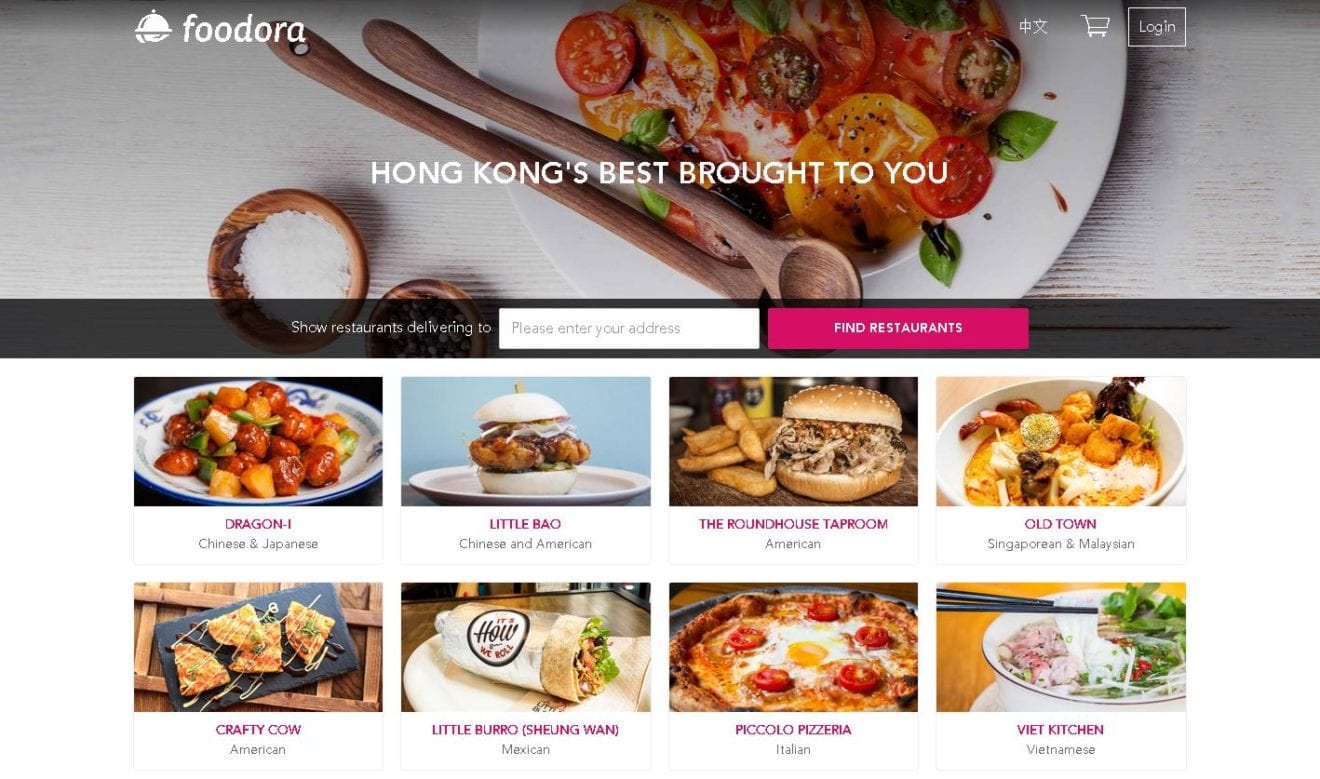
    “The company has set itself apart from traditional delivery services by working with big names in the restaurant scene, including the likes of Dragon-i, Iberico, Check-In Taipei,The Boss and Social Place. Restaurants such as Little Bao will for the first time offer hungry Hong Kongers an alternative to waiting in a queue for superior eats,” Foodora said at the time.

    But today, Foodpanda said those restaurant brands will now be listed alongside fastfood brands like Pizza Express on the parent site.

    It disguised the axing of the two month old project in a media statement proclaiming it has “drastically reduced delivery time” of all its orders to “an average” of 30 minutes, a key marketing plank of Foodora.

    “Sister company Foodora, launched in October this year, is also now integrated into the Foodpanda business, in order to have natural synergies and premium expertise. This new integration is an additional step to reinforce Foodpanda’s philosophy and expertise on providing the best food delivery services,” the statement said.

    The company says it has developed proprietary rider and restaurant software technology, using an advanced algorithm to optimise delivery courier routes and restaurant operations.

    “The company is now able to ensure that steps in the food ordering process occur faster than ever, bringing average delivery down to 30 minutes after the order confirmation.”

    Announcing the addition of Pizza Express, Oolaa, Mana Raw and Nosh by Secret Ingredient, among others, to its offer, Foodpanda Hong Kong MD Alexander Roth said it is Foodpanda’s mission “to deliver the best meals from the best restaurants to our customers as quickly as possible”.

    Foodpanda is encountering increasing difficulties rolling out its business model in Asia. Last month it closed its Vietnam operation after failing to make a dent in the market share of more efficient, established rivals (subsequently selling its database to one of them).  In Kuala Lumpur it is struggling to win customer confidence after buying up its rivals and shutting them down and operating a monopoly widely criticised for delivery times of often more than an hour, complaints of cold food and poor customer service.

  • Restaurant delivery startup foodora launched in Hong Kong

    Restaurant delivery startup foodora launched in Hong Kong

    Berlin-based premium-restaurant delivery service foodora is expanding to Hong Kong.

    The startup offers an alternative to traditional takeaway options and employs an advanced logistics algorithm to ensure that food maintains its high quality and arrives at the customer’s doorstep or office, on average, within 30-minutes.

    Founded less than one-year ago, foodora has set itself apart from traditional delivery services by working only with high-end and trendy restaurants such as Dragon-i, Iberico, Check-In Taipei, The Boss and Le Port Parfume. Exclusive delivery contracts with no-reservation restaurants such as Little Bao will offer Kongers an alternative to waiting in a queue for trendy eats. 

    Behind the scenes, foodora’s proprietary logistics system determines the optimal route between restaurants and customers to help drivers navigate the dense traffic of Hong Kong.

    “Hong Kong is one of the world’s great global cities and as such should have access to world-class food delivery services. foodora wants to introduce a new benchmark of reliability, speed, and quality, bringing Hong Kongers what other markets already enjoy,” said Mat Podesta, CEO of foodora Hong Kong, remarks: “Hong Kong is one of the world’s great global cities and as such should have access to world-class food delivery services. foodora wants to introduce a new benchmark of reliability, speed, and quality, bringing Hong Kongers what other markets already enjoy.”

    foodora Hong Kong currently delivers to Central and Sheung Wan and plans to expand their delivery area to TST, Wan Chai, and Causeway Bay with 400 restaurants by the end of 2015.

  • Foodora Hong Kong launches with 100 restaurants

    Foodora Hong Kong launches with 100 restaurants

    Foodora Hong Kong – the expensive little sister of Foodpanda – claims it already has 100 restaurants and cafes on its books as it formally launches its service.

    Foodora – whose imminent launch was reported by Inside Retail Hong Kong on September 29 – has today formally announced its creation after a trial in two suburbs: Central and Sheung Wan.

    A key plank of its marketing message is “Hong Kong’s first 30-minute food delivery service” which Hong Kong locals may well greet with a degree of skepticism.

    But Foodora, which was founded in Germany last October, says its proprietary logistics system “determines the optimal route between restaurants and customers to help drivers navigate the dense traffic of Hong Kong”.

    “The company’s dedicated, uniformed and friendly delivery team ensures maximum food quality and transportation standards by not stacking orders and knowing their terrain extremely well,” it says in a statement.

    The Foodora app sends updates along the order process, allowing customers to monitor progress of their food’s preparation and despatch.

    Meanwhile, Foodora says it has more than 100 local restaurants on board for its Hong Kong launch.

    “The company has set itself apart from traditional delivery services by working with big names in the restaurant scene, including the likes of Dragon-i, Iberico, Check-In Taipei,The Boss and Social Place. Restaurants such as Little Bao will for the first time offer hungry Hong Kongers an alternative to waiting in a queue for superior eats.”

    “Few realise Dragon-I has very talented chefs serving some of Hong Kong’s best Chinese and Japanese food,” said Raymond Young, GM of Dragon-I.

    “With Foodora we can now extend the Dragon-I experience into homes and offices.”

    Foodora Hong Kong CEO Mat Podesta says Hong Kong is one of the world’s great global cities and as such should have access to world-class food delivery services.

    “Foodora wants to introduce a new benchmark of reliability, speed, and quality, bringing Hong Kongers what other markets already enjoy.”

    While the brand is still restricting delivery to just Central and Sheung Wan, Podesta says Tsim Sha Tsui, Wan Chai and Causeway Bay will be added, along with an expanded list of 400 restaurants, by the end of the year.

    New customers can receive HK$50 off their first order with code: HELLOHONGKONG.

  • Foodpanda’s sister Foodora Singapore bound

    Foodpanda’s sister Foodora Singapore bound

    Foodora – an upmarket little sister of mass market food delivery monopoly Foodpanda – is destined for Singapore.

    Foodora Singapore is best described as an “upscale Foodpanda”, a high-end food delivery service targeting cashed-up Millennials who want a higher standard of meal than quick service restaurant fare and faster delivery – and who parent Rocket Internet expects are happy to pay a premium for it.

    Rocket launched Foodora in Hong Kong earlier this year and a trial continues in two suburbs with more postcodes to be added later this year.

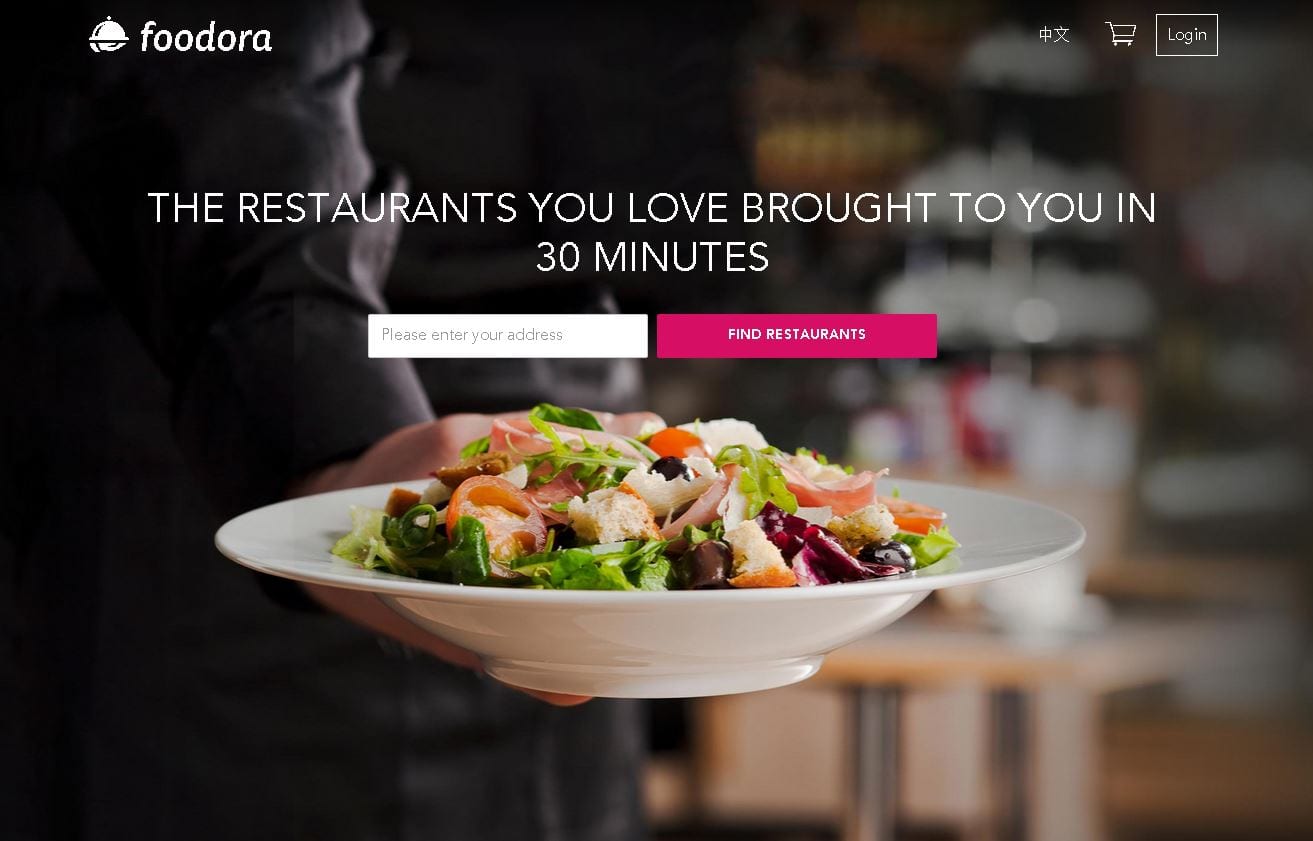
    A quick look at the Hong Kong website shows a clear family resemblance to the Foodpanda site, just a different coloured search button and a silver service platter logo in place of the smiling panda.

    But behind the scenes it is all different, we are assured.

    Chris Parrott, marketing MD with Foodora, said in an interview with e27 about the Hong Kong site that the two brands are targeting different clientele, albeit meeting the same need: food delivered to the door as quickly as possible.

    “Foodpanda is a sister company, so there is scope for knowledge-sharing. We have different target clientele, as our minimum basket size is US$25.8 (HK$200) and Foodpanda’s is variable,” Parrott explained.

    A key difference is the delivery time: Foodora promises within 30 minutes, which seems an overly ambitious promise; Foodpanda can take an hour or more, depending on the customer’s location.

    Foodora is now active in 14 countries and early this month took over Delivery Hero which is in 34 countries. Singapore will be next, with a website page already visible announcing “Coming soon”.

    The Hong Kong business is initially being promoted through blogs, food critics and Instagram.