Retail News CRM

Tag: ford

  • Ford Issues Recall of 21,100 Vehicles in Vietnam Due to Screen Malfunction Issues

    Ford Issues Recall of 21,100 Vehicles in Vietnam Due to Screen Malfunction Issues

    American automaker Ford is initiating a recall of more than 21,100 vehicles in Vietnam due to issues with infotainment screens that unexpectedly crash while displaying images from the rearview camera.

    Screen Failures Raise Safety Concerns

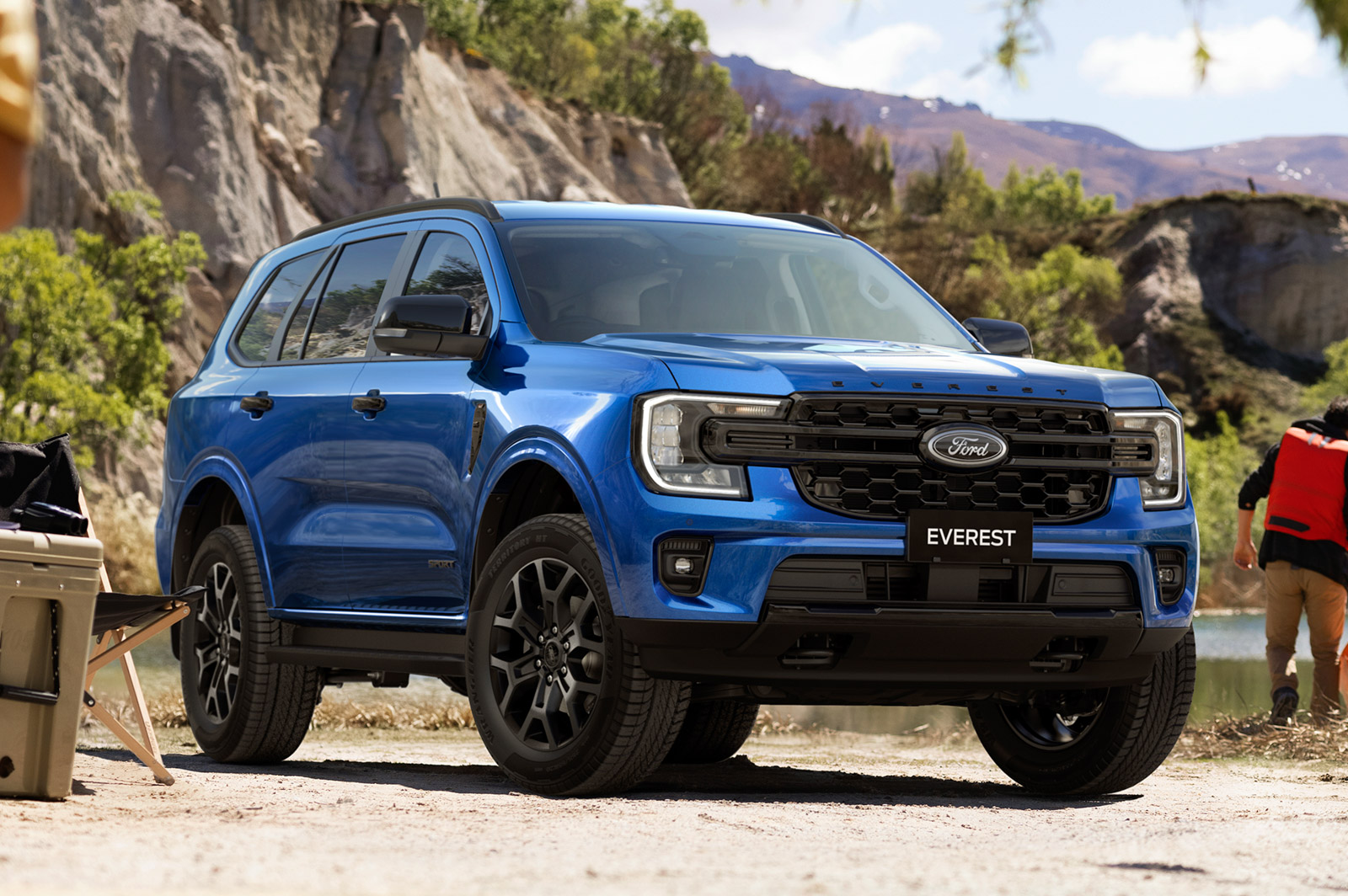
    This particular glitch has been identified in certain models of the Ranger, Ranger Raptor, and Everest, where the screen intermittently freezes and restarts during reverse operation, heightening the risk of accidents, according to Ford Vietnam. Notably, this issue affects both domestically assembled vehicles and those imported into the market.

    A Breakdown of the Recall

    The recall encompasses 11,002 Ranger vehicles manufactured between August 2022 and April 2024, alongside 7,947 Everests produced between December 2021 and April 2024 and 2,179 Raptors made between April 2022 and May 2024. Interestingly, the latter two models were built at Ford’s facility in Thailand before being shipped to Vietnam.

    Commitment to Customer Safety

    Ford has assured customers that authorized dealerships will conduct the necessary repairs at no cost. This proactive approach is aimed at restoring consumer confidence, although it’s worth noting that this isn’t Ford’s first major recall related to display failures in Vietnam. Just a few months earlier, in May, the company recalled nearly 1,000 Explorer SUVs due to problems with their rearview and 360-degree camera displays. Those vehicles were produced in the U.S. between January 2019 and July 2023 and had also been imported into Vietnam.

    As Ford navigates these technical hiccups, drivers are reminded of the importance of vehicle safety and the potential pitfalls of modern technology—proof that sometimes, screens aren’t so smart after all.

    Questions & Answers

    What models are affected by the Ford recall in Vietnam?
    The recall involves the Ranger, Ranger Raptor, and Everest models, totaling over 21,100 vehicles.

    What specific issue are these vehicles experiencing?
    They suffer from infotainment screen malfunctions, freezing and restarting while reversing, increasing the risk of collisions.

    Will the repairs for the recall be free of charge?
    Yes, Ford has stated that all necessary repairs will be conducted free of charge by authorized dealerships.
  • Ford recalls nearly 1,200 Everest, Explorer SUVs

    Ford recalls nearly 1,200 Everest, Explorer SUVs

    Ford has recalled 1,182 Everest and Explorer SUVs in Vietnam for engine control module software failure and a rearview camera display error.

    The Everest recall involves 185 vehicles, all produced at Ford’s factory in Thailand between June 28, 2022, and April 4 this year

    The American carmaker said the software failure causes the AdBlue warning light, which indicates the car could drive another 2,400 km before the liquid needs to be refilled, to flash 500 km earlier.

    A software update, which takes around 20 minutes, would fix the issue, it said. AdBlue is an additive injected into the exhaust system to reduce the car’s harmful NOx gas, helping the Everest meet Euro 5 emission standards.A tank lasts 10,000-15,000 km.

    The other recall involves 997 Explorer cars imported from the U.S. and manufactured between Oct. 19, 2018, and May 2, 2023.They have faulty camera control software which causes the central screen to display a blue mark or turn blue/black when in reverse or when the 360-degree mode is on.

    To fix the problem, a new rearview camera and wiring and a software update are needed, which should take about 60 minutes.Ford earlier recalled 1,870 Transit vans assembled between July 22, 2022, and March 17, 2023, for defective steering column components.

    Bolts and screws used to connect the steering shaft to the steering wheel could be loose, leading to a loose steering wheel or unusual noises in certain situations.

    In the long run, the bolts could fall out, causing the driver to lose control and even crash. The recall started in Aug. 21 and will last three years.

    The faulty vans are fixed in 20 minutes.

  • Former bosses of Ford Vietnam, Be join transport firm Tasco

    Former bosses of Ford Vietnam, Be join transport firm Tasco

    Pham Van Dung, former CEO of Ford Vietnam, and Nguyen Thien Minh, co-founder of ride-hailing app Be, have taken up jobs at transport services provider Tasco.

    Dung has become chairman of SVC Holdings, a Tasco subsidiary and Vietnam’s biggest car distributor with a market share of 11.2%.

    Minh is the new chairman of Vietnam Electronic Toll Collection Company (VETC), another subsidiary, and Tasco’s Technology Council.

    Dung’s job description includes operations, developing strategic partners, research, initiating new projects, and expanding markets, including abroad.

    He has more than 20 years’ experience at global corporations such as GM-Daewoo, Ford and Inchcape, and has held a number of senior positions in the auto industry. From 2015 to 2022, he was CEO of Ford Vietnam, the first Vietnamese to be appointed to this position.

    Minh has more than 20 years of experience in building technology platforms at major firms and startups in the U.S., Europe and Singapore such as PayPal, Wells Fargo, BestBuy, OpenTV, DTT, and American Airlines.

  • Ford recalls over 3,200 Everest, Explorer cars for multiple problems

    Ford recalls over 3,200 Everest, Explorer cars for multiple problems

    Ford is recalling more than 3,200 Everest and Explorer SUVs to fix a battery fault, incorrectly installed exhaust filters, and faulty camera control software.

    In the case of the Everest, 1,256 cars manufactured between Nov. 24, 2021, and Feb. 3, 2023, have a low-battery charge fault, which could cause the transmission to engage “park” while moving at low speeds.

    Due to a software problem, if the battery level drops below a critical threshold, the transmission may shift into park when the vehicle is traveling at below six kilometers per hour.

    This may cause a sudden stop without the rear brake lamps illuminating, increasing the risk of an accident.

    Two cars manufactured between May 19, 2022, and June 28, 2023, are also being recalled because their diesel particulate filter has not been correctly fitted in the exhaust system to filter soot out of the exhaust gases to ensure that the vehicle complies with emission standards.

    The incorrectly fitted filter also leads to more frequent exhaust gas regeneration, resulting in reduced fuel efficiency and oil life, and non-compliance with emissions regulations.

    The Everest, Ford’s top-priced SUV, will see 1,967 recalled because of a failure in the 360-degree camera system, causing a loss of rear camera image while in reverse.

    A loss of video frames in the image processing module occurs during re-initialization or when the cameras enter sleep mode during the re-initialization process. This causes a blue image or a full blue or black screen.

    The Everest began to be recalled on Aug. 31 and the Explorer on Sept. 5.

  • Ford Fiesta Production To End In June 2023

    Ford Fiesta Production To End In June 2023

    There has already been speculation about it, now it’s official. After 47 years and over 18 million units, production of the Ford Fiesta will end in the summer of 2023, as electric vehicles are on the brand’s agenda in the future. Developed as the “Bobcat” project, the first Ford Fiesta was launched in 1976. Developed at a cost of billions, a plant was built especially for the small car in Valencia, Spain. Pony, Bambi, Metro or Sierra were discussed as alternative names, and Henry Ford II finally decided in favour of Fiesta.

    The seventh generation of the Ford Fiesta got a major facelift in 2021, but with the elimination of the three-door model a year later, it was already clear that the future would not look very rosy. Ford is now officially confirming that the Fiesta will end at the end of June 2023 at the Cologne plant. Until the end of production, only 5-door versions of the Fiesta will roll off the assembly line.

    All Ford Fiesta customer vehicles already ordered will be built and delivered. However, one cannot say exactly how long that will be, but one will ensure that Ford dealers are provided with the most up-to-date information that they can pass on to their customers. In addition, with the termination of Fiesta production, the production of combustion engines at the Cologne plant will also be phased out. The production volume of the 1.0-litre petrol engine, which is currently still being manufactured in the Cologne engine plant for other Ford locations, will be relocated to the engine plant in Craiova/Romania.

    The Ford Fiesta entered the Indian market back in 1999 as the Ford Ikon sedan in its fourth-generation avatar. It employed a powerful 1.6-litre petrol engine while later in its fifth generation, it was launched under the Fiesta moniker. It was joined by the Ford Fiesta S variant with a retuned suspension and a few other tweaks for responsive handling. Later when the sixth generation Ford Fiesta arrived, the car debuted the new 1.5-litre Ti-VCT engine along with improved safety features. However, due to poor reception, by 2015, Ford pulled the plug on the Fiesta sedan in India and missed out on receiving the Ford Fiesta hatchback altogether.

  • Ford India Makes Final Settlement Offer To Chennai Factory Workers

    Ford India Makes Final Settlement Offer To Chennai Factory Workers

    Ford India has made the ‘final’ settlement offer to the workers of its Chennai plant, offering a deadline of September 23, 2022 to accept it. The American carmaker, who announced its plan to stop manufacturing vehicles in India last year, has continuously been in failed negotiations with the Chennai Ford Employees Union (CFEU) regarding the severance package for the factory employees. Now, Ford has presented its final severance package to the Chennai car factory Union and the company has said that it will be valid from September 5, 2022, to September 23, 2022.

    In its official statement, Ford India said, “The Company has always cared for its employees and has taken steps to help them to the extent possible. Unfortunately, the Company’s attempts to negotiate a fair severance package have not yielded results because of the Union’s unreasonable demands (of an average of 215 equivalent days of wages per completed year of service). Union also failed to recognize that no company which has decided to stop production because of significant accumulated losses and no sustainable path forward can meet such demands.”

    Alternatively, Ford has been trying to find a suitable buyer for the plant, however, as that hasn’t happened yet, the carmaker has decided to roll out the final severance settlement offer to employees. Ford India says that on average, the settlement is equivalent to 130 days of gross wages per completed year of service. The severance packages will range from a minimum amount of Rs. 33 lakh to a maximum cap of Rs. 85 lakh, which is a cumulative average severance of Rs. 41 lakh per employee.

    Ford says, “The final severance settlement offer translates to an average of about 4.6 years or 56-month salary for each employee (from a minimum of 3.5 years i.e., 43 months to a maximum of 8 years i.e., 100 months), thus assuring employees with adequate financial cushion and adequate time to decide their next action. The Company strongly encourages employees to accept and sign-up for the final severance settlement offer, valid from September 5, 2022, to September 23, 2022, for their own and their family’s future. Further, employees who take the final severance settlement offer will be paid wages until September 30, 2022.”

    Post the deadline, Ford says that if the Company were to retrench employees and pay the statutory compensation, the employees will only be entitled to severance pay of 15 days of every completed year of service.

    Earlier in August 2022, Ford India signed a Unit Transfer Agreement (UTA) with Tata Passenger Electric Mobility Limited (TPEML) for the acquisition of the former’s manufacturing plant in Sanand, Gujarat. The agreement includes entire land and buildings, the vehicle manufacturing facility as well as the machinery and equipment inside. It also includes the transfer of all eligible employees of Ford India working at the Sanand plant to Tata Motors. The Indian auto giant acquired the facility from Ford for a sum of Rs. 725.7 crore exclusive of taxes, the company said in a statement. Both companies signed a tripartite MoU on May 30, 2022.

  • Ford Appeals For 100 Per Cent All-Electric Vehicle Sales In Europe By 2035

    Ford Appeals For 100 Per Cent All-Electric Vehicle Sales In Europe By 2035

    Ford Europe together with 27 companies has joined an appeal to the European Union (EU) to ensure all new cars and vans in Europe are zero-emission from 2035 and to establish mandatory targets for charging infrastructure. The appeal insists that removing fossil fuel-burning vehicles from the road is imperative for Europe to reach its goal of net-zero emissions by 2050, and to help avoid the worst impacts of climate change on people and the planet. This includes enacting legislation that establishes standards and a clear timeline for the industry and suppliers to follow, to ensure the transition to electric vehicles.

    The EU decision-makers are currently deciding on new clean car rules, following a proposal by the EU Commission supported by the companies making the appeal that only zero-emission new cars and vans can be sold EU-wide from 2035. The European Parliament and EU governments will decide their positions in June, with the final law expected to be adopted in autumn.

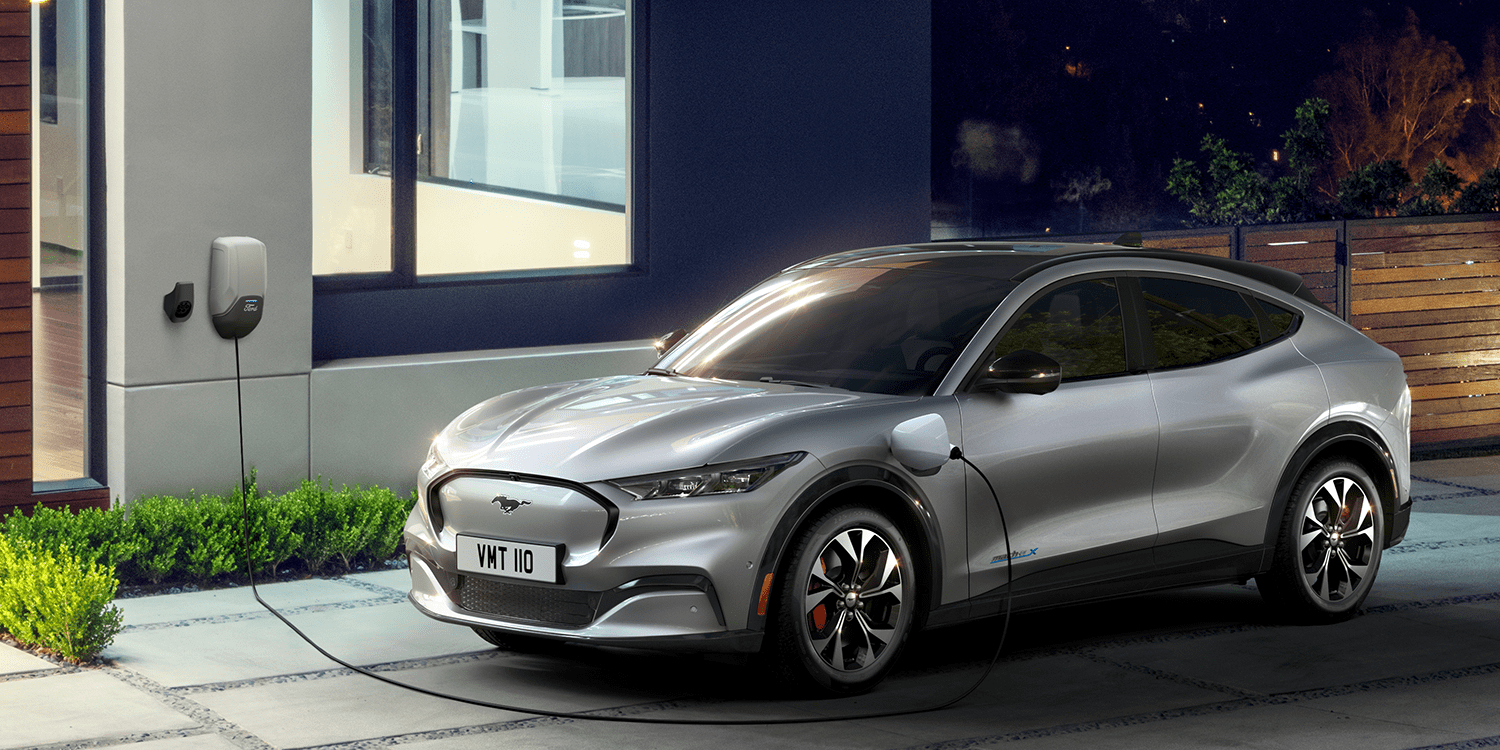
    For Ford Europe, the road towards zero-emission vehicles is being paved by a new generation of seven, all-electric, fully connected passenger vehicles, and vans, coming to Europe by 2024. Leading the charge are the Mustang Mach-E, which last year achieved maximum safety and green ratings from Euro NCAP and Green NCAP, and the E-Transit, which received the Gold Award from Euro NCAP for its advanced driver assistance systems.

    All the electricity sourced at the company’s manufacturing sites in Europe is already 100 per cent renewable. The planned production of electric vehicles in Cologne, Germany, is now expected to be 1.2 million vehicles over six years, with a total product investment of $2 billion, helping to bring more electric vehicles to customers in Europe. Ford’s BlueOval charging network has over 3 lakh charge points in Europe, while for Ford employees, 1,000 charging stations will be added to the company’s European sites by 2023.

  • Ford Shelves Plans To Manufacture EVs In India

    Ford Shelves Plans To Manufacture EVs In India

    Ford India has shelved its plans to manufacture EVs in India. The carmaker had as part of its ongoing business restructuring applied for the Indian Government’s Product Linked Incentive (PLI) scheme. Under the PLI scheme, Ford had considered utilizing one of its two manufacturing facilities to manufacture EVs for exports and domestic markets though it has now announced that it is no longer pursuing that avenue.

    In a statement, the company said, “After careful review, we have decided to no longer pursue EV manufacturing for exports from any of the Indian plants. We remain grateful to the Government for approving our proposal under the Production-Linked Incentives and for being supportive while we continued our exploration.”

    Ford India had announced a halt to its domestic car manufacturing operations in September last year, with manufacturing for export markets ending by the end of the calendar year. The company though had carried on manufacturing engines for export markets which too are set to close this quarter (Q2 2022).

    Coming to how this would affect its manufacturing facilities in India Ford commented, “Ford India’s previously announced business restructuring continues as planned, including exploring other alternatives for our manufacturing facilities. We continue to work closely with unions and other stakeholders to deliver an equitable and balanced plan to mitigate the impacts of restructuring.”

    Ford’s current restructuring plans involve moving to a CBU only line-up for the Indian market with models such as the Mustang and the all-electric Mach-e expected to be on the card for India with other models from its global range also likely to be considered. The company is also looking to sell its existing manufacturing facilities in the country with Tata Motors and Hyundai reportedly interested in acquiring the plants.

  • Ford dealer reports 36-fold profit increase

    Ford dealer reports 36-fold profit increase

    City Auto Corp, Vietnam’s largest Ford dealer, reported profits of VND51.8 billion (US$2.27 million) last year, a 36-fold rise from 2020.

    But it sold only 4,580 vehicles, 29 percent fewer than in 2020, and the increased profitability was due to the average price of each rising by 13 percent to VND915 million.

    The company attributed the decline in number of cars sold to last year’s Covid-19 outbreak and social distancing, but said business bounced back in the last quarter of 2021 thanks to post-pandemic economic recovery and the registration fee cut.

    It hopes to sell 8,820 units this year and double profits to VND104 billion, its highest ever.

    Opening new Ford dealerships and also distributing other car brands are part of its strategies to achieve the goals, it said.

    It did not exclude the possibility of acquiring other dealerships and selling electric vehicles.

  • Ford Says European Production Hit By Chip Shortage, Ukraine Conflict

    Ford Says European Production Hit By Chip Shortage, Ukraine Conflict

    Ford Motor said on Monday vehicle production and orders in Europe have been hit by the global semiconductor shortage as well as the conflict in Ukraine.

    The U.S. automaker said it will idle its German plants in Saarlouis and Cologne, mostly due to the global chip shortage. That also led it to stop taking new orders for the S-Max and Galaxy vehicles built in Valencia, Spain. Ford said it has orders for both products that take it beyond September and that existing orders will be fulfilled.

    Russia’s invasion of Ukraine also has caused parts shortages at a Volkswagen plant in Poland that builds Ford’s Tourneo Connect vehicle, leading to a temporary halt of production, Ford said.

    “We continue to monitor the situation on a daily basis in conjunction with our partners at VW and will have more to say on this at a later date,” Ford said in a statement.

    The Ukraine conflict has also led to supply issues that have forced Ford to offer consumers the Focus car with a smaller, 8-inch dashboard screen, instead of the 13.2-inch SYNC4 screen that was part of the updated vehicle’s introduction, the company said, without providing details.

  • Ford Aims To Be World’s Second Largest Electric Vehicle Maker Within Two Years

    Ford Aims To Be World’s Second Largest Electric Vehicle Maker Within Two Years

    Ford Motor expects to be the world’s second-largest electric vehicle manufacturer within two years, with an annual production capacity of nearly 600,000, a top company executive said Friday.

    The automaker’s optimism stems from the increasing demand for its next new EV, the Ford F-150 Lightning pickup, with retail reservations approaching 200,000, Lisa Drake, chief operating officer of Ford North America, said.

    Reuters reported on Wednesday that Ford likely would be vying with Stellantis for third place in the EV race by 2025, behind Tesla and the Volkswagen Group, based on production forecast data provided by AutoForecast Solutions.

    Speaking at an investor conference, Drake said Ford is working to vertically integrate more EV components, including power electronics and e-drives, at existing facilities that build parts for combustion vehicles – a modern take on founder Henry Ford’s pioneering work in building many of his own components.

    “We haven’t used ‘vertical integration in this industry in a long time,” Drake said, but “you’re going to hear it a lot more” as Ford and other automakers transition from combustion to electric vehicles.

    She said Ford working with five global battery suppliers to manufacture and help develop battery cells for its future EVs, aiming to build 240 gigawatt-hours of production capacity globally by 2030. Those suppliers include SK On, LG Energy Solution, CATL, BYD, and Panasonic.

    Ford expects to reduce EV battery cell cost to $80 per kilowatt-hour at the pack level “well before the end of the decade,” Drake said.

    The automaker is looking at different cell chemistries, including cobalt-free lithium iron phosphate, and cell-to-pack structural batteries to help reduce costs.

    Ford and BMW are working with Colorado-based startup Solid Power on developing solid-state batteries, which Drake said should be commercialized “well before the end of the decade.”

  • Ford Mustang Mach-E Production Delayed Because Of Global Semiconductor Shortage

    Ford Mustang Mach-E Production Delayed Because Of Global Semiconductor Shortage

    Ford is delaying shipments of Mach-E electric vehicles due to the global chip shortage that’s causing problems across all manner of industries. The company told affected owners their deliveries will be delayed by at least six weeks.

    In an effort to make up for the delay, Ford is offering an additional 250kWh worth of charging on the house, which should be good for around 700 miles of driving. That doubles the complimentary charging Mach E owners receive with their EV. The delay affects EVs that were scheduled for production between July 5th and October 1st.

    “We’d like you to know that while we’re working nonstop to deliver your very own Mustang Mach-E vehicle, we project your vehicle delivery will be delayed by a minimum of six weeks,” Ford wrote in an email to customers. “Once your vehicle receives the required chip, your vehicle status will be updated, and you’ll receive an email with an estimated week of delivery.”

    The semiconductor shortage has impacted production of a broad range of products in recent months. Along with EVs and other vehicles, game consoles, graphics cards, smartphones, Apple products and other goods have been affected. Ford cut vehicle production earlier this year due to the problem.

  • Rivian’s Amazon Delivery Vans Hitting Mass Production

    Rivian’s Amazon Delivery Vans Hitting Mass Production

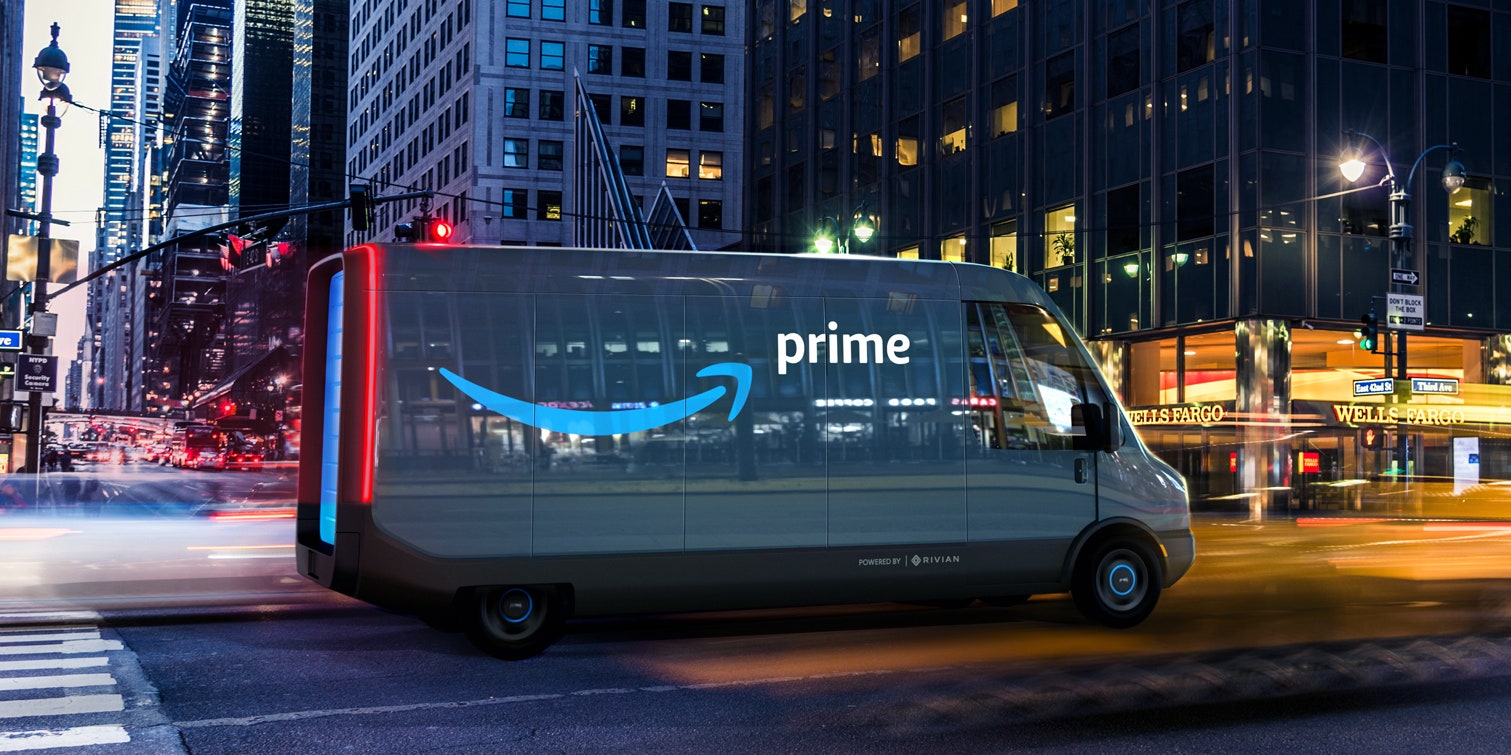
    Rivian is one of the hottest EV startups doing the rounds. It has deep pockets thanks to investments from Ford, Amazon, and many venture capital firms. Amazon’s investment in Rivian originally was $700 million which entailed the startup producing 100,000 electric delivery trucks. It was supposed to be delivering the first tranche of 10,000 vehicles by the end of 2022.

    Looks like Rivian is right on track with achieving the same. Its vehicles have already been popping up in cities like San Francisco, Denver, and Oklahoma – but these were prototype vehicles that were doing real-world testing.

    Rivian CEO and co-founder RJ Scaringe has posted a photo of eight Rivian vans which look identical to the one that Amazon has been teasing which even feature the “Powered By Rivian” signage. He also shared tweeted videos that showed the initial production process.

    A lot of it is not known about these vans as they have probably been customized and tailored for Amazon’s logistics. These vehicles are obviously different from the R1T and R1S vehicles which Rivian are going on sale soon in July and August.

    The R1T has been even showcased in the Apple TV+ original “the Long Way Up” and is expected to duel with the likes of the Tesla Cybertruck and the Ford F-150 Lightning.

  • Volkswagen, Ford To Exit Auto Finance Business In India

    Volkswagen, Ford To Exit Auto Finance Business In India

    The auto financing arms of Volkswagen AG and Ford Motor Co plan to stop giving new credit to car buyers and dealers in India and will exit from the country, sources aware of the development told Reuters. Volkswagen Finance Private Ltd, the German carmaker’s finance arm, stopped giving loans to car buyers in India last year and in May told dealers of all VW brands, which includes Volkswagen, Skoda and Audi, to find another financing, two sources with direct knowledge of the talks said.

    As some customers failed to make repayments, the finance unit has suffered losses, and will close for business by Dec. 31, the sources said.

    More than 50% of Volkswagen group dealers use credit from the finance arm, they said.

    Volkswagen Finance Private Ltd said in a statement that it had acquired a major stake in Indian loan brokerage portal KUWY Technologies to service its retail customers.

    It is in talks with dealers and will review its business strategy by the end of the year, the company said.

    The auto finance arms are classified as non-banking financial companies (NBFCs) and they compete with banks for providing credit. But banks have access to cheaper funding so can offer loans at lower rates than those offered by NBFCs or shadow lenders.

    To offset the disadvantage, Volkswagen and Ford would offer incentives to those dealers who have used their credit finance, the sources said.

    Dealers typically need credit to buy cars from automakers which they then sell on to customers.

    Volkswagen’s plan to exit the financing business has surprised dealers, coming weeks ahead of the launch of Skoda’s new sport-utility vehicle (SUV) to boost sales in India, the two sources said.

    Skoda dealers have been asked to find new financing by the end of the month – a tight deadline ahead of a new model launch, one source said.

    Ford Credit, the automaker’s financing arm, stopped lending to car buyers at the end of last year and will cease credit to dealers by June 30, two separate sources said.

    The decision to exit the financing business comes at a time when Ford is finalizing a new strategy for India after ending ties with Mahindra & Mahindra on Dec. 31.

    A Ford Motor India spokesperson said the company regularly assesses market conditions for its credit business and the decision to discontinue was conveyed to dealers in October – before it made any announcement on the Mahindra partnership.

    “We are confident the auto financing sector in India can support Ford customer and dealer new financing needs. Our team continues to service our existing book of business,” the spokesperson said, adding that 25%-30% of its dealers do business with Ford Credit.

  • Ford To Decide On India Investment Plan In Second Half Of 2021

    Ford To Decide On India Investment Plan In Second Half Of 2021

    Ford Motor Co expects to firm up capital allocation plans for India in the second half of 2021, a senior executive said in an email to staff, as the automaker overhauls its strategy in a loss-making market. Dearborn, Michigan-based Ford has tasked senior executive Steven Armstrong with evaluating investment plans for India in his new role as transformation officer, South America, and India, the automaker said in a separate statement this week.

    “We have a lot of work to do as we continue to assess our capital allocations in the market,” Dianne Craig, president of Ford’s International Markets Group (IMG), said in an email to staff on Wednesday, referring to India.

    “While we expect to have an answer in the second half of this year, the appointment of Steven…will help focus our efforts and speed up the process,” she said.

    IMG includes India, where the company employs more than 16,000, and 100 other markets.

    Ford India head Anurag Mehrotra will report to Armstrong, who previously headed the Changan Ford joint venture in China and will take on his new role from May 1, the company said.

    Confirming that the company expects to reach a capital allocation decision in the second half of the year, a Ford India spokesman said that the country is an important market and a source of global powertrains for its Ranger SUV.

    Ford has said previously it will allocate capital consistent with its plan to generate consistently strong cash flows and achieve an 8% company adjusted EBIT (earnings before interest and tax) margin.

    The automaker beat Wall Street’s first-quarter profit estimate late on Wednesday, telling investors all its markets under IMG were profitable except for India.

    CEO Jim Farley, who is overseeing an $11 billion global restructuring of Ford, wants to boost profits in India but the country is a lower priority than some other markets, sources said previously.

    Ford is not the first western automaker to struggle to win over India’s frugal buyers and turn a profit in a market dominated by Suzuki Motor Corp’s and Hyundai Motor’s extensive line-up of mainly low-cost cars.

    General Motors exited the domestic market in 2017 after 20 years, while Harley-Davidson Inc packed up last year after a decade of unsuccessful efforts to gain a foothold.

    Ford entered India 25 years ago but has a less than 2% share of the passenger vehicles market in the world’s second most populous nation, where car penetration is lower than in the U.S. and China.

    A tie-up with domestic automaker Mahindra & Mahindra, now called off, would have ended most of Ford’s independent operations in India but allowed it to launch new vehicles faster, at a reduced cost, and with lower investment.

    The two companies planned to develop at least three new SUVs and share powertrains.

    Ford will now need to pick vehicles from its global portfolio to sell in India, or develop new ones, a source said.

    The joint venture would have also helped Ford tackle low plant utilization in the country, which remains one of its biggest problems, the person added.

    Two years ago Ford used only around 60% of its total annual production capacity of 440,000 units across two Indian plants, with the pandemic reducing it to as little as 20% last fiscal year.