Tag: foreign investment

  • Foreign Funds Withdraw $50 Billion from Asian Equities in October

    Foreign Funds Withdraw $50 Billion from Asian Equities in October

    Foreign investors dumped a net $49.77 billion from Asian equities in October, marking the steepest monthly retreat from the region in four months. The selloff hammered technology-heavy markets as institutional funds balked at cloud providers’ soaring capital expenditures and weighed regulatory headwinds following United States midterm elections.

    Taiwanese equities absorbed the heaviest blow, logging $30.68 billion in net foreign selling, the largest monthly liquidation since at least January 2008. South Korea recorded $14.59 billion in net exits over the same period, data from LSEG showed.

    Taiwan and South Korea Bear Tech Selloff

    The regional exodus extended into this month, with cross-border funds cutting another $22.6 billion across seven tracked Asian equity markets. Taiwan recorded a further $19.76 billion in net foreign sales so far this month, while South Korea surrendered another $8.32 billion.

    Much of that pressure stemmed directly from hardware supply chains tied to data centres and advanced computing components. Investors pulled back on fears that tighter power, land and environmental regulations in the US could stall facility construction, curbing purchase orders for regional foundries and memory makers.

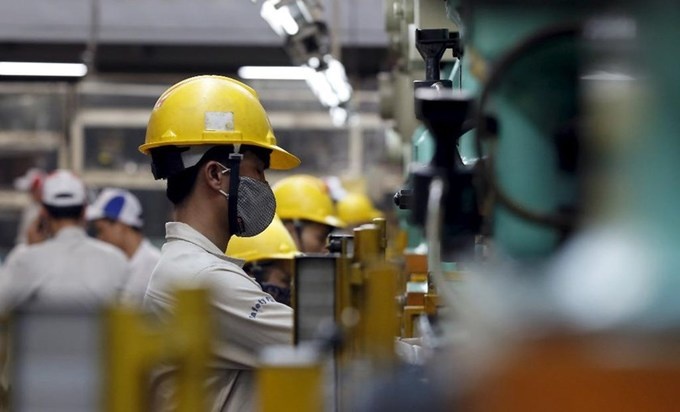
    The outflows reflect a retreat from AI-linked positions amid increased doubts about AI infrastructure spending and profitability.

    Exness lead financial market strategist Wael Makarem noted that tighter environmental reviews and regulations ahead of the US midterms were viewed as obstacles to data centre construction and chip demand.

    Yield Pressures and Global Reallocations

    Widening yield differentials accelerated the regional drawdown. The MSCI Asia Pacific ex-Japan index slid 6.91% in October, underperforming the broader MSCI All Country World Index, which slipped 1.69%.

    US debt markets offered higher risk-free returns during the month, drawing institutional capital away from emerging Asian paper. Yields on benchmark 10-year US Treasuries climbed to 5.3% in early October, dampening investor appetite for emerging equity risk.

    For hardware vendors and electronics groups listed across Taipei and Seoul, the capital flight tightens domestic liquidity and elevates corporate borrowing costs. Equipment makers and contract assemblers banking on relentless capacity expansions face a sharper funding climate if institutional sponsors stay cautious.

    Divergence Across Southeast Asia and India

    Southeast Asian bourses posted mixed performances through the October rout. Indonesian equities logged net foreign selling of $938 million, while Thailand recorded $199 million in net exits. Vietnam and the Philippines bucked the broader trend, drawing modest net foreign inflows of $122 million and $109 million, respectively.

    India experienced a second straight month of foreign outflows in October, losing $3.6 billion. Fund managers reversed that stance quickly once prices corrected, injecting a net $5.68 billion into Indian shares so far this month.

    HSBC equity strategy head for Asia Pacific Herald van der Linde lifted India to overweight on Monday, pointing to resilient corporate earnings and improved entry valuations.

    Capital Spending Scrutiny Ahead

    October’s $49.77 billion withdrawal represents the sharpest regional liquidation since foreign investors pulled capital in June. The rapid unwinding highlights how exposed regional bourses remain to changes in Western tech procurement budgets.

    Regional equity sentiment now rests on whether commercial returns from artificial intelligence software justify current hardware investments. Portfolio managers are watching upcoming corporate earnings reports and order volumes from US hyperscalers to see if institutional selling stabilises before year-end.
  • Keppel to Mobilize up to $1 Billion Through Vietnam Financial Center

    Keppel to Mobilize up to $1 Billion Through Vietnam Financial Center

    Keppel has joined the Vietnam International Financial Center as an inaugural member, setting up investment platforms to direct up to $1 billion into real estate assets nationwide.

    This week, the Singaporean group received its founding membership certificate from Truong Minh Huy Vu, vice chairman of the Ho Chi Minh City People’s Committee and head of the executive body for the center, known as VIFC.

    Alongside its own balance sheet, Keppel plans to source the bulk of the $1 billion from third-party institutional backers, deploying capital into commercial, residential and infrastructure property.

    Terms of the financial center platform

    The vehicle operates under the charter of the Vietnam International Financial Center, known as VIFC, which Vietnam’s National Assembly authorized in 2025. VIFC runs across dual hubs in Ho Chi Minh City and Da Nang under standalone regulatory rules designed to attract overseas capital.

    Those special rules permit direct foreign-currency settlements, offer tax incentives for registered projects and establish international dispute-resolution mechanisms outside the standard domestic court circuit. Truong Minh Huy Vu, vice chairman of the Ho Chi Minh City People’s Committee and head of the executive body for the VIFC, handed Keppel its founding membership certificate this week.

    Deployments remain contingent on project approvals, market conditions and external partner commitments. Keppel’s Real Estate Division will manage the vehicles, targeting urban developments that mix commercial, residential and retail square footage.

    The shift to fee-bearing asset management

    For cross-border developers, the vehicle shows how global real estate firms are restructuring their presence in Vietnam. Direct balance-sheet acquisitions in Southeast Asian emerging markets tie up heavy capital during lengthy land-clearance and permitting phases. By establishing third-party co-investment platforms, Keppel shifts toward fee-bearing asset management, spreading development exposure across global limited partners while retaining operating control.

    Institutional investors have historically treated Vietnam as a high-yield, high-friction destination. The legal ring-fencing provided by the VIFC, particularly foreign-currency transactions and international arbitration, addresses the primary governance risks that keep global pension funds and sovereign vehicles from underwriting Vietnamese projects at scale.

    Building on four decades in Vietnam

    Keppel entered Vietnam roughly forty years ago, steadily building an operating portfolio that now spans 30 real estate projects. Its registered capital in the country exceeds S$5 billion ($3.9 billion), making the company one of the largest foreign property players in the market.

    The company framed the new setup around long-term economic expansion rather than short-term trading gains.

    Keppel is honored to be selected as an inaugural member of the VIFC. This reflects our longstanding commitment to Vietnam and our confidence in the country’s long-term growth potential.

    Joseph Low, chief representative for Vietnam and president of Vietnam Real Estate at Keppel, confirmed the firm will work with municipal agencies and institutional partners to channel international funding through the center.

    Capital deployment targets to watch

    The financial center’s first 10 members have pledged to raise $2.7 billion for projects, with Keppel accounting for more than a third of that targeted total.

    Attention now turns to the specific asset pipelines Keppel puts forward under the VIFC structure, with the first co-investment vehicles expected to test how quickly municipal regulators process site approvals under the 2025 financial center decree.

  • Vietnamese Banks Plan Nearly $7 Billion in Share Sales

    Vietnamese Banks Plan Nearly $7 Billion in Share Sales

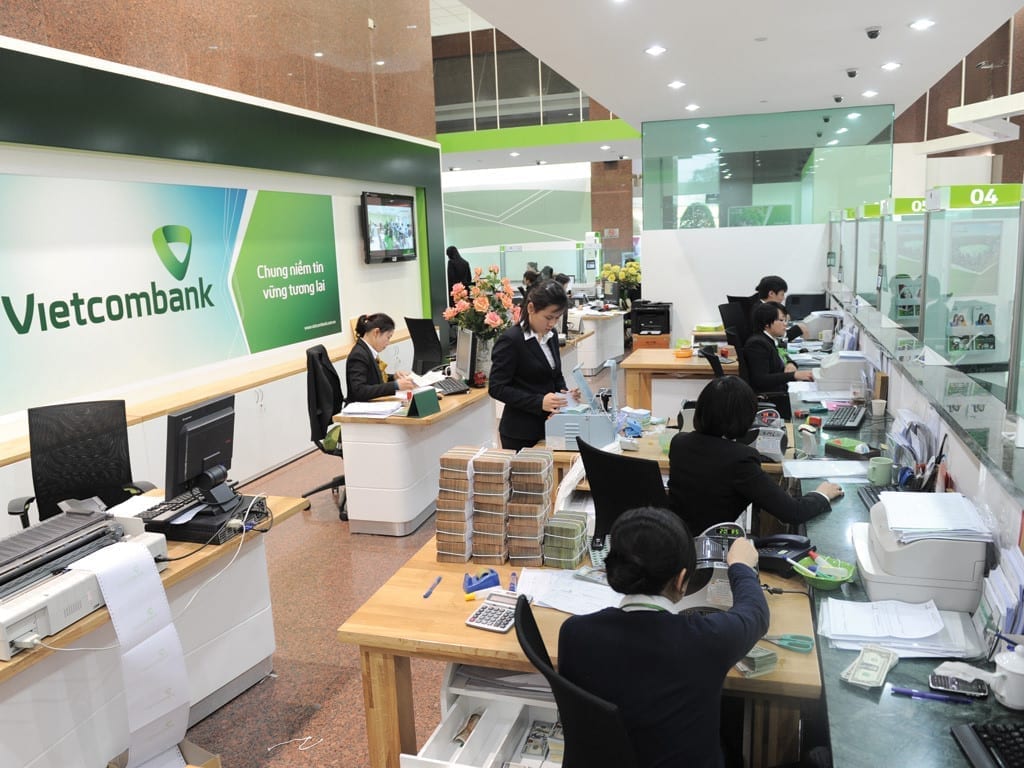
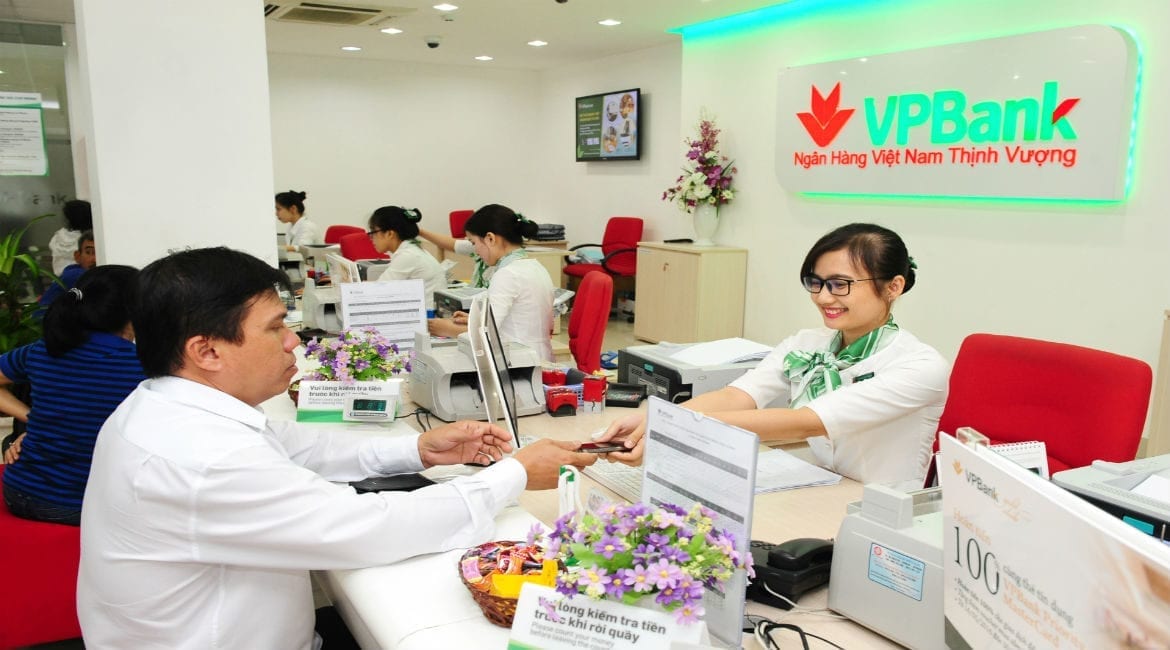
    Vietnamese banks are planning nearly US$7 billion in share sales as the country’s fast-growing economy fuels demand for capital in October 2026.

    The planned offerings open a window for foreign investors to expand in the financial sector after Vietnam reported economic growth of nearly 10 per cent in the last quarter.

    Access to the industry remains tightly controlled by state regulations, which cap cumulative foreign ownership in domestic lenders at 30 per cent and limit individual offshore stakes to 20 per cent.

    Foreign Ownership Limits Face Fresh Scrutiny

    The capital drive arrives as international asset managers reassess their allocations to Southeast Asian financial assets. FTSE Russell reclassified Vietnam as a secondary emerging market, a technical transition estimated to channel between $3 billion and $5 billion in portfolio inflows into local equities. For global funds, commercial banking counters offer the most liquid gateway to consumer spending, industrial real estate financing and retail supply chains.

    Foreign investors still face operational friction despite high domestic credit demand. Offshore funds often pay steep over-the-counter premiums to acquire shares from existing foreign holders when a lender hits its 30 per cent ceiling. Easing or selectively lifting these limits gives local banks direct access to long-term institutional capital, but state authorities remain cautious about ceding governance control in core financial intermediaries.

    Reforms Target Capital Market Modernization

    Hanoi has accelerated regulatory overhauls to modernize its broader corporate landscape. The government enacted more than 86 laws and 300 decrees since 2025, overhauling customs, commercial tax codes, digital banking operations and judiciary procedures under an economic program led by General Secretary To Lam. The administrative updates aim to transition the economy away from basic low-cost manufacturing toward higher-value tech assembly, modern logistics and formal retail distribution networks.

    These policy shifts follow long-term structural changes that elevated Vietnam to upper middle-income status in July 2026, according to World Bank classifications. National gross domestic product per capita passed $5,000 in 2025, up from under $700 when initial market-oriented Doi Moi reforms began in 1986. Annual economic expansion averaged more than 7 per cent following pandemic reopenings in 2022, reaching 8 per cent in 2025 on high export volumes and resilient domestic retail trade.

    Credit Growth Targets and Trade Pressures

    Maintaining high balance-sheet expansion carries operational risks for commercial lenders. Vietnam runs an export-heavy trading model where total trade turnover equals roughly 170 per cent of gross domestic product, leaving corporate borrowers exposed to overseas tariff shocks, geopolitical shipping disruptions and currency volatility. The World Bank projects national economic growth of 6.8 per cent for 2026 before accelerating to 7.1 per cent in 2027, citing corporate debt use and foreign-exchange pressures as key vulnerabilities.

    Bank executives now look to upcoming legislative sessions where lawmakers will review potential adjustments to foreign investment limits across strategic commercial sectors. Lenders must balance their new equity issues against state economic targets that aim for average annual GDP growth of at least 10 per cent through 2030.

  • Thai Protesters Slam Foreign Companies as GDP Growth Slows to 1.9%

    Thai Protesters Slam Foreign Companies as GDP Growth Slows to 1.9%

    Thai activist groups staged protests in Bangkok against Chinese, Israeli and other foreign businesses accused of bypassing local ownership caps through nominee structures as quarterly growth slowed to 1.9 per cent in the second quarter.

    The pushback targets foreign entities operating in protected commercial sectors without direct statutory permits, prompting authorities to consider widening an ongoing enforcement campaign against proxy shareholding arrangements.

    Scrutiny on nominee corporate structures

    Demonstrators gathered outside foreign diplomatic missions, including the Israeli embassy, in October 2026, citing widespread evasion of foreign business limits and labor regulations. Under current corporate rules, foreign ownership in designated services, retail and agricultural sectors remains capped unless granted specific board exemptions or bilateral treaty waivers. Activists argue that overseas operators increasingly rely on silent local shareholders to secure operating control while running competing storefronts and logistics networks.

    Thai regulatory agencies have responded by reviewing business registrations in tourism hubs, retail districts and agricultural centers. Investigators examine voting rights, dividend distributions and bank accounts to identify enterprises where domestic shareholders act merely as legal fronts for overseas capital.

    Commercial tension across local supply chains

    For international operators and regional suppliers, heightened scrutiny on corporate structures raises immediate compliance hurdles. Foreign retailers, distributors and franchise networks operating through joint ventures must prove authentic domestic capital participation or risk sudden operational halts and corporate deregistration. The risk sits directly with joint-venture operators that structured majority-local equity on paper while retaining sole operational and financial authority.

    Local merchant groups continue to press trade authorities for tighter enforcement, arguing that foreign-backed entities flood consumer channels with subsidized imports and operate unlicensed supply chains. This pressure complicates commercial expansion for regional businesses seeking market entry through fast-tracked partnership arrangements.

    Slowing domestic momentum and investment friction

    The regulatory tightening coincides with a broader deceleration across the domestic economy, where second-quarter economic expansion reached only 1.9 per cent due to higher energy expenses and soft tourism receipts. A shifting public mood tests the country’s historic reliance on foreign commercial investment to support private sector employment.

    Yet capital inflows into capital-intensive industries remain elevated. Total investment applications filed with authorities climbed 37 per cent during the January to June period, propelled by data centers and advanced manufacturing projects that operate under statutory promotional exemptions rather than local proxy setups.

    Enforcement reviews expand into commercial hubs

    Scrutiny follows earlier municipal sweeps against foreign-operated wholesale markets and agricultural supply firms that used local nominees to trade goods reserved for Thai nationals. Commercial enforcement teams have since expanded document audits across hospitality and retail districts in Bangkok, Chiang Mai and Phuket.

    Commercial registries and enforcement agencies are now set to audit registered corporate shareholding structures across high-risk service sectors, with initial compliance findings expected before year-end.

  • Foreign Funds Buy $4.7 Billion in Asian Equities Ending Nine-Month Selloff

    Foreign Funds Buy $4.7 Billion in Asian Equities Ending Nine-Month Selloff

    Foreign investors poured a net $4.72 billion into Asian equities in August. The buying ended a nine-month selling streak across seven regional markets. Strong hardware demand and better-than-expected corporate earnings drew international funds back to North Asian technology exporters after heavy selling in July.

    Capital flowed heavily into Taiwan, which took in $11.15 billion in net purchases during August. Fresh allocations continued into early September. Global funds added another $1.52 billion across regional bourses through Tuesday.

    Tech Earnings Power North Asian Rebound

    Quarterly profits from regional technology suppliers accelerated sharply, shifting market sentiment. Across Asia, 2,108 large and mid-cap companies tracked by LSEG beat analyst projections by an average of 10.2 per cent, posting 44.7 per cent overall profit growth. Technology exporters led the charge. Their profits surged 88.3 per cent.

    Suppliers in Taiwan benefited directly from higher revenue guidance issued by US hyperscalers including Amazon, Microsoft, and Nvidia. Broader markets gained ground as well. The MSCI Asia-Pacific ex-Japan index climbed 3.01 per cent in August, rebounding from a July low of 797.6.

    The latest foreign inflows appear to reflect a renewed AI allocation rather than a broad-based return to Asia.

    Divergent Flows Across Seoul and Southeast Asia

    Rallies bypassed parts of the region during August. South Korea recorded foreign outflows of $8.65 billion, extending net foreign selling in Seoul to a fourth straight month. Sentiment turned only in the first week of September. Overseas buyers then picked up $1.1 billion of South Korean shares alongside $1.45 billion in Taiwanese equities.

    India maintained steady foreign interest. The market pulled in $3.1 billion in August for its second consecutive month of net foreign purchases. Southeast Asian bourses presented a more fragmented picture. Indonesia and Vietnam recorded modest foreign inflows of $68 million and $11 million. Meanwhile, foreign funds withdrew $749 million from Thailand and $216 million from the Philippines.

    Earnings Visibility Counters Macro Risks

    Asset managers are targeting compute infrastructure rather than broad consumer recovery plays. For corporate treasurers and regional operators, these selective flows deepen the divide between high-margin tech supply chains and local consumer sectors.

    Market volatility persists as investors weigh high US bond yields against fluctuating energy costs. Attention now turns to third-quarter order books for regional semiconductor and component manufacturers to see if they match the optimistic guidance set by North American cloud buyers.

  • Foreign investment crucial to Vietnamese banks in 2019: Moody’s

    Foreign investment crucial to Vietnamese banks in 2019: Moody’s

    Most Vietnamese banks fall short of international capital adequacy norms and have to focus on attracting foreign capital this year, Moody’s has said. The credit rating agency said in a release Monday that “the underdevelopment of the domestic capital markets” means the banks would have to look to foreign investors to meet the capital requirement of 8 percent of risk-weighted assets to cover operational risks.

    Raising capital has been a struggle for Vietnamese banks in recent years. Major state-owned banks such as BIDV and Vietinbank have for long been making plans to increase charter capital but in vain.

    BIDV, the second largest listed bank, has had charter capital of nearly VND34.19 trillion ($1.46 billion) unchanged since 2015.

    Last November it planned to sell a 17.65 stake to South Korea’s KEB Hana Bank to increase it to over VND40.22 trillion ($1.73 billion), but the deal has not been consummated.

    Vietinbank, the fourth largest listed bank, has seen its capital remain unchanged since 2014 at VND37.23 trillion ($1.59 billion).

    Only Vietcombank, the largest listed bank in the country, last month raised VND6.2 trillion ($265.86 million) from selling a 3 percent stake to foreign investors, as part of its plan to ultimately sell 10 percent.

    BIDV and Vietinbank had offered to pay its largest shareholder, the State Bank of Vietnam (SBV), the previous year’s dividends in stocks and not cash to increase their capital, but the central bank refused saying it needed the cash.

    Moody’s added that the banks’ capitalization will strengthen this year because of stronger profitability and stable credit growth.

    It said that Vietnamese banks last year achieved a higher aggregate return on assets for a second year running, registering a rise of 1.1 percent from 0.9 percent in 2017.

    Aggregate net income for the banks rose 35 percent to VND70 trillion ($3 billion) in 2018 from the previous year, it said.

    “For 2019, Vietnamese banks that Moody’s rates will achieve a further improvement in profitability, again because of wider net interest spreads and lower credit costs,” said Rebaca Tan, a Moody’s analyst.

    “Credit growth will stay stable over the same period because of tighter control by the State Bank of Vietnam, and asset quality will improve further, as the banks continue cleaning up their balance sheets.”

  • Vietnam FDI disbursement in 2018 tops $19 bln

    Vietnam FDI disbursement in 2018 tops $19 bln

    Foreign direct investment disbursement in Vietnam reached a record $19.1 billion in 2018, a year-on-year increase of 9.1 percent. However, FDI pledges for new projects, capital supplements and stake acquisitions were down 1.2 percent from a year earlier to $35.46 billion, according to the Ministry of Planning and Investment.

    A total of 3,046 new projects have been granted investment certificates since the beginning of the year, with a total registered capital of nearly $18 billion. Nearly 1,170 projects registered to increase their capital by a total of $7.5 billion. The rest of the registered capital was reported in a total of 6,500 instances of capital contribution and share purchases by foreign investors.

    This year, foreign investors injected capital into 18 fields and sectors. The processing and manufacturing industry attracted the highest capital at $16.5 billion, followed by real estate with $6.6 billion, and wholesale and retail sectors with $3.6 billion.

    Japan ranked first in FDI contributions to Vietnam this year, followed by South Korea and Singapore. Localities that attracted the most FDI were Hanoi, Ho Chi Minh City and the northern city of Hai Phong.

    Meanwhile, Vietnam invested nearly $380 million abroad this year, mainly in banking and finance, forestry, and fishing. Vietnamese investors injected capital into 38 different countries and territories, with the highest investment in Laos, followed by Australia, the U.S. and Cambodia.