Tag: foreign

  • Malaysia Vows to Slash Reliance on Foreign Food by Half by 2050 for Enhanced National Food Security

    Malaysia Vows to Slash Reliance on Foreign Food by Half by 2050 for Enhanced National Food Security

    Malaysia has outlined an ambitious plan to decrease its dependence on imported food by half by 2050 in an effort to bolster national food security. This objective arises as the nation grapples with an annual food import expenditure hitting around 80 billion MYR, or approximately US$20 billion, as per the statement of Ahmad Zahid Hamidi, Deputy Prime Minister and Minister of Rural and Regional Development, on July 4.

    Phased Implementation

    The strategy is set to be executed in stages, with intermediate milestones set at a 15% reduction by 2030 and just over 30% by 2040, before eventually realizing the ultimate aim by 2050. Hamidi stated that the strategy would focus on maximizing the use of underemployed and unused land owned by branches under the Ministry of Rural and Regional Development. This land would be transformed into agricultural and livestock production areas in order to increase domestic food production capacity.

    Hamidi further elaborated that the food security program has been active for the past three years and has already contributed to stabilizing prices, specifically through broiler chicken and egg production initiatives.

    Domestic Supply and Stable Prices

    Hamidi emphasized that the purpose of the plan is not to rival commercial producers. Instead, its primary focus is to guarantee an ample domestic supply and reduce price fluctuations. By increasing local production, Malaysia aims to obtain a more reliable and sustainable food source, reducing its vulnerability to global market changes and potential supply chain disruptions.

    Questions & Answers

    What is Malaysia’s goal with respect to imported food?
    Malaysia aims to cut its reliance on imported food by 50% by 2050 in order to enhance national food security.

    How does the country plan to achieve this objective?
    Malaysia plans to utilize underused and idle land owned by agencies under the Ministry of Rural and Regional Development, converting it into agricultural and livestock production zones.

    What is the purpose of this initiative?
    The goal is to ensure a sufficient domestic food supply and reduce price volatility, not to compete with commercial producers.


  • Singapore Boosts Gold Market Role: Invites Foreign Central Banks for Secure Gold Storage Services

    Singapore Boosts Gold Market Role: Invites Foreign Central Banks for Secure Gold Storage Services

    Beginning in October, Singapore will permit foreign central banks and sovereign entities to store their gold reserves within its borders. This move is aimed at reinforcing Singapore’s standing as a regional hub for gold trading and storage. The city-state’s commercial vaulting capacity currently surpasses 2,000 tonnes. This capacity is utilized by a diverse array of market participants including bullion banks, institutional investors, and high-net-worth individuals, as expressed by Deputy Prime Minister Gan Kim Yong on a recent Monday forum.

    Strengthening the Gold Market

    In addition to providing secure storage, Singapore will cater to foreign central banks and sovereign entities desiring to actively manage their gold holdings. The Monetary Authority of Singapore plans to offer gold accounts to a select group of bullion banks based in Singapore. This initiative will enhance their capability to deliver gold-related services and liquidity to these entities.

    Deputy Prime Minister Yong believes that this move will enhance Singapore’s reputation as a safe and reliable jurisdiction where reserve assets can be securely held and actively managed. The city-state will also be able to connect these assets to wider market liquidity during Asian trading hours, further reinforcing its regional dominance.

    Gold Market Innovations

    Several innovative measures have also been announced to strengthen Singapore’s role in the global gold market. One significant measure includes the establishment of an over-the-counter gold clearing system by the Singapore Exchange by the end of 2026. Interbank trading is anticipated to grow from 2027 onwards.

    This revolutionary system aims to enhance trade processing, boost transparency, and support more efficient clearing and settlement. According to Yong, this will instill greater confidence in market participants to transact in Singapore. The new system will accommodate both large bars and kilobars, enabling standardized settlement during Asian trading hours.

    Large bars refer to 400-troy-ounce gold bars or approximately 12.4 kilograms, which are standard for institutional trading and settlement in London. Kilobars, on the other hand, are 1-kilogram bars that are popular in Asian markets and are accepted for delivery in Comex gold futures contracts in the U.S.

    DBS, Deutsche Bank, ICBC Standard Bank, JPMorgan, OCBC, and UOB have been reported as the six banks that will join as clearing members and contribute to the development of Singapore’s gold market.

    Questions & Answers

    What will Singapore allow from October?
    Starting from October, Singapore will allow foreign central banks and sovereign entities to store their gold reserves in the country.

    What benefits will the proposed gold clearing system bring to Singapore’s gold market?
    The proposed over-the-counter gold clearing system will streamline trade processing, enhance transparency, and support more efficient clearing and settlement, thereby bolstering market participant confidence to transact in Singapore.

    Which banks will be joining as clearing members to develop Singapore’s gold market?
    DBS, Deutsche Bank, ICBC Standard Bank, JPMorgan, OCBC, and UOB are set to join as clearing members to help develop Singapore’s gold market.

  • Thailand to Levy Taxes on All Foreign Online Purchases in Boost to Local Businesses

    Thailand to Levy Taxes on All Foreign Online Purchases in Boost to Local Businesses

    Beginning January next year, Thailand will impose taxes on all foreign goods sold through online platforms, thereby ending the current exemption on low-value imports priced under 1500 baht (US$46.30).

    Creating a Fair Market

    According to Panthong Loikulnan, the Director-General of the Customs Department, the objective of this move is to level the competition for local businesses and increase government revenue. The current situation gives foreign goods an edge over Thai businesses, putting Small and Medium-sized Enterprises (SMEs) at a disadvantage.

    New Tax System for Imports

    The newly instated system will subject all imported goods, regardless of their value, to customs duties and Value-Added Tax (VAT) as required by the law. This change supersedes the existing tariff exemption, which will be phased out by the end of this year.

    Goods priced below 1500 baht currently represent over 30 billion baht ($927 million) in annual imports. Loikulnan estimates that imposing an average 10 per cent duty could generate at least an additional 3 billion baht ($92.7 million) in government revenue each year.

    The proposed system will primarily rely on data verification from online platforms and random inspections to ensure compliance. Furthermore, Thailand’s customs department is currently in discussions with major e-commerce operators to directly link their sales and import data.

    Protecting Domestic Retailers

    Loikulnan believes that this reform will help establish a fair market for domestic retailers who are already paying taxes and are particularly impacted by the wave of low-cost imported products.

    In his opinion, delaying the implementation of such a system would put Thailand at a disadvantage since many other countries are grappling with the same issue: domestic sellers pay taxes, while foreign goods are imported tax-free.

    Lump-sum Tax Proposal

    For the long term, Loikulnan suggests introducing a “lump-sum tax”, which implies a flat rate of 20 to 30 per cent per imported package. This would simplify the system and increase efficiency. However, he acknowledges that such a change would necessitate legislative amendments and would take time to implement.

    Questions & Answers

    What is the objective of Thailand’s new tax system?
    The aim is to level the playing field for local businesses and increase government revenue.

    How will the new system work?
    All imported goods, regardless of their value, will be subject to customs duties and VAT. The system will rely on data verification from online platforms and random inspections to ensure compliance.

    What is the proposed “lump-sum tax”?
    The “lump-sum tax” refers to a flat rate of 20 to 30 per cent per imported package, suggested as a long-term solution to simplify the system and increase efficiency.

  • Vietnam launches website to tax foreign tech giants

    Vietnam launches website to tax foreign tech giants

    The tax department has set up a website for collecting tax from foreign companies to make it easier for tech giants like Facebook and Google to fulfill their duties.

    The Portal of the General Department of Taxation for Foreign Providers (etaxvn.gdt.gov.vn) came online Monday for companies to declare their tax and track their payments.

    Until now foreign companies were paying their taxes through a third party, but now they could pay directly, Nguyen Van Phung, head of the Large Enterprise Taxation Agency, said.

    By filling in their details on the website, businesses could see how much they need to pay and bank account details, he said.

    “Foreign companies can now pay tax at any time, even from an airplane”.

    Generally, foreign firms are required to pay value-added tax and corporate income tax every quarter. Phung said many foreign firms have been leaving their Vietnamese partners with the burden of their tax, he added. There are at least 64 foreign service providers active in Vietnam, according to tax authorities.

    Vietnam taxed cross-border platforms like Google and Facebook a total of VND5 trillion ($218.53 million) in 2018-21. Authorities have been calling for properly taxing tech giants like Facebook and Google, pointing out they account for around 70 percent of the online advertisement market but evade taxes.

  • Foreign buying on Bursa slows to RM146.8m last week

    Foreign buying on Bursa slows to RM146.8m last week

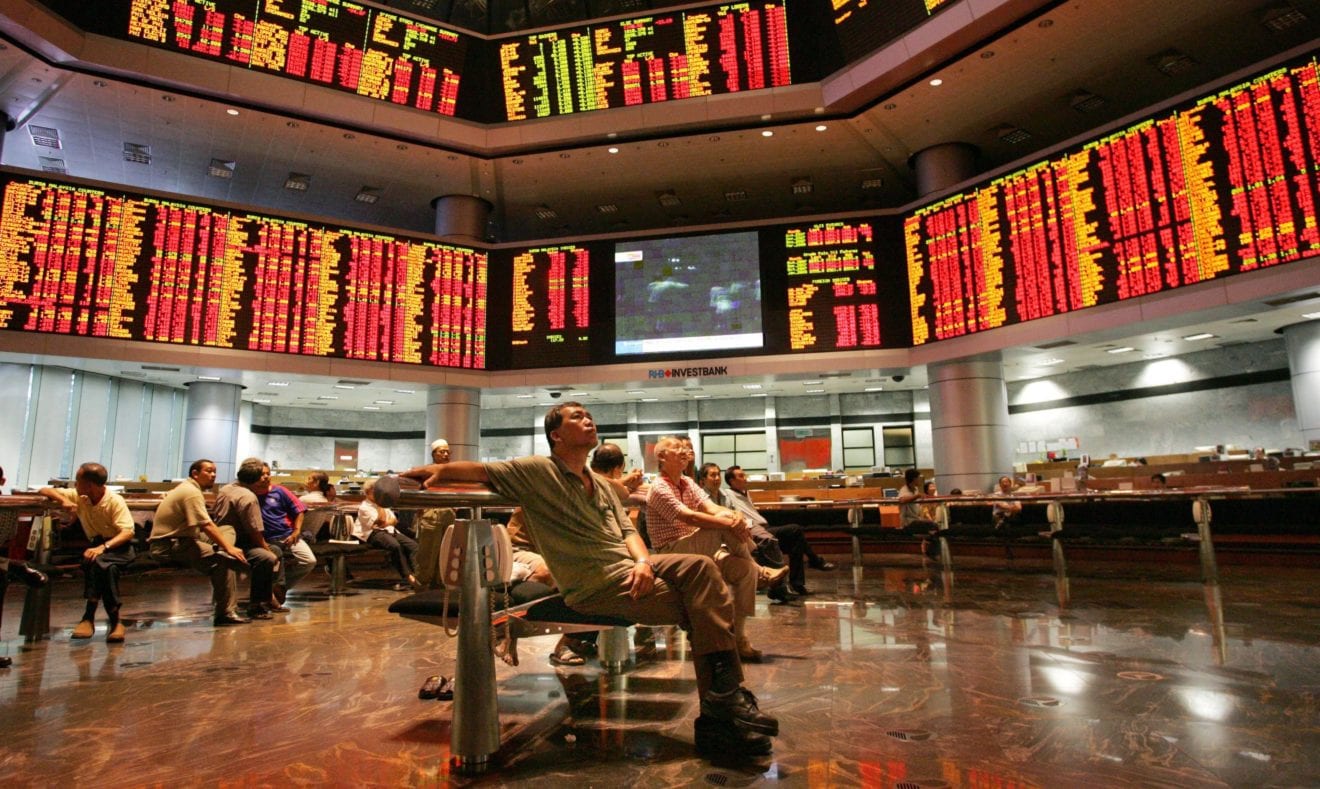
    Foreign funds snapped up RM146.8 million net of local equities last week during the holiday-shortened week. “Foreign funds resumed their entry into stocks listed on Bursa for the fourth consecutive week albeit at a slower pace compared to the preceding week,“ MIDF Research said in its weekly fund flow report.

    It said last Monday saw a moderate net inflow of foreign funds worth RM37.3 million, extending the daily buying streak to nine days. However, this foreign buying spree came to an end on the next day as international funds sold RM12.8 million net, coinciding with the local bourse’s 0.4% slide to settle at 1,690 points.

    Risk appetite was weak on Tuesday following the overnight 2.8% slump in Brent crude oil price combined with the anticipation ahead of the Sino-US trade negotiations.

    Notwithstanding this, offshore investors returned to Bursa on Wednesday at a tune of RM65.1 million net, the highest foreign net inflow during the week.

    The catalyst responsible for the boost of foreign net inflows on that day was 0.4% increase in Brent crude oil price as US President Donald Trump’s administration slaps sanctions on Venezuela’s state-owned oil company while Saudi Arabia had a deeper output cuts in January than initially pledged.

    The momentum of foreign net inflows continued on the last trading day of the week as foreign investors bought RM57.2 million net.

    “We opine that the sentiment was partially supported by the Malaysia’s exports in 2018 which grew by 6.7% to reach almost RM1 trillion. Meanwhile, the FBM KLCI was little changed, declining by less than 1% on Thursday ahead of the long weekend and festive season.”

    The month of January 2019 saw a foreign net inflow of RM1.03 billion or US$249.3 million, the first monthly net inflow since September last year.

    “In comparison with the three other Asean markets we monitor, Malaysia has the second lowest foreign net inflow while Indonesia leads,“ said MIDF.

    Foreign investors were the only group which saw a weekly increase in average daily traded value, jumping by 21.0% to remain above RM1 billion for the second week running.

  • Vietnam foreign investment skyrockets in January

    Vietnam foreign investment skyrockets in January

    FDI pledges for new projects, increased capital and stake acquisitions in Vietnam rose 51.9 percent year-on-year to $1.9 billion in January. In a statement Monday, the Ministry of Planning and Investment said the manufacturing sector attracted the most interest from foreign investors, accounting for $1.19 billion or 62.4 percent of the total FDI. Science and technology ranked second with $185.8 million, followed by real estate with $179.1 million.

    Japanese were the top investors with nearly $364 million. South Korea and China were next with $349.1 million and $307.8 million.

    Ho Chi Minh City is the most attractive location for FDI investors in January, accounting for around 39.1 percent of the total FDI. Southern Binh Duong Province ranked second, accounting for 12.5 percent, followed by northern Hai Duong Province with 6.5 percent.

    As of January 20 authorities had issued licenses for 226 new projects with a total capital of $805 million. Meanwhile, another $340.2 million was pledged for existing projects this month.

    The two biggest projects were Kyoshin Vietnam’s $134.7 million investment expansion in HCMC by Japanese investors to produce, process and export electrical components and molds, and Katolec Global Logistics Vietnam’s $65 million investment for warehousing and storing goods in the northern province of Ha Nam.

    Estimated FDI disbursement for the month was $1.55 billion, up 9.2 percent year-on-year.

    Vietnam reported FDI disbursement of $19.1 billion last year, up 9.1 percent.

  • China will continue to relax foreign investment rules for auto industry

    China will continue to relax foreign investment rules for auto industry

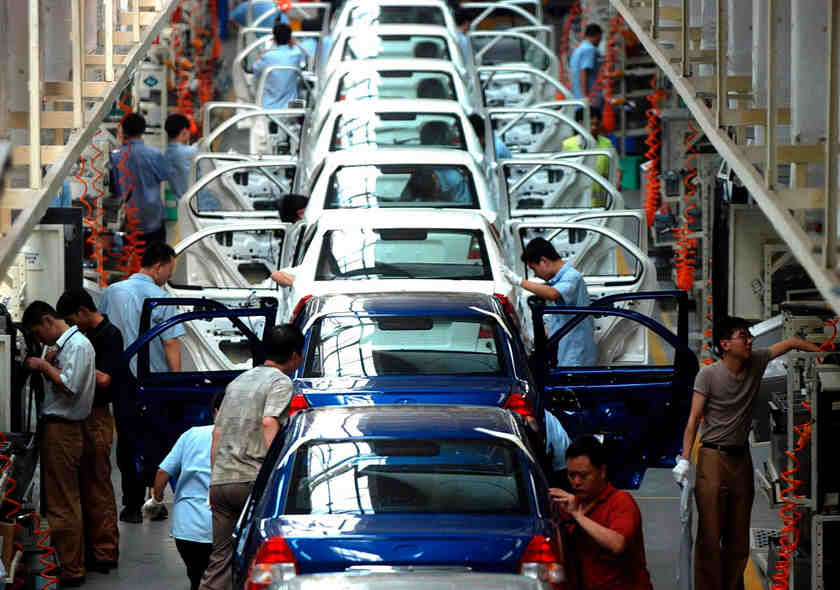
    China will continue to relax foreign investment rules for the country’s auto sector and other high end manufacturing, lifting restrictions in an orderly fashion, the commerce ministry said on Thursday.

    The government is preparing to further open up the new energy vehicle battery market to foreign investment, Ministry spokesman Sun Jiwen told a regular briefing in Beijing.

  • Many foreign banks have not complied with SMEs credit policy

    Many foreign banks have not complied with SMEs credit policy

    Bank Indonesia said many banks mainly branches of foreign banks have not complied with the call for setting aside at least 10 percent of their credits for micro, small and medium enterprises (SMEs) .

    Head of Bank Indonesias division for development of SMEs Yunita Resmi Sari in Jakarta said despite facility such linkage branches of foreign banks are still in difficulty in extending credits for SMEs as asked by the central bank.

    “We are aware that foreign banks have limited networks of branches and their capacity is not for SMEs,” Yunita said here on Thursday.

    In 2015, the central bank asked banks to increase the portion of their credits for SMEs by 5 percentage points a year to 20 percent in 2018.

    Yunita , the central bank is preparing a policy on SMEs credits from foreign bank branches.

    Until August, this year, more than 100 of the 119 banks in the country already set aside 10 percent of their credits for SMEs.

    Yunita said the SMEs credit market is still wide open , pointing out only 22 percent of 57.8 million units of SMEs have access to bank credits.

    SMEs account only 19.7 percent or Rp827.3 trillion of the total outstanding credits of banks in the country by the end of the second quarter of 2016.

    The SMEs credits grew 8.3 percent year-on-year in the second quarter of 2016.

  • New Rule for Foreign Internet Data and Content Providers

    New Rule for Foreign Internet Data and Content Providers

    The rapid development of the digital world has encouraged internet data and content providers to expand their business to developing countries like Indonesia. The problem is that Indonesia is not prepared for this development. Although there are almost 100 million internet users in Indonesia, this business is not adequately regulated.

    Today, internet data and content providers can run their businesses in Indonesia without having to establish a legal business entity in the country. Telecom operators, meanwhile, have to invest significant amounts developing the network infrastructure used by these ‘over the top’ (OTT) companies.

    Minister of communications and informatics, Rudiantara, said that regulations are to be put in force to govern the presence of foreign OTTs in Indonesia. “They will have to be permanent legal entities in Indonesia,” said Rudiantara, Jakarta, Friday (11/3).

    The government believes that consumer protection, equality before the law in tax matters, and properly handling of customer complaints are three reasons that these companies need to have a presence in Indonesia.

    Under current rules, collecting taxes from foreign OTT companies, which are not registered in Indonesia, is difficult. Meanwhile, the telecom firms that provide internet services that are vital to the running of the OTT business in Indonesia, pay substantial amounts of tax to the government.

    Data from the Ministry of Communications and Informatics revealed that the value of digital advertising, a major source of revenue for OTT firms in Indonesia, was more than US$ 800 million a year ago. “Two major global firms account for seventy percent of digital ads,” he added.

    While Rudiantara admitted that setting up a permanent business entity in Indonesia is not easy, the government will make it easier by offering three options: setting up a business entity individually, entering into a joint venture with other companies, or partnering with a mobile operator in the country.

    The new rules, which are expected to be passed early next month, aim to benefit the Indonesian people as users of OTT services. “Indonesia is not just a market; the people of Indonesia should benefit from this, too,” said Rudiantara.

  • Foreign wine imports to hit Myanmar’s shelves

    Foreign wine imports to hit Myanmar’s shelves

    U Tin Ye Win, a commerce ministry director in Nay Pyi Taw, said three or four companies have been granted licences, and several more are in the process of applying, but have not yet met all the requirements.

    Premium Distribution Company has been importing wines from South Africa and Italy since late November and Loi Hein Group has been granted an exclusive licence to import Thailand’s Spy wines. “These suppliers are well-experienced and will influence the whole market,” U Tin Ye Win said.

    Further liberalisation will depend on whether wholesalers buy wine imports from the official suppliers, or choose to continue selling cheaper illegal imports, he added.

    Shops are not allowed to sell foreign-made liquor under the current laws. While large supermarkets stick to the rules, smaller shops sell a range of illegally imported foreign brands, such as Johnnie Walker. If sellers switch to legal wine imports, officials may soon allow foreign liquors to be distributed, U Tin Ye Win said.

    The commerce ministry also needs to discover which companies have been dodging taxes by, for example, paying for 100 bottles but importing 100,000. However, it remains hard to keep track of the exact number of bottles entering the country, he said.

    A Ministry of Commerce notification in March said importers must register for a company trading licence and must have a dealership.

    This means they must first secure their licence and then contract a dealership with one or more foreign wine companies, before applying for an FL11 licence from the General Administration Department. This licence allows distribution of foreign liquor brands, which are taxed at 82 percent – 30pc customs duty, 50pc commercial tax and 2pc income tax.

    Importers must pay tax on every bottle, and ensure that ingredients are displayed in English. They can only import by sea or air – not by land – and must declare the country of origin. Suppliers must also ensure that products are Food and Drug Administration-approved, and have a certificate of free sale from the Ministry of Commerce, industry sources said.

    Beyond the big suppliers, DTR Company was set up last April specifically to apply for a wine licence, and has been importing French wines since October. Managing director Ko Thiha Sitt said the company distributes six wine brands for K10,000 to K30,000 a bottle to wholesale, retail, bar, hotel and restaurant markets in Yangon and Mandalay. The company plans to expand to other tourist hotspots in the near future.

    “I understand that this will take some timeas we are in the period of transition, but strongly believe that the government will take serious action on illegal importations,” he said.

    In the past, the Myanmar Customs Department has held auctions of confiscated products at a discount to licenced products and revenues went to the Internal Revenue Department.

    Now the auctions are a thing of the past, and officials say they are toughening up. New tax labels are more secure, and tear as soon as the bottle is opened, he said. In addition, a unique code is printed on the labels of licenced importers.

    It was easy to re-use the old-style tax labels, by peeling them off and sticking them to new bottles, and people made money by collecting labels and selling them to wholesalers and retail outlets, said Ko Thiha Sitt. “We can now guarantee our products, so customers can’t complain,” he said.