Retail News CRM

Tag: Foreigners

  • Foreigners in Vietnam face settlement headache

    Foreigners in Vietnam face settlement headache

    The foreigner community has high expectations for quality apartments with synchronized amenities and a favorable location, though good housing options remain limited.

    According to a survey by InterNations, in 2021, Vietnam ranked among the top 10 countries with a foreigner satisfaction rating of more than 86 percent. It was proved in particular by the fact that 9 percent of expats in Vietnam had an annual income of more than $250,000, compared to only 3 percent globally, giving the domestic real estate market, particularly in the high-end and luxury segments of residential and vacation property, a certain customer base.

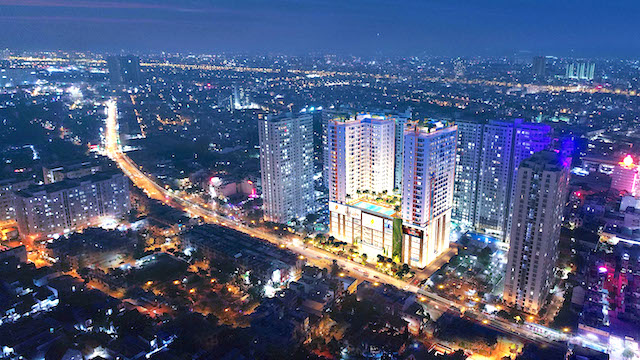
    To provide foreigners the best living options, Phu Thinh Green Park offers more than 500 smart apartments designed to high-quality standards by Phu Thinh Group. Located in the Ha Dong administrative center with numerous corporate headquarters and international organizations, Phu Thinh Green Park is surrounded by a series of important routes, including Quang Trung, Tran Phu, Nguyen Trai, Le Trong Tan, To Huu, Phuc La, Xa La, Nguyen Xien, and Hanoi metro stations. These customers are mostly experts, high-income employees with strict requirements for living quality, facilities, and proximity to expat communities. However, it is difficult for a foreign specialist to access suitable rental housing that meets excellent living standards and apartment quality, even in a big city like Hanoi.

    Residents can also walk within five minutes to the metro station, supermarkets, commercial centers, administrative centers, hospitals, schools, and golf courses. Foreign tenants who prefer public transportation will soon have the option of taking the Cat Linh – Ha Dong railway. Furthermore, the project is well connected to Thang Long Avenue, where tens of thousands of international professionals work.

    The internal utility system meets all living needs for residents via a 300 square meter overflowing swimming pool, A-class offices, commercial centers, landscaped parks, and rooftop cafes.

    Green Park Phu Thinh is located next to a 100-hectare sports park with four fresh seasons, suitable for recreation and entertainment. The bulk density of trees is like a natural air conditioner for the local atmosphere. The temperature on summer days is usually 2-3 degrees Celsius lower than in other regions.

    Moreover, Phu Thinh Green Park is a place of cultural interference of different countries, which creates a community with diverse lifestyles. Located between the Hyundai Hillstate area and Booyoung Residence, Phu Thinh Green Park attracts a lot of foreigners, mainly from Japan, China, and Korea.

    A square meter in Phu Thinh Green Park costs VND27 million ($1,170). The project is now open for sale during the third quarter of 2021. Documents and handovers are legally transparent to ensure the rights and profits of customers. With each apartment handed over, the basic equipment system will be installed according to standard amenities.

    “Synchronous development of traffic infrastructure of Ha Dong District is strictly guaranteed for a rental profit of 5-6 percent per year and/or a high capital growth of 30-50 percent in the next two to three years. Green Park is suitable for real estate investors expecting high profits and safety,” a project representative said.

    In early 2021, due to the sharp increase of iron and steel prices and transportation costs, the value of an apartment could exceed the purchase price, he added.
  • Japan’s malls and restaurants brace for Olympics without foreigners

    Japan’s malls and restaurants brace for Olympics without foreigners

    Shopping malls and restaurants in Japan will miss out on a business boom, as Tokyo expects to hold the Olympics without overseas spectators, dealing another blow to industries already on the ropes from the coronavirus.

    In the years leading up to the Games, developers have poured tens of billions of yen into shopping and dining complexes to serve an influx of foreigners, with major investments made in Tokyo’s central Shibuya district, iconic for its scramble crossing.

    But the number of foreign visitors has dropped from nearly 32 million in 2019 to almost zero, causing the government to halt a spending survey that showed their consumption that year was worth 4.5 trillion yen.

    Now Tokyo 2020’s expected decision to block foreigners from attending the Games means a boost the service sector was counting on to recover lockdown-related losses will not materialize.

    “There was so much development, with new buildings being constructed, but people aren’t coming at all,” said Ryota Himeno, an analyst at JP Morgan Securities Japan.

    Up to eight million tourists visited Shibuya’s bustling clubs and cafes in 2019, and ward chief Ken Hasebe expected 10 million in 2020 before the coronavirus scuppered those plans.

    Himeno says that projected growth prompted developers to spend more than 300 billion yen in the district, which is also home to some venues from the 1964 Olympics.

    The most imposing of the new developments is Shibuya Scramble Square, a 230-meter glass tower that has come to dominate the skyline since opening in 2019.

    Its developer, Tokyu Corp, spent 110 billion yen on projects in Shibuya in the three years through 2020.

    “Our financial results are unfortunately expected to fall into the red in the current period,” said Tokyu’s Ryosuke Toura, with hotel businesses taking the biggest hit, followed by railways and retail.

    Across the Shibuya station, at Masaka, a vegan restaurant inside Parco department store, which reopened after years of renovation in time for the Olympics, foreign tourists used to make up as much as half of the clientele.

    Manager Yuta Namekawa is now pinning his hopes on growing awareness of vegan food among locals, thanks in part to people watching documentaries about the meat industry on Netflix.

    “Part of the reason why the restaurant was opened was because of the Olympics, so it’s quite worrisome if that isn’t happening,” he said. “It can’t be helped.”

  • Indonesia plans emergency law to let foreigners buy apartments

    Indonesia plans emergency law to let foreigners buy apartments

    Property sector needs reform to attract investments, says minister. Indonesia plans to issue an emergency law – known as a perppu – to break an impasse of more than a decade in efforts to streamline unfriendly laws as the country aims to allow foreigners to purchase apartments in Indonesia.

    The government had in the past repeatedly tried to move forward and set regulations to allow foreigners to own apartments in South-east Asia’s biggest economy.

    But they were never able to get these implemented because the basic stipulation under Indonesia’s 1960 Agrarian Law is that foreigners just cannot own homes in the country, Coordinating Minister for Political, Legal and Security Affairs Luhut Pandjaitan said.

    “But the era has changed now. The property sector needs a reform so we could attract foreign investment. Foreigners should be allowed to buy apartments – but not landed houses – even if they don’t hold Kitas (Indonesia’s residence permit),” Luhut told The Straits Times.

    “It is similar to that in Singapore,” he added.

    Indonesia’s Constitution gives the President the right to issue a rule in lieu of law (perppu) when he determines that an emergency in the country requires it.

    A perppu is immediately effective after the President signs it, and Parliament can either let it remain effective or end it within a year after the perppu is issued.

    Luhut said the perppu that covers a new rule allowing foreign investors to buy apartments is one of between four and five perppu that Indonesia plans to issue by August, to resolve other obstacles hindering the government reform programme.

    “This is a revolutionary step to address such problems,” he said.

    A so-called debottlenecking working committee has been set up to identify problematic and protracted clauses in all laws.

    “We will comb all legislations that overlap with each other,” Purbaya Yudhi Sadewa, who heads the working committee, told The Straits Times.

    The perppu will supersede only the problematic clauses in each law and serve to bypass them, Luhut said.

    He added that one perppu could address problems in five to more than 10 existing laws, and about 80 per cent to 90 per cent of the existing laws can be harmonised.

    Issuing perppu is a normal practice that some foreign governments, such as the United States, also use, Luhut said, adding that the term used in the US is “presidential Act”.

    In May, President Joko Widodo signed a perppu that allows courts to increase penalties for sex crimes, which include for the first time chemical castration and death sentence, after the media highlighted a growing number of attacks against children.

    Previously, the maximum sentence for a child sex offence was 15 years’ jail. Indonesians have mostly welcomed the move.

    Amending existing laws through the normal process, by proposing Bills to Indonesian Parliament, can drag on for several years, and in some cases, proposed Bills were thrown out.

    Numerous government reform programs in Indonesia in the past decades have hit a snag due to conflicting laws that need amendment.

  • Foreign Travel Agencies Expanding into Yogyakarta

    Foreign Travel Agencies Expanding into Yogyakarta

    The competition in travel agency business is getting stiffer in the wake of the free trade agreement of ASEAN Economic Community (AEC). The free trade agreement implementation has seen foreign travel agencies competing directly with local agencies, including in Yogyakarta.

    “Foreign travel agencies have been expanding into Yogya in the past two years,” said Edwin Ismedi Himna, Counsellor of Asita Associatoin of The Indonesia Tour & Travel Agencies (Asita) Yogyakarta.

    He said that the foreign travel agencies are originated from Korea, Japan, the United States and France.

    The free trade agreement implementation will see foreign travel agencies handle both domestic and overseas vacation packages. “Local agencies are being left behind despite efforts [to compete] by setting competitive or cheaper prices,” Edwin said.

    According to Edwin, of 190ish current member travel agencies incorporated in Asita Yogyakarta, only 30 percent are still handling  European and American tourists. “Most agencies prefer to keep targeting Asian tourists that are deemed to have more potential by exploiting short-haul destination programs,” he said.