Retail News CRM

Tag: Forever 21

  • Forever 21’s Fourth Attempt: Reinventing Brand Presence In Chinese And North American Markets

    Forever 21’s Fourth Attempt: Reinventing Brand Presence In Chinese And North American Markets

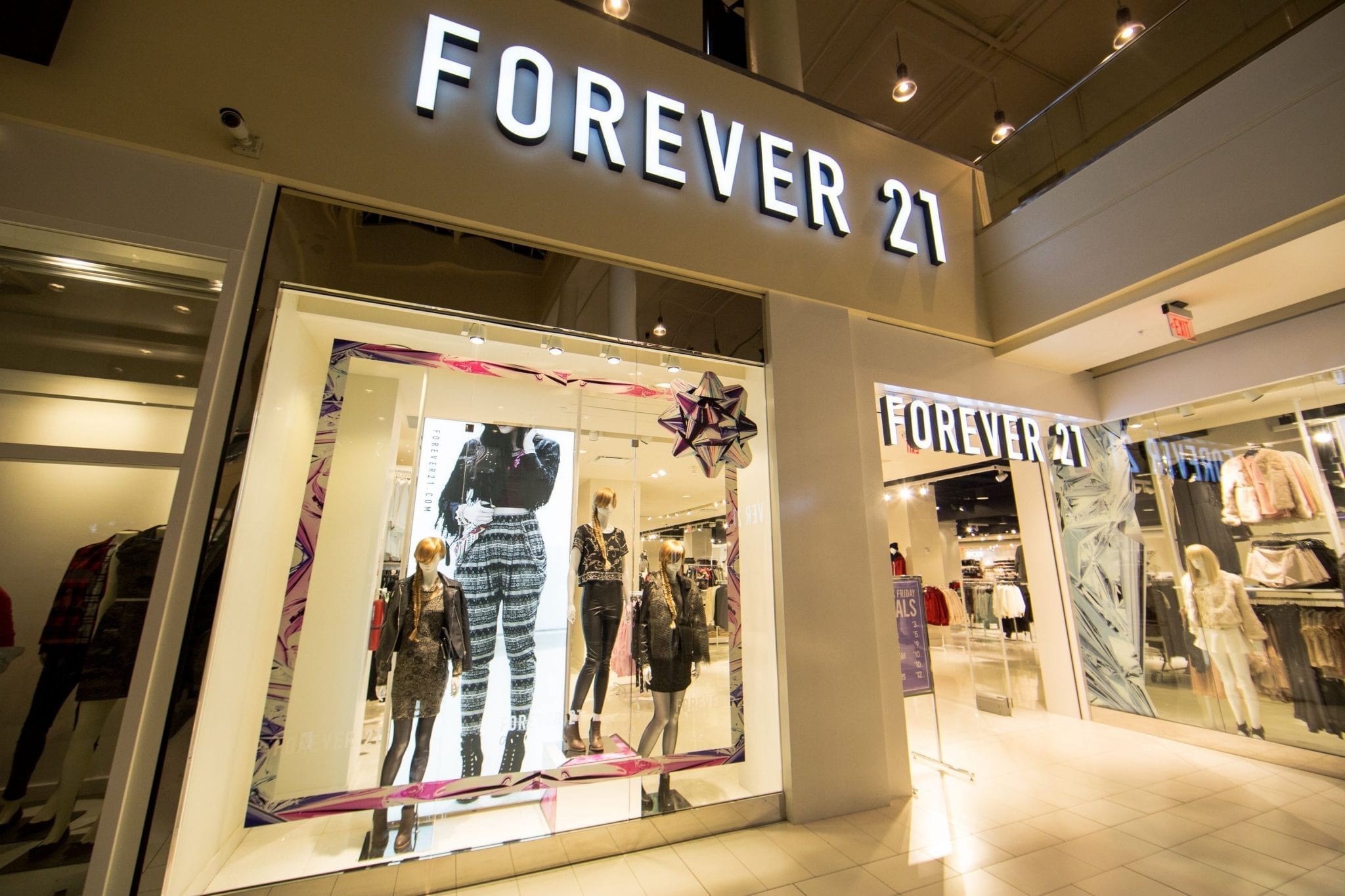
    Renowned fast-fashion retailer, Forever 21, is poised to venture once again into the Chinese market for the fourth time. The brand’s previous three attempts, beginning in 2008, were unsuccessful in maintaining a solid foothold in the second-largest global economy.

    Reviving the Brand: Future Prospects

    Beyond its focus on China, Forever 21 also aims to revitalise its presence in the North American market. To support this endeavour, the brand is currently in search of a strategic partner, with an announcement to follow in the near future, according to Authentic Brands Group (ABG), the holder of Forever 21’s worldwide intellectual property rights.

    The primary emphasis of the brand for the foreseeable future is on strengthening its market position in both China and the United States, as disclosed by ABG in a recent press briefing.

    Bankruptcy and Recovery

    In March, Forever 21 declared bankruptcy in the U.S. for the second time in six years. The brand also revealed plans to phase out domestic operations due to the increasing pressures of online competition in the fast-fashion industry, coupled with dwindling traffic in shopping malls.

    Following its third relaunch in China in 2022 and the opening of several retail outlets beyond the country’s primary fashion hubs, Forever 21’s operations gradually diminished towards the end of 2024.

    Re-emergence and Partnerships

    However, the brand is making a comeback, creating a buzz with its famed bright yellow branding appearing in major Chinese cities. Marketing events at music festivals and Forever 21 advertisements within Shanghai’s metro system have marked the brand’s return.

    For its latest endeavor, ABG is collaborating with brand operator Chengdi, a firm partly owned by e-commerce giant Vipshop Holdings. During a press launch in Shanghai, Chengdi expressed its intention to localize operations and attract a new generation of young consumers, with plans to open more brick-and-mortar stores in 2026.

    CEO’s Remarks on the Acquisition

    Jamie Salter, CEO of ABG, had previously described the acquisition of Forever 21, which was purchased from bankruptcy in 2020, as “probably the biggest mistake I made.” However, when asked about these remarks recently, an ABG spokesperson clarified that Salter “has always believed that having Forever 21 as part of ABG is a good idea and he continues to maintain that belief.”

    Questions & Answers

    What is Forever 21’s future strategy in the global market?
    Forever 21 aims to reestablish its presence in the Chinese and North American markets, with plans to seek a strategic partner for the North American relaunch.

    What led to Forever 21’s bankruptcy and eventual recovery?
    Increasing online competition in the fast-fashion industry and declining mall footfall led to Forever 21’s bankruptcy. It’s recovery has been marked by a strategic relaunch and partnership with Chengdi in the Chinese market.

    What did ABG’s CEO Jamie Salter mean by his comments regarding the acquisition of Forever 21?
    Jamie Salter had previously expressed regrets about acquiring Forever 21. However, an ABG spokesperson clarified that Salter continues to believe in the brand’s potential as part of ABG.

  • Gucci America goes into battle with Forever 21

    Gucci America goes into battle with Forever 21

    Gucci America has filed a lawsuit against US fast-fashion retailer Forever 21 for allegedly copying its trademark “blue-red-blue” and “green-red-green” stripe webbing.

    Included in the filing in a Californian district court is a motion to dismiss a Forever 21 complaint against a threat of trademark litigation from the Italian luxury brand, and counterclaims of trademark infringement and dilution as well as unfair competition.

    “Gucci America brings these counterclaims because Forever 21 has challenged its most valuable and widely known marks,” says the document, “and further because Forever 21’s legal assault, like its business model, is built on undermining the very notion of trademark protection, which is of critical importance to Gucci America’s brand.”

    The lawsuit follows cease-and-desist letters Gucci sent the retailer over of its use of the stripe webbing on several items. The pieces include silver and floral bomber jackets, a jumper featuring a butterfly, a jumper with a green tiger motif, and a choker – all lookalike designs with striped webbing. The items are not currently listed on the Forever 21 website.

    Forever 21 filed its case in June, seeking protection against a threat of trademark litigation. Its complaint said Gucci should not be allowed to claim that it alone has a monopoly on all blue-red-blue and green-red-green striped clothing and accessories.

    Responding to the latest action, Forever 21 says it brought its lawsuit because it believes its position has merit.

    To prove trademark infringement, Gucci must demonstrate a high degree of possibility that a consumer seeing the Forever 21 items could be deceived into believing they may be Gucci products or part of a collaboration with Forever 21.

    Forever 21 is already being pounded by lawsuits this year from other international brands.

    German sportswear brand Puma, also owned by Gucci parent Kering, this year filed a lawsuit claiming Forever 21 had copied three shoe designs from its Fenty Puma by Rihanna collection.  Swimwear brand Mara Hoffman is also suing Forever 21 for infringing copyright of its leaf print, and another German sportswear company, Adidas, claims Forever 21 has used its three-stripe trademark on footwear and clothing.

  • Forever 21 returns to Japan with new upscale image

    Forever 21 returns to Japan with new upscale image

    TOKYO — U.S. fast-fashion chain Forever 21 returned to Japan on Tuesday, more than three years after pulling out of the country, aiming to break away from its former mass-production image with items tailored to Japanese tastes and an emphasis on responsible environmental practices.

    The store started selling products online on Tuesday morning through an e-commerce site operated by Japanese apparel company Adastria. It also opened a limited-time pop-up store in Tokyo’s bustling Shibuya district on the same day.

    “I feel like their prices have gone up, but the fabric seems durable so I could probably wear them for a long time,” said a woman in her 20s who visited the pop-up store, where people were lining up before the 11:00 a.m. opening. She had viewed the products online, but visited the shop to check the quality of the fabric.

    The company plans to open its first permanent store in Osaka in April. It aims for 15 stores in the country by February 2028, with sales including online totaling 10 billion yen ($74.5 million).

    Forever 21 made a full-scale entry into Japan in 2009, operating about 20 stores at one point and leading the fast-fashion boom in the country. But the rise of online shopping and changes in consumer tastes cut into sales, leading the American parent company to file for Chapter 11 bankruptcy protection in September 2019.

    The retailer withdrew from Japan in October of that year. In 2022, Japanese trading house Itochu bought the rights for the brand in the Japanese market from a U.S. investment fund that acquired Forever 21 in 2020. Itochu signed a sublicense agreement with Adastria.

    About 80% of the company’s new collection was developed by Adastria for Japanese consumers, with the average price of items set around 4,000 yen. Forever 21 aims to position itself as a brand that offers both affordable prices and high fashion sense, focusing on women in their teens to 30s.

    The company is taking environmentally friendly initiatives such as improving inventory control, collecting used clothing and reducing the amount of water used during denim processing, hoping to move on from fast fashion’s image of producing, selling and disposing of mass quantities of clothing.

    The Tokyo pop-up store is open until Sunday, and most items on display must be purchased online. In March, another pop-up shop will open at a mall in Yokohama, south of Tokyo.

  • American Eagle and Forever 21 to make a return to Japan

    American Eagle and Forever 21 to make a return to Japan

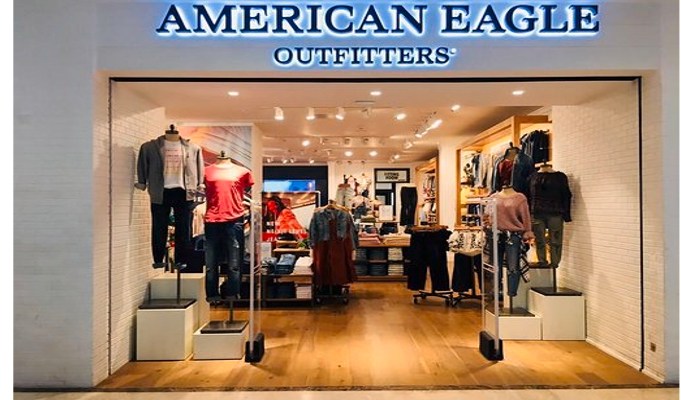
    Forever 21 and American Eagle Outfitters Inc. are set to return to Japan after both U.S. fast-fashion brands exited the market in 2019, according to company announcements on Wednesday.

    Forever 21 will begin e-commerce sales next February and open a physical store in the spring, according to Japanese trading company Itochu Corp., which acquired domestic sales and licensing rights for the brand.

    Forever 21 was acquired in 2020 by New York-based Authentic Brands Group (ABG). Itochu said in August it was working with ABG to expand Eddie Bauer stores in Japan after that brand closed its last shop in the country in December 2021.

    American Eagle said separately it was returning to Japan with two flagship stores in the Tokyo neighborhoods of Shibuya and Ikebukuro in October. The brand had only been available online in Japan following the closure of its last physical stores in 2019.

  • 7-Eleven launches apparel range with Forever 21

    7-Eleven launches apparel range with Forever 21

    Forever 21 has teamed with 7-Eleven to launch a casual apparel range, featuring the US convenience chain’s famous logo and soft drinks.

    The US-released 7-Eleven apparel collection comprises 16 colorful pieces, including regular Tees and hoodies, representing the convenience-store chain’s summer drinks – Slurpee and Big Gulp.

    “7-Eleven is a modern breathing brand, but also a nostalgic phenomenon for many,” said Joanna Choo, global creative director at Forever 21.

    “Forever 21 echoes this mindset by presenting a collaboration for its customers that pays homage to everyone’s favorite memory of being out, but staying close to home, heading out for a quick snack run with friends, and finding comfort in the little things.

    “During this time, it makes sense to create a capsule that’s about being cozy but stylist,” she said.

    Forever 21 has launched several promotions on Instagram and TikTok, including a dance challenge, poll, games, and sweepstakes. A Slurpee AR hologram in the Forever 21 app allows followers to take photos and share on social media.

    “When this year turned everyone’s summer plans on their head, including our free Slurpee drink birthday celebration, we were thrilled to add some sizzle to the summer through our collaboration with Forever 21,” said Marissa Jarratt, chief marketing officer and senior VP at 7-Eleven.”

    The Forever 21 x 7-Eleven collection is sold only online.

  • Forever 21’s new owners tap H&M executive to lead turnaround

    Forever 21’s new owners tap H&M executive to lead turnaround

    The new owners of failed US fast-fashion firm Forever 21 have appointed a key H&M executive to take charge of a turnaround plan.

    Two of the chain’s landlords, Simon Property Group and Brookfield Property Partners, teamed with Authentic Brands Group to purchase the business for a bargain-basement price of just US$81.1 million. However, the consortium has also assumed some $300 million in liabilities as part of the deal.

    Former H&M US president Daniel Kulle has been appointed the firm’s new CEO. He will work with the new owners to maintain the majority of the 450-odd stores across the US. Some overseas stores will be licensed to local operators. The owners will seek to expand the brand throughout China, Southeast Asia and in other key markets, having already launched an online-first strategy.

    Under Kulle’s leadership, the brand will focus on current design trends, speed to market, sustainability and a younger target audience.

    “Forever 21 is a powerful retail brand with incredible consumer reach and a wealth of untapped potential,” said ABG founder, chairman, and CEO Jamie Salter. “We’re looking forward to working with the Forever 21 team and our global partners. Together, we’ll revitalize the brand’s core business and connect with audiences around the world through new product offerings and experiences.”

  • Landlords collaborate with Authentic Brands Group to rescue Forever 21

    Landlords collaborate with Authentic Brands Group to rescue Forever 21

    Control of collapsed Californian fast-fashion chain Forever 21 is about to be handed over to a consortium of creditors led by property companies.

    According to recently filed court documents, Simon Property Group and Brookfield Property Partners along with Authentic Brands Group have agreed to pay US$81 million for Forever 21’s assets, which include its beauty store brand Riley Rose and its online store.

    That’s a stark contrast to Forever 21’s global sales at its peak in 2015 at $4.4 billion and $3.4 billion in 2017.

    Forever 21 is said to owe millions in unpaid rent to Simon and Brookfield and the deal will likely allow the mall operators to keep the stores trading as tenants.

    Authentic Brands Group, which describes itself as “brand owners, curators, and guardians”, has 50 labels in its portfolio, including Nine West, Aeropostale, and Juicy Couture, all rescued from near collapse. Nautica, Muhammid Ali, Spyder, Jones New York, Frye, and Barneys New York are also under its management.

    Forever 21 was founded in 1984 by Korean immigrants Do Won Chang and his wife Jin Sook Chang. It filed for bankruptcy in September last year and has since closed about 100 stores.

    However, in January the company announced a new partnership with e-commerce specialist Global-e to launch a new international online store supporting nearly 100 currencies and more than 150 local and alternative payment methods, along with localized tax collection and duties calculations. The site will feature 21 languages and signals a shift away from physical stores to a strong online presence to protect the brand in the future.

  • Forever 21 online store relaunched

    Forever 21 online store relaunched

    Bankrupt US fast-fashion chain Forever 21 is relaunching its e-commerce site to target customers in Asia, Australia and the Americas.

    The troubled retailer has closed more than 100 stores – mostly outside its core US market – since it sought Chapter 11 protection in September. But in a sign it wants to continue to engage with customers in Asia, especially, Forever 21 online has partnered with Global-e to create a new site which will support nearly 100 currencies and more than 150 local and alternative payment methods, along with localized tax collection and duties calculations. The site will feature 21 languages.

    Forever 21 president Alex Ok said the company had noted ongoing demand from customers in markets it has plans to exit.

    “E-commerce forms a large chunk of the profitable core of our operations and as part of our new global strategy, Forever 21 will leverage Global-e’s technology to offer international customers an outstanding online experience,” he said in a statement.

    Matthew Merrilees, Global-e​ CEO for North America, says the global e-commerce market remains an opportunity for Forever 21 online.

    “More than 60 percent of Australian online shoppers and more than 80 percent of Canadian online shoppers are now purchasing from international retailers, and we’re also noticing a growing trend towards cross-border e-commerce from a variety of markets across the Asia-Pacific region,” he said.

    A commentator writing for Retail Dive said pressure on the fast-fashion sector due to growing awareness of sustainability and growth in resale and rental services could impact Forever 21’s recovery strategies.

    “At least in the US, that is driving a slowdown in overall apparel sales and throws Forever 21’s longer-term prospects into question. That may be one reason why, despite centering its post-bankruptcy operations on the US and Latin America, the fast-fashion retailer doesn’t want to completely let go of its potential abroad.”

  • Forever 21 leaves Hong Kong amid bankruptcy predictions

    Forever 21 leaves Hong Kong amid bankruptcy predictions

    Once, Forever 21 had one of the largest flagship stores in Hong Kong. Now it has exited the market altogether.

    The California-headquartered fast-fashion retailer has closed its three-story Mong Kok store, eight years after it opened a massive six-story flagship in the heart of Causeway Bay, which is now home to Victoria’s Secret.

    In April, Forever 21 closed its Chinese e-commerce website and withdrew products for sale on Tmall and JD.  At the same time it closed one physical store on the mainland and was widely reported to be planning to exit the market altogether.

    Last month, it was reported by Bloomberg to be preparing to file for bankruptcy protection after failing to reach a deal to refinance its heavy debt load but as recently as 10 days ago its owners discounted that course, saying the business would trade on.

    With more than 800 stores in the Americas, Asia and Europe Forever 21 grew from a single store in Los Angeles in 1984 opened by co-founder Do Won Chang and his wife Jin Sook. While its international growth trajectory was rapid in the 2000s, in later years it has failed to keep pace with European rivals H&M and Zara and Japan’s Uniqlo, leading it to shutter flagship stores like the one in Causeway Bay.

  • Forever 21 may seek bankruptcy protection in court

    Forever 21 may seek bankruptcy protection in court

    Californian fast-fashion retailer Forever 21 is reportedly preparing to file for bankruptcy protection after failing to reach a deal to refinance its heavy debt load.

    Citing people with knowledge of the plans, Bloomberg has reported that the company has been in talks for additional financing and working with a team of advisers to help it restructure its debt, but negotiations with possible lenders have so far stalled.

    There are reports that a major barrier to any deal being reached is the unwillingness of co-founder Do Won Chang to accept less than a controlling interest in the business in return for investment which could place the retailer on a firmer financial footing.

    Now the company is believed to be looking to secure a so-called ‘debtor-in-possession loan’ which would allow it to file for Chapter 11 bankruptcy protection.

    With more than 800 stores in the Americas, Asia and Europe Forever 21 grew from a single store in Los Angeles in 1984 opened by Chang and his daughter Jin Sook. While its international growth trajectory was rapid in the 2000s, in later years it has failed to keep pace with European rivals H&M and Zara and Japan’s Uniqlo, leading it to shutter flagship stores like the giant, three-story space in Hong Kong’s Causeway Bay.

    It no longer has a store in Hong Kong, but sells online there. In Asia, its network covers the Philippines, South Korea, Japan, Malaysia, Singapore, Indonesia, and India.

    Like a raft of other troubled US retailers entering Chapter 11 protection, Forever 21 would have the ability to close unprofitable stores, reduce its payroll and recapitalize the business.

  • Forever 21 China Closes Down Online Stores

    Forever 21 China Closes Down Online Stores

    Fashion retailer Forever 21 will close its Chinese e-commerce website amist indications of possible physical store closures to come.

    While an April 25 notice on the brand’s home page confirms the e-commerce shutdown, the retailer has declined to issue any official comments, despite the confirmed shuttering of one physical outlet and major discount sales reportedly underway in other stores. It has been operating in the territory since 2011.

    Tmall and JD have released statements indicating that the fashion retailer will cease trading on their platforms from today onward.

    The brand’s last remaining store in Taiwan closed last month, while stores in other markets have reportedly been closing down as well, including France. Forever 21’s multi-storey flagship in Hong Kong closed in 2016, with the space being taken over by Victoria’s Secret. It opened a smaller store on Mong Kok in its place.

    A report in Retail Dive suggested that the possible withdrawal accords with a slowing retail environment within China for international goods, pointing to the withdrawal of Amazon from the territory after investing in the market for 15 years.

    “Overall this is a big and tough market to compete for non-Chinese brands, given strong domestic competition and unique consumer demands,” said China practice lead at global public policy consultancy Access Partnership Xiaomeng Lu. “Domestic e-commerce giants such as Alibaba, JD.com, and Pinduoduo compete fiercely against each other as well as edge out smaller brands.

    “Chinese customers are used to shopping on apps, expect low-cost same-day shipping, and tend to have little brand loyalty.”

    The report also quotes Euromonitor International analyst Arianna Zhai as commenting “Alibaba and JD alone have taken about 70 per cent market share. The strong presence and different strategic positions of both e-commerce retailers leave limited room for others.”

    “The reasons for the shutdown of operations are unclear, but it is likely that Forever 21 has struggled to cut through in what is an increasingly competitive market,” said GlobalData Retail MD Neil Saunders. “Although the Chinese retail market is still growing strongly and offers enormous potential, the proliferation of Western and indigenous brands means it can be hard to stand out from the crowd. There are also concerns that activity is slowing down, although growth remains well above that available in Western markets.”

  • Forever 21 revamps Mall of India store with an international twist

    Forever 21 revamps Mall of India store with an international twist

    Forever 21, the most loved international fast fashion destination from Los Angeles, California, and part of Aditya Birla Fashion and Retail Ltd. will be re-opening the store at Mall Of India on November 2, 2018. The refreshing new look gives the shoppers an unforgettable experience bringing classic, international designs with fresh and chic merchandise which effortlessly reflects the brand’s promise of an fulfilling shopping experience.

    The revamped store is best identified as ultra-modern, which houses fresh styles straight off the streets and fashion districts of LA.

    Customers can get their hands on the latest global, contemporary and chic designs loved by all under one roof. The new collection comprises of trendy party wear outfits, laid-back street wear styles, sophisticated contemporary outfits and edgy athleisure wear. They can step up their style quotient with a wide range of international footwear designs, which include – boots, slip-ons, sandals and much more.

  • Forever 21 and Kodak launch collaborative capsule collection

    Forever 21 and Kodak launch collaborative capsule collection

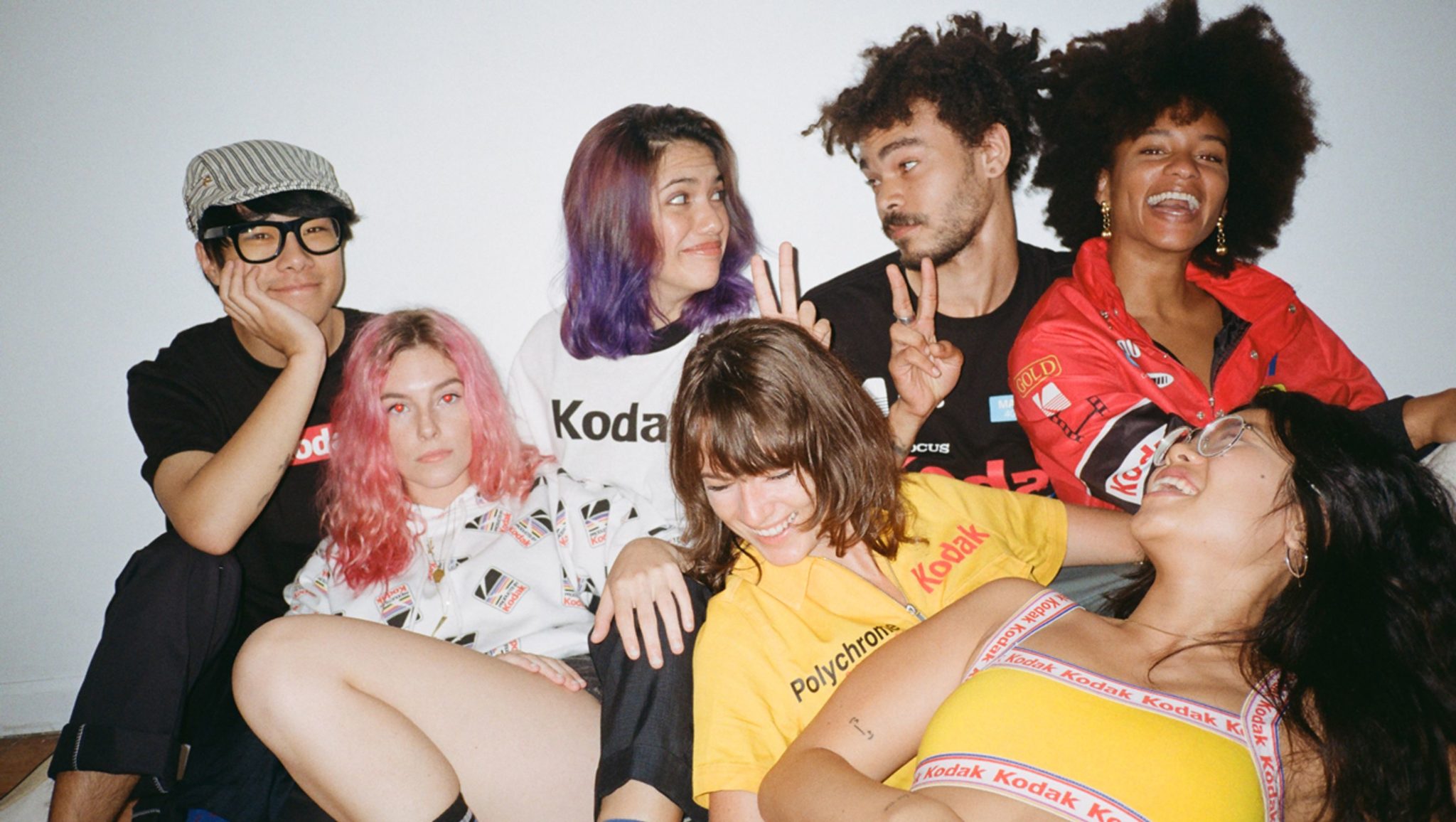
    Kodak and Forever 21 have teamed up to create an apparel collection featuring logos and designs from the Kodak brand’s history.

    The bright and vibrant apparel uses many of the original colors from Kodak branding and packaging from the 90’s and draws inspiration from the company’s days as a Nascar race team sponsor.

    The Kodak and Forever 21 collection offers women’s t-shirts, crop tops, jackets and lounge wear; the men’s line includes tees, polos, pullovers and jerseys. Altogether, 26 items will be available in more than 600 stores globally.

    Both Kodak and Forever 21 are enthusiastic about the collection which links back to the days when the Kodak logo was seen virtually everywhere.

    “Kodak is such an iconic brand that so many people love and respect, and we were excited to bring our customers a fun and unique way to celebrate photography,” says Linda Chang, VP of marketing at Forever 21.

    Kodak has been working on collaborations to drive brand awareness and advocacy with new audiences.

    “Rather than be a fad or trend, we want to retain an aspirational product aimed at our core audience and those that they influence,” said Dany Atkins, chief brand officer at Kodak. “What could be better for a brand transformation than everyone wearing your logo on a t-shirt?”

    The collection was produced with Hybrid Apparel, a Kodak Licensee who works closely with the company on brand licensing efforts in the apparel space.

    “Kodak has always been synonymous with our life’s best memories, including past, present and even future aspirations,” said Bonnie Segall, EVP of new business development at Hybrid. “We were able to capture this by leveraging the current streetwear trend and creating a new ‘Kodak moment’ for a new generation of enthusiasts.”

  • Honda, Forever 21 to Collaborate on Vintage Collection

    Honda, Forever 21 to Collaborate on Vintage Collection

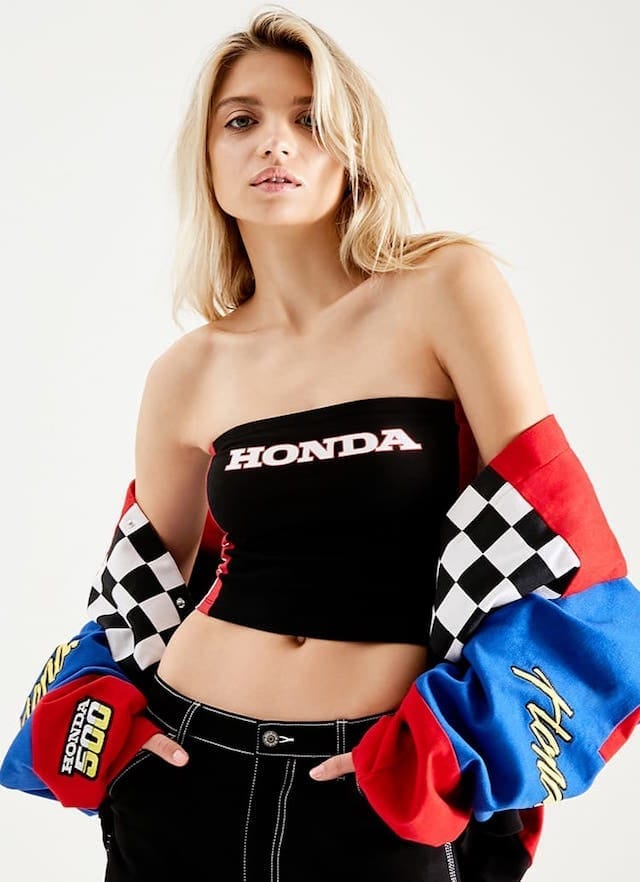
    Forever 21 has launched a collection featuring classic Honda racing motifs.

    The brainchild of Honda’s brand management agency Earthbound, the F21xHonda racing capsule collection consists of iconic Honda designs from the early 1980s and action sportswear of the 1990s.

    “Pairing nostalgic Honda racing iconography with updated silhouettes and fabrics to create a modern yet timeless aesthetic, the latest collection includes a variety of men’s and women’s apparel,”said the two companies in a statement.

    The women’s collection offers vintage inspired styles from long and short sleeved crop-tops, long sleeve t-shirts and skirts, including items in the Plus size range. The men’s collection features street-wear ready pieces including t-shirts, pull-over sweaters and racing jackets.

    “We are always looking for new and unexpected partnerships,” said Linda Chang, VP of marketing for Forever 21. “This collaboration with Honda racing is especially relevant now with the popularity of racing and motorsport designs. We hope that fans of both Honda racing and our customers will celebrate with us through this collection.”

    Honda Powersports Marketing’s senior manager Mike Snyder said collaborating with a brand like Forever 21 allows Honda motorcycles to access a completely new audience.

    “We are very happy with the collection they have developed. It does a great job of blending Honda’s Racing history with Forever 21’s fashion sense.”

    The F21 x Honda racing collection launched in stores throughout North America and on Forever21.com this week.

  • Forever 21 investigating POS security breach

    Forever 21 investigating POS security breach

    A Forever 21 data breach uncovered last November has prompted the fashion retailer to boost security at its checkout counters.

    In the security scare, hackers installed malware on point-of-sale machines at store checkouts in the US.

    A two-month long investigation has revealed that encryption technology on some POS devices at an unspecified number of stores was not always on and that malware had been installed by criminals looking to mine the system for customer payment data.

    The breaches occurred between April 3 and November 18 last year, lasting between a few days and in some cases the entire period, the company has admitted. Forever 21 stores use multiple POS devices and in most cases only one or a few of the POS devices in a store were affected.

    The malware searched for data on cards used for payments at the point-of-sale. In most cases, the data did not include the cardholder’s name, so was of no use to the hackers, but in a minority of instances, the cardholder’s name was found.

    Forever 21 said it has been working with its payment processors, hardware suppliers and independent consultants to improve the encryption systems on the POS devices in all Forever 21 stores.

    “We also continue to work with the payment card networks so that the banks that issue payment cards can be made aware of this incident,” the company said in a statement. “Lastly, we will continue to support law enforcement’s investigation of this incident.”