Tag: frasers group

  • Hugo Boss Slashes Earnings Outlook as Q3 Profit Slumps 15%

    Hugo Boss Slashes Earnings Outlook as Q3 Profit Slumps 15%

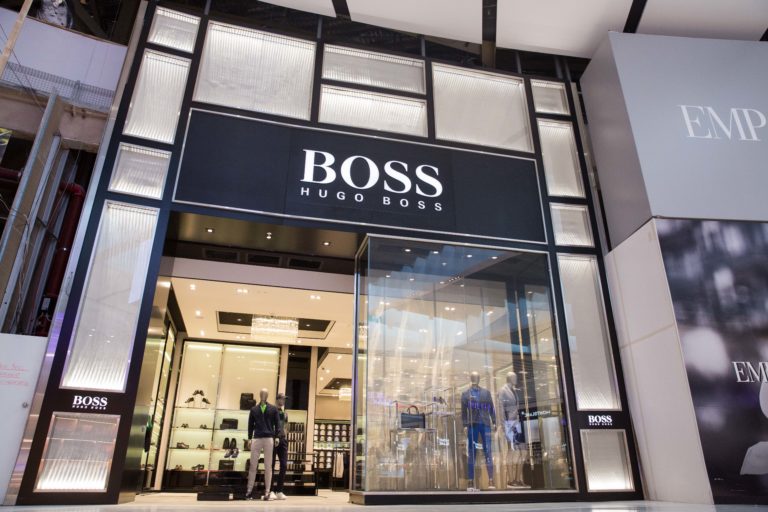
    Hugo Boss lowered its full-year earnings guidance after third-quarter revenue fell 5 per cent to 946 million euros, dragged down by European weakness and flat sales across Asia-Pacific.

    Operating profit dropped 15 per cent to 81 million euros in the three months to Sept. 30, pulling the group operating margin down to 8.6 per cent from 9.6 per cent a year earlier.

    Currency-adjusted group revenue fell 4 per cent. Group management cut its full-year operating profit expectation to between 250 million euros and 300 million euros, down from an earlier target band of 300 million euros to 350 million euros. Full-year sales are now projected to decline in the high single digits, compared with prior expectations of a mid- to high-single-digit drop.

    Flat Demand Across Asia and Regional Pressure

    Performance across Asia-Pacific generated zero top-line growth during the quarter, mirroring flat results in the Americas and offering no counterbalance to the downturn in Europe. The core European, Middle Eastern and African operations saw revenue fall 7 per cent to 598 million euros, with deep declines in Britain and France outpacing relative resilience in Germany.

    For retail landlords and department store operators across key Asian shopping hubs, stagnation at the German brand points to stubborn hesitation among upper-middle-income apparel buyers. Premium fashion labels positioned just below traditional luxury houses face a specific squeeze. Shoppers either trade down to fast fashion or hold back discretionary spending entirely, leaving mid-tier luxury square footage exposed to lower inventory turns.

    The slowdown puts immediate operational pressure on Asian concession partners and franchise operators who committed to expanded floor space during earlier expansion drives. Holding inventory that moves slowly through high-rent retail corridors eats into working capital, forcing local merchants to reconsider promotional timing and order sizes for upcoming seasons.

    Casual Lines Suffer as Formal Wear Holds Up

    Core Boss collections eased 2 per cent to 813 million euros. Menswear maintained stronger footing, while Boss womenswear continued to feel the disruption of an operational reboot initiated ahead of the fall 2027 collection.

    Casualwear took the heaviest beating across global retail networks. Sales for the youth-oriented Hugo label tumbled 16 per cent during the three-month period, reflecting what management characterized as an ongoing strategic refinement of the brand footprint.

    “In the third quarter, our top line performance reflected both the deliberate strategic realignment of our business and a persistently subdued consumer environment,” Hugo Boss chief executive officer Daniel Grieder said in a statement, referring to a strategic “quality over quantity” reset initiated late last year. “At the same time, we made further progress in improving our gross margin and operating efficiencies.”

    Shift Away From Promotional Spending

    The revised full-year numbers follow a deliberate pivot away from aggressive marketing outlays that drove post-pandemic revenue spikes on soft historical comparables. The company had previously warned that 2026 would be difficult, pointing to 2027 as the earliest window for a return to meaningful expansion.

    Earlier quarters showed initial signs of operational discipline, which won over institutional backers including majority owner Frasers Group. The 100 million euro change in operating profit guidance tests that patience and increases pressure on management to protect store-level profitability rather than chasing top-line volume.

    Store networks across the region now face tighter merchandising budgets as the company manages inventory levels heading into the final quarter. The primary figure to track is whether full-year operating profit can clear the bottom of the revised 250 million euro floor when annual results close.
  • Dickson Poon Faces £100M Loss Following Sale of Harvey Nichols

    Dickson Poon Faces £100M Loss Following Sale of Harvey Nichols

    Hong Kong retail tycoon Dickson Poon faces a £100 million loss following the sale of luxury department store chain Harvey Nichols to Frasers Group. Frasers acquired the business out of administration in August in a £43 million deal covering six UK stores, the e-commerce operation and international franchise agreements.

    The transaction ended Poon’s multi-decade ownership of the British luxury institution. The retailer fell into administration after sustained operational challenges and mounting trading headwinds eroded cash reserves.

    Breakup of the Regional UK Network

    Frasers Group has begun reorganising the physical store footprint to align with its broader commercial portfolio. Chief executive Michael Murray confirmed plans to rebrand the Leeds and Bristol Harvey Nichols branches under the Flannels banner. Leeds opened in 1996 on Briggate as the chain’s first outlet outside London, while the Bristol site at Cabot Circus launched in 1998.

    Staff at both regional locations received notice of the rebranding proposals in October. The group will maintain Harvey Nichols department stores in London, Edinburgh and Manchester, keeping the historic name on flagship metropolitan assets while converting regional units to its contemporary streetwear and designer format.

    Consolidation Under Frasers Luxury Division

    The acquisition anchors a newly established £1 billion luxury division inside Frasers Group. The unit integrates Harvey Nichols with Flannels and US retailer The Webster, combining prestige department store operations with multi-brand designer retail.

    Frasers has assembled an extensive stable of premium and heritage names through distressed acquisitions. The group’s portfolio includes Savile Row tailor Gieves & Hawkes, lingerie label Agent Provocateur, House of Fraser, Jack Wills and core sporting retailer Sports Direct.

    Shift in Capital Deployment for Asian Luxury Investors

    Poon’s exit highlights the difficult economics facing Asian high-net-worth investors and holding companies that acquired legacy European department stores. High structural overheads, elevated business rates and shifted tourism spending patterns have compressed margins across traditional multi-brand department stores. Luxury consumers increasingly shop directly through mono-brand flagships or digital platforms, bypassing regional department store concessions.

    For regional operators and real estate landlords, the conversion to Flannels signals a shift in tenant mix. Flannels prioritises younger demographic designer apparel and streetwear over traditional departmental concessions. Landlords that relied on Harvey Nichols to anchor regional luxury catchments now face the test of whether younger-skewing multi-brand formats generate equivalent footfall and consumer spending.

    Earlier Restructuring and Franchise Assets

    Harvey Nichols operated under Poon’s control through periods of rapid international franchise expansion across the Middle East and Asia. The brand built outposts in regional hubs while maintaining its core Knightsbridge presence. Persistent trading pressure across the UK retail sector eventually forced the parent entity into administration earlier this summer before Frasers stepped in with the rescue transaction.

    Attention turns to how Frasers handles the existing Flannels flagship in Leeds, situated inside the former Debenhams building only yards from the Harvey Nichols site on Briggate. Landlords and retail partners await formal lease filings detailing the exact conversion timelines for both Leeds and Bristol.

  • Frasers Group Extends 65-Cent Takeover Bid for Accent Group to January 2027

    Frasers Group Extends 65-Cent Takeover Bid for Accent Group to January 2027

    Frasers Group extended its hostile on-market takeover bid for Australia’s Accent Group on Friday. Shareholders now have until January 29, 2027 to accept the cash offer of 65 cents per share.

    The London-listed retail conglomerate already controls 22.9 per cent of Accent. It wants to buy every remaining share listed on the Australian Securities Exchange.

    Under the revised schedule announced through broker Barrenjoey Markets, the acceptance deadline shifts from September 30 to 4:00pm Sydney time on January 29. All other financial terms remain unchanged at 65 cents per ordinary share.

    Board Resistance and Turnaround Friction

    Accent’s board has urged shareholders to reject the approach from the start. Directors labelled the 65-cent valuation insufficient and opportunistic. They warned investors that tendering stock forfeits future dividend streams and upside from the retailer’s 2030 strategic growth plan.

    Frasers argues that current leadership broke the business model. Christopher Wootton, a director at Frasers, stated that the group has significant concerns regarding Accent’s strategic direction and performance under chairman Lawrence Myers and the incumbent executive team.

    Ashley’s group has also demanded that Myers step down from the board. Frasers backs the footwear and apparel brands across Accent’s network, but it insists the business needs hands-on operational restructuring rather than standalone turnaround promises.

    Earnings Pressure Across the Australian Footwear Network

    Trading numbers have put Accent under heavy scrutiny. The Melbourne-headquartered retailer recorded $1.64 billion in sales for fiscal 2026, but finished the financial year with a net loss of $13.8 million.

    This playbook matches the standard Frasers takeover blueprint across the Asia-Pacific retail market. The company builds a blocking minority stake, waits for margin compression or losses, and tables a low-premium cash bid to squeeze institutional holders.

    For Australian retail landlords and rival apparel chains, prolonged ownership battles create operational paralysis. Store network optimisation, lease renewals, and capital expenditure decisions slow down while executives defend against board spills and creeping takeovers.

    Timeline of the On-Market Pursuit

    The takeover fight started on June 15, 2026, when Frasers lodged its initial bidder’s statement on the ASX after amassing its 22.9 per cent holding. A supplementary bidder’s statement followed on August 10 to address technical offer disclosures.

    Barrenjoey Markets registered the extension notice with the ASX on September 18. The revision keeps the offer active through holiday trading and forces Accent’s board to defend its interim performance numbers in the middle of the takeover window.

    Shareholders face a four-month wait until the January 29, 2027 closing bell. Market attention now turns to whether Frasers lifts its 65-cent price or attempts a formal boardroom challenge at the upcoming annual general meeting.