Retail News CRM

Tag: fuel price

  • Fuel price cuts fail to drag prices down

    Fuel price cuts fail to drag prices down

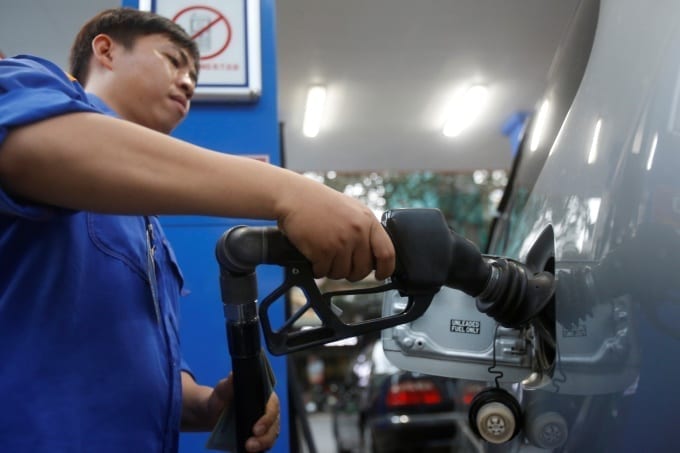
    Gasoline prices may have fallen by 10 percent on Monday, but to many people’s chagrin this has not had a knock-on effect on other prices.

    Three days after fuel prices fell, Hanh, owner of a chicken pho restaurant in Hanoi, has yet to adjust prices downward. A bowl of pho still costs VND40,000-60,000 ($1.71-2.56), up VND5,000-10,000 from June.

    He blamed it on the high costs of other items, especially chicken. “A kilogram of chicken still costs me VND110,000-120,000, and so I cannot lower my prices.”

    In HCMC too, food stalls have yet to cut prices after having raised them earlier to cope with higher fuel and other costs.

    Gasoline prices have only fallen by 10 percent after a 35 per cent hike since mid-April, eateries pointed out, adding they therefore have to wait for further fuel price cuts before reducing their prices.

    Prices of fresh foods at traditional markets are also unchanged. Hoa, a vegetable seller in HCMC’s Binh Thanh District, said prices are unlikely to fall since heavy rains have affected supply.

    A butcher in HCMC’s Go Vap District, also called Hoa, said he could not cut pork prices further since he is already selling at cost.

    “Prices of pig of the hoof will probably increase in the next few days, and so retail pork prices are unlikely to fall. Animal feed costs have risen significantly in the first half of this year.”

    Nguyen, a butcher in a market in Hanoi, said, “Due to bad weather, low demand and higher costs, I suffer losses most of the time.”

    Gasoline only accounts for 20 percent of fresh food prices, while labor input costs are rising, Hoang, a wholesaler in HCMC, said.

    Truong Chi Thien, director of egg producer Vinh Thanh Dat, said the costs of animal feed, labor and packaging have risen by 20-40 percent from last year.

    “Egg prices will only decline if input costs fall.”

    Dinh Trong Thinh, a lecturer at the Academy of Finance, said there would be a lag between changes in gasoline prices and those of other goods.

    Despite two recent cuts, gasoline prices remain at nearly VND30,000 a liter, up 25 percent from last year, and so it is understandable that producers, suppliers and retailers have yet to cut prices, he added.
  • Industries hit hard by rising fuel prices

    Industries hit hard by rising fuel prices

    Sao Viet Bus, which operates on the northern route Hanoi – Lao Cai Province, is struggling to survive as the price of fuel, which accounts for 50 percent of costs, keeps rising.

    “If we do not operate regularly, we will lose our slots at bus stations, but the more we operate, the more we lose because of surging costs,” Do Van Bang, CEO of Sao Viet’s parent company, Minh Thanh Phat, said.

    Sao Viet has reducing the number of trips to cut costs.

    Bang said the only way to break even is to increase fares by 15-20 percent, but with competition being intense, the time is not right for it.

    But the company would not be able to absorb the losses for long, he added.

    The company is one of many to lose due to the 39 percent rise in fuel prices since the beginning of this year.

    Nguyen Manh Hung, CEO of transport firm International Logistics, said fuel accounts for 40 percent of costs, and so the increases in their prices has affected the company.

    It is not easy to negotiate price hikes with customers, he said.

    “We are trying to cut all other expenses to survive the fuel price surge.”

    Half of all fishing vessels in Vietnam have stopped going out to sea after diesel prices rose 1.7-fold since the end of last year, the Ministry of Agriculture and Rural Development said in a recent report.

    The cost of operating boats has risen by 35-48 percent, while seafood prices have only gone up marginally, it added.

    The chairman of garment company TNG, Nguyen Van Thoi, said its business has not been majorly affected by the fuel price surge as contracts have already been signed for the rest of the year.

    But it is seeing prices drop as consumer in its export markets are cutting spending due to inflation, he said.

    Huynh Thi My, general secretary of the Vietnam Plastics Association, said plastic companies are also in trouble as they cannot negotiate price hikes with foreign customers.

    Businesses are looking for new markets and suppliers with lower prices, she added.

    Businesses are petitioning for more tax cuts to lower fuel costs.

    The Ministry of Finance should reduce special consumption tax (currently at 10 percent) and value added tax (also 10 percent) on fuel so that businesses face no more burden, Bang of Minh Thanh Phat said.

  • Vietnam’s latest fuel price hike spikes inflation concerns

    Vietnam’s latest fuel price hike spikes inflation concerns

    Last weekend’s increase in fuel prices has stoked fears that Vietnam might not meet its 2018 inflation target.

    The ministries of Industry and Trade and Finance upped fuel price last Friday, and prices of biofuel E5 RON 92 went by VND675 per liter to VND20,906 (90 cents) and that of RON 95 by VND577 to VND22,347 (96 cents).

    Kerosene prices went up by VND485 to VND17,086 (73 cents) per liter and that of mazut oil by VND752 to VND15,694 (67 cents) per kilogram.

    The ministries said that the increase in domestic prices followed a rise in world fuel prices of 3-5 percent over the last 15 days.

    They said that a RON 92 barrel costs $90.36, RON 95, $92.40 and diesel, $96.89.

    This was the third fuel price hike since early September. In this period, the per liter price of E5 RON 92 went up by VND1,296 (5.6 cents) in total, while that of RON 95 rose by VND1,170 (5 cents).

    While the latest increase has raised concerns among economists that Vietnam will not be able to meet its inflation target for the year, transportation businesses are worried about immediate impacts.

    Lam Dai Vinh, director of a cargo business said that he had to raise his service prices as fuel price accounts for 40 percent of his costs.

    Although his customers were not happy, Vinh said that he had no other choice.

    Economist Nguyen Tri Hieu said that the fuel price hike is one of the contributing factors to higher consumer price index (CPI).

    Costs will increase for businesses, which in turn, will lead to higher goods prices and therefore affect inflation, he said.

    “It is unlikely that Vietnam will be able to keep inflation below its target of 4 percent this year,” Hieu added.

    Echoing Hieu, Ngo Tri Long, former director of the Market Research Institute under the Ministry of Finance, said that there are “variables” in the market that could negatively affect inflation this year.

    Inflation was at 3.57 percent from January to September this year, according to the General Statistic Office.

    Experts are concerned about other factors that could lead to higher inflation, including the Vietnamese currency, dong, falling against the US dollar as a result of the U.S.-China trade war and natural disasters that often occur in the second half of the year, making business target more difficult to meet.

    Oil firms grow

    However, local oil firms are seeing robust growth because of higher oil and petrol prices.

    PetroVietnam Drilling (PVD) saw the price of its stock on the HCMC Stock Exchange (HOSE) increase by 65 percent in the last 30 days because of increasing world prices.

    From September 21 to October 6, crude oil prices went up from $78.9 to $88.81 per barrel, while that of RON 95 rose from $84.16 to $92.4 per barrel.

    PVD board chair Do Van Khanh said that when crude oil prices go above $60 per barrel, the company’s oil rigs will not have to be put on hold, and when it reaches over $70, business will become stable.

    PetroVietnam Gas also saw revenues up by 41.5 percent in the first half of this year, because oil prices rose 36 percent year-on-year in the same period.

    The price of its stock on HOSE has gone up by over 40 percent to VND120,000 ($5.15) since early July.

    Vietnam’s fuel price is set to increase even more next year when the new environmental tax approved by the National Assembly’s Standing Committee takes effect.

    Starting January 1 the tax on petrol will increase from VND3,000 (13 cents) per liter to VND4,000 (17 cents), and on diesel from VND1,500 to VND2,000.

    The hike was scheduled for next year so that the government could keep inflation under 4 percent this year.

    Although the plan met strong public opposition during its draft phase, authorities defended it, saying it would bring VND15.7 trillion ($676.8 million) each year to the government’s coffers, and help to deal with environmental issues.

    In the first half of this year, Vietnam imported 7.07 million tonnes of fuel worth $4.66 billion, up 40.4 percent in value from the same time last year, according to Vietnam Customs.

    The country exported 1.6 million tonnes of fuel, worth over $1 billion, up 41.7 percent in value.

  • Malaysia’s govt undecided on fuel subsidy plans

    Malaysia’s govt undecided on fuel subsidy plans

    The government, which has promised to stabilise the fuel prices and reintroduce fuel subsidies to targeted groups in its manifesto, has yet to make decision on its fuel subsidy plans.

    “We are still drafting it. We have not come up to a number yet, and whether there is a decrease or increase (in fuel subsidy) we will see when we table it in the parliament,” Minister of Entrepreneur Development Mohd Redzuan Md Yusof said.

    “We are still trying to make estimates to what impact it (the subsidy plans) has to the economy of the country,” he added.

    On Budget 2019, Mohd Redzuan said the government is trying its best to come up with a fair and balanced budget, noting there will be an increase in the development expenditure.

  • Vietnam fuel tax set to rise to highest level

    Vietnam fuel tax set to rise to highest level

    Prime Minister Nguyen Xuan Phuc will persist with a controversial plan to increase environmental tax on fuel to the highest level permitted, a source said.

    A Finance Ministry official who did not want to be named said the plan will be discussed at the meeting of the Standing Committee of the National Assembly, Vietnam’s parliament, which is scheduled on July 11-13.

    Should it pass, the new tax will take effect starting this October, three months later than the original schedule.

    The reason for the delay, the official said, was that the Finance Ministry did not want to impose the tax in September, as a majority of students would be starting a new school year then.

    The ensuing surge in transportation could affect the consumer price index, the source explained.

    Under the proposal, the environmental tax on petrol and diesel will increase by 33 percent, or VND4,000 (17 cents) per liter and VND2,000 per liter respectively.

  • Indonesia Gov’t to Foot Rising Fuel and Electricity Subsidy Bills

    Indonesia Gov’t to Foot Rising Fuel and Electricity Subsidy Bills

    The government has reiterated its commitment to keep fuel and electricity prices steady this year, amid rising global oil prices and the recent strengthening of the US dollar.

    State Enterprises Minister Rini Soemarno said the government will continue to subsidize diesel fuel at the current rate, which is four times higher than planned in the state budget. The government will also increase its subsidies for electricity.

    “Diesel was subsidized Rp 500 [a liter] by the government. Now it is Rp 1,500 and it will be Rp 2,000. It is covered from the current state budget,” the minister said over the weekend.

    According to her deputy, Harry Fajar Sampurno, the government’s diesel fuel quota is 16.23 million kiloliters for this year, which means the subsidies will cost Rp 32 trillion ($2.3 billion).

    The government will discuss the increase with House of Representatives Commission VII, which oversees the energy sector.

    It was previously planned to keep fuel and electricity prices stable until the end of 2019, but pressure is mounting to increase them, as crude oil prices are now nearly 50 percent higher than the government’s initial forecast of $48 a barrel.

    President Joko “Jokowi” Widodo, who is preparing to run for a second term next year, went as far as to support consumer purchasing power by raising energy subsidies to $588 million to keep fuel and electricity cheap until the end of 2019.

    Household consumption, which accounts for half of Indonesia’s economy, has been subdued over the past few years as Jokowi opted to divert money previously used for energy subsidies toward infrastructure development.

    The government spent Rp 98 trillion on energy subsidies last year, compared with Rp 342 trillion in 2014. State spending on infrastructure has meanwhile increased by more than 80 percent to Rp 376 trillion in the same period.

    Last month, oil prices spiked after the United States announced plans to impose new sanctions on Iran, a major exporter. The announcement resulted in oil prices hitting their highest levels since November 2014, with Brent crude futures at $77.90 and US West Texas Intermediate at $71.80 a barrel.

    Meanwhile, the rupiah traded at an average rate of 13,713 versus the dollar, compared with the initial forecast of 13,400, according to central bank data. Bank Indonesia governor Perry Warjiyo said the central bank expects a rupiah exchange rate of between 13,800 and 14,100 to the dollar for the remainder of this year and next year.

    Although higher oil prices and the weaker exchange rate will likely boost state revenue from oil and gas, they will also increase energy subsidies, especially for electricity and liquefied petroleum gas.

    The decision to maintain fuel and electricity prices is also intended to avoid undue pressure on the 2018 state budget, while at the same time limiting the budget deficit to 2.19 percent of gross domestic product.

    The government aims to keep the budget deficit at Rp 325.9 trillion, or 2.19 percent of GDP for the full year, compared with last year’s Rp 336.4 trillion, which amounted to 2.48 percent of GDP.

  • Pertamina Needs Up to $70m to Support National Single-Price Fuel Scheme

    Pertamina Needs Up to $70m to Support National Single-Price Fuel Scheme

    State-owned energy company Pertamina needs to spend around Rp 800 billion to Rp 1 trillion ($70 million) this year to support the government’s single-price fuel scheme in 54 of the country’s most remote areas, a minister said on Monday (08/01).

    The administration of President Joko “Jokowi” Widodo initiated the single-price fuel scheme in October 2016 to provide cheap, subsidized fuel in remote areas to help spur growth.

    According to Energy and Mineral Resources Minister Ignasius Jonan, Pertamina needs as much as Rp 1 trillion to help fund logistical, operational and development costs to distribute the fuel in the country’s hard-to-reach districts.

    Pertamina has been tasked with developing a total of 150 fuel distribution facilities by the end of 2019, estimated to cost about Rp 3.8 trillion in total. The government targets to offer the same fuel prices across the country at Rp 5,150 per cubic meter for subsidized diesel and Rp 6,450 per cubic meter for low octane “Premium” gasoline.

    “[Subsidized] fuel products are very important, especially in the frontier, outermost and most remote areas, in which the disparity [with big cities] is pretty high. This is a three-year program as [reaching] the areas is not easy,” Jonan said in a press conference on Monday.

    Since former President Susilo Bambang Yudhoyono’s administration, the government has continuously liberalized fuel distribution businesses to the private sector from, previously, Pertamina.

    Last year, the state-controlled company, along with privately owned chemical distribution company AKR Corporindo, built a total of 57 fuel distribution facilities: Pertamina developed 54 of those facilities. In total, the new facilities have a combined distribution capacity of 48,000 kiloliters per year.

    However, last year, distributors from Pertamina and AKR only distributed 11,000 kiloliters of Premium gasoline and 6,000 kl of subsidized diesel.

    For the 2018-2022 period, the government has appointed Pertamina and AKR to procure subsidized fuel products in the country.

  • Vietnam’s PV Oil hoping to strike it rich with $92 million share sale in January

    Vietnam’s PV Oil hoping to strike it rich with $92 million share sale in January

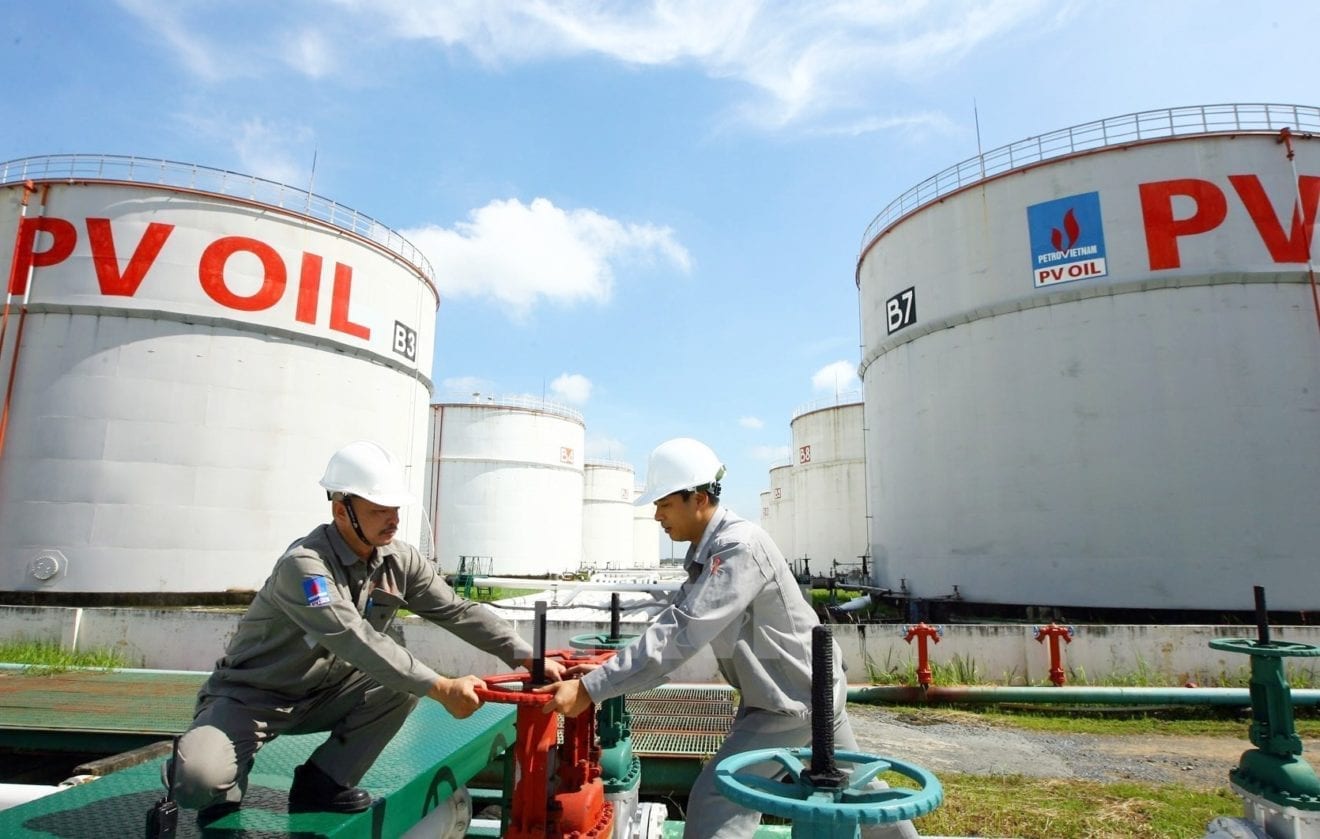
    Vietnamese state oil distribution firm PetroVietnam Oil Corp (PV Oil) plans to offer 20 percent of its shares in an initial public offering (IPO) in January that aims to raise at least $92 million, its parent firm said on Friday.

    PV Oil will also offer up to an additional 44.72 percent to strategic investors and another 0.18 percent to employees, state oil and gas group PetroVietnam said on its website.

    The sale is part of Vietnam’s broader privatization program that seeks to divest from hundreds of state-owned enterprises to improve their performance and to help raise funds for the tight state budget that is struggling to support growth.

    The government plans to reduce its stake in PV Oil to 35.1 percent, PetroVietnam said. Nineteen companies have submitted applications to become strategic investors, three quarters of which are foreign, the firm added.

    PV Oil is Vietnam’s sole crude oil exporter and among the country’s top oil products retailers with a 22 percent market share, the company said on its website.

    PV Oil is one of several state energy firms earmarked for privatization, along with PetroVietnam Power Co and refinery operator Binh Son Refining and Petrochemical Corp (BSR), whose IPO is also targeted for January at the latest.

    PV Oil said earlier this year its first half pre-tax profits reached an estimated VND202 billion ($8.89 million), down 6 percent from the same period in 2016, while its revenue rose 43 percent on-year to VND23.4 trillion.

  • Fuel prices drop after five weeks of hikes

    Fuel prices drop after five weeks of hikes

    RON95 and RON97 petrol will be both be 8 sen cheaper at midnight, ending five consecutive weekly price increases.

    The Domestic Trade, Co-operatives and Consumerism Ministry announced today that RON95 will retail for RM2.30/L and RON97 for RM2.58/L, while diesel will drop by 2 sen to RM2.23/L.

    All prices are effective after midnight and valid until next Thursday.

    Fuel prices previously rose for five straight weeks as global oil prices spiked due to the unrest in the Middle East region.

    Putrajaya has pledged to intervene in the event RON95 and diesel exceed the RM2.50/L mark for three consecutive months.


  • Malaysia Fuel prices up 15-20 sen in January 2017

    Malaysia Fuel prices up 15-20 sen in January 2017

    Fuel prices will increase between 15 to 20 sen just as Malaysians usher in the New Year at midnight tonight, according to the Petrol Dealers Association of Malaysia (PDAM).

    The widely used RON95 petrol will cost RM2.10 per litre from tomorrow, and diesel RM2.05 per litre, an increase of 20 sen.

    The RON97 petrol will see an increase of 15 sen, to RM2.40 per litre.

    This comes after the Finance Ministry’s lengthy explanation yesterday justifying an increase in fuel prices in 2017 as inevitable.

    PKRs Rafizi Ramli had predicted a 30 sen increase in fuel prices following an 18% hike in world crude oil prices.

    “With the current strengthening of the US dollar against the ringgit, the cost of purchasing crude oil will also increase.

    “Hence, the surge of the retail fuel price in Malaysia,” said Finance Ministry strategic communications director, Lokman Noor Adam.

  • Pertamina Issues New Fuel Prices

    Pertamina Issues New Fuel Prices

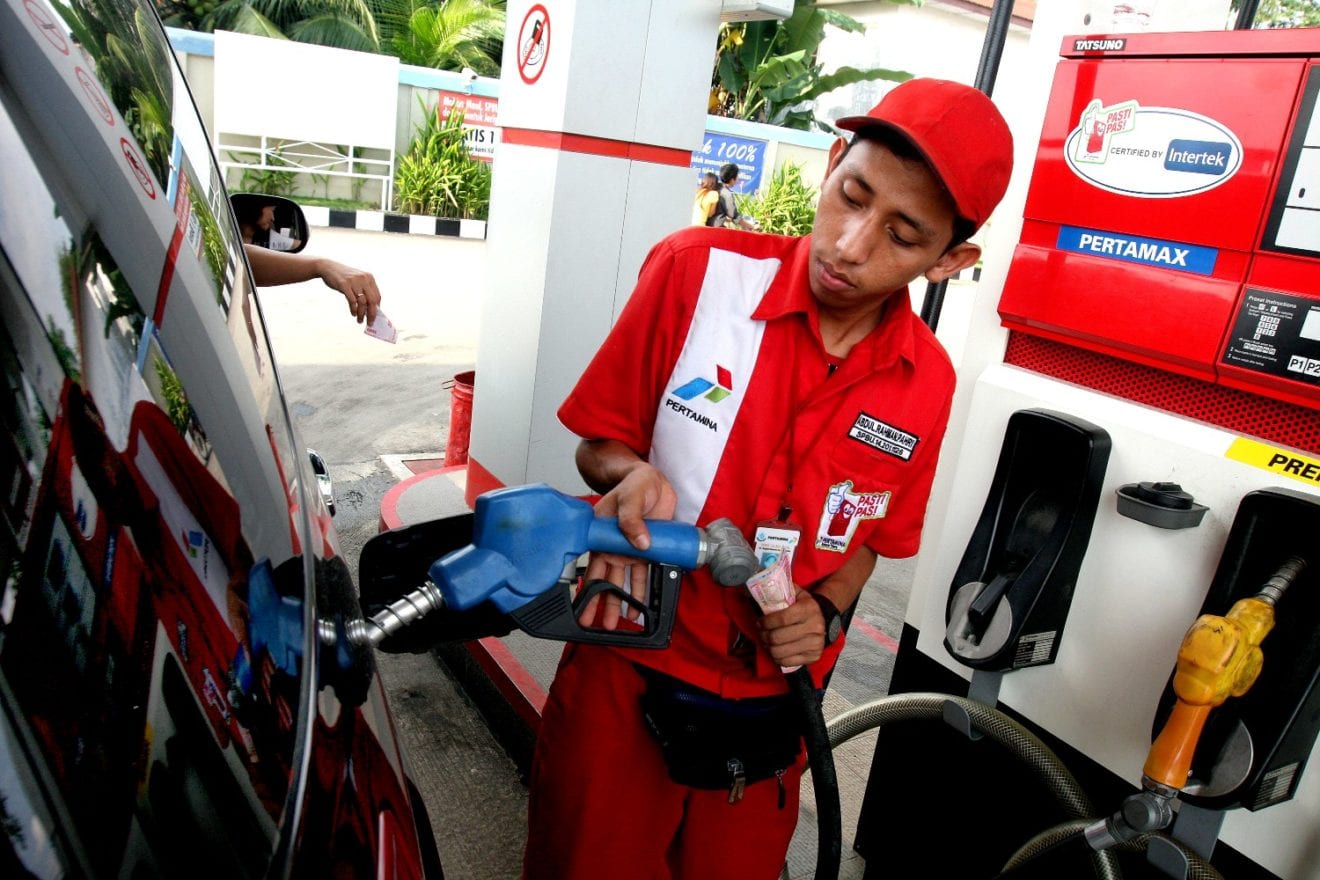
    PT Pertamina (Persero) has issued circular letter on general fuel (BBM umum) and designated fuel (BBM khusus) prices in its Marketing Operation Region III.

    Based on circular letter no 518/F13410/2016-S3, general and designated fuel prices have changed at Region III Pertamina which consist of 27 public gas stations in West Java.

    New prices listed in the letter include a number of general and designated fuels, such as Pertamax, Pertamax Plus, Pertamina Dex, Premium, Non-subsidized Solar/ Biosolar, and Pertamax Racing. The change is effective from 12.00 am Western Indonesia Time, Tuesday, March 15, 2016.

    Listed below are new tariffs of general and designated fuels of Region III, also the details of base price, motor vehicle fuel tax (PBBKB) and value-added tax (VAT):

    Type of general fuel-designated fuel / Basic Price (Rp per liter) / PBBKB (Rp) / VAT (Rp) / Selling Price (Rp per liter):

    Pertamax Plus / 7,521 / 376 / 752 / 8,650 Pertamax / 6,739 / 336 / 673 / 7,750Pertamina Dex / 7,478 / 373 / 747 / 8,600Premium /6,130 / 301 / 613 / 7,050Pertalite / 6,347 / 317 / 634 / 7,300Non-subsidized Solar, Biosolar / 6,217 / 310 / 621 / 7,150Pertamax Racing, Pail / 47,391 / 2,369 / 4,739 / 54,500Pertamax Racing, Bulk /31,304 / 1,565 / 3,130 / 36,000

    Pertamax, Pertamax Plus and Pertamina Dex prices issued by Pertamina in West Java region have fallen compared to the prices announced before.

    Per March 1, 2016, Pertamax was Rp8,050 per liter, Pertamax Plus was Rp8.850 per liter, dan Pertamina Dex was Rp8.800 per liter. Whereas on March 15, 2016, the prices have been adjusted to Rp7.750 for Pertamax, Rp8.650 for Pertamax Plus, and Rp8,600 for Pertamax Dex.

    In Jakarta, the fuel prices have fallen, albeit insignificantly. Per March 1, 2016, Pertamax price in Jakarta was Rp7.950, Pertamax Plus was Rp8,850, and Pertamina Dex was Rp8,800. The figure has changed on March 15, 2016 to Rp7.750 for Pertamax, Rp8.650 for Pertamax Plus, and Rp8,600 for Pertamax Dex.