Tag: fuel prices

  • Pakistan Raises Petrol to Rs349 and Diesel to Rs374 per Litre

    Pakistan Raises Petrol to Rs349 and Diesel to Rs374 per Litre

    Pakistan raised the retail price of petrol by Rs2.84 per litre and high-speed diesel by Rs2.28 per litre, effective September 4.

    Petrol now costs Rs349 per litre. High-speed diesel stands at Rs374.31 per litre. State fuel taxes add Rs114 per litre in duties on petrol and Rs100 per litre on diesel.

    Daily Pricing and Middle East Volatility

    Fuel rates now change daily under a system the government introduced on July 17. Petroleum Minister Ali Pervaiz Malik instructed the Oil and Gas Regulatory Authority to adjust prices every day based on international crude fluctuations.

    Both fuels remain well below their spring records. High-speed diesel peaked at Rs520.35 per litre on April 3, up from Rs281 before hostilities between the United States and Iran escalated in late February. Petrol reached Rs458.41 per litre on that same April date after opening March at Rs266.

    Impact on Freight and Retail Transport

    Transport costs feed directly into retail operations across Pakistani cities. High-speed diesel fuels long-haul freight trucks, intercity logistics fleets, agriculture machinery, and backup commercial generators. Petrol runs commuter motorbikes and urban delivery networks.

    Monthly consumption of petrol and high-speed diesel combined runs between 700,000 and 800,000 tonnes, compared to 10,000 tonnes for kerosene. Fleet operators and logistics providers are watching the next daily OGRA notices as global oil benchmarks shift.

  • Pakistan Raises Petrol and Diesel Prices Under Daily Mechanism

    Pakistan Raises Petrol and Diesel Prices Under Daily Mechanism

    Pakistan raised the ex-depot price of petrol by Rs 1.12 and high-speed diesel by Rs 1.11 per litre, effective August 26, 2026.

    The adjustments lift petrol to Rs 343.10 per litre and diesel to Rs 371.80 per litre, according to notifications issued by the Oil and Gas Regulatory Authority and the Petroleum Division of the Ministry of Energy.

    Daily Pricing Adjustments

    Official pricing records show the revision extends the daily pricing mechanism introduced on July 21, when petrol stood at Rs 315.80 and diesel at Rs 367.58 per litre. Rates had held steady at Rs 341.59 for petrol and Rs 368.29 for diesel between August 22 and August 24 before rising slightly on August 25 to Rs 341.98 and Rs 370.69 respectively.

    Fuel rates remain substantially below their record peaks set on April 3, 2026, when petrol hit Rs 458.41 and diesel reached Rs 520.35 during the Strait of Hormuz supply disruption. Current rates, however, stay well above the pre-crisis baseline of Rs 266.17 for petrol and Rs 280.86 for diesel recorded on February 28.

    Transport and Retail Supply Chains

    For fleet operators and retail distribution networks across South Asia, frequent pump revisions complicate freight budgeting and last-mile consumer delivery margins. The shift from fortnightly reviews to daily pricing transfers global crude volatility directly to local commercial transport, forcing fast-moving consumer goods distributors to update their delivery surcharge formulas in real time.

    Market participants are now tracking whether daily adjustments will hold prices around current levels or push transport diesel closer to the Rs 400 threshold as regional energy markets stabilize.

  • Philippine Fuel Retailers Raise Diesel by P2.31 per Liter

    Philippine Fuel Retailers Raise Diesel by P2.31 per Liter

    Philippine fuel retailers will raise pump prices on August 25, adding P2.31 per liter to diesel and P1.08 per liter to gasoline.

    The adjustment extends a second consecutive week of increases across Metro Manila and provincial networks, following a sharp rise on August 18 when diesel jumped P3.84 and gasoline gained P2.49. Kerosene will also climb by P0.95 per liter for the week of August 25 to 31, according to Department of Energy pricing data.

    What Drives the Regional Surge

    Dubai crude climbed roughly $8.90 per barrel during trading between August 10 and 14, driving refined product benchmarks higher across Asia. International diesel prices climbed $11.40 per barrel over the same period, while international gasoline rose $6.50 per barrel.

    Shipping constraints through the Strait of Hormuz contributed to the tighter supply outlook. Tanker transits through the passage dropped from 17 vessels on August 10 to 16 on August 11, reflecting persistent friction between Iranian and US-Israeli forces.

    Transport Costs and Supply Chains

    Rising pump prices squeeze operating margins for regional delivery fleets and retail logistics networks across the archipelago. The Philippines imports almost all of its fuel requirements, making freight and retail transport immediately sensitive to movements in global oil benchmarks and foreign exchange rates.

    Current retail levels sit well above baseline figures recorded in February. Prior to the escalation in Middle East maritime disputes, common retail prices in Metro Manila stood at P55.00 per liter for diesel and P56.00 per liter for RON95 gasoline.

    Russia also maintained its export ban on diesel during the August trading cycle, limiting replacement cargoes for Asian buyers and keeping regional diesel prices firm.

    Energy authorities will monitor crude throughput and tanker traffic through the Persian Gulf during the next trading window to assess adjustments for the first week of September.

  • New retail fuel prices announced

    New retail fuel prices announced

    The Independent Consumer and Competition Commission (ICCC) has announced the new retail fuel prices for this month, which will take effect on January 8, 2018.

    According to the ICCC’s calculations, retail fuel prices for petrol, diesel and kerosene will increase throughout PNG as of 8th January, 2018.

    “These price increases are attributed to the increases in the Import Parity Prices (IPP) for this month. Furthermore, the increases in the IPP are attributed to the increases in the Mean of Platts Singapore (MOPS) prices for petrol, diesel and kerosene during the month of December, 2017,” ICCC said in a statement.

    “Increases in the MOPS prices are attributed to the increases in crude oil prices during the month of December, 2017. The retail price increase particularly for diesel is attributed in the increase in its excise duty in 2018 from 10 toea to 23 toea per litre.”

    The domestic retail fuel prices are inclusive of the IPP, domestic sea and road freight rates for the first quarter of 2018, 2018 wholesale and retail margins for petrol, diesel and kerosene; including excise duty for petrol and diesel, and the Goods and Services Tax (GST).

    As a result of adding all the various cost components, the table below shows the maximum retail prices for fuel that are to be sold in Port Moresby.

    Port Moresby Retail Prices (toea per litre)

    Petrol (tpl)

    Diesel (tpl)

    Kerosene (tpl)

    Retail Prices as of 8th January, 2018

    346.92

    308.76

    280.47

    Retail Prices as of 8th December, 2017

    343.29

    286.12

    273.94

    Price Variance (+/-) toea per litre

    +3.63

         +22.64        +6.53

    As stated above, for this month the retail fuel prices in the National Capital District will change as follows:

    • Petrol prices will increase by 3.63 toea per litre;
    • Diesel prices will increase by 22.64 toea per litre; and
    • Kerosene prices will increase by 6.53 toea per litre.

    Retail prices in all other designated centres will change according to their approved in-country shipping and road freight rates (for the first quarter of 2018) that are charged by the fuel distributors.

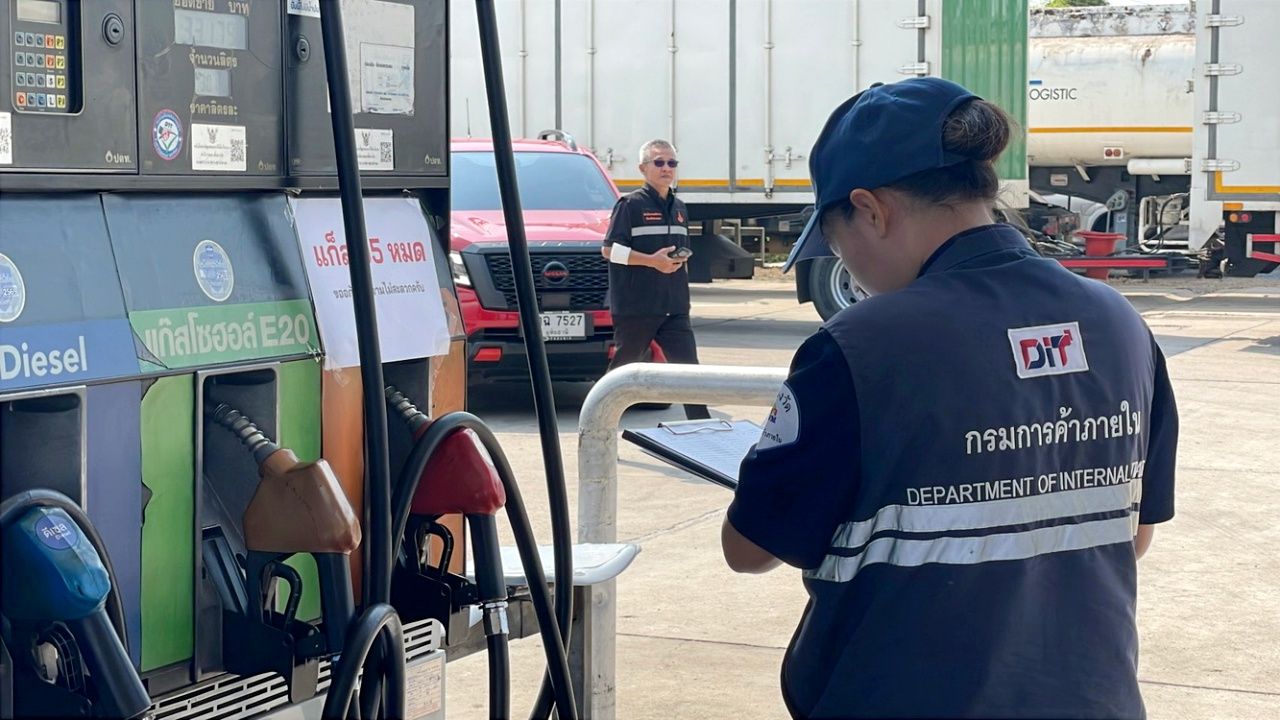
    As part of the ICCC’s enforcement and compliance of fuel prices, its investigation officers will conduct inspections at all service stations on Monday, January 8, to ensure prices of petroleum products do not exceed the allowable maximum prices.

    The prices set by the ICCC are the indicative maximum retail prices, for which retailers may choose to sell below the maximum price.

    “Again, the ICCC would like to remind retailers who sell fuel using pumps to set fuel prices to one decimal place while the ICCC will continue to set the maximum price to 2 decimal places,” said Avi Hubert, acting chief executive officer.

    “No fuel pump operator should charge above the Indicative Retail Price for this month’s price regardless of the number of decimals. This is to ensure compliance with the Prices Regulation Act under which the maximum prices of refined petroleum products are set.

    “Retailers who are displaying prices to 1 decimal place are urged by the ICCC to round the prices down to ensure prices are within the allowable indicative retail prices. The ICCC inspectors will continue to conduct spot checks after 8th January to ensure ongoing compliance by fuel operators.”

    Consumers are advised to report any instances of overcharging by retailers through the ICCC’s Consumer Protection Division on 325 2144 or on toll free number 180 3333.