
Retail News CRM

Tag: fuell

  • General Motors To Supply Electric Batteries, Hydrogen Fuel Cell Systems For Wabtec Locomotive

    General Motors To Supply Electric Batteries, Hydrogen Fuel Cell Systems For Wabtec Locomotive

    General Motors Co will supply electric batteries and hydrogen fuel cell systems for rail supplier Wabtec Corp’s locomotives, in a move extending the No. 1 U.S. automaker’s reach outside the automotive sector. Wabtec, based in Pittsburgh, is developing locomotives powered by electric batteries and hydrogen fuel cells in response to rail industry demand to eliminate carbon emissions. It has a test electric locomotive model and intends to build a second-generation version, with deliveries starting in 2023. “The rail industry is on the cusp of a sustainable transformation with the introduction of batteries and hydrogen to power locomotive fleets,” Wabtec Chief Executive Rafael Santana said in a statement.

    Under the nonbinding memorandum of understanding, GM will supply Ultium electric batteries and Hydrotec hydrogen fuel cell power cubes. Terms of the deal were not disclosed. “Wabtec’s decision to deploy GM’s Ultium battery and Hydrotec hydrogen fuel cell systems further validates our advanced technology,” GM President Mark Reuss said. Ultium is a key part of GM’s strategy to roll out efficient and cost-effective electric vehicles, and closing a deal with Wabtec would help spread development costs over a larger volume of batteries. GM is developing a hydrogen fuel-cell-powered commercial truck with truck maker Navistar.

    GM’s Ultium batteries will be built by the company’s joint venture with South Korea battery maker LG Energy Solution, which is building plants in Ohio and Tennessee. The hydrogen fuel-cell systems will be assembled by GM’s joint venture with Honda in Brownstown, Michigan.

    Last month, Wabtec announced that its FLXdrive all-electric locomotive, during a test program with BNSF Railway in California, delivered more than an 11% average reduction in fuel consumption and greenhouse gas emissions for the entire train – the equivalent of over 6,200 gallons of diesel fuel saved and about 69 tons of CO2 emissions reduced. It is also developing hydrogen fuel-cell-powered locomotives.

    The 430,000-pound electric locomotive, with a battery capacity of 2.4-megawatt hours (MWh), uses 18,000 lithium-ion battery cells, Wabtec’s chief technology officer, Eric Gebhardt, said in a recent interview. It generates its energy largely through regenerative braking.

    The company intends to build a second-generation electric locomotive with a battery capacity of more than 6 MWh, a level it says can reduce fuel consumption and carbon emissions by up to 30%. Gebhardt compared that capacity to 100 Tesla vehicles.

    Wabtec expects to begin shipments of the second-generation electric locomotive in mid-2023, he said. The company has not disclosed volume targets.
  • Erik Buell’s New Electric Bike FUELL Fluid Details Revealed

    Erik Buell’s New Electric Bike FUELL Fluid Details Revealed

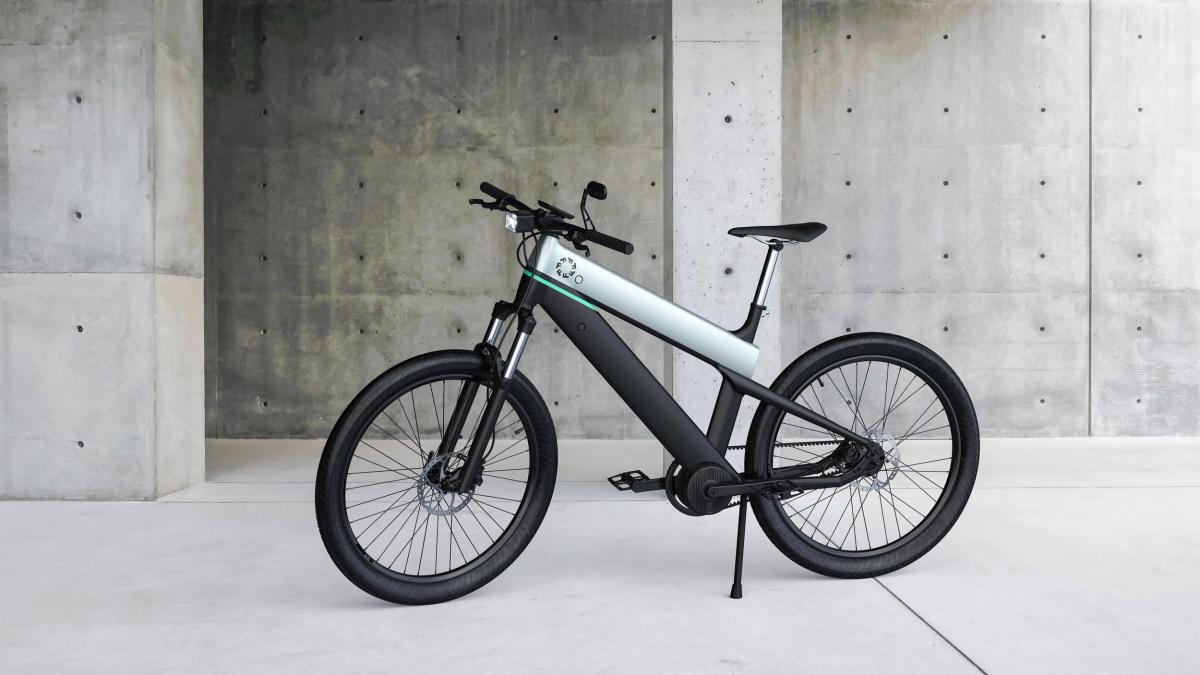
    The FUELL Fluid electric bike is the first product from the new company spearheaded by motorcycle engineer Erik Buell. Buell was a former engineer with Harley-Davidson, and had founded his own motorcycle brand, the Buell Motorcycle Company and later Erik Buell Racing. The new company, called FUELL, is a partnership between Erik Buell and two other entities, Vanguard Motorcycles, and Spark Racing Technology. FUELL’s first product is the Fluid electric bike, and has a claimed range of 200 km from its two 1,008 Wh removable batteries.

    The FUELL Fluid e-bike has a mid-drive bofeili 500W pedal-assisted motor, giving it 100 Nm of torque, and comes equipped with a Gates Carbon Drive belt system and a Shimano Alfine 8-speed Geared Hub. The twin batteries can be charged up to 80 percent in just 2.5 hours and a full charge in 5 hours. According to FUELL, both of the Fluid e-bike’s 504wh batteries are removable and have the potential to be upgradable, as and when battery technology evolves. The Fluid e-bike sports a 3.2 IPC colour screen which displays information like speed, distance traveled, battery level and five configurable motor assist settings. The Fluid also comes equipped with adjustable suspension and hydraulic brakes for impressive stopping power. The Fluid e-bike is expected to be available from September 2019 and will be shipped worldwide. It’s priced at USD 2,999 (around ₹ 2 lakh in current exchange rates).

    Erik Buell, the man behind the FUELL brand, is considered to be a pioneer in motorcycle technology and was inducted into the American Motorcyclist’s Association Hall of Fame in 2002. He has over 40 years of engineering experience and founded Buell Motorcycle Company which eventually merged with Harley-Davidson. Erik Buell Racing followed the shutdown of Buell Motorcycle Company, and has an Indian connection as well, with Hero MotoCorp picking up 49.2 percent stake in the company in 2013. Erik Buell Racing was involved primarily in building race-ready motorcycles. Erik Buell Racing eventually shut shop in 2016, and the remnants of the company were sold to Liquid Asset Partners.

    FUELL, Erik Buell’s new electric bike venture is expected to introduce more electric motorcycle models in the coming years. The next FUELL product is expected to be the FUELL Flow, an electric motorcycle featuring a hub-mounted electric motor and side-mounted rear shock. The Flow is expected to be available in two variants – with one variant producing 11kW (around 15 bhp) and the other with 35 kW (around 37 bhp). With a history of motorcycle engineering, and racing, it will be interesting to see how the FUELL brand will evolve in the coming years, particularly at a time when the entire auto industry seems to be focussing on electric vehicles as the preferred choice of technology for the future.