Tag: fulfillment

  • Shopee Expands Local Fulfillment Network Across Southeast Asia and Taiwan

    Shopee Expands Local Fulfillment Network Across Southeast Asia and Taiwan

    Shopee is overhauling its logistics network across Southeast Asia and Taiwan. The push aims to cut transit times and protect delivery margins across its core marketplace.

    The Singapore-based platform, owned by Sea Group, uses a mix of in-house couriers, third-party fulfillment centers, and external delivery networks. These teams process merchant orders across multiple regional hubs.

    How the routing model operates

    Merchants use a split fulfillment model. They either ship directly from their own facilities or hold stock inside platform-managed hubs. Storing fast-moving inventory near dense urban areas cuts transit distance and speeds up dispatch. Automated systems then route each parcel to external couriers or internal fleets based on carrier capacity, pricing, and destination.

    Surges during promotional events like 11.11 and 12.12 test this setup. Shopee handles these spikes by enforcing strict cut-off windows. It also synchronizes warehouse picking schedules with local freight partners.

    Cross-border friction and last-mile costs

    Last-mile transport remains the most expensive link in regional logistics. Island geography in Indonesia and the Philippines creates delivery hurdles. Heavy traffic in capital cities adds further friction, forcing platforms to run separate delivery setups for urban and rural buyers. Cross-border consignments face extra delays from customs clearance and import duties, requiring close coordination with regional freight handlers.

    Marketplace operators across the region face steady pressure to balance speed against parcel subsidies. Moving higher volumes through dedicated fulfillment nodes lowers per-package handling costs. It also helps platforms retain larger brand merchants.

    Sellers are now preparing inventory allocations for year-end shopping campaigns, setting up the network’s next operational test.

  • DHL Global Forwarding puts Japan’s FIA races into top gear

    DHL Global Forwarding puts Japan’s FIA races into top gear

     DHL Global Forwarding, the leading international provider of air, sea and road freight services, will provide end-to-end multimodal freight support for the back-to-back Fédération Internationale de l’Automobile (FIA) World Endurance Championship (WEC) and the WTCR — FIA World Touring Car Cup (WTCR) Race in Japan. As the official logistics partner of the global championship races for the seventh year, DHL Global Forwarding will deliver racing cars, spares and equipment via air, ocean and land freight to the WEC’s Fuji International Speedway and WTCR’s Suzuka Circuit.

    To support the races, DHL Global Forwarding will manage all transportation, customs clearance, and ground handling for 36 racecars, spares, and ancillary equipment — including everything from specialized tires to high-performance engine blocks. Prior to the WEC race at Mount Fuji, DHL will ship the cargos via a combination of ocean and air freight from the United Kingdom and Germany to the Port of Tokyo, before delivering the cars and other equipment to the race circuits via road. In the lead-up to the WTCR’s race, a second set of vehicles will arrive via ocean freight direct from their previous race in Wuhan, China.

    “It is our honor to be partnering with the FIA once again for both the World Endurance Championship as well as the WTCR Race of Japan,” said Charles Kaufmann, President/Representative Director — Japan K.K, and CEO, North Asia South Pacific, DHL Global Forwarding. “As with all of the motorsports events we support around the world, our goal remains the same: deliver the race’s critical ingredients with speed and agility, while also ensuring the utmost safety and regulatory compliance of these precious cargos. Given the relatively tight scheduling between each championship’s events, we’ve also optimized our delivery patterns to ensure the cars move swiftly from their prior engagements to Japan before continuing on their global tours.”

    DHL Global Forwarding’s rapid shipments and expertise in automotive handling will play a major role in ensuring the cars move from circuit to circuit according to the FIA’s precise schedule. Immediately after each race, DHL’s teams will load all goods, transport them from circuit to port, and clear customs within 72 hours, before conveying the cars to their next outings in Shanghai (WEC) and Macau (WTCR).

    The FIA WEC, also known as 6 Hours of Fuji, will be held from 12-14 October 2018 at the foothills of Mount Fuji. The three-day event will see the likes of world-renowned racers like Fernando Alonso, Bruno Senna, Jenson Button and Oliver Webb race to the finish line during an endurance competition that lasts six hours, stretching over a 4.5-kilometer loop with 16 spectacular twists and turns.

    Meanwhile, the WTCR Race of Japan will be held over the weekend of 26-28 October 2018, consisting of three races totaling 42 laps and 168 kilometers. At the Suzuka Circuit, home to the Formula 1 Japanese Grand Prix since 1987, drivers will be tested on their skills thanks to a unique figure-of-eight layout and variety of corners.

  • DHL expands e-commerce fulfillment internationally

    DHL expands e-commerce fulfillment internationally

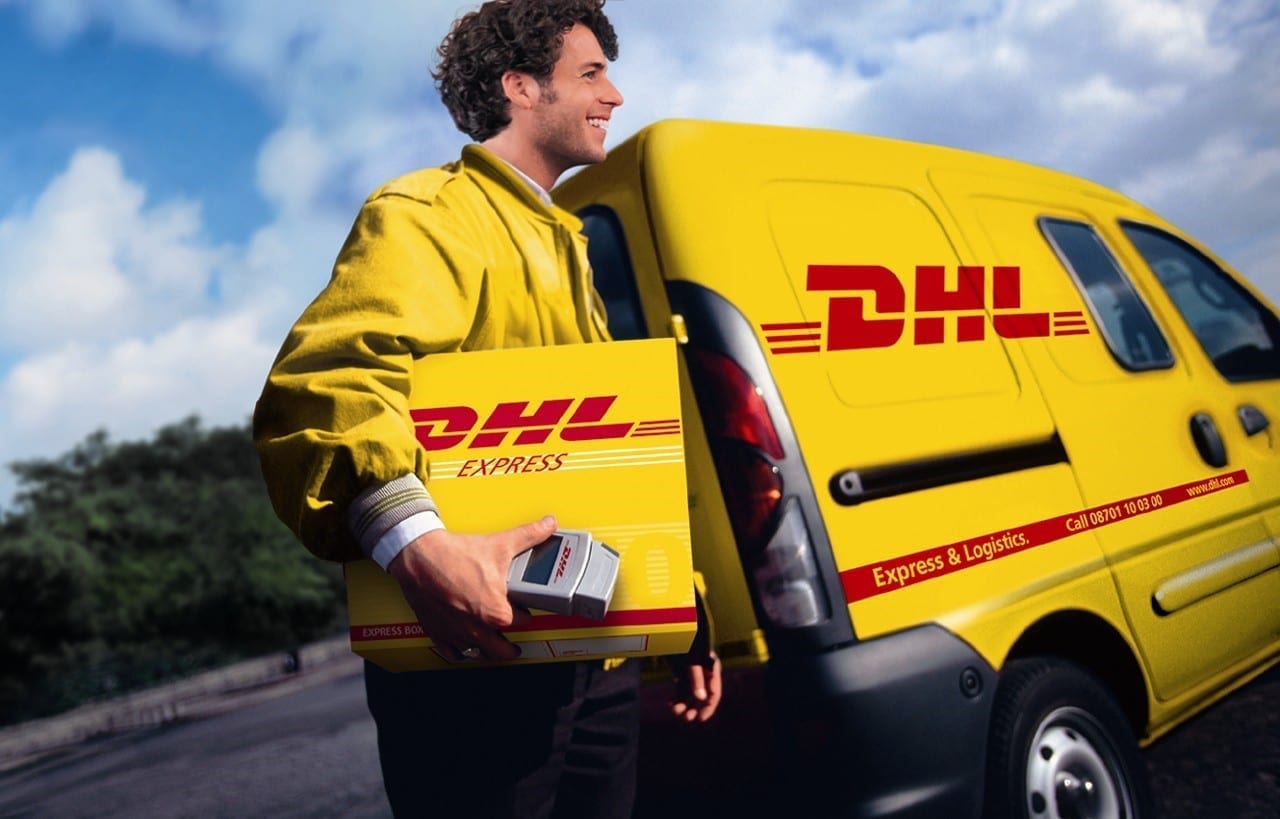
    DHL Parcel and DHL eCommerce are now offering online retailers a global solution for their e-commerce fulfillment needs with a global fulfillment platform and new fulfillment centers in the UK, Americas and Southeast Asia,emphasizing once again Deutsche Post DHL Group’s aspiration to become one of the leading global providers in e-commerce logistics. Through DHL’s unique family of divisions Deutsche Post DHL Group is the most international company worldwide, present across 220 countries and territories and online retailers are able to leverage the Group’s strong global footprint for their e-commerce retail strategy.

    Today’s e-commerce market is placing aggressive demands on the retailer to provide fast fulfillment and delivery, and doing so without increasing costs. This is simply not possible for most merchants because they lack capital or the ability to manage the complexity. DHL has built a new IT platform that provides seamless access to a network of fulfillment centers and is closely integrated with DHL’s shipping capabilities to allow our customers to meet their fulfillment and shipping requirements in a much more efficient fashion. DHL is investing in this platform as well as in expanding its fulfillment centers in key international markets, enabling retailers to reach their consumers worldwide.

    “Without seamless and reliable logistics processes, the current e-commerce boom would be inconceivable. The physical storage of ordered goods, their picking and packaging, the global shipping and delivery to the end-user’s front door or desired address — we now offer all of this in even more markets and from one single source,” says Jürgen Gerdes, CEO of the Post – eCommerce – Parcel division at Deutsche Post DHL Group. “By further internationalizing our fulfillment portfolio we will be able to do even more to help online retailers tap into new regions and benefit from the global e-commerce boom.”

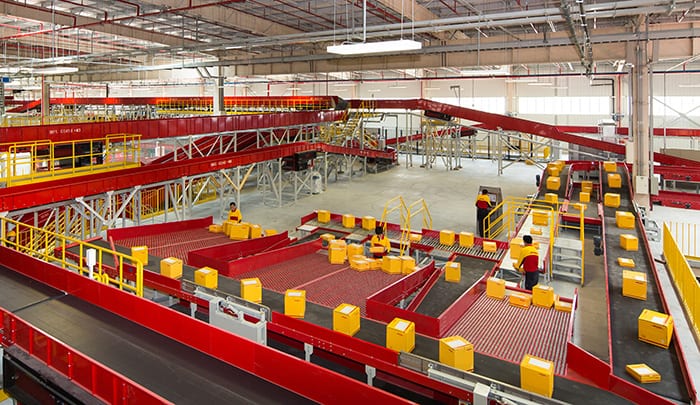
    With existing fulfillment centers in the U.S., Mexico, Colombia, Hong Kong, India, Australia, Germany, and now in the United Kingdom and Southeast Asia, DHL already covers major e-commerce markets with its own presence and will expand these further in the future. Situated near London on an area of about 6,500 square meters, the latest addition to the fulfillment network in the English town of Radlett, offers great potential for same-day processing for the Greater London area due to the center’s good transport links. Apart from the center in Radlett, DHL is already working on the expansion of its fulfillment centers across other European markets, like the Netherlands, Poland or Switzerland.

    The new IT platform allows DHL to provide online retailers with access to all of these important e-commerce regions from a single source. This ensures simple and secure data synchronization as well as an easy connection to new business locations or regions since a reintegration is no longer required. “Online retailers don’t have to look for new logistics partners anymore if they want to expand their international reach,” Gerdes says. By directly integrating the new DHL solution into the webshop of the relevant retailer, the business can access different reporting options in real time and view current order data, for example, or the stock of individual products.

    More and more retailers and companies recognize the increasing importance of smooth fulfillment processes because traditional approaches that are aligned with individual sales channels have long since failed to satisfy the purchasing habits and expectations of modern consumers. Today’s consumers not only want to be able to shop at any time and in any place, but also want to have their goods delivered at any time and in any place. Without the behind-the-scenes logistics processes that effectively orchestrate the movement of goods through multiple sales channels, and a highly fragmented fulfillment landscape hassle a free shopping experience would not be possible for the consumer.
  • DHL eCommerce has launched its fulfillment centre in Sydney

    DHL eCommerce has launched its fulfillment centre in Sydney

    “E-commerce has gone borderless, and order fulfillment needs to do the same,” said Charles Brewer, CEO of DHL eCommerce. “Our Australian facility adds another node to our standardized global network of fulfillment centres located in the US, Mexico, India, Hong Kong and Central Europe, eliminating the need for e-commerce merchants to hunt for new logistics partners as they look to expand their global reach.”

    According to DHL, the new facility integrates inbound freight, inventory and last-mile delivery into a single consolidated service, operating under the same service level agreements, management platforms and customer support as the rest of the DHL eCommerce fulfillment network. All services will be offered on a pay-per-use basis.

    “Australian shoppers are the second-most likely in the world to buy online from overseas merchants, and the significance of their purchasing power will only increase as cross-border e-commerce grows at an average of 29% per year until 2020,” said Damien Sheehan, managing director of Australia at DHL eCommerce. “Online retailers need to overcome the traditional problems associated with overseas expansion — finding new suppliers in each market, delivering shipments within days not weeks, and keeping costs in check — if they want to stay competitive in this borderless future. The launch of our Australian fulfillment centre gives our customers immediate access to one of the world’s most mature and fastest-growing e-commerce markets, with the scalability and quality needed to reach Australia’s highly savvy online shoppers.”

    Malcolm Monteiro, CEO of Asia Pacific at DHL eCommerce, said that cost-effectiveness and scalability are the most critical issues for online retailers in Australia because the value of the country’s e-commerce sales is expected to grow by almost 50% between now and 2020.

    “Whether it’s extending into new channels, offering more delivery options, or simply increasing inventory and warehouse capacity, global brands need fulfillment solutions that can adapt to their needs without requiring hands-on intervention every time a change occurs,” he said. “Global e-tailers can access our latest fulfillment centre for simplified nationwide inventory and last-mile delivery and also as part of a rapid and painless global expansion.”