Tag: fulfilment

  • Kuehne+nagel Boosts India’s Logistics Sector With Five New Fulfilment Centres, Creating 1,500 Jobs

    Kuehne+nagel Boosts India’s Logistics Sector With Five New Fulfilment Centres, Creating 1,500 Jobs

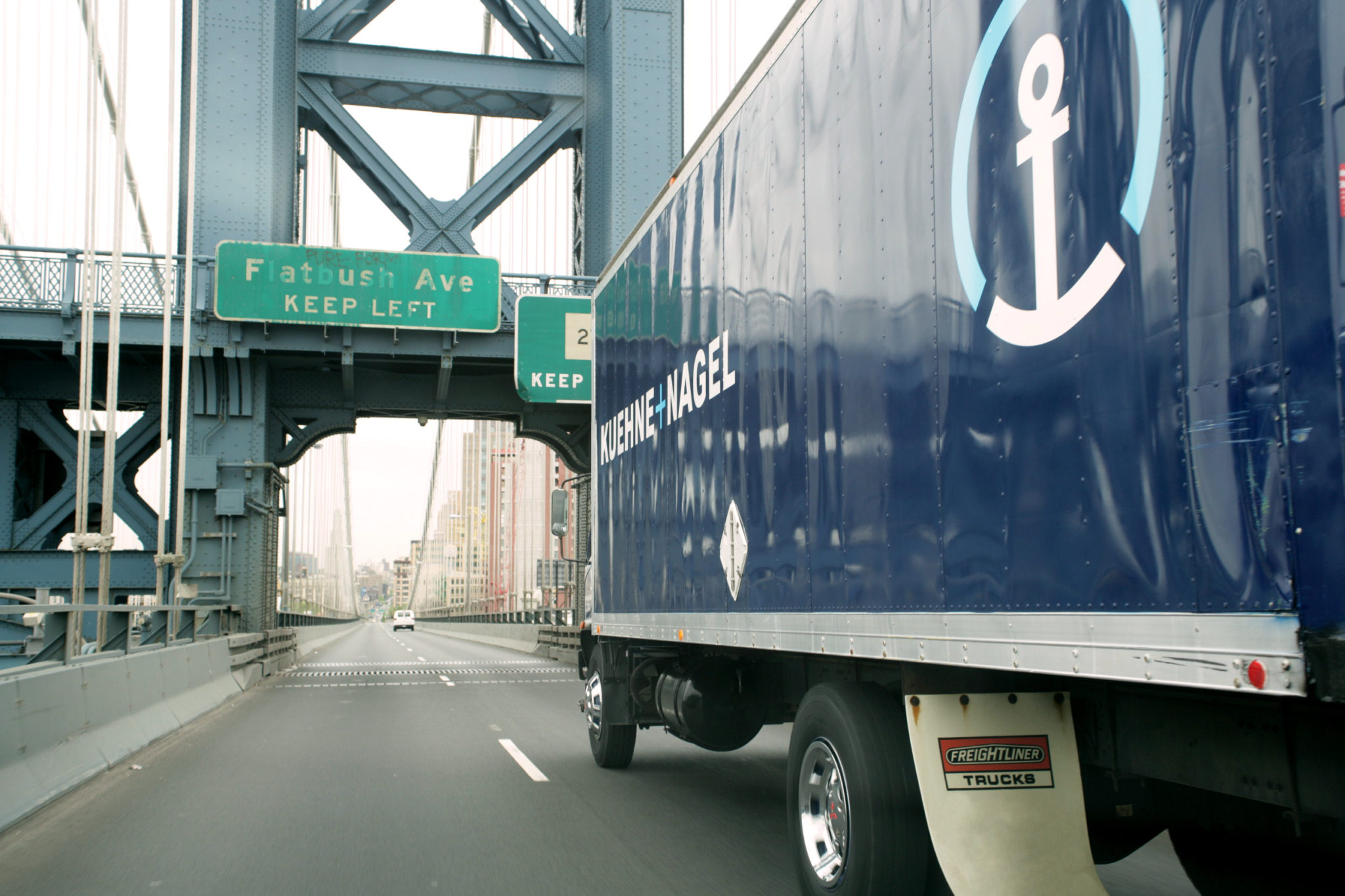
    Kuehne+Nagel, the international logistics firm, is expanding its operations in India with the establishment of five new fulfilment centres. The locations for these centres include Gurgaon, Kolkata, Nagpur, Mumbai, and Rajpura. This expansion will provide 100,000 square meters of additional capacity, raising the company’s total fulfillment centre footprint in the country to nearly 500,000 square meters. The new centres will create over 1,500 jobs nationwide, supporting local economic growth.

    India’s Economic Potential

    India is expected to rise to the position of the world’s third-largest economy by 2030, underpinned by robust growth in industries such as high-tech, automotive, consumer goods, and healthcare. As these sectors continue to expand, there’s an increasing demand for a scalable, efficient logistics infrastructure.

    Automation and Boosting Order Handling Capacity

    The new fulfilment centres will employ advanced automation technologies like telescopic conveyors and high-performance sorting systems. These will facilitate an increase in peak order handling capacity by 75%.

    City Selection and Industry Growth

    The locations of the new centres cover the spectrum of Indian cities. This includes tier-1 cities like Mumbai and Kolkata, tier-2 hubs Gurgaon and Nagpur, and the tier-3 city, Rajpura. The diverse location selection aligns with India’s industrial growth across multiple cities. Gurgaon and Nagpur are emerging as growth centres for various industries, while Rajpura is experiencing a surge in manufacturing and distribution.

    Strategic Investment

    Damian Raczynski, Senior Vice President of Contract Logistics at Kuehne+Nagel Asia Pacific, expressed his optimistic views regarding the company’s expansion. He shared that India is a crucial growth market for Kuehne+Nagel and that they invest where their customers are. He further emphasized that this expansion enhances their ability to serve high-demand sectors, like consumer and healthcare. The goal is to deliver a service that’s characterized by speed, reliability, and flexibility.

    Questions & Answers

    What is the purpose of Kuehne+Nagel’s expansion in India?
    The expansion aims to meet the growing demand for efficient logistics infrastructure in India’s expanding industries such as high-tech, automotive, consumer goods, and healthcare.

    What additional features will the new fulfilment centres have?
    The new centres will incorporate advanced automation technologies such as telescopic conveyors and high-performance sorting systems, which will boost peak order handling capacity by 75%.

    How will this expansion benefit the local economy?
    The expansion will generate over 1,500 new jobs nationwide, contributing positively to the growth of local economies.

  • Three innovations Asian retailers are prioritising for next year

    Three innovations Asian retailers are prioritising for next year

    New innovative approaches are required for retailers to continue to meet the lofty expectations of today’s connected consumers. Inside Retail’s Top 50 innovative retail leaders ranking is testament to the progress that is being made in Hong Kong. But what does the picture look like for retailers elsewhere in Asia?

    Tofugear has just published its annual Asia Digital Transformation Report, in which 150 Asian retail leaders and executives across the region were surveyed on their innovation plans and motivations. In particular, retailers were asked which customer-facing technologies they were prioritising for next year.

    The good news for shoppers in Asia is that retailers are focusing on innovations that will help enhance the customer experience and offer increased convenience. While technologies such as drone deliveries and in-store robots might generate bigger headlines, these are not (yet) very scalable and their impact on the overall experience is limited.

    So what then are the top three investment priorities for retailers operating in Asia?

    1. Scan-and-go technology using mobile apps

    Gone are the days of using scanning guns in grocery stores. When it comes to scan-and-go technology, retailers are now looking to leverage the device that most people carry around in their pockets: their mobile phone.

    Through mobile native apps, shoppers are able to scan products on their phones as they go around a store. It is clearly a more economical alternative than investing in unmanned store technology and also does not alienate consumers that still value being served by a human.

    These days, scan-and-go does not need to be restricted to supermarkets – it can be relevant in sectors such as fashion as well. Research from Tofugear has shown that the next generation of consumers have a ‘do it yourself’ mindset and are actively seeking out retailers that allow them to take control of the shopping experience.

    2. Same-day deliveries

    In the age of having takeaway food delivered within 30 minutes through apps like Food Panda and Deliveroo, the fulfillment speeds offered by many retailers are not cutting it anymore. Indeed, research by Tofugear has found that slow shipping is a major frustration for a third of Asian consumers.

    It is therefore perhaps not surprising that same-day deliveries are now such a pressing issue for retailers. However, this might be a bigger priority in some markets than others.

    Hong Kong is arguably behind the curve when it comes to fulfillment speeds. Meanwhile, countries like Japan are already accustomed to high demand for same-day deliveries, prompting Amazon to recently set up its own network of Uber-like delivery drivers there to support its ‘Prime Now’ offer.

    3. In-store shoppable screens 

    Being ‘omnichannel’ is about so much more than opening a click-and-collect area in your store. It means empowering shoppers to get their hands on products through any way they desire. Without of stock items being one of the biggest pain points when shopping in stores, it seems a no brainer to launch in-store shoppable screens that allow customers to order from other stores or from the online channel for home delivery.

    To launch these screens, retailers need to be fairly advanced in their digital transformation journeys. They need to have real-time insight into their stock positions across all channels, which then allows each store to effectively become an order and fulfillment hub.

  • Amazon opens another fulfilment centre in Sydney

    Amazon opens another fulfilment centre in Sydney

    Amazon is opening a second fulfilment centre to speed up delivery to customers across Australia, as the US-based company expands its e-commerce business Down Under.

    The 43,000sqm fulfilment centre in Moorebank, South West Sydney, is planned to start operations in the second half of 2018.

    “We are thrilled to be establishing our next fulfilment centre in Sydney and working with incredible people in the local community around Moorebank,” said Robert Bruce, Amazon Australia’s operations director.

    “Sydney represents another important development for our growth strategy in Australia, following a steady and progressive increase in customer demand.”

    Together with Amazon’s Dandenong South fulfilment centre, which opened in December 2017, the second warehouse, located within easy access to the M5 and M7 motorways, will allow Amazon to handle current and future customer demand and speed up delivery to customers across the country.

    “This investment will benefit both customers and the local economy by generating new jobs and providing small and medium sized Australian businesses who sell on amazon.com.au and use our Fulfilment by Amazon program, with an opportunity to more easily access millions of customers across the country,” Bruce said.

    Amazon will begin recruiting immediately for a range of roles including operations, support and technical specialists, adding to the more than 1,200 people it currently employs in Australia.

    Since launching its online retail offering in Australia late last year, Amazon has since released new products into the market, including Alexa and Amazon Echo, Amazon Music Unlimited as well as Fulfilment by Amazon, which allows Australian sellers to outsource their pick, pack and shipping process to Amazon logistics.

    Amazon Prime is expected to launch in Australia in mid-2018.

  • DHL expands e-commerce fulfilment internationally

    DHL expands e-commerce fulfilment internationally

    DHL Parcel and DHL eCommerce are now offering online retailers a global solution for their e-commerce fulfilment needs with a global fulfilment platform and new fulfilment centers in the UK, Americas and South-east Asia.

    Today’s e-commerce market is placing aggressive demands on the retailer to provide fast fulfilment and delivery, and doing so without increasing costs. This is simply not possible for most merchants because they lack capital or the ability to manage the complexity.

    DHL has built a new IT platform that provides access to a network of fulfilment centres and is closely integrated with DHL’s shipping capabilities to allow our customers to meet their fulfilment and shipping requirements in a much more efficient fashion.

    DHL is investing in this platform as well as in expanding its fulfilment centres in key international markets, enabling retailers to reach their consumers worldwide.

    “Without seamless and reliable logistics processes, the current e-commerce boom would be inconceivable. The physical storage of ordered goods, their picking and packaging, the global shipping and delivery to the end-user’s front door or desired address – we now offer all of this in even more markets and from one single source,” says Jürgen Gerdes, CEO of the Post – eCommerce – Parcel division at Deutsche Post DHL Group.

    “By further internationalizing our fulfilment portfolio we will be able to do even more to help online retailers tap into new regions and benefit from the global e-commerce boom.”

    With existing fulfilment centres in the U.S., Mexico, Colombia, Hong Kong, India, Australia, Germany, and now in the United Kingdom and South-east Asia, DHL already covers major e-commerce markets with its own presence and will expand these further in the future.

    Situated near London on an area of about 6,500 square meters, the latest addition to the fulfilment network in the UK town of Radlett, offers great potential for same-day processing for the Greater London area due to the centre’s good transport links.

    Apart from the centre in Radlett, DHL is already working on the expansion of its fulfilment centres across other European markets, like the Netherlands, Poland or Switzerland.

    The new IT platform allows DHL to provide online retailers with access to all of these e-commerce regions from a single source. This ensures simple and secure data synchronization as well as an easy connection to new business locations or regions since a reintegration is no longer required.

    “Online retailers don’t have to look for new logistics partners any more if they want to expand their international reach,” Gerdes says.

    By directly integrating the new DHL solution into the webshop of the relevant retailer, the business can access different reporting options in real time and view current order data, for example, or the stock of individual products.

    More and more retailers and companies recognize the increasing importance of smooth fulfilment processes because traditional approaches that are aligned with individual sales channels have long since failed to satisfy the purchasing habits and expectations of modern consumers.