Retail News CRM

Tag: Gadgets

  • Apple’s manufacturers gearing up production of new iPad and AirPods hardware

    Apple’s manufacturers gearing up production of new iPad and AirPods hardware

    Apple’s March 25 event is around the corner and naturally, rumors about it are abundant. The event is expected to be focused on new services but its almost inevitable that there will be a hardware release or two, even if there won’t be any dedicated time for them during the presentations. The latest news coming from distant Taiwan seems to confirm that. Some of Apple’s part suppliers are preparing to ramp up production of components for new products.

    Flexium Interconnect and Zhen Ding Technology are manufacturers of flexible PCB (printed circuit boards) that are reportedly starting production of PCBs for a new iPad model. Rumors are that Apple is going to refresh its iPad Mini. The last model of the line came out in 2015, so it’s long overdue for an overhaul. The revamp is expected to be primarily internal, however, so expect a familiar looking iPad with a more powerful chip.

    Both part suppliers are also providing components for the current line of iPhones. The release of a new iPad comes as a blessing for them since both saw their orders reduced after demand for the iPhones was weaker than anticipated.

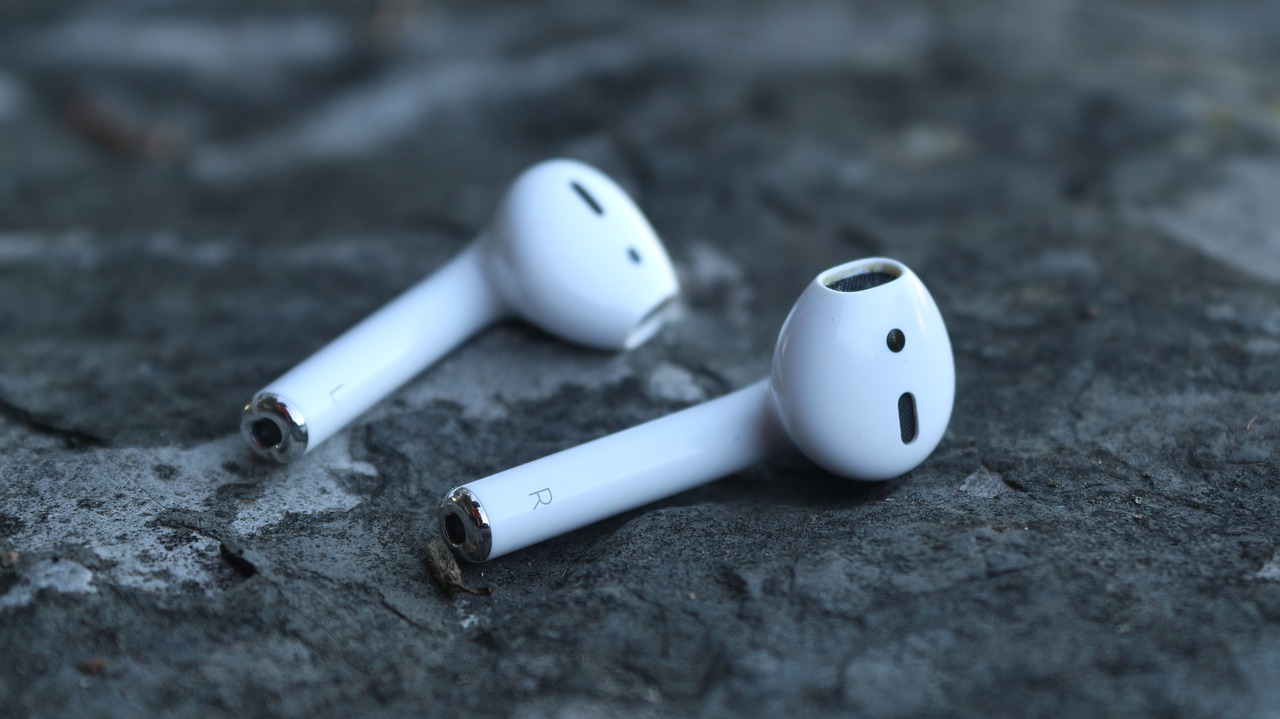
    At the same time, two other companies, Compeq Manufacturing and Unitech PCB, are now working on rigid-flex boards for the yet unannounced AirPods, according to sources within the industry. Tech insiders are still divided whether Apple is going to introduce the AirPods 2, or a less meaningful refresh of its popular earbuds that may consist only of a new wireless-charging case.

    If Apple does indeed announce new hardware products on March 25, preorders will likely begin either on the same day or within a week. If you’ve been itching for a new Apple gadget for a while, the time has almost come!

  • Copperwired adding .Life stores next year

    Copperwired adding .Life stores next year

    Gadget retailer Copperwired is set to invest THB165 million (US$5.036 million) opening 30 new .Life stores by the end of next year. The new .Life stores include a new 310sqm flagship at CentralWorld, described as the “largest gadget lifestyle shop featuring Internet of Things (IoT) technology in Thailand”, which opened in September.

    The brand’s public listing on the Thai exchange is expected next year.

    “With the adoption of 5G, the number of connected devices will increase, and IoT in the form of connected toys, smart homes and smart transport and new demand for product categories will rise accordingly,” said Copperwired CEO Paramate Rienjaroensuk.

    The company expects .Life stores to boost its income by more than 20 per cent in the current financial year to more than THB800 million (US$24.414 million).

  • Tech products to drive reboot of Asia’s growth engine

    Tech products to drive reboot of Asia’s growth engine

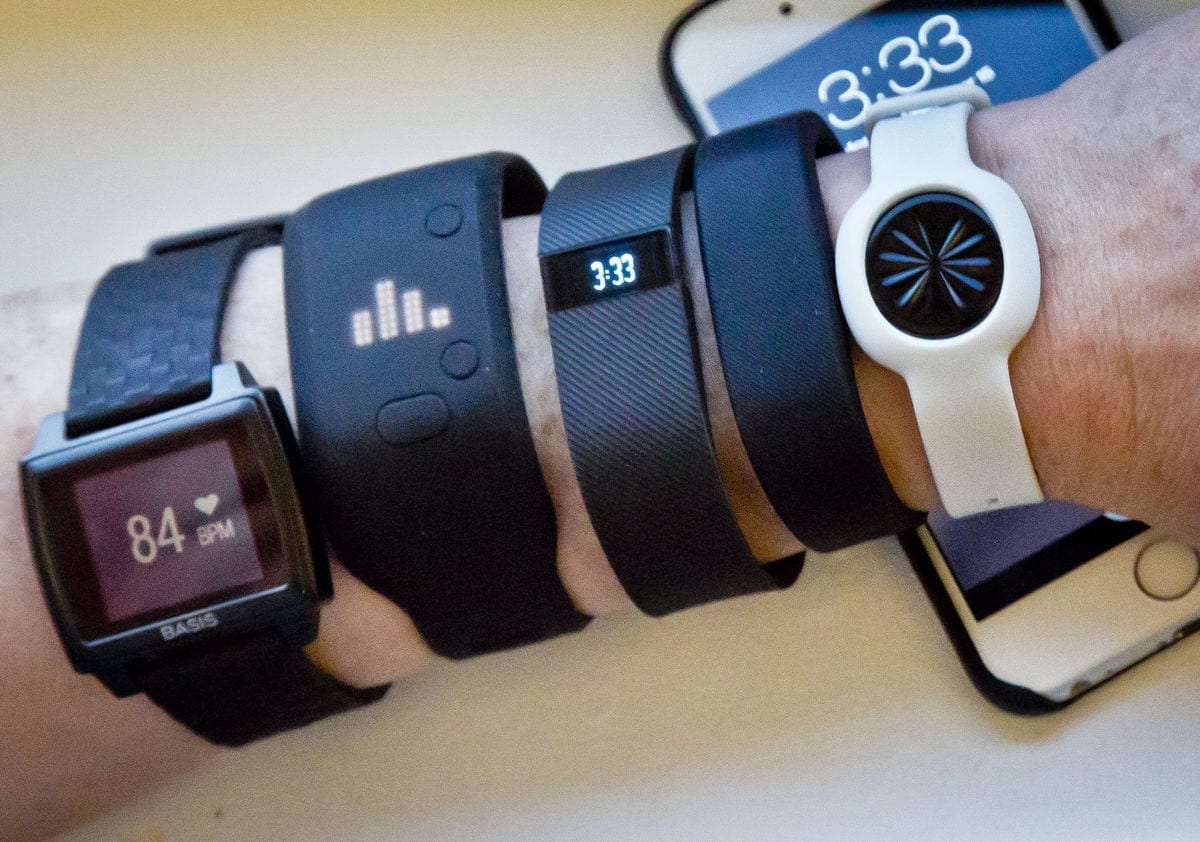
    The technology boom powering Asia’s economies is about to get a reboot. Explosive growth in new-era gadgets such as wearable devices and internet-linked home appliances is tipped to offset cooling sales of smartphones, which has already dinged Asia’s tech manufacturers.

    “Where demand may be softening in some areas it will be strengthening in others,” Koshy Mathai, a senior official in the International Monetary Fund’s Asia Pacific Department, said in an interview. He pointed to upcoming demand from “a vast middle class in China, India and other frontier markets.”

    That’s good news for the world economy. Asia Pacific accounts for 60 percent of global growth, much of it from a technology-supply chain that’s vulnerable to smartphone cycles.

    The IMF isn’t alone in tipping the rise of a new tech cycle. The world is in the early stages of a shift from the late-stage mobile Internet era to a new, data-centered computing era, Morgan Stanley analysts wrote in a report last month.

    Crucially, it will be the first such era in which multiple technologies emerge at once, including the internet of things, artificial intelligence and virtual and augmented reality, and it will require IT investment unparalleled since the launch of the web in 1990, Morgan Stanley analysts said.

    Samsung Tops Profit Estimates, Warns of Weaker Phone Demand

    Take wearable devices. Global sales of body-worn cameras are forecast to reach 5.6 million units in 2021, more than triple the 1.6 million this year, according to forecasts by Gartner Inc. Smartwatch sales are expected to hit 81 million from 48 million over the same period, while those of head-mounted displays will more than double to 67 million.

    Spending on robotics and drones solutions will reach US$103.1 billion in 2018, up 22 per cent from last year, and more than double to US$218.4 billion by 2021, according to International Data Corporation.

    China, Japan, South Korea and Taiwan would be among the economies expected to benefit most — as they did from smartphones — with the new products stoking fresh demand for components such as semiconductors and displays.

    That is expected to benefit manufacturers such as South Korea’s LG Display Co., which makes displays used in products including smartwatches and Bluetooth devices, and Samsung Electronics Co., which makes memory capacity. Japan’s Sony Corp. is developing 3D sensors that can be used in drones, self-driving automobiles, gaming consoles, industrial equipment and more.

    “Manufacturers have always been able to shift their production line to cater to the newest trend in the market,” said Kenneth Liew, Singapore-based senior research manager at IDC. “We are now seeing products like wearables, smart home devices as some of the key products for future growth.”

    The upbeat view comes as a more-than-year-long rebound in Asia’s exports has hit a speed bump, with softening industrial and manufacturing activity. Smartphones contributed around one sixth of the estimated growth in trade in 2017, according to the IMF. Sales totaled close to 1.5 billion units last year — enough for one of every five people on the planet.

    But with more and more people already owning a smartphone, demand has peaked. That’s being felt at chip foundries and assembly plants across Asia.

    Taiwan’s Pegatron Corp., which assembles Apple Inc.’s iPhone 8, ramped up capacity in anticipation of a surge in business last year. A subsequent shortfall in demand led to lower utilization rates across its factories and operating margins almost halved. Both Pegatron and Hon Hai Precision Industry Co. — Apple’s principal assemblers — reported declines in net income in 2017 even as their biggest customer racked up record profits.

    To be sure, the smartphone sector is tapering off, not cratering, as evidenced by Apple’s results. And it will be some time before the emerging tech cycle reaches a point of matching demand generated through phone production, said Frederic Neumann, co-head of Asian economics research at HSBC Holdings Plc in Hong Kong.

    “While demand for consumer electronics like wearable devices and virtual reality headsets is growing rapidly, production runs still pale in comparison to smartphones,” Neumann said.

    Apple Earnings Show Growing Immunity to Smartphone Malaise

    Of course, all bets are off if an all-out trade war erupts between China and the U.S. Barring that, the next evolution in tech is poised to support global economic growth, even as smartphones reach saturation.

    “It is fair to say that economists often don’t understand technology well enough to understand what it can do in terms of growth,” the IMF’s Mr Mathai said.

  • LifeProof Announces FRE for iPhone 7, iPhone 7 Plus Available Now

    LifeProof Announces FRE for iPhone 7, iPhone 7 Plus Available Now

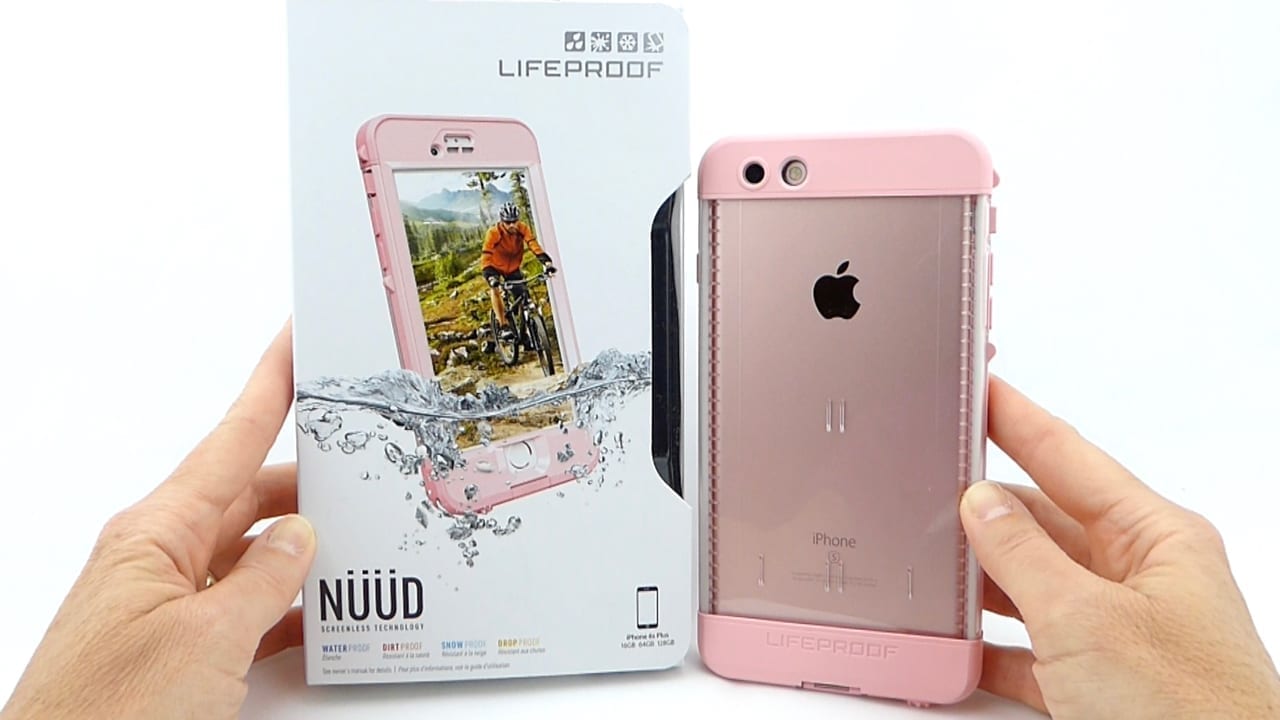
    Adventure calls, and for iPhone fans, LifeProof FRĒ has been there to answer, year after year. Take iPhone 7 and iPhone 7 Plus wherever the action leads in absolute confidence and bring back the living proof with incredible photos shot on iPhone’s best cameras yet. FRĒ for iPhone 7 and iPhone 7 Plus select color are available at LifeProof.asia now.

    LifeProof FRĒ for iPhone 7 and iPhone 7 Plus

    For those looking for the best in screenless waterproof technology, NÜÜD for iPhone 7 and iPhone 7 Plus are also coming soon.  

    “LifeProof helps you get the most out of your iPhone and our latest designs incorporate some exciting changes that make the user experience the best we’ve ever delivered,” said LifeProof CEO Jim Parke. “Apple has set the bar high with these iPhones, and we’re helping bring it to places you’ve never before thought possible.”

    LifeProof allows smartphone users to dive head-first into the action at a moment’s notice. The super slim designs are waterproof to 6.6 feet, drop proof to 6.6 feet, dirt proof and snow proof. FRĒ features a built-in screen protector, while NÜÜD leaves the screen uncovered for the truest touchscreen experience. Every device feature remains accessible and fully functional, making LifeProof cases a necessity when intentionally taking on water, drops, dirt or snow.

    Price listings as follow —


    LifeProof FRĒ

    LifeProof NÜÜD

    iPhone 7

    RM 329 (include GST)

    RM 359 (include GST)

    iPhone 7 Plus

    RM 359 (include GST)

    RM 399 (include GST)


    LifeProof FRĒ for iPhone 7 and iPhone 7 Plus in Black are available at selected retail, while NÜÜD for iPhone 7 and iPhone 7 Plus are coming soon. For more information and product availability, please visit www.lifeproof.asia

  • IT industry still ripe for growth on Indonesians’ love for gadgets

    IT industry still ripe for growth on Indonesians’ love for gadgets

    The government is intensifying efforts to support the country’s longstagnant pharmaceutical industry after opening up the sector to foreign investment in its latest revision to the negative investment list (DNI).

    The efforts were evident at a dialog on “Expediting the Development of Indonesia’s Pharmaceutical Industry” organized by the Investment Coordinating Board (BKPM) on Thursday that gathered together players in the pharmaceutical industry and its related sectors.

    “Most of the existing companies make medicines, whereas the raw material businesses is small. Roughly 90 percent of raw material for the pharmaceutical industry is imported from India or China. We have to change this,” BKPM investment monitoring and implementation deputy chairman Azhar Lubis said during the event.

    In a bid to encourage the raw material industry, the government has revised the DNI, which lists the sectors restricted to foreign investment. Following the revision, the government now allows 100 percent foreign ownership in pharmaceutical companies, from 85 percent previously.

    Following the issuance of the regulation, no fresh interests on raw material sector have been expressed by foreign investors, Azhar said. However, there have been 18 new licenses for investments in the pharmaceutical industry issued by BKPM from January to September worth Rp 2.1 trillion.

    Apart from campaigning for investment in pharmaceutical factories, the BKPM will also push research and development (R&D) in the sector to encourage new innovations in new medicines that are locally made, Azhar added, citing R&D centers in Singapore and Europe.

    However, industry players said the problem with investment in the pharmaceutical sector lay in the fact that there was a relatively small number of hospitals and doctors for whom the medicines would be distributed.

    “Boosting the industry does not only mean pushing for medicine production and factories. What’s also needed is hospitals, doctors and clinics as the infrastructure to feed the pharmaceutical industry,” said International Pharmaceutical Manufacturers Group (IPMG) executive director Parulian Simanjuntak.

    Investments in the pharmaceutical sector have stagnated in recent years, reaching just Rp 8.9 trillion from January 2011 to September 2016, BKPM data shows. Also, there are only 214 pharmaceutical companies in Indonesia, most of which make medicines. Just a few of them manufacture raw material for pharmaceuticals.

    “If production [of raw material] were to start in Indonesia, it would take around three years to really get going and it would definitely cost more than importing from other countries,” said Arustiyono, the director of supervision and therapeutic product distribution at the Food and Drug Monitoring Agency (BPOM).

    “The research and development phase for the chemical reactions would itself take a year,” he added.

    The pharmaceutical industry is 70 percent dominated by local players, including privately-owned Kalbe Farma and state-owned Kimia Farma, among others.

    “The stimulus package for raw material factory investments will bring about a positive impact for the pharmaceutical industry because the source for materials will shift to local sources. This will inoculate the industry from the rupiah’s fluctuations,” Kalbe Farma corporate secretary Vidjongtius said. “In this way, medicine production costs can be more controlled. This, however, is a medium to long-term project.”

  • Apple’s strategic ‘luxury move’

    Apple’s strategic ‘luxury move’

    According to social analytics company NetBase’s most recent Brand Passion Report, Apple ranks second among top luxury brands in the world, behind only Louis Vuitton and ahead of brands such as Chanel, Burberry, Hermes and Gucci. “Consumers’ definition of luxury brands are ever-changing,” Pernille Bruun-Jensen, chief marketing officer of NetBase, tellsMarketing Daily.

  • Tablet sales slow down

    Tablet sales slow down

    Demand for tablets will continue to be slow in 2015, with sales reaching 233 million units for the year, or only an 8 percent increase from 2014, research firm Gartner said.

    Ranjit Atwal, research director at Gartner, said global sales have been growing in double digits prior to 2014.

    “The steep drop can be explained by several factors. One is that the lifetime of tablets is being extended – they are shared out among family members and software upgrades, especially for iOS devices, keep the tablets current. Another factor includes the lack of innovation in hardware, which refrains consumers from upgrading,” he said.

    The Tablets category includes devices such as, iPad, iPad Mini, Samsung Galaxy Tab S 10.5, Nexus 7 and Acer Iconia Tab 8. Other Hybrids/Clamshells include devices such as HP Pavilion 11, Lenovo Yoga 2 11 and Dell Inspiron 13.

    At the Consumer Electronics Show (CES) this week, Gartner analysts expect the vendors in the devices space to announce new partnerships that lead to innovative apps that use personal data to tailor the user experience.

    Meanwhile, the mobile phone segment is on pace to grow 3.7 percent in 2015 and reach two billion units in 2016.

    In the operating system (OS) market, Android surpassed a billion shipments of devices in 2014, and will continue to grow at a double-digit pace in 2015, with a 26 percent increase year over year.