Tag: garlic

  • Infested Chinese Garlic Imports Kick Up a Stink in Indonesia

    Infested Chinese Garlic Imports Kick Up a Stink in Indonesia

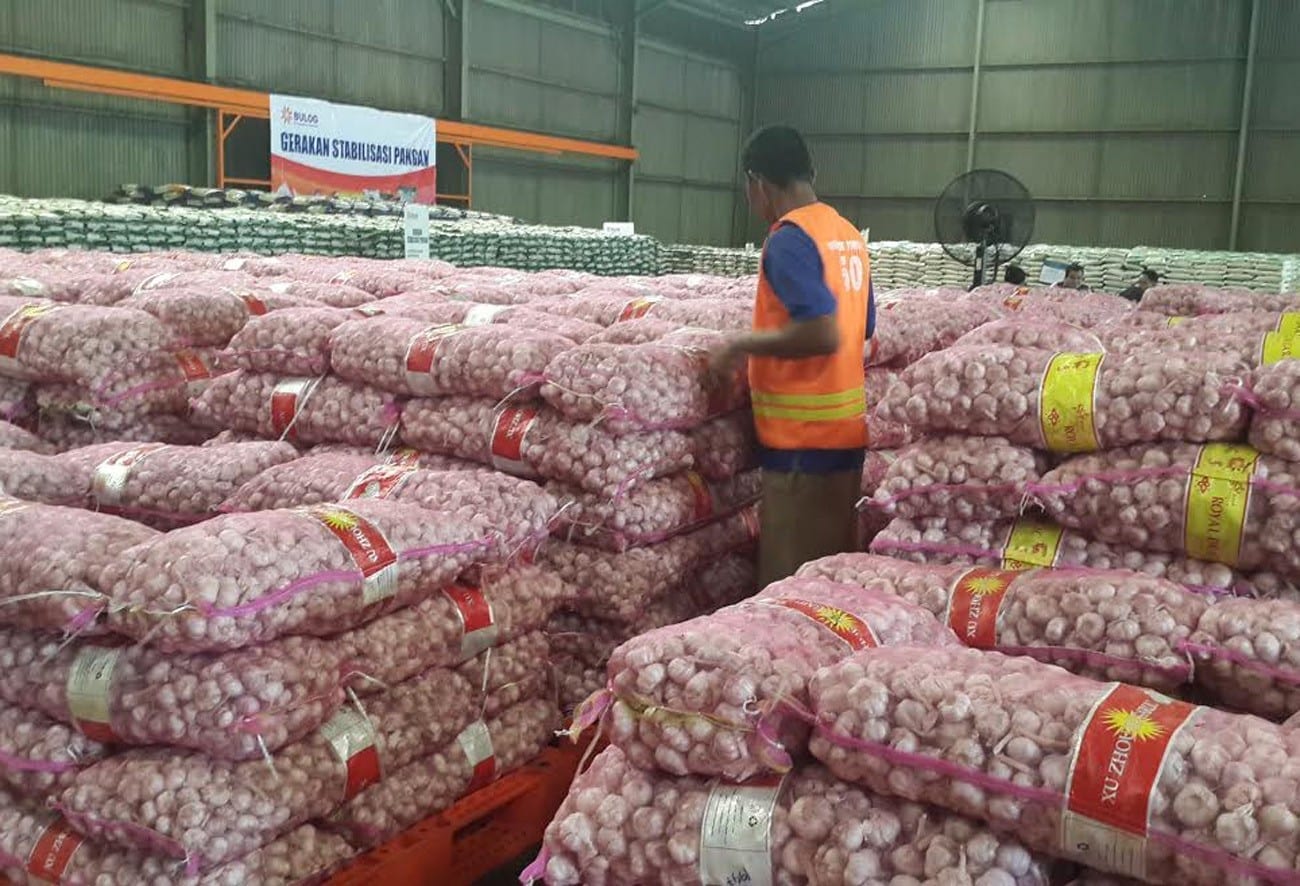
    Indonesia has impounded more than 200 tons of garlic imported from China, warning that a microscopic worm infestation found in the shipment could put at risk plans by the Southeast Asian country to boost its own garlic crop.

    Since coming to power in 2014, Indonesian President Joko “Jokowi” Widodo has pursued self-sufficiency policies to protect farmers, but efforts to rely on domestic supplies of everything from beef to rice have at times caused shortages and price spikes.

    Chinese food imports have previously proved sensitive in Indonesia. In 2016, Beijing’s embassy in Jakarta expressed alarm at media reports accusing China of using a “biological weapon” against Indonesia, after four Chinese nationals were arrested for planting imported chilli seeds contaminated with a bacteria.

    The 232 metric tons of garlic were imported from China in mid-February and after arriving at Jakarta’s port were shipped to the island of Sumatra, the Ministry of Agriculture said.

    This could be “very damaging to our garlic farming when we are trying to achieve self-sufficiency,” the ministry said in a statement on March 12.

    Despite being certified as free of pests in China, samples of the shipment contained ditylenchus dipsaci, a microscopic worm that infects onions and garlic, the ministry said.

    The nematology department at the University of Nebraska-Lincoln describes the worm as “one of the most devastating plant parasitic nematodes.”

    When quarantine officials reported the discovery to the importer, the garlic had already been sent to North Sumatra, the agriculture ministry said.

    The controversy even stirred a heated debate in parliament this week when a member of Jokowi’s ruling party called for a police investigation.

    Soetrisno, the chief executive officer of Tunas Sumber Rejeki, the company that imported the garlic, could not immediately be reached for comment.

    The Chinese embassy in Jakarta declined to comment.

    The garlic is currently being stored at a warehouse in Belawan Port, Sumatra, that has been sealed by police and the quarantine agency.

    Banun Harpini, the head of quarantine at the agriculture ministry, said on Wednesday the importer would be blacklisted. It was not immediately clear what other penalties would be levied.

    Indonesia plans to be self sufficient in garlic in 2019 by increasing the growing area for the crop by more than 70,000 hectares, but this may be an ambitious target since last year the country imported 434,000 tons of garlic, more than ten times the amount grown domestically.

    This year, the agriculture ministry expects 392,000 tons will be imported, mostly from China and India.
  • Government to realize self-sufficiency in garlic in 2019

    Government to realize self-sufficiency in garlic in 2019

    The Agriculture Ministry has targeted to achieve self sufficiency in garlic in 2019, sooner than its previously set target of 2033, Agriculture Minister Amran Sulaiman stated here, Monday.

    Sulaiman noted after the delivery of the Supreme Audit Agency Report that the decision to advance the target was made following recent fluctuations in the prices of the commodity.

    “We are learning from the recent fluctuations in the prices of garlic. Earlier, we had planned to become self-sufficient in garlic in 2033. However, we would advance the target; god willing, it would be in 2019 or 2020. We are aiming to advance the target by 13 years,” he remarked.

    According to the minister, a total of 60 thousand hectares of land will be needed to realize the target.

    Currently, some 90 percent of the countries garlic demand is met through imports annually reaching some 500 thousand tons worth Rp20 trillion.

    “If we can have 60 thousand hectares of (garlic plantations), then we can save Rp20 trillion in foreign exchange while boosting the farmers income,” he added.

    Sulaiman noted that the ministry will maximize the existing land potential, including four million hectares of rain-fed land and 21 million hectares of former swamp areas.

    “We can cultivate (garlic) in these four million hectares of land, with three harvests a year. Farmers could earn Rp150 trillion-Rp200 trillion from this. Secondly, we have 21 million hectares of swap areas that we can use for farming along with building a sugar factory. If we can achieve this, then we can become the worlds largest food producers,” Sulaiman remarked.

    Data from the Central Bureau of Statistics showed that 22,630 tons of garlic was imported from China as of April, while 1,971 tons of the commodity was imported from India during the same period.

    Indonesia has recorded self-sufficiency in garlic production in the period between 1990 and 1998.

  • Indonesia aims for zero imports of garlic in 2018

    Indonesia aims for zero imports of garlic in 2018

    The government is looking to achieve its goal of zero garlic imports in 2018, following an expansion of garlic farms across the country.

    “We aim to see 100,000 hectares of garlic farms next year. If 1 hectare [ha] can produce 5 tons of garlic, we won’t need to import anymore,” Agriculture Ministry spokesperson Agung Hendriadi told over the phone on Tuesday.

    Annual garlic consumption for household and industrial needs reached 500,000 tons in 2015, but only 20,000 tons of it was planted domestically. The remaining 480,000 tons were imported from China and India, ministry data shows.

    Last year, the government expanded garlic farms, which jacked up the national production of garlic to almost 200,000 tons.

    Indonesia in the 1990s supplied most of its garlic to the domestic market, but gradually the farmers were discouraged from planting it due to a continuous decline in prices. Now, there are only 2,000 ha of garlic plantations, a massive decrease from the 28,000 ha of plantations in the 1990s.

    Agung also said that the Trade Ministry had set maximum price of Rp 38,000 per kilogram for garlic and would maintain the price to encourage farmers to cultivate garlic.