Tag: garment manufacturing

  • Only 35 Percent of Gazipur Garment Factories Open on Friday

    Only 35 Percent of Gazipur Garment Factories Open on Friday

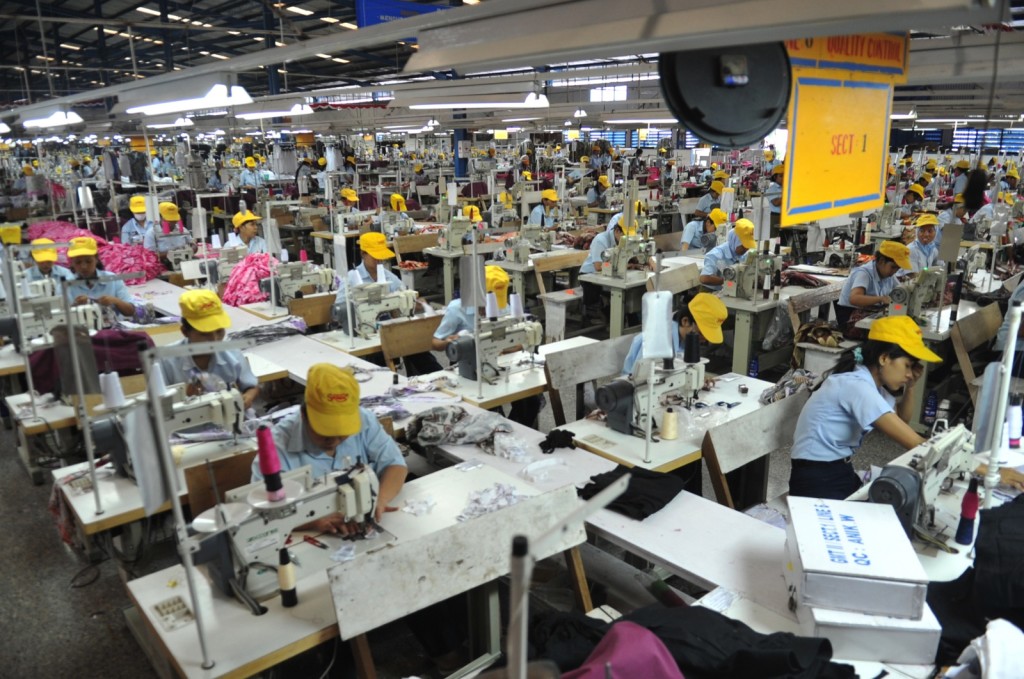
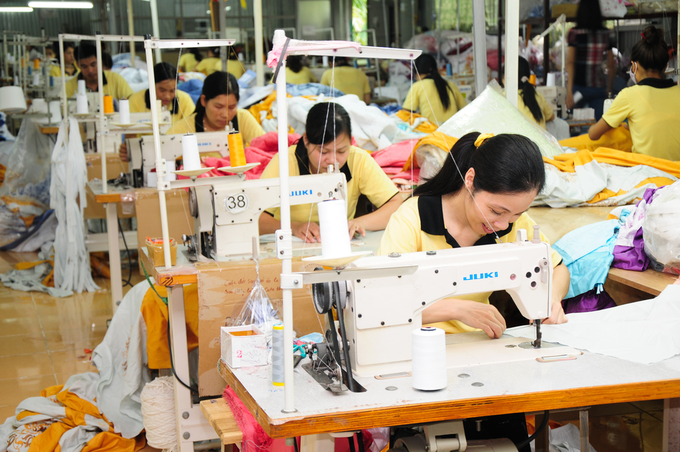
    Garment manufacturers in Gazipur operated only 35 percent of their production facilities on Friday as widespread factory shutdowns sent assembly line workers home across Bangladesh’s core apparel belt.

    Amjad Hossain, superintendent of Gazipur Industrial Police, confirmed the operating rate at 10:00am, leaving roughly two-thirds of the district’s export factories idle along key transport arteries including the Dhaka-Mymensingh Highway.

    Workers emptied out of the Taragachh industrial zone early in the morning after plant managers declared two-day closures. Ananta Garments suspended work at its Taragachh site, directing staff to leave the compound. Matrix Sweater in the Hajipukur area similarly halted operations for two days, citing local tensions.

    Uneven Operations Across the Cluster

    Disruptions remained selective rather than total across the manufacturing cluster. Parkstar Apparels and Parksin Bangladesh kept lines running in Barabari and Gachha, logging standard morning shift arrivals without incident.

    Freight corridors showed little physical obstruction despite the stoppages. Traffic Inspector Tarikul Islam reported clear vehicle movement through the Chandana Chourasta interchange, with commercial freight lanes operating normally throughout the morning.

    Sourcing Risks for International Buyers

    Sourcing directors across Europe and North America face immediate production bottlenecks when Gazipur pauses. The industrial hub accounts for a major share of Bangladesh’s readymade garment exports, serving global mass-market fashion brands that run tight inventory turns.

    When plants declare sudden multi-day shutdowns, delivery schedules for spring collections slip, forcing suppliers to absorb air freight penalties or renegotiate shipment windows. Sourcing desks at global fashion retailers are already monitoring South Asian capacity after months of volatile operating conditions in Dhaka’s satellite hubs.

    Production Continuity in Question

    Factory floors in Gazipur have experienced repeated friction between management and labour over working conditions, wage settlements, and local safety. Industrial police superintendent Amjad Hossain noted that Saturday coincides with a scheduled government holiday, giving operators a natural operational pause.

    A decision on whether garment factories would remain closed on Saturday would be announced this afternoon.
  • Factory Fires Hit Apparel Suppliers in Cambodia and Bangladesh

    Factory Fires Hit Apparel Suppliers in Cambodia and Bangladesh

    A fire ripped through a fabric storage facility at YTC Corporation’s garment factory in Cambodia’s Kampong Speu province, destroying the building and 150 sewing machines. The site shipped apparel to multinational retailers including Gap Inc as recently as January.

    Emergency crews deployed 10 fire engines, 107 personnel and 61 truckloads of water over five hours to stop the flames from spreading across the industrial compound. No injuries were reported, though the primary storage building was lost.

    Disruption Hits Cambodian Apparel Hub

    The facility in Kampong Speu forms part of Cambodia’s export network for womenswear and children’s garments. Fabric stock and primary assembly hardware suffered heavy damage before municipal teams contained the blaze.

    Worker safety is the ministry’s top priority. Senior ministry officials, together with representatives of the provincial labor department and the National Social Security Fund, arrived at the scene immediately and coordinated with local authorities to facilitate workers’ evacuation from the factory and their safe return home, Sun Mesa, spokesman for the Ministry of Labour and Vocational Training, told local media. Police have not determined the cause of the ignition.

    Warehouse Fires in Gazipur

    Industrial disruptions extended to South Asia over the same weekend. In Bangladesh, fires struck two export operations in the manufacturing hub of Gazipur.

    Flames gutted a carton storage facility belonging to Supreme Stitch Limited, also operating as Supreme Garments. The blaze spread to a yarn warehouse owned by DBL Garments before nine firefighting units controlled the incident after three hours. The fire caused structural collapses in tin-shed units, though managers reported zero worker casualties.

    Supply Chain Volatility for Global Buyers

    The incidents hit suppliers at a time when apparel brands demand faster turnarounds and tighter audit compliance across Southeast and South Asia. For brands sourcing basic apparel across Phnom Penh and Dhaka, unexpected facility shutdowns trigger shipment delays and force immediate production reallocations.

    Replacement costs for machinery and lost textile inputs fall directly on local contract manufacturers already managing margin pressure. Factory operators face heightened scrutiny from regional safety inspectors and international audit teams assessing fire safety equipment and evacuation standards.

    Labor and Environmental Headwinds

    Operating conditions across Asian garment corridors face concurrent regulatory and environmental strains. In India, police in East Delhi arrested nine factory owners after freeing 19 minors working extended shifts in unlicensed garment and jewelry workshops in Gandhi Nagar.

    Climate pressures compound these workplace compliance challenges. International Labour Organization projections show heat stress risks stripping 145,000 full-time jobs in Sri Lanka even under a low-emissions pathway, and up to 6,100 positions in the Maldives under severe warming scenarios. In Kampong Speu, municipal investigators continue their inspection of the YTC Corporation site to clear debris and assess whether structural damage extends to adjacent production lines.

  • Bangladesh Garment Shipments to Russia Drop to $257 Million

    Bangladesh Garment Shipments to Russia Drop to $257 Million

    Bangladesh apparel exports to Russia plunged to $257.26 million in fiscal year 2025-26, down 61 percent from pre-war highs as banking restrictions and shipping hurdles severed trade corridors.

    The export drop from $665.31 million in fiscal 2020-21 ends a decade of rapid expansion that local suppliers hoped would reach $1 billion in annual sales. Garments account for more than 95 percent of all goods Dhaka ships to Moscow, led by knitwear and sweaters.

    Payment Bottlenecks and Trapped Capital

    Trade ground to a crawl after Western sanctions disconnected major Russian lenders from the SWIFT international payment messaging network following the invasion of Ukraine in February 2022. Exporters in Dhaka cannot collect funds through normal interbank channels, forcing transactions into complicated third-country clearing systems.

    Bangladeshi apparel makers now hold more than $1 billion in unpaid receivables from Russian accounts, according to Mohammad Hatem, president of the Bangladesh Knitwear Manufacturers and Exporters Association. Individual small and mid-tier knitwear suppliers carry between $3 million and $4 million each in uncollected dues, with payments stalled even on indirect shipments handled through European intermediaries such as Polish retail group LPP.

    Transit Rerouting Adds Freight Costs

    Direct ocean shipments to Russian ports have stopped entirely. Manufacturers now route consignments through overland and sea corridors across Poland, Finland, Belarus and Germany, adding transit time, border handling fees and third-party forwarding costs.

    Attempts to settle trade in alternate currencies such as Chinese yuan or Turkish lira create separate liabilities for suppliers. Factory owners face the risk of secondary sanctions or international blacklisting if transactions cross sanctioned Russian entities or non-compliant payment conduits.

    “Because of payment problems, I stopped exporting to Russia, although I used to export more than $1 million worth of garments to the country before the war,” said Rajiv Chowdhury, managing director of Young4ever Textiles, a local apparel exporter.

    Pivot to Alternative Asian Markets

    For factory operators in Dhaka and Chittagong, the collapse of direct Russian business forces a structural shift in capacity allocation. Rather than carrying the credit risk of trapped receivables, large manufacturing houses are redirecting production lines to established and emerging buyers in Japan, India, South Korea and Turkey.

    This shift increases competition across Asian consumer markets as Dhaka seeks volume buyers to replace lost European orders. Exporters that built specialised heavy-knit capacity for cold-climate markets must either convert machinery for year-round collections or compete for tighter margins in East Asia.

    Tariff History and the Line to Sanctions

    Direct garment flows between Bangladesh and Russia originally took off after 2011, when Turkey imposed a 17.5 percent safeguard duty on Bangladeshi clothing to protect domestic producers. Prior to that duty, Bangladeshi factories shipped basic garments to Turkish intermediaries, who rebranded and re-exported the finished apparel to Moscow. The Turkish tariff forced Dhaka suppliers to bypass Istanbul and establish direct commercial links with Russian retail buyers, building export volumes from nominal levels to $638.30 million by fiscal 2021-22.

    Trade bodies including the Bangladesh Garment Manufacturers and Exporters Association maintain that Russia remains a viable long-term outlet once geopolitical conditions normalize. BGMEA president Mahmud Hasan Khan noted that factory groups will focus on expanding market share across Asian retail corridors while monitoring unresolved payment settlements on outstanding Moscow shipments.

  • Bangladesh Garment Factory Cooling Costs Recovered Within Four Years

    Bangladesh Garment Factory Cooling Costs Recovered Within Four Years

    Investments in cooling systems across Bangladesh garment factories pay back capital costs within four years, according to a study released on Sunday. Temperature data collected over a six-month period across eight manufacturing facilities in Dhaka showed that indoor heat stress erased an average of 4.1 per cent of annual factory revenue.

    Researchers at Cornell University’s Global Labor Institute found that physical modifications, including reflective roof paint, overhead insulation, and airflow ventilation, are commercially viable. Factory temperatures regularly climbed higher than outdoor readings, with the heaviest thermal load concentrated in pressing, ironing, and finishing lines.

    The Math on Shop Floor Cooling

    Jason Judd, executive director of the Global Labor Institute, noted that suppliers considering heat mitigation have struggled to weigh upfront spending against operational savings. Over the past year, apparel brands have sought verified payback timetables while discussing mitigation costs, emissions targets, and alternative energy sources with manufacturers.

    Apparel brands have spent years negotiating greenhouse gas targets and energy efficiency standards with suppliers. Adding physical climate adaptation to commercial contracts changes the financial equation. It shifts the focus from pure regulatory compliance to protecting factory throughput.

    Buyer Pricing and Cost Sharing

    Paying for factory retrofits creates friction between Asian garment manufacturers and Western fashion labels. Factory operators run on thin unit margins. They hesitate to fund facility upgrades without long-term order commitments or higher purchasing prices from international buyers.

    A heat resilience toolkit from the American Apparel and Footwear Association recommends that global brands co-fund factory modifications when direct commercial returns fall short of total setup costs. Nate Herman, executive vice president at the trade group, stated that brands must help protect workers across manufacturing networks as extreme heat events become frequent.

    Regional Export Exposure

    Earlier trade assessments showed severe climate risks across Asian manufacturing hubs. Heat stress and seasonal flooding threaten to wipe out $65 billion in combined apparel export earnings across Bangladesh, Cambodia, Pakistan, and Vietnam by 2030 if industrial zones fail to adapt physical infrastructure.

    Suppliers in Dhaka and regional production belts face a clear timeline to integrate cooling into capex plans. Retail buyers and factory operators will test the financial returns of these ventilation and insulation upgrades as contract pricing rounds open for upcoming production cycles.

  • Bangladesh Raises Fuel Prices by up to 17.4 Percent as Import Costs Surge

    Bangladesh Raises Fuel Prices by up to 17.4 Percent as Import Costs Surge

    Bangladesh raised domestic fuel prices by up to 17.4 percent on Monday, targeting state energy import losses as crude prices and ocean freight rates climbed.

    The price adjustments took effect immediately across petrol pumps nationwide, lifting diesel to 135 taka ($1.11) per litre from 115 taka.

    Under the revised schedule, 95-octane gasoline increased to 165 taka per litre from 145 taka, petrol climbed to 160 taka from 140 taka, and kerosene rose to 155 taka from 135 taka. The Energy Ministry said international fuel prices have more than doubled since March 2026, while shipping disruptions linked to Middle East conflict increased landed supply costs.

    Cutting State Losses at the Pump

    State-owned Bangladesh Petroleum Corporation accumulated losses of 228.76 billion taka ($1.9 billion) between March and August 2026. Ministry officials estimate the revised retail pricing will reduce the agency’s annual deficit by approximately 100 billion taka. The adjustment aims to protect central foreign exchange reserves and discourage cross-border fuel smuggling to neighbouring markets where retail prices trade higher.

    Dhaka continues to fund heavy subsidies on imported liquefied natural gas to maintain power generation and industrial gas distribution. Rising procurement costs across both liquid fuels and gas have steadily eroded the state treasury balance over the last two quarters.

    Factory Floors Face Margin Compression

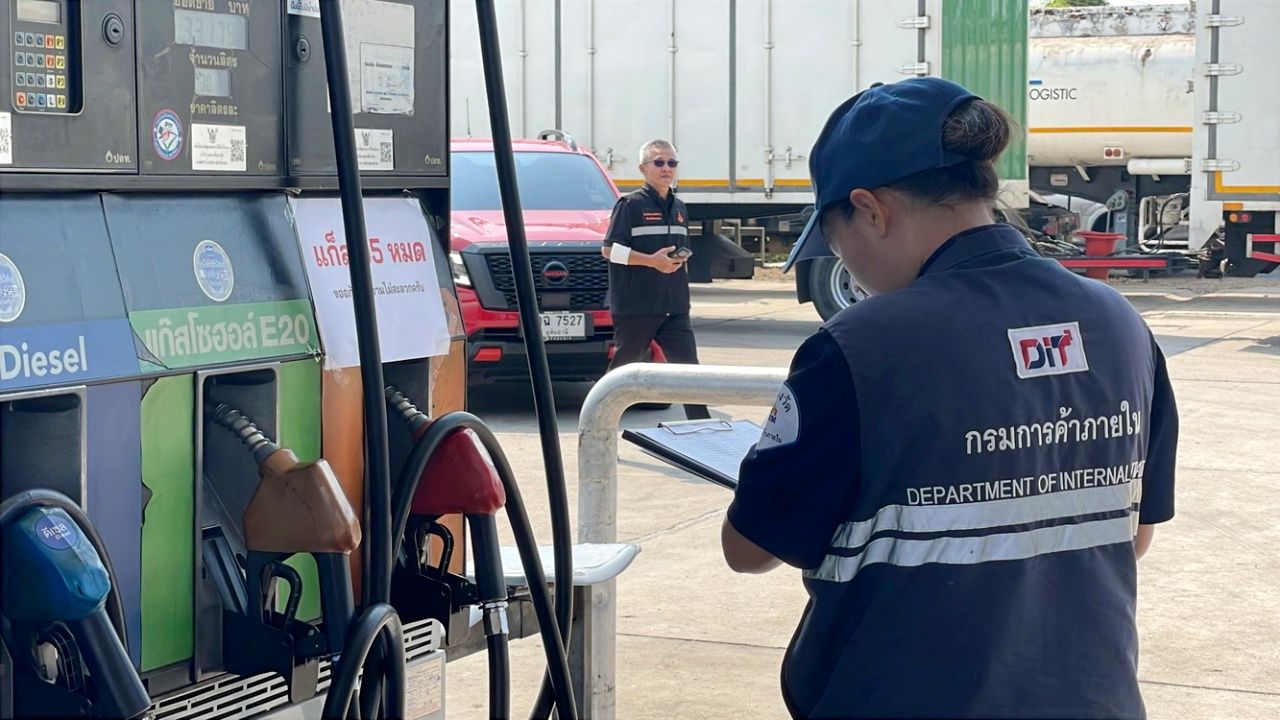
    For consumer goods manufacturers and the apparel export network, the price increase hits operations already coping with unstable grid power and factory fuel rationing. Garment suppliers rely on diesel generators to prevent assembly line stoppages during power cuts, meaning higher pump prices translate directly into elevated unit production costs.

    Mohiuddin Rubel, additional managing director of Denim Expert Ltd, which supplies international fashion retailers including H&M, noted that fast turnaround times and low manufacturing overhead remain critical to retaining brand contracts.

    “Staying in business means staying competitive: the buyer who gets a product onto the shelf fastest and cheapest wins, and gas, power, and fuel costs all feed into that equation,” said Mohiuddin Rubel, additional managing director of Denim Expert Ltd.

    Transport Rates and Consumer Inflation

    Domestic trucking fleets and river transport operators face immediate overhead increases that will push up wholesale and supermarket shelf prices across Dhaka, Chittagong, and secondary cities. Higher logistics expenses reduce operating margins for retail distributors who are unable to pass full cost increments onto price-sensitive shoppers.

    Anwar-ul Alam Chowdhury, president of the Bangladesh Chamber of Industries and chairman of apparel exporter Evince Group, warned that elevated operating expenses risk prompting industrial downsizing and job cuts across production clusters.

    The Third Adjustment Since April

    Monday’s increase represents Dhaka’s third upward fuel revision in five months, following earlier price rises enacted in April 2026 and June 2026. Each successive step attempted to narrow the gap between fixed domestic pump rates and volatile global energy benchmarks without extinguishing factory activity.

    The Energy Ministry will review Bangladesh Petroleum Corporation import invoices and domestic refinery runs next quarter to determine whether the 100 billion taka annual loss reduction target holds.

  • Gas Shortage Shuts 80 Percent of Narsingdi Textile Mills in Bangladesh

    Gas Shortage Shuts 80 Percent of Narsingdi Textile Mills in Bangladesh

    A severe natural gas shortage has shut roughly 80 percent of textile and dyeing mills in Narsingdi, wiping out an estimated Tk 500 crore in daily output.

    The industrial hub supplies about 75 percent of domestic fabric demand in Bangladesh, leaving garment makers without essential materials as international buyers cancel orders.

    Rotting Fabric and Idled Boilers

    Narsingdi houses more than 3,000 production units, including 2,500 sizing, spinning, dyeing and weaving mills. About 400 of these operations rely on uninterrupted natural gas at 10 to 15 pounds per square inch to run steam boilers and drying machines. Gas pressure in key industrial pockets like Madhabdi and Chowala fell to zero for four straight days, leaving chemically treated fabric stranded mid-cycle. Fabric left wet beyond 16 hours rots and turns unusable.

    Local industry groups estimate between 10 million and 15 million yards of fabric have been ruined. At Tithi Textile in Madhabdi, 250,000 yards were damaged after generators and machinery stopped. Facing steep losses and wage deadlines, more than 100 mills closed indefinitely, sending workers home on unpaid leave. Others turned to burning wood in steam boilers at a cost of Tk 12,000 a day, skirting local environmental permits after the price of scrap fabric waste spiked.

    Supply Chain Bottlenecks Spread

    The disruption traces back to July 21, when a technical fault crippled an offshore floating liquefied natural gas terminal at Moheshkhali. National gas output plunged from 2,650 million cubic feet per day to 2,175 mmcfd against total demand of 3,800 mmcfd. State distributor Petrobangla lifted supply to 2,300 mmcfd on August 22, but state utility Titas Gas diverted high-pressure flows of 200 PSI to the Ghorashal-Palash fertiliser plant, starving private textile processors.

    Bangladesh remains the world’s second-largest apparel exporter, yet its supply chain faces recurring energy vulnerabilities that threaten delivery timelines for global fashion brands. While competing manufacturing hubs in Vietnam and India rely on more diversified power grids, Bangladeshi mills remain exposed to single-point infrastructure failures in offshore gas infrastructure, compounding margin pressure from rising domestic debt.

    Titas Gas engineers expect regional gas pressure to show initial signs of recovery next week as repair teams complete work on the Moheshkhali LNG terminal.