Tag: Garmin

  • Garmin brings the ECG app to more smartwatches

    Garmin brings the ECG app to more smartwatches

    Garmin’s smartwatches are pretty popular in the United States and Europe, so the multinational company is trying to keep them updated. One of the features that most of Garmin’s smartwatches have been lacking in comparison with the competition is ECG support.

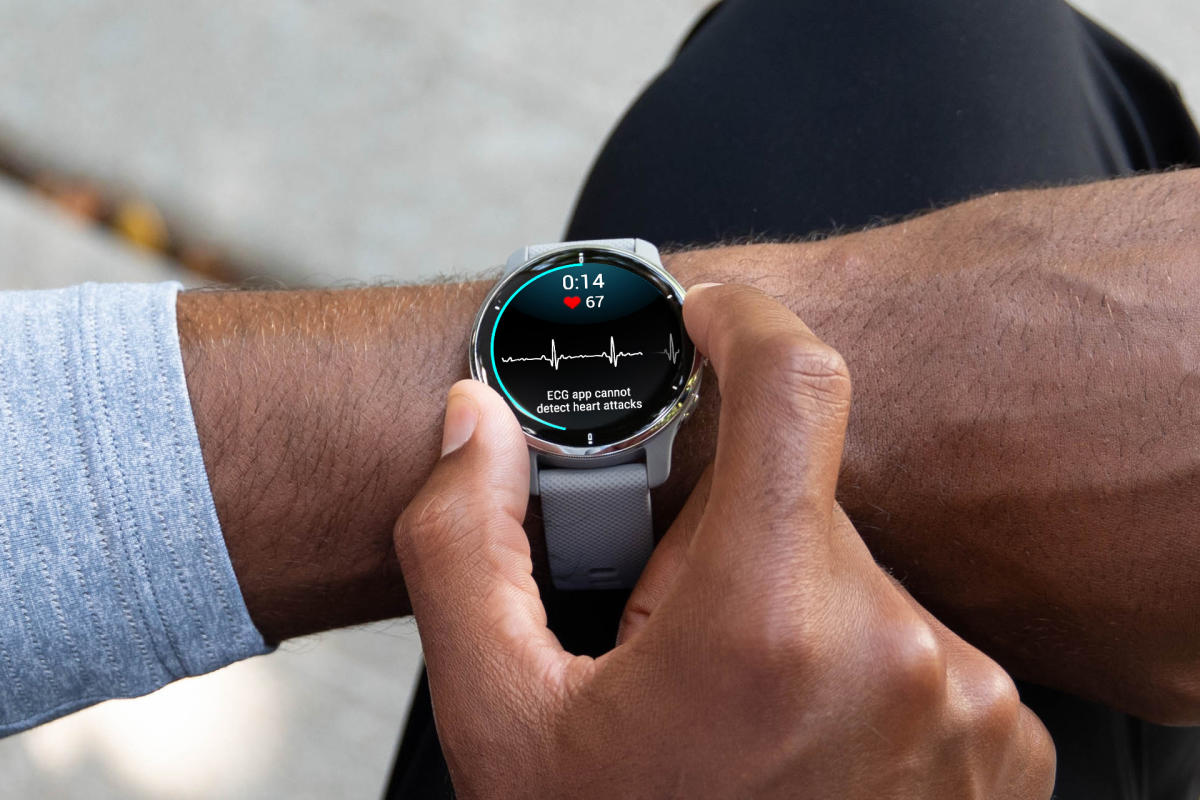
    The ability to measure atrial fibrillation was only available on Garmin Venu 2 Plus, but that’s about to change. The company has just confirmed that the ECG app is coming to more Garmin smartwatches, so if you own any mode from the list below, look for an update that will bring this new feature.

    In a post on Twitter, Garmin revealed that the ECG app is now available for epix Pro, Venu 3, and Fenix 7 Pro smartwatches. Yes, there are a bunch of other Garmin smartwatches that have yet to get the app, but the company told Android Central that “it intends to continue to expand its portfolio of products supporting the ECG app and launch it in new regions in-line with necessary regulatory approval.

  • Android’s emergency satellite service could work in over 150 countries

    Android’s emergency satellite service could work in over 150 countries

    By a show of hands, let’s see how many of you think that the iPhone was the first smartphone offering emergency services via satellite connectivity. Wow, it’s going to be interesting to tell all of you with your hands up that you’re wrong. Actually, Huawei’s Mate 50 series introduced its version of this feature one day before Apple did. And now there is talk that Huawei’s Mate 60 line, due out later this year, will offer voice and image transmissions by satellite.

    With iOS and Harmony ahead of the pack, Google is supposed to dip its toes in the satellite water with the release of Android 14. One rumor last month said that the release of Android 14 was going to bring satellite connectivity to Pixel and Galaxy handsets at first. The rumor said that the Android 14 update will add the necessary software while phone manufacturers will have to deal with the hardware requirements.

    The Team Pixel FanClub, while not affiliated with Google, said that Pixel and Galaxy models will be the first Android devices to sport the necessary hardware required for satellite connectivity to work. And on Sunday, Neïl Rahmouni, who was nominated as a Top Google Developer Online Contributor in June, posted on X that it “Looks like Google Messages may use Garmin Response for the Satellite Emergency SOS. If true it could mean that Emergency Satellite messages would be available in 150+ countries.”
    This would instantly top Apple’s Satellite connectivity service which is available in only a handful of countries at the moment. Not that it hasn’t proven its worth as Apple’s Emergency SOS via Satellite has already saved numerous lives.
    Despite having his name all over the X message proclaiming that Garmin’s service might be used by Google Messages for its satellite connectivity feature, Rahmouni believes that we shouldn’t assume that the Google-Garmin tie-up is happening until Google makes the official announcement. At this point, we don’t know when the feature is expected to launch and more importantly, which Android devices will support it.
  • Garmin expands Forerunner line with five new GPS models

    Garmin expands Forerunner line with five new GPS models

    While Garmin makes all kinds of wearable devices, ranging from super-basic activity trackers to luxury smartwatches, its central focus remains on so-called GPS running watches, designed to take on the likes of the Fitbit Versa rather than the global market-leading Apple Watch family.

    But not all athletes have the same passion, drive, and needs, which is why Garmin is today vastly expanding the Forerunner lineup with five new models ranging in price from $199.99 to $599.99. These are joining the entry-level $100 Forerunner 25, mid-range $350 Forerunner 735XT, and a $450 Forerunner 645 Music that lets you store your favorite tunes directly on your wrist, as well as supporting contactless payments.

    Obviously, the newly unveiled Garmin Forerunner 45 and Forerunner 45S come with no such advanced features, although their built-in heart rate monitor and standalone GPS functionality are arguably enough to justify a $200 price tag. In case you’re wondering, the main difference between these two models is the smaller 39 mm case of the 45S (compared to a 42-milimeter “standard” Forerunner 45 variant).

    Not exactly the world’s most stylish wearable products, the Forerunner 45 series also comes with “chemically strengthened” glass, a silicone strap, relatively small display, top-notch water resistance, lengthy battery life (up to 7 days in “smartwatch mode”), and all the elementary fitness tracking features a casual runner would ever need.

    At $350, the Garmin Forerunner 245 Music adds the ability to hold up to 500 songs into the equation, as well as more “advanced features to help runners improve.” Basically, you can get personalized recommendations on smarter ways to train and recover after intense workouts, not to mention a larger and sharper screen, stronger Gorilla Glass 3 lens protection, and improved battery life in “GPS mode.” There’s also a non-Music Forerunner 245 version available in exchange for $299.99.

    Last but certainly not least, the $600 Garmin Forerunner 945 is purportedly “made for the driven, the qualifiers, and the elite”, holding up to 1,000 songs (with both Spotify and Deezer support), while aiming to take your training to the next level with all the state-of-the-art activity tracking technologies and sensors available today, from VO2 Max to Pulse Ox and a bunch of complex performance monitoring tools.

    The Forerunner 945 can keep the lights on for up to two weeks on a single charge with the GPS switched off, while supporting wrist payments and boasting an extra-robust body with Gorilla Glass DX protection.
  • Smartwatch market set for a shakeup: Juniper Research

    Smartwatch market set for a shakeup: Juniper Research

    Big brands are set to lose share in a major shakeup of the smartwatch market. According to Juniper Research, the largest brands in the category now will see their market share fall by 2023 as new niche players gain ground. Four leading brands including Apple, Samsung, Fitbit, and Fossil will see sales decline from an estimated 58 per cent of the market last year to 47 per cent by 2023. The decline is due to the growth of smaller players such as Garmin, Huami and Huawei.

    Smaller players will thrive thanks to strategies tailored for niche markets, their choice of cases or price points, while other brands are releasing premium smartwatches combining the best of fitness, outdoor activity and health features. While Apple will remain the largest single vendor in terms of shipments over the next four years, Huawei will enjoy the fastest growth, at a CAGR of 20 per cent.

    An intensified focus on healthcare integration will also contribute to an increase in smartwatch shipments over the next few years. Juniper forecasts that Apple and Withings will lead this section, followed by Fitbit and Garmin.

    China to become the biggest market

    The rise of smaller players is linked to the rapid expansion of the Chinese market offering lower-priced smartwatches. The Far East and China have now overtaken North America as the largest geographical market, with more than 24 million smartwatches shipped last year, compared to 19.5 million in North America.

    The gap between these two markets will widen by 2023, with the Far East and China trebling its shipments by then.

    Slower hybrid market

    The adoption of hybrid smartwatches will be slower than expected. Last year, hybrid smartwatches represented about 22 per cent of all smartwatch sales. The slower growth is linked to smaller players focusing on digital smartwatches offering more possibilities in terms of apps, connectivity and sensors than hybrid watches, which remain limited in their functionality.

  • Visa and GARMIN launch GARMIN Pay in Thailand

    Visa and GARMIN launch GARMIN Pay in Thailand

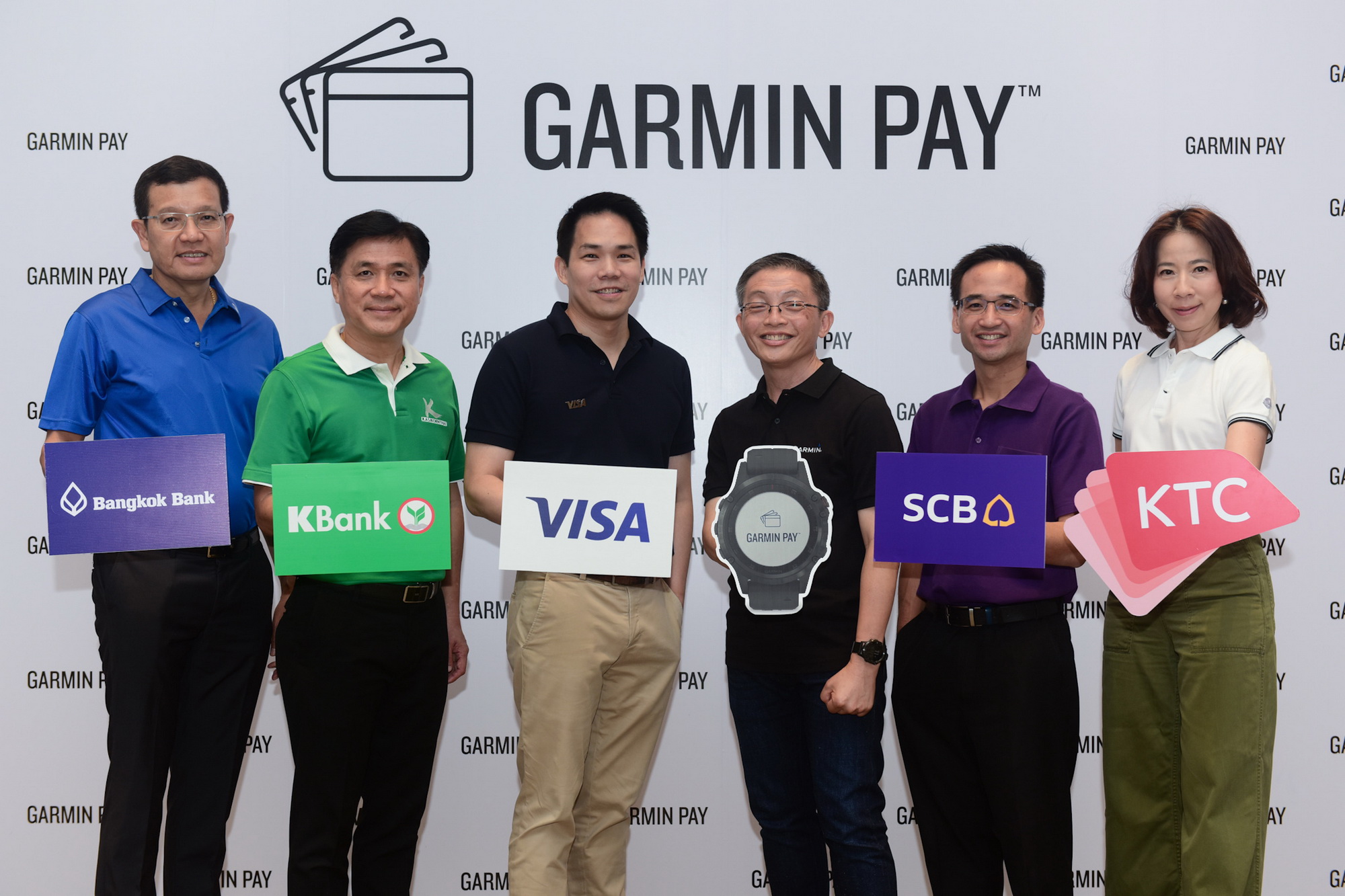
    Visa, the world’s leader in digital payments and GARMIN, in partnership with leading financial institutions, announced the launch of GARMIN Pay, a new contactless payment feature on GARMIN smartwatches. Starting 15 November, customers of Kasikornbank, Krungthai Card and Siam Commercial Bank can add their Visa credit or debit card to their GARMIN smartwatches, while Bangkok Bank is in line to launch by first quarter 2019.  The feature offers a new cashless experience, where purchases can be made seamlessly at growing contactless-accepted merchant locations. The emergence of payment innovation and technology mark yet another milestone helping to transform Thailand into a less-cash society.

    Mr. Suripong Tantiyanon, Visa Country Manager for Thailand said: “Visa is pleased to support the launch of Garmin Pay, bringing Visa contactless payments to Garmin smartwatches in Thailand.  Visa believes payments wearables are the future of fast, simple and secure payments, for people who lead an active lifestyle. According to Visa’s “sweaty money” survey, 57 percent of people who bring cash or a payment.

    card along on their workouts are stashing it somewhere uncomfortable and inconvenient. Garmin Pay will be a welcome solution for anyone looking for an effortless way to pay while on the go.  This launch is another milestone in Visa’s commitment to continue providing payment innovations and experiences across a wide range of form factors to consumers in Thailand.”

    Mr. Krairop Luang U-Thai, General Manager of GIS, the authorized distributor of GARMIN products in Thailand said: “GARMIN Pay is the latest feature on the GARMIN smartwatch.  Select the credit card you want to connect to the watch and create the GARMIN Pay Wallet by filling in the card information on the GARMIN Connect application along with your passcode. All customers then have to do is place their wrist near a card reader that supports contactless payments to purchase goods and services.  GARMIN Pay uses tokenization offered by the global payment networks to secure users’ information. The tokenized data is saved in an isolated safety chip which is in device, so to keep sensitive data from malware or virus. In addition to Thailand, GARMIN Pay is also currently available in 22 countries around the world.”.

    GARMIN Pay is available on vivoactive 3 series, forerunner 645 series, fenix 5 plus series. Check back for future additions and more information about GARMIN Pay, visit Garmin.co.th/Garmin-Pay


  • Garmin Philippines reports positive growth

    Garmin Philippines reports positive growth

    Active lifestyle smartwatch Garmin Philippines will introduce its expanded line to the Philippine market and open another location this year in Vertis North Mall Quezon City and its first-ever branch in Mindanao at the SM Lanang Premier (Davao).

    Garmin Philippines (Navco Inc.) president Ryan Tan says the expanded range is made for any kind of lifestyle, whether for everyday or for adventures.

    “Before, Garmins were primarily used by hardcore runners, triathletes and adventurers. In IronMan events almost 80 per cent of athletes use Garmin. Now Garmin has evolved into a lifestyle watch brand.”

    He says it looks like a normal everyday analog watch but with smart wellness features. The Vivomove HR, for example, is a hybrid smartwatch with a discreet touchscreen. It features a crystal touchscreen with a discreet display. Precision hands show the time and dynamically move away when the user swipes through their messages, heart rate and more. It counts the user’s steps and calories while monitoring wellness, including all-day stress tracking plus the relaxation-based breathing timer.

    The US brand has also introduced multisport watches such as Forerunner® 645 and the DescentTM Mk1. Up to 500 songs are built in to the Forerunner® 645 Music, which also offers smart notifications plus the ability to send prewritten responses to text messages, automatic uploads to the Garmin connect app and the ability for others to track your runs with the LiveTrack feature.

    Meanwhile, the Garmin DescentTM Mk1 is a do-it-all dive computer, the first of its kind to pack surface GPS navigation with full-color onscreen mapping and location reference. On top of that, it features an algorithm that alerts you when you’re beyond your dive limits.

    Meanwhile, Garmin is launching the Garmin PH Community on Facebook for Garmin users and fans in the Philippines.

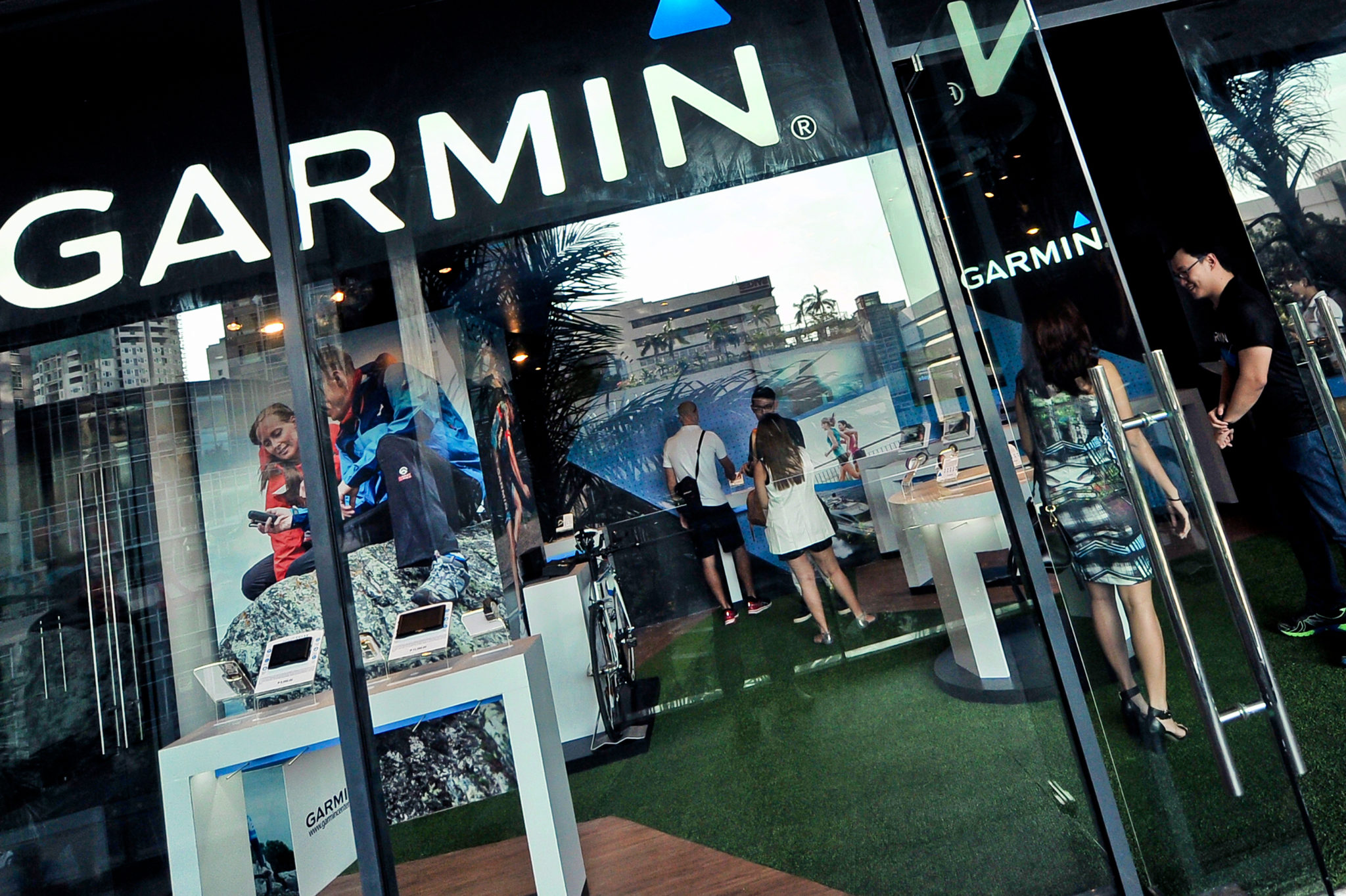
    Garmin opened its first concept store in Glorietta 5 in 2014, followed by outlets in Uptown Mall BGC, SM North Edsa, The Podium, SM Megamall, SM Mall of Asia, SM Aura Premier and Alabang Town Center.

  • Garmin sets up regional HQ in Singapore with eye on SEA

    Garmin sets up regional HQ in Singapore with eye on SEA

    Global manufacturer of fitness products Garmin has selected Singapore as its regional headquarters as part of the brand’s strategic plan to strengthen its presence in the region.

    Garmin’s consumer products have been sold in Singapore through distributors since the early 1990s. The company has a strong foundation in engineering products for aviation and marine since 1989.

    With the opening of its Singapore headquarters, Garmin will now directly manage sales and marketing of its consumer business devices in South-East Asia and India region.

    Leading Garmin’s Singapore business is its managing director for South Asia/ India region, Engelhard Al Sundoro, who will manage Garmin’s consumer business in six Southeast Asian (SEA) countries that include Singapore, Malaysia, Philippines, Indonesia, Vietnam and Thailand.

    “Outside of US, China and Taiwan, it is a natural step for the brand to strengthen our presence in SEA with Singapore as our headquarters as consumers here tend to be early adopters of technology,” said Al Sundoro.

    Garmin had recently announced its partnership with EZ-Link to launch a special version of its vivosmart HR activity tracker with built-in NFC contactless payment capability. This would allow commuters to use their fitness band to pay for their train, bus, cab rides and even purchase items at selected retail stores in Singapore.

    “As a company, we need to be an enduring brand that consistently innovates. In order to do that, it is essential for us to be closer to our customers to understand what they need. Even as a global brand, Garmin sees each market differently as the customer needs in each region is diverse,” he added.

  • Wearable technology goes beyond watches

    Wearable technology goes beyond watches

    There is more to wearable technology than wrist devices, with more than 25 exhibitors out to prove this at a consumer technology expo coming up in Shanghai.

    They will be showcasing the latest in wearable innovation at CES Asia, which returns to Shanghai from May 11 to 13.

    Owned and produced by the Consumer Technology Association (CTA) and co-produced by Intex Shanghai, the event is being hosted at the Shanghai New International Expo Centre (SNIEC).

    CTA research expects wearable sales in the emerging Asia-Pacific region to increase by 56 per cent this year.

    “Wearables are one of the fastest-growing areas of technology. They not only count our steps, they also track our mood, sleeping habits and even our pets,” says CES senior vice-president Karen Chupka.

    “The possibilities in this product category are endless.”

    Key companies exhibiting wearables at CES Asia include Garmin, Monster and Ximmerse, plus there is a wearables pavilion organised by the China Electronic Chamber of Commerce.

    New this year will be a CTA-hosted session entitled Innovative Wearables, at the Kerry Hotel on May 12. The panel will discuss innovations coming to market, as well as user interface and design.

    So far, 250 companies representing 20 countries across 15 product categories have signed up to exhibit at CES Asia, including 360, BMW, Hisense and Huawei.

    Formerly the Consumer Electronics Association, CTA is the trade association representing the $287 billion US consumer technology industry. It covers more than 2200 companies, 80 per cent of which are small businesses and startups.