Tag: gaz

  • Cooking gas prices fall in June

    Cooking gas prices fall in June

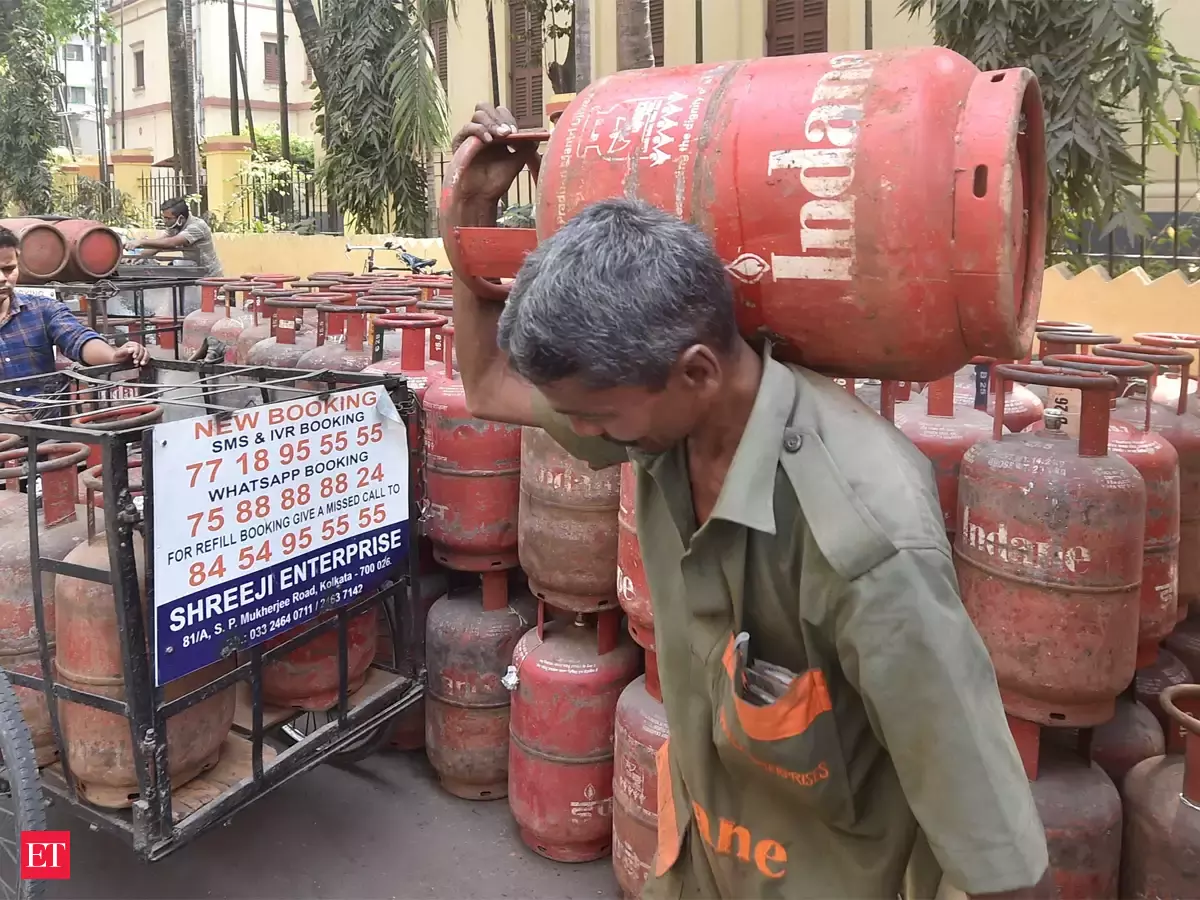
    Cooking gas prices have decreased on June 1 following the falling prices in world market.

    The retail prices of Petrolimex gas (including VAT) in June in Hanoi is VND371,600 ($15.82) per 12 kg cylinder; down VND33,640.

    Nghiem Xuan Cuong, head of the Commercial and Civil Gas Sales Department under Petrolimex Gas JSC said that the average contract gas price in the world in June is at $445 per tonnes, down $110 per tonnes compared to May.

    From the beginning of the year, the retail gas prices in the domestic market have declined four times in January, March, April, and June and increased twice in February and May.

    On the world market, at 8 am on May 31, the price of gas futures contracts delivered in July 2023 is at $2,319 per mmBTU, down $0.004 per mmBTU due to falling demand for natural gas in Europe as the winter is over and demand for electricity in summer peak has not yet begun. Gas consumption by industries also weakened.

    According to data from Gas Infrastructure Europe, as of May 24, natural gas storage sites in the EU was 66.71% full.

  • Cooking gas prices up 3%

    Cooking gas prices up 3%

    Cooking gas prices rose on Thursday in Ho Chi Minh City and other southern localities, with a 12-liter cylinder now costing VND438,000 (US$17.78), 3.06% higher than before.

    This is the second increase since November after prices fell for six months in a row from May.

    Global rates have gone up by 1.56% to $650 per ton as demand for heating surges amid winter, according to local distributor Saigon Petro.

    In Vietnam, domestic supply meets only around 60% of the demand, which means prices are partially dependent on global rates.

  • Gas shortages in few places in Vietnam

    Gas shortages in few places in Vietnam

    Gasoline shortages have been occurring only in a few southern locations and the country has adequate reserves to fully meet demand, the industry ministry has assured.

    Shortages are only reported by small distributors who want to hold on to their stocks to push prices up, Deputy Minister of Industry and Trade Do Thang Hai said at a meeting Tuesday.

    “We have reserves to ensure supply for 20 days of consumption as regulations require.”

    Major distributors (who account for over 90 percent of market share) have been selling routinely since before the Lunar New Year holidays (January 29-February 6), he said. Many gas stations in An Giang, Dong Nai and Hau Giang provinces closed down in recent days complaining of lack of supply.

    Some also stopped selling because rising prices are forcing them to sell at a loss. They are not allowed to increase retail prices on their own and authorities usually make price changes on the 1st, 11th or 21st of a month. But since February 1 was a holiday, the next price change is not likely until Friday.

    The country’s biggest refinery, Nghi Son in the central province of Thanh Hoa, had to cut down production from 105 percent of capacity to 80 percent last month due to a cash crunch. Vietnam produces around 75 percent of its fuel requirements, with Nghi Son accounting for 35 percent, and imports the rest.

    Phan Thi Thang, deputy chairwoman of the HCMC People’s Committee, said some gas stations in the city too had closed down temporarily due to lack of supply, but reopened, and as of Tuesday only two out of 548 were closed but for other reasons.

    Major distributors in the city have assured they have enough inventory to last 40-60 days, she said.

    The city has ordered all distributors to import more to ensure reserves that would meet at least 30 days of demand, she added.

    Deputy Prime Minister Le Van Thanh has instructed the trade ministry to be more proactive in regulating gas supply to ensure there are no shortages.

  • Petrolimex reports $44 mln profit

    Petrolimex reports $44 mln profit

    Petrolimex has reported pre-tax profits of over VND1 trillion ($44 million) in the first quarter thanks to the Covid-19 pandemic being contained and rising global oil prices.

    It has made a loss of VND1.7 trillion in the same period last year.

    The management of the country’s top fuel retailer said oil prices had risen 24 percent from last year to over $59 per barrel by the end of March.

    In the same period last year, they had plummeted 66 percent to around $22 per barrel.

    Revenues in the first quarter remained virtually unchanged from a year earlier, at VND38.2 trillion.

    It has targets of VND135.2 trillion in revenues and VND3.3 trillion in pre-tax profits, up 9 percent and 138 percent respectively, for the full year.

  • Huge Rise In Coronavirus Cases Hit India’s April Fuel Demand

    Huge Rise In Coronavirus Cases Hit India’s April Fuel Demand

    Indian state refiners’ local fuel sales in April declined due to state-level restrictions aimed at stemming a rampant second wave of coronavirus infections, preliminary data shows. The deadly second wave topped 400,000 new daily cases for the first time on Saturday.

    Authorities reported 401,993 new cases in the previous 24 hours, the highest daily count globally, after 10 consecutive days over 300,000. Deaths from COVID-19 jumped by 3,523, taking the total toll in India to 211,853.

    “Overall fuel demand is down by about 7% from pre-covid level of April 2019,” said A.K. Singh, head of marketing at refiner Bharat Petroleum Corp.

    “We were near pre-covid level in March but new restrictions and covid wave-2 has temporarily reduced demand equivalent to about 10% of March demand for both personal mobility and industrial goods movement,” Singh told Reuters.

    He said the local fuel consumption will ‘start to look up’ in June, by when second wave of coronavirus is expected to weaken.

    Analysts are expecting India’s demand for transportation fuels to witness a sharper slump in May due to more impending restrictions.

    Declining fuel sales will reduce crude intake by refiners. The country’s top refiner Indian Oil Corp is operating refineries at an average 95% capacity.

    State companies – IOC, Hindustan Petroleum Corp and BPCL – own about 90% of India’s retail fuel outlets.

    State retailers’ fuel sales in April declined from their sales in March and April 2019 levels, while posting a sharp rise from the year ago month when there was a nation-wide lockdown.

  • BP pulls sexualised magazines from stores

    BP pulls sexualised magazines from stores

    Fuel giant BP Australia has joined 7-Eleven and pulled two “M+” rated magazines from its 350 petrol outlets across the country after complaints they sexualized young girls and promoted harassment.

    People and The Picture magazines, published by Bauer, will be pulled from the shelves BP has confirmed.

    “M+ rated magazines will no longer be stocked at our 350 company-owned stores across Australia,” BP tweeted on Monday night.

    Its decision comes after activist group Collective Shout said it alerted BP to recent covers of the Australian magazines, which frequently publish pictures of glamour models and stories with a sexual element.

    Headlines on the covers included “Better Than Viagra” and featured a photograph of a young woman in pigtails with the caption “I have no gag reflex”, Collective Shout said.

    Now the group has set its sights on supermarket giant Coles, which still stocks the publications.

    “The display and sale of pornographic magazines in the public space creates a hostile environment for women and girls,” campaigns manager Melinda Liszewski said in a statement.

    “We urge other retailers selling these magazines – such as Coles Express – to follow the example set by 7-Eleven and BP and cease the sale of ‘unrestricted’ pornographic magazines immediately.”

    7-Eleven recently stopped selling the magazines in its 700 convenience stores.

    Collective Shout campaigns against the objectification of women and the sexualization of girls, according to its website.

  • Petrol, Diesel Prices Go Down For Two Days In A Row

    Petrol, Diesel Prices Go Down For Two Days In A Row

    Fuel price rates continued a downward trend for the second day on Friday. Delhi, Kolkata, and Mumbai saw a decline of 18 paisa a litre on petrol and Chennai 19 paisa per litre. Similarly, diesel rates also reduced by 8 paisa a litre in Delhi, Kolata and Mumbai and in Chennai the reduction was by 9 paisa a litre.

    “This festive season has seen the prices of fruit and vegetable soar. The rising fuel prices are one of the major factors for this. Now that the fuel rates are coming down, the consumers may benefit,” said Anuj Gupta, Vice-President of Angel Broking.

    As per the Indian Oil website, the new rates on petrol in Delhi, Kolkata, Mumbai and Chennai are Rs 74.33/litre, Rs 76.96/litre, Rs 79.93/litre and Rs 77.21/litre, respectively. The diesel rates after the decline are Rs 67.35/litre, Rs 69.71/litre, Rs 70.61/litre and Rs 71.15/litre, respectively.

    The fuel price has seen a decline for the past two days and in Delhi petrol rates have come down by 28 paisa/litre and diesel by 14 paisa/litre. Gupta said that the fuel rates will come down further as the brent crude oil price is declining.

    The fuel prices have seen a sharp rise after the drone attack on a Saudi oil facility on September 14. The Brent crude oil rates went up by $71.95 /barrel. But, now the rates are gradually coming down and the Brent Crude rates have come down by $14 per barrel.

  • VW in talks to buy stake in Russia’s GAZ

    VW in talks to buy stake in Russia’s GAZ

    German carmaker Volkswagen is in talks to buy a stake in GAZ, a Russian manufacturer of light commercial vehicles (LCV), five sources familiar with the talks told.

    It was not immediately clear how big a stake is being discussed or the value of the deal.

    GAZ is a part of the Basic Element group that holds the assets of Russian businessman Oleg Deripaska. Both GAZ and Basic Element declined to comment, while a spokesman at VW headquarters said he does not comment on market speculation.

    “There are talks, they are trying to reach an agreement. Deripaska has long been looking for a partner and VW does not have a Russian partner,” one well-placed industry source said.

    Another well-connected car industry source, two financial market sources and another person familiar with the matter also said talks were under way.

    One of the sources said that a decision on the size of the proposed stake sale has yet to be made.

    A source close to VW also confirmed that talks were in progress but said the possibility of the German group taking a stake in GAZ is not the only mater under consideration.

  • Petron to start $20B oil refinery in early 2018

    Petron to start $20B oil refinery in early 2018

    Petron, the country’s biggest oil refiner and retailer, has partnered with two foreign firms to start building a new oil refinery worth $15 million to $20 billion by early 2018.

    This is the biggest investment in the Philippine history so far. Have you seen a plant that is worth that much?” Ramon Ang, president and chief executive officer of Petron, said in a media roundtable in Pasig City.

    Ang said the oil refinery will mainly produce petrochemicals, with a capacity of 250,000 barrels per day. “It will process petrochemical and by-products.”

    Right now, we have a target location and we are in the process of acquiring or doing a lease or a joint venture agreement with the land owners. A new oil refinery project with this size requires at least 2,000 hectares and a deep sea port,” Ang told reporters.

    The chief of Petron said he cannot reveal yet the location and the names of his partners as the project has yet to secure government approvals.

    We have to wait for ECC (environmental compliance certificate) and other government approvals. We may start early next year, once the partners agree on equity. Financing is huge, we have to process it in different countries,” Ang said in Filipino.

    He said the construction period for the greenfield project will take two to 3 years. Ang said his group is looking at 30% equity and 70% loan for the financing of the project.

    “World market potential for petrochemical is very very high, so we are gearing for that,” Ang said.

    Expansion in Malaysia, Philippines

    Other than its greenfield project, Ang said Petron plans to earmark a spending budget of another $2 billion to expand its plants in Bataan and Malaysia.

    He said Petron plans to spend at least $1.5 billion to expand the capacity of its oil refinery in Malaysia to 150,000 barrels a day from 88,000 barrels a day. Petron also plans to spend about $500 million to upgrade its refinery in Bataan.

    “Right now, Malaysian investment contributes about 25% of our revenue. It will only grow if we invest in the Malaysian refinery upgrade. Otherwise, it is just like buy and sell. So, the Malaysian refinery, we have to upgrade. At the moment, we are finalizing the study to do the upgrade,” Ang told reporters.

    He said the Malaysian market is promising, with about 25 million population, consuming around 600,000 barrels a day.

    Petron acquired in 2011 Esso Malaysia’s Port Dickson refinery and fuel retail network in Malaysia.

    Meanwhile, the Petron Bataan Refinery is the country’s largest integrated crude oil refinery and petrochemicals complex. Inaugurated in 1961 with a capacity of 25,000 barrels per day, it has grown to its current rated capacity of 180,000 barrels-per-day.

    “Bataan upgrade will start within the next two months. If you notice, during the time of the government, they already know how to do oil refinery upgrade… it is just that the investment is too big. For us, this is where we are strong at,” Ang said.

    Petron registered a net income of P5.6 billion in the first quarter of 2017, doubling the P2.8 billion it posted for the same period last year.

    Combined volumes from the Philippines and Malaysia were 3% higher at 26.2 million barrels. 

    Domestic retail segment volumes grew 6%, with LPG and lubricants growing 5% and 16%, respectively. 

    Petrochemical export volumes also more than doubled. Petron Malaysia’s commercial and lubcricants sectors also posted double-digit growth.

  • Korean motorists pay high oil taxes

    Korean motorists pay high oil taxes

    South Korean motorists pay much higher oil taxes than their counterparts in the United States and Japan, a report said Monday, sparking calls for the government to lower them.

    According to the report by online crude price provider Opinet, gasoline prices in South Korea averaged 1,455 won ($1.28) per liter in December last year, with taxes accounting for 62.3 percent of the price, or 905.75 won.

    In January, the proportion of taxes dropped to 60 percent in line with rising gasoline prices.South Korea imposes a flat sum of three different taxes on petroleum products, including transportation-energy-environment and education taxes. Also added are an import levy of 16 won per liter, a tariff equivalent to 3 percent of crude prices and a value added tax amounting to 10 percent of the retail price.

    An industry source said that the percentage of taxes to gasoline prices has remained in the 60 percent range since 2014, when international crude prices entered into a low-price phase.

    Taxes account for a far greater share of retail gasoline prices in South Korea than in the U.S. and Japan. In November, the portion of taxes stood at 61.5 percent for South Korea, while comparable figures were 52.9 percent for Japan and 20.9 percent for America.

    Some experts call on the government to reduce oil taxes that are “excessive and irrational,” which they claim has resulted in mass production of ersatz oil products.

    Others argue that the current oil tax system should remain intact because South Korea relies entirely on imports for its oil needs and a cut would run counter to government efforts to reduce greenhouse gases and fine dust.

    The government has started research on revising the current oil tax system, but a finance ministry official said nothing has been determined yet.

  • BN explains why petrol prices have gone up

    BN explains why petrol prices have gone up

    The price of petrol has gone up because the price of refined petrol has increased, even though crude oil prices have dropped.

    In refuting allegations by the opposition, the Barisan Nasional Strategic Communications Team said today Malaysians used refined petrol, not crude oil.

    It noted that refined petrol prices might differ from crude oil prices due to global supply and demand factors.

    Also, Malaysia uses a managed float system which is dependent on global petrol prices.

    “Knowing that it is a managed float system, it is ridiculous that opposition leaders blame the government when petrol prices increase due to global market price increases but when petrol prices go down, they claim this is due to global prices and give no credit to the government,” said the statement.

    It said MPs Dr Wan Azizah Wan Ismail (PKR) and Tony Pua (DAP) had pointed out that the crude oil price for January had dropped and that the ringgit did not weaken compared with the previous month when criticising the increase in petrol prices.

    “We would like to inform both these Members of Parliament, the other opposition leaders and their propagandists that Malaysians do not pump crude oil into their cars.

    “The majority of Malaysians pump refined petrol in the form of RON95 or refined diesel.”

    The prices of RON95 and RON97 went up by 20 sen to RM2.30 (up 9.5%) and RM2.60 (8.3%) respectively, while diesel went up by 10 sen to RM2.15 (4.9%) today.

    The statement said as part of the move away from inefficient blanket subsidies, where the rich had benefited more than the poor, to more direct targeted assistance, Malaysia had adopted the managed float system from Dec 1, 2014, to determine the price of retail petrol and diesel.

    “Our managed float system uses the average price of the refined product — not crude oil — for the previous month to determine the retail pump price for the next month. Specifically, Malaysia uses the Singapore Means of Platts (MOPS) pricing for petrol and diesel.

    “While global oil prices had increased in recent months due to an agreement to cut production by oil-producing countries — which also benefits Malaysia — the price of refined oil products has increased further due to other reasons.”

    It said a check on the MOPS would show that the average price of motor gasoline 95 unleaded for January had stabilised in a range of US$69 to US$70 per barrel and was materially higher than the average price in December 2016 where the price had steadily increased from US$62 at the beginning of the month to US$68 by December’s end.

    The statement noted that oil refineries in Southeast Asia had enjoyed “higher pricing and margins due to an unusually higher than normal number of refineries around the world shutting down due to fires and major maintenance”.

    This, it said, had reduced supply and increased the refineries’ margins and pricing — hence the higher motor gasoline 95 prices.

    The statement advised Wan Azizah and Pua to “better understand the economics and market reality of petrol prices instead of making baseless statements that are untrue — or worse — designed to intentionally mislead and incite Malaysians.

    “It is like a monthly game that never ends and a game that opposition leaders do not seem to tire of playing.”

    The statement said that while Malaysians had reason to complain that the price of RON95 in February at RM2.30 per litre was higher than what they had enjoyed in the past, Malaysia’s petrol prices were still consistently the cheapest in Southeast Asia (except Brunei) and among the 15 cheapest among 180 countries in the world.

    “This is unusual as Malaysia is not a big producer and exporter of oil when compared with the other countries in the top 15 cheapest retail petrol list.

    “In Asean, our RM2.30 per litre price for February compares favourably to Indonesia (RM2.73), Thailand (RM4.10), the Philippines (RM3.72) and Singapore (RM6.56).

    “Malaysia’s RON95 price was also at RM2.30 per litre in October and November 2014. It is also interesting to note that in 2008, RON92 had reached RM2.62 per litre.”

    The statement noted that while a managed float would mean that Malaysians had to bear with higher petrol prices when global prices increased, this also meant “we had also benefited from a prolonged period of low refined petrol prices over the past two years when it had reached as low as RM1.60 per litre”.

    This, it added, was unlike before 2004 when Malaysians did not benefit from low global oil prices, which had ranged from US$10 to US$20 per barrel compared with US$55 to US$60 per barrel now as Malaysians were taxed 58.62 sen per litre for petrol and 19.64 sen per litre for diesel for decades. These taxes, it noted, were abolished only in the year 2004.
  • Pertamina Reports Net Profit rp23,8 Trillion Six Months

    Pertamina Reports Net Profit rp23,8 Trillion Six Months

    PT Pertamina reported US$1.83 billion (Rp23.8 trillion) in net profit in the first half of the year, or an increase of 221 percent from the same period last year.

    Chief Executive of the state-owned energy company Dwi Soetjipto attributed the increase in profit to improved performance of its business units and efficiency in operation.

    “We are grateful that efficiency and increase in performance in the upstream and downstream operations have resulted in an increase in net profit to US$1.83 billion,” Dwi said.

    He said in the first half of the year, the company was still confronted with declining prices of oil in the world market.

    The condition served a big blow to oil companies in the world though the impact was less damaging on Pertamina, he said.

    The prices, however, began to pick up in the following three months, he added.

    Pertaminas Finance Director Arief Budiman said in the first half of 2016 the company recorded US$17.19 billion in income, down 21 percent from US$21.79 billion in the same period last year.

    Its operating income rose 110 percent from US$1.56 billion in the first six months of 2015 to US$3.28 billion in the same period in 2016.

    “We are strong in cash flow with balance reaching US$5 billion. Therefore, we are strong enough to carry out corporate action when necessary,” he said.

    He said the company produced 640,000 barrels of oil equivalent per day consisting of 305,000 barrels of crude oil and 1,938 mmscfd of gas.

    Investment in a number of upstream projects have been implemented such as in the 1×55 MW geothermal power project of PLTP Ulubelu 3, and 2×55 MW PLTP Lumut Balai now 45 percent completed .

    The company also continued to develop infrastructure both for gas transport and processing and marketing.

    Among gas pipe projects such as Arun-Belawan-KlM-KEK, Muara Karang-Muara Tawar, Gresik-Semarang, and Porong-Grati gas pipes have been more than 80 percent completed.

    Development of processing infrastructure is being accelerated such as Refinery Development Masterplan Program (RDMP) of Kilang Balikpapan, which is now in the final phase of “Basic Engineering Design”, and RDMP of the Cilacap refinery now in the phase of “Front End Engineering Design”.

    Meanwhile, a number of marketing infrastructure projects have been in the final phase of development such as Pulau Sambu and Tanjung Uban oil fuel terminals, procurement of oil fuel and crude oil tankers of the General Purposes (GP) and Medium Range (MR) types with delivery expected this year.

  • Hong Kong Investors Eye Filling Station Business in Indonesia

    Hong Kong Investors Eye Filling Station Business in Indonesia

    Foreign investors have shown strong interest in the downstream oil and gas business in Indonesia. A leading Hong Kong-based company recently announced its interest in investing in the filling station business in Southeast Asia’s largest economy.

    The company’s investment interest was expressed during a business forum event that featured the Head of the Investment Coordinating Board (BKPM) Franky Sibarani as keynote speaker to 40 Hong Kong multi-sector investors, Wednesday (18/5). Franky said the investoris engaged in the trading of petrol, diesel, jet fuel and LPG in Hong Kong and overseas, and has business capability in the downstream oil and gas sector.

    Currently, the investor owns 42 petrol stations and two oil terminals with a storage capacity of 374,500 cubic metres. It also has a fleet of 16 vesselswith the capacity to transport 68,600 tons of oil. In addition, the company has a marketing network that covers almost the whole of Hong Kong.

    Franky added that the investor had visited Indonesia a number of times. They had met with Pertamina to share their investment plans in the general commercial fuel business in Indonesia. To ensure the plan goes ahead, a designated BKPM marketing team in Hong Kong will oversee the investment interest.

    BKPM has also received expressions of interest from other Hong Kong companies in investing in the infrastructure, maritime and fisheries sectors. “In fact there is one company operating in the electronics and property industries that will increase its investment in Sukabumi by US$ 5 million,” said Franky in a BKPM press release on Thursday (19/5).

    Franky hopes that in the future more Hong Kong companies will invest in Indonesia. He believes that as an investment destination, Indonesia has several competitive advantages,particularly its rich natural resources such as agricultural and mining commodities, including renewable energy sources.

    The government also has several infrastructure projects to promote investment and enhance the competitiveness of investment opportunities. These include 15 new airports, 163 ports, the 35 GW power project, and construction of 2,024miles of railway track and 621 miles of toll road and sea routes.

    BKPM has reformed its investment services by introducing One Stop Services and a 3-hour investment permit service, and easing direct investment in construction, as well as earmarking priority sectors for investment, which includes plans to develop 11 neweconomic zones and 20 National Strategic Tourism Areas.

    Franky added that Hong Kong is one of Indonesia’s main investment partners. Between 2010 and 2015, BKPM recorded actual investment from Hong Kong of US$ 3 billion. In the first quarter of 2016, actual investment from Hong Kong amounted to US$ 456 million, a significant increase on the US$ 75 million recorded the same period last year. The most popular sectors for Hong Kong investors were property including industrial estates, transport, warehousing and telecommunications.