Tag: Gcash

  • Cebu Pacific Enhances Payment Method Features with CellPoint Digital’s Payment Orchestration Platform

    Cebu Pacific Enhances Payment Method Features with CellPoint Digital’s Payment Orchestration Platform

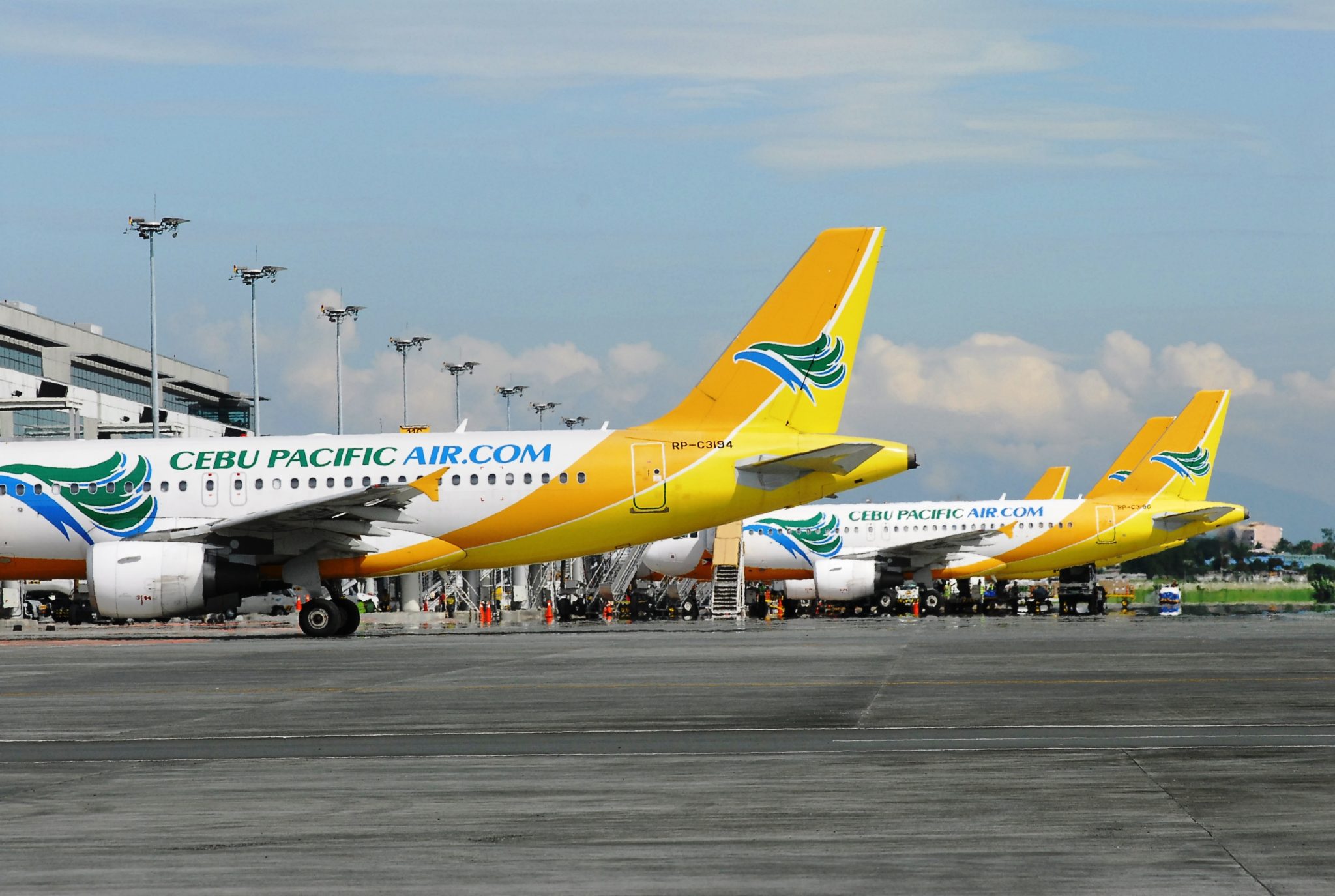
    CellPoint Digital, a fintech leader in payment orchestration, today announces the next leg of its partnership with Cebu Pacific, the largest airline in the Philippines.

    Cebu Pacific is one of the most successful low-cost airlines in the world, having flown over 22 million passengers to over 60 destinations in 2019, with 70% of these bookings being made directly via the carrier’s digital channels.

    Following the successful implementation of CellPoint Digital’s cutting-edge Payment Orchestration Platform, Velocity, across all of Cebu Pacific’s digital channels last year, the airline has now implemented new alternative payment methods to provide more flexible options to their customer’s payment experience. Thanks to the PSP/acquirer agnostic Velocity platform, Cebu Pacific customers will now have access to the following popular payment methods: GCash, GrabPay and PayMaya.

    The new alternative payment methods boast wide-ranging end-user benefits, including enabling split payments between travel fund vouchers and cash, and converting local currencies in real-time. For the airline itself, providing more payment methods should increase revenues, and by optimizing card payment processing across multiple acquirers, they will be able to do real-time transaction monitoring – by market, and by payment method – all delivered conveniently in one place.

    The intelligent routing module already dynamically optimizes the routing of each transaction made via a bespoke network of acquiring banks, thereby maximizing acceptance rates and lowering transaction costs.

    Candice Iyog, Vice-president for Marketing and Customer Experience at Cebu Pacific added: “Our partnership with CellPoint Digital continues to go from strength to strength. As the world begins to open back up and consumers are more used to using flexible digital payment methods than ever before, we’re proud to be able to offer our customers a frictionless customer experience at the checkout by giving them the payment methods they most want to use.”

    Commenting on the announcement Kristian Gjerding, CEO of CellPoint Digital commented: “We’re delighted to announce this evolution in our partnership with Cebu Pacific. Airlines have, by necessity, some of the most complex payment ecosystems of modern merchants, and an equally diverse customer base to match. By utilising our comprehensive payment orchestration platform and having access to a large payments ecosystem, we have simplified the payment process for Cebu while bolstering its offering with popular alternative payment methods for its customers.”

    The news comes as the APAC airline sector gears up to take off again following the disruption caused by the COVID-19 pandemic, with 77% of APAC airline customers ready to travel as soon as restrictions fully ease. Via its access to CellPoint Digital’s growing ecosystem, Cebu Pacific is ready to maximise the payments journey for APAC travellers with payment methods covering over 40 local and global cards, and over 350 alternative payment methods.

    The future is promising for the partnership as the two companies work towards introducing more new features such as stored cards and other popular APMs, while also empowering Cebu’s B2B offering with more payment capabilities.
  • Alipay’s e-wallet partner GCash introduces GCash Forest in the Philippines

    Alipay’s e-wallet partner GCash introduces GCash Forest in the Philippines

    Filipinos who want to contribute to environmental preservation can now conveniently use an innovative mobile phone app to help plant trees and increase the Philippines’ forest cover.

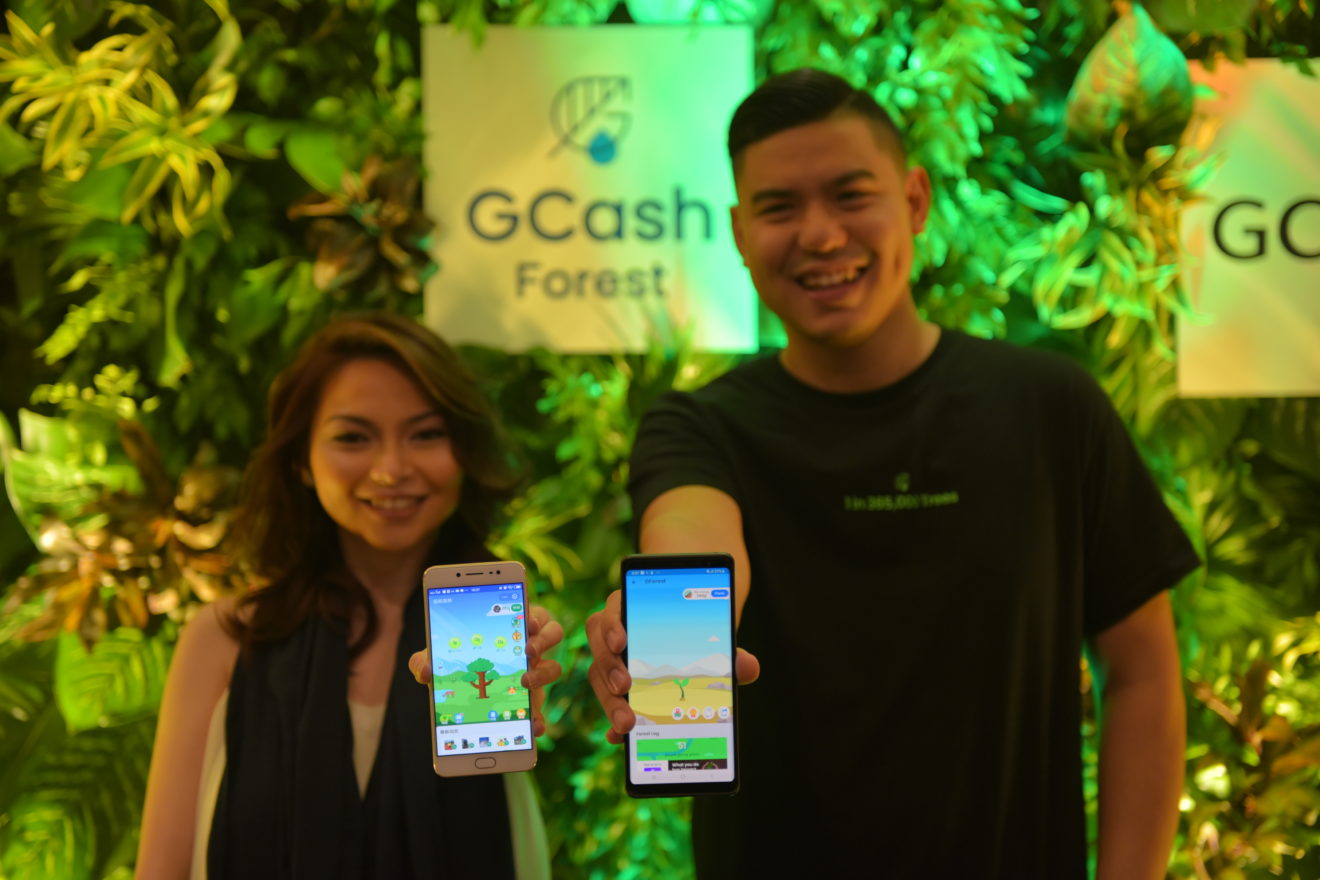
    Leading mobile wallet, GCash, is introducing an exciting “green” feature on the app called GCash Forest, which lets subscribers plant virtual trees that will have real-life counterparts. By the end of 365 days, GCash Forest aims to plant 365 thousand trees with the help of GCash subscribers.
    According to the Department of Environment and Natural Resources’ Forest Management Bureau (FMB), the Philippines is losing 47,000 hectares of forest cover every year. The FMB also reported the need to rehabilitate 1.2 million hectares of forest lands by 2022 to prevent landslides, ensure water availability, and preserve biodiversity.

    “GCash Forest is about making it easier, more convenient, and even rewarding for everyone to take care of our environment for the benefit of future generations,” said Mynt CEO Anthony Thomas. “GCash is no longer just providing an excellent platform for accessible financial products and services but also enabling Filipinos to be more active in responding to real-life issues, such as climate change mitigation through reforestation.”
    GCash considers GCash Forest as the last mile initiative that fully recognizes the emergence of an all-digital Filipino lifestyle.

    To implement its tree-planting initiatives, GCash Forest partnered with the Department of Environment and Natural Resources (DENR), World Wildlife Fund (WWF) and The Biodiversity Finance Initiative (BIOFIN). The DENR will provide land resources in Ipo Watershed, an essential component of the Angat-Umiray-Ipo watersheds system supplying 98 percent of Metro Manila’s water. WWF will be providing trees and manpower while BIOFIN will provide expertise on monitoring.

    Thomas added that recent findings on the Philippines’ vulnerability to climate-related hazards call for greater collective action. Results of the Global Peace Index 2019 identified the Philippines as the most susceptible country to the adverse effects of climate change. By leveraging the GCash platform and scale, GCash Forest aims to rally a coalition of individuals, non-government organizations, and international organizations to meet its 2020 targets.
    To plant trees through GCash Forest, GCash users need to collect “green energy” by frequently using the app. Users who get enough green energy can choose which species of trees they want to plant in a selected area at the Ipo watershed. Once the trees are physically planted, users get to receive a certificate of ownership with a serial number, fun facts and updates on the growth of their trees on their GCash apps.

    “Many Filipinos, especially the younger ones, care about the environment but a lot of them don’t know how they can actively take part in environmental protection. This is a barrier that GCash Forest addresses because they only need to use their smartphones—an already integral part of their daily lives—to make a difference,” concluded Thomas.

    The new feature is inspired by Alipay Ant Forest, a product operates by Ant Financial, an Alibaba affiliate and the parent company of the world’s leading payments and lifestyle platform, Alipay. Via the mobile platform, more than 500 million users have planted 100 million real trees and advanced a shared vision of sustainable and inclusive development.

  • Globe’s GCash debuts QR code payments

    Globe’s GCash debuts QR code payments

    Globe Telecom’s GCash has launched the Philippines’ first QR code payment service, which it has named GoPay.

    The GoPay feature within the GCash mobile money app will allow customers to use their GCash account to pay for goods and services using their smartphones by scanning QR codes displayed by merchants.

    The service will enable merchants to accept mobile payments using their own GCash wallets, eliminating the need for eftpos machines. GCash said this will make mobile payment acceptance available even to roaming vendors and small neighborhood stores.

    Alibaba’s Ant Financial, which popularized QR code payments in China via its Alipay subsidiary, invested in GCash’s immediate parent company Mynt in February to help develop the Philippines’ digital money market.

    “Our goal has always been to make finance more inclusive by building a cashless ecosystem. GoPay QR payments solution will close the loop and drive merchants accepting GCash payments,” Mynt CEO and President John Rubio said.

    “We plan to extend this service from all types of retailers nationwide down to our favorite fishball vendor.”

    GCash is available for both Android and iOS, and users can deposit funds into their GCash wallet at over 12,000 partner outlets across the Philippines.

  • Globe’s GCash adapted for tax payment

    Globe’s GCash adapted for tax payment

    The Philippines’ Bureau of Internal Revenue (BIR) has teamed up with Globe Telecom to improve tax collection via the GCash mobile money service.

    Under the partnership, Globe’s GCash and the BIR have relaunched the Philippines’ first electronic tax filing and payment system.

    Together with the USAID Facilitating Public Investment Project and the USAID E-PESO Activity, Globe relaunched the electronic filing and payment system on Tuesday with more enhanced features.

    The goals of the project are to improve tax collection and administration, curb corruption, and strengthen the business climate in the country.

    “The continuous payment of right taxes will continue and sustain the growth of the Philippines,” said BIR Commissioner Kim Henares in a statement. “The bureau aims to increase funding contribution for the country’s growing needs for basic infrastructure and social programs necessary to reduce poverty, thus, the government continues to push for the growth of the country’s fiscal space.”

    GCash was first introduced for national tax payments in 2005 when BIR’s thrust was to expand the provision of electronic services, most notably with the release of eBIRForms v6, an improved e-filing software that can serve all taxpayers.

    The use of GCash has now been expanded to allow payments for all types of taxes and also works with local and national government agencies to increase public’s awareness through the e-Bayad campaigns and enable usage of electronic payments in government transactions.

    GCash President Albert Tinio said GCash also helps the government utilize mobile money for collections and disbursements of social welfare benefits, government fees, and taxes. By limiting face-to-face transactions, the service is able to increase access to government services and reduce potential leakages especially in hard to reach areas.

    With the partnership in place, all Philippine taxpayers can use their mobile phone to pay for all types of taxes instead of going to BIR regional district offices or authorized agent banks with their cash or check.

    The Gcash mobile app can be downloaded from the Google Play Store for Android. Users need to register for the service and fund their Gcash account in any partner outlet.

  • Globe upgrading GCash to support bulk payments

    Globe upgrading GCash to support bulk payments

    The Philippines’ Globe Telecom is upgrading its GCash mobile money service to allow it to support expanded services such as bulk payment services for salaries.

    The operator’s dedicated G-Xchange Inc (GXI) subsidiary will deploy the latest version of Amdocs’ Mobile Financial Services (MFS) suite, which has been powering the GCash money service since 2004.

    By conducting the upgrade GXI aims to be able to deliver services faster ad more efficiency and to be able to scale up the service to bulk transactions when needed.

    Amdocs will also provide end-to-end delivery services including development, deployment, testing and support as part of the contract.

    “GCash has come a long way in solving financial inclusion challenges in the Philippines,” GXI CEO Albert Tinio said.

    “This key system enhancement will enable us to realize new revenue streams with new services targeting new segments, while boosting GCash’s ability to deliver a highly scalable and efficient mobile financial services solution for consumers, merchants and organizations, meeting the business need of the evolving marketplace.”

  • Philippines’ mobile wallet providers announce interoperability

    Philippines’ mobile wallet providers announce interoperability

    Mobile money interoperability in the Philippines took a step forward with the successful integration of the digital payments mobile app of PLDT and Smart Communications’ Paymaya Philippines with Globe Telecom’s mobile money service GCash.

    The interoperability agreement is part of an initiative of the GSM Association (GSMA) and the Philippine Central Bank in making mobile money services more inclusive and accessible to more people in the country.

    With the interoperability in place, users of the PayMaya app can soon send funds to users of other mobile money systems, including GCash, and vice-versa. This move is seen to boost the growth of mobile money usage in the country, and in turn, expand the local digital commerce ecosystem.

    “This development comes on the heels of the launch of the National Retail Payment System (NRPS) Framework in December led by the BSP and fully supported by the industry, which aims to create a “safe, efficient, reliable, and affordable electronic retail payment system that is interconnected and interoperable,” said Bangko Sentral ng Pilipinas (BSP) Deputy Governor Nestor A. Espenilla Jr. in a statement.

    Aside from domestic remittances, GCash and PayMaya are also expected to collaborate on merchant payments, bulk payments, government-to-person payments (G2P), and person-to-government payments (P2G), among others.

    “We are confident that more consumers would be more open to adopt mobile money services if they can send cash to anybody regardless of what mobile provider they are using especially if this means more efficient services and lower prices,” John Rubio, President and CEO of Mynt, a fully-owned financial services subsidiary of Globe, said in a media statement.  Mynt is also the mother company of G-Xchange, Inc. which operates GCash.

    Through Paymaya and GCash, customers no longer need to own a credit card or even have a bank account to make financial and e-commerce transactions.

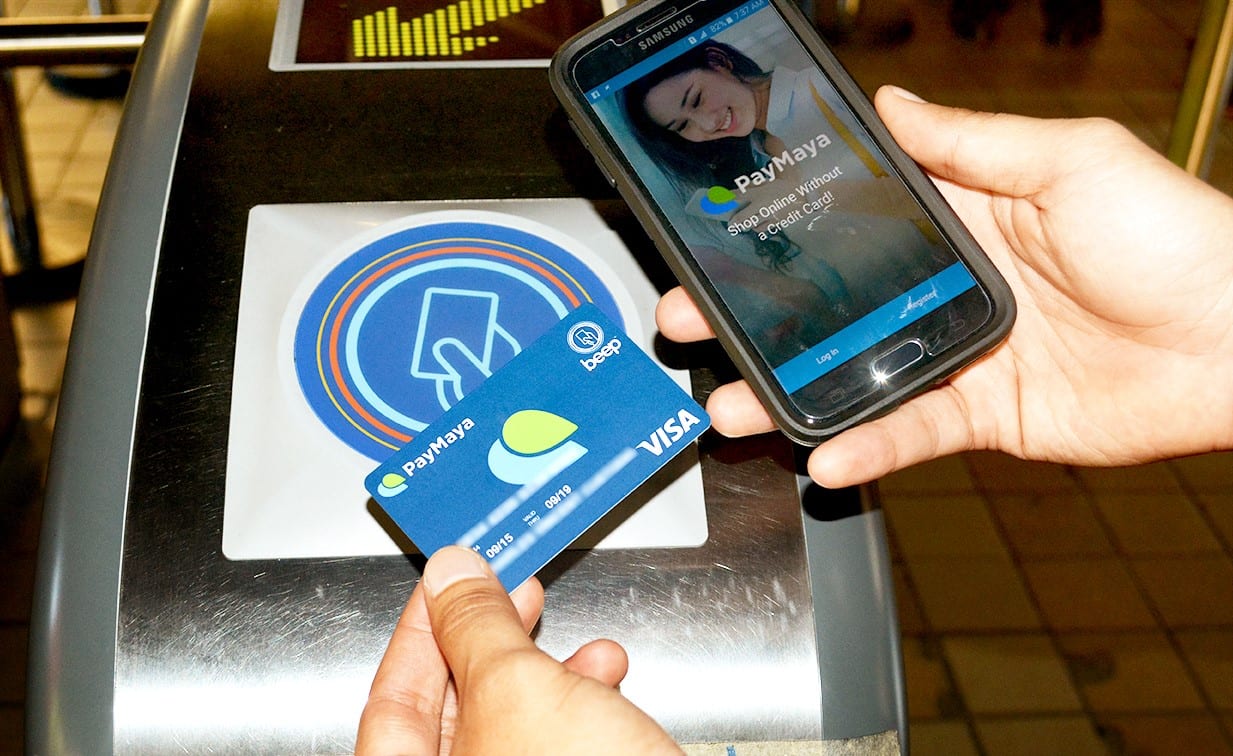
    Paymaya was launched in August 2015 as a virtual Visa card that resides in a mobile app, allowing people to purchase online, send money, send telco airtime load. Soon, it envisions to allow users to pay bills online and do other types of transactions. A physical card can be linked to the virtual card for use for purchases in physical stores and pay for train rides.

    GCash, on the other hand, was launched in 2004 as a micropayment service of millions of Globe subscribers. It transforms a mobile phone into a virtual wallet for safe, secure, and hassle-free mobile money transactions such as the purchase of prepaid load, bills payment, money remittance, donations, online shopping, among others.

    “This is a step toward advancing the future our digital economy. Interoperability is but a natural progression in the ongoing evolution of financial technology services in the country,” said Orlando B. Vea, President and CEO of PayMaya Philippines.

    BSP Governor Amando Tetangco Jr. cited in an earlier speech that studies have shown that shifting from paper to electronic–based payment system could generate annual savings up to one percent of the country’s gross domestic product (GDP).

    At present, there are 10 GSMA active operators with strong money deployments, three of which – Sri Lanka, Pakistan, and Tanzania, are already practicing interoperability since 2014.

    Committed markets, on the other hand, include the Philippines, Paraguay, and Myanmar while Rwanda, Madagascar, Thailand, and Jordan already made a pilot launch last year.

    The fifth annual ‘State of the Industry Report on Mobile Money’ released by GSMA during the Mobile World Congress in Barcelona, Spain showed that there are more than one billion mobile money transactions in December 2015.

    The report noted that mobile money is available in 85 percent of countries where most of the population lack access to formal financial institutions. Moreover, there were 29 cross-border mobile money initiatives connecting 19 countries in 2015, with cross-border remittances growing 52 percent, by volume, over the last year.

    “Mobile money is driving social and economic impact for millions of people in emerging markets,” said John Giusti, Chief Regulatory Officer, GSMA. “Over the last decade, mobile money has done more to extend the reach of financial services than traditional bricks and mortar banking were able to do over the last century. With 411 million mobile money accounts today, mobile is an increasingly critical platform for expanding financial inclusion globally.”

  • Globe Telecom partners with Lazada for mWallet service

    Globe Telecom partners with Lazada for mWallet service

    Globe Telecom recently partnered with online retailer and marketplace Lazada to bring its GCASH mobile wallet to the e-commerce space in Southeast Asia.

    Under the agreement signed by Globe Telecom President and CEO Ernest Cu and Lazada Founder and CEO Maximilian Bittner in Seoul, Korea, GCASH will be used as a mode of payment in Lazada’s eCommerce website through an open integrated mWallet platform.

    “By increasing transactions through mWallet, we will expand the online ecosystem of Globe and provide our customers with a full digital lifestyle experience,” said Cu. GCASH is a product of Globe Telecom’s wholly-owned subsidiary G-Xchange, Inc. (GXI) and is among the pioneers of telco-led mWallet.

    GXI’s partners today include government agencies, utility companies, cooperatives, insurance companies, remittance companies, universities, banks, and commercial establishments which accept GCASH as a means of payment for products and services via mobile phone or the Internet.

    Through mWallet, Globe customers no longer need to own a credit card or even have a bank account to shop online. Instead, they can turn their mobile phone into a virtual wallet to shop at the speed of a text message.

    Lazada has over 15,000 merchants in Southeast Asia, and 1.4 million active customers. In the Philippines, mobile traffic constitutes more than 50 percent of its daily traffic. According to Inanc Balci, CEO of Lazada Philippines, the Lazada Mobile App downloads have grown 18 percent month-on-month since its launch in early 2014.