Retail News CRM

Tag: Gemalto

  • Galaxy S8 to use Gemalto Secure Element in some markets

    Galaxy S8 to use Gemalto Secure Element in some markets

    Samsung’s flagship Galaxy S8 smartphone will be equipped with Gemalto’s embedded Secure Element, a smart chip with a secure OS and applications, in selected markets.

    The smart chip can secure various application types including Samsung Pay (Samsung’s contactless payment solution), couponing, transport, access control, ticketing, corporate, cloud computing and e-government.

    This integration is expected to help Samsung deploy its services worldwide, due to Gemalto’s connections with multiple service providers via its Trusted Services Hub (TSH).

    The chip has already been integrated into other Samsung smartphones including the Galaxy A series globally and the Galaxy C series in China.

    “Gemalto is thrilled to be selected as one of Samsung’s providers for the new Galaxy S8 and other smartphones. We are delighted to provide them with an end-to-end solution, which proves that our strategy based on our state-of-the-art embedded secure elements is successful,” Gemalto SVP of Greater China and Korea for mobiles services and IoT and China country head Suzanne Tong-Li said.

    “[The element] supports a unique combination of features, and our TSH offering delivers a single entry point to link device manufacturers and service providers.”

  • Gemalto to power China’s first internet car

    Gemalto to power China’s first internet car

    Gemalto is working with Banma Technologies, a new joint venture between Alibaba Group and SAIC Motor, to help produce China’s first internet car the Roewe RX5.

    The RX5 leverages Gemalto’s machine identification module (MIM) — securing cellular M2M connections for industrial applications — and features advanced telematics such as Bluetooth virtual car key, locationing of the vehicle, voice-command-enabled remote control of in-car functions, and real-time road condition alerts, etc.

    The MIM is compliant with the GSMA standards and supports remote provisioning of any operator’s profile.

    “The Roewe RX5, empowered by Alibaba’s YunOS operating system, is the first mass produced internet car. It’s a breakthrough embodying years of research and technological innovation,” said Alex Shi, CEO of Banma. “It is a product that demands the most secure and reliable end-to-end connectivity.”

    Suzanne Tong-Li, president of Greater China and Korea at Gemalto, said connected cars mark the beginning of digital transformation across the automotive industry, paving the way for autonomous vehicles in the near future.

    “Our expertise and global experience, combined with tried-and-tested secure connectivity solutions, put us in a sweet spot to help car manufacturers create smarter and more connected vehicles,” said Tong-Li.

    The Chinese car market is currently the largest and fastest-growing in the world. In 2015, foreign and domestic car makers sold a total of 21.1 million passenger cars, up by 7.3% compared to 2014.

    For 2016, the local connected car market is expected to generate a substantial revenue of $7.7 million.

    With an estimated compound annual growth rate of 45%, this market is potentially worth up to $33.9 million by 2020. Moreover, connected car penetration in China is projected to triple from 4.8% to 18.1% over the same period.

  • Security on cloud still a major challenge for global firms, says study

    Security on cloud still a major challenge for global firms, says study

    Despite the continued importance of cloud computing resources to organizations, companies are not adopting appropriate governance and security measures to protect sensitive data in the cloud.

    This is just one of the findings of a Ponemon Institute study titled “The 2016 Global Cloud Data Security Study,” commissioned by digital security firm Gemalto.

    The study surveyed more than 3,400 IT and IT security practitioners worldwide to gain a better understanding of key trends in data governance and security practices for cloud-based services.

    According to 73% of respondents, cloud-based services and platforms are considered important to their organization’s operations and 81% said they will be more so over the next two years. In fact, 36% of respondents said their companies’ total IT and data processing needs were met using cloud resources today and that they expected this to increase to 45% over the next two years.

    Although cloud-based resources are becoming more important to companies’ IT operations and business strategies, 54% of respondents did not agree their companies have a proactive approach to managing security and complying with privacy and data protection regulations in cloud environments. This is despite the fact that 65% of respondents said their organizations are committed to protecting confidential or sensitive information in the cloud. Furthermore, 56% did not agree their organization is careful about sharing sensitive information in the cloud with third parties such as business partners, contractors and vendors.
    Larry Ponemon, chairman and founder of Ponemon Institute, said, “Cloud security continues to be a challenge for companies, especially in dealing with the complexity of privacy and data protection regulations.”

    “To ensure compliance, it is important for companies to consider deploying such technologies as encryption, tokenization or other cryptographic solutions to secure sensitive data transferred and stored in the cloud,” Ponemon said.

    Jason Hart, VP and CTO for Data Protection at Gemalto, said, “Organizations have embraced the cloud with its benefits of cost and flexibility but they are still struggling with maintaining control of their data and compliance in virtual environments.”

    “It’s quite obvious security measures are not keeping pace because the cloud challenges traditional approaches of protecting data when it was just stored on the network. It is an issue that can only be solved with a data-centric approach in which IT organizations can uniformly protect customer and corporate information across the dozens of cloud-based services their employees and internal departments rely every day,” Hart said.
    More customer information is being stored in the cloud and is considered the data most at risk.
    According to the survey, customer information, emails, consumer data, employee records and payment information are the types of data most often stored in the cloud. Since 2014, the storage of customer information in the cloud has increased the most, from 53% in 2014 to 62% of respondents saying their company was doing this today.


  • India’s YES BANK taps Gemalto for secure m-payments

    India’s YES BANK taps Gemalto for secure m-payments

    India’s YES BANK has deployed Gemalto technology to secure mobile payment transactions for its customers under India’s recently implemented Unified Payments Interface (UPI).

    YES BANK, India’s fifth largest private sector bank, has adopted Gemalto’s SafeNet Network HSM for the purpose.

    UPI, India’s online payments solution, enables all account holders to send and receive money from their smartphones with a single identifier – such as mobile number or virtual payments address – without entering any bank account information.

    The SafeNet Network HSM (formerly SafeNet Luna SA HSM) provides end-to-end data security and encryption to protect user credential confidentiality and the private keys responsible for digital signing.

    “With a widespread network of over 860+ branches and 1,625+ ATMs Pan India, we’re committed to taking a customer-centric approach to our banking services,” said Anup Purohit, CIO at YES BANK.

    “The Unified Payments Interface offers clients revolutionary convenience when it comes to banking and payments, and we want to ensure the highest levels of security for users of the platform. We’re thrilled to integrate Gemalto’s industry-leading SafeNet HSM technology into the UPI application to support this initiative.”

  • KDDI taps Gemalto for connected cars and IoT

    KDDI taps Gemalto for connected cars and IoT

    Japan’s KDDI has selected Gemalto to provide the platform to enable secure connectivity for connected cars and IoT applications worldwide.

    Gemalto will provide its LinqUs On-Demand Connectivity (ODC) subscription management solution and embedded SIMs (eSIMs) to the operator.

    As a result, KDDI can expect to provision any requested operator’s profile on connected cars equipped with pre-embedded eSIM.

    Motorists can access optimized real-time information about traffic and nearby amenities, navigation, vehicle diagnostics, and emergency services, anytime, anywhere.

    Gartner forecasts that by 2020, there will be around 250 million vehicles on the road with some form of wireless connectivity, making connected cars a major element of the Internet of Things. The lack of flexible and interoperable remote subscription management is a major challenge in deploying IoT.

    Gemalto’s solution, based on global GSMA specifications, is designed to simplify logistics for OEMs.

    “Gemalto’s solution is based on interoperable GSMA standards, and will provide a common and consistent way to connect devices in the future,” said Keiichi Mori, executive officer and general manager of KDDI’s IoT business development division.

    “With long-lasting relationships with over 500 mobile operators worldwide and a strong local presence, they can help us expand our services to other IoT applications, to obtain rapid growth in the connected world.”

    Michael Au, Gemalto president for South Asia and Japan, said IoT is increasingly turning connected cars into powerful hubs for value-added services such as infotainment, real-time vehicle telematics, and usage-based insurance, offering plenty of opportunities to OEMs and service providers.

  • Gemalto launches applet for UnionPay wearables

    Gemalto launches applet for UnionPay wearables

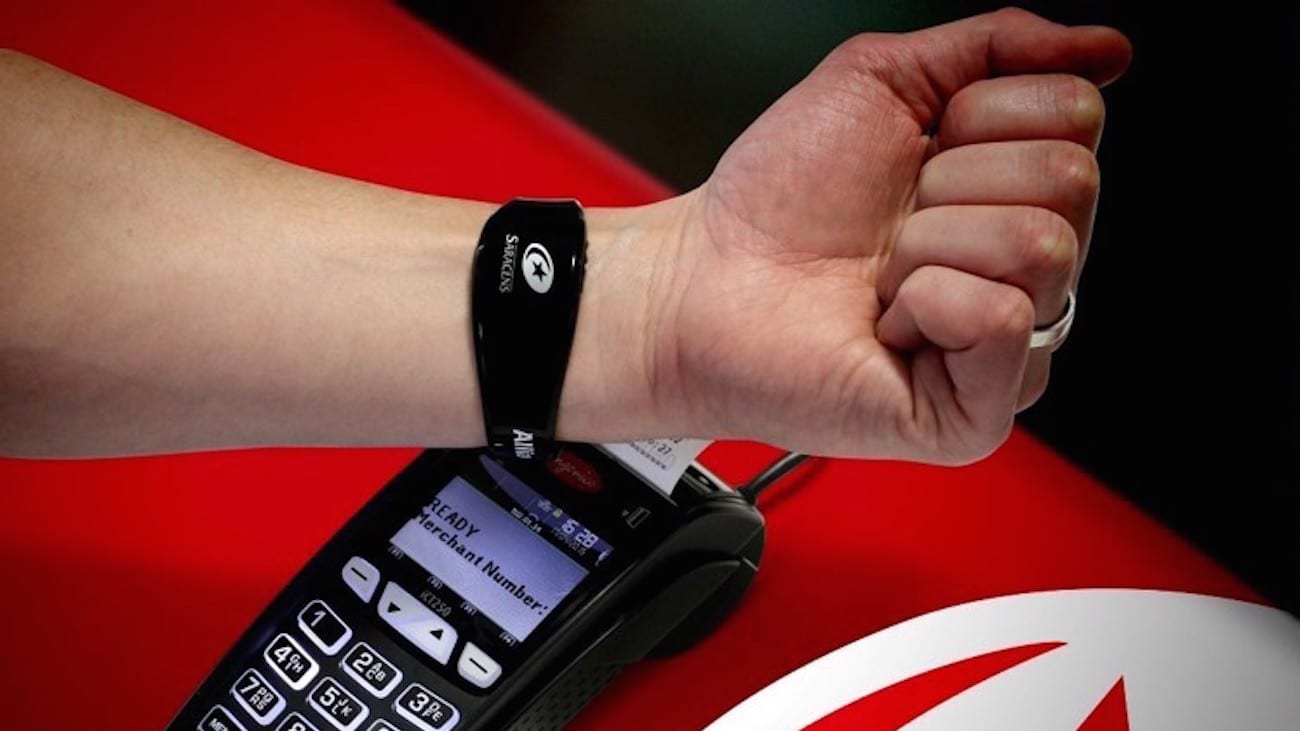
    Gemalto has launched a secure element based applet for smart wearables developed by China UnionPay (CUP).

    CUP had launched smart wearables with embedded secure elements based payment applications last year.

    The payment applet runs on the secure element, to provide online and offline payment capabilities on wearables.

    This is expected to eliminate the need for different card vendors to develop their own versions, simplifying deployment of payment applications on a range of secure elements and improving time to market.

    “Intelligent NFC-based wearable devices are set to disrupt our lives much beyond contactless payments – from user access and authentication to smart homes and cities, the possibilities are simply endless,” said Suzanne Tong-Li, president for Greater China and Korea at Gemalto.

    With extensive experience in NFC ecosystem and end-to-end security, we support CUP to not only simplify and speed up this launch for maximum outreach, but also provide consulting for next-generation solutions.”