Retail News CRM

Tag: gen z

  • China’s Gen Z Champions a Transformative Shift Towards Emotional and Sustainable Shopping Habits

    China’s Gen Z Champions a Transformative Shift Towards Emotional and Sustainable Shopping Habits

    Generation Z is revolutionizing China’s consumer landscape, prioritizing personal well-being, emotional fulfillment, and sustainability while leaving behind the materialistic pursuits of earlier generations. This cohort, despite representing only 15% of the population, wields an impressive influence on economic trends.

    Instead of hoarding possessions, Gen Z is favoring experiences and wellness investments. From premium skincare lines to spa memberships and limited-edition collectibles, spending for these consumers is more about enhancing happiness than simply acquiring items. This shift prompts local and international brands to swiftly adapt to their new demands.

    A recent report by People’s Daily highlights the pivotal role Gen Z plays, revealing that 64% of Chinese consumers, led by this demographic, prioritize emotional fulfillment in their purchasing decisions. Products like character plushies, themed souvenirs, and blind-box toys have surged in popularity, offering joy while sidestepping the trappings of overconsumption.

    The significance of health and sustainability cannot be overstated in this context. Take Lululemon, which recently reported a remarkable 21% growth in same-store sales in China, a direct reflection of Gen Z’s enthusiasm for fitness and social interaction. Their commitment to these values reinforces the brand’s relevance in a crowded market.

    Alongside wellness, environmental awareness plays a crucial role in shaping purchasing decisions. A study from Daxue Consulting indicates that 40% of Chinese consumers favor eco-friendly products, with a striking 90% of Gen Z actively searching for recyclable options. It seems being “green” is becoming the new chic.

    Furthermore, Gen Z’s demand for transparency and authenticity is redefining the marketplace. E-commerce platforms like Douyin and Taobao are integral to this transformation, where consumers prioritize trustworthy information and tailor-made products over mass-produced alternatives. This trend is urging companies to adopt more responsible and transparent practices in their operations.

    The convergence of these factors is fostering what’s being termed the “emotional economy.” Here, consumer preferences actively shape production and investment strategies, aligning with ethical and societal aspirations. Fund managers are increasingly directing their attention toward youth-centric, socially responsible products and services, crafting a retail environment that merges personal well-being with broader social and environmental goals.

    Questions & Answers

    How is Generation Z changing consumer priorities in China?
    Generation Z is moving away from materialism and instead values personal wellness, emotional fulfillment, and sustainability, significantly influencing purchasing behavior.

    What role do platforms like Douyin and Taobao play for Gen Z consumers?
    These platforms provide reliable information and personalized product recommendations, which resonate with Gen Z’s preference for authenticity and quality over mass production.

    What does the “emotional economy” signify for retailers?
    The “emotional economy” highlights how consumer preferences, especially from Gen Z, are shaping production and investment strategies to align with ethical and societal goals, pushing brands toward more responsible practices.

  • Gen Z Fuels Thrift Revival: Pinterest Reports Soaring Interest In Vintage Style

    Gen Z Fuels Thrift Revival: Pinterest Reports Soaring Interest In Vintage Style

    This fall, vintage secures its place as a wardrobe staple. Pinterest’s new Trend Report reveals a major style shift sweeping the globe: searches for thrift-related ideas are soaring, driven largely by Gen Z users reimagining how they shop, style, and decorate. Whether it’s a dream thrift find or a retro kitchen upgrade, Pinners are proving that secondhand is not second-best.

    As the leading destination for trends and inspiration, Pinterest empowers people to personalise their style, home, and life with what’s next — and right now, that means embracing thrifting like never before. Gen Z momentum on Pinterest continues to grow, with this generation now representing more than 50% of global monthly active users — making Pinterest a go-to platform for the next generation to get inspired, curate, and shop.

    Across the globe, Gen Z is fueling this movement. On Pinterest, searches for “dream thrift finds” have skyrocketed by 550% among this demographic, while “vintage fall aesthetic” is up 1,074%. And their thrifting habits extend beyond the wardrobe – searches for “thrifted kitchen” have also climbed 1,012% and “thrifted decor” is up 283%, showing that the vintage style is making its way into every corner of the home.

    Gen Z men are also stepping up their vintage game. Searches for “men thrift outfits” have grown by 31% globally, and interest in “vintage watch for men” has jumped 65%, proving the appeal of unique finds resonates across styles and genders.

    The thrift revival presents a strategic creative and commercial opportunity for fashion retailers in the months to come. And it’s not just fashion — with searches for home-related thrift inspiration on the rise, the secondhand movement now spans furniture, interiors, and home appliances. Brands can ride this wave by offering vintage inspired collections, sparking upcycling ideas, or launching resale and donation programs that help consumers give pre-loved items a second life.

    This global momentum is mirrored across APAC, where thrift-related searches continue to climb in key markets. In India, searches are up 127% year-over-year, while Japan has seen a 55% increase. Korea recorded 31% growth and Singapore is up 33%, underscoring the region’s growing appetite for unique, secondhand finds. These four markets combined saw a significant year-over-year rise in thrift searches such as “thrift flips” (486%) and “thrift finds” (93%). Vintage-related terms also saw a consolidated increase through searches such as “dreamy aesthetic vintage” (580%), “vintage style outfits” (109%) and “retro vintage outfits” (100%).

    “What we’re seeing in APAC is more than just a fashion trend, it’s a mindset shift,” says Ayumi Nakajima,  Senior Director, Content Partnerships, APAC for Pinterest. “Gen Z are embracing thrifting not only for its style potential but for its creativity, sustainability, and individuality. On Pinterest, they can visually explore endless ideas, curate boards with their favourite finds and turn inspiration into action through product Pins. By analysing billions of data points and through our visual search technology, Pinterest can spot emerging trends before they go mainstream – helping brands stay ahead of Gen Z’s evolving tastes. For our users, it’s the place to discover one-of-a-kind finds and unique inspiration from around the world.”

    Pinterest delivers personalised inspiration that’s perfect for thrifting. Across APAC, Gen Z are turning to the platform to find, plan, and shop for the best in vintage and secondhand, uncovering fresh ways to express their individuality in a sea of sameness.

  • Oh!some Expands Regional Presence With New Bangkok Store, Unveils Disney Collaboration

    Oh!some Expands Regional Presence With New Bangkok Store, Unveils Disney Collaboration

    The lifestyle brand Oh!Some is making its debut in Thailand, signaling further growth in its regional presence, which includes a recent inauguration in Ho Chi Minh City.

    Store Location and Interior Concept

    Oh!Some’s newest retail branch will be positioned in Samyan Mitrtown, right in the heart of Bangkok. The store’s interior is conceived with an “ice and snow world” theme, a design specifically crafted to entice the Gen Z demographic through its captivating and photogenic displays.

    Product Line and Collaborations

    The product portfolio at the store will span across several categories. Customers can expect to find items ranging from beauty and skincare products, fragrances, and stationery to toys, collectibles, snacks, and home decor.

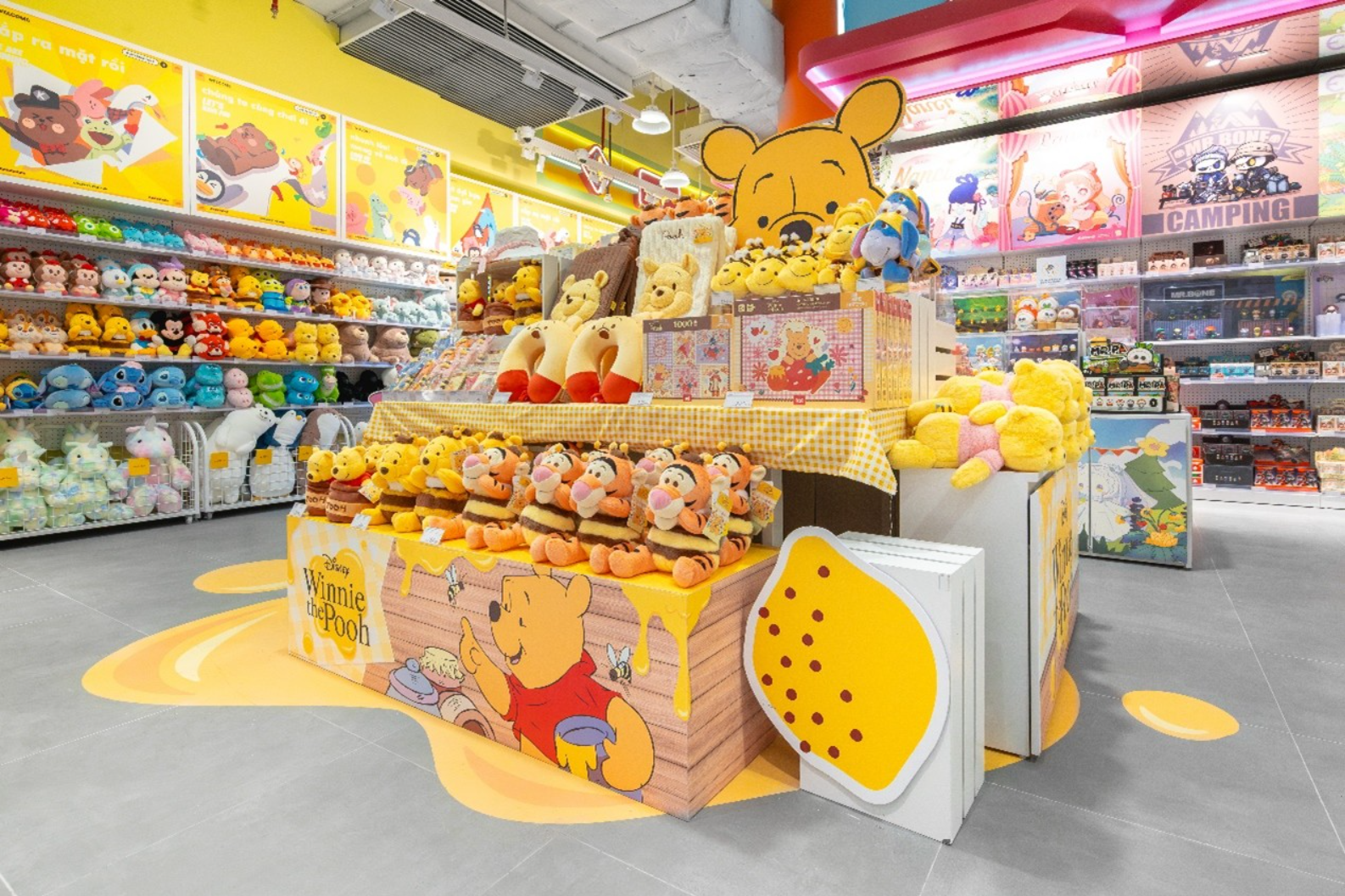
    In addition to its regular offerings, the store will also feature exclusive merchandise produced in collaboration with Disney. These exclusive collections will showcase beloved characters such as Stitch, Winnie the Pooh and a future line inspired by Mickey Mouse with a denim theme.

    Existing Presence and Future Plans

    At present, Oh!Some operates over 130 stores spread out across Singapore, Vietnam, Malaysia, and Indonesia. The brand has further expansion plans within the city of Bangkok, with more branches set to open in various districts later in the year.

    Questions & Answers

    What is the interior design concept of the new Oh!Some store in Bangkok?
    The store features an “ice and snow world” theme designed to attract Gen Z consumers with visually striking, photo-friendly displays.

    What kind of products will be available in the new Oh!Some store?
    The store will offer a range of products across categories, including beauty and skincare, fragrances, stationery, toys, collectibles, snacks, and home decor.

    Does Oh!Some have any collaborations planned for their new store in Bangkok?
    Yes, the store will have exclusive items produced in collaboration with Disney, including themed collections featuring Stitch, Winnie the Pooh, and a forthcoming denim-inspired Mickey Mouse line.

  • Gen Z grapples with shrinking job market

    Gen Z grapples with shrinking job market

    Many Gen Z people are struggling to find jobs as businesses scale down operations amid the economic downturn.

    Ho Chi Minh City has over 300,000 businesses, but none of them were willing to hire Thanh Nga, 25, last year.

    “I have experience in customer service but was not able to find a job after submitting CVs to over 50 businesses in HCMC, Da Lat and Binh Duong,” she says.

    She looked for a job on online platforms and social media groups.

    “In 2018 usually somebody would call me soon after I submitted my CV, but last year I received no call most of the time.”

    Nga is among an increasing number of Gen Z people, or those born between 1997 and 2012, who are struggling to find jobs in the post-Covid economy.

    Youths accounted for 41.3% of unemployed people last year, up from 37.6% from 2022. This meant 437,300 people aged between 15 and 24 had no jobs, according to the Ministry of Labor, Invalids and Social Affairs.

    Nguyen Hoang Ha, an officer in the International Labour Organization, says people who graduated since Covid-19 are among the “quarantined generation” who had to go through disruptions in the labor market and in education and training.

    Another HCMC local, Thu Thuy, 24, had struggled to find a job in 2022 when the economy reopened after two years of the pandemic.

    She submitted 30 CVs and went to more than a dozen interviews but failed to find a job since most companies asked for months of experience, which she could not get due to Covid travel restrictions.

    She says: “Employers often want at least six months of experience but I did not have that. I used to think that having a college degree would guarantee a job but turns out that is not the case.”

    Economist Nguyen Minh Phong said the unemployment among youths is a global trend as companies often lay off the most inexperienced staff when the situation becomes difficult.

    Many urban Vietnamese youths have high expectations about salaries and will rather wait for a good opportunity than work for low pay, he adds.

    Thuy says some companies offered her a job for VND6 million ($244), but she declined, saying she needed at least VND7 million to pay the bills in expensive HCMC.

    Embarrassed, she lied to her family in the countryside that she was still working.

    But the economy alone is not to blame.

    Ha of ILO advises people in the 15-24 age group to educate themselves in technology and soft skills such as group collaboration and problem solving to meet the increasing demands on the labor market.

  • Is it already ‘game over’ in the metaverse for Bondee, Singapore’s avatar-based app?

    Is it already ‘game over’ in the metaverse for Bondee, Singapore’s avatar-based app?

    After garnering two million downloads within two weeks of its launch, Bondee’s Gen Z users have got past the novelty factor. Bondee’s is a story of social media hype punctured by a sharp truth that the loyalty of digital natives is hard-earned, experts say

    The rise of Singapore-based metaverse newcomer Bondee was impressive: two million downloads within two weeks of its launch on Apple’s App Store.

    But that initial hype was short-lived as Singapore’s social media users quickly dropped the home-grown avatar-based app, retreating from yet another attempt by makers of the metaverse to capture the long-term loyalty of Gen Z in Southeast Asia.

    Yet Bondee’s moment in the sun may reveal the challenges that the region’s metaverse developers face, experts say, with none so far hooking a crowd large enough to trouble social media giants, such as Meta which has ploughed billions of dollars into the digital future.

    Bondee’s early adopters in Singapore were initially pulled in by the “cute” avatars, personalised rooms and picnic spaces, reminiscent of games like Habbo Hotel that many millennials dabbled in as teens.

    With shades of the Nintendo game Animal Crossing, which took the online world by storm during Covid lockdowns in 2020, Bondee allows users to personalise avatars and bedrooms that friends can visit.

    Friends are capped at 50 by the app’s Singapore-based creators Metadream, in an effort to keep the community tight, relevant and connected.

    Aqil Lim, 25, said he enjoyed being able to visit his friends’ virtual homes, even more as “we don’t have our own homes in real life” in the expensive Asian city state.

    As word of mouth of what was dubbed the “new Gen Z app” spread quickly across Asia, many shared the QR code of their Bondee account on Instagram and Twitter, prompting friends to add them.
    But the novelty quickly wore off as Bondee felt “primitive, with limited customisations and chat functions”, Lim said, adding that after a few weeks he hardly uses the app.

    By Wednesday, Bondee had fallen to 19th on Singapore’s Apple Store – just a month after it topped charts across Asia.

    This also comes after reports of social media users using the term #ripbondee while recording themselves uninstalling the app.

    Bondee’s is a story of social media hype punctured by a sharp truth that the loyalty of digital natives is hard-earned, experts say, since most of their allegiances are already captured by larger platforms like TikTok and Instagram.

    “Avatars alone can’t draw people in, it’s what the entire platform allows you to do with your avatar that gives the platform its stickiness,” said Lim Sun Sun, a professor of communication and technology at the Singapore Management University (SMU).

    The cutesy aesthetics and whimsical feel of Bondee was a “nice hook” but if there isn’t anything else after that, then it is quite literally, “game over”, she said, adding that this will be a challenge for metaverse developers to meet.

    Singaporean Joey Tan, 23, saw videos on TikTok about Bondee and became “curious about what the hype was about”.
    But given the newness of the app, not many of her other friends were on it, an apparent failure to reach a “critical mass” which quickly sees new tech fizzle.
  • Thai beauty e-commerce platform Konvy bags $10 million in series A

    Thai beauty e-commerce platform Konvy bags $10 million in series A

    Founded 10 years ago, Konvy is now Thailand’s top beauty e-commerce platform. It plans to accelerate its omnichannel and international distribution with a new Series A of $10 million from Insignia Ventures Partners.

    Konvy was launched in 2012 by Chinese entrepreneur QingGui Huang, who previously managed fashion e-commerce platforms in China. It now works with more than 1,000 brands, representing SKUs of more than 20,000. Its brand portfolio includes L’Oréal, Shiseido, Sulwhasoo, Eucerin and La Roche-Posay.

    “Konvy had the advantage of starting in Thailand when there were no really significant e-commerce players there at the time,” Huang told TechCrunch. “We’ve since leveraged our first mover advantage in Thailand to become a leading e-commerce player in the market.”

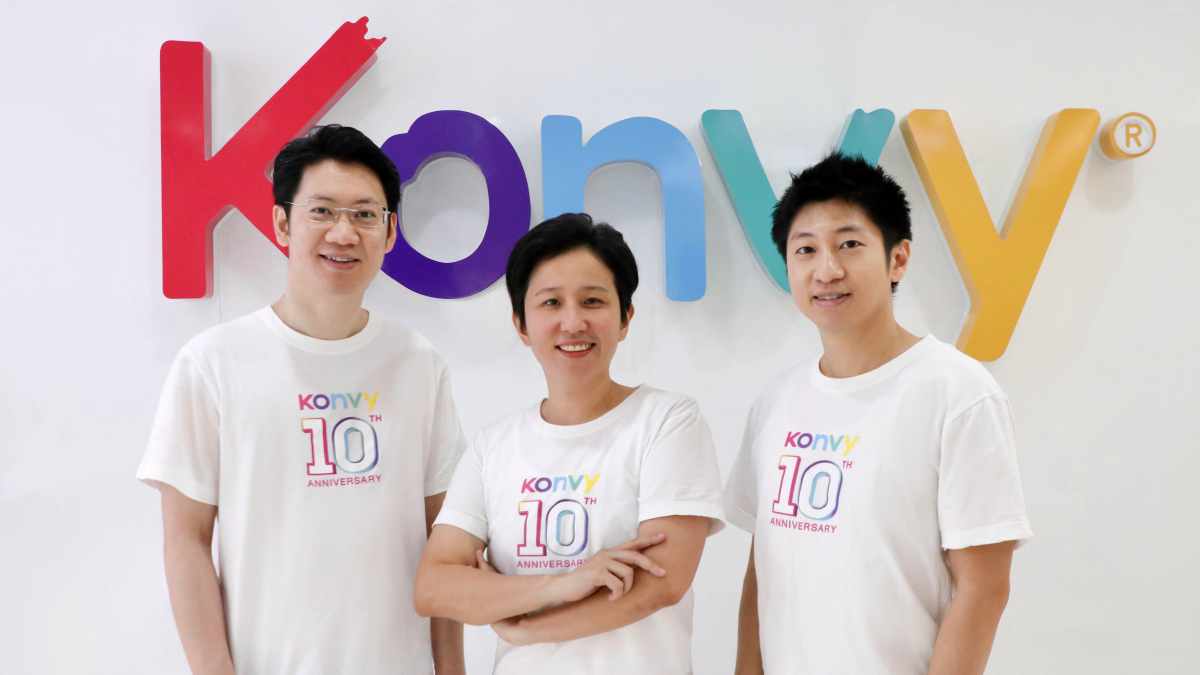
    Konvy founders Leon Huang, Pornsuda Vangvidhayakul and QingHui Huang

    Konvy’s goal is to help local and international beauty brands take advantage of two major trends. The first is that health and beauty purchases are a priority spending category for Thai consumers and the second is that Thailand sees high rates of e-commerce purchases and social media usage, meaning that young people in Thailand spend an average of about two hours and 55 minutes on social media each day.

    Huang said he confirmed his assumptions about Thai spending on beauty products through conversations with brands, which drove his desire to start Konvy.

    “This opportunity of health and beauty being a priority spending category for Thai consumers is a function of both demand and supply circumstances favoring this consumer behavior over the past decades,” he said. “On the supply side, Thailand has been a manufacturing hub for a lot of international brands for more than 40 years. This has spawned as well a thriving local industry. On the demand side, we see that Thai consumers are plugged into this mindset of ‘upgrades’ when it comes to health and beauty, that is to say, it’s not just about accessing such products but actually looking for the best products and high willingness to spend on the latest trends.”

    Konvy taps into the high rate of social media usage by developing a feedback loop, where engagements on its partner brands’ not only helps Konvy’s existing portfolio, but also helps more brands in the future. For example, as more Gen Z consumers bought products they saw on TikTok during the pandemic, Konvy made itself more present on that channel.

    In a statement, Insignia Ventures Partners founding managing partner Yinglan Tan said, “While there may be stronger competitors from horizontal marketplaces in the future, we believe Konvy is best positioned to be the market leader in the online beauty segment given its long-standing brand equity, brand-centric and community-led approach.”

  • Understanding Modern Retail Through the Gen Z Filter

    Understanding Modern Retail Through the Gen Z Filter

    Over the past decade retailers faced the challenge of managing their own digital transformation, while simultaneously scrambling to serve the needs of a younger and increasingly online-savvy audience – generally accepted as being digitally native. Today, brands are additionally tested to plan and accommodate for the increasing buying power of the emerging 11-24 age group of shoppers, colloquially known as ‘Gen Z’ or ‘Zoomers’.

    Generation Omnichannel

    Perhaps a more fitting nickname for Gen Z or Zoomers, would be ‘Generation Omnichannel’, as this is the first truly omnichannel generation to both physical and online stores and social media platforms in equal measure. This group are prepared to shop wherever suits them best, and in a more impulsive and immediate way.

    According to a recent article in Vogue, Zoomers are 56% more likely to have shopped for fashion in-store over the last three months and 38% more likely to have shopped online in the same timeframe. They are willing to shop across all channels and have an appetite for higher-quality items in an effort to stay on trend with cultural developments.

    This awareness of cultural trends is leading to some key generational spending indicators too; not to mention the fact that Gen Z consumers are more conscious about the planet and the future. They believe that the generations before them represented overconsumption, capitalism, and materialism, meaning they are more likely to associate themselves (and their wallets) with brands that match their own core values, such as sustainability, environmentalism, and equality.

    At the same time, Gen Z has been called the most critical consumer group of all, with a fundamentally different view of shopping and consumption to previous generations. They are the latest to enter the workforce and will have strong purchasing power over the next decade, meaning brands have to earn their loyalty before they become loyal shoppers.

    Furthermore, Zoomers’ frequency of shopping for new items is being disrupted by the second-hand, preloved, vintage market – a market that Zoomers are 27% more likely to shop. In Australia, preloved and vintage platforms, such as Depop & Vinted, are arguably slowing the cycle of new purchases and redefining the concept of the customer journey and what it really means to be ‘new’.

    Embracing New & All Forms of Payments

    According to PayPal, 22% of Zoomers have used buy-now, pay-later (BNPL) solutions such as Klarna and Afterpay since the start of the pandemic to buy more expensive, higher-quality products.

    Since the beginning of the pandemic, 123% more Zoomers have used BNPL than previously, representing the strongest uptake of any generation – and during April 2021, 33% of Gen Z respondents said they were likely to use BNPL solutions in the future too.

    Furthermore, Gen Z has continued to embrace mobile payment options such as mobile apps and e-wallets, including Apple and Android Pay, faster than any other consumer spending group. This expectation to be able to pay now, or later, with a device or platform is something that permeates Gen Z spending habits enormously, meaning traditional payment and Point-of-Sale (POS) technologies need to be modernised in order to offer these different payment options.

    A Window to the Future

    The pandemic and the associate rise in online activity grew usage and acceptance of eCommerce amongst consumers, regardless of generational status. If we glance into the future, beyond the Gen Z age group, Generation Alpha and subsequent cohorts will likely prove to be even more digitally-savvy – thus, the cycle of retail reinvention will likely have to start anew in another 20 years or so.

    The key to success for brands confronted by this continual sequence of progressiveness is to be agile and nimble enough to not only introduce different digital and in-store commerce options but have the capabilities to support these with the native omnichannel capabilities needed to deliver against the demanding expectations of these new generational groups.

    Gen Z is the emerging cultural and economic powerhouse in today’s retail landscape and it will continue to drive cultural change and retail spending habits on so many levels over the next two decades.

    While the full force of their dollars may not have hit retailers just yet, the race to meet the future expectations of Gen Z consumers is very much underway. The success of brands over the next two decades will not only be established by understanding what, how and from who Zoomers are likely to buy, but also on a retailer’s abilities to execute frictionless omnichannel experiences by having the right technology in place at within stores and supply chains.

    Written by Richard Wright, Managing Director, SEA, at Manhattan Associates

    For more information on how your brand can better serve customers in an omnichannel environment, please visit: www.manh.com/en-sg




  • Miniso to rebrand US stores as $10 N’ Under banner to attract Gen Z

    Miniso to rebrand US stores as $10 N’ Under banner to attract Gen Z

    As Chinese discount retailer Miniso opened its 5000th store this week, the company said it would rebrand all of its US stores $10 N’ Under.  The 5000th store is located in Boston, and was one of four US stores to open on the same day. In a statement, the company said its expansion in North America was among its fastest rollout internationally.

    While the company has built a presence in 100 markets since its 2013 debut, the bulk of its network is in Greater China. Expansion in other countries has seen mixed results, but the company says its US strategy of using the $10 N’Under banner is winning over Gen Z consumers.

    “The strong market response towards our $10 N’ Under stores validates our strategy to cater to Gen Z who place a premium on value: they want trendy, quality products at an affordable price,” said Andrew Xie, GM at Miniso North America.

    Existing US Miniso stores will be rebranded by the end of this month, by which time the retailer expects to have 100 stores operating across the country.

    Xie says store deco will be unique to certain US locations. “For instance, its SoHo pop-up in New York City features a wide variety of plush toys and pillows exuding warmth and comfort.”

    Elsewhere in the world, the company plans to continue to expand, but in the statement said it would “proactively respond to changes in different markets” suggesting it is aware its offer may not suit all regions. Outside China, it has stores in the UK, Italy, Spain, India, Mexico, Singapore, Vietnam and Australia, offering products ranging from homewares cosmetics, toys and food.

    Next year it plans to expand its offer to attract Gen Z shoppers, adding scented products, plush toys, and “fun accessories”. “Miniso will localise its product portfolio based on market trends to meet local consumer needs,” said overseas VP Vincent Huang.

  • Tmall seeks to boost engagement with Chinese Gen Z luxury consumers

    Tmall seeks to boost engagement with Chinese Gen Z luxury consumers

    High-end Chinese e-commerce platform Tmall Luxury has implemented new features to boost its brands’ appeal for Gen Z consumers in the region.

    The three new features include a daily live streaming service on luxury topics, a content-rich magazine channel featuring fashion news, and an upgraded membership program offering personalized services. The features are a response to the strong spending power for luxury items exhibited by consumers within the Gen Z age group, spending on average US$3600 annually on high-end goods.

    Data collected by Tmall Luxury shows that four-fifths of its user base are below the age of 35, with the number of luxury consumers aged 18–25 age group more than doubling between July 2018 and June last year. The emerging consumer dynamic has attracted top brands in the category such as Valentino and Balenciaga to collaborate with the platform.

    “By providing Tmall’s unparalleled analytics and insights on luxury consumption in China, we empower luxury brands with a deeper and more accurate understanding of local consumer preferences,” said Alibaba VP and GM of Tmall luxury, fashion, and FMCG Mike Hu. “These insights allow luxury brands to precisely tailor their communications to Chinese young audiences while staying true to their brand identities.”

    Almost 200 brands have opened flagship stores on the Tmall Luxury platform.

  • APAC Gen Z passengers are transforming inflight e-commerce

    APAC Gen Z passengers are transforming inflight e-commerce

    Generation Z is forecast to become the largest group of airline flyers globally within the next decade, with 1.2 billion flying each year by 2028. More than a third (37%) of this global cohort will be made up of APAC passengers. The LSE estimates that globally, this consumer group currently spends a collective $3.6 billion in items and services in the weeks leading up to a trip and upon arrival at their destination.

    APAC Gen Z passengers are the least ‘cost-sensitive’ traveler group globally, and by 2028 are predicted to spend $4 more per passenger through infight e-commerce than the global Gen Z average of $26. The findings underscore a significant opportunity for airlines in the region to shift spending on board and take a proportion of the revenue with an e-commerce model that supports the ‘last-minute’ approach of today’s ‘digital-first’ passengers.

    The research analyzed purchasing decisions made during three key phases of the customer journey before travel: more than a week before; in the days before; and upon arrival. It finds that Gen Z is the most likely of all generations globally to delay buying products and services for their trip until the days before they fly.

    While currently, only one in ten passengers make an inflight duty-free purchase when they fly, there is a significant opportunity for airlines to monetize the growing trend for last-minute spending. According to the LSE, 70% of Millennials and Gen Z passengers indicate that they would delay arrangements for their trip until their flight if they knew that a reliable Wi-Fi connection would be available, and the necessary delivery infrastructure was in place.

    Dr. Alexander Grous (B. Ec, MBA, M.Com, MA, PhD.), Department of Media and Communications (LSE) and author of the research, said, “Having grown up in a digital world with connectivity at their fingertips, more often than not Gen Z make last-minute decisions when it comes to travel planning and preparation. This behavioral shift presents an exciting opportunity for airlines to strike innovative partnerships with global and local retailers that extend the possibilities of inflight spending.”

    Philip Balaam, President, Inmarsat Aviation said, “If passengers reject traditional purchase channels in favor of inflight spending to the extent that this suggests in the next decade, the implications for airlines and retailers would be huge. We may be on the verge of a habitual shift in travel spending, much like the movement from offline to online purchasing witnessed on the ground in the last decade. In APAC, the opportunity is even greater – with every Gen Z passenger in the region predicted to spend $4 more on inflight holiday purchases than the rest of their generation each time they fly, there is a huge potential new revenue stream up for grabs.”

    Dominic Walters, Vice President, Marketing Communications and Strategy, Inmarsat Aviation said, “Developing a connected infrastructure built for inflight spending will be a win-win for both airlines and passengers, bringing airlines the chance to take a slice of revenue currently spent elsewhere in the customer journey, and saving passengers valuable time before and after their flight. With airlines all over the world already ramping up their connectivity offerings, and a growing trend for last-minute spending in younger passenger groups, this is a revolution waiting to happen.”

  • How to deal with centennials

    How to deal with centennials

    All eyes are on Southeast Asia as the world’s next consumer powerhouse, with its young population and increasing purchasing power. Almost 280 million centennials – those born since 1995, also known as Generation Z, currently call this region home. While the size of this new generation alone makes them attractive prospects for retailers, their distinct behaviours set them apart as the ones to watch to crack Asia’s hyper-competitive retail landscape during the next few decades.

    Born into the digital age and mobile natives, centennials will soon be one of the world’s most demanding consumer groups with high standards and expectations of the online-shopping experience.

    Here’s what we know about the centennials….

    Webrooming vs showrooming

    Almost all centennials in Southeast Asia use the internet as part of their buying journeys, but their route is much more converged than other generations. Latest research commissioned by Dentsu Aegis Network, Here Comes the Centennial reveals that centennials like to use both online and offline channels – 97 per cent browse for products online before purchasing online (‘webrooming’) and 90 per cent look for products in store before buying online (‘showrooming’). Detailed research is a key part of their buying decisions – whether online or offline – to ensure they get the best price, as well as the best quality by going into stores to experience the product. Some 70 per cent browse online to find the best price, while 67 per cent use the internet for checking out product details and specifications and 65 per cent are checking out reviews.

    Smartphones have also created an environment where centennials can browse products wherever they are, whatever they are doing – multi-tasking to the extreme. For example, 52 per cent look at products online while eating, watching TV or hanging out with friends or family, while 38 per cent do so while commuting, and 34 per cent browse products while at school or college.

    Centennials use social-media platforms differently to previous generations, as an important and intimate touchpoint in their purchase and decision-making journey.  Social media applications (47 per cent) such as Facebook and Instagram are the second most popular place for them to shop in, while 49 per cent turn to such platforms for research on their future purchases, rather than asking friends (45 per cent) or family (27 per cent). Even a good reputation with friends and family does not feature highly as a motivator to purchase – just 15 per cent choose this as an option.

    Digital natives

    As digital natives, centennials expect technology to be an integral part of the experience, and are highly optimistic about the use of technology.

    Eighty-two per cent of centennials are excited about futuristic shopping technology such as virtual reality. They demand fast-and-easy experiences that allow them to research and buy products with minimal frustration.

    To this audience, commerce has moved beyond “buying something on a website” to a series of interactions, from enticing them to view a product to providing a personalised purchase experience, to where and when the product should be delivered. In this context, online retailers need to focus on understanding the centennial customer journey, specific to the category being sold. This can be done by incorporating relevant technologies which seamlessly enhance engagement along the path to purchase. For example, the research showed that “Good customer service/reliability” ranks third among qualities of an online store with this audience, with delivering a superior and excellent customer service option using chatbots rather than call centres a more significant differentiator than low prices and free/fast delivery that every other marketplace claims to offer.

    Brand irrelevance

    Brand name and image are no longer a priority of centennials. Only 11 per cent of centennials cite having a prestigious or famous brand as one of their top three attributes when choosing where to shop online. Instead, personalisation and convenience are key, as 76 per cent of respondents are happy to share data with websites, if it makes more relevant recommendations.

    E-commerce payments provide a unique example of this; despite being digital natives, the concept of a cashless society has yet to fully take off for centennials in the six countries surveyed, with 56 per cent of respondents still preferring to pay cash on delivery for their purchases. Whilst preferring digital shopping experiences, the next generation of online shoppers enjoy having a variety of payment methods to choose from, and 43 per cent of centennials will readily abandon their purchases because their preferred payment option is not available.

    This is also accompanied by a shift towards values-based purchasing, with 82 per cent agreeing that they “prefer to buy products from ethical or sustainable brands,” while 70 per cent express a preference for local brands.

    With centennials less responsive to traditional campaign and brand-based purchasing, and increasingly influenced by disparate sources of dynamic information and opinions, retailers can no longer just rely on well-designed stores or brand campaigns to drive sales. Instead, driving a unified brand experience across multiple touchpoints will be key to unlocking the centennial consumer opportunity.

    This year

    So what does this all mean for retail this year and beyond?

    Southeast Asia’s internet economy is expected to exceed US$240 billion by 2025, according to research from Google and Temasek. One in two of centennials surveyed are already spending more than $30 per month online. Nine per cent indicated that they spend more than $100 a month – and as the centennial generation comes of age and joins the workforce, their disposable incomes will increase further.

    This combination of large populations, high connectivity and smartphone penetration rates, and increasing online spending power means the centennial opportunity in Asia is large and growing. We will increasingly see e-commerce technology accelerating this year to help create innovative and memorable brand experiences of the consumer.

    Centennials represent tomorrow’s consumer. They are looking for integrated solutions and a seamless experience that will allow them to purchase anywhere, anytime, and on their own terms. As this new group of consumers become increasingly elusive and multi-channel savvy, retailers need to harness creativity and technology in new ways. Combining new media and technology to deliver innovative and memorable brand experiences is the key to success – and brands are learning quickly in order to tap the huge centennial opportunity here in Asia.

    For example, in Thailand, Cotton USA worked with Vizeum and Isobar to launch the Cotton USA online store through an experiential shopping campaign “Shop the Runway”, partnering e-commerce marketplace 11Street.

    Targeted at the Centennial audience, Shop the Runway was the first real-time online shopping fashion show in Thailand which streamed the live programme on 11Street, while clothes from the catwalk were displayed in real time – within the same page – so viewers could purchase their favourite looks direct from the runway.

    At the heart of the campaign was a unique offline-to-online (O2O) feature within the 11Street mobile application which allowed fashion-show attendees to simultaneously view and shop the runway outfits.

    Shopping coupons were also given to all customers who downloaded and registered their details on the app to further encourage conversions. The campaign drew close to 500,000 campaign visitors, a 13 per cent increase in 11Street app downloads following the campaign, and ultimately boosted Cotton USA sales and brand awareness amongst the target centennial audience.

    Shop the Runway is one example demonstrating how brands can leverage technology and O2O features in innovative ways to reach consumers in today’s competitive e-commerce environment. Combined with a seamless shopping experience, and varied account and purchase options to suit different consumers, moments like these will attract tomorrow’s consumers on their terms, arrest their attention in a hyper-competitive commerce landscape, and allow brands to win in Asia’s digital-led retail landscape.

  • Startups blooms in Vietnam, liked by youngster

    Startups blooms in Vietnam, liked by youngster

    An increasing number of young Vietnamese are taking the startup route, willing to take risks and wait for rewards. Pham Khanh Linh seemed to be all set on a rewarding career, finding a job at global financial firm Goldman Sachs after graduating from the Cambridge University. But she quit the job in less than a year. Instead of pursuing a corporate employee path, the 25-year-old decided to return to Vietnam and start her own business, which she did last year.

    She said her ambition is to make a difference in her country.

    “I didn’t feel like I could make a difference with a corporate job. I wanted to influence more people,” she said.

    Linh is the founder and CEO of Logivan, a logistics service which optimizes trucks’ routes and reduces their empty load return rates. She came up with the idea after observing that about 60-70 percent of truck drivers in Vietnam go back to their base with empty trunks, because they cannot be connected with potential customers.

    “I saw a big problem for the logistics sector in Vietnam, but also an opportunity to make an impact.”

    Linh is one among an increasing number of aspiring entrepreneurs in Vietnam who are seeking to make a difference with startups in a country that is encouraging young people to start their own businesses.

    Le Anh Tien is another. While many of Tien’s friends at the University of Science and Technology in the central city of Da Nang began a quest for a stable corporate career immediately after graduation, he demurred.

    Tien joined with two other partners to found Chatbot Vietnam last year, a startup which provides solutions for businesses on Facebook Messenger to answer customers’ questions and help them order a product without the need for a customer service officer.

    With 13 employees, the 28-year-old plans to expand the service to Indonesia and the Philippines next year. “There are investors who are interested, but I haven’t said yes to them. I’m waiting for someone who could offer me a million-dollar investment.”

    About 75 percent of fresh graduates in Vietnam are interested in starting their own business, according to a recent survey by Navigos Search, a leading provider of executive search services in Vietnam.

    Fifty-two percent of them have never attempted a startup before but want to in the near future, while 22 percent of them have attempted at least once, said the survey, which polled 1,600 graduates with less than two years working experience.

    Nguyen Phuong Mai, managing director of Navigos Search, said that Vietnam is seeing a young generation of entrepreneurs who are determined to pursue the startup path.

    “These young people have a strong entrepreneurship spirit. We can observe this spirit in large companies, and even in our own,” she said.

    Supporting environment

    What motivates these people to start up is the support from the government and local companies in recent years, Mai added.

    At the Youth Startups Forum 2018 in Hanoi last November, Prime Minister Nguyen Xuan Phuc said that the Vietnamese government is willing to make changes in regulations to facilitate timely funding for startups.

    “We need a breakthrough innovation in policies from government bodies to help startups succeed with their ideas,” he told the forum, which attracted 300 entrepreneurs from across the country.

    Investment funds are also ready to pour cash and back aspiring young entrepreneurs. In August, Linh’s Logivan, dubbed “Uber for trucks,” received an investment from the Vietnamese fund VinaCapital Ventures, which has set aside $100 million to invest in technology startups.

    Singapore-based Ethos Partners and Singapore-based Insignia Venture Partners have also invested in the startup, bringing the total investment that Logivan has raised in the second round to $1.75 million, after raising $600,000 for the first round in March.

    In early December, Logivan became one of four winners of Pitch@Palace Global 3.0, a platform hosted by the Duke of York to accelerate the work of international entrepreneurs.

    Linh became the only Vietnamese representative to win the Entrepreneur of the Year title in a competition of 23 entrepreneurs from countries like Australia, China, Hungary and Singapore and the U.K.

    Tien’s startup, Chatbot Vietnam, also received financial support of $30,000 last year from Amazon and Facebook in the FbStart program, which is designed to assist mobile startups in their early stage.

    Another reason why more young people, aging from 26 to 35 years old, want to open startups is a desire to make an impact in their own country, said Mai of Navigos Search.

    Although there are a high number of young people who found a startup because they want to be successful and rich, Navigos surveys show that other popular reasons are “wanting to be a boss” and “wanting to have a personal value on the market,” she said.

    Inevitable failures

    The number of Vietnamese startups successful in attracting investment has been increasing in recent years, reaching 92 in 2017, a 45 percent increase over 2016, according to the Topica Founder Institute, which organizes an annual program that trains and connects startups with potential investors.

    The total value of the deals was $291 million in 2017, up 42 percent from 2016, the institute said.

    However, challenges are unavoidable for the new companies. Mai said that with a large number of people attempting startups, venture funds can only select a small number, leaving the rest to their own devices.

    The lack of funds is a vital challenge to startups. “80-90 percent of startups fail in the early stages because they don’t have enough funding to move on to the expansion stage,” Phan Hoang Lan, head of the Financial Planning Division under the Ministry of Science and Technology’s Market Development Department, said at a forum earlier.

    Mai added that most startups also fail because young leaders, no matter how passionate, lack the skills to manage a new company as well as the capability to create a complete product that is well-received by the market.

    Tien’s knows this struggle too well. His previous startup, a service which connects laborers with potential workplaces, could not continue due to a lack of funds. Other projects have also failed because the team members weren’t on the same page.

    But the failures are not in vain.

    Tien’s goal to pursue his own dream seems to have been partly achieved when Chatbot Vietnam became one of the top five companies in the Startup Viet 2018 competition in November. It also received a prize from Grab Venture, an innovation arm of ride-hailing firm aimed at supporting Southeast Asia’s startups.

    “Every time my startup fails, I learn something which I could never have known without the failures. Starting a business helps me become more versatile and complete.”

    “If this startup fails, I’ll do another. I still have a couple of ideas left,” he said.

  • Saigonese spend $11.5 a month on convenient food and drinks

    Saigonese spend $11.5 a month on convenient food and drinks

    Each Saigon resident spends $11.5 on average per month on convenient foods and drinks, a consumer research firm says. The product groups most often chosen by consumers are non-alcoholic drinks, nutritional beverages, confectionery and snacks like instant noodles, sausages and pies, according to a study on Saigon consumers’ out-of-home (OOH) spending.

    The study was recently done by Kantar Worlpanel, an international company dealing in consumer knowledge and insights.

    On average, Saigon residents make around 8 or 9 out of home trips for these products a month.

    This study also shows that product selection and external spending patterns are clearly differentiated by gender. Women, especially students, often spend money on milk tea, while men and the seniors prefer coffee. Consumption of carbonated soft drinks, energy drinks and bottled water are highly skewed towards teenagers.

    Coffee shops and tea shops are the most popular places, chosen by 45 percent for those going out for OOH drinks, most of whom are aged 30-39. The remaining channels are convenience stores, restaurants, supermarkets, shopping malls and traditional channels such as markets and pavement shops.

    Previously, market research firm Decision Lab had published a report on spending trends of target groups born in 1995 and later (Generation Z). It is estimated that Vietnam has more than 14.4 million people in this age group, with above 56 percent of them having no income or earning less than VND3 million ($129.12) per month.

    Despite the modest income and large dependence relying on their families, average monthly OOH spending by this generation is VND892,400 ($38.41), almost four times that of the average Saigon resident, the report said.

    On average each month, the total amount spent by this age group on eating and drinking was nearly VND13 trillion ($559.56 million).

  • Millennials Dominate Indonesia’s Online Shopping Scene

    Millennials Dominate Indonesia’s Online Shopping Scene

    Millennials are driving growth in Indonesia’s e-commerce industry as they buy a wide range of items, from clothes and gadgets to phone credit and electricity tokens, from online outlets with increasing frequency, according to a recent report from market research and consulting firm Ipsos Indonesia. The E-Commerce Outlook 2018 report released on Monday looked at the profiles of 32 million online shoppers in the country.

    The study drew results from an online survey in August. Ipsos Indonesia said the study served as an exploratory stage to be followed up by a more extensive survey planned for next year.

    The study found that 64 percent of online shopping is dominated and driven by millennials, both in terms of product categories and revenue, Ipsos research director Andi Sukma said, referring to the 25-30 age group.

    “They are made up of young families that have a minimum income of Rp 4 million [$280] per month,” said Indah Tanip, an associate director at Ipsos Observer.

    Most millennials are drawn to e-commerce for its convenience and competitive prices, the rise of financial technology and online payment platforms, such as OVO and Go-Pay, which have also encouraged more millennials to purchase their phone credit and pay bills through e-commerce apps, the Ipsos report said.

    The report also identified the five most-visited e-commerce sites: Tokopedia, Shopee, Lazada, Bukalapak and Blibli.com.

    Citing data from the Indonesian Internet Service Providers Association (APJII), Ipsos said the wider availability of broadband internet in the country has helped fuel e-commerce growth. About 72 percent of Indonesians living in urban areas and nearly 50 percent in rural-urban areas have internet access.

    The E-Commerce Outlook 2018 report also looked at community habits, online service accessibility, popular e-commerce sites and consumers’ preferred payment methods.

  • The 15 hottest online luxury brands in 2018

    The 15 hottest online luxury brands in 2018

    Some brands have embraced digital better than others, as evidenced by their popularity online. According to a new report by Luxe Digital, the top 15 most popular luxury brands online are particularly successful at building online awareness but also at forging deep emotional connections with their audience—particularly young affluent consumers.

    The ranking provides a good gauge of the sales potential of the brands for this coming year-end.

    It’s also a great source of inspiration and best practices for luxury leaders. By exploring how the top high-end brands are performing online, one can understand the reasons for their popularity and how their approach could be replicated.

    Gucci is leading the 2018 ranking, followed by French houses Chanel and Louis Vuitton.

    Interestingly, it is Italian fashion brand Balenciaga that saw the most impressive growth thanks to its fresh take on luxury streetwear.

    The Direct-to-Consumer approach emerges as a winning strategy for luxury

    The ranking is largely dominated by fashion brands, although Rolex and Tiffany made it to the top 10.

    It is worth noticing that Lancôme is the only beauty brand to appear in the list, finishing at the 13th position.

    A noticeable trend is the Direct-to-Consumer retail model which is increasingly more adopted by luxury brands. The DTC approach emerges as a great way for high-end brands to control their brand identity online and own their customers’ data.

    Influencer marketing is also playing a key role in 2018. Virtually every brand in the top 15 has collaborated with social media influencers to shape the conversations online and drive brand discovery amongst untapped audiences.

    For luxury fashion specifically, high-end streetwear is clearly making the buzz this year.

    Other noticeable trends for 2018 include more interest in sustainable practices and social causes. Natural cosmetics, natural and vegan beauty products, in particular, are also generating a lot of online interest.

    The rising share of affluent Millennials and Gen Z consumers

    These trends are mainly driven by the growing portion of more socially-conscious, affluent Millennials and Generation Z consumers.

    This shift in consumers’ values and preferences combined with the disruptive impact of new technologies are challenging the traditional notions of luxury.

    As the sophisticated younger generations become important luxury shoppers, modern luxury brands are evolving their offerings to appeal to their specific tastes.

    Luxury brands are also adapting their marketing strategy to offer a seamless shopping experience both online and offline in line with the younger affluent consumers’ growing expectations.

    Conscious of the essential role that new technologies play in driving their narrative, luxury leaders are finally embracing digital technologies.

    For brands, it is clear that the ability or inability to pivot to this new reality will continue to widen the gap between the successfully agile luxury brands and the slow adopters.