Tag: gender

  • Hong Kong Leads in Gender Equality: Women Occupy Nearly Half of Senior Financial Roles

    Hong Kong Leads in Gender Equality: Women Occupy Nearly Half of Senior Financial Roles

    Nearly half of the senior roles in Hong Kong’s banking sector are held by women, as highlighted in a recent study. This significant representation, amounting to 45 percent, is attributed to advancements in societal, organizational, and regulatory fronts.

    Women in Leadership

    The study, a collaborative effort of The Women’s Foundation, Women Chief Executives (WCE) Hong Kong and KPMG, suggests that this figure marks a considerable increase since 2018. The term ‘senior leadership’ encompasses roles such as CEO, managing directors, and all other positions up to three reporting levels below.

    The data also revealed that women hold 37 percent of board director positions. Comparatively, Hong Kong outperforms other international financial hubs in terms of the visible societal acceptance of women occupying high-ranking positions, attributing societal infrastructure as a significant facilitator for career advancement.

    A majority, or 70 percent, of female respondents expressed that they felt encouraged to take up leadership roles, with only 15 percent experiencing gender bias from their male colleagues. Furthermore, 76 percent cited the city’s safety as a critical factor contributing to their career progression.

    Regulatory and Organizational Developments

    The report also identifies regulatory and organizational progress as key contributors to the increased representation of women. The Hong Kong Exchanges and Clearing have introduced a reform to eliminate all single-gender boards by 2025 and necessitate annual gender reporting at both senior leadership and workforce levels.

    In terms of organizational developments, 76 percent of women view visible female leadership as the most influential workplace factor for career advancement. Moreover, 72 percent believe that female role models in leadership positions are becoming more prevalent.

    Support for Mid-Career Women

    While the data shows nearly equal representation at the top level, the report argues there is still work to be done for mid-career women. About 59 percent of this demographic feel encouraged to assume leadership roles, compared to 77 percent at the entry level and 68 percent at the senior level.

    Some proposed solutions include promoting flexibility for caregivers, frequently reassessing leave policies such as parental and carer’s leave, offering supplemental services like mental health support, and implementing structured re-entry programs for those returning from career breaks.

    In the words of Amy Lo, the Asia wealth chair at UBS, “One of Hong Kong’s strengths lies in the supportive environment it fosters – one that encourages entrepreneurship and pragmatism. Diversity here feels organic, not imposed, and women benefit from a broad culture of encouragement that empowers them to lead with confidence and authenticity.”

    Questions & Answers

    What percentage of senior leadership roles in Hong Kong’s financial sector are held by women?
    As per the recent report, 45 percent of senior leadership positions in Hong Kong’s financial sector are occupied by women.

    What measures have been proposed to further encourage mid-career women to assume leadership roles?
    Suggestions include promoting flexibility for caregivers, frequently reviewing leave policies such as parental and carer’s leave, providing supplemental services like mental health support, and implementing structured re-entry programs for those returning from career breaks.

    What role does societal infrastructure play in women’s career progression in Hong Kong’s financial sector?
    Societal infrastructure is recognized as a key facilitator for career advancement, with the majority of female respondents citing the city’s safety and the visible societal acceptance of women in leadership roles as significant contributors to their career progression.
  • Are We ready for gender-neutral changing rooms yet ?

    Are We ready for gender-neutral changing rooms yet ?

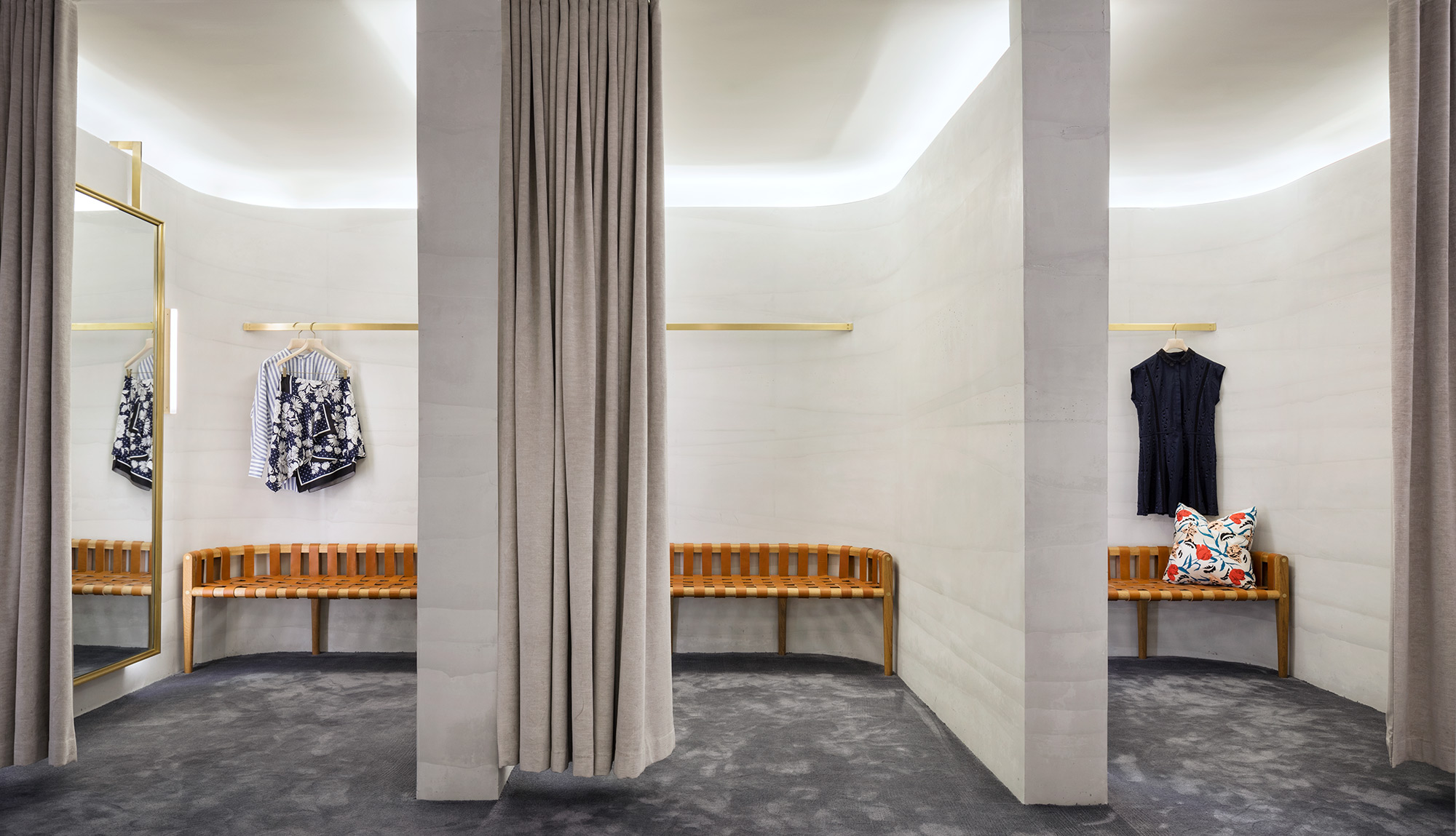
    UK fashion retailer Primark has introduced gender-neutral changing rooms in two stores, prompting both criticism and support from online observers.

    The move comes a year after Topshop began integrating its changing rooms.

    The response to Primark’s announcement has lit up social media in the UK, posing the question: Are shoppers ready for gender-neutral changing rooms?

    Primark says its action follows a challenge from transgender shoppers who said they faced difficulties using gendered changing areas. The new arrangement allows all shoppers to change in the same area, albeit in private booths.

    But critics online have suggested that more needs to be done to address privacy and safety concerns, in particular noting that doors would offer more protection than the current curtains.

    One user noted on Twitter that the perceived threat from men changing in neighbouring cubicles was far greater than any concerns from transgender people.

    “Women should not be made to feel unsafe when shopping,” tweeted another. “You don’t even have doors, so any man can walk in on us changing – so wrong will be boycotting!”

    Another shopper had a positive response, highlighting an advantage of the policy: “I am really happy to hear that Primark [has] swapped to gender-neutral changing rooms – as a disabled couple we often need to help each other try clothes on & need to accompany each other into changing rooms,” she tweeted. “We can’t always do that in some stores. It depends on the staff.”

    Primark responded to the mixed response calmly: “It has been our policy for some time that all customers are welcome to use the fitting rooms of their choice in our stores,” said a spokesperson.

    “As part of our latest in-store design, non-gendered fitting rooms, which are commonplace in retail and other markets in which we operate, have been introduced in our new Bluewater and Hastings stores.”

  • H&M launches a new collection with gender-neutrality

    H&M launches a new collection with gender-neutrality

    Fashion giant H&M has teamed up with Swedish streetwear brand Eytys to launch a gender neutral fashion collection that will go on sale in selected stores worldwide on January 24. The new unisex collection, which is being designed in collaboration with H&M, will feature footwear, apparel and accessories for men, women and kids.

    The footwear collection will include new takes on a number of Eytys’ signature chunky-soled styles and will come in custom-designed boxes decorated by painter Zoe Barcza.

    “With this collaboration, we hope to introduce the H&M customer to our design philosophy of robust and fuss-free design where function triumphs embellishment and style spans genders,” said Max Schiller, creative director at Eytys.

    “The collection is all about proportions – creating a distinct unisex silhouette by playing around with loose silhouettes and chunky architectural footwear. It’s the Eytys idea of a ‘generic’ look, one that is meant to elevate integrity, attitude and confidence.”

    According to H&M, the Eytys design approach and overall ethos are rooted in the digital age, but also in freedom from restraints based on gender or age.

    “Together the brands have extracted the core of Eytys DNA and developed a unisex collection featuring a no- fuss and fashion-forward range of shoes and clothes.”

    Schiller said H&M admired Eytys’ distinct look and initially approached the company with the idea of creating a shoe collection.

    But after initial brainstorming, it was decided to create a full gender neutral fashion collection – shoes, clothes and accessories – and enable customers to experience the whole brand aesthetic and ethos, he said.

  • Vietjet CEO becomes first Vietnamese Bloomberg game changer

    Vietjet CEO becomes first Vietnamese Bloomberg game changer

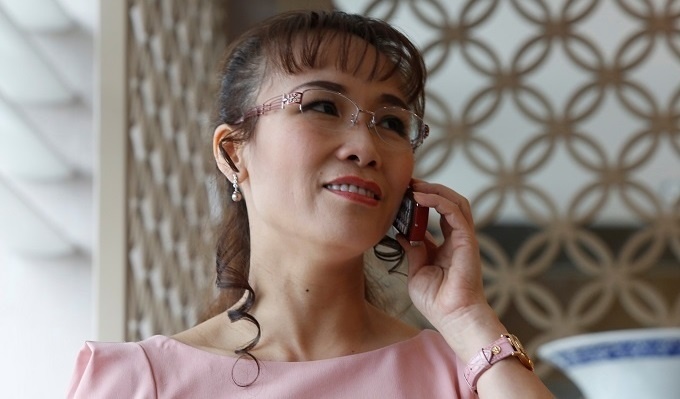
    Nguyen Thi Phuong Thao is in Bloomberg’s list of 50 people who’ve been business game changers in 2018. Thao is the first Vietnamese citizen to be named in the Bloomberg list, which highlights key players in all fields, from finance to fashion, media to manufacturing, banking to biotech, politics to philanthropy, entertainment to energy. The founder and CEO of budget carrier Vietjet Air wants to take on regional giants like Indonesia’s Lion Air and Malaysia’s AirAsia Group Bhd.

    The carrier has forecast that the number of passengers it serves this year will rise 40 percent to 24 million, as it begins to tap into Vietnam’s growing middle class by expanding overseas routes.

    The expansion further changes the face of Vietnam’s aviation market that has been long dominated by state-owned Vietnam Airlines JSC, as VietJet offers millions of Vietnamese customers who have never flown the chance to buy a cheap ticket, Bloomberg says.

    Thao, 48, has extensive experience in doing business in Vietnam and abroad in many fields, including finance, banking, aviation, realestate, and retail.

    She launched Vietjet in 2011. The airline now leads the domestic market with a 45 percent share. It operates 385 flights daily within Vietnam and to Japan, Hong Kong, South Korea, Taiwan, Singapore, mainland China, Thailand, Myanmar, and Malaysia.

    The carrier made an IPO on the Ho Chi Minh City Stock Exchange on February last year, becoming the first airline in Vietnam to list publicly.

    Thao also has interests in banking and real estate, which includes owning three beach resorts.

    Bloomberg says it comes up with the list by utilizing its worldwide resources, including the work of 2,400 journalists and unique, proprietary data and analytics.

    Also on the list this year are Jerome Powell, the U.S. Federal Reserve chairman, Amy Hood, chief financial officer at Microsoft Corp, and Ryan Coogler, director of Maverl’s movie Black Panther.

    Just last week, Thao was named the 44th most powerful woman in the world byForbes, up 11 places from last year.

    Forbes estimated the richest woman in Vietnam to have a net worth of around $2.6 billion.

  • Kering leads the way to gender diversity

    Kering leads the way to gender diversity

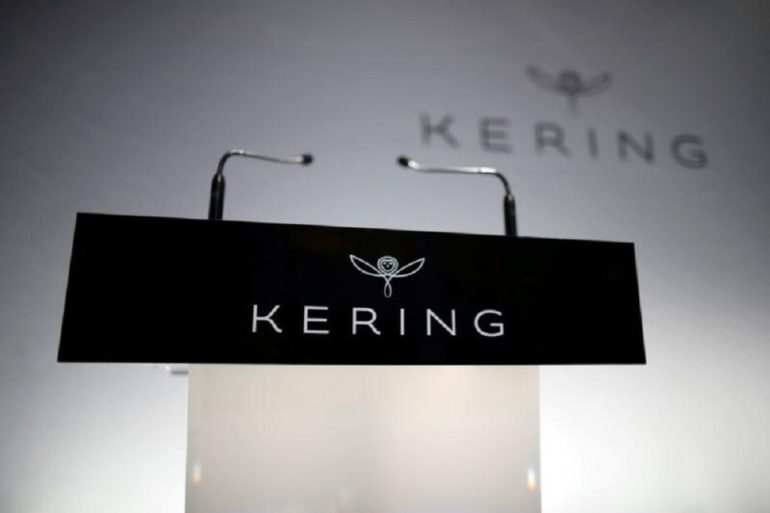
    French luxury goods giant Kering has received a prize for its high level of female representation on its board. The company has made gender equality one of its corporate priority and has, this week, been chosen to receive the “Most Feminine Board of Directors” award.

    Handed out by the European Women on Boards along with Ethics & Boards, Kering was selected among the 200 largest companies of the Stoxx Europe 600 index based on the percentage of women on the boards as well as the presence of women serving as chief executive officer or chair of the executive board.

    The company, which owns a range of high-end labels including Saint Laurent, Bottega Veneta and Pomellato, launched a leadership and diversity program in 2010 with the aim of increasing access for women to leadership positions.

    Kering has also committed to reaching gender parity and pay equality at all levels by 2025.

    French companies are leading the way on gender diversity and Kering is a great model setting an example for the rest of the world to follow.

    Indeed, more than half of the group’s managers are women while they constitute 64% percent of the board and 33% of its executive committee.

    François-Henri Pinault, Kering’s CEO, also announced that the company would be doubling the budget of the Kering Foundation, aimed at tackling violence against women.

    Kering is also partnering with Michelle Obama for the French leg of her blockbuster tour for her memoir titled “Becoming.”

  • Paid less than male peers, BBC China editor quits and speaks out

    Paid less than male peers, BBC China editor quits and speaks out

    The BBC’s China Editor Carrie Gracie has quit her post in Beijing to fight for her right to pay equality with male peers, posting an attack on what she called the “secretive and illegal BBC pay culture”.

    Gracie’s revolt is part of the fallout from pay disclosures the British broadcaster was forced to make last July, which showed that two thirds of the highest earners on air were men, and that some of them were earning far more than women in equivalent roles.

    Funded by a license fee levied on TV viewers and reaching 95 percent of British adults every week, the BBC is a pillar of the nation’s life, but as such it is closely scrutinized and held to exacting standards by the public and rival media.

    Gracie’s stand was one of the top news headlines of the day on the BBC itself and on other British media, and many prominent women from the BBC and beyond voiced their support on social media under the slogan #IStandWithCarrie.

    Gracie, who speaks fluent Mandarin and has reported on China for three decades, has not left the BBC. She said she was returning to her former post in the TV newsroom in London where she expected to be paid equally to men in equal jobs.

    “I am not asking for more money. I believe I am very well paid already — especially as someone working for a publicly funded organization. I simply want the BBC to abide by the law and value men and women equally,” she wrote on her website.

    Gracie said she was paid 135,000 pounds ($182,800) a year as China editor. According to last July’s disclosures, North America Editor Jon Sopel earned between 200,000 and 250,000 pounds a year, while Middle East Editor Jeremy Bowen was in the 150,000 to 200,000 bracket.

    Europe editor Katya Adler, the BBC’s only other female editor in foreign news, did not feature in the disclosures, meaning her pay was less than 150,000 pounds.

    Gracie said managers had offered to increase her pay to 180,000 pounds, but that was no solution. She rejected the rise and insisted that all four of the BBC’s international editors should receive equal pay.

    “I was not interested in more money. I was interested in equality,” she said during an interview on BBC radio.

    Britain enacted legislation outlawing sex discrimination in the 1970s and this was followed by an equality act in 2010, but women still earn less than men across much of the economy.

    “Enough is enough”

    The BBC defended itself by saying its gender pay gap was below the national average and less bad than at many other organizations, adding that it was committed to wiping it out by 2020. It also said an independent audit of rank and file staff had found “no systemic discrimination against women” at the BBC.

    Several high-profile women seized on the Gracie story to say the problem was much bigger than the BBC and affected the whole of society.

    “Tip of the iceberg in @BBC & most other orgs (organizations). Equality Act 2010 means no hiding place for shameful discrimination against women. Ending it long overdue,” wrote prominent lawmaker Harriet Harman of the opposition Labor Party, a long-time advocate of women’s equality, on Twitter.

    As in many other countries, pay inequality based on gender has been a persistent problem in Britain, which by some measures has performed worse than comparable European countries in recent years. Britain was ranked 15th in the World Economic Forum’s global gender gap index 2017, below France and Germany.

    But Gracie said her complaint was not about the gender pay gap the BBC admits to, which stems from men earning more on average because they do more of the best paid jobs. “It is men earning more in the same jobs or jobs of equal value. It is pay discrimination and it is illegal,” she said.

    Gracie accused the BBC of adopting a botched “divide and rule” response to the legitimate anger of female staff, offering pay rises to some women while locking down others in a protracted complaints process. In her own case, the process had been “dismayingly incompetent and undermining”, she said.

    “Enough is enough. The rise of China is one of the biggest stories of our time and one of the hardest to tell,” she wrote, citing Chinese state censorship, surveillance, police harassment and official intimidation.

    “I cannot do it justice while battling my bosses and a byzantine complaints process.”v